AI ads flooded Super Bowl 2026, but quality concerns and bubble fears cast shadows over the hype


8 Sources
8 Sources
[1]
AI-generated ads dropped the ball at this year's Super Bowl
It feels like everyone who produced ad spots for this year's Super Bowl with gen AI failed in terms of making gen AI seem useful or like something worth getting excited about. Though we've seen plenty of AI generated commercials before (at previous Super Bowls, no less), this year's event was oversaturated with them. That's in part because image and video generation models have become more somewhat sophisticated in the past year - though still subpar compared to what humans create - just better enough for a number of brands to be now comfortable having their names associated with AI-derived footage. Also, it's much, much cheaper and faster to use gen AI, which is convenient when the cost for 30 second ad spots at this year's Super Bowl ranged anywhere from $8-$10 million. With traditionally-produced ads from previous Super Bowls, you could really see how spending money on production ultimately led to commercials that felt more premium than what you would usually see on television. But this year, there was an undeniable cheap and sloppy quality to many of the advertisements. Here are some of them. One of the worst examples of this was the Artlist ad. The main thrust of the ad (which only aired in New York and Los Angeles) from Israeli creative firm Artlist is that anyone can generate Super Bowl-worthy video footage using the company's suite of production tools. It even makes a point of bragging that Artlist only bought its Super Bowl space about a week ago and spent a mere five days producing the commercial. That would be impressive if Artlist's final product actually looked like something that would get average consumers to want to use these tools. Instead, the ad features the very hallmarks that have convinced people to see AI-generated video as slop. Rather than telling a short, compelling, cohesive story of any kind, the ad is just a series of very short clips of animals doing weird things, strung together with a voiceover. There is nothing innovative about it. And given how much slop there already is in the world, the whole thing feels more like a threat rather than a promise of good things to come. For its presence at the Super Bowl, vodka brand Svedka -- which is owned by Sazerac Company -- resurrected its old Fembot CGI character, gave her a new male-presenting companion called Brobot, and dropped the android pair into a commercial that was almost entity created with gen AI. Though Fembot has previously been part of the larger Svedka brand and has always looked ... like that, everything about the Brobot character feels like a ripoff of I, Robot's Sonny character, who was portrayed by Alan Tudyk in the 2004 film. Speaking to The Hollywood Reporter ahead of the Super Bowl, Sazerac's chief marketing officer Sara Saunders said that using AI to create the ad didn't actually save the company all that much time or money. Rather, Sazerac felt that an AI aesthetic could be thematically-resonant for a vodka brand, and the company believed that the ad could convey a message that "is ultimately pro-human." The ad's story is pretty straight-forward: two robots show up at a club, pop bottles of vodka out of their bodies, and proceed to get drunk while standing in a crowd of awkwardly dancing, AI-generated humans. We're meant to understand that liquor helps machines let loose in a very human way. But what stands out most about the commercial is the way Brobot starts short circuiting after gulping down a drink, which immediately starts spilling down his chassis because the machine's mouth isn't connected to an internal system of pipes that are meant to process fluids. Though Sazerac says Brobot's malfunction is intentional, it looks very much like the sort of gross accidental video output that AI models have been known to generate without being explicitly prompted to do so. The sequence reads like the Brobot character is breaking itself by interacting with Svedka's product, which isn't exactly the sort of message that alcohol companies have been known to lean into. Sazerac can try all it wants to spin the Svedka ad as a win that's in-line with the vodka' brand identity, but the most pro-human thing the company could have done in this situation would have been to hire more humans to develop a better idea. Clearly, we're not alone in our feelings about gen AI's less-than-polished production process, which is why it was even riskier for these brands to participate in it this year. So much animosity is in the air that people are now quick to assume that wonky visuals are AI-generated, even if sloppy editing work might actually be to blame. One of the most star-studded Super Bowl commercials was a Jurassic Park-themed ad for Comcast's Xfinity network that digitally de-aged Sam Neil, Laura Dern, and Jeff Goldblum. While people across social media have remarked that the questionable CGI and de-aging "look like AI slop," Industrial Light & Magic (ILM) and Lola VFX are actually credited for creating the visual effects -- the latter of which has been digitally de-aging actors for years in movies like X-Men: The Last Stand, and The Curious Case of Benjamin Button. Dunkin's ad spot fell foul of the same speculation regarding AI usage. The "Good Will Dunkin'" commercial featured de-aged versions of Ben Affleck, Jennifer Aniston, Matt LeBlanc, and other stars parodying a '90s sitcom, but the oddly smoothed skin and unnatural facial movements have divided opinions online regarding whether AI was used to shave three decades off the actors' appearances. Sure, the ad has gone viral because people are playing "spot the AI Super Bowl ads," but none of those conversations are about coffee or pastries. There are usually some machine learning processes involved with creating computer-generated effects, but these are typically embedded with creative software editing tools rather than the text-to-video models now associated with AI videos. (We have reached out to Dunkin', ILM, and Lola VFX to enquire what tools were used to create the Xfinity and Dunkin' ads.) AI usage has also worked its way into rivalries between companies, as seen with the Super Bowl ad for Pepsi Zero Sugar. The commercial, set to Queen's "I Want to Break Free," features a CGI polar bear (traditionally a Coca-Cola mascot) having a crisis about preferring Pepsi in a blind taste test. It ends with the message that consumers "deserve taste" -- possibly a jab at Coca-Cola's controversial AI-generated holiday ads. In a statement to AdWeek, Pepsi marketing vp Gustavo Reyna said it was important to have a human touch in the ad. "If there's something we care about and we believe in, it's in the craft and the creativity of our people, our talent, and our partners," Reyna said. Even if this is meant to be understood that unlike Coca-Cola, Pepsi is not using AI, it is suspicious by association on account of "animals doing weird stuff" trope farmed so sloppily by Artlist. This latest crop of gen AI ads was, in part, aiming to normalize the technology via onslaught. But the point of a truly effective Super Bowl ad is to create a cultural moment that is positive and exciting to associate with your product. Instead, the ads have left people questioning: Is it AI? Does it just look like AI? Does it even matter anymore?
[2]
Super Bowl LX ads: all AI everything
Super Bowl LX is nearly here, with the Seattle Seahawks taking on the New England Patriots. While Bad Bunny will be the star of the halftime show, AI could be the star of the commercial breaks, much like crypto was a few years ago. Last year's Super Bowl featured a Google Gemini ad that fumbled a Gouda cheese stat, and this year's game is already slated to include an ad for Anthropic's AI platform that takes jabs at its competitors, namely OpenAI. AI-generated ads could make an appearance, too. Super Bowl LX is set to kick off at 6:30PM ET/3:30PM PT on Sunday, February 8th at Levi's Stadium in Santa Clara, California.
[3]
AI companies pour big money into Super Bowl battle
AI is being used to produce more ads, which could help lower the production cost. Artificial intelligence companies are playing their biggest role yet at the Super Bowl, with all the major AI players buying ads to showcase their tools - both for consumers and for businesses - to the expected audience of as many as 130 million people. This year's Super Bowl ads cost a record $8 million on average for a 30-second spot, with some priced as high as $10 million, plus more to produce the ads. Deep-pocketed tech giants and startups alike are seizing the opportunity to be part of the national conversation. A battle started the week before the big game when Anthropic's Claude debuted an ad skewering OpenAI's decision to include ads in ChatGPT. That ad triggered a response from OpenAI CEO Sam Altman that drew even more attention to the campaign. OpenAI will be returning to the Super Bowl ad slate this year after its debut campaign - a 60-second spot - last year. But it's not just Anthropic's Dario Amodei and Altman facing off: All the major AI players are buying time in the big game. The campaigns are taking the place of some big advertiser categories, including automakers, which are pulling back. Google is running ads for the second year for Gemini AI after promoting its AI-powered features the prior two years: the Pixel's "Guided Frame" and "Magic Eraser." Amazon is leaning into concerns about AI in the home with a spot for Alexa+ featuring actor Chris Hemsworth expressing some comedic concerns about the risks of AI. And Meta, rather than promoting its chatbot like other tech companies, is returning with spots for its Oakley Meta AI glasses, which give access to its AI tools. A number of smaller AI companies are also buying Super Bowl spots to introduce their products to a broad audience. Startup Genspark is marketing its AI productivity platform, with an ad featuring Matthew Broderick. Base44 is showcasing its AI-powered app development tool, saying anyone can use its products to create custom apps. And Wix, known for its tools to create websites, will showcase its new Harmony platform, which uses AI to enable web design. Another one of those smaller AI companies, Artlist.io, is showcasing its AI tools for consumers by putting the tech at the center of its 30-second spot. The entirely AI-generated ad boasts that it was purchased a week ago and created for just a few thousand dollars in just five days. It's one of a range of companies, including those that have nothing to do with technology, that used AI to create their ads this year. Svedka Vodka is running an ad this year for the first time in decades after a ban on campaigns for liquor. (Absolut is also running a big game ad.) Svedka is bringing back its Fembot character that appeared in its ads in the early 2000s, this time backed by AI trained on TikTok dances. Other AI uses will be more subtle: Xfinity used AI to digitally de-age the cast of Jurassic Park for a new commercial. With commercial production costs for a Super Bowl ad typically starting at $1 million, and generally running far higher -- celebrities can charge millions of dollars for a cameo, for example -- the response to this year's Super Bowl ads could have major implications for how these high-profile ads are produced.
[4]
Super Bowl ads go all-in on AI as brands spend up to $10M per spot
Many companies utilized the platform not only to promote AI-powered products and services, but also to challenge their rivals. At the same time, several ads were themselves produced using AI tools. For instance, US vodka brand Svedka ran what it claims is the first "primarily" AI-generated national Super Bowl spot. The ad, titled "Shake Your Bots Off," featured the firm's female robot character, Fembot, and her companion, Brobot, dancing at a party with humans. According to The Wall Street Journal, Svedka's parent company, Sazerac, revealed that it took nearly four months to rebuild Fembot, in addition to training the AI to replicate facial expressions and movement. San Francisco-headquartered AI startup Anthropic used its commercial not only to promote its AI model, the Claude chatbot, but also to mock its rival, OpenAI. The commercial took aim at OpenAI's plans to introduce ads in ChatGPT, using the tagline: "Ads are coming to AI. But not to Claude." Meanwhile, OpenAI aired a 60-second ad carrying the message "Now you can just create something." The ad stressed how AI has simplified creative and production processes that were once learned through books, notes, and code.
[5]
Do Super Bowl Ads Predict a Bubble? Dot-Coms, Crypto and Now AI
Super Bowl LX featured 10 ads for different AI products, and some observers believe it could be a sign that the AI financial bubble will soon burst. Advertisements for the Super Bowl -- the championship game of American football -- are some of the most watched and most expensive. The game on Sunday boasted some 127 million viewers, making it the most-viewed sporting match of the year in the US, as well as the most-watched Super Bowl of all time. Advertisers pay a premium for the limited number of commercial spots. Some companies shelled out as much as $4 million for a 30-second slot. The high sticker price, as well as the massive audience, drives companies to make their advertisements unique. But tech industry observers have noted one particular trend in Super Bowl ads: If there's novel tech all over the ad space, a bubble will soon pop. In January 2000, the dot-com boom was in full swing due to the widespread adoption of the internet. At the Super Bowl that year, which became dubbed "the dot-com bowl," 17 different ads were about the world wide web. One from trading platform e-Trade featured a 20-second clip of a dancing chimpanzee, followed by a screen that read, "Well, we just wasted 2 million dollars. What are you doing with your money?" Two months later, the dot-com bubble began a steep decline that lasted until October 2002. The same happened with the "crypto bowl" in 2022. At Super Bowl LVI, four different crypto companies aired ads: Coinbase, Crypto.com, eToro and FTX. The now-defunct FTX aired an ad with "Seinfeld" showrunner Larry David, encouraging investors not to "miss out" on crypto. Crypto companies spent an estimated $6.5 million each per 30-second slot that year. Just months later, the crypto market unraveled. Terra's stablecoin ecosystem imploded in May. FTX, Celsius, Voyager Digital and BlockFi were insolvent by the year's end. Genesis followed in January 2023. Related: Crypto figures address connections mentioned in latest Epstein file release The following Super Bowl, only one crypto-related ad appeared: a non-fungible token promotion related to the video game Limit Break. There were none in 2024 and 2025. After a two-year hiatus, one major crypto company has returned to the Super Bowl. Coinbase ran an ad in the form of a karaoke sing-along to the Backstreet Boys, which was also screened on the Sphere in Las Vegas. Not everyone was thrilled. For many, crypto's image has not improved since the FTX days. Political streamer Jordan Uhl posted, "From crypto to AI to Trump accounts, every Super Bowl has its own scam ad theme." Northwestern University's Kellogg School of Management publishes formal ratings of Super Bowl ads and puts them in two categories: touchdowns (successful/good advertisements) or fumbles (ineffective/poor advertisements). The Kellogg survey found that Coinbase's 2026 ad "failed to establish a clear connection to the brand or its value proposition." It received an "F." But the crypto industry now has some serious legislative victories under its belt. Coinbase's ad may be a signal that the industry will keep promoting its brands on the largest single night for advertising in the US. Related: Crypto PACs secure massive war chests ahead of US midterms While Crypto.com didn't make any crypto-related advertisements, it did announce its new AI platform, imaginatively named AI.com. A total of 10 ads at this year's Super Bowl were about AI. Anthropic boasted its ad-free AI model, Claude. Meta showed off its AI-enabled Oakley smart glasses, and Google's commercial featured a mother and son furnishing their home with Nano Banana Pro, the company's AI-enabled image generator. Amazon debuted its new Alexa+ in an ad with actor Chris Hemsworth, in which he imagines that AI is out to get him, either by closing the garage door on his head or attempting to drown him in the pool. Svedka Vodka's 2026 ad revived its "fembot" character that was made primarily with AI. Source: YouTube The rapid proliferation of AI tech has coincided with eye-watering company valuations and doubt about whether firms like OpenAI will turn a profit. Now, some observers are wondering if the "AI bowl" was a harbinger of an impending bubble burst. Gary Smith, an economics professor at Pomona College, and Jeffrey Funk, an independent consultant with Carnegie Mellon, wrote on Sunday: "In this AI bubble, the prices of AI-dependent stocks have become untethered from realistic projections of future profits. LLM-dependent companies such as OpenAI and Anthropic are losing enormous amounts of money yet are given valuations in the hundreds of billions of dollars as if they were real companies making real profits." Ads focus on onboarding new users to the technology. Smith and Funk said, "In the absence of profits, the tech bros increasingly emphasize an old metric that was popular during the dot-com bubble: the number of users, with a new flavor." Ahead of the Super Bowl, software developer and researcher Carl Brown said, "I don't know exactly how many AI commercials are going to be in the game this weekend. I already know there will be a lot more than it seems like there ought to be." E-Trade may have "wasted" $2 million in 2000, but it was still around to gloat about surviving the dot-com bust the next year. FTX and other smaller crypto platforms went under in 2022, but Coinbase and the Backstreet Boys were playing on the Vegas Sphere this time around. The AI bubble could burst, but if past patterns point to anything, a few companies will survive -- and maybe make a commercial about it.
[6]

The Super Bowl Was Overrun by AI Ads -- And There's a Reason Viewers Weren't Buying It
Super Bowl commercials can spark as much conversation as the Halftime show or the game itself -- and this year, what people are talking about is the substantial number of ads there were trying to sell America on AI. One in particular that got people talking was for Ring, a doorbell video camera and smart home security device. It begins with a little girl getting kisses from her new puppy, a yellow Lab named Milo. Then, we see the same little girl looking forlorn as her dad staples a "lost dog" poster up in her neighborhood. Luckily, Ring camera's "Search Party" tool comes in to save the day, activating all of the neighborhood's Ring video cameras to use AI and search for the dog. Milo is found! Almost immediately, people took to social media to critique the commercial. "'Surveillance state,' but make it adorable," tweeted one X user, adding, "Ring is owned by Amazon, and Amazon is a technology partner of ICE." (Ring recently partnered with Flock Safety, a network of AI cameras that can be accessed by law enforcement. Ring did not immediately respond to a request for comment, but previously told NJ.com that "Search Party" only works for dogs, not humans.) "I had no opinion on Ring doorbells but now I will actively avoid purchasing one as long as I live," tweeted another. Ring was far from the only ad propping up AI as helpful or positive. A commercial for Google's Gemini showed a mom and her young son using generative AI to plan out what their new home would look like. GenSpark's commercial featured Matthew Broderick encouraging people to take a day off and let their AI assistant work for them. Ramp showcased The Office character Kevin Malone (Brian Baumgartner) cloning himself to get all of his paperwork done. Meta promoted their Oakley AI sunglasses by showing athletes skydiving, running, biking and playing golf while asking things like "Is it okay to eat mud?" and, "When does the storm hit?" Though the ads were trying to sell AI as a helpful, trustworthy tech we can all safely integrate into our lives, that's not necessarily how the general public took it. Rumman Chowdhury, CEO of the tech nonprofit Humane Intelligence and former U.S. Science Envoy for AI, tells Rolling Stone that she thinks this year's AI commercials were incongruous with a society that has been coming to grips with its overreliance on technology. "The AI 'optimism at all cost' ads were really out of touch with public sentiment on AI and technology broadly," says Chowdhury, noting that 2026 has been called the "year of friction," with people trying to scale back their use of technology. "People don't want to buy expensive sunglasses to tell them what the weather is when you can't even afford pizza because it's like $60, and nobody's making money, and the tariffs are kicking everyone's ass." To Chowdhury, the ads felt like they were from "another era, where people still believed the shtick that these guys were going to usher in immense social and technological and economic change." Instead, she says, people are starting to be critical of tech billionaires who are "trying to consolidate wealth and power." As far as Ring using lost puppies to hype up their video technology, Chowdhury says she's not surprised people criticized the commercial. "Replace lost dog with a Black kid wandering around in the neighborhood and that's where all of our minds go," she says. "Not because we're paranoid, because that's literally how it's being used. You think we're stupid?" (Ring recently told Wirecutter that they will only share footage with local law enforcement, and only with the permission of device owners, unless they're compelled by law to do so.) Another ad that stuck was Amazon's spot, in which Chris Hemsworth busts into his house, (for some reason holding a venomous snake) and tells his wife, Elsa Pataky, he's concerned the AI assistant Alexa+ is going to kill him. He goes through all of the ways it could happen -- closing the garage door on his neck, ordering a man-eating bear to his door -- but when Alexa offers to book him a cinnamon scrub, he relents and accepts the device into his home. Chowdhury was put off by how it mocked people who are skeptical about AI. "It's very condescending," she says. Suresh Venkatasubramanian, director of the Center for Tech Responsibility at Brown University, says he's seen a shift over the past six months with how people view AI. "Ever since the summer and the horrific teen suicides, poll after poll is saying that people are generally more cautious and concerned about the rapid flood of AI tools everywhere," says Venkatasubramanian. He believes the backlash to the commercials is a reflection of how people are starting to think about the concerns regarding AI. "Tech has always been about, 'Here is a future we can imagine for you. We're not there yet, but we might get there,'" says Venkatasubramanian. "It's always about selling the future with gauzy imagery and visuals and trying to make it seem like this is exactly what's going to happen. And saying 'Don't worry about all these other boring issues the naysayers will talk about.' Companies using the glamour and spotlight of the Super Bowl to sell their products is nothing new, and certainly not exclusive to tech companies. And there are certain elements that companies use to market their products. Rama Yelkur, the executive dean of the business school at Texas Women's University, has run a Super Bowl research panel for 25 years. She says that although the product has changed, this year's commercials used many of the same tropes that are known to work on consumers. "Humor, animals, children, celebrities, music -- these are the winning ingredients," says Yelkur. She says from a storytelling standpoint, the Ring ad captured a lot of these ingredients by having a cute puppy and children, which tug at people's hearts. Similarly, she liked the Chris Hemsworth Alexa+ commercial. "They used humor, celebrities, [and] animals very cleverly," she says. "There's a snake in the beginning, a bear at the end, it's poking fun at people who can't use AI." Yelkur ranked Google's Gemini commercial about imagining a new home as one of the most emotionally appealing, likeable ads that tugged at the heartstrings. Elon Musk's AI.com ad however, which featured nothing but product information as the letters scrolled, was ranked one of her worst or least likeable. She likens the wave of AI commercials to the 2000 Super Bowl, which happened at the height of the dot-com bubble. Eleven dot-com companies bought ads. "Before the end of the year," Yelkur says, "Nine out of the 11 companies went out of business." Chowdhury also remembers the dot-com commercials. "We had Pets.com and it was like, 'Here's a new service you can use!' it was grounded in a very real problem they were solving," says Chowdhury. "Now I'm nostalgic for those days. Like, 'Remember when they gave a shit about the thing we actually wanted and tried to sell it to us?' Now it's like, 'Go sign up for your ai.com account. Why? Nobody knows, but go, sheep. Sign up for it.'"
[7]

AI Companies Sold Us Their Vision of the Future at the Super Bowl. Here's Why We Should Reject It
Are you feeling like your football-scouting operation has been taking a beating lately? Do you sometimes wonder why your spreadsheets can't get generated fast enough? Or perhaps your software coding is going slower than you always thought it would? Most of all, does your kid struggle with not being able to imagine the decor of his bedroom in your new home? If any of these problems resonate -- and really, what could be more universal? -- has Silicon Valley got an AI product for you. You may have noticed Sunday night that these four instances were prime AI use cases per a series of Super Bowl ads from the industry's biggest players (Microsoft Copilot, unicorn startup GenSpark, OpenAI's Codex and Google Gemini, respectively), either solving challenges that don't exist day-to-day for most Americans or, in the last case, solving a challenge that may actually be a good thing. Any parenting expert will tell you that temporary uncertainty or disappointment can healthily prepare a child for adulthood. But why risk that brief bout of questioning when AI can Magic Erase it from their lives? Of course, we're acting like the removal of a childhood-development moment is a byproduct of AI adoption and not the whole point. While these ads and the dozen or so more that aired during the game -- from both established players like Meta and Anthropic and upstarts like Ramp AI and Artlist -- have different visions for how machine thinking will help us, they are nearly all united by a common ideology. Namely: Everyday life is unruly, unknown, hard. Wouldn't it be nice if a computer happened along to make it easy and guaranteed? If you arrived unformed into the techno-capitalist parade that is the current iteration of the Super Bowl telecast, you would come to at least one very specific conclusion: technology will soon offload so much of our current toil. "It'll be whatever we want it to be," the Gemini mother says to her son about their house -- AI is apparently manna now -- as onscreen a message flashes "A new kind of help from Google." A more encapsulating set of credos I cannot imagine. Whatever we want! No limitations or consequences! And new help! Who doesn't want that? Well, compared to the current kind of Googling -- the kind that requires critical thinking -- it certainly is new. Better? Less clear. Tech revolutions at heart change the mechanisms by which humans live. The automobile lessened our reliance on the horse. This new revolution will lessen our need for a brain. Whether we want what this digital Che will wreak is another matter. Yes, on the surface, this ad spate is about AI products, which is about massive capitalizations, and Wall Street valuations, and many other -ations you hear on CNBC. But such talk of companies and products abstract, purposefully, what's really being sold. The abstracting reached its pinnacle (nadir) with an insidious Alexa ad featuring Chris Hemsworth and wife Elsa Pataky. He insisted the smart speaker could go sentient in various wildly extravagant ways and kill him -- a classic straw man of painting anyone worried about AI Safety as some kind of tinfoil alarmist while cleverly ignoring the actual dangers, like Alexa's new policy of nonconsensual constant uploading. (See also under Amazon's Super Bowl Ring ad for how it saves all the lost dogs while, oh yes, turning on some kind of Big Brother camera for mass surveillance.) "I would never. I'm just here to help," Alexa tells Hemsworth, which confoundingly seeks to have it both ways: "An AI can't have murderous feelings; that's silly. But it can have feelings of help and love!" (Literally an Alexa ad from earlier this football season starring Pete Davidson has him vulnerably telling a computer screen "I like you, too.") To think about any of these tech company ads for more than five seconds is to realize how little they stand up to scrutiny. Which is exactly how the brands want it generally: feeling more, thinking less. Of course matters aren't that simple; we're just not that naive anymore. By now too many of us are wary of what's being sold -- sensitized by two years of deepfakes and soft slop, chastened by two decades of social media and rage-farming. And indeed, in-between the shiny sales pitches came little glimpses of self-own. Anthropic went after OpenAI for how the latter's ad-based chatbot could be compromised without appearing to realize that asking sensitive information from a chatbot could be dangerous even when it wasn't trying to sell you something. I'm not sure relying on an LLM to tell you how to navigate your relationship with your mother is so wise even if it refrains from pushing a cougar dating site. And Artlist.io, a little-known video-generation platform, pitched its tools to NY and LA markets with an ad the company told us that as a result of those tools took less than a week to create -- or rather, a polar bear reading a voiceover script told us that while, on screen, dogs roasted marshmallows, horses ate from craft services and a person in a banana costume surveyed a rocker-destroyed stage, all in an attempt to show how our content landscape will be transformed. "Artlist's Big Game debut proves that high-end video production is no longer gated by time, budget, or access," an accompanying press release touted. No doubt such efficiency boasts land with Madison Avenue beancounters, but the rest of us may find ourselves busier trying to recover from the retinal burning brought on by these proto-assaults of slop. Some 25 million people viewed the spot, by the way, but only 15 commented on it, and most were critical. These ads may not have fooled as many of us as their makers seemed to think. Some brands, at least, respected human intelligence. One standout came from Volkswagen -- which went back to its "90's "Drivers Wanted" slogan and the deeply human vibes of its seminal Nick Drake spot from that era (directed by a pre Little Miss Sunshine Jonathan Dayton and Valerie Faris!) -- with a beautifully on-point third-quarter ad. Soundtracked by House of Pain's 90's staple "Jump Around," the spot showed a young professional guy leaving his laptop life behind to play with his dog; a Gen Z woman dancing in the rain and getting her friends to exit the car to join her; a driver making a U-turn to follow an ice cream truck; and a group in a schoolyard cheering on a besuited corporate worker to kick back their soccer ball over the fence, Messi penalty-kick style, which he eventually does, incurring sweet release. Hardly a smartphone appears in the spot, let alone any AI, and the whole vibe blissfully shrugs its shoulders at the "let a computer tell you what to do" low-key enslavement of so many of the other spots that aired Sunday night (and at the slop; it was shot on film). "Being so programmed puts us in handcuffs, and we wanted to push back on that," Rachel Zaluzec, Volkswagen's chief marketing officer, told me in an interview Friday. The company didn't even set out to make a Super Bowl ad, she said; it simply wanted to react to all the automation out there before soon realizing that it had a newly relevant "Drivers Wanted" campaign capturing the essence of those refreshing pre-tech days. "We see this as a recruiting campaign for an invitation to participate," she said. "All this tech has its place of course but we should be asking, 'are we controlling it or is it controlling us?'" Even driving, she added, could be a human act compared to the shut-offery of our Uberized and Waymoified world. "There's nothing like putting your hands on the wheel and deciding where you want to go," she said. One of the slop-makers was trying to temper their message, too. Beverage company Sazerac, which during the game had the first-ever national Super Bowl ad generated by AI, said that its revival of the Fembot and Brobot characters to sell Svedka vodka was meant to show the folly of turning over so much power to the algorithm. "The entire idea of the campaign is that the robots have returned to remind the humans to be more human," Sazerac chief marketing officer Sara Saunders told THR before the game. The best AI ad didn't mention the technology at all: Ben Affleck/90's sitcom Good Will Dunkin' spoof used de-aging to some nifty effect, even if it dipped into the uncanny valley a few times. Of course this was AI as tool for human vision, not as replacement for human creativity, skill and decision-making. It has become fashionable to rag on AI, and for some brands and public pronouncers this is, as you might warily suspect, a pose -- a cheap monetization of hipster skepticism more than a carefully thought-out ideology. But a kernel of meaning sits at the heart of even the most blithe pushbacks -- that we should ask what all this technology that has come to automate and convenientize our lives will take away with it. AI is coming and technology can't be stopped; about that Bob Iger, who recently made the point to David Muir, is right. But that doesn't tell the whole story. Sure, as a broad concept the idea of AI is moving forward; there are too many stakeholders for it not to. And too many unassailably positive use cases for it not to. If you as a medical researcher could know a drug's effects on the genome better, why wouldn't you? If you're a climate activist and can push for models that will limit waste, why wouldn't you do that too? But AI as a consumer deployment is far from assured; AI as something we'll use to replace or at least seriously augment teachers and writers and designers and therapists is not necessarily an inevitability. We have no idea if people will want to use Sora en masse to animate characters on Disney+, as Iger is betting it will, or will be deemed safe enough to become all of our assistants, or trustworthy enough to give advice on our how to talk to our mothers. Most important of all -- and this was decidedly hidden by the brands on NBC Sunday night -- we can do something about the onslaught. If we reject slop, AI video-generation tools get marginalized; if we evince skepticism about using a chatbot for mental health, Claude and ChatGPT see their reach curbed. It's telling that even as Google was making the case for how Gemini can think a house into existence and dispel the worry of its new inhabitants it used a very real Randy Newman singing "Feels Like Home" to make the point, and not, say, an AI trained on "the greatest living songwriters." A more ironic undercutting of a tech company's message you will not find: "Machines can address all of our emotional needs, and to convince you of that we'll draw on the most human of artists." But Big Tech leaders don't really do irony, and they're not worried about undercutting. Just keep pushing products that will make life more efficient, they believe, and hope that, faced with a world made so exhausting and overwhelming (by tech), consumers will grasp at any product that brings them momentary relief -- the executives unaware, it seems, that we can simply be recruited not to participate.
[8]
Super Bowl AI War Set as OpenAI, Anthropic, Gemini and Amazon Alexa+ Face Off
In the Super Bowl ad for Amazon's Alexa+ AI assistant, Chris Hemsworth fears that the AI is trying to kill him. Perhaps it will trigger a rogue garage door, or close the pool cover while he is out for a swim. Ultimately, of course, he learns that the AI just wants him to be happy, offering a massage to relieve his tension. Watch: As it happens, AI anxiety seems to be running high, and the Super Bowl is poised to become the center of that conversation. Even as AI threatens every part of the entertainment business, live sports is still the king of advertising, and even the biggest of the tech giants are gladly ponying up the $8-$10 million fees (and millions more in production costs) to secure an ad slot. Sure, AI might steal all our time (and maybe our jobs, or our lives?), but for now, these companies are paying handsomely just to get a tiny slice of human attention. Google Gemini, for example, is taking an earnest approach in its ad, showing how it hopes users can take advantage of it's tech. For some background: OpenAI announced plans to bring advertising to its ChatGPT product, as it seeks to drive revenue to help cover the enormous expenses of building out an AI company. Anthropic, which has both professional AI tools and the Claude AI assistant, is using its Super Bowl ad to take a not-so-veiled shot at OpenAI. Watch: "All the time, we see proof that advertising works brilliantly in the right context. We're using advertising's biggest stage to ask a simple question: does it belong everywhere? So we made funny ads about how unfunny it would be," says Felix Richter, CCO at Mother, the agency that produced the ad. "People asking AI about their health, their relationships, their business. Then a sponsored answer. We don't need to explain why that's wrong. We just need to show it." But the Claude ad clearly struck a nerve: Sam Altman, the CEO of OpenAI, responded in a post on X: "I guess it's on brand for Anthropic doublespeak to use a deceptive ad to critique theoretical deceptive ads that aren't real, but a Super Bowl ad is not where I would expect it," he wrote, adding that he thought they were funny, although his response doesn't sound like he was laughing. "Anthropic serves an expensive product to rich people. We are glad they do that and we are doing that too, but we also feel strongly that we need to bring AI to billions of people who can't pay for subscriptions." So OpenAI will use the Super Bowl to make its own case. "As for our Super Bowl ad: it's about builders, and how anyone can now build anything," Altman said. But in a Super Bowl filled with AI ads, both for AI chatbots and using AI tech, will it resonate with the human watching? Or will it become a relic destined for a deep corner of an LLM?
Share
Share
Copy Link
Super Bowl 2026 featured 10 AI advertisements as tech giants and startups spent up to $10 million per 30-second spot to reach 127 million viewers. But the heavy use of AI-generated commercials drew criticism for poor quality, with brands like Svedka and Artlist producing entirely AI-created spots that many viewers labeled as 'slop.' The saturation has sparked comparisons to previous tech bubbles.
AI Ads Take Center Stage at Super Bowl 2026
Super Bowl 2026 marked a turning point as artificial intelligence dominated the advertising landscape, with 10 different AI ads appearing throughout the broadcast that reached approximately 127 million viewers
5
. AI companies poured unprecedented resources into the event, with 30-second spots costing a record $8 million on average and some priced as high as $10 million3
. Deep-pocketed tech giants and startups alike seized the opportunity to showcase AI-powered products to a massive national audience, with major players including Anthropic, OpenAI, Google, Meta, and Amazon all buying airtime3
.
Source: THR
The battle among AI companies began before kickoff when Anthropic's Claude debuted an advertisement mocking OpenAI's decision to include ads in ChatGPT, using the tagline "Ads are coming to AI. But not to Claude"
4
. This triggered a response from OpenAI CEO Sam Altman that drew even more attention to the campaign. OpenAI returned with its own 60-second spot carrying the message "Now you can just create something," emphasizing how AI tools have simplified creative processes4
. Google ran ads for Gemini AI for the second consecutive year, while Meta promoted its Oakley Meta AI glasses rather than its chatbot3
. Amazon leaned into concerns about AI in the home with a spot for Alexa+ featuring actor Chris Hemsworth expressing comedic worries about AI risks3
.AI-Generated Advertisements Draw Sharp Criticism
Beyond promoting AI-powered products, several brands used generative AI to actually produce their Super Bowl commercials, with results that drew widespread criticism for poor quality. Vodka brand Svedka ran what it claimed was the first "primarily" AI-generated national Super Bowl spot, resurrecting its Fembot character alongside a new companion called Brobot
4
. According to parent company Sazerac, the production took nearly four months to rebuild Fembot and train the AI to replicate facial expressions and movement4
. Despite these efforts, the ad featured awkwardly dancing AI-generated humans and a scene where Brobot malfunctions after drinking vodka, with liquid spilling down his chassis in a way that resembled the gross accidental video output AI models are known to generate1
.
Source: Interesting Engineering
Artlist delivered what critics called one of the worst examples of AI in advertising. The Israeli creative firm's commercial, which only aired in New York and Los Angeles, boasted that it purchased its Super Bowl space just a week before the event and spent a mere five days producing the spot
1
. Rather than telling a compelling story, the ad consisted of very short clips of animals doing weird things strung together with a voiceover, featuring the hallmarks that have convinced people to see AI-generated video as slop1
. With commercial production costs for traditional Super Bowl ads typically starting at $1 million and running far higher, the response to these AI-generated commercials could have major implications for how high-profile ads are produced in the future3
.Public Skepticism and Quality Concerns Mount
The oversaturation of AI-generated advertisements revealed an undeniable cheap and sloppy quality compared to traditionally-produced ads from previous Super Bowls, where spending money on ad production led to commercials that felt more premium
1
. So much animosity now exists around generative AI that people quickly assume wonky visuals are AI-generated, even when sloppy editing work might actually be to blame. This phenomenon affected even a star-studded Jurassic Park-themed ad for Comcast's Xfinity network that digitally de-aged Sam Neill, Laura Dern, and Jeff Goldblum—while people across social media remarked that the questionable CGI looked like AI slop, Industrial Light & Magic and Lola VFX were actually credited for creating the visual effects [1](https://www.theverge.com/entertainment/875886/super-bowl-2026-ai-generated-ads-were-terrible].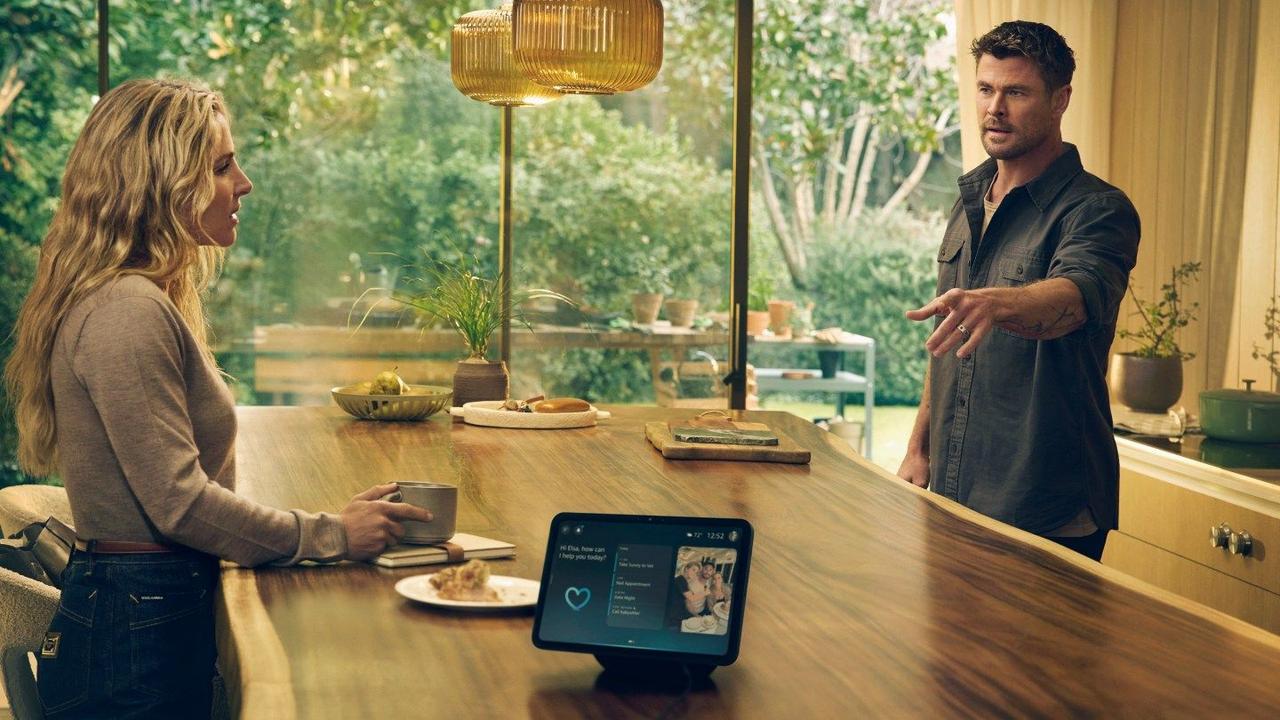
Source: THR
Sazerac's chief marketing officer Sara Saunders told The Hollywood Reporter that using AI to create the Svedka ad didn't actually save the company much time or money, but rather that an AI aesthetic could be thematically resonant for the brand identity
1
. However, critics argued that the most pro-human thing companies could do would be to hire more humans to develop better ideas rather than relying on AI tools that produce subpar results.Related Stories


Historical Parallels Raise AI Bubble Concerns
The concentration of AI product advertisements at Super Bowl 2026 has sparked comparisons to previous tech bubbles that burst shortly after similar advertising blitzes. In January 2000, the "dot-com bowl" featured 17 different ads about the world wide web, and just two months later, the dot-com bubble began a steep decline that lasted until October 2002
5
. Similarly, Super Bowl 2022 became the "crypto bowl" with four different crypto companies airing ads, and just months later the crypto market unraveled with multiple major companies becoming insolvent5
.Economics professor Gary Smith and consultant Jeffrey Funk wrote that in the current AI bubble, prices of AI-dependent stocks have become untethered from realistic projections of future profits, with companies like OpenAI and Anthropic losing enormous amounts of money yet receiving valuations in the hundreds of billions of dollars
5
. The ads focus on onboarding new users to the technology, and in the absence of profits, tech companies increasingly emphasize user numbers—a metric that was popular during the dot-com bubble5
. As AI companies continue to battle for market share and consumer attention, observers will be watching closely to see whether the "AI bowl" proves to be another harbinger of an impending bubble burst.References
Summarized by

Navi
[2]
[4]
[5]
Related Stories
Recent Highlights


Recent Highlights
Today's Top Stories





Your Daily Dose of Curated AI News
Don’t drown in AI news. We cut through the noise - filtering, ranking and summarizing the most important AI news, breakthroughs and research daily. Spend less time searching for the latest in AI and get straight to action.

