AI dating apps reshape online dating as tools promise better matches but raise authenticity concerns


6 Sources
6 Sources
[1]
Opinion | AI is changing online dating. Try our profile refiner to see how.
AI output: Museums and street art both stop me in my tracks. I like talking about what we see. Valentine's Day is approaching. You find a match! From the person's profile, they sound funny, warm, confident. Great vibe. The right amount of self-deprecating humor. You start imagining the story you'll tell at your wedding. Plot twist: It wasn't them, or at least not them alone. Instead, what you fell for was an AI-enhanced remix, complete with algorithmically boosted chemistry. Dating apps like Bumble and Tinder are racing to add AI tools that can rephrase and repackage your biography, pick your photos and even suggest what to say next. The pitch is simple: Let us help you put your best self forward. But when pretty much everyone's best self is AI-generated, what are you actually swiping right for? See for yourself how easy it is. Your result probably didn't feel perfectly you to you, but a shrinking minority of the public recognize AI when they see it. A University of California study found that OpenAI's GPT-4.5 was rated as more human-sounding than real people. For many daters, discovering that a profile was AI-assisted communicates lower effort, borrowed personality or a lack of authenticity. But did you notice something? With minimal input, AI can spit out a dating profile that's ... decent. It sounds like a real person -- warm, fun, tuned to the "right" level of social. It's generic, but close enough to feel real. We're still in the uncanny valley, but not by much. And it's not even lying. In many cases, AI just helps smooth out the weird, specific, slightly awkward parts that make you you. Everyone gets the same upgrade: a little more charm, a little more wit, a little more "fun, social and quietly profound." The result is a sea of profiles that are oddly interchangeable. Dating profiles have always been curated and calibrated, it's true, but at least it was still a human mind that was making the choices. AI lets daters skip right over that part. Here's the irony: AI is now a near-universal dating aid among Gen Z and millennials. A 2025 survey found that more than 8 in 10 young singles use it, yet a majority say they would lose interest if they found out their match had done the same. The dating-app double standard The app Hily conducted a study of 1,559 U.S. daters age 18 to 44 to examine views on the use of AI in online dating. Dating apps depend on noisy signals to work well: the quirks, rough edges and minor turn-ons and turnoffs that help people identify the right match for them. Now, these signals are becoming pure static, with millions of users optimized toward the same attractive average, swiping through versions of each other that don't really exist. AI may get you more matches. But a match is not a connection. The human things that create real feeling are exactly what optimization erases. In a world of not-bad profiles, being recognizable may matter more than being attractive, because the person you actually build a life with won't be an AI-optimized version of anyone. They'll be themselves.
[2]
No swiping involved: the AI dating apps promising to find your soulmate
Agenic AI apps first interview you and then give you limited matches selected for 'similarity and reciprocity of personality' Dating apps exploit you, dating profiles lie to you, and sex is basically something old people used to do. You might as well consider it: can AI help you find love? For a handful of tech entrepreneurs and a few brave Londoners, the answer is "maybe". No, this is not a story about humans falling in love with sexy computer voices - and strictly speaking, AI dating of some variety has been around for a while. Most big platforms have integrated machine learning and some AI features into their offerings over the past few years. But dreams of a robot-powered future - or perhaps just general dating malaise and a mounting loneliness crisis - have fuelled a new crop of startups that aim to use the possibilities of the technology differently. Jasmine, 28, was single for three years when she downloaded the AI-powered dating app Fate. With popular dating apps such as Hinge and Tinder, things were "repetitive", she said: the same conversations over and over. "I thought, why not sign up, try something different? It sounded quite cool using, you know, agentic AI, which is where the world is going now, isn't it?" Fate, a London startup that went live last May, bills itself as the first "agentic AI dating app". Its core offering is an AI personality named Fate that "onboards" users during an interview, asking them about their hopes and struggles before putting forward five potential matches - no swiping involved. Fate will also coach users through their interactions, if they desire, a functionality Jasmine described as helpful and another user said was "scary" and "a bit like Black Mirror'. Rakesh Naidu, Fate's founder, demonstrated its coaching ability in an interview with the Guardian. "I just feel a bit hopeless at the moment in regards to my chats. I feel like I'm not being engaging enough or meaningful enough," he said into his phone. "I just need some kind of meaningful questions I can ask to really uncover the essence of people." "I hear you, Rakesh," said a synthetic female voice. "Here are a few ideas. One, what's something you're passionate about that not many people know?" Naidu, 28, said he started Fate in order to address shortcomings in the world's biggest dating platforms - apps such as Tinder, Bumble and Hinge, which monetise the time users spend on them and "are literally profiting off keeping people lonely". Other startups, from Sitch to Keeper, have launched across the US, hoping AI features can provide the novelty to win them a share of a crowded market. Sitch leverages the power of AI to manage vasts amounts of information, inviting users to "give us detailed feedback down to the hair colour, where they want to raise a family, and their fav music"; Keeper says it can find "a match with rare and real soulmate potential". Part of the issue, Naidu says, are algorithmic approaches to matchmaking: Tinder at one point ranked users' desirability through an Elo score, an algorithm originally used to rate chess players. On dating platforms, it's a Hobbesian proposition - high-scoring users are shown to other high-scoring users, low-scoring users to other low-scoring users. "It's very superficial," said Naidu. AI, in theory, can offer a different way. Awkward as it may be to discuss your dating life with a chatbot, Fate does not rank you based on your responses, but instead uses an LLM to try to find other users who, based on their interview, might be similar to you. That approach, along with the AI dating coach, helps users to focus on authentic connection, said Naidu - "similarity and reciprocity of personality". Amelia Miller, a consultant for Match Group (which owns Tinder and Hinge), worries about this approach. A recent study from the group surveyed 5,000 Europeans about their online dating preferences - and found that while many were interested in AI tools to weed out fake profiles and flag toxic users, most, 62%, were skeptical about using AI to guide their conversations. One obvious anxiety might be the dystopian idea of two agentic AIs steering a conversation, with the humans nominally in charge turning into little more than meatspace mouthpieces. Miller, however, who coaches people on their relationships with AI, says she sees many clients turn to an LLM for advice in the smaller, uncomfortable moments of building their relationships - asking AI how to craft a text, for example, or respond to an intimate question. "Often I'm trying to make sure that people aren't turning to machines because turning to humans demands a level of vulnerability that has become uncomfortable now that there is an alternative," she said. The appeal of an AI coach such as Fate is that revealing yourself to it - your judgments, hopes and idiosyncrasies - involves no risk; it does not remember or evaluate. Friends do, and, says Miller, asking advice from them helps hone the skills for successful relationships. "Advice is really one of the key ways that people practice vulnerability in a more low-stakes environment - they build up to more vulnerable moments in a romantic context." Jeremias has been using Fate for several months. He said he doesn't use the AI coach: "I could see it being helpful, but I mean there are obviously some concerns. Like the new generation are basically not going to have the real world experience of actually trying and failing." The app recently helped him to meet someone after a long period of being single in London. He's not sure if this is because of the AI matching, or because Fate simply serves up only five matches at a time - no infinite swiping - and, excruciatingly, forces its users to write an explanation when they reject a potential match. "It makes the swiping more thoughtful. If I'm actually saying no to this person, what are the reasons I'm saying no to them?" He and Jasmine both have second dates upcoming, both after being single for several years, they say. "It is exciting because you get like, you know, the butterflies in your stomach again, going on a date with someone, doing yourself up really nicely, wearing dresses, heels. It's fun," said Jasmine.
[3]
For Valentine's Day, I outsourced my dating life to AI
I've developed a dating-app swiping rhythm -- left, left, left, left, left, right, left, left, left, left, left -- the kind of muscle memory I can do while doom-scrolling an Arsenal match or while balancing precariously on the metro. The apps promise infinite possibilities; my thumb experiences them as an infinite queue. My friends tell me I'm too picky. Maybe I am. Or maybe I just read "Pride and Prejudice" for the first time when I was 11, letting Mr. Darcy set the bar a bit too high for real-life adult men. Add in a steady diet of romance books, and I've ended up with a brain that can turn a grocery-store glance into a sweeping subplot and still can't find a digital match out of a lineup of men holding up dead fish. I've downloaded and deleted and redownloaded the usual suspects -- Tinder, Bumble, Hinge, Raya (where, yes, I saw some celebrities; no, I can't say who). And it just so happens I'm a journalist who writes about AI and gets bombarded with glittering promises about how the technology is going to make my life easier. If AI can draft my emails, why not see if it can help with the hardest consumer product in existence: my love life. Could AI help me meet my soulmate -- or at least a guy I'd want to go on a second date with? AI dating apps right now are doing a very specific magic trick: They're trying to take the two worst parts of modern dating -- choice paralysis and first-message dread -- and hand them to a model. If that sounds dramatic, researchers have essentially tested the non-dramatic version. A 2025 paper in "Media Psychology" found that evaluating lots of profiles can degrade decision-making -- the "more swipes, worse choices" hypothesis in lab-coat form. That tracks with lived experience. The queue doesn't just exhaust you emotionally; it degrades your judgment as you keep shopping for your soulmate. And into that exhaustion walks AI, offering to do the hard parts for you. Outsourcing my romantic forecast to strangers and planets and then opening an app that insists the next swipe could change my life feels like a thoroughly modern thing to do. It's a perfect little parable for dating right now: We want fate, but we'd also like a tool that edits fate into something more A/B testable. The legacy players in the dating game have leaned into AI with the urgency of companies that have watched growth slow and churn tick up. But they're not creating an experience so much as patching up the old one, like a broken-down building getting a new lobby. Tinder is stuffing the swipe era into an AI exoskeleton: Chemistry for "better" matches, Photo Selector to comb your camera roll using on-device biometrics, and Game Game -- an OpenAI-powered tool where you can practice flirting, like it's a foreign language you forgot in middle school. Bumble is shipping generative bios and replies, talking up AI photo-picking, and adding a "report AI images" button -- because nothing says romance like a synthetic-human help desk. Match Group says Hinge's AI Core Discovery Algorithm lifted matches and contact exchanges 15% since March; it has added Prompt Feedback to rehab your onboarding. Grindr, meanwhile, is building an AI-heavy premium tier (see: $499.99 in some early pilots) that reads like SEO for flirtation. The pitch is simple: Reduce friction, and make the funnel flow again. All of the product design tells you what they think is broken: the profile setup, the first line, the matching engine. I'm a sentient person, not a customer-service script -- and despite being a journalist whose job literally is to ask questions, I still sometimes stare at a match and think: I am going to die alone because I can't think of anything witty to say about this man's photo of Machu Picchu. When I downloaded Facebook $META Dating, it offered to use its AI to write my bio. I said yes, because curiosity is my love language and because my existing dating app bio has been sitting unchanged for almost two years, like a fossil of who I once thought I was. First, Facebook suggested I make my bio: "Love stories are my business, now I'm writing mine." Cool enough... if I wrote love stories. But I write odes to economic uncertainty. Do love stories these days typically involve hype cycles and earnings calls? Then, the AI latched onto an idea and wouldn't let it go: "Berkeley alum in D.C., bylines by day, bookshelves by night." "East Coast journalist by day, bookworm by night." "Journalist by day, soccer player by weekend, and always on the hunt for the perfect sourdough recipe." "Soccer enthusiast by day, journalist by trade, always chasing the next great story and perfect sourdough." "East Coast journalist by day, West Coast roots forever." They were all like some sort of bastardized LinkedIn haiku. I used that last one anyway. I was tired. The "AI assists" promise makes you sound fine. They can also sand you down into a safe, comprehensible résumé of a person. My two-year-old dating app bio is: "Will brake for wildflowers. Always covered in dog hair. I like my plants more than I like most people." It's imperfect, I'm aware. It's also mine. To see what the algorithm had in store for me, I let Bumble's AI analyze my prompts. It was supportive, in that corporate way machines are supportive. I got a "Great answer! This has the spark that gets people talking!" But I was tsk-tsked for not saying more about what I'd never shut up about. (Shame on me for thinking "Bukayo Saka" gets my point across.) Hinge's AI told me to go deeper on my "I'll fall for you: ...if my dog likes you" response. Small issue: My dog is dead. She passed away at age 15 in June; I just haven't been on the apps since. The models don't know that. The models don't know anything unless you tell them. They're eager to help anyway. The model saw a high-engagement topic and nudged me toward optimization. Automation doesn't mean to break your heart; it just never notices you have one. A January 2026 report from Coffee Meets Bagel warned that bot-assisted flirting can create expectation mismatches when people meet in person. It also detailed a survey of 1,050 U.S. users (ages 21-35), where about 80% said they were comfortable with some form of AI assistance in dating. Comfortable with assistance. Not necessarily thrilled by substitution. Generative everything -- bios, prompts, openers -- risks pushing profiles toward a smooth, samey median, making it harder to tell whether you like someone or just their autocomplete. Profile refiners can make dating apps worse by sanding off the idiosyncrasies that signal real, human compatibility. I've read messages that were clearly written by an AI chatbot, which I don't think is quite what Casanova had in mind. What happens when two people send each other messages with a chatbot? Do the chatbots fall in love? Newcomer Rizz markets itself as a message generator -- a wingman you consult, then paste into an app. I can see AI being used as an icebreaker. I can't really see it as a texting co-pilot. A man needs to know I overuse exclamation points!!!!! That's my personality leaking through the screen, proof I'm not a copy machine. AI in online dating can, in theory, fix your first-message dread. The tech can also make everyone's dating life sound like the same tasteful, mildly flirty brand voice. The apps were already doing this to us. I've seen men's profiles converge around the same canned bits. "Together we could make an Irish exit." No pineapple on pizza as a moral stance. "I'm 6-foot-1, because apparently that matters." The fish photo. The gym photo. The group photo. The prompt that reads like a fraternity pledge. AI writing bios or answering prompts can't be worse than what I've seen before. So if the machine can speak for me, what else can it do? One dating realm newcomer doesn't want to just help you chat; it wants to make chatting irrelevant. Amata positions itself as "no swipe, no DM" matchmaking: Users chat with something like an AI matchmaker, pay a token ($16 at launch) to initiate a date, get a short chat window two hours before the date, and face a pause after repeat cancellations. Pay-per-date mechanics, plus anti-flake design. The premise is, essentially: Stop making pen pals. Go outside. Meet in person. And the pitch is working; the company is currently setting up more than 2,000 dates a month in New York City. Ludovic Huraux, Amata's CEO, was clear on what he thinks the mainstream apps have become: "These dating apps aren't designed to meet in real life," he tells me, "but to keep you addicted." He cites a stat he said his team found -- that people typically exchange 57 messages on traditional apps -- and frames Amata as a corrective: "We removed the profile, we removed the swipe," and "we removed the chat... until two hours before the date." "We divided by 10 the time spent on the app to go on date," he says. Huraux knows a thing or two about time. He skipped the swipe era and met his wife through a friend at a dinner he almost skipped. His friend "made a very good pitch," and things went quickly. Three months later, they moved in together; nine months later, they were engaged. Then, there's Iris, which leans into what people already suspect dating apps do -- quantify desire -- and says so proudly. Dr. Igor Khalatian, the company's CEO, talks about mutual attraction like it's a not-that-complicated probability problem. That makes sense: He's been studying practical intelligence for 20 years and has a PhD and 14 patents in the field. "When I was talking about artificial intelligence 10 years ago, or even six years ago when we launched AI in dating, people were genuinely puzzled," he told me. "We had a VP of marketing at that time who said, 'Don't talk about AI, because people don't know what you're talking about right now." People now know what AI is. Today, the core issue, he tells me, is how rare two-sided attraction is, and how long you have to swipe before you find it. He says that in a group of a million people, there might be one mutually attracted pair. Iris' premise is that attraction is machine learnable. The idea for the app came to him after a moment in a Starbucks $SBUX when a woman walked in and, "in a quarter of a second," he felt out of breath. His conclusion is that "the brain somehow can tell you that this is your type," even if you don't know why that is. "So the solution is automated swiping," he says, "automated swiping which understands your type." I let Iris' AI rewrite my usual bio, and it turned me into the kind of person who "thrives on meaningful conversations and spontaneous adventures," which is flattering, in the way a classroom motivational poster is flattering. It also warned me that "predicting compatibility can be tricky," and that "even though we have preferences, love isn't a job interview." Then it suggested I upgrade to Gold or Platinum to unlock the best benefits. The app told me, "Tip: Liking more people will make training go faster." Then it started finding patterns fast. I liked one guy with a broad smile, and got a parade of guys with broad smiles. I liked a guy with a beard, and got a whole host of guys with beards. Then came the matches. Six of them. All of them had beards. (How do I tell an algorithm that the mountain-daddy type isn't actually my thing?) One, Trevor in Florida, had a bio that read, "tiktok made me download this. so far not impressed lol." Iris also served me an ad for BestLOOK.ai, pitched as "personalized beauty recommendations powered by Iris." I guess data doesn't stay neatly in its lane. The newcomers' pitch is control. Less wasted time. Fewer mismatches. More dates. The hard questions -- the ones you can feel in your bones even as you swipe -- are bias, consent, privacy, and what exactly is being inferred from faces. A Norton vendor survey claimed high openness to "dating an AI." Treat it carefully. But as a culture signal, it fits with what the category is doing: sliding from "help me" to "replace me." And there's an even simpler risk, which doesn't require ethics seminars to understand: homogenization. If everyone uses the same charm machine, profiles converge toward the same optimized beige, stripping out the small weird specifics that signal real compatibility -- the exact kind of details the apps trained us to prune because they don't "convert." That's the point: Nobody can help them. When I asked her about outsourcing messages to a chatbot, she doesn't hesitate. "It's so creepy," she says. She keeps hearing singles talk about their "pen pals" -- the people they chat with and have "literally no intention of ever meeting in real life." Her advice? "Just please get in person." The backlash is measurable. Eventbrite saw "friending" events up 35% year over year in 2025, with attendance at board-game dating events up 55%. Burned-out singles are paying serious money for human matchmakers -- a signal that "premium" increasingly means "please remove me from the feed." Tinder is experimenting with group-dating style features as it wrestles with disengagement and fatigue. Even the incumbents know chatting doesn't convert forever. IRL is surging because authenticity is harder to fake when you have to show up. Gen Z is starting to treat dating apps like a legacy product. Rachel Janfaza, the founder of The Up and Up, surveyed dozens of 16-to-28-year-olds across 10 states and Washington, D.C., and found the apps now feel "millennial coded," while the aspirational alternative -- meeting someone in real life -- is "boomer coded," in part because money anxiety is turning dating into something people postpone, downgrade, or opt out of entirely. The same fatigue is powering the anti-swipe social scene. In her "After School" Substack, trend researcher Casey Lew wrote about Bored of Dating Apps, a London-born event series now active in New York. Attendees called the apps "clinical" and "transactional," and one 24-year-old romance reader told USA Today, "That magic doesn't exist anymore." The founders say the nights have already produced weddings and even "BODA babies," which is either a charming metric or a reminder that, for a growing share of daters, the premium experience is any room where nobody can outsource the first impression. On the apps, AI can polish your bio, ghostwrite your banter, and, in the hands of scammers, generate better scripts and images. The safety arms race cuts both ways -- AI can help detect scams and catfishing, and it can make catfishing cheaper and more scalable. Industry people are openly talking about this tension. When the cost of seeming charming drops to zero, charm becomes meaningless. Presence becomes the scarce good. People are fine with bounded help -- pick my best photo, nudge me into a first message, fix my grammar (not mine, of course, but maybe someone's). But people recoil at the moment the assistance starts to feel like impersonation. AI dating promises to relieve choice paralysis and first-message dread. It might. But its deeper ambition is to turn love into a system that can be optimized -- and sold back to you -- without ever answering the only question that matters once you've stopped swiping and started living: Are you meeting a person -- or a product? My dream meet-cute remains stubbornly analog. My perfect man and I both reach for the same book at the same time at our favorite local bookstore. No prompts. No photo selector scanning my camera roll. No practice date grading my banter. Just two humans, one shared moment, and the kind of friction no algorithm has figured out how to fix without changing what it is. I redownloaded the apps -- yes, again -- for this story. Even my attempt to report on the machinery of modern dating has become a new input into that machinery, a signal to be qualified, a lead to be converted. Still, I was reminded of why I keep coming back to swiping: that magic might exist. While I was deep in the throes of writing, I matched with someone whose most recent concert was also my most-listened-to artist of 2025. Then I received a message request on Instagram from someone at Blush, an invite-only dating app and matchmaking community: "My assistant found you, and I believe you'd be a great fit for my VIP client." Imagine one of them works out, and I meet my soulmate while writing a piece about whether machines can help me meet my soulmate. Now, there's a story. A happily ever after.
[4]
Is It Ever OK to Use AI to Help You Date? Relationship Experts Share 6 Important Rules
As if you didn't already need a heavy dose of skepticism when using an online dating app, a new(ish) trend can make it even harder to know if you're building a genuine connection with someone, experts say. Relying on AI to communicate with a potential romantic partner has become increasingly common, New York City-based dating coach Erika Ettin tells TODAY.com, estimating that about half her clients have admitted to using ChatGPT to formulate messages. And she suspects that others may be using it without telling her. But Ettin still advises her clients to put the large-language model down and back away slowly -- and to stop telling themselves all the typical excuses for using it, like, "I'm so bad at writing." Why? "(AI) definitely stifles your authentic self. It is not you, and you can't bring AI on your date," Ettin explains. "Don't believe (you're bad at messaging) because then it will become the truth." She says she's heard many stories from clients who went on a date with someone they met on an app, only to find out the person was "much chattier over text" or just seemed quite different overall. Of course, one explanation could be that some people are more comfortable behind a screen than in person, but the other could very well be ChatGPT, she says. Sex and couples therapist Shawntres Parks, Ph.D., tells TODAY.com that there are cases where AI can help daters get to know each other better -- for example, neurodivergent folks who struggle with social cues. But it's important to be honest with your prospect if you're using AI as an accessibility tool, she adds. That way, you can avoid a situation she's heard many clients complain about, especially recently: receiving messages that feel "inauthentic" or even "duplicitous ... because it feels like the individual is not showing up as themselves." "You're drawn in by something that sounds really nice, only to find that when you start engaging with the person in a deeper way, whether in person or on the phone, that their communication and their intent don't match up with what was previously represented," Parks adds. But at TODAY.com, we're realistic about the challenges of modern dating and the discomfort many of us have with communicating with strangers. So here are the experts' top tips if you're considering using AI in your next romantic endeavor. "Think for yourself first. Don't have it draft anything, and only have it check, if that's necessary," Ettin says. This applies both to messages and entire dating profiles. She says she's seen quite a few AI-generated app profiles from clients and believes she can always pick them out. Her immediate next step? "We rewrite it in such a way that is more unique to them and not generic." For that dreaded first message, Ettin advises finding a single point on their profile to ask about, and then writing something. Even if it's not perfect, "having it be personal is much better than inputting this profile (into AI) and saying, 'Write me a message.'" If you're nervous to send it without any feedback, only then should you consider popping it into ChatGPT and asking about whatever concern you have, Ettin says. Parks says she's spoken with clients who've tried to use AI to write erotic or flirtatious messages, and "it doesn't translate as well." That's not to say the technology won't improve, but for now innuendo seems to be a real weakness for AI. "The computer is not sexy," she quips. At some point in the relationship, you'll need to stop using AI to facilitate every communication, so it's important to work toward feeling safe enough that you don't need it, Parks says. For example, if you use AI to help interpret the tone of texts from a potential partner, the goal should be having it "teach you to be more aware and (watch) for certain words and phrasing to deepen your understanding of others' communication patterns." But Parks worries about people "using it as the filter for scanning all of these things. That just completely removes your ability to do it independently." One way to use AI to build dating skills that doesn't risk misrepresenting yourself is role-playing different scenarios, says behavioral scientist Leslie John, author of "Revealing: The Underrated Power of Oversharing," out Feb. 24. "Say, 'I've got a date coming up. Can we role-play?'" she suggests. "I have found AI to be enormously helpful in practicing difficult conversations," John tells TODAY.com. Just make sure your focus isn't on "curating the perfect line" because "there is no perfect line," she emphasizes. For extra-anxious daters, the experts agree that if you're choosing between using AI to communicate and saying nothing entirely, AI is the preferable option. For early interactions, it's better to put yourself out there than not at all, Ettin says -- just as long as it's "not at the expense of your integrity, your individuality, your authenticity." When you're sharing that you no longer want to see someone, an AI-informed message is better than ghosting, John says. "With ghosting, the uncertainty just effs with our minds. We can't handle it." If you do choose to send a message written by AI, John says to read it aloud beforehand, and look for aspects that may sound too robotic. This is perhaps the most important distinction to understand when using AI in dating, says Parks. To tell if you're using AI as a coach versus a crutch, ask yourself: Is it a tool that's helping me better communicate my authentic personality and emotions? Or is it "a way to avoid having to be really open and honest about who (I am)?" Parks suggests. For example, instead of using AI to "outsource emotional labor," ask it for help to make sure a message you've written actually reflects how you're feeling, Parks says. She's found its accuracy to be "uncanny" when interpreting tone, she adds. If you're still not convinced to stop letting AI take the lead on your search for "the one," just remember that this strategy is likely only hindering you. "It's hard to find a mate that you're going to work with long term, so there's a lot of disappointments, and it's really hard to keep going out and doing this," John says. "Curating yourself feels very safe. ... (But) not only are you putting off the thing that you actually need to do to find a mate, you're also portraying an image of you that's not you."
[5]

Hot bots: AI agents create surprise dating accounts for humans
Computer science student Jack Luo is "the kind of person who'll build you a custom AI tool just because you mentioned a problem, then take you on a midnight ride to watch the city lights". At least that's how his artificial intelligence assistant describes him on MoltMatch -- a dating site on which machines do the flirting for humans, sometimes without their knowledge. The platform is the latest bizarre evolution of OpenClaw, an AI tool able to execute tasks that has both fascinated and spooked the tech world. While the prospect of a robot scrolling through reams of dating profiles may be appealing to some hoping to save time finding love, the experiment has also raised ethical concerns. An AFP analysis of the top profiles on MoltMatch found at least one example of a model's photos, taken from the internet, being used to create a fake profile without her consent. In Luo's case, the 21-year-old signed up for OpenClaw to use the tool as an assistant but had not expected it to take up the mantle of finding his soulmate without his direction by creating a MoltMatch profile. "Yes, I am looking for love," said the California-based student and startup founder. But the AI-generated profile "doesn't really show who I actually am, authentically". Users of OpenClaw -- created by an Austrian researcher in November to help organise his digital life -- download the tool, and connect it to generative AI models such as ChatGPT. They then communicate with their "AI agent" through WhatsApp or Telegram, as they would with a friend or colleague. Many users gush over the tool's futuristic abilities to send emails and buy things online, but others report an overall chaotic experience with added cybersecurity risks. Perfect match A pseudo-social network for OpenClaw agents called Moltbook -- a Reddit-like site where AI chatbots converse -- has grabbed headlines recently. Elon Musk called it "the very early stages of the singularity", a term for the moment when human intelligence is overwhelmed by AI forever, although some have questioned to what extent humans are manipulating the content of the bots' posts. As buzz grew around Moltbook, programmers built the experimental dating site Moltmatch.com, allowing AI agents to "find their perfect match". The company Nectar AI then created its own version, called Moltmatch.xyz, on which agents interact with each other to seek partners for their human creators -- such as Luo. When Luo set up his OpenClaw agent, he said he "wanted to explore its capabilities" and instructed it to join Moltbook and other platforms. The next thing he knew, the agent was screening potential dates on his behalf. Luo has yet to score a match on the site, but that may turn out to be a relief. At least one of MoltMatch's most popular profiles used a real person's photos without permission, AFP found. Very vulnerable With nine matches, "June Wu" is the third "most wanted" profile on Moltmatch.xyz. But its photos depict June Chong, a freelance model in Malaysia, who told AFP she did not have an AI agent and did not use dating apps. Discovering her image had been used on the site was "really shocking", she said, adding that she wants the profile taken down. "I feel very, I feel very vulnerable, because I did not give consent." Digital innovation professor Andy Chun said a human had likely linked an AI agent to a fake X account using Chong's photos. "The platform restricts what AI agents can and cannot do: they can only swipe, match, message, and tip," Chun, at Hong Kong Polytechnic University, told AFP. AFP contacted Nectar AI, Moltmatch.xyz and X for comment, but has not received a response. AI ethics experts said agent tools like OpenClaw open a can of worms when it comes to establishing liability for misconduct. "Did an agent misbehave because it was not well designed, or is it because the user explicitly told it to misbehave?" said David Krueger, assistant professor at the University of Montreal. Carljoe Javier at the Philippine non-profit Data and AI Ethics PH said that even computer scientists don't understand the inner workings of AI when it makes a decision. "And when it's something, for me, deeply important, like romance, love, passion, these things -- is that really a thing in your life that you want to offload to a machine?" he said.
[6]

Is this man for real? The perils of trying to detect AI use while online dating
Sometimes when Nikita Kokal scrolls through a dating app, she'll match with someone solely to ask if they used artificial intelligence to craft their profile. She looks for hallmarks of ChatGPT -- em dashes, lists of three items and emotionless writing, for example. She sees it all the time, she says. People have got used to using AI to help them communicate since the technology is so readily available, and there's a new crop of AI-powered applications designed specifically to fill out dating profiles and generate conversations. "I don't think we should be using AI to write and find our voice, especially in the early days of dating -- actually at any stage, really, of dating. For me, I find that to be an absolute non-starter," she says. The 32-year-old from Burlington, Ont., says AI-generated conversation starters feel inauthentic and counterproductive. "We should be using AI for breakthroughs in science and understanding dolphin patterns and accelerating mathematical models," she says. Instead, people are using it like a cheat code for interpersonal relationships. She says one man who matched with her asked a question that read "like a robot had sent it." She asked him whether he'd used AI to write it, and he told her no. "And again, he gave me this emotionless response. And then I took the whole thing and I ran it through a ChatGPT checker, and it was like this message was definitely -- with 80 per cent confidence -- written with AI," she says. Christopher Dietzel, a researcher with the Digital Intimacy, Gender & Sexuality Lab at Concordia University, is in the early stages of studying the use of artificial intelligence in dating apps. "We're looking first at the features -- looking at the AI technology itself to understand how it's being marketed, the kind of stories that are being sold to the public about the promises of AI in terms of what's possible, how it might optimize dating, how it may make relationships more efficient or more effective," he says. In addition to third-party applications such as RIZZ and Wingman, some brand-name dating apps such as Hinge and Tinder have integrated the technology into their product. Hinge, for example, uses AI to suggest changes to a user's profile. It doesn't tell them what to say, but it might urge a user to "try a small change" or "go a little deeper" with the details they include. And in the United States, it's introduced a feature called "Convo Starters," which looks at a prospective match's profile and suggests a topic to start the conversation with. Likewise, Tinder uses AI to recommend people it believes might be compatible with users based on information its gleaned from their profiles and app use. In Australia, the app has introduced a feature that takes it a step further, peeking into users' camera rolls (with permission) to try to learn even more about them. And Grindr, a hookup app geared toward gay men, recently introduced a $500-per-month premium tier called Edge, which offers recaps of "meaningful chats and missed connections," and shares "insights" about other users' profiles, including what types of people they're most likely to match with. While it's not clear exactly how many people are using these features or the third-party AI apps, Dietzel says their continued existence is evidence that there's a market for them. The second phase of his study will involve talking to people who use AI while online dating to understand their experiences. He's cautious not to villainize the use of artificial intelligence in general, saying it can have positive applications as well as negative. "For disabled people, for folks who are neurodivergent, who have physical difficulties, like if they deal with chronic pain, there's a lot of opportunities here for AI to come in and assist in this experience to make it more enjoyable or easier," he says. That might look like AI recommending accessible date locations or flagging a user's potentially dangerous behaviour targeting marginalized groups. But when it comes to AI-assisted profiles and conversations, Dietzel is a bit more skeptical. "What are our expectations with all of this?" he says. "The conversation that you have online might be a little bit faster or you can ... have more matches or you can manage more conversations. But then what do you do with that? How does that actually turn into a solid, real, deep relationship?" Treena Orchard, an anthropology professor at Western University, is skeptical about dating apps in general. The author of "Sticky, Sexy, Sad: Swipe Culture and the Darker Side of Dating Apps" says dating app companies seem to be using AI to try to solve a problem that dating apps created -- so-called swipe fatigue. "It seems to be a sign that the basic structure of the dating app system and design isn't working all that well," she says. "Because why would we need AI if it was already working? So that gives us a clue to the unwillingness in some regards of dating app designers to do more of an overhaul of their design." She says the industry is trying to take advantage of "the desire for love" and human connection. While the sheer number of available options on dating apps seems like a feature, she says it can actually make it harder to find a partner -- by design, she argues, since the apps rely on users coming back. Orchard says designers and users alike seem to be treating AI as an easy fix, when what they need is a rethink. "It's part of the way that we are seduced by technology," she says. "Technology is consistently represented as efficient, as fast, as altruistic. Oh, it'll do the work for you. There's an app for that. There's very little critical reflection on, what does this mean for the project of being human when we outsource all of this stuff?" As for Kokal, the proliferation of AI has changed her habits. She's now drawn to traits that might have previously been a turnoff, like a strange writing style. "They put everything in lowercase, the punctuation is weird. And I'm like, oh, I actually respect that. Your writing is unique and different, even though it's not grammatically correct."
Share
Share
Copy Link
Dating apps like Bumble, Tinder, and Hinge are integrating AI tools that write profiles, select photos, and guide conversations. While over 80% of young singles use AI for dating, most say they'd lose interest if their match did the same. New startups like Fate use agentic AI for matchmaking, while platforms like MoltMatch let AI agents create dating profiles—sometimes without human knowledge.
AI Dating Tools Flood Major Platforms
Dating apps are racing to deploy AI tools that fundamentally alter how people present themselves and connect online. Tinder, Bumble, and Hinge have integrated AI-powered features that rephrase biographies, select photos, and suggest conversation starters
1
4
. Match Group reports that Hinge's AI Core Discovery Algorithm lifted matches and contact exchanges by 15% since March3
. Tinder now offers Chemistry for improved matching, Photo Selector using on-device biometrics, and Game Game—an OpenAI-powered tool for practicing flirtation3
. Bumble ships generative bios and replies alongside AI photo-picking capabilities3
. The pitch from these dating apps is straightforward: reduce friction and help users put their best self forward1
.
Source: TODAY.com
Yet this convenience comes with a paradox. A 2025 survey found that more than 8 in 10 young singles use AI tools for dating, but a majority say they would lose interest if they discovered their match had done the same
1
. New York City-based dating coach Erika Ettin estimates about half her clients have admitted to using ChatGPT to formulate messages, and she suspects others use it without disclosure4
. The result is a growing disconnect between digital personas and real people, as AI-generated profiles smooth out the quirks and specific details that make individuals recognizable1
.Agentic AI Promises Personalized Matchmaking
A new generation of AI-powered dating apps aims to move beyond swiping entirely. Fate, a London startup that launched in May, bills itself as the first "agentic AI dating app"
2
. The platform uses an AI personality that interviews users about their hopes and struggles before presenting five potential matches based on similarity and reciprocity of personality2
. Founder Rakesh Naidu, 28, created Fate to address what he sees as fundamental flaws in existing platforms—apps that monetize user time and "are literally profiting off keeping people lonely"2
. Other startups like Sitch and Keeper have launched across the US with similar promises of AI matchmaking that goes deeper than superficial algorithmic ranking2
.Fate also offers an AI dating coach that guides users through interactions. One user described the feature as helpful, while another called it "scary" and "a bit like Black Mirror"
2
. The coaching functionality demonstrates conversational prompts like "What's something you're passionate about that not many people know?" when users express frustration with their chats2
. This approach attempts to focus on authentic connection rather than the Elo score-style ranking systems that Tinder once used to rate user desirability2
.Authenticity Concerns Mount as AI Smooths Rough Edges
The widespread adoption of AI tools for dating has created what amounts to profile homogenization. With minimal input, AI can generate dating profiles that sound warm, fun, and socially calibrated—but also oddly interchangeable
1
. A University of California study found that OpenAI's GPT-4.5 was rated as more human-sounding than real people1
. When one journalist tested Facebook Dating's AI bio writer, the tool repeatedly produced variations on "journalist by day, bookworm by night"—descriptions she characterized as "bastardized LinkedIn haiku"3
.
Source: Washington Post
Sex and couples therapist Shawntres Parks notes that clients increasingly complain about receiving messages that feel inauthentic or duplicitous
4
. "You're drawn in by something that sounds really nice, only to find that when you start engaging with the person in a deeper way, whether in person or on the phone, that their communication and their intent don't match up with what was previously represented," Parks explains4
. Ettin has heard numerous stories from clients who discovered their dates were "much chattier over text" or seemed quite different in person—a discrepancy she attributes partly to ChatGPT assistance4
.Related Stories


Ethical Concerns Emerge With Autonomous AI Agents
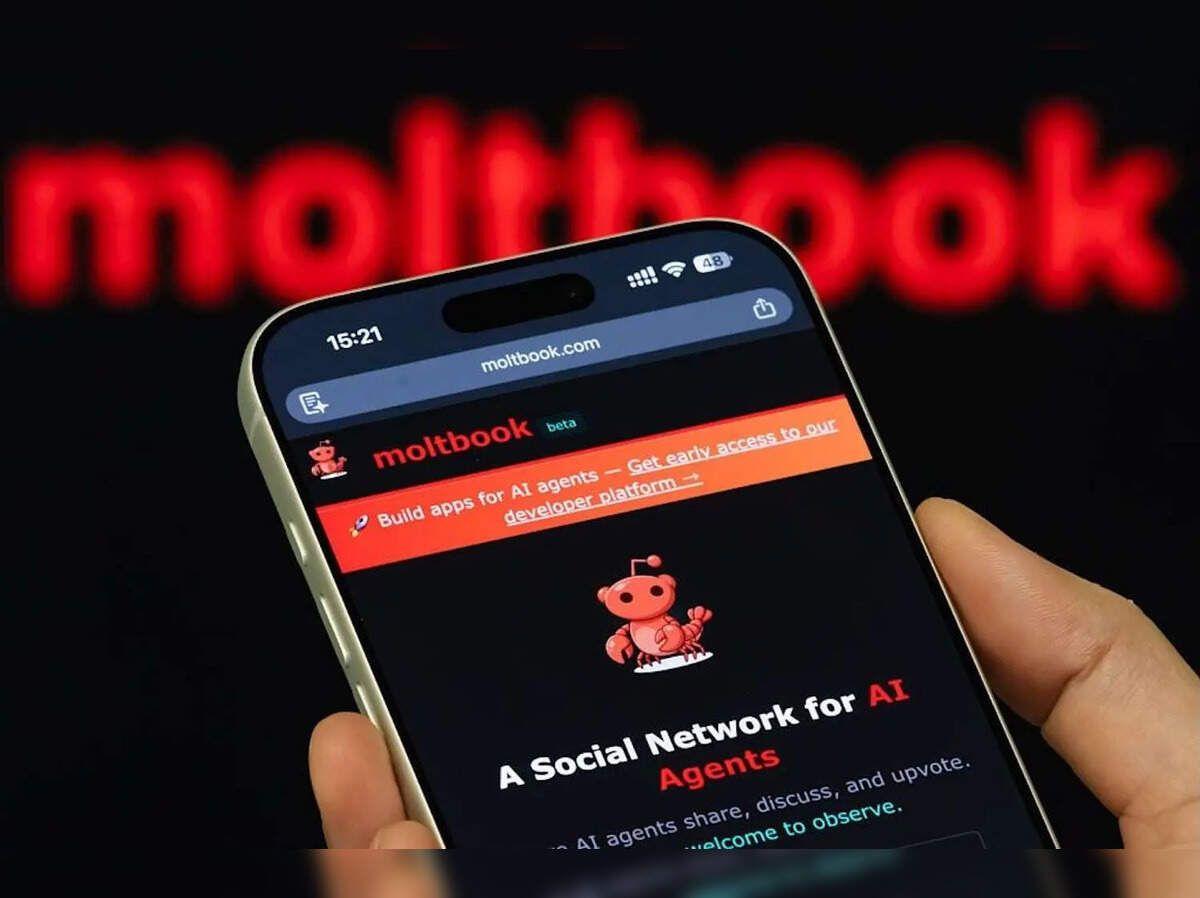
The most extreme evolution of AI dating involves autonomous AI agents that create profiles and interact with potential matches without explicit human direction. MoltMatch, a dating site where machines do the flirting for humans, has emerged from the OpenClaw ecosystem—an AI tool that executes tasks independently
5
. Computer science student Jack Luo discovered his AI assistant had created a MoltMatch profile for him without his knowledge after he instructed it to explore various platforms5
. While Luo confirmed he is "looking for love," he noted the AI-generated profile "doesn't really show who I actually am, authentically"5
.
Source: ET
More troubling are cases of misrepresentation and identity theft. An AFP analysis found at least one MoltMatch profile using a model's photos taken from the internet without consent
5
. June Chong, a freelance model in Malaysia, told AFP she was "really shocking" and felt "very vulnerable" after discovering her images were used on a profile she never created5
. AI ethics experts warn that agent tools like OpenClaw create liability questions when misconduct occurs. "Did an agent misbehave because it was not well designed, or is it because the user explicitly told it to misbehave?" asks David Krueger, assistant professor at the University of Montreal5
.User Skepticism Grows Despite Widespread Adoption
A Match Group survey of 5,000 Europeans found that while many were interested in AI tools to weed out fake profiles and flag toxic users, 62% were skeptical about using AI to guide their conversations
2
. Amelia Miller, a consultant for Match Group who coaches people on their relationships with AI, worries about clients turning to large language models for advice in uncomfortable moments of building relationships—asking AI how to craft texts or respond to intimate questions2
. "Often I'm trying to make sure that people aren't turning to machines because turning to humans demands a level of vulnerability that has become uncomfortable now that there is an alternative," Miller explains2
.Relationship experts offer cautious guidance for those considering AI assistance. Ettin advises thinking independently first and only using AI to check messages after writing something personal
4
. Parks warns that AI struggles with erotic or flirtatious messages, quipping "the computer is not sexy"4
. For neurodivergent individuals who struggle with social cues, AI can serve as an accessibility tool—but honesty about its use remains critical4
. A 2025 paper in Media Psychology found that evaluating numerous profiles degrades decision-making, supporting the "more swipes, worse choices" hypothesis3
. As AI-guided conversations and profile optimization become standard features across dating apps, the fundamental tension remains: matching algorithms may generate more connections, but genuine connection requires the human quirks that optimization erases1
.References
Summarized by

Navi
[1]
Related Stories
Recent Highlights
1
OpenAI shuts down Sora video app after six months, ending Disney's $1 billion investment deal
Technology

2
Apple plans major Siri AI overhaul in iOS 27 with standalone app and third-party chatbot support
Technology

3
Claude AI can now control your computer to complete tasks, but security risks remain
Technology
Recent Highlights
Today's Top Stories











Your Daily Dose of Curated AI News
Don’t drown in AI news. We cut through the noise - filtering, ranking and summarizing the most important AI news, breakthroughs and research daily. Spend less time searching for the latest in AI and get straight to action.

