Horror Demon Photo Appears in Washington, D.C. Real Estate Listing After AI Goes Wrong


3 Sources
3 Sources
[1]
Horror 'Demon' Appears in DC Real Estate Listing Photo
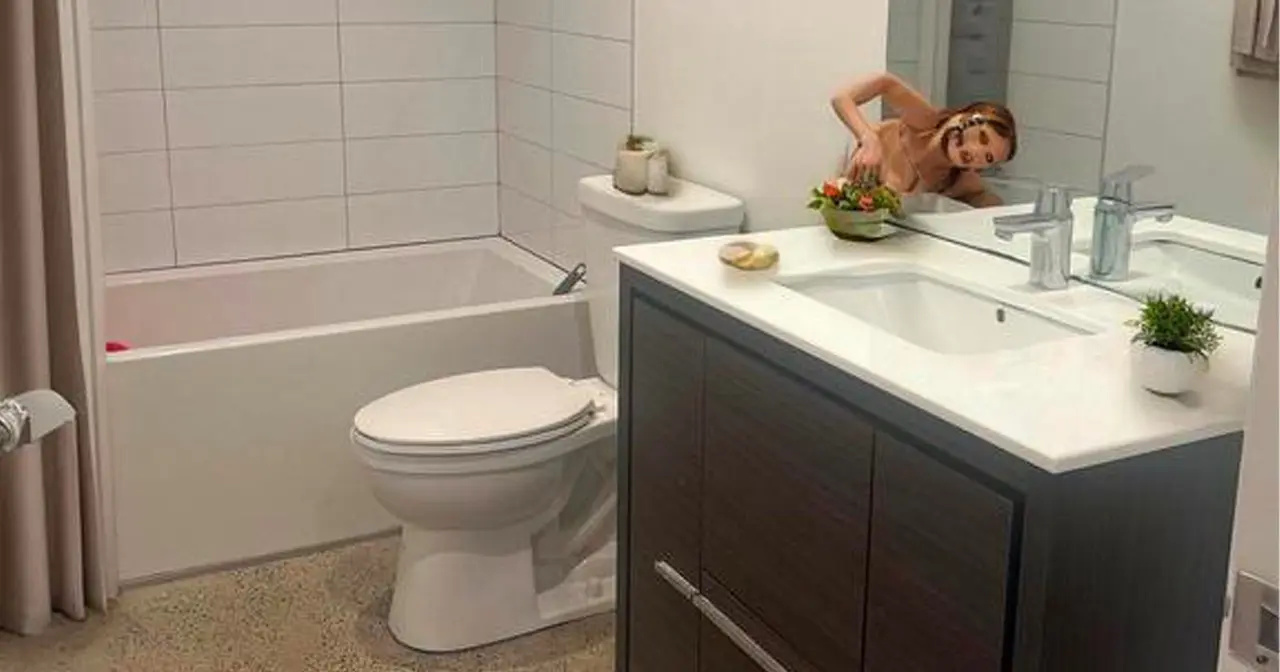
Real estate photos are meant to attract renters and buyers, but AI-generated images are misleading people and making horrific errors. Case in point: a Washington, D.C. listing featured a "demon" climbing out of a bathroom toilet. Futurism reports that a Redditor in D.C. scrolling through listings stumbled across the disturbing image that was featured on apartments.com and Redfin. "For just $1,800 a month you can have your own bathroom demon," the Redditor writes. The listing has since been pulled from apartments.com and the offending image has now been removed from Redfin. But the Wayback Machine saved a screenshot of the listing that featured a 'Bright MLS' watermark. There is no explanation as to how the strange image came to be but when it was cross-posted to r/weird another user shared a photo they had found on another listing that also shows some kind of mangled human form on top of a toilet. It's remarkable that these obvious errors weren't spotted before publishing. As PetaPixel reported last year, house hunters have begun to notice that real estate listings increasingly contain AI images and are calling them out for being misleading. There's even a term for it: 'housefishing'. A recent report from The Atlantic revealed that in a survey of realtors, 70 percent of them admitted to using AI. The driving force behind all of this is cost. "Why would I send my photos of an empty room to a virtual stager, have them spend four days and send it back to me at a charge of 500 bucks when I can just do it in ChatGPT for free in 45 seconds?" realtor Jason Haber told Wired last year. "We've done virtual renderings for 20 years, so the fact that you can just do it now on AI, there was a whole cottage industry of virtual renderings and those people are now looking for a new job." There are rules in place for real estate listings: the National Association of Realtors specifically prohibits the use of misleading images. But as with most areas, the law hasn't caught up to AI yet. Of course all of this is bad news for real estate photographers.
[2]
Realtor Uses AI, Accidentally Posts Photo of Rental Property With Demonic Figure Emerging From Mirror
"Genuinely the worst possible thing to scroll past before I fall asleep." The real estate industry has seized on generative AI with a passion. Realtors have made extensive use of the tech, manipulating photos of properties beyond recognition by giving facades and interiors a heavy coat of AI-generated paint. Text descriptions of properties have turned into a heap of ChatGPT-generated buzzwords, devolving an already frustrating house hunt into a genuinely exasperating experience. Making sense of what a rental apartment actually looks like in the real world has regressed into a guessing game. We've already come across bizarre listings of inexplicably yassified houses with smoothed-over architectural features, misplaced trees, nonsensically rearranged furniture, and mangled props. But now, a listing for a property in the Washington, DC area has taken the cake. Renters seeking a new home in the capital made a horrifying discovery while browsing listings: what can only be described as an Eldritch horror poking her disfigured head out -- from somehow both inside and outside -- of a bathroom mirror. In other words, it's the kind of nightmarish creature only a flawed AI algorithm could've cooked up -- and that only a time-strapped realtor could fail to notice before posting for the whole world to see. The listing for a property in Fort Totten, a suburb in northern DC, has since been taken down from Apartments.com. Other instances of the same listing still exist on other sites, such as Redfin, but no longer include the mangled picture of what one Reddit user described as their "sleep paralysis demon." Helpfully, the Internet Archive backed up a snapshot of the listing before it was pulled. "Genuinely the worst possible thing to scroll past before I fall asleep," one horrified user wrote. "That thing somehow struck raw primal fear in me at an unparalleled record high." The Zillow listing for the property includes what appears to be either the original or a differently edited photo of the same bathroom, suggesting the realtors may have attempted to edit out personal cosmetic items the previous renter had left behind on the vanity. Besides the nightmarish creature, a mysterious ottoman was added to the middle of the bathroom floor, strengthening the case that an AI tool was involved. "And then, for some reason, the AI added an uncanny valley blow-up doll reaching through the mirror for bathroom salad," one user wrote. Futurism has reached out to the real estate company behind the listing for comment. It's not even the first bathroom demon renters have come across lately. A separate Reddit user noticed what appears to be a miniaturized woman holding a smartphone disconcertingly crouched on the top of a toilet tank. "How do you not notice the melted demon crawling out of the wall before you hit publish?" one baffled user wrote, responding to the suggestion that AI image editing tools may have been involved. "That s*** made my stomach drop." Whether the image -- which includes a watermark for the cooperative realtor tool MLS but no indication that it was edited with AI -- broke any rules before it was taken down remains unclear, as rules can vary significantly. As Giraffe360, an AI image editing tool for real estate photos, points out on its website, MLS organizations "consistently prohibit" edits that remove or alter structural elements, erase or modify views, or digitally renovate or upgrade interiors or exteriors. "Here's a simple test: if an edit would require physical renovation to achieve in real life, it shouldn't be in an MLS listing photo," the website reads. Whether an Eldritch horror climbing out of a bathroom mirror requires a physical renovation remains unclear at best.
[3]
A redditor claims to have found a horrifying, AI-generated, multi-limbed figure in a rental house listing photo and it's exactly the sort of Phasmophobia-style jump scare I didn't need this morning
Picture the scene: You're scrolling away through rental property photos late at night, trying to sort through the ambitious photography and overly-cheery copy to find somewhere new to live. This one's too small. This one's too expensive. This one... this one looks pretty good, actually. I wonder if the bathroom's a good size. Yep, full tub, integrated units and... HOLY MOLY. Looking through pictures of a rental house. from r/Weird Yep, that's an AI-generated demon alright (via Futurism). Redditor jininberry claims to have found the photo while scrolling through rental property listings, and the more you stare at it, the more it reveals itself to be wrong on all sorts of levels. Let's ignore the multi-limbed horror that appears to be crawling through some impossible wall geometry for a moment. Try, at least. A closer look at the image reveals more and more artifacts that can only be the work of our good friend, artificial-not-so-intelligence. Check out the pattern on that cushion, for example, placed oddly on a box in the middle of the floor. It's got all kinds of warping and blurring going on towards the back of the print. Or the object on top of the toilet cistern. It looks like hand soap at a distance, but on closer examination, it reveals itself to be an approximation of what hand soap might look like if you spin yourself round in circles after drinking one too many beers. Or the toilet paper roll making an odd appearance on the left, floating in at a bizarre angle as if to say, "This is definitely a real bathroom, honest." Or there's Sally there at the back, as I'm affectionately naming it. While the controversy around the use of AI asset generation in games rolls on, I don't think even Phasmophobia's best artists could come up with something quite as horrific as that. I say that as someone who messed with it once, nearly ruined my britches, and endeavoured never to play it again. In all seriousness, we now live in a world where AI image generation is getting better and better at fooling us into believing fake images are real, but it's somewhat encouraging to see that it's still capable of making large enough mistakes to raise the "oh hell no" flag. Speaking of which, I wonder if the rental agent is wondering why this particular property refuses to budge. Could it be the price? The location? Headwinds in the local market? Nope. It's Sally. Time to purge this image from my memory, lest my late-night bathroom trips become a little more anxiety-inducing than I'd like.
Share
Share
Copy Link
A Washington, D.C. rental property listing shocked house hunters when AI-generated images produced a horrifying demon photo emerging from a bathroom mirror. The bizarre AI errors highlight growing concerns about misleading images in real estate as 70% of realtors admit to using AI tools, raising questions about transparency and accuracy in property photos.
AI-Generated Images Create Nightmare Scenario for House Hunters
A real estate listing in Washington, D.C. became an internet sensation for all the wrong reasons when a rental property photo featured what can only be described as a demonic figure emerging from a bathroom mirror. The disturbing AI-generated images were discovered by a Redditor scrolling through listings on apartments.com and Redfin, who sarcastically noted, "For just $1,800 a month you can have your own bathroom demon"
1
. The listing for the Fort Totten property has since been removed from apartments.com, and the offending image deleted from Redfin, though the Internet Archive preserved the bizarre moment2
.The demon photo showcased multiple AI artifacts that should have raised red flags before publication. Beyond the multi-limbed horror appearing to crawl through impossible wall geometry, closer inspection revealed warped patterns on a mysteriously placed cushion, distorted hand soap on the toilet cistern, and floating toilet paper at odd angles
3
. A comparison with the Zillow listing for the same rental property photo suggested realtors attempted to edit out personal cosmetic items left by the previous renter, with AI tools adding an uncanny ottoman to the bathroom floor in the process2
.This wasn't an isolated incident. Another rental house listing photo surfaced on Reddit showing a miniaturized woman holding a smartphone, disconcertingly crouched atop a toilet tank. "How do you not notice the melted demon crawling out of the wall before you hit publish?" one baffled user questioned
2
. These bizarre AI errors underscore a growing problem in the real estate industry where misleading AI-generated images are becoming increasingly common.Housefishing Becomes Industry Standard as Realtors Embrace AI
The real estate industry has seized on generative AI with remarkable enthusiasm, fundamentally changing how property photos are presented to house hunters. A recent survey revealed that 70 percent of realtors admitted to using AI, driven primarily by cost considerations
1
. Realtor Jason Haber explained the economic logic: "Why would I send my photos of an empty room to a virtual stager, have them spend four days and send it back to me at a charge of 500 bucks when I can just do it in ChatGPT for free in 45 seconds?"1
.This shift has given rise to a phenomenon known as housefishing, where AI-edited photos in real estate make properties look dramatically different from reality. House hunters have begun calling out misleading images that feature yassified houses with smoothed-over architectural features, misplaced trees, nonsensically rearranged furniture, and mangled props
2
. The practice has transformed an already frustrating house hunt into a genuinely exasperating guessing game about what rental properties actually look like in the real world.Related Stories

Regulatory Gap Leaves Real Estate Photographers Vulnerable
While the National Association of Realtors specifically prohibits the use of misleading images, the law hasn't caught up to AI image generation yet
1
. MLS organizations consistently prohibit edits that remove or alter structural elements, erase or modify views, or digitally renovate interiors or exteriors. As the image editing tool Giraffe360 notes, "if an edit would require physical renovation to achieve in real life, it shouldn't be in an MLS listing photo"2
.The rise of AI tools has decimated traditional virtual staging services. "We've done virtual renderings for 20 years, so the fact that you can just do it now on AI, there was a whole cottage industry of virtual renderings and those people are now looking for a new job," Haber noted
1
. Real estate photographers face similar pressures as AI becomes the default option for cost-conscious realtors. The bathroom demon incident serves as a stark reminder that while AI image generation is improving at fooling viewers, it still produces catastrophic errors that can undermine trust in property listings entirely.References
Summarized by

Navi
[2]
Related Stories
AI-Enhanced Real Estate Listings: A Double-Edged Sword for Buyers and Sellers
09 Oct 2025•Technology

AI-Generated 'Homeless Man' Prank Sparks Police Concerns and Highlights AI Misuse
17 Oct 2025•Technology
Airbnb Host Accused of Using AI-Generated Images for False $16,000 Damage Claim
05 Aug 2025•Technology

Recent Highlights



Recent Highlights
Today's Top Stories






Your Daily Dose of Curated AI News
Don’t drown in AI news. We cut through the noise - filtering, ranking and summarizing the most important AI news, breakthroughs and research daily. Spend less time searching for the latest in AI and get straight to action.

