Alphabet hits $4 trillion valuation as AI strategy and Apple deal reshape investor sentiment


17 Sources
17 Sources
[1]
Alphabet hits $4 trillion valuation as AI refocus lifts sentiment
Jan 12 (Reuters) - Alphabet hit a $4 trillion market valuation on Monday, as the Google parent's sharpened artificial intelligence focus allayed doubts about its strategy and thrust it back to the forefront of the high-stakes race. The tech giant (GOOGL.O), opens new tab on Wednesday surpassed Apple (AAPL.O), opens new tab in market capitalization for the first time since 2019, becoming the second most valuable company in the world. The milestones mark a remarkable change in investor sentiment for Alphabet, with its stock surging about 65% in 2025, outperforming its peers on Wall Street's elite group of stocks, the so-called Magnificent Seven. The stock has gained another 6% so far this year, and was last up 1.1%. The shift was fueled by the company quelling concerns that it let an early AI advantage slip by turning a once-overlooked cloud unit into a major growth engine and drawing a rare tech investment from Warren Buffett's Berkshire Hathaway (BRKa.N), opens new tab. Its new Gemini 3 model has also drawn strong reviews, intensifying pressure on OpenAI after GPT-5 left some users underwhelmed. A Reuters report said that Samsung Electronics (005930.KS), opens new tab plans to double this year the number of its mobile devices with AI features powered by Google's Gemini. Google Cloud's revenue jumped 34% in the third quarter, with a backlog of non-recognized sales contracts rising to $155 billion. Renting out Google's self-developed AI chips that were reserved for internal use to outside customers has also enabled the unit's breakneck pace of growth. Indicating the rising demand, The Information reported that Meta Platforms (META.O), opens new tab was in talks to spend billions of dollars on Alphabet's chips for use in its data centers starting from 2027. Meanwhile, the company's dominant revenue generator - the advertising business - has largely held steady in the face of economic uncertainty and intense competition. Alphabet is the fourth company to hit the $4 trillion milestone after Nvidia (NVDA.O), opens new tab, Microsoft (MSFT.O), opens new tab and Apple (AAPL.O), opens new tab. The stock has also benefited after a U.S. judge in September ruled against breaking up the company and allowing it to retain control of its Chrome browser and Android mobile operating system. Reporting by Zaheer Kachwala, Shashwat Chauhan and Johann M Cherian in Bengaluru; Editing by Sriraj Kalluvila Our Standards: The Thomson Reuters Trust Principles., opens new tab
[2]
Google's corporate parent joins $4 trillion club as investors continue to bet on AI breakthroughs
Google parent Alphabet Inc. on Monday became the fourth Big Tech powerhouse to be valued at $4 trillion, a once seemingly unfathomable milestone that's become more like a rite of passage amid an artificial intelligence arms race. Alphabet reached the threshold just four months after Google dodged the U.S. government's attempt to break up its internet empire following a ruling last year that branded its ubiquitous search engine an illegal monopoly. In an effort to prevent further abuses, a federal judge overseeing the case ordered a shake-up that investors widely interpreted as a slap on the wrist, resulting in a 57% increase in Alphabet's stock price since then that has created an additional $1.4 trillion in shareholder wealth. The rapid run-up thrust Alphabet into a $4 trillion club that has previously welcomed computer chipmaker Nvidia, which became the first to cross the barrier in July. Both Apple and Microsoft also surpassed market values of $4 trillion last year, but they have fallen back mid worries that the spending spree on AI will turn into a bubble that bursts. Nvidia's market value briefly topped $5 trillion in late October, before backtracking as the AI bubble fears also exacted a toll on its stock price because its chipsets are needed to power the technology. Meanwhile, Amazon is currently valued at $2.6 trillion, in part because of its AI ambitions, and Facebook parent Meta Platforms is valued at $1.6 trillion for some of the same reasons. Electric automaker Tesla also is betting heavily on AI, a gambit that prompted the company -- now valued at $1.5 trillion -- to approve a compensation package t hat would pay CEO Elon Musk $1 trillion if several targets are hit, including reaching a market value of more than $8.5 trillion. Alphabet joined the $4 trillion club on the same day that Apple announced it will rely on Google's AI technology to help smarten up its virtual assistant Siri after coming up short in its own efforts to bring more advanced features to the iPhone. Google is well positioned to become one of the big winners in the AI battle because it is deploying the technology to transform its search engine into more of a conversational answer engine to compete against the likes of OpenAI's ChatGPT and Perplexity. The next generation of the Gemini model underlying Google's AI technology has been winning rave reviews since its recent release, helping to drive up Alphabet's stock price while the shares of other AI-driven companies have dipped with ongoing bubble worries. Google's Cloud division that sells AI tools to corporate customers and government agencies has emerged as Alphabet's fastest growing segment during the past three years while AI technology has enabled its Waymo robotaxi division to dispatch more self-driving vehicles in cities across the U.S. The competitive threats posed by rising AI stars such as OpenAI and Perplexity is one of the reasons that U.S. District Judge Amit Mehta rebuffed the U.S. Justice Department's proposal to force Google to sell its industry-leading Chrome web browser. The judge reasoned the technological advances unleashed by AI already have been forcing significant changes in online search. Alphabet's market value could plunge if investor sentiment about the company's exposure to a potential AI bubble suddenly shift. Even Alphabet CEO Sundar Pichai conceded that some market "irrationality" is contributing to the skyrocketing market values of Big Tech companies during a November interview with the BBC. "I think no company is going to be immune, including us," Pichai said if the AI-driven euphoria suddenly evaporates.
[3]
Alphabet hits $4 trillion market capitalization
Apple said Monday that Google's Gemini will be the foundation for its artificial intelligence models and will power the next generation of Siri. Google parent company Alphabet has become the fourth member of the $4 trillion club. Alphabet shares popped about 1% Monday, after Apple said it had picked Google's Gemini to be the foundation for its artificial intelligence models and the next generation of Siri. The search company joins Nvidia, Microsoft and Apple as the few companies that have crossed the $4 trillion mark. Both Nvidia and Microsoft topped the $4 trillion milestone for the first time in July, while Apple crossed the threshold for the first time in October. Since then, however, Apple and Microsoft have dropped well below the $4 trillion line. Alphabet's entry into the elite club comes after the company ended 2025 as one of the top performers on Wall Street. Its shares jumped 65% in 2025, Alphabet's sharpest rally since 2009, when the stock doubled coming out of the financial crisis. The search company has been on the rise after putting together the pieces for its AI comeback and overcoming key regulatory hurdles last year. In November, the company unveiled Ironwood, the seventh generation of its tensor processing units, a custom AI chip that has emerged as a potential alternative to Nvidia's offerings. Then in December, Google introduced Gemini 3 to rave reviews. Despite OpenAI's ChatGPT and Sora services capturing an increasing amount of consumer engagement and concerns swirling around the future of online advertising in a world of AI chatbots and agents, Alphabet has managed to ward off fears that its most innovative days are in the past. In a Jan. 8 note, analyst Deepak Mathivanan upgraded Alphabet's stock. "We believe the technological advantages of the Gemini assistant app -- powered by Google's 'grounding' assets -- vs. ChatGPT (powered by Bing and partner integrations) are underappreciated," Mathivanan wrote. Google "arguably, has the strongest footprint across several layers in the AI tech stack, and the company's decade-long investments have enabled deep competitive moats." Citi analysts named Google a top internet pick for its 2026 outlook in a recent note. Analysts said 70% of Google Cloud customers use its AI products, adding "Google has the chip, the infrastructure capacity, and the model amid growing demand."
[4]
Alphabet passes Apple in market cap for the first time since 2019 amid contrasting AI fortunes
Serving tech enthusiasts for over 25 years. TechSpot means tech analysis and advice you can trust. What just happened? Remember when Apple was the most valuable company in the world? It held that position almost continuously for around 13 years before Nvidia knocked it off the top spot in 2024. Now, for the first time since 2019, Google parent Alphabet has seen its valuation surpass Cupertino, knocking its rival down to third - and a lot of people are blaming Apple's AI issues. Alphabet shares closed up 2.5% yesterday, pushing its market cap to $3.892 trillion. Apple, meanwhile, has seen its shares fall more than 4% over the last five days to $3.863 trillion. The change marks the first time that Alphabet's market cap has been greater than Apple's since January 29, 2019. It's also the first time that Alphabet has been the second-largest US company by market cap since February 26, 2018. Alphabet's shares were up 66% throughout 2025, while Apple's were up a comparatively disappointing 9%. A lot of investors are pointing to the companies' contrasting AI successes as the reason why. Google released its Gemini 2.5 Flash "nano banana" image model in August. The editor's abilities led to a slew of photorealistic pictures and videos appearing online, giving Google its own ChatGPT-style Studio Ghibli moment. Alphabet's share price over the last 12 months The Gemini app was also one of the most downloaded iPhone apps of the year, and there was more AI integration with Google products. While most consumers aren't fans of the latter, it helps drive up Alphabet's share price. Google also revealed its TPU (tensor processing unit) v7 "Ironwood" accelerator in November as an alternative to Nvidia's hardware. This was followed by the Gemini 3 release in December and a new Gemini partnership with the Pentagon for its military AI platform. Elsewhere, Google's cloud business signed more deals worth over $1 billion in 2025 through the third quarter of the year than in the two prior years combined, according to CEO Sundar Pichai. The company also avoided the worst possible outcomes in its federal antitrust case. Apple, on the other hand, still hasn't launched the AI-enhanced version of its Siri voice assistant that it first unveiled in 2024 and has repeatedly postponed the update - it's supposed to land this year. Apple's share price over the last 12 months There's also Apple Intelligence, which has been dogged by criticism for being inaccurate and underwhelming, especially compared with rivals. One of the biggest related stories in 2025 was the fake news headlines that Siri kept generating in its summaries. Both Apple and Alphabet still have a long way to go if they want to catch market-cap leader Nvidia. Team Green's AI endeavors have pushed its valuation to a massive $4.6 trillion, around $800 billion more than Alphabet.
[5]

Google parent Alphabet hits $4tn valuation after AI deal with Apple
After Apple chose Gemini to power Siri, Alphabet surpassed Apple to become second-most valuable company in world Google's parent company hit a major financial milestone on Monday, reaching a $4tn valuation for the first time and surpassing Apple to become the second-most valuable company in the world. Alphabet is the fourth company to hit the $4tn milestone after Nvidia, which later hit $5tn, Microsoft and Apple. The spike in share price comes after Apple announced it had chosen Google's Gemini AI model to power a major overhaul of the iPhone maker's digital assistant Siri, which comes installed in every iPhone. Neither company disclosed how much the deal was worth. "After careful evaluation, we determined that Google's technology provides the most capable foundation for Apple Foundation Models," Apple said in a statement to CNBC. As tech stocks continue a years-long meteoric rise, fears of a bubble in the stock market persist; however, Wall Street's excitement for new avenues of investment in AI does as well. Alphabet's milestones signal a remarkable change in investor sentiment for Alphabet, with its stock surging about 65% in 2025, outperforming its peers on Wall Street's elite group of stocks, the so-called "Magnificent Seven". The tech giant has allayed investors' doubts about its artificial intelligence strategy in recent months with a series of high-profile product launches, including the latest version of its flagship AI model, Gemini, and the popular Nano Banana image generator and editor. OpenAI, the maker of ChatGPT and Google's insurgent rival, left investors and consumers underwhelmed with the release of its latest model, GPT-5, which allowed Alphabet to surge ahead. Google, best known for making the world's most popular search engine and browser, has also turned its once-overlooked cloud unit into a major growth engine, which drew a rare tech investment from Warren Buffett's Berkshire Hathaway. Google Cloud's revenue jumped 34% in the third quarter, with a backlog of non-recognized sales contracts rising to $155bn. Renting out Google's self-developed AI chips that were reserved for internal use to outside customers has also enabled the unit's breakneck pace of growth. Meanwhile, the company's dominant revenue generator - the advertising business, driven by Google Search and YouTube - has largely held steady in the face of economic uncertainty and intense competition. The company has faced two landmark US antitrust suits as it has navigated its place in the AI boom. After Google lost the first case, a judge ruled in September against breaking up the company, allowing it to retain control of its Chrome browser and Android mobile operating system. In the second case, a judge ruled Google had illegally monopolized the online ad market last April. A trial over how to remedy the monopoly began in September, which could see the judge forcing Google to divest parts of its lucrative ads business to foster competition.
[6]

From AI Laggard to $4 Tn Titan: How Google Won the First Great Pivot of AI Era | AIM
Google's $4-trillion surge signals its AI comeback and sets the stage for a possible leap past Nvidia. Google parent Alphabet is now the world's second-most valuable company -- just behind Nvidia -- with a market capitalisation of more than $4 trillion. The milestone follows Apple choosing Google's Gemini models to power Siri's next major upgrade. For markets, the deal was a definitive signal that Google had won the first "great pivot" of the AI era. "After careful evaluation, Apple determined that Google's AI technology provides the most capable foundation for Apple Foundation Models and is excited about the innovative new experiences it will unlock for Apple users," Apple had said in a statement, while also asserting that its arrangement with OpenAI -- allowing users to access ChatGPT for certain queries -- remains unchanged. The turnaround has not been easy. After OpenAI's ChatGPT burst onto the scene in 2022, Google was widely perceived as an AI laggard. That narrative began to reverse only last year, as the company executed rapidly across products, partnerships
[7]

Google's corporate parent joins $4 trillion club as investors continue to bet on AI breakthroughs
Google parent Alphabet Inc. on Monday became the fourth Big Tech powerhouse to be valued at $4 trillion, a once seemingly unfathomable milestone that's become more like a rite of passage amid an artificial intelligence arms race Google parent Alphabet Inc. on Monday became the fourth Big Tech powerhouse to be valued at $4 trillion, a once seemingly unfathomable milestone that's become more like a rite of passage amid an artificial intelligence arms race. Alphabet reached the threshold just four months after Google dodged the U.S. government's attempt to break up its internet empire following a ruling last year that branded its ubiquitous search engine an illegal monopoly. In an effort to prevent further abuses, a federal judge overseeing the case ordered a shake-up that investors widely interpreted as a slap on the wrist, resulting in a 57% increase in Alphabet's stock price since then that has created an additional $1.4 trillion in shareholder wealth. The rapid run-up thrust Alphabet into a $4 trillion club that has previously welcomed computer chipmaker Nvidia, which became the first to cross the barrier in July. Both Apple and Microsoft also surpassed market values of $4 trillion last year, but they have fallen back mid worries that the spending spree on AI will turn into a bubble that bursts. Nvidia's market value briefly topped $5 trillion in late October, before backtracking as the AI bubble fears also exacted a toll on its stock price because its chipsets are needed to power the technology. Meanwhile, Amazon is currently valued at $2.6 trillion, in part because of its AI ambitions, and Facebook parent Meta Platforms is valued at $1.6 trillion for some of the same reasons. Electric automaker Tesla also is betting heavily on AI, a gambit that prompted the company -- now valued at $1.5 trillion -- to approve a compensation package t hat would pay CEO Elon Musk $1 trillion if several targets are hit, including reaching a market value of more than $8.5 trillion. Alphabet joined the $4 trillion club on the same day that Apple announced it will rely on Google's AI technology to help smarten up its virtual assistant Siri after coming up short in its own efforts to bring more advanced features to the iPhone. Google is well positioned to become one of the big winners in the AI battle because it is deploying the technology to transform its search engine into more of a conversational answer engine to compete against the likes of OpenAI's ChatGPT and Perplexity. The next generation of the Gemini model underlying Google's AI technology has been winning rave reviews since its recent release, helping to drive up Alphabet's stock price while the shares of other AI-driven companies have dipped with ongoing bubble worries. Google's Cloud division that sells AI tools to corporate customers and government agencies has emerged as Alphabet's fastest growing segment during the past three years while AI technology has enabled its Waymo robotaxi division to dispatch more self-driving vehicles in cities across the U.S. The competitive threats posed by rising AI stars such as OpenAI and Perplexity is one of the reasons that U.S. District Judge Amit Mehta rebuffed the U.S. Justice Department's proposal to force Google to sell its industry-leading Chrome web browser. The judge reasoned the technological advances unleashed by AI already have been forcing significant changes in online search. Alphabet's market value could plunge if investor sentiment about the company's exposure to a potential AI bubble suddenly shift. Even Alphabet CEO Sundar Pichai conceded that some market "irrationality" is contributing to the skyrocketing market values of Big Tech companies during a November interview with the BBC. "I think no company is going to be immune, including us," Pichai said if the AI-driven euphoria suddenly evaporates.
[8]

Google's corporate parent joins $4 trillion club as investors continue to bet on AI breakthroughs
Google parent Alphabet Inc. on Monday became the fourth Big Tech powerhouse to be valued at $4 trillion, a once seemingly unfathomable milestone that's become more like a rite of passage amid an artificial intelligence arms race. Alphabet reached the threshold just four months after Google dodged the U.S. government's attempt to break up its internet empire following a ruling last year that branded its ubiquitous search engine an illegal monopoly. In an effort to prevent further abuses, a federal judge overseeing the case ordered a shake-up that investors widely interpreted as a slap on the wrist, resulting in a 57% increase in Alphabet's stock price since then that has created an additional $1.4 trillion in shareholder wealth. The rapid run-up thrust Alphabet into a $4 trillion club that has previously welcomed computer chipmaker Nvidia, which became the first to cross the barrier in July. Both Apple and Microsoft also surpassed market values of $4 trillion last year, but they have fallen back mid worries that the spending spree on AI will turn into a bubble that bursts. Nvidia's market value briefly topped $5 trillion in late October, before backtracking as the AI bubble fears also exacted a toll on its stock price because its chipsets are needed to power the technology. Meanwhile, Amazon is currently valued at $2.6 trillion, in part because of its AI ambitions, and Facebook parent Meta Platforms is valued at $1.6 trillion for some of the same reasons. Electric automaker Tesla also is betting heavily on AI, a gambit that prompted the company -- now valued at $1.5 trillion -- to approve a compensation package t hat would pay CEO Elon Musk $1 trillion if several targets are hit, including reaching a market value of more than $8.5 trillion. Alphabet joined the $4 trillion club on the same day that Apple announced it will rely on Google's AI technology to help smarten up its virtual assistant Siri after coming up short in its own efforts to bring more advanced features to the iPhone. Google is well positioned to become one of the big winners in the AI battle because it is deploying the technology to transform its search engine into more of a conversational answer engine to compete against the likes of OpenAI's ChatGPT and Perplexity. The next generation of the Gemini model underlying Google's AI technology has been winning rave reviews since its recent release, helping to drive up Alphabet's stock price while the shares of other AI-driven companies have dipped with ongoing bubble worries. Google's Cloud division that sells AI tools to corporate customers and government agencies has emerged as Alphabet's fastest growing segment during the past three years while AI technology has enabled its Waymo robotaxi division to dispatch more self-driving vehicles in cities across the U.S. The competitive threats posed by rising AI stars such as OpenAI and Perplexity is one of the reasons that U.S. District Judge Amit Mehta rebuffed the U.S. Justice Department's proposal to force Google to sell its industry-leading Chrome web browser. The judge reasoned the technological advances unleashed by AI already have been forcing significant changes in online search. Alphabet's market value could plunge if investor sentiment about the company's exposure to a potential AI bubble suddenly shift. Even Alphabet CEO Sundar Pichai conceded that some market "irrationality" is contributing to the skyrocketing market values of Big Tech companies during a November interview with the BBC. "I think no company is going to be immune, including us," Pichai said if the AI-driven euphoria suddenly evaporates.
[9]

Google's Corporate Parent Joins $4 Trillion Club as Investors Continue to Bet on AI Breakthroughs
Google parent Alphabet Inc. on Monday became the fourth Big Tech powerhouse to be valued at $4 trillion, a once seemingly unfathomable milestone that's become more like a rite of passage amid an artificial intelligence arms race. Alphabet reached the threshold just four months after Google dodged the U.S. government's attempt to break up its internet empire following a ruling last year that branded its ubiquitous search engine an illegal monopoly. In an effort to prevent further abuses, a federal judge overseeing the case ordered a shake-up that investors widely interpreted as a slap on the wrist, resulting in a 57% increase in Alphabet's stock price since then that has created an additional $1.4 trillion in shareholder wealth. The rapid run-up thrust Alphabet into a $4 trillion club that has previously welcomed computer chipmaker Nvidia, which became the first to cross the barrier in July. Both Apple and Microsoft also surpassed market values of $4 trillion last year, but they have fallen back mid worries that the spending spree on AI will turn into a bubble that bursts. Nvidia's market value briefly topped $5 trillion in late October, before backtracking as the AI bubble fears also exacted a toll on its stock price because its chipsets are needed to power the technology. Meanwhile, Amazon is currently valued at $2.6 trillion, in part because of its AI ambitions, and Facebook parent Meta Platforms is valued at $1.6 trillion for some of the same reasons. Electric automaker Tesla also is betting heavily on AI, a gambit that prompted the company -- now valued at $1.5 trillion -- to approve a compensation package t hat would pay CEO Elon Musk $1 trillion if several targets are hit, including reaching a market value of more than $8.5 trillion. Alphabet joined the $4 trillion club on the same day that Apple announced it will rely on Google's AI technology to help smarten up its virtual assistant Siri after coming up short in its own efforts to bring more advanced features to the iPhone. Google is well positioned to become one of the big winners in the AI battle because it is deploying the technology to transform its search engine into more of a conversational answer engine to compete against the likes of OpenAI's ChatGPT and Perplexity. The next generation of the Gemini model underlying Google's AI technology has been winning rave reviews since its recent release, helping to drive up Alphabet's stock price while the shares of other AI-driven companies have dipped with ongoing bubble worries. Google's Cloud division that sells AI tools to corporate customers and government agencies has emerged as Alphabet's fastest growing segment during the past three years while AI technology has enabled its Waymo robotaxi division to dispatch more self-driving vehicles in cities across the U.S. The competitive threats posed by rising AI stars such as OpenAI and Perplexity is one of the reasons that U.S. District Judge Amit Mehta rebuffed the U.S. Justice Department's proposal to force Google to sell its industry-leading Chrome web browser. The judge reasoned the technological advances unleashed by AI already have been forcing significant changes in online search. Alphabet's market value could plunge if investor sentiment about the company's exposure to a potential AI bubble suddenly shift. Even Alphabet CEO Sundar Pichai conceded that some market "irrationality" is contributing to the skyrocketing market values of Big Tech companies during a November interview with the BBC. "I think no company is going to be immune, including us," Pichai said if the AI-driven euphoria suddenly evaporates.
[10]

Google parent joins elite $4-trillion market cap club
The company's shares rose as much as 1.7% to $334.04 after news broke that Apple and Google had entered a multi-year deal for Gemini models to power the next generation of the former's virtual assistant, Siri. The announcement cemented Alphabet as Wall Street's second-most valuable company, surpassing Apple for the first time since 2019. Alphabet on Monday made history and broke through the $4 trillion market capitalisation threshold, joining an exclusive club of companies that have reached the milestone, thanks to investors backing Google's dominance in artificial intelligence (AI). The company's shares rose as much as 1.7% to $334.04 after news broke that Apple and Google had entered a multi-year deal for Gemini models to power the next generation of the former's virtual assistant, Siri. The announcement cemented Alphabet as Wall Street's second-most valuable company, surpassing Apple for the first time since 2019. Only Nvidia, Microsoft, and Apple have previously crossed the $4 trillion mark. The milestone caps a remarkable turnaround in investor sentiment. Alphabet's stock surged approximately 65% in 2025, outperforming its peers among the elite "Magnificent Seven" tech stocks, and has gained another 6% so far this year. Cantor Fitzgerald upgraded Alphabet's stock on January 8, with analyst Deepak Mathivanan calling the company the "king of all AI trades" and setting a price target of $370. The firm cited Google's strengths across the entire AI value chain, from its proprietary Ironwood tensor processing units to large language models and consumer applications. Alphabet's market cap: a timeline The Google parent's valuation has seen a dramatic rise since 2010, kicked off by mobile expansion, the rise of cloud computing, and eventually, the AI wave. * December 2010: The market capitalisation was at $190 billion, and the company was growing, cementing its place in search. * 2014: Valuation reaches $360 billion on the back of mobile ads and the Android ecosystem taking off. * January 2020: The company becomes the fourth US firm to breach $1 trillion in market capitalisation, after Apple, Amazon and Microsoft. * April 2024: $2 trillion valuation crossed. Alphabet announces first dividend, and a $70 billion share buyback. * September 2025: Amid cloud business acceleration and relief in an antitrust case, market cap breaches $3 trillion. * January 2026: Valuation breaches $4 trillion on the back of the Apple deal, and Gemini's rise in the AI race. The AI party Alphabet battled concerns about falling behind in the ever-competitive AI race, but as its earnings show in the past two years, it has converted its cloud unit into a major growth engine. Google Cloud revenue jumped 34% in the third quarter, with unrecognised sales contracts reaching $155 billion. The November launch of Gemini 3, which achieved record benchmark scores, drew strong reviews and intensified pressure on rival OpenAI after its GPT-5 left some users underwhelmed. Apple's deal with Google will be a major fillip for Alphabet. "After careful evaluation, we determined that Google's technology provides the most capable foundation for Apple Foundation Models," Apple said in a statement. The multi-year deal will utilise Gemini models and cloud infrastructure for future Apple AI features. Big deals Google Gemini also struck a deal with Samsung to double its Google Gemini-powered mobile devices to 800 million units in 2026, up from 400 million last year. As per a report by The Information, the company has attracted interest from Meta Platforms as well for TPU chips, to be used in its data centres starting 2027. Last September, the company also got some relief on the antitrust ruling front. A federal judge ruled that Google won't have to sell its Chrome browser, handing a rare win to Big Tech in its battle with US antitrust enforcers. But the judge ordered Google to share data with its rivals to open up competition in online search.
[11]
Why Alphabet (GOOGL) stock is up today: Google shares jump over 1% as Alphabet becomes the fourth company to cross the $4 trillion market cap milestone
Alphabet Inc., the parent company of Google, crossed a major financial milestone on Monday, January 12, 2026, when its total market capitalization surpassed $4 trillion, marking one of the most significant achievements in the history of U.S. technology stocks. The move places Alphabet alongside an elite group of global companies that have reached this valuation level. It also overtook Apple in total market value for the first time since 2019, making Alphabet the second‑most valuable publicly traded company in the world behind Nvidia. The surge reflects renewed investor confidence in Alphabet's strategic focus on artificial intelligence, cloud computing, and enterprise services. Alphabet's shares saw a sharp rally in 2025, rising more than 65 percent over the year -- its strongest performance in decades -- while the stock continued to climb in early 2026. Shares of Alphabet Class A (GOOGL) climbed 0.38% to close at $329.81, while Class C shares (GOOG) rose 0.40% to $330.46. The stock hit an intraday peak of $334.13, pushing its market cap to approximately $3.98 trillion by the closing bell. This rally marks a pivotal moment in the "AI arms race," as Alphabet has now surpassed Apple in total valuation for the first time since 2019. The surge is backed by a phenomenal 65% gain in 2025, Alphabet's strongest performance since the post-financial crisis recovery of 2009. Investors are reacting to a combination of surging cloud revenues and the successful rollout of the Gemini 3 model. While trading volume was relatively light at 17.4 million shares -- roughly half the 30-day average -- the price action confirmed a strong bullish trend. Alphabet is now the fourth member of the elite $4 trillion club, joining the ranks of Nvidia, Microsoft, and Apple. However, with Microsoft and Apple currently trading below their peaks, Google's parent company is establishing itself as the primary challenger to Nvidia's dominance. The primary catalyst for Monday's price action was the confirmation that Apple has selected Google Gemini as the foundational engine for its next generation of artificial intelligence. This deal transforms Gemini into the backbone of Siri, providing billions of iPhone users with Google's advanced generative capabilities. Analysts view this as a massive validation of Alphabet's AI stack, effectively quieting concerns that OpenAI or Microsoft might capture the mobile AI market. By securing a spot within the iOS ecosystem, Alphabet ensures its models remain at the center of consumer interaction. Beyond the Apple deal, Alphabet is leveraging its "Ironwood" chips -- the seventh generation of its custom Tensor Processing Units (TPUs). These chips offer a viable alternative to Nvidia's hardware, allowing Google to scale its AI services more cost-effectively. Reports indicate that even Meta is considering multi-billion dollar investments in Alphabet's silicon for its own data centers by 2027. This shift from internal use to external leasing has turned Google's hardware into a significant revenue lever, further diversifying the company's income beyond traditional search advertising. Investors also responded positively to the strong performance of Google Cloud, sustained advertising revenue, and the growing global demand for AI‑driven services -- all of which helped lift Alphabet's shares to record highs and push its overall market value past the $4 trillion threshold. Alphabet's rise into the $4 trillion market‑cap club was driven by multiple business factors, chief among them artificial intelligence. The company's Gemini AI models, particularly Gemini 3, have drawn strong reviews and positioned Google as a serious competitor to other AI platforms. These models power tools across search, cloud, and consumer services, reinforcing Alphabet's core revenue engines. While advertising remains the core profit engine, Google Cloud has emerged as the company's most aggressive growth driver. In the most recent quarter, cloud revenue jumped by 34%, significantly outperforming the growth rates of Amazon Web Services (AWS) and Microsoft Azure. Since early 2022, Google Cloud has increased its market share from 19.1% to 25.5%. The division currently sits on a massive $155 billion backlog of unrecognized contracts, signaling long-term stability and sustained demand for Alphabet's infrastructure. This growth is largely attributed to the "Gemini effect." Approximately 70% of Google Cloud customers are now utilizing its AI products. Analysts from Citi recently named Alphabet a top pick for 2026, citing the company's "deep competitive moats" and its ownership of every layer in the AI tech stack -- from the physical chips to the consumer-facing assistant. The successful launch of Gemini 3 has also shifted the narrative away from OpenAI's GPT models, as Google's "grounding" assets provide more reliable and real-world-integrated responses than its peers. Analysts say this combination of software innovation and strategic hardware deployment gives Alphabet a unique competitive edge in the AI race. Some industry observers argue that Alphabet's deep integration of AI across its services, from Search and YouTube to enterprise solutions, creates a "full‑stack" advantage that underpins long‑term growth potential. Although Nvidia was the first company to breach a $4 trillion valuation and remains the only firm to have surpassed $5 trillion, Alphabet's achievement underscores how critical AI technologies have become in shaping investor expectations and future revenue prospects across the technology sector. On the day of the milestone, Alphabet's Class A shares traded near all‑time highs. The stock's performance continued a longer trend of strength that began in 2025. Alphabet's market value had already exceeded that of Apple earlier in the year, reflecting shifts in investor sentiment and confidence in lingering high‑growth sectors like AI and cloud computing. Despite broader economic uncertainties and rising global geopolitical tensions, Alphabet's core advertising business remained resilient -- a key component of its financial engine. This performance helped balance investor concerns about market volatility and emphasized the company's ability to generate steady revenue even in challenging conditions. Major investment firms, including Berkshire Hathaway, have publicly increased stakes in Alphabet, signaling strong institutional confidence. Recent analyst upgrades have also highlighted Alphabet's leadership in AI solutions and potential for further stock price appreciation in 2026 and beyond. Alphabet's path to $4 trillion was also cleared by major legal victories and unexpected institutional backing. In late 2025, a U.S. judge ruled against breaking up the company, allowing Alphabet to maintain control over its Chrome browser and Android operating system. This decision removed a significant cloud of uncertainty that had weighed on the stock for years. Relieved of the threat of forced divestiture, investors have aggressively re-entered the position, viewing the current regulatory landscape as manageable. Confidence in Alphabet's leadership has also been bolstered by Warren Buffett's Berkshire Hathaway, which recently initiated a rare tech position in the company. Buffett's entry is seen as a "seal of approval" for Alphabet's business model and its ability to generate consistent cash flow despite economic volatility. With a Price-to-Earnings (P/E) ratio of 32.59 and earnings per share (EPS) hovering around $10.12, the company remains attractively priced relative to its growth trajectory. As Alphabet continues to integrate AI across Search, YouTube, and Cloud, its $4 trillion valuation may soon become a baseline rather than a ceiling. Alphabet's valuation surge comes at a time of heightened global geopolitical tension, particularly involving the United States, Iran, and Israel. Large‑scale anti‑government protests in Iran have continued into January 2026, with significant unrest across major cities and a government‑imposed internet blackout aimed at disrupting communications. Reports indicate that thousands have been arrested and hundreds killed amid the crackdown, fueling international concerns over stability in the Middle East. Iranian leaders have warned that foreign interference could provoke retaliation against U.S. and Israeli interests in the region, heightening diplomatic risks and drawing attention from global policymakers. At the same time, U.S. discussions with Israeli officials have included considerations of possible intervention, underscoring how geopolitical developments can affect global markets and investor sentiment. In this broader environment of political and economic uncertainty, Alphabet's strong performance highlights the resilience of major U.S. technology companies -- and their central role in global financial markets. Such firms are often viewed as safe harbors for capital due to their diversified revenue streams, global reach, and leadership in fast‑growing technologies like AI. Q: How did Alphabet reach a $4 trillion market capitalization? A: Alphabet crossed the $4 trillion valuation on January 12, 2026, driven by strong AI adoption and cloud growth. Its shares rose after Apple announced a multi-year deal to use Google's Gemini AI models for Siri. Google Cloud revenue grew 34% in Q3 2025, and institutional investments, including Berkshire Hathaway's stake, boosted investor confidence. Q: What are the key factors supporting Alphabet's future growth? A: Alphabet's growth is fueled by AI innovation, enterprise adoption, and advertising stability. Gemini 3 received strong reviews, Google Cloud continues to expand with a $155 billion backlog, and AI chip leasing accelerates infrastructure reach. Analysts highlight Alphabet's decade-long investments and competitive advantages across AI, search, and cloud services as key drivers in 2026.
[12]

Google Claims Apple's Spot on Most-Valuable-Companies List | PYMNTS.com
That's according to a report Thursday (Jan. 8) by Bloomberg News, which characterizes the milestone as an indication of how the company has become one of the biggest winners in the artificial intelligence (AI) race. Google, which trades under its corporate name Alphabet, had reached a valuation of $3.89 trillion the day before, ahead of Apple's $3.85 trillion. By Thursday afternoon, that gap had opened up, with Google at $3.92 trillion and Apple at $3.80 trillion. The report said this marks the first time since 2019 Google has overtaken Apple in terms of value. The top company is still Nvidia, valued at $4.49 trillion Thursday afternoon. Writing about Google's AI efforts earlier this month, PYMNTS argued that the company was signaling a shift in how it wants the technology to be deployed. "Alongside its cloud-based Gemini models, the company has been expanding its edge AI stack, including Google Edge tooling and a new compact model called FunctionGemma," the report said. "Together, these efforts point to a strategy that treats local execution as a core layer of AI infrastructure rather than a niche optimization." FunctionGemma, the report continued, was created to run directly on mobile devices and translate natural language commands into actions without relying on cloud inference, letting phones respond instantly to user intent. "FunctionGemma fits into Google's broader edge AI push, which includes Google Edge tooling designed to help developers deploy and run models locally across phones, browsers and embedded devices," PYMNTS added. "Together, these efforts reflect a shift toward hybrid AI architectures that divide responsibilities between local and cloud systems." And earlier this week, PYMNTS examined Google's role in redesigning shopping around the rise of AI, pointing to a recent report from Google Cloud that argued that retail has entered a new stage of agentic adoption. The report, based on an interview with Kapil Dabi, Google Cloud's market lead for retail and consumer industries in the Americas, characterized agentic AI as technology that can reason, understand context and carry out action in ways resembling human decision-making.
[13]

Google parent joins $4 trillion club, overtakes Apple to take second spot
Google parent Alphabet has become the fourth company to reach a $4 trillion valuation after it surpassed Apple and Microsoft this week to become the second most valuable company in the world. Google is now trailing only Nvidia, which leads the market with a valuation of $4.5 trillion. Both Microsoft and Apple hit the $4 trillion market cap in late 2025, but their values have dropped since then. Microsoft is now valued at $3.5 trillion, while Apple sits at $3.8 trillion. Nvidia is the only company to briefly touch the $5 trillion cap in October 2025. It is also estimated to touch $8-10 trillion by 2030, given its position as the leading supplier of the AI GPUs that power most of the large language models (LLMs). According to market estimates, Nvidia's Hopper and Blackwell GPUs account for 80-90% of the AI chip market. Google's market cap has skyrocketed since April 2025, when it was below $2 trillion, following the success of its latest AI models and its emergence as a competitor to Nvidia in the AI chip market. After initially being sidelined by the rapid adoption of ChatGPT and Microsoft's aggressive integration of it across all its platforms, Google released generative AI chatbot Bard (now known as Gemini) and followed it up with features such as AI Overview in Search to generate useful and informative summaries. The AI Overview was rolled back within days after it started giving misleading and bizarre suggestions to users. Google has since recovered from these hiccups to establish itself as the leader in the AI market. Early this week, Google announced that it has signed a multi-year deal with Apple to provide Gemini models and cloud services to power Apple Intelligence, Apple's foundational models and the upgraded Siri, which is expected to roll out this year. According to Similarweb's Global AI Tracker, released last week, ChatGPT accounts for 64% of global generative AI chatbot traffic as of January, while Gemini accounted for only 21% traffic. What is interesting is that ChatGPT's market share was 86% a year ago while Gemini's was only 5%, indicating significant gains for Google. In November 2026, Google released its most intelligent AI models, Gemini 3 and Gemini 3 Pro, which reportedly outperformed rivals including OpenAI's GPT-5.2 and Anthropic's Claude Sonnet 4.5 on some benchmark tests. Google followed it with the release of Gemini 3 Flash in December, which outperformed even Gemini 3 Pro in agentic coding. Google is also competing with chip providers such as Nvidia with its tensor processing units (TPUs), which also powers Google Cloud Platform. In November, it was reported that Facebook parent Meta Platforms is planning to use Google's TPUs in its datacentres by 2027. Meta is also mulling to rent TPUs through Google's cloud services as early as this year. Unlike Nvidia's GPUs which were used widely for gaming and datacentres, Google's TPUs were designed for machine learning (ML). They were first used to support AI in Google Search and Translate and were made available to third parties in 2018 via Google Cloud services. According to Google, Gemini 3 was developed entirely on TPUs.
[14]
Alphabet hits $4 trillion valuation as AI refocus lifts sentiment
Alphabet hit a $4 trillion market valuation on Monday, as the Google parent's sharpened artificial intelligence focus allayed doubts about its strategy and thrust it back to the forefront of the high-stakes race. The tech giant on Wednesday surpassed Apple in market capitalization for the first time since 2019, becoming the second most valuable company in the world. The milestones mark a remarkable change in investor sentiment for Alphabet, with its stock surging about 65% in 2025, outperforming its peers on Wall Street's elite group of stocks, the so-called Magnificent Seven. The stock has gained another 6% so far this year, and was last up 1.1%. The shift was fueled by the company quelling concerns that it let an early AI advantage slip by turning a once-overlooked cloud unit into a major growth engine and drawing a rare tech investment from Warren Buffett's Berkshire Hathaway. Its new Gemini 3 model has also drawn strong reviews, intensifying pressure on OpenAI after GPT-5 left some users underwhelmed. A Reuters report said that Samsung Electronics plans to double this year the number of its mobile devices with AI features powered by Google's Gemini. Google Cloud's revenue jumped 34% in the third quarter, with a backlog of non-recognized sales contracts rising to $155 billion. Renting out Google's self-developed AI chips that were reserved for internal use to outside customers has also enabled the unit's breakneck pace of growth. Indicating the rising demand, The Information reported that Meta Platforms was in talks to spend billions of dollars on Alphabet's chips for use in its data centers starting from 2027. Meanwhile, the company's dominant revenue generator - the advertising business - has largely held steady in the face of economic uncertainty and intense competition. Alphabet is the fourth company to hit the $4 trillion milestone after Nvidia, Microsoft and Apple. The stock has also benefited after a U.S. judge in September ruled against breaking up the company and allowing it to retain control of its Chrome browser and Android mobile operating system.
[15]

Alphabet hits US$4 trillion valuation as AI refocus lifts sentiment
Alphabet briefly hit $4 trillion in market valuation on Monday, as the Google parent's sharpened artificial intelligence focus allayed doubts about its strategy and thrust it back to the forefront of the high-stakes race. In the latest sign that its efforts were paying off, Alphabet said the next-generation of Apple's AI models will be based on Google's Gemini under a multi-year deal. The company's class-A shares rose as much as 1.7 per cent to $334.04 to hit a record high before giving up those gains. A Reuters report earlier this year said that Samsung Electronics plans to double this year the number of its mobile devices with AI features powered by Gemini. Alphabet last week surpassed Apple in market capitalization for the first time since 2019, becoming the second most valuable company in the world. The milestones mark a remarkable change in investor sentiment for Alphabet, with its stock surging about 65 per cent in 2025, outperforming its peers on Wall Street's elite group of stocks, the so-called Magnificent Seven. The shift was fueled by the company quelling concerns that it let an early AI advantage slip by turning a once-overlooked cloud unit into a major growth engine and drawing a rare tech investment from Warren Buffett's Berkshire Hathaway. "Of the Magnificent 7 stocks, it's the one name that has surprised us all over the last 12 months and they're making inroads beyond their traditional model," said Phil Blancato, CEO of Ladenburg Thalmann Asset Management. "What I would give the company credit for is innovation, that's what they've done to separate them from a lot of other firms in recent days and you're seeing it in earnings data." The new Gemini 3 model has drawn strong reviews, intensifying pressure on OpenAI after GPT-5 left some users underwhelmed. Google Cloud's revenue jumped 34 per cent in the third quarter, with a backlog of non-recognized sales contracts rising to $155 billion. Renting out Google's self-developed AI chips that were reserved for internal use to outside customers has also enabled the unit's breakneck pace of growth. Indicating the rising demand, The Information reported that Meta Platforms was in talks to spend billions of dollars on Alphabet's chips for use in its data centers starting from 2027. Meanwhile, Alphabet's dominant revenue generator - the advertising business - has largely held steady in the face of economic uncertainty and intense competition. Alphabet is the fourth company to hit the $4 trillion milestone after Nvidia, Microsoft and Apple. The stock has also benefited after a U.S. judge in September ruled against breaking up the company and allowing it to retain control of its Chrome browser and Android mobile operating system.
[16]

Apple taps Google's Gemini to revitalize Siri as Alphabet hits $4T valuation By Investing.com
Investing.com -- Apple has entered a multi-year partnership with Google to use its Gemini technology for AI-powered Siri features later this year, CNBC reported Monday. "After careful evaluation, we determined that Google's technology provides the most capable foundation for Apple Foundation Models and we're excited about the innovative new experiences it will unlock for our users," Apple stated to CNBC. This partnership was initially reported by Bloomberg in November, with today's news appearing to confirm the arrangement. The announcement comes as Alphabet, Google's parent company, reached a $4 trillion market valuation on Monday. The tech giant's renewed focus on artificial intelligence has addressed previous concerns about its strategy and positioned it as a leader in the competitive AI landscape. On Wednesday, Alphabet surpassed Apple in market capitalization for the first time since 2019, becoming the world's second most valuable company. Alphabet's stock has seen remarkable growth, rising approximately 65% in 2025, outperforming other members of Wall Street's elite "Magnificent Seven" stocks. The shares have gained an additional 5% so far this year.
[17]

Alphabet crosses the $4 trillion valuation mark, driven by the AI boom
Alphabet reached a market capitalization of $4 trillion on Monday, becoming the world's fourth company to cross this threshold, alongside Nvidia, Microsoft and Apple. The stock rose by about 1% in early trading, notably buoyed by the announcement of its partnership with Apple. Apple plans to integrate Gemini models into a new version of Siri, marking a strategic endorsement of the AI technologies developed by Google. The tech giant has notched a series of advances in artificial intelligence: the unveiling of the Tensor "Ironwood" processor in November, followed by the launch of the Gemini 3 model in December. These innovations, combined with the rising momentum of Google Cloud in AI-related services, have strengthened investor confidence. Facing competition from OpenAI and the rapid evolution of conversational agents, Alphabet has managed to reassure the market about its ability to remain a central player in generative AI.
Share
Share
Copy Link
Google's parent company reached a $4 trillion valuation for the first time, surpassing Apple to become the second-most valuable company globally. The milestone follows Apple's decision to use Google's Gemini AI model to power Siri, marking a dramatic shift in investor sentiment as Alphabet's stock surged 65% in 2025.
Alphabet Reaches Historic $4 Trillion Valuation Milestone
Alphabet achieved a $4 trillion valuation on Monday, becoming the fourth company to reach this threshold after Nvidia, Microsoft, and Apple
1
. Google's parent company also surpassed Apple in market cap for the first time since 2019, claiming the position as the second-most valuable company in the world . The achievement marks a stunning reversal in investor sentiment, with Alphabet's stock surging approximately 65% throughout 2025, outperforming its peers in the Magnificent Seven group of elite tech stocks5
.
Source: ET
The rapid run-up created an additional $1.4 trillion in shareholder wealth since September, when a federal judge ruled against breaking up the company following an antitrust case
2
. This represents Alphabet's sharpest rally since 2009, when the stock doubled coming out of the financial crisis3
.Gemini AI Model Powers Strategic Apple Partnership
The stock surge accelerated after Apple announced it had selected Google's Gemini AI model to power a major overhaul of Siri, the digital assistant installed on every iPhone
5
. Apple stated it determined that Google's technology provides the most capable foundation for Apple Foundation Models after careful evaluation3
. While neither company disclosed the deal's financial terms, the partnership represents a significant validation of Google's artificial intelligence capabilities.
Source: PYMNTS
The timing proves particularly advantageous for Alphabet as Apple has struggled with its own AI development. Apple still hasn't launched the AI-enhanced version of Siri it first unveiled in 2024, repeatedly postponing the update . Apple Intelligence has been criticized for being inaccurate and underwhelming compared with rivals, with one of the biggest stories in 2025 being fake news headlines that Siri kept generating in its summaries .
Advancements in AI Drive Competitive Edge
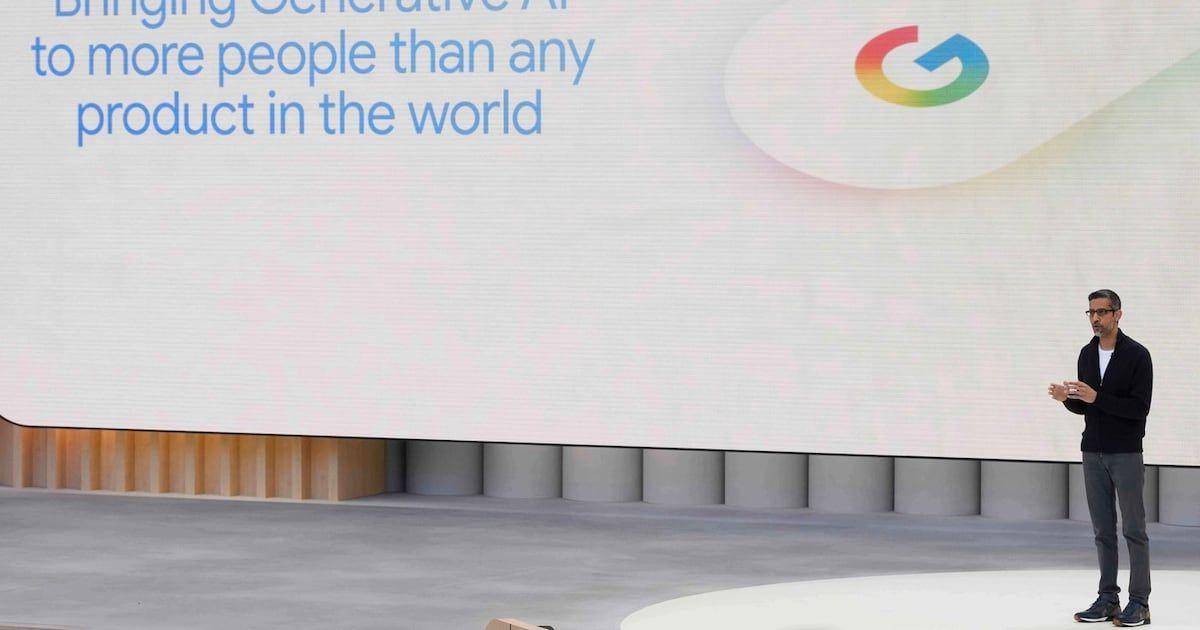
Alphabet's resurgence stems from a series of high-profile product launches that demonstrate its AI breakthroughs. The company's Gemini 3 model has drawn strong reviews, intensifying pressure on OpenAI after GPT-5 left some users underwhelmed
1
. The popular Nano Banana image generator and editor also contributed to shifting momentum, giving Google its own viral moment similar to ChatGPT's early success5
.
Source: BNN
Analyst Deepak Mathivanan upgraded Alphabet's stock on January 8, noting that the technological advantages of the Gemini assistant app are underappreciated. "Google arguably has the strongest footprint across several layers in the AI tech stack, and the company's decade-long investments have enabled deep competitive moats," Mathivanan wrote
3
. Citi analysts named Google a top internet pick for 2026, highlighting that 70% of Google Cloud customers use its AI products3
.Related Stories
Google Cloud Unit Emerges as Major Growth Engine
The once-overlooked Google Cloud unit has transformed into a major driver of AI-driven growth. Google Cloud's revenue jumped 34% in the third quarter, with a backlog of non-recognized sales contracts rising to $155 billion
1
. The company signed more deals worth over $1 billion through the third quarter of 2025 than in the two prior years combined, according to CEO Sundar Pichai .Renting out Google's self-developed AI chips that were reserved for internal use to outside customers has enabled the unit's breakneck pace of growth
5
. The Information reported that Meta Platforms was in talks to spend billions of dollars on Alphabet's chips for use in its data centers starting from 20271
. Google revealed its TPU (tensor processing unit) v7 "Ironwood" accelerator in November as an alternative to Nvidia's hardware, followed by a new Gemini partnership with the Pentagon for its military AI platform .The company's dominant revenue generator—the advertising business driven by Google Search and YouTube—has largely held steady in the face of economic uncertainty and intense competition
5
. This stability provides a foundation for continued investment in AI infrastructure.Antitrust Victories and AI Bubble Concerns
Alphabet's stock performance benefited significantly after a U.S. judge ruled in September against breaking up the company, allowing it to retain control of its Chrome browser and Android mobile operating system
1
. The ruling came after a case that branded Google's search engine an illegal monopoly, but investors widely interpreted the outcome as a slap on the wrist2
. U.S. District Judge Amit Mehta reasoned that technological advances unleashed by artificial intelligence already have been forcing significant changes in online search2
.However, concerns about an AI bubble persist. Both Apple and Microsoft have dropped well below the $4 trillion line amid worries that spending sprees on AI will turn into a bubble that bursts
2
. Nvidia's market value briefly topped $5 trillion in late October before backtracking as AI bubble fears exacted a toll on its stock performance2
. Even Sundar Pichai conceded that some market "irrationality" is contributing to skyrocketing market values of Big Tech companies during a November interview with the BBC, stating "I think no company is going to be immune, including us" if the AI-driven euphoria suddenly evaporates2
.The rare tech investment from Warren Buffett's Berkshire Hathaway in Google's cloud business signals institutional confidence in Alphabet's AI strategy
1
. A Reuters report indicated that Samsung Electronics plans to double this year the number of its mobile devices with AI features powered by Google's Gemini1
. Google's Waymo robotaxi division has also dispatched more self-driving vehicles in cities across the U.S., demonstrating practical applications of AI technology2
.References
Summarized by

Navi
[2]
[4]
Related Stories
Google's AI Strategy Pays Off with Historic $100 Billion Quarter
30 Oct 2025•Business and Economy
Google's AI Renaissance: Alphabet Races Toward $4 Trillion Valuation as Gemini 3 Sparks Market Surge
24 Nov 2025•Business and Economy
Google emerges from AI laggard status to lead the race against OpenAI and Nvidia
02 Dec 2025•Business and Economy

Recent Highlights


Recent Highlights
Today's Top Stories










Your Daily Dose of Curated AI News
Don’t drown in AI news. We cut through the noise - filtering, ranking and summarizing the most important AI news, breakthroughs and research daily. Spend less time searching for the latest in AI and get straight to action.

