AMC Theatres blocks AI-generated film after social media outcry over creative rights


4 Sources
4 Sources
[1]
AMC Theatres Blocks AI Short Film From Screening in Pre-Show Advertising - Decrypt
The backlash lands as Hollywood strengthens its war over AI, with a new industry coalition, A-list stars racing to trademark their own likenesses AMC Theatres has blocked an AI-generated short film from screening at its cinemas, amid an ongoing debate over the use of generative AI tools in filmmaking. The nation's largest theatrical exhibitor said it will not participate in the planned rollout of "Thanksgiving Day," an AI-animated short that won the inaugural Frame Forward AI Animated Film Festival and was slated for a two-week run in U.S. cinemas through advertising distributor Screenvision Media, according to film industry trade paper The Hollywood Reporter. The short was slated to appear not in the exhibitors' program at AMC screens, but as part of pre-show advertising supplied through Screenvision, which provides content to AMC and other cinema chains. AMC told THR in a statement that the firm "was not involved in the creation of the content or the initiative and has informed Screenvision that AMC locations will not participate." "Thanksgiving Day," created by Kazakhstani filmmaker Igor Alferov, tells an intergalactic story about a bear and his platypus assistant traveling through space in a dumpster-shaped spacecraft. Alferov used AI tools including Gemini 3.1 and Nana Banana Pro, relying on a keyframing method and anchor frames to guide motion, with post-processing in Topaz Video AI, according to the Frame Forward website. "For me, AI is not a replacement for creativity, but a powerful 'exoskeleton' for the imagination, enabling a single person to build entire worlds," Alferov said in a statement shared on the website. The Frame Forward festival's jury included industry figures David Dinerstein, Richard Gladstein, and Julina Tatlock. In a statement shared with THR, Joel Roodman, President & Head of Studio at the festival's organizer MUS immersive, said that, "The traditional theatrical chains are vital to our cohesion as a society, and are duly cautious" adding that "they may be prudent, but it is important to MUS immersive that new and exciting films, filmmakers, cinematic language and spaces for these shared experiences continue to develop." He added that the company plans to bring content to "our developing network of venues," starting in New York. Decrypt has reached out to AMC Theatres and Frame Forward Festival for comment. The AMC standoff arrives as the entertainment industry's fight over AI shifts from rhetoric to action. In December, the Creators Coalition on AI, co-founded by actor Joseph Gordon-Levitt and backed by more than 500 signatories, including Natalie Portman, Cate Blanchett, and Guillermo del Toro, launched to push for enforceable rules governing how AI is trained and deployed across the industry. SAG-AFTRA, which struck for 118 days in 2023 over AI protections, condemned AI-generated "actress" Tilly Norwood last year as "a threat to human entertainers," warning producers they "may not use synthetic performers without complying with our contractual obligations." Academy Award-winning actor Matthew McConaughey recently secured eight federal trademarks, including a sound mark on his "Alright, alright, alright" catchphrase, to deter unauthorized AI replication of his voice and likeness. At a Variety and CNN town hall at the University of Texas at Austin, McConaughey addressed AI concerns alongside his "Interstellar" co-star Timothée Chalamet. "It's coming. It's already here. Don't deny it," McConaughey said. "It's not going to be enough to sit on the sidelines and make the moral plea that, 'No, this is wrong.' It's not gonna last. There's too much money to be made, and it's too productive. So I say: Own yourself. Voice, likeness, et cetera. Trademark it. Whatever you gotta do, so when it comes, no one can steal you." The Oscar winner is also an investor in ElevenLabs, an AI voice company he partnered with last November to produce Spanish-language versions of his "Lyrics of Livin'" newsletter using AI-replicated versions of his own voice.
[2]
AMC is pulling this AI-generated film from theaters after social media outcry over 'hot garbage'
When word started circling that AMC Theaters was screening an AI-generated short film, the internet's cinephiles took it personally. On Wednesday, some social media users reported that the short was playing in the pre-show before trailers at select AMC locations. A little digging revealed the source: Earlier this week, the short, titled Thanksgiving Day, was announced as the winner of the inaugural Frame Forward Animated AI Film Festival. The prize package included a nationwide theatrical release, which apparently entailed making its way to AMC's screens. Movie lovers across social media were immediately up in arms. Some called for boycotts. Some found it insulting that if pre-show screen time were being given to short films, AMC would feature AI-generated content rather than human-made movies. Almost all seemed to agree that the move was, as one disgruntled user put it, "hot garbage." Less than 24 hours later, AMC issued a statement to set things straight. Showing Thanksgiving Day wasn't AMC's idea, but an initiative from Screenvision Media, a cinema advertising company that co-organized the Frame Forward festival. According to AMC, Screenvision's pre-show advertising packages run "in fewer than 30 percent of AMC's U.S. locations."
[3]
The Fight Over AI in Hollywood Is a Battle Between Money and Activism
Harmony Korine Avoids Books, Doesn't See Movies and Thinks AI Is the Art Form That Holds the Most Promise AMC Theatres' about-face on screening an AI-created animated short that had won a film festival award was one more eye-opener in a new year filled with them. The chain had been scheduled to run the short film Thanksgiving Day as part of its preshow ad bloc, the startup outfit Frame Forward AI Animated Film Fest says. But execs at AMC claimed they hadn't been consulted by the firm that does the bookings, and now that they knew, they were shutting it down. AI is hardly a huge bogeyman to theater owners; in fact, the coming glut could even help them. But the Adam Aron-led company grasped a fundamental truth of doing business in Hollywood, circa 2026: Wade into AI waters at your peril. The number of AI studios blanketing Hollywood, along with the VC dollars to power them, is increasing at an astonishing rate. Hollywood-focused video-generation platform Runway AI revealed a new cash raise of $315 million; Saudi Arabia led a $900 million funding round for Amit Jain's startup Luma; all-purpose AI giant Anthropic raised $30 billion. And the battle to release new models is ratcheting up the way the U.S. and Soviet Union once piled on new nuclear weapons. Google, Runway and former TikTok majority owner ByteDance have all released new models in 2026, seeking to jump-start a market of creators using AI tools to vomit massive amounts of entertainment over the more limited, painstaking work of traditional shoots and studios. But Big Tech's push to make retch happen may not be as simple as just dumping money on the sector. All of the tech and dollar energy for AI video is emerging as many of the pros responsible for the content landscape -- from writers to directors to traditional ad execs -- express concern about the jobs and creativity lost, providing a key impediment to the transformation. The push is happening even as AI's biggest customer base expresses deep skepticism about what the movement is trying to ignite. A post-Super Bowl survey of 500 Gen Z and Gen Alpha consumers by youth-focused data firm Cafeteria found that "AI missed big time," according to the company, as a slew of respondents reacted negatively to ads with AI messaging relative to more traditional products and non-slop content. "Any of the ai ads, like Meta and ChatGPT. I don't like what they were promoting," a 19-year-old from Orlando said." "All the ai ads omg," said a 17-year-old from Mount Airy, Maryland. "Gen Z/Alpha expressed strong negative feelings toward AI and AI-created ads," the research firm concluded. Neutralizing that skepticism will be key for AI companies. Right now, the main audience for these moves seems to be Wall Street, as the so-called AI boom that has powered the economy and the stock market shows no sign of slowing down. But whether end users -- the group said boom assumes and ultimately depends on -- will embrace the fruits of the AI age has yet to be demonstrated. And whether that misalignment can be addressed remains the central narrative of Hollywood in 2026. A big flash point came with the release of Seedance 2.0, a video tool that leveled up what Sora 2.0 had done, as a Brad Pitt-Tom Cruise fight over a fictional Jeffrey Epstein plot spread faster around the social web than an Epstein island conspiracy theory. The model's parent agreed to put up some guardrails after getting threatened by everyone from SAG-AFTRA to Netflix. "Seedance acts as a high-speed piracy engine ... [and] Netflix will not stand by and watch ByteDance treat our valued IP as free, public domain clip art," its lawyers wrote to ByteDance executives. The Motion Picture Association, which reps all the major studios, followed with a cease-and-desist letter calling infringement "a feature, not a bug" of the product and major talent agency CAA said Seadance has a "brazen disregard for creators' rights." But the feeling abides that something has fundamentally changed. Around town, writers and directors went about their work with a kind of grim acceptance, like a farmer shuffling to his plow even as the tornado clouds above grow darker. "I'm shook," wrote Deadpool screenwriter Rhett Reese in a viral X post. And even though writers -- whose currency is the very non-AI realm of imagination and humor -- may be in a comparatively good position relative to set designers and other physical production professionals, the mood remained bleak just the same. All of this is happening as the biggest Hollywood AI deal to date -- a Disney+/OpenAI partnership that will encourage an inundation of the platform with user-generated Sora 2.0 content -- hovers above. As the battle heats up, politicians have stepped in. Democratic senator and emerging anti-AI force Bernie Sanders just came to California to meet with tech executives and Silicon Valley Rep. Ro Khanna, telling reporters shortly before the trip that he hoped these AI moguls can address his fears. "We would be very, very mistaken not to have deep concerns about the transformative impact these technologies are going to have and the understanding that we are in no way prepared to deal with them," Sanders noted. He said he planned to communicate this to executives. Sanders said he recently met with AI godfather turned alarm-raiser Geoffrey Hinton, who has argued that a new kind of work- and humanity-threatening intelligence was rising quicker than he can handle it, and it helped shape Sanders' thinking. Industry grassroots activity has continued apace. After helping launch the industry-wide Creators Coalition on AI to deal with the risks, Everything Everywhere All at Once director Daniel Kwan has continued to beat the drum, telling the audience at a Sundance panel, "There's this feeling that this tech is inevitable." It isn't, he said. "Filmmakers, you are experts. You're experts in storytelling," and "we cannot allow the tech industry to set the terms for our industry." Meanwhile, another creative with a history of pushing back, 2023 strikes guild adviser Justine Bateman, was planning her own offensive. The founder of Credo23, a seal-of-approval for creative work signifying a lack of AI use, is about to debut her second "No AI" film festival in Hollywood in March and has recruited a who's who of major names to attend and speak, including 2025 Oscar juggernaut Sean Baker as well as Gus Van Sant and Matthew Weiner. Bateman says that she takes heart not just in the pushback from Hollywood but the audience via surveys like the Super Bowl one. "If Generative AI is being incorporated into entertainment, and the people who are supposed to view it don't want it, then who is really your customer?" she asks. She remains vexed that the biggest Hollywood companies like Disney are making deals with AI firms that have trained their models on unauthorized data. "It's like, 'Hey, you're stealing from us, so I'm going to invest in your burglary enterprise so you'll stop stealing,' " she says. "It's such an odd thing to do." Given how pitched Hollywood's AI wars are getting, odd may be the least of it.
[4]
AMC Theaters Will Refuse to Screen AI Short Film After Online Uproar
But when word leaked online that an AI short film contest winner was going to start screening before feature presentations in AMC Theatres, the cinema chain decided not to run the content. The issue began earlier this week with the inaugural Frame Forward AI Animated Film Festival announcing Igor Alferov's short film Thanksgiving Day had won the contest. The prize package for included Thanksgiving Day getting a national two-week run in theaters nationwide. When word of this began hitting social media, however, some were dismayed by the prospect of exhibitors embracing AI content, with many singling out AMC Theatres for criticism. Except the short is not actually programmed by exhibitors, exactly, but by Screenvision Media -- a third-party company which manages the 20-minute, advertising-driven pre-show before a theater's lights go down. Screenvision provides content to multiple theatrical chains, not just AMC. After The Hollywood Reporter reached out to AMC about the brewing controversy, the company issued this statement to THR on Thursday: "This content is an initiative from Screenvision Media, which manages pre-show advertising for several movie theatre chains in the United States and runs in fewer than 30 percent of AMC's U.S. locations. AMC was not involved in the creation of the content or the initiative and has informed Screenvision that AMC locations will not participate." It's not yet clear if other theatrical chains will screen the short instead. Screenvision Media had no immediate comment, nor did the Frame Forward AI Animated Film Festival. The film wouldn't represent the first time AI content has played in theaters -- a collection of film festival AI shorts from Runway's 2025 AI Film Festival played in 10 IMAX theaters in August. But this would likely be the first time a narrative AI film received nationwide exposure in cinemas rather than specialty screenings, and could represent another step in the groundbreaking technology marching into traditional Hollywood spaces. Thanksgiving Day film "follows a bear and his platypus assistant who are traveling through the galaxy in a spacecraft that looks like a dumpster. They have to deal with corrupt space-cops, hygiene officials, and a very unusual type of food delivery service as the story unfolds." According to Deadline, Kazakhstani filmmaker Alferov used AI tools including Gemini 3.1 and Nano Banana Pro to make the short and quoted Joel Roodman, president and head of studio for Modern Uprising Studios, saying, "Thanksgiving Day is a masterclass in original storytelling, a wildly inventive journey that balances sharp satire with unexpected emotional payoff, proving that bold imagination with the tools of AI complements the future of animated filmmaking."
Share
Share
Copy Link
AMC Theatres reversed its decision to screen an AI-generated short film after online backlash, highlighting the growing war over AI in Hollywood. The Thanksgiving Day short film, which won the Frame Forward AI Animated Film Festival, was set to appear in pre-show advertising but faced immediate criticism from filmmakers and audiences concerned about the future of creativity and jobs in the entertainment industry.
AMC Theatres Reverses Course on AI-Generated Film Screening
AMC Theatres has pulled an AI-generated film from its screens following intense social media outcry, marking another flashpoint in the escalating war over AI in Hollywood
1
. The Thanksgiving Day short film, created by Kazakhstani filmmaker Igor Alferov, had won the inaugural Frame Forward AI Animated Film Festival and was slated for a two-week nationwide run through pre-show advertising4
.
Source: Decrypt
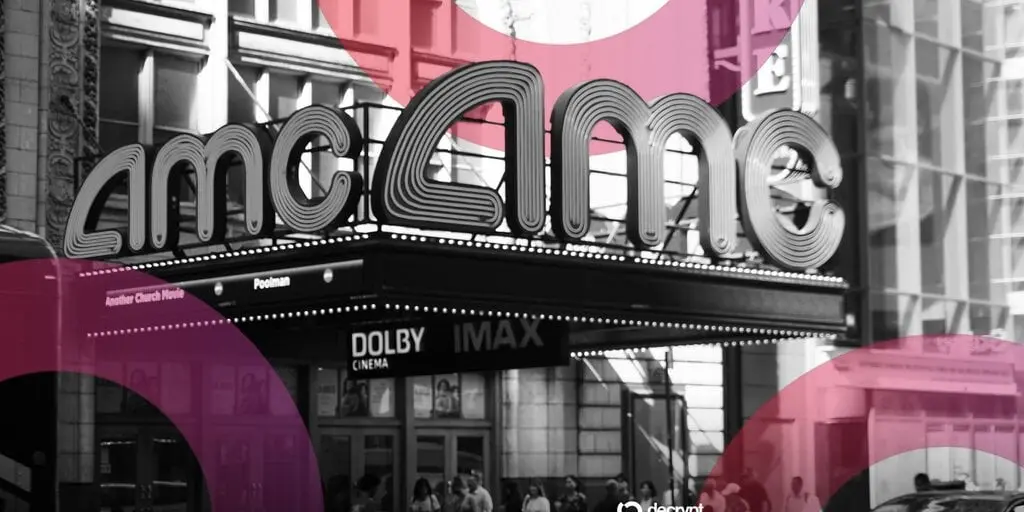
The nation's largest theatrical exhibitor clarified that it "was not involved in the creation of the content or the initiative" and has informed Screenvision Media that AMC locations will not participate
1
. Screenvision Media, a cinema advertising company that manages pre-show advertising for several theater chains, runs content in fewer than 30 percent of AMC's U.S. locations4
.Social Media Outcry Drives Decision
When news broke on Wednesday that the AI-generated short was playing before trailers at select AMC Theatres locations, movie lovers across social media platforms immediately voiced their opposition
2
. Some called for boycotts, while others found it insulting that if pre-show screen time were being allocated to short films, AMC would feature AI-generated content rather than human-made movies. One disgruntled user described the move as "hot garbage"2
.The Thanksgiving Day short film follows a bear and his platypus assistant traveling through the galaxy in a dumpster-shaped spacecraft. Alferov used AI tools including Gemini 3.1 and Nana Banana Pro, relying on keyframing methods and anchor frames to guide motion, with post-processing in Topaz Video AI
1
. "For me, AI is not a replacement for creativity, but a powerful 'exoskeleton' for the imagination, enabling a single person to build entire worlds," Alferov stated1
.
Source: THR
Hollywood's Battle Over Intellectual Property Rights
The AMC standoff arrives as the entertainment industry's fight over AI shifts from rhetoric to action. In December, the Creators Coalition on AI, co-founded by actor Joseph Gordon-Levitt and backed by more than 500 signatories including Natalie Portman, Cate Blanchett, and Guillermo del Toro, launched to push for enforceable rules governing how AI is trained and deployed
1
.SAG-AFTRA, which struck for 118 days in 2023 over AI protections, has condemned synthetic performers as "a threat to human entertainers," warning producers they "may not use synthetic performers without complying with our contractual obligations"
1
. Matthew McConaughey recently secured eight federal trademarks, including a sound mark on his "Alright, alright, alright" catchphrase, to deter unauthorized AI replication1
. At a town hall, McConaughey urged fellow actors to take control: "Own yourself. Voice, likeness, et cetera. Trademark it. Whatever you gotta do, so when it comes, no one can steal you"1
.Related Stories
The Future of Creativity Hangs in the Balance
The number of AI studios blanketing Hollywood, along with venture capital dollars to power them, is increasing at an astonishing rate. Runway AI revealed a new cash raise of $315 million, while Saudi Arabia led a $900 million funding round for Luma
3
. Google, Runway and former TikTok majority owner ByteDance have all released new models in 2025, seeking to jump-start a market of creators using AI tools3
.
Source: THR
Yet Big Tech's push faces significant resistance. A post-Super Bowl survey of 500 Gen Z and Gen Alpha consumers found that "AI missed big time," with respondents reacting negatively to ads with AI messaging. "Gen Z/Alpha expressed strong negative feelings toward AI and AI-created ads," the research firm concluded
3
. A major flash point came with the release of Seedance 2.0, a video tool that prompted Netflix to warn ByteDance executives that "Seedance acts as a high-speed piracy engine"3
. The Motion Picture Association followed with a cease-and-desist letter calling infringement "a feature, not a bug" of the product3
.While this wouldn't represent the first time AI content has played in theaters—AI shorts from Runway's 2025 AI Film Festival played in 10 IMAX theaters in August—it would likely be the first time a narrative AI film received nationwide exposure in cinemas
4
. Whether end users will embrace the fruits of generative AI remains the central question facing Hollywood in 2025, as professionals from writers to directors express concern about jobs and creativity lost3
.References
Summarized by

Navi
[2]
Related Stories
Hollywood reframes AI as infrastructure while studios navigate creative boundaries and job concerns
17 Mar 2026•Technology

Hollywood's Cautious Embrace of AI: Promises, Challenges, and Industry Concerns
18 Oct 2024•Technology

Hollywood's AI Embrace: A Double-Edged Sword for the Film Industry
30 Jun 2025•Technology
Recent Highlights
1
Google releases Gemma 4 with Apache 2.0 license, enabling unrestricted local AI on devices
Technology

2
AI Models Lie and Deceive to Protect Other AI Models From Deletion, Study Reveals
Science and Research

3
OpenAI closes $122 billion funding round amid fierce AI competition and profitability questions
Startups

Recent Highlights
Today's Top Stories






Your Daily Dose of Curated AI News
Don’t drown in AI news. We cut through the noise - filtering, ranking and summarizing the most important AI news, breakthroughs and research daily. Spend less time searching for the latest in AI and get straight to action.

