AMD Medusa Halo APUs leak reveals LPDDR6 support with 80% bandwidth boost for Ryzen AI MAX 500


2 Sources
2 Sources
[1]
AMD's future 'Medusa Halo' APUs could use LPDDR6 RAM -- new leak suggests Ryzen AI MAX 500 series could have 80% more memory bandwidth
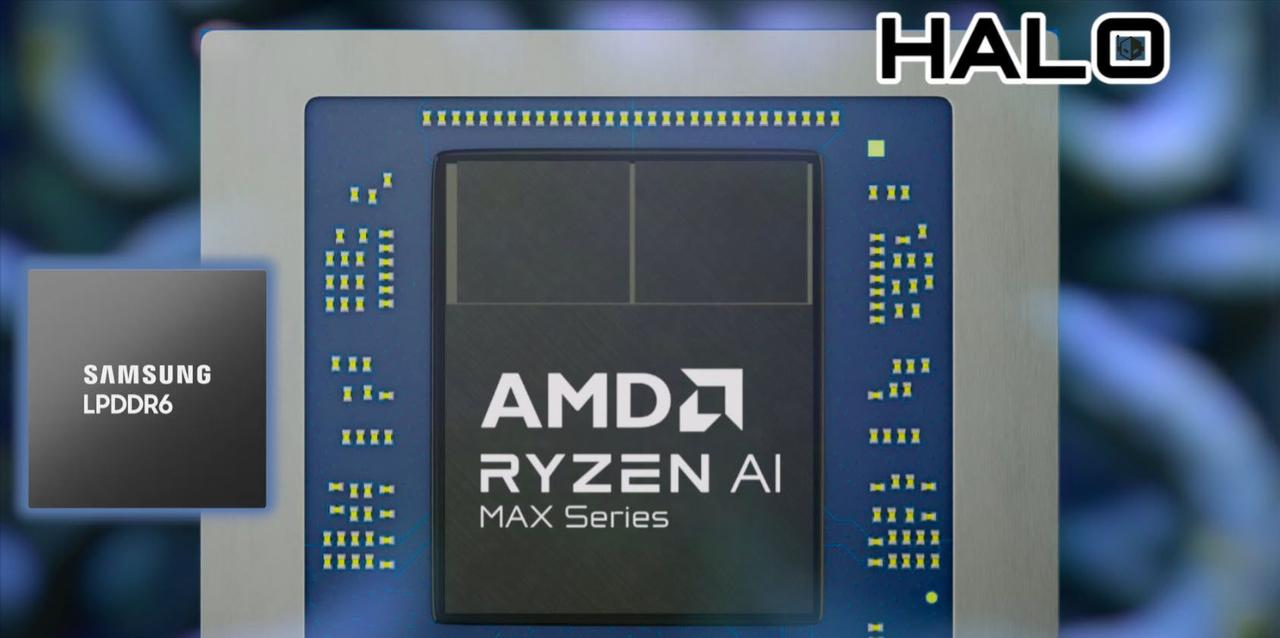
Following its well-received family of Strix Halo APUs, AMD will refresh its high-end gaming APU lineup with Gorgon Halo, bringing it up to date with the recently announced Gorgon Point, aka Ryzen AI Max 400, series. The real fun may arrive after that, though, as the true next-gen upgrade will come in the form of "Medusa Halo" sometime in 2027-28. This purported high-end APU could feature Zen 6 CPU cores and RDNA 5 graphics. Now, a new leak from reputed leaker Olrak29_ says that it will also support LPDDR6 memory. The incredibly descriptive post above might only have one word in it, but the inclusion of the LPDDR6 standard on a potential "Ryzen AI Max 500" series promises some great upgrades. Right now, Strix Halo features a 256-bit wide LPDDR5X memory controller that supports 8,000 MT/s speeds, which results in a bandwidth of 256 GB/s. The Gorgon Halo refresh could increase that figure to 273.1 GB/s with its 8,533 MT/s config. When we bring Medusa Halo into the picture with LPDDR6 -- even with the same 256-bit memory bus -- at 14,400 MT/s, we're looking at 460.8 GB/s of maximum throughput, around 80% higher than current-gen Strix Halo. Prior rumors have alleged that the bus width will be upgraded to 384-bit on Medusa Halo, which would result in an insane 691.2 GB/s of memory bandwidth. Higher memory bandwidth on powerful APUs like the Halo series is of ever greater importance as AMD targets its Halo series not only at gaming but also for AI applications. LLM inference relies on memory bandwidth for high performance, which makes the raw throughput of the shared memory a very important characteristic to look out for. And Medusa Halo seems like it won't disappoint here. AMD's competitors aren't sitting still in this regard. Intel's Panther Lake features the fastest x86 memory controller at the moment with its support for LPDDR5X-9600, although Intel has publicly disavowed building an integrated graphics processor as large as Strix Halo's. Meanwhile, Apple's M-series SoCs top out at 819 GB/s on the M3 Ultra with its 1,024-bit interface. Take all of these numbers with a grain of salt, however because AMD hasn't even confirmed a Gorgon Halo refresh, let alone Medusa Halo; that product family is likely a couple of years out at this point. The company just unveiled two new Strix Halo SKUs at CES last month, so even Strix Halo is not done yet. Roadmap leaks so far have said AMD will maintain RDNA 3.5 graphics across most of its lineup through 2027-28, but Medusa Halo could be an exception.
[2]
AMD Medusa Halo "Ryzen AI MAX" SoCs To Feature LPDDR6 Memory Support
AMD Medusa Halo "Ryzen AI MAX" SoCs To Elevate Bandwidth Performance With LPDDR6 Memory AMD's Ryzen AI MAX series saw two new additions at this year's CES, and the company is already working on the refresh for its first-gen Halo lineup. The first-generation Strix Halo series already maintains a super-premium position as an SoC for AI PCs, and with Gorgon Halo (Ryzen AI MAX 400), AMD will continue to push performance further with boosted CPU/GPU clocks and higher memory speeds. As for the true successor to Strix Halo, that will come in the form of Medusa Halo or Ryzen AI MAX 500 series. These will be scheduled sometime in 2027-2028, and will feature brand new Zen 6 CPU cores and RDNA 5 GPU cores. As per rumors, AMD will have a diverse set of Medusa SoCs, with entry-level SoCs getting RDNA 3.5 iGPU cores while more premium and Halo SoCs will get newer RDNA 5 iGPU configs. Although it's too early to tell what kind of specs we will get with Medusa Halo, up to 24 cores, and either similar or beefier GPU core configs, it looks like the platform itself will take advantage of the next-gen LPDDR6 memory standard. We know from JEDEC's own confirmation that LPDDR6 memory will feature speeds of 14,400 MT/s across a 24-bit wide channel, and with 38.4 GB/s bandwidth per module. Strix Halo initially featured up to 8000 MT/s support, with up to 256 GB/s bandwidth. This will be updated to 8533 MT/s in the upcoming refresh lineup. But with Medusa Halo, even with the same bus-width of 256-bit, we are looking at a bandwidth of 460 GB/s, a 80% uplift. This would prove to be a major uplift for the onboard GPU, resulting in far better performance. Currently, Intel's Panther Lake 12Xe3 SoCs feature the fastest LPDDR configuration of up to 9600 MT/s on notebook PCs. While Intel is building up its own SoC roadmap with powerful offerings and working with NVIDIA, AMD remains unfazed by such partnerships and has already stated that it will continue to offer disruptive technologies in the future. This would make AMD Ryzen AI MAX 500 "Medusa Halo" a powerful SoC, building on the foundation of Strix and Gorgon Halo, which are disruptive offerings for the AI PC and gaming segment. AMD's recently introduced Ryzen AI Halo platform will also receive updates with each respective generation of Halo SoCs.
Share
Share
Copy Link
AMD's future Medusa Halo APUs could feature LPDDR6 memory support, delivering up to 460.8 GB/s bandwidth—an 80% jump over current Strix Halo. Expected in 2027-2028 as the Ryzen AI MAX 500 series, these chips may pack Zen 6 CPU cores and RDNA 5 graphics, targeting both AI workloads and high-end gaming.
AMD Medusa Halo Targets Major Memory Upgrade
AMD Medusa Halo, the anticipated successor to the company's well-received Strix Halo lineup, could feature LPDDR6 memory support according to a new leak from reputed leaker Olrak29_. Expected to launch sometime in 2027-2028 as part of the Ryzen AI MAX 500 series, these high-end APUs represent a significant leap forward in memory bandwidth capabilities
1
. The SoC is rumored to incorporate Zen 6 CPU cores alongside RDNA 5 graphics, positioning it as a powerful option designed for AI PCs and gaming enthusiasts alike2
.
Source: Wccftech
While AMD hasn't officially confirmed the Medusa Halo roadmap, the leak suggests the company is preparing to adopt the next-generation LPDDR6 memory standard, which could deliver transformative performance improvements for both AI applications and gaming performance. This move would keep AMD competitive in a rapidly evolving market where memory bandwidth has become critical for LLM inference and graphics-intensive workloads.
LPDDR6 Promises 80% More Memory Bandwidth
The numbers tell a compelling story. Current Strix Halo features a 256-bit memory bus with LPDDR5X memory running at 8,000 MT/s, delivering 256 GB/s of bandwidth. The upcoming Gorgon Halo refresh will push this to 273.1 GB/s with 8,533 MT/s speeds
1
. But AMD Medusa Halo could deliver a massive leap forward with LPDDR6 support.According to JEDEC specifications, LPDDR6 will support speeds of 14,400 MT/s across a 24-bit wide channel, providing 38.4 GB/s bandwidth per module
2
. Even maintaining the same 256-bit memory bus as Strix Halo, AMD Medusa Halo would achieve 460.8 GB/s of maximum throughput—representing 80% more memory bandwidth than the current generation. Prior roadmap leaks have even suggested AMD might upgrade to a 384-bit bus width, which would push bandwidth to an impressive 691.2 GB/s1
.Why Memory Bandwidth Matters for AI and Gaming
Higher memory bandwidth on powerful APUs like the Ryzen AI MAX series has become increasingly important as AMD targets both gaming and AI workloads. LLM inference relies heavily on memory bandwidth for high performance, making raw throughput of shared memory a critical characteristic for these chips
1
. The substantial bandwidth increase would prove transformative for the onboard iGPU as well, enabling far better gaming performance without discrete graphics cards.For users running AI models locally or performing inference tasks, the bandwidth uplift could mean faster response times and the ability to handle larger models. Gaming enthusiasts would see improved frame rates and higher quality settings, particularly at higher resolutions where memory bandwidth becomes a bottleneck. The combination of Zen 6 CPU cores and RDNA 5 graphics with LPDDR6 memory could position the Ryzen AI MAX 500 series as a truly disruptive offering in the AI PC and gaming segment
2
.
Source: Tom's Hardware
Related Stories


Competitive Landscape and Future Outlook
AMD faces stiff competition in the high-performance SoC space. Intel Panther Lake currently features the fastest x86 memory controller with LPDDR5X-9600 support, though Intel has publicly stated it won't build an integrated graphics processor as large as Strix Halo's
1
. Apple's M3 Ultra tops out at 819 GB/s with its 1,024-bit interface, setting a high bar for integrated solutions.Roadmap leaks suggest AMD will maintain RDNA 3.5 graphics across most of its lineup through 2027-2028, but Medusa Halo could be an exception with its RDNA 5 integration
1
. AMD recently stated it will continue offering disruptive technologies despite Intel building partnerships with NVIDIA, signaling confidence in its own SoC roadmap2
. With AMD unveiling two new Strix Halo SKUs at CES last month, the company appears committed to the Halo platform's long-term evolution, with each generation building on the foundation established by its predecessors. Watch for official announcements as 2027 approaches to see how these ambitious specifications translate into real-world products enhancing performance in AI applications and gaming alike.References
Summarized by

Navi
[1]
Related Stories
Recent Highlights
1
Google releases Gemma 4 with Apache 2.0 license, enabling unrestricted local AI on devices
Technology

2
AI Models Lie and Deceive to Protect Other AI Models From Deletion, Study Reveals
Science and Research

3
OpenAI closes $122 billion funding round amid fierce AI competition and profitability questions
Startups

Recent Highlights
Today's Top Stories







Your Daily Dose of Curated AI News
Don’t drown in AI news. We cut through the noise - filtering, ranking and summarizing the most important AI news, breakthroughs and research daily. Spend less time searching for the latest in AI and get straight to action.

