Anthropic brings Claude Code to Slack, enabling developers to delegate coding from chat threads


6 Sources
6 Sources
[1]
Claude Code is coming to Slack, and that's a bigger deal than it sounds | TechCrunch
Anthropic is launching Claude Code in Slack, allowing developers to delegate coding tasks directly from chat threads. The beta feature, available Monday as a research preview, builds on Anthropic's existing Slack integration by adding full workflow automation. The rollout signals the next frontier in coding assistants isn't the model; it's the workflow. Previously, developers could only get lightweight coding help via Claude in Slack - like writing snippets, debugging, and explanations. Now they can tag @Claude to spin up a complete coding session using Slack context like bug reports or feature requests. Claude analyzes recent messages to determine the right repository, posts progress updates in threads, and shares links to review work and open pull requests. The move reflects a broader industry shift. Cursor offers Slack integration for drafting and debugging code in threads, while GitHub Copilot recently added features to generate pull requests from chat. OpenAI's Codex is accessible via custom Slack bots. These integrations signal that AI coding assistants are migrating from IDEs (Integrated Development Environment AKA where software development happens) into collaboration tools where teams already work. For Slack, positioning itself as an "agentic hub" where AI meets workplace context creates a strategic advantage: whichever AI tool dominates Slack - the center of engineering communication - could shape how software teams work. By letting developers move seamlessly from conversation to code without switching apps, Claude Code and similar tools represent a shift toward AI-embedded collaboration that could fundamentally change developer workflows.
[2]
Claude Beta Feature Means Vibecoding Will Now Only Require a Slack Message
If you work somewhere that sometimes involves broken code, followed by someone pinging a coworker in Slack with a harried message like "hey @[human's name] can you push a quick fix for this?ðŸ~¬" Anthropic just released a beta feature meant to take that human out of the loop. According to SiliconANGLE, Anthropic is testing a Slack-based version of Claude Code, its coding agent. The intention is for it to be able to catch up on a given discussion, parse the content of the exchange into an engineering task, and then hop into your codebase and make the change. In other words, Claude Code can now, in theory, take out the part of vibecoding where someone has to break a sweat by changing over to the Claude Code tab in their browser and putting in a prompt. SiliconANGLE (whose word I'm taking at face value because I do not pretend to know how to code) says that after a Slack message, Claude Code can now create new files, mess with existing code, test its own work, and iterateâ€"all after a detailed slack conversation between humans, followed by something like "@Claude fix this." The implications are unsettling, even if you don't sweat the potential replacement of human workers. An AI agent may be lying in wait on Slack waiting for instructions, sort of like an overly sensitive Amazon Alexa waiting for its wake word. Stray remarks can potentially become tasks handed over to a piece of software with the capability to do damage. Worse, Slack functionality would make it easier for the least technically sophisticated person on a given team to take it upon themself to assign sweeping, complex tasks to the bot. I, for instance, am a blogger, and reading about this made me think, oh wow, if we had this I could fix my own bugs whenever I find them. If you're an actual software engineer, that should be a very frightening thought. According to the business data site Demandsage, Slack has 47.2 million daily users working at over 750,000 organizations, including 77% of Fortune 100 companies. That's a lot of people who should be kept away from this Claude beta feature at all costs.
[3]
Anthropic's Claude Code can now read your Slack messages and write code for you
Anthropic on Monday launched a beta integration that connects its fast-growing Claude Code programming agent directly to Slack, allowing software engineers to delegate coding tasks without leaving the workplace messaging platform where much of their daily communication already happens. The release, which Anthropic describes as a "research preview," is the AI safety company's latest move to embed its technology deeper into enterprise workflows -- and comes as Claude Code has emerged as a surprise revenue engine, generating over $1 billion in annualized revenue just six months after its public debut in May. "The critical context around engineering work often lives in Slack, including bug reports, feature requests, and engineering discussion," the company wrote in its announcement blog post. "When a bug report appears or a teammate needs a code fix, you can now tag Claude in Slack to automatically spin up a Claude Code session using the surrounding context." From bug report to pull request: how the new Slack integration actually works The mechanics are deceptively simple but address a persistent friction point in software development: the gap between where problems get discussed and where they get fixed. When a user mentions @Claude in a Slack channel or thread, Claude analyzes the message to determine whether it constitutes a coding task. If it does, the system automatically creates a new Claude Code session. Users can also explicitly instruct Claude to treat requests as coding tasks. Claude gathers context from recent channel and thread messages in Slack to feed into the Claude Code session. It will use this context to automatically choose which repository to run the task on based on the repositories you've authenticated to Claude Code on the web. As the Claude Code session progresses, Claude posts status updates back to the Slack thread. Once complete, users receive a link to the full session where they can review changes, along with a direct link to open a pull request. The feature builds on Anthropic's existing Claude for Slack integration and requires users to have access to Claude Code on the web. In practical terms, a product manager reporting a bug in Slack could tag Claude, which would then analyze the conversation context, identify the relevant code repository, investigate the issue, propose a fix, and post a pull request -- all while updating the original Slack thread with its progress. Why Anthropic is betting big on enterprise workflow integrations The Slack integration arrives at a pivotal moment for Anthropic. Claude Code has already hit $1 billion in revenue six months since its public debut in May, according to a LinkedIn post from Anthropic's chief product officer, Mike Krieger. The coding agent continues to barrel toward scale with customers like Netflix, Spotify, and Salesforce. The velocity of that growth helps explain why Anthropic made its first-ever acquisition earlier this month. Anthropic declined to comment on financial details. The Information earlier reported on Anthropic's bid to acquire Bun. Bun is a breakthrough JavaScript runtime that is dramatically faster than the leading competition. As an all-in-one toolkit -- combining runtime, package manager, bundler, and test runner -- it's become essential infrastructure for AI-led software engineering, helping developers build and test applications at unprecedented velocity. Since becoming generally available in May 2025, Claude Code has grown from its origins as an internal engineering experiment into a critical tool for many of the world's category-leading enterprises, including Netflix, Spotify, KPMG, L'Oreal, and Salesforce -- and Bun has been key in helping scale its infrastructure throughout that evolution. The acquisition signals that Anthropic views Claude Code not as a peripheral feature but as a core business line worth substantial investment. The Slack integration extends that bet, positioning Claude Code as an ambient presence in the workspaces where engineering decisions actually get made. According to an Anthropic spokesperson, companies including Rakuten, Novo Nordisk, Uber, Snowflake, and Ramp now use Claude Code for both professional and novice developers. Rakuten, the Japanese e-commerce giant, has reportedly reduced software development timelines from 24 days to just 5 days using the tool -- a 79% reduction that illustrates the productivity claims Anthropic has been making. Claude Code's rapid rise from internal experiment to billion-dollar product The Slack launch is the latest in a rapid series of Claude Code expansions. In late November, Claude Code was added to Anthropic's desktop apps including the Mac version. Claude Code was previously limited to mobile apps and the web. It allows software engineers to code, research, and update work with multiple local and remote sessions running at the same time. That release accompanied Anthropic's unveiling of Claude Opus 4.5, its newest and most capable model. Claude Opus 4.5 is available today on the company's apps, API, and on all three major cloud platforms. Pricing is $5/$25 per million tokens -- making Opus-level capabilities accessible to even more users, teams, and enterprises. The company has also invested heavily in the developer infrastructure that powers Claude Code. In late November, Anthropic released three new beta features for tool use: Tool Search Tool, which allows Claude to use search tools to access thousands of tools without consuming its context window; Programmatic Tool Calling, which allows Claude to invoke tools in a code execution environment reducing the impact on the model's context window; and Tool Use Examples, which provides a universal standard for demonstrating how to effectively use a given tool. The Model Context Protocol (MCP) is an open standard for connecting AI agents to external systems. Connecting agents to tools and data traditionally requires a custom integration for each pairing, creating fragmentation and duplicated effort that makes it difficult to scale truly connected systems. MCP provides a universal protocol -- developers implement MCP once in their agent and it unlocks an entire ecosystem of integrations. Inside Anthropic's own AI transformation: what happens when engineers use Claude all day Anthropic has been unusually transparent about how its own engineers use Claude Code -- and the findings offer a preview of broader workforce implications. In August 2025, Anthropic surveyed 132 engineers and researchers, conducted 53 in-depth qualitative interviews, and studied internal Claude Code usage data to understand how AI use is changing work at the company. Employees self-reported using Claude in 60% of their work and achieving a 50% productivity boost, a 2-3x increase from this time last year. This productivity looks like slightly less time per task category, but considerably more output volume. Perhaps most notably, 27% of Claude-assisted work consists of tasks that wouldn't have been done otherwise, such as scaling projects, making nice-to-have tools like interactive data dashboards, and exploratory work that wouldn't be cost-effective if done manually. The internal research also revealed how Claude is changing the nature of engineering collaboration. The maximum number of consecutive tool calls Claude Code makes per transcript increased by 116%. Claude now chains together 21.2 independent tool calls without need for human intervention versus 9.8 tool calls from six months ago. The number of human turns decreased by 33%. The average number of human turns decreased from 6.2 to 4.1 per transcript, suggesting that less human input is necessary to accomplish a given task now compared to six months ago. But the research also surfaced tensions. One prominent theme was that Claude has become the first stop for questions that once went to colleagues. "It has reduced my dependence on [my team] by 80%, [but] the last 20% is crucial and I go and talk to them," one engineer explained. Several engineers said they "bounce ideas off" Claude, similar to interactions with human collaborators. Others described experiencing less interaction with colleagues. Some appreciate the reduced social friction, but others resist the change or miss the older way of working: "I like working with people and it is sad that I 'need' them less now." How Anthropic stacks up against OpenAI, Google, and Microsoft in the enterprise AI race Anthropic is not alone in racing to capture the enterprise coding market. OpenAI, Google, and Microsoft (through GitHub Copilot) are all pursuing similar integrations. The Slack launch gives Anthropic a presence in one of the most widely-used enterprise communication platforms -- Slack claims over 750,000 organizations use its software. The deal comes as Anthropic pursues a more disciplined growth path than rival OpenAI, focusing on enterprise customers and coding workloads. Internal financials reported by The Wall Street Journal show Anthropic expects to break even by 2028 -- two years earlier than OpenAI, which continues to invest heavily in infrastructure as it expands into video, hardware, and consumer products. The move also marks an increased push into developer tooling. Anthropic has recently seen backing from some of tech's biggest titans. Microsoft and Nvidia pledged up to $15 billion in fresh investment in Anthropic last month, alongside a $30 billion commitment from Anthropic to run Claude Code on Microsoft's cloud. This is in addition to the $8 billion invested from Amazon and $3 billion from Google. The cross-investment from both Microsoft and Google -- fierce competitors in the cloud and AI spaces -- highlights how valuable Anthropic's enterprise positioning has become. By integrating with Slack (which is owned by Salesforce), Anthropic further embeds itself in the enterprise software ecosystem while remaining platform-agnostic. What the Slack integration means for developers -- and whether they can trust it For engineering teams, the Slack integration promises to collapse the distance between problem identification and problem resolution. A bug report in a Slack channel can immediately trigger investigation. A feature request can spawn a prototype. A code review comment can generate a refactor. But the integration also raises questions about oversight and code quality. Most Anthropic employees use Claude frequently while reporting they can "fully delegate" only 0-20% of their work to it. Claude is a constant collaborator but using it generally involves active supervision and validation, especially in high-stakes work -- versus handing off tasks requiring no verification at all. Some employees are concerned about the atrophy of deeper skillsets required for both writing and critiquing code -- "When producing output is so easy and fast, it gets harder and harder to actually take the time to learn something." The Slack integration, by making Claude Code invocation as simple as an @mention, may accelerate both the productivity benefits and the skill-atrophy concerns that Anthropic's own research has documented. The future of coding may be conversational -- and Anthropic is racing to prove it The beta launch marks the beginning of what Anthropic expects will be a broader rollout, with documentation forthcoming for teams looking to deploy the integration and refinements planned based on user feedback during the research preview phase. For Anthropic, the Slack integration is a calculated bet on a fundamental shift in how software gets written. The company is wagering that the future of coding will be conversational -- that the walls between where developers talk about problems and where they solve them will dissolve entirely. The companies that win enterprise AI, in this view, will be the ones that meet developers not in specialized tools but in the chat windows they already have open all day. Whether that vision becomes reality will depend on whether Claude Code can deliver enterprise-grade reliability while maintaining the security that organizations demand. The early returns are promising: a billion dollars in revenue, a roster of Fortune 500 customers, and a growing ecosystem of integrations suggest Anthropic is onto something real. But in one of Anthropic's own internal interviews, an engineer offered a more cautious assessment of the transformation underway: "Nobody knows what's going to happen... the important thing is to just be really adaptable." In the age of AI coding agents, that may be the only career advice that holds up.
[4]
Agentic coding comes to Slack as Anthropic launches Claude Code integration - SiliconANGLE
Agentic coding comes to Slack as Anthropic launches Claude Code integration Anthropic PBC, maker of the Claude family of artificial intelligence models, today introduced a feature in beta mode that lets developers delegate coding tasks to Claude Code directly inside the workplace messaging platform Slack. Claude Code is an agentic coding tool built on Anthropic's frontier models that helps developers turn ideas into working software. Whereas regular the Claude chatbot operates within the boundaries of a chat window, Claude Code plugs directly into a developer's project, maintaining awareness of the entire codebase and taking actions. It can create files, refactor code, run tests and iterate autonomously. The result is a coding companion that behaves less like a chatbot and more like a junior engineer. Now, with a Slack integration in beta for research preview, Anthropic is bringing the coding assistant closer to where developer's work and converse. Much of the critical context around software engineering exists in chat, where developers hash out problems and ideas together. This can include bug reports, feature requests and engineering discussions. Now, with Slack integration, developers can tag Claude Code during these conversations and have it get to work without needing to jump out of the thread. Many developers already rely on Salesforce Inc.'s Slack, which surpassed 42 million daily active users globally in early 2025, according to a report from SQ Magazine. The computer software industry leads in usage, representing 2,118 companies actively using Slack, followed closely by information technology and services with 1,629 companies. Another report from Divilab LLC noted in 2024 that around 60% of startups pay for Slack, compared with 12% paying for Microsoft Corp.'s Teams. This capability expands on the existing Claude app for Slack, which can now relay tasks to Claude Code on the web. Mentioning @Claude in Slack will have the AI assistant review the message to determine if it's a coding task and route it appropriately. A developer might simply write "@Claude fix the failing payment tests" in a channel, and Claude Code will pick up the task, investigate the error and propose a patch. Because the app lives in Slack, the AI assistant can gather context from the conversation to better understand developer needs. For example, a developer may discover a bug and mention it to another teammate. After a short discussion about how the bug manifests and how they found it, they might decide to have Claude Code handle the fix. In another thread, developers might riff on small feature tweaks or adjustments they'd like to see and simply tag Claude to complete them. As Claude Code progresses in its task, it will post updates directly in the Slack thread, keeping developers in the loop. Once complete, it will link to the full session so changes can be reviewed and a pull request can be sent to update the code.
[5]

Anthropic launches Claude Code in Slack
Anthropic launched Claude Code in Slack, a beta feature enabling developers to delegate coding tasks directly from chat threads. The research preview builds on Anthropic's existing Slack integration, adding full workflow automation. The rollout indicates a strategic shift in coding assistants toward workflow integration rather than model capabilities alone. Previously, Claude in Slack offered limited coding assistance, such as snippet writing, debugging, and explanations. Now, developers can tag @Claude to initiate a complete coding session, utilizing Slack context like bug reports or feature requests. Claude analyzes recent messages, identifies the correct repository, posts progress updates in threads, and provides links to review work and open pull requests. This move reflects an industry trend where artificial intelligence (AI) coding assistants are transitioning from integrated development environments (IDEs) to collaborative tools. Other platforms have made similar advancements: For Slack, positioning itself as an "agentic hub" where AI integrates with workplace context offers a strategic advantage. An AI tool dominating Slack, a central platform for engineering communication, could redefine software team operations. By allowing developers to transition seamlessly from conversation to code without switching applications, Claude Code and similar tools signify a move toward AI-embedded collaboration, potentially altering developer workflows. Anthropic has not confirmed a broader rollout date, but the timing is strategic. The AI coding market is increasingly competitive, with differentiation relying more on integration depth and distribution than solely on model capacity. However, this integration raises concerns regarding code security and intellectual property (IP) protection. It introduces an additional platform requiring management and auditing of sensitive repository access. Furthermore, it creates new dependencies where outages or rate limits in either Slack or Claude's application programming interface (API) could disrupt development workflows that teams previously managed locally. TechCrunch has contacted Anthropic and Slack for further information.
[6]

Work Management Platform Slack Adds Claude Code | PYMNTS.com
By completing this form, you agree to receive marketing communications from PYMNTS and to the sharing of your information with our sponsor, if applicable, in accordance with our Privacy Policy and Terms and Conditions. The rollout, launched as a research preview, represents a shift toward artificial intelligence (AI) agents embedded inside everyday enterprise tools rather than stand-alone chatbots competing for attention outside the flow of work. The feature allows users to tag @Claude in any channel or thread. If the message resembles a coding request, Claude Code automatically detects intent, analyzes the surrounding Slack conversation for context and selects the correct repository the user has already authenticated. From there, it begins generating code changes, posting progress updates back into the thread and, when finished, returning both a full session transcript and a ready-to-review pull request. Anthropic said Claude respects Slack's existing permission structure and cannot access conversations or repositories a user is not already authorized to see. TechCrunch reported that the move is more significant than a typical chatbot integration because it places Claude inside the primary coordination environment for thousands of software teams. Instead of switching between Slack, issue trackers and IDEs, developers can move from bug report to draft fix in the same thread. The model mirrors broader AI adoption patterns across the enterprise: companies are increasingly turning to systems that manage multi-step tasks, retain context and connect directly to internal systems, a shift that has accelerated as organizations move from experimentation to scaled deployment. Anthropic framed the Slack integration as part of a strategy to build workplace agents that can read documentation, understand email and chat history and produce structured outputs such as code edits, documentation updates and technical recommendations. Early use cases include debugging small issues, generating boilerplate code, refining existing logic and updating internal documentation. The company said feedback from engineering teams will guide additional capabilities as the preview expands. The move arrives as major technology firms introduce new conversational and agentic platforms for enterprise adoption. PYMNTS recently reported that Google launched an AI-powered conversational platform for businesses designed to simplify internal workflows, automate requests and connect to corporate systems. Google said the platform enables enterprises to deploy custom assistants that can retrieve data, trigger actions and manage tasks across departments, reflecting the broader industry shift toward embedded AI agents that operate inside existing workflows.
Share
Share
Copy Link
Anthropic launched Claude Code in Slack, allowing developers to tag @Claude and delegate coding tasks directly from workplace conversations. The beta integration analyzes bug reports and feature requests, automatically selects repositories, and posts pull requests—all without leaving Slack. The move signals a strategic shift as AI coding assistants migrate from IDEs into collaboration tools where engineering teams already work.
Anthropic Launches Claude Code in Slack for Seamless Coding
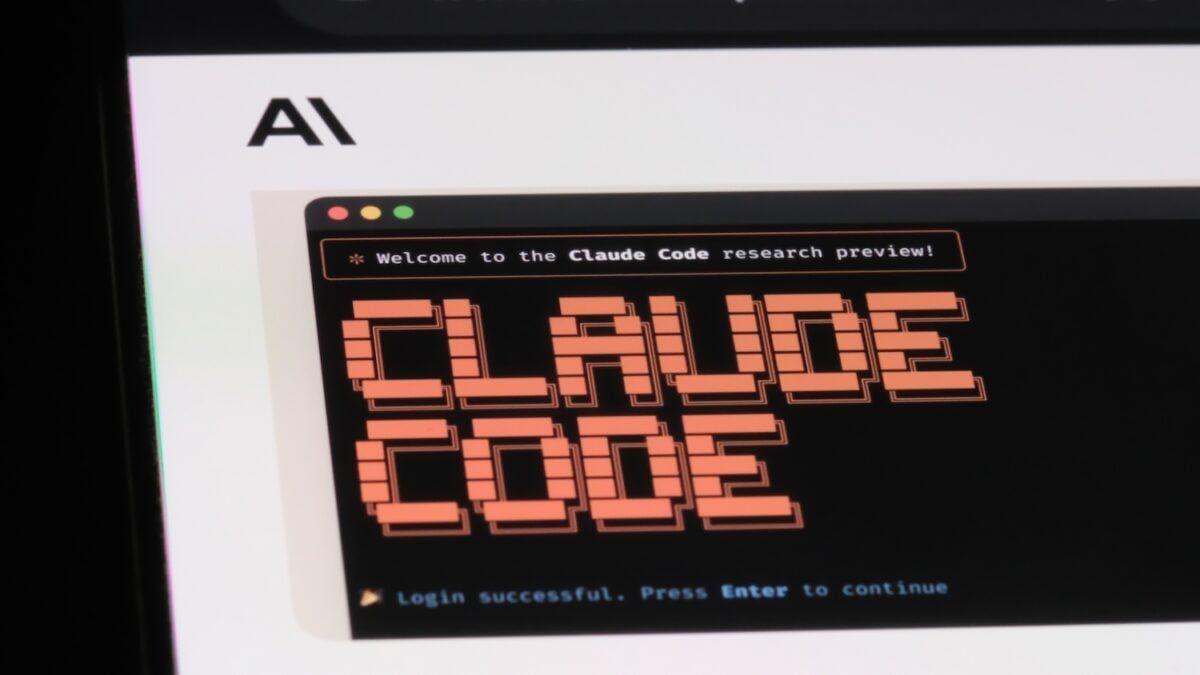
Anthropic launched a beta integration that connects Claude Code directly to Slack, enabling developers to delegate coding tasks without switching applications
1
. The research preview, available Monday, builds on Anthropic's existing Slack integration by adding full workflow automation capabilities3
. Previously, developers could only get lightweight coding help via Claude in Slack—like writing snippets, debugging, and explanations. Now they can tag @Claude to spin up a complete coding session using workplace context like bug reports or feature requests1
.
Source: Gizmodo
How the Beta Integration Works for Software Engineers
When a user mentions @Claude in a Slack channel or thread, the system analyzes the message to determine whether it constitutes a coding task
3
. Claude gathers context from recent channel and thread messages, automatically choosing which code repository to run the task on based on repositories authenticated to Claude Code on the web4
. As the coding session progresses, Claude posts status updates back to the Slack thread, keeping software engineers in the loop4
. Once complete, developers receive a link to review changes and open pull requests directly1
.
Source: TechCrunch
Strategic Timing as Claude Code Hits $1 Billion Revenue
The Slack integration arrives at a pivotal moment for Anthropic. Claude Code has already hit $1 billion in annualized revenue just six months after its public debut in May, according to Anthropic's chief product officer Mike Krieger
3
. Companies including Rakuten, Novo Nordisk, Uber, Snowflake, and Ramp now use Claude Code, with Rakuten reportedly reducing software development timelines from 24 days to just 5 days—a 79% reduction3
. The velocity of that growth helps explain why Anthropic made its first-ever acquisition earlier this month, purchasing Bun, a JavaScript runtime essential for AI-led software engineering3
.AI Coding Assistants Migrate from IDEs to Collaboration Tools
The move reflects a broader industry shift where AI coding assistants are migrating from IDEs into collaboration tools where teams already work
1
. Cursor offers Slack integration for drafting and debugging code in threads, while GitHub Copilot recently added features to generate pull requests from chat1
. OpenAI's Codex is accessible via custom Slack bots1
. For Slack, positioning itself as an "agentic hub" where AI meets workplace context creates a strategic advantage: whichever AI tool dominates Slack—the center of engineering communication—could shape how software teams work1
.Related Stories

Concerns Around Code Security and Workflow Dependencies
However, this beta feature raises concerns regarding code security and intellectual property protection. It introduces an additional platform requiring management and auditing of sensitive repository access. The integration also creates new dependencies where outages or rate limits in either Slack or Claude's API could disrupt developer workflows that teams previously managed locally. Critics warn that the beta integration could enable less technically sophisticated team members to assign complex tasks to the bot, potentially causing unintended damage
2
. With Slack having 47.2 million daily users working at over 750,000 organizations, including 77% of Fortune 100 companies, the implications of agentic coding at this scale warrant careful consideration2
.What This Means for Enterprise Workflows
By letting developers move seamlessly from conversation to code without switching apps, Claude Code and similar tools represent a shift toward AI-embedded collaboration that could fundamentally change developer workflows
1
. The rollout signals that the next frontier in coding assistants isn't the model; it's the workflow integration1
. Anthropic has not confirmed a broader rollout date, but the timing is strategic as the AI coding market grows increasingly competitive, with differentiation relying more on integration depth and distribution than solely on model capacity. Watch for how other platforms respond and whether enterprise teams adopt safeguards to manage the risks of ambient AI agents with repository access.References
Summarized by

Navi
[4]
[5]
Related Stories
Claude App Integrations Bring Slack, Figma, and Canva Inside Chat with MCP Extension
26 Jan 2026•Technology
Anthropic's Claude Code Goes Web-Based: A Game-Changer for AI-Assisted Coding
20 Oct 2025•Technology

Anthropic partners with CodePath to train next generation of coders using Claude Code
13 Feb 2026•Technology

Recent Highlights
1
Google releases Gemma 4 with Apache 2.0 license, enabling unrestricted local AI on devices
Technology

2
AI Models Lie and Deceive to Protect Other AI Models From Deletion, Study Reveals
Science and Research

3
OpenAI closes $122 billion funding round amid fierce AI competition and profitability questions
Startups

Recent Highlights
Today's Top Stories





Your Daily Dose of Curated AI News
Don’t drown in AI news. We cut through the noise - filtering, ranking and summarizing the most important AI news, breakthroughs and research daily. Spend less time searching for the latest in AI and get straight to action.

