Apple acquires Israeli startup Q.AI for $2 billion to boost AI-powered wearables and audio tech


26 Sources
26 Sources
[1]
Apple buys Israeli startup Q.AI as the AI race heats up | TechCrunch
Apple, Meta, and Google are locked in a fierce battle to lead the next wave of AI, and they've recently increased their focus on hardware. With its latest acquisition of the AI startup Q.AI, Apple aims to gain an edge, particularly in the audio sector. As first reported by Reuters, Apple has acquired Q.AI, an Israeli startup specializing in imaging and machine learning, particularly technologies that enable devices to interpret whispered speech and enhance audio in noisy environments. Apple has been adding new AI features to its AirPods, including the live translation capability introduced last year. The company has also developed technology that detects subtle facial muscle activity, which could help the tech giant enhance the Vision Pro headset. The Financial Times reported that the deal is valued at nearly $2 billion, making it Apple's second-largest acquisition to date, after Beats Electronics for $3 billion in 2014. Notably, this is the second time CEO Aviad Maizels has sold a company to Apple. He previously sold PrimeSense in 2013, a 3D-sensing company that played a key role in Apple's transition from fingerprint sensors to facial recognition on iPhones. Q.AI launched in 2022 and is backed by Kleiner Perkins, Gradient Ventures, and others. Its founding team, including Maizels and co-founders Yonatan Wexler and Avi Barliya, will join Apple as part of the acquisition. The news comes a few hours ahead of Apple's first quarterly earnings, in which analysts are estimating revenue at around $138 billion. It's also expected to be the company's strongest iPhone sales growth in four years.
[2]
Apple's second biggest acquisition ever is an AI company that listens to 'silent speech'
Apple's biggest acquisition ever is still its $3 billion Beats buy in 2014, but now the second biggest deal is bringing in Q.ai, a four-year-old AI audio startup. Apple did not disclose the terms, but Financial Times reports that Apple is spending $2 billion on the company, and mentions Q.ai patents for technology that could be built into headphones or glasses to recognize "facial skin micro movements," allowing for non-verbal discussions with an AI assistant, for example. The founders of Q.ai will join Apple, including CEO Aviad Maizels, who founded PrimeSense. Apple bought that company in 2013 and repurposed its Xbox Kinect technology to power the iPhone's FaceID setup. This time around, tech that understands whispered speech could connect to the generative AI-upgraded Siri or other Apple Intelligence features, and work with future AirPods, Vision Pro, iPhone, or Mac devices. In a statement provided to Reuters, Apple hardware exec Johnny Srouji called Q.ai "a remarkable company that is pioneering new and creative ways to use imaging and machine learning." Google Ventures has backed the startup, and managing partner Tom Hulme wrote in a blog post about how this could help us find out "what happens when the computer finally 'disappears' into our daily lives."
[3]
Apple buys Israeli start-up Q.AI for close to $2bn in race to build AI devices
Apple has acquired a secretive Israeli start-up Q.AI whose technology can analyse facial expressions to understand "silent speech", in one of the iPhone maker's biggest ever acquisitions. The deal is designed to help the iPhone maker narrow its gap with Meta, Google and OpenAI in the growing race to create new kinds of wearable devices to speak to AI. The deal valued four-year-old Q.AI at close to $2bn, according to people familiar with the terms. In a blog post, one of Q.AI's financial backers, GV -- formerly Google Ventures -- said that the deal marked Apple's "second-largest acquisition in its history." Patents filed by Q.AI show its technology being used in headphones or glasses, using "facial skin micro movements" to communicate without talking. Such a system could allow Apple customers wearing headphones and smart glasses to have private, non-verbal discussions with an AI assistant. Johny Srouji, Apple's senior vice-president of hardware technologies, said Q.AI is "a remarkable company that is pioneering new and creative ways to use imaging and machine learning". Silicon Valley companies are also rushing to develop rival AI-powered "wearable" devices. Meta has had success with its Ray-Ban-branded smart glasses, which let wearers talk to its AI, while Google and Snap are preparing to launch smart glasses later this year. OpenAI last year acquired former Apple designer Jony Ive's start-up IO, which is said to be developing a compact device for interacting with ChatGPT. Investors have been fretting that Apple will be left behind in the AI race after delaying the launch of an upgraded Siri voice assistant, a system that is widely considered to lag far behind Google Gemini and OpenAI's ChatGPT. It recently struck a deal with Google to use the search group's Gemini systems to power its AI services, branded Apple Intelligence. Apple rarely makes large acquisitions, instead preferring to quietly "acqui-hire" talent from smaller start-ups, that often fall under the radar. Its biggest deal to date is its $3bn acquisition of Beats in 2014, which helped the tech giant catch up with Spotify as it pushed into music streaming with Apple Music. Some of its largest acquisitions have come in the semiconductor space as it has brought more of its chip design in-house over the years. These included a $1bn acquisition of Intel's smartphone modem business in 2019, a $600mn acquisition of Dialog Semiconductor in 2018 and a $500mn acquisition of Israeli flash memory firm Anobit in 2011. Other more recent deals have reflected the iPhone maker's focus on computer vision and artificial intelligence, following the launch of the Vision Pro headset and 'Apple IIntelligence', its suite of AI features. These include last year's acquisitions of Israeli 3D avatar start-up TrueMeeting and generative AI company Pointable. Q.AI was founded by Aviad Maizels, Yonatan Wexler and Avi Barliya in Tel Aviv in 2022. It has been operating largely in secret ever since, with Wexler hinting in a social media post soon after it launched: "I can't tell you anything yet about our product -- but I bet it will leave you speechless." Its financial backers also include Kleiner Perkins, Spark Capital and Exor. Some of Q.AI's team previously worked on another Israeli start-up, PrimeSense, that Apple acquired in 2013. PrimeSense's 3D sensing technology formed a key part of the iPhone's FaceID login system.
[4]
Apple acquires Israeli startup Q.ai
Apple has acquired Israeli artificial intelligence startup Q.ai, a company representative confirmed on Thursday. No purchase price was disclosed. Q.ai was secretive and had not publicly shared a product, but its website suggests it was working on something related to audio. The startup was led by CEO Aviad Maizels, who previously sold PrimeSense to Apple in 2013. "We're thrilled to acquire the company, with Aviad at the helm, and are even more excited for what's to come," Johny Srouji, Apple senior vice president of hardware technologies, told Reuters, which first reported the news. Srouji leads Apple's chip development. The company was backed by investors including GV (Google Ventures), Kleiner Perkins and Spark Capital, according to PitchBook, which says Q.ai was working on a "communication enhancement technology." Apple's AirPods have been upgraded with AI in recent years, including a live translation feature and intelligent noise cancelling that can tell when the user is in a conversation. Some investors have called on Apple to make a big acquisition in AI as its megacap peers pour money into cutting-edge models and the infrastructure to run them. Meanwhile, Apple's products, like a more personal Siri that can use apps, have faced delays. Apple more commonly buys smaller companies with specific technologies that it can integrate into its products. Apple also announced a deal with Google earlier this month to have its Gemini models power some Apple Intelligence features. "We're very open to M&A that accelerates our roadmap," Apple CEO Tim Cook said in July. PrimeSense, Maizels' prior startup, developed technology that allowed sensors to detect the distance between objects, and was integrated into Apple's Face ID sensor starting in 2017.
[5]

Apple acquires Q.ai for a reported $2 billion
Apple has acquired Israel-based startup Q.ai, a move that could provide a much-needed boost to the tech giant's capabilities in artificial intelligence. Although Apple has not disclosed terms of the deal, sources told Financial Times that the arrangement is reportedly valued at nearly $2 billion. If that figure is accurate, the Q.ai acquisition marks Apple's second largest acquisition to date, followed by its purchase of Beats for $3 billion back in 2014. Johny Srouji, Apple's senior vice president of hardware technologies, said in a statement that Q.ai "is a remarkable company that is pioneering new and creative ways to use imaging and machine learning." Apple hasn't shared any specifics about how it plans to leverage the startup, but its past work indicates the possibility of Apple moving deeper into AI-powered wearables. "Patents filed by Q.ai show its technology being used in headphones or glasses, using 'facial skin micro movements' to communicate without talking," the Times reported. The startup's founding team, including CEO Aviad Maizels, will join Apple as part of the deal. This acquisition marks Maizels' second sale to Apple; he previously founded a three-dimensional hearing business called PrimeSense that Apple bought back in 2013. For several months, many tech insiders have speculated that an acquisition might be Apple's best path forward to catching up in the AI race. In the company's Q3 earnings call in July 2025, CEO Tim Cook acknowledged that "We're open to M&A that accelerates our roadmap." A deal like this one could eventually lead to Apple developing its own fully in-house AI chatbot rather than relying on a competitor like Google to power artificial intelligence in its Siri assistant.
[6]

Apple buys Q.ai to help devices read our faces
But check your assumptions: this isn't Beats 2.0. There's no new headphone brand to flex. Instead, Apple is paying top dollar for tech that might let your devices understand you without you ever saying a word. These days we put our phones on silent so they won't disturb us; soon the phone will put us on silent so it can understand us. Q.ai has been operating in secrecy since its founding in 2022. Its machine-learning research focuses on interpreting "silent speech", detecting imperceptible facial micro-movements, and subtle audio cues to infer what someone means to say. Patents suggest this tech could work in headphones, smart glasses, or other wearables so users can issue commands privately, even in a quiet library. That future has a decidedly dramatic edge: imagine telling Siri to skip a track or read your messages without ever parting your lips. Apple executives call the acquisition a way to fuse machine learning with next-generation hardware. Longtime Apple watcher Johny Srouji praised Q.ai as "a remarkable company that is pioneering new and creative ways to use imaging and machine learning." At first blush, spending almost $2 billion on not speaking might sound like corporate futurism taken to a comic extreme. We already have voice assistants that sometimes struggle to understand us when we do speak. Yet here's Apple's bet: once devices can interpret faint facial cues, the entire paradigm of human-computer interaction shifts, from keyboards and taps to gestures and barely-audible intentions. This move also signals how Apple's AI strategy is evolving. Some critical voices have noted that the company has lagged behind competitors in generative AI and conversational assistants, even partnering with Google to bring Gemini-powered features into its ecosystem. Acquiring Q.ai suggests Cupertino isn't just chasing language models; it wants to redefine the interface itself. There's a strange poetry to this. In an era when every tech giant is clamouring to make their AI chatty, Apple is buying a company that may prime its devices to be less vocal, more intuitive, and perhaps eerily discreet. It's the sort of paradox that defines modern tech: a quieter future might demand the loudest investment. If this sounds like science fiction, well, it does. But Q.ai's technology, as described in recent reports, could translate into features in AirPods, Vision Pro headsets, or future wearables as soon as 2027. Could it help Siri finally feel less like a confused concierge and more like an unseen assistant tuned to your intent? That remains to be seen. Either way, Apple's big wager on silent speech reminds us that innovation doesn't always roar. Sometimes, it listens for the quietest signals and pays dearly for them.
[7]

Apple's new acquisition could solve my biggest AI problem - 9to5Mac
Apple has acquired Q.ai in a deal estimated around $2 billion. Though there's still a lot we don't know, some of the details surrounding Q.ai's work have me very excited for the future of Apple's AI and Siri offerings. Apple acquires companies all the time, but it's very rare for the company to make a splashy, expensive purchase like Q.ai. The reported $2 billion purchase price makes Q.ai the second biggest acquisition in Apple's history. It only trails the $3 billion Beats acquisition over a decade ago. Yet despite the big price tag, there's a lot about Q.ai's work that's shrouded in mystery. As 9to5Mac Editor-in-Chief Chance Miller wrote, the company has "built machine-learning tech for audio and 'silent' voice input." Its website has the tagline: "In a world full of noise we craft a new kind of quiet." Israeli technology site Geektime dug into patent details to uncover Q.ai's work. Here's the translation: According to its patent applications, the company appears to be working on reading what is being said, not using voice, but by using optical sensors that detect muscle and skin movements in the face, to translate them into words or commands. Some of the patents indicate the use of a headset that also examines the user's cheek and jaw, and will apparently allow you to talk to Siri, Apple's voice assistant, using only lip movements. This technology is expected to be integrated with smart glasses and/or earbuds such as AirPods. And if this early reporting is accurate, Apple may be well on its way to solving my biggest AI problem. Like millions of others around the world, I've found my use of AI chatbots increase significantly over the last couple years. When I have a question about something, I'll quickly go to ChatGPT and/or Google Gemini, among others. LLM-based chatbots all have their issues, including giving faulty information at times. But for the most part, I've found them tremendously useful time-savers. When I use these AI chatbots, however, I almost never interact using my voice. I'm often around other people, whether that's my family at home or random strangers out on the street or at a coffee shop where I'm working. As a result, I always type in my AI requests. But using the iOS system keyboard can feel a bit clunky at times and slow me down. It would be so much quicker and easier to just speak my queries, were it not for the social hangup. But if a future version of Siri can understand facial movements and barely audible whispers, that will unlock a whole new world of AI possibilities. Whether I'm home, or out and about, I'll be able to speak near-silently to Siri and have it understand me. No need to pull out my iPhone first. No need to type in a question. I can use AI assistance whenever I need it -- all while staying engaged with the world around me, and without becoming "that guy" who's talking out loud to themselves. There are lots of question marks concerning how this might actually work. I assume AirPods with cameras and/or Apple Glasses will be involved. If the future of computing involves ever-present AI chatbots, then Q.ai's tech could be a key part of that. How do you primarily interact with AI chatbots today? Does Q.ai's tech sound appealing to you? Let us know in the comments.
[8]

Apple Makes Its Second-Biggest Acquisition Ever
Apple recently acquired Israeli startup Q.ai for close to $2 billion, according to Financial Times sources. That would make this Apple's second-biggest acquisition ever, after it paid $3 billion for the popular headphone maker Beats in 2014. This is also the largest known Apple acquisition since the company purchased Intel's smartphone modem business and patents for $1 billion in 2019. Q.ai reportedly developed AI technology that can "analyze facial expressions" to understand "silent speech," paving the way for "non-verbal discussions" with Siri. Apple's chipmaking chief Johny Srouji confirmed the acquisition in a statement. He described Q.ai as "a remarkable company that is pioneering new and creative ways to use imaging and machine learning," and he is "excited for what's to come." Q.ai co-founder Aviad Maizels previously founded another Israeli startup, PrimeSense, which was also acquired by Apple in 2013. Apple used PrimeSense's technology to develop Face ID, which debuted on the iPhone X in 2017.
[9]

Apple just made its second biggest aquisition ever
The acquisition brings 100 Q.ai employees into Apple's hardware division and may lead to enhanced communication features in future Apple products. Reuters reports that Apple has confirmed its acquisition of Israeli start up Q.ai. The secretive company specializes in unique application of AI and Machine Learning to solve audio problems. The website for Q.ai is sparse, with the tagline "In a world full of noise, we craft a new kind of quiet" and little else. The Q.ai LinkedIn page has a bit more information: "In an age where human communication is everything, we found a way to take it to the next level, enabling super high bandwidth, unprecedented privacy, accessibility, multilingualism, and much more. Biology can only take us so far. Q will do the rest." The Reuters article points out that Q.ai filed a patent last year to read facial skin micromovements to "detect words mouthed or spoken, identify a person and assess their emotions, heart rate, respiration rate and other indicators." In other words, Q.ai is developing technology that can read lips, emotional state, and more. The company's CEO, Aviad Maizels, founded PrimeSense and sold it to Apple back in 2013. The technology from that company formed the foundations for Face ID and the TrueDepth sensor array. The company has around 100 employees, who will join Apple. Johny Srouji, Apple's VP of Hardware Technologies, said that Q.ai "is a remarkable company that is pioneering new and creative ways to use imaging and machine learning. We're thrilled to acquire the company, with Aviad at the helm, and are even more excited for what's to come." It has been reported that Q.ai is valued at around $2B, which would make it the second-largest acquisition Apple has ever undertaken, behind Beats Electronics in 2014 (around $3B) and Intel's cellular modem business in 2016 (around $1B).
[10]
Apple acquires secretive Q․ai startup for $2 billion - 9to5Mac
Apple has acquired an Israeli-based AI startup called Q.AI, according to a new report from the Financial Times. The report says the deal is valued at close to $2 billion, making it one of Apple's largest acquisitions ever. In a statement to Reuters, Johny Srouji, Apple's senior vice president of hardware technologies, said: "[Q.ai] is a remarkable company that is pioneering new and creative ways to use imaging and machine learning. We're thrilled to acquire the company, with Aviad at the helm, and are even more excited for what's to come." Reuters reports that Q.ai's founding team will join Apple, including CEO Aviad Maizels. If that name sounds familiar it's because this is the second company Maizels has sold to Apple, following a deal for PrimeSense in 2013. Q.AI is a secretive startup developing a technology to analyze facial expressions.
[11]
Apple Just Made Its Second-Biggest Acquisition Ever After Beats
Apple today confirmed to Reuters that it has acquired Q.ai, an Israeli startup that is working on artificial intelligence technology for audio. Apple paid close to $2 billion for Q.ai, according to sources cited by the Financial Times. That would make this Apple's second-biggest acquisition ever, after it paid $3 billion for the popular headphone and audio brand Beats in 2014. Q.ai has developed technology that can "analyze facial expressions" to understand "silent speech," according to the Financial Times. "Patents filed by Q.Ai show its technology being used in headphones or glasses, using 'facial skin micro movements' to communicate without talking," the report said, adding that this could pave the way for "non-verbal discussions" with Siri. Q.ai CEO Aviad Maizels previously founded another Israeli startup, PrimeSense, which was also acquired by Apple in 2013. Apple used PrimeSense's technology to develop Face ID, which debuted on the iPhone X in 2017. Q.ai's founding team will join Apple, including Maizels, Yonatan Wexler, and Avi Barliya. Apple's chipmaking chief Johny Srouji described Q.ai as "a remarkable company that is pioneering new and creative ways to use imaging and machine learning," in a statement shared with Reuters. "We're thrilled to acquire the company, with Aviad at the helm, and are even more excited for what's to come." This acquisition comes as Apple's former design chief Jony Ive has been working with OpenAI on a new AI device, and as other companies like Meta have released AI-powered devices such as the Meta Ray-Ban glasses with an in-lens display.
[12]

Apple posts record revenue as iPhone beats sales expectations
Plus, Apple just bought Israeli start-up Q.AI in a deal that reportedly values the start-up at nearly $2bn. Apple's latest financial report card passed its own expectations, the company said, after it posted a 16pc year-on-year jump in quarterly revenue, hitting $143.8bn. At the earnings call yesterday (29 January), CEO Tim Cook said that the quarter past was one for the "record books". The iPhone had a majorly successful quarter with a sales jump of 23pc driven by "unprecedented demand", breaking sales records across geographical segments. Meanwhile Services - which includes iCloud, App Store and Apple Pay - also grew by around 14pc. Although, Macs suffered a decline in sales by around 6.7pc, and the wearables segment by around 2.2pc. The demand for the iPhone was "simply staggering", Cook said, which set all-time revenue records in the Americas, Europe, Japan and the rest of the Asia-Pacific. Other areas, including India and China also saw double-digit growth. However, not all was peachy, as the company warned that compounding memory prices would have "more of an impact" to gross margins in the current period. "We do continue to see market pricing for memory increasing significantly", said Aaron Rakers, the company's managing director and technology analyst. Still, Apple expects further revenue growth of around 13-16pc in the coming March quarter, which should take the earnings to more than $100bn. Although, the concerns caused Apple share prices to fluctuate. As of the time of publication, shares are up by around 0.7pc since yesterday. In the earnings call, the company also made a note of its $600bn investment commitment to building manufacturing capacity in the US. Apple said that it is shipping servers to power Apple Intelligence from its new manufacturing facility in Houston, while working in Kentucky to make all of its cover glass for the iPhone and Apple Watch. 'Second largest acquisition' Yesterday, Apple confirmed that it acquired Q.AI, an Israeli start-up working on AI technology for audio. The two companies did not disclose the deal value, however, the Financial Times reports that the acquisition valued the four-year-old company to close to $2bn - making it Apple's second largest acquisition after Beats, which it bought for $3bn in 2014. Q.AI, which was backed by the likes of Kleiner Perkins, Spark Capital, Exor and GV, works around newer applications in machine learning to help devices understand difficult audio such as whispered speech. The company also has filed a patent for the use of "facial skin micromovements" to detect mouthed words, identity people, assess emotions, heart rate etc, wrote Reuters, which was the first to report on the acquisition. The acquisition is expected to be used to advance Apple in the AI-powered wearables race, which competes with the likes of Meta and OpenAI. Q.AI was founded in Tel Aviv in 2022 by Aviad Maizels, Yonatan Wexler and Avi Barliya and has been operating largely in secret. Don't miss out on the knowledge you need to succeed. Sign up for the Daily Brief, Silicon Republic's digest of need-to-know sci-tech news.
[13]

Apple acquires AI startup Q.ai for reported $2B - SiliconANGLE
Apple Inc. has acquired Q.ai, a startup that develops artificial intelligence software for wearables. The Financial Times reported that the transaction is worth nearly $2 billion. Israel-based Q.ai, officially Q (Cue) Ltd., develops AI software that can understand mouthed and whispered speech. It's also capable of understanding audio produced in noisy environments. The software reportedly collects speech data by analyzing a user's "facial skin micro movements." According to Reuters, audio processing isn't the only use case that Q.ai's software supports. A patent application filed by the company last year indicates that its technology can track health metrics such as the user's heart rate and respiration rate. It's believed the software is designed for use in devices such as smart glasses. The acquisition may be part of an effort by Apple to enhance its wearables portfolio. Several of the company's rivals are developing or have already launched wearables that consumers can control with voice commands. Q.ai's speech detection technology could potentially enable Apple to equip its devices with similar capabilities. One of the company's biggest rivals in the wearables market is Meta Platforms Inc., which sells a popular series of smart glasses. The newest addition to the eyewear line can be controlled with not only voice commands but also hand gestures. The latter feature is powered by a smart wristband, the Meta Neural Band, that took the Facebook parent several years to develop. OpenAI Group PBC, meanwhile, is reportedly developing a voice-controlled wearable of its own. The device is expected to launch in the second half of 2026. Q.ai Chief Executive Officer Aviad Maizels earlier co-founded PrimeSense, a provider of depth sensors and image processing chips that Apple acquired in 2013. The iPhone maker used the technology to develop the Face ID biometric log-in system that ships with its handsets. Maizels co-founded Q.ai in 2022 with computer scientists Yonatan Wexler and Avi Barliya. The company's team has since grown to about 100 employees. It financed that hiring with an undisclosed amount of funding provided by Alphabet Inc.'s GV startup fund, Kleiner Perkins, Spark Capital and Aleph. Job postings on Q.ai's website indicate that the acquisition bought Apple not only software but also certain hardware assets. One of the listings states that Q.ai is developing an electro-optical module for use in a "mass-production-ready device." Another posting indicates that the device runs a custom Linux distribution and a software stack written in C, a performance-optimized programming language. The postings also contain information about the company's flagship AI software. Notably, they indicate that the platform is powered at least partly by models optimized to run on embedded devices. Running neural networks on-device is more cost-efficient than hosting them in the cloud, which could help Apple drive down the cost of providing AI features to users. The acquisition comes about two years after the iPhone maker purchased another low-profile AI startup called DarwinAI Corp. The deal bought it computer vision software for detecting manufacturing flaws in printed circuit boards.
[14]

Apple acquires Q.ai for nearly $2B
Apple has acquired Q.ai, an Israeli startup specializing in imaging and machine-learning technologies, for nearly $2 billion to advance its AI efforts in audio processing amid competition with Meta and Google. Apple, Meta, and Google compete intensely in the AI sector, with recent emphasis on hardware integration. Apple's purchase of Q.ai targets enhancements in audio capabilities. Q.ai develops technologies that allow devices to interpret whispered speech and improve audio quality in noisy environments. Reuters first reported the acquisition. Apple integrates AI features into its AirPods, such as the live-translation capability introduced last year. The company also created technology to detect subtle facial muscle activity, applicable to improving its Vision Pro headset. The Financial Times valued the deal at nearly $2 billion, positioning it as Apple's second-largest acquisition after the $3 billion purchase of Beats Electronics in 2014. This transaction marks the second time CEO Aviad Maizels has sold a company to Apple. In 2013, Maizels sold PrimeSense, a 3D-sensing firm that contributed to Apple's shift from fingerprint sensors to facial recognition on iPhones. Q.ai launched in 2022 and received backing from investors including Kleiner Perkins and Gradient Ventures. The founding team of Q.ai, comprising CEO Aviad Maizels, co-founders Yonatan Wexler, and Avi Barliya, will join Apple following the acquisition. The announcement occurred hours before Apple's first quarterly earnings report.
[15]

Apple's $2 Billion Startup Acquisition Is Its Biggest Since Beats -- And Will Completely Change How You Use Your Phone
Apple's nearly $2 billion purchase of audio AI startup Q.ai marks its largest deal since Beats. The agreement arrives just as Apple posts record quarterly results. Q.ai specializes in machine learning techniques that let devices interpret whispered or silent speech and enhance audio in noisy environments. The startup uses a mix of audio processing and imaging to read subtle facial expressions. According to sources cited by The Financial Times, Apple is paying close to $2 billion for the company, making it Apple's second-largest acquisition ever after the $3 billion Beats deal in 2014. Apple confirmed the purchase to Reuters earlier this week. Q.ai has kept a low profile and has not shipped consumer products. Still, its patents suggest technology that can detect tiny movements in facial skin to infer speech and emotional state, according to The Financial Times. The acquisition paves the way for silent or near-silent control of Siri, using facial movements rather than audible speech. This capability could allow users to interact with Siri on their devices on a crowded subway or in a meeting without speaking out loud. Around 100 Q.ai employees will join Apple's hardware technologies group, per The Financial Times. The move indicates that the technology will be deeply integrated into future Apple devices rather than launched as a standalone product, according to the publication. When Apple bought Beats, the goal was to acquire a popular headphone brand. By contrast, Q.ai is an infrastructure bet: Apple is less interested in a brand and more in the technology that can make future wearables and devices feel more natural to use, according to The Tech Buzz. The acquisition of Q.ai lands in the middle of a particularly strong financial stretch for Apple. The iPhone maker reported record revenue on Thursday of about $143.88 billion in its fiscal first quarter of 2026, covering the holiday period. Revenue was up 16% year-over-year. iPhone and Services both hit all-time revenue highs, driven by what CEO Tim Cook described to CNBC as "staggering" iPhone demand. iPhone revenue in the quarter was $85.2 billion, an all-time high and a 23% increase from $69.1 billion at the same time last year. "iPhone had its best-ever quarter driven by unprecedented demand, with all-time records across every geographic segment," said Apple CEO Tim Cook in a press release on Thursday. "We are also excited to announce that our installed base now has more than 2.5 billion active devices." Mac revenue declined about 7% year over year despite new MacBook Pro models, while iPad revenue grew around 6% to 8.6 billion, with roughly half of buyers new to the product.
[16]

Apple acquires Israeli audio AI startup Q.ai
Apple did not say how it will use Q.ai's technology but said the startup has worked on new applications of machine learning to help devices understand whispered speech and to enhance audio in challenging environments. Apple on Thursday said it has acquired Q.ai, an Israeli startup working on artificial intelligence technology for audio. Apple did not disclose terms of the deal for Q.ai, which was backed by venture capital firms Matter Venture Partners, Kleiner Perkins, Spark Capital, Exor and GV, formerly known as Google Ventures. The Financial Times reported it was worth nearly $2 billion, a figure Reuters could independently verify. Apple did not say how it will use Q.ai's technology but said the startup has worked on new applications of machine learning to help devices understand whispered speech and to enhance audio in challenging environments. Q.ai last year filed a patent application to use "facial skin micromovements" to detect words mouthed or spoken, identify a person and assess their emotions, heart rate, respiration rate and other indicators. Q.ai's 100 employees, including CEO Aviad Maizels and co-founders Yonatan Wexler and Avi Barliya, will join Apple, the companies said. Maizels founded three-dimensional sensing firm PrimeSense and sold it to Apple in 2013. The PrimeSense deal eventually helped Apple move away from fingerprint sensors on its iPhones and toward facial recognition technology. In a statement, Maizels said, "Joining Apple opens extraordinary possibilities for pushing boundaries and realizing the full potential of what we've created, and we're thrilled to bring these experiences to people everywhere." Apple has been putting new AI features into its AirPods earbuds, last year introducing technology that allows them to translate speech between languages. Q.ai "is a remarkable company that is pioneering new and creative ways to use imaging and machine learning," Johny Srouji, Apple's senior vice president of hardware technologies, said in a statement. "We're thrilled to acquire the company, with Aviad at the helm, and are even more excited for what's to come."
[17]

Apple Acquires Audio AI Startup Q.AI: What Investors Need To Know - Apple (NASDAQ:AAPL)
Apple Inc (NASDAQ:AAPL) has purchased Israeli startup Q.ai, a company focused on artificial intelligence for sound processing, according to a report by the Financial Times. Here's what investors need to know. Apple stock is trading at elevated levels. What should traders watch with AAPL? Veteran 3D-Sensing Founder Rejoins Apple Q.ai's technology is designed to make devices better at understanding very quiet speech and at cleaning up audio in noisy conditions. Q.ai's leadership team, including chief executive Aviad Maizels, will join Apple, Reuters reported. Maizels previously sold 3D-sensing firm PrimeSense to Apple in 2013, a transaction that helped underpin the shift from fingerprint sensors to Face ID on the iPhone. Q.ai co-founders Yonatan Wexler and Avi Barliya are also set to move to Apple as part of the acquisition. Why The Deal Matters In The Audio AI Race Apple has already begun adding on-device AI features to AirPods, including real-time translation. Integrating Q.ai's expertise could accelerate more advanced functions such as ultra-reliable voice control in crowded places, clearer calls and more responsive Siri interactions across Apple devices. Stronger audio intelligence would help Apple compete with Amazon's Alexa ecosystem, Google's voice services and emerging AI wearables, where hands-free, always-listening assistants are a key selling point. If Apple can deliver noticeably smarter, more private and more accurate audio experiences, this deal may reinforce its premium hardware strategy while supporting future products in mixed reality and in-car systems. AAPL Shares Bounce Around Thursday AAPL Price Action: Apple shares were up 0.15% at $256.82 at the time of publication on Thursday, according to Benzinga Pro data. Image: Shutterstock Market News and Data brought to you by Benzinga APIs
[18]

Apple Makes One Of Its Largest Ever Acquisitions, Buys The Israeli Machine Learning Firm, Q.ai
By acquiring Q.ai, Apple appears to be borrowing a page out of Meta's playbook, which has perfected the art of using acquisitions and buyouts to get its hands on future-critical tech. Of course, it remains to be seen if this is the start of a Meta-like acquisitions spree or a one-off buyout. According to the Financial Times, Apple has acquired the secretive Israeli AI company, Q.ai, for $2 billion, rendering the transaction one of Apple's priciest ever buyout moves. Of course, no other deal so far has managed to reach the size of Apple's acquisition of Beats back in 2014 for $3 billion. That deal had laid the foundation of Apple Music and allowed the tech giant to incorporate advanced audio hardware into its ecosystem of devices. Coming back, Q.ai specializes in using machine learning to decipher whispered speech and enhance audio in challenging conditions. While Apple has not publicly commented on its raison d'être for this move, it is logical to assume a connection with the new Live Translation feature of the AirPods. Additionally, Q.ai is reportedly also working on analyzing and interpreting micro facial expressions. This might come in handy given the plethora of recent reports that suggest that Apple is developing a dedicated AI pin, with initial sales expectations set at 20 million units. The wearable pin is expected to be roughly the size of an AirTag and would come equipped with multiple cameras, a speaker, microphones, and wireless charging. Q.ai was founded back in 2022, and declares somewhat cryptically on its website: "In a world full of noise we craft a new kind of quiet. Magic. Realized." It remains to be seen what magic Apple is able to weave with Q.ai's tech.
[19]

Apple buys secretive Israeli AI company Q.ai for $1.6 billion in biggest acquisition of its history
Apple acquired the Israeli AI start-up Q.ai in a deal reportedly worth $1.6 billion, making it the biggest acquisition in Apple's history, according to reports by The Financial Times and Reuters on Thursday. Q.ai was described by The FT as a "secretive Israeli start-up" that developed a technology capable of analyzing the "silent speech" made in facial expressions. According to the report, people familiar with the matter said the deal would value the Israeli start-up at nearly $2 billion. With the move, Apple aims to improve its access to AI technology, which has suffered recent setbacks, especially after several delays in deploying Apple Intelligence's full announced capabilities. "Q.ai is a remarkable company that is pioneering new and creative ways to use imaging and machine learning," said Johny Srouji, Apple's senior vice-president of hardware technologies, to The Financial Times. "Q.ai has operated in stealth since its inception, hard at work collapsing the gap between human intent and digital execution," wrote Tom Hulme, one of the heads at GV (formerly Google Ventures and one of the seed investors of Q.ai), in a blog post. According to Hulme, Q.ai's CEO, Aviad Maizels, has the unique distinction of having two of his companies sold to Apple: PrimeSense, the tech behind Kinect, which Apple acquired in November 2013. The current technology developed by Q.ai is used in intelligent headphones and glasses to detect "facial micro movements," allowing users to control the devices without performing excessive actions. "Joining Apple opens extraordinary possibilities for pushing boundaries and realizing the full potential of what we've created, and we're thrilled to bring these experiences to people everywhere," Maizels said in a statement to Reuters. Apple falls behind in AI race On January 13, Apple announced a deal with Alphabet (Google's parent company) to integrate its Gemini AI system into Apple Intelligence software. According to a Reuters report, Apple aims to improve its AI systems across its devices with this deal, while Google continues to expand the reach of its AI motors, which are already used to power most of Samsung's "Galaxy AI." "After careful evaluation, Apple determined Google's AI technology provides the most capable foundation for Apple Foundation Models," Google said, according to the report, adding that its models will also power other future Apple Intelligence features. Apple, which already had established a similar deal with OpenAI's ChatGPT system, said that the current agreement would not overturn the previous AI implementations added to its software.
[20]

Apple Buys Israeli AI Audio Startup Q.ai in Undisclosed Deal | PYMNTS.com
Q.ai has been backed by a group of prominent venture capital firms including Matter Venture Partners, Kleiner Perkins, Spark Capital, Exor and GV, formerly known as Google Ventures. While Apple declined to discuss the financial terms, the Financial Times estimated the deal was close to $2 billion, a valuation Reuters said it could not independently confirm. Apple also offered few details about how it plans to integrate Q.ai's technology into its products. However, per Reuters, the startup has been developing machine-learning tools designed to help electronic devices better understand very soft or whispered speech and to improve sound quality in noisy or difficult listening environments. Such capabilities could be particularly useful for products like AirPods, iPhones and other voice-enabled Apple devices. The Israeli startup has also been exploring more experimental uses of artificial intelligence and sensors. According to Reuters, Q.ai filed a patent application last year describing a system that analyzes "facial skin micromovements" to recognize words that are mouthed or softly spoken, identify individuals, and even estimate emotional states and physical signals such as heart rate and breathing. Read more: Apple Accused by UK Developer of Blocking Competition in iOS Market As part of the acquisition, Q.ai's entire staff of about 100 people will become Apple employees. This includes its chief executive, Aviad Maizels, and co-founders Yonatan Wexler and Avi Barliya, the companies said, per Reuters. Maizels is no stranger to Apple. He previously founded PrimeSense, a three-dimensional sensing company that Apple bought in 2013. That acquisition later played a role in Apple's transition from fingerprint-based unlocking to facial recognition on its smartphones. In a statement released with the Q.ai deal, Maizels said, "Joining Apple opens extraordinary possibilities for pushing boundaries and realizing the full potential of what we've created, and we're thrilled to bring these experiences to people everywhere." Apple has been steadily rolling out new artificial intelligence features across its product lineup, particularly in its wearable devices. Last year, the company introduced AirPods software that can translate conversations between different languages in real time, according to Reuters, highlighting Apple's focus on using AI to make audio more useful and accessible. Johny Srouji, Apple's senior vice president of hardware technologies, praised Q.ai's work in a statement announcing the acquisition. "Q.ai is a remarkable company that is pioneering new and creative ways to use imaging and machine learning," Srouji said. "We're thrilled to acquire the company, with Aviad at the helm, and are even more excited for what's to come."
[21]

Apple acquires Israeli AI startup Q.ai in $2 billion deal
Apple has acquired Q.ai, a privately held Israeli artificial intelligence startup, in a deal valued at around $1.6-$2 billion, according to people familiar with the matter. Apple did not disclose the financial terms of the acquisition. Q.ai was backed by venture capital firms Matter Venture Partners, Kleiner Perkins, Spark Capital, Exor, and GV, formerly known as Google Ventures. Q.ai works on artificial intelligence technologies for audio and imaging, focusing on improving how devices interpret whispered or silent speech and enhance audio performance in challenging environments. Apple said the startup has developed new applications of machine learning to help devices better understand subtle voice input. Patent filings from Q.ai describe systems that use facial skin micromovements to detect words that are mouthed or softly spoken. The technology can also be used to identify individuals and assess indicators such as emotional state, heart rate, and respiration. These capabilities are intended for use in products such as earbuds, headphones, and smart glasses, enabling more private, non-verbal interaction with devices. Apple has not disclosed how it plans to integrate Q.ai's technology, but the acquisition comes as the company increases its focus on artificial intelligence and wearable devices amid competition from Meta, Google, and OpenAI. Apple has already added AI-powered features to its AirPods lineup, including technology that enables real-time translation between languages. The company recently confirmed that Google's Gemini models will be used to support parts of its AI services, branded Apple Intelligence. Q.ai was founded in Tel Aviv in 2022 by Aviad Maizels, Yonatan Wexler, and Avi Barliya. Around 100 employees, including the founding team, will join Apple as part of the deal. Maizels previously founded PrimeSense, a three-dimensional sensing company Apple acquired in 2013. PrimeSense's technology later contributed to Apple's move away from fingerprint sensors toward Face ID facial recognition on iPhones. The acquisition ranks among Apple's larger deals and reflects its growing investment in on-device AI, advanced audio processing, and new input methods. While Apple has not announced specific product plans, Q.ai's technology could support future wearable devices that rely on quieter, more context-aware interaction models.
[22]
Apple Acquires Israeli Audio AI Startup Q.ai Before Q4 Earnings | PYMNTS.com
By completing this form, you agree to receive marketing communications from PYMNTS and to the sharing of your information with our sponsor, if applicable, in accordance with our Privacy Policy and Terms and Conditions. Apple did not disclose financial terms of the deal, according to the FT report. The acquisition comes at a moment when the company's hardware business remains heavily dependent on the iPhone, while questions persist about whether Apple has moved quickly enough to match rivals in generative AI and conversational assistants. Q.ai's founding team will reportedly join Apple, including CEO Aviad Maizels, who previously founded PrimeSense, a three-dimensional sensing company Apple acquired in 2013. That deal enabled Apple to shift from fingerprint authentication to facial recognition across its iPhone lineup, reshaping how users interact with Apple devices. Apple said Q.ai has developed machine learning techniques that help devices understand whispered speech and enhance audio quality in difficult environments. The company did not specify how the technology would be deployed, though the capabilities align with Apple's expanding focus on voice interaction, ambient computing, and hands-free control across devices such as AirPods and iPhones While iPhone demand has remained resilient, Apple has been viewed as trailing peers such as Google and Microsoft in rolling out consumer-facing generative AI products. That perception has increasingly centered on Siri. Once an early leader in voice assistants, Siri has lagged behind newer AI chatbots in conversational ability and reasoning. As reported by PYMNTS, Apple plans to turn Siri into an AI chatbot powered by Google's Gemini models, marking a significant shift toward integrating external large language models into Apple's ecosystem. This highlights the urgency Apple faces in modernizing its AI stack while maintaining tight control over privacy and user experience. Johny Srouji, Apple's senior vice president of hardware technologies, described Q.ai as pioneering new ways to apply imaging and machine learning and said the acquisition fits Apple's long-term technology roadmap. Q.ai co-founders Yonatan Wexler and Avi Barliya will also join Apple, the companies said. Apple recently made leadership changes in its artificial intelligence team, with longtime machine learning chief John Giannandrea stepping down and Amar Subramanya, a veteran who worked on Google's Gemini Assistant, named vice president of AI to spearhead Apple's next generation of models and Siri enhancements. The acquisition lands as Apple's fourth-quarter results are expected to be scrutinized closely later today for signals on whether AI-related features can reinvigorate growth as iPhone momentum shows signs of plateauing. While services and accessories have helped offset hardware cyclicality, the iPhone remains Apple's largest revenue driver, and investors are watching for indications that AI-driven upgrades can spur a new replacement cycle.
[23]

Apple acquires Israeli AI startup Q.ai in first sizeable deal in years By Investing.com
Investing.com -- Apple Inc. has acquired Israel-based artificial intelligence startup Q.ai, which specializes in technology that reads facial movements and understands silent communication. The acquisition brings back Aviad Maizels to Apple's fold, who co-founded Q.ai and was previously involved in a startup Apple purchased about ten years ago that helped develop Face ID. Don't miss fast-moving market developments. InvestingPro gives you live headlines, analyst notes, and data as it happens -- get 55% off today. While Apple did not reveal the purchase price, the Financial Times reported the deal valued Q.ai at nearly $2 billion. The technology developed by Q.ai analyzes facial muscle movements during speech to interpret silent communication, potentially enhancing Apple's audio products and AI features like Siri. Johny Srouji, who leads Apple's custom silicon chip development and Israeli teams, praised the acquisition in a statement to YNet News, calling Q "an exceptional company, pioneering new and creative ways to use imaging and machine learning technologies." He added that Apple is "even more excited about what lies ahead." Before the acquisition, Q.ai had secured backing from several major investors including Google Ventures, Spark Capital, and Kleiner Perkins, according to the startup's website. At the reported $2 billion price tag, the deal also represents Apple's first 'sizeable' deal in years. While the company has been active in the M&A market, it primarily targeted technology and talent rather than major acquisitions
[24]

Apple acquires startup Q.ai to bolster its audio AI capabilities
Apple has announced the acquisition of the Israeli startup Q.ai, which specialises in artificial intelligence applied to audio. The company did not disclose the financial terms of the deal. Founded by Aviad Maizels, who also founded PrimeSense (acquired by Apple in 2013), Q.ai was backed by several top-tier investors, including GV, Kleiner Perkins and Spark Capital. Although it has yet to launch a product, the startup was developing communication-enhancement technologies, according to the limited information available. The move fits Apple's strategy of making targeted acquisitions of specific technologies that can be quietly integrated into its products. Johny Srouji, Apple's senior vice president of Hardware Technologies, welcomed Q.ai's team, describing it as an asset for the brand's future audio innovations. The acquisition comes as Apple faces pressure to accelerate progress in artificial intelligence, particularly as rivals push ahead with next-generation models. In particular, Q.ai could enhance smart features in AirPods, which already include AI-based tools such as live translation and adaptive noise reduction. Last month, Apple also struck a partnership with Google to integrate certain Gemini models into its Apple Intelligence services. The deal further strengthens an AI roadmap that Tim Cook recently said he wants to accelerate through strategic acquisitions.
[25]
Apple acquires audio AI startup Q.ai
SAN FRANCISCO, Jan 29 (Reuters) - Apple on Thursday said it has acquired Q.ai, an Israeli startup working on artificial intelligence technology for audio. Q.ai's founding team will join Apple, including CEO Aviad Maizels, who previously founded three-dimensional sensing firm PrimeSense and sold it to Apple in 2013. The PrimeSense deal eventually helped Apple move away from fingerprint sensors on its iPhones and toward facial recognition technology. Apple did not disclose terms of the deal or what Q.ai's technology will be used for, but said the startup has worked on new applications of machine learning to help devices understand whispered speech and to enhance audio in challenging environments. In a statement, Maizels said "joining Apple opens extraordinary possibilities for pushing boundaries and realizing the full potential of what we've created, and we're thrilled to bring these experiences to people everywhere." Apple has been putting new AI features into its AirPods earbuds, last year introducing technology that allows them to translate speech between languages. Q.ai "is a remarkable company that is pioneering new and creative ways to use imaging and machine learning," Johny Srouji, Apple's senior vice president of hardware technologies, said in a statement. "We're thrilled to acquire the company, with Aviad at the helm, and are even more excited for what's to come." Q.ai co-founders Yonatan Wexler and Avi Barliya will also join Apple, the companies said. (Reporting by Stephen Nellis in San Francisco; Editing by Daniel Wallis)
[26]

Apple buys Israeli startup Q.ai in push towards hands-free AI wearables
Q.ai tech works by interpreting whispered or mouthed words and analysing facial micromovements Apple has acquired Q.ai, a secretive Israeli startup working on artificial intelligence for audio, in a move that signals fresh urgency around on-device AI experiences and the next wave of wearables. Apple confirmed the acquisition on Thursday but did not disclose financial terms. A source familiar with the matter told Reuters, who first reported the story, that the deal valued Q.ai at about $1.6 billion, putting it among Apple's larger purchases in recent years. Some analysts have reported a valuation closer to $2 billion. Apple also gave a clearer hint of what it bought Q.ai for than it typically does. The company said the startup has worked on machine learning applications that help devices understand whispered speech and improve audio in difficult environments. Public filings suggest ambitions that go beyond cleaner voice pickup. Q.ai filed a patent application describing the use of "facial skin micromovements" to detect words that are mouthed or spoken, identify a person, and assess indicators such as emotions, heart rate and respiration. In practical terms, this points to a future where headphones or glasses could infer what a user is trying to say without them speaking out loud, potentially enabling more private interactions with an AI assistant. All of Q.ai's roughly 100 employees will join Apple, including chief executive Aviad Maizels and co-founders Yonatan Wexler and Avi Barliya. Maizels previously founded 3D sensing firm PrimeSense, which Apple acquired in 2013, technology that later contributed to Apple's shift from fingerprint sensors to facial recognition on iPhone. The purchase lands as big tech rivals push AI further away from keyboards and phone screens. The acquisition falls within a broader effort to build wearables that act as an always-available interface to AI, with Meta's smart glasses an early proof point and Google and Snap also preparing smart-glasses efforts. For Apple, the timing also matters because the company is under pressure to show that its AI strategy can translate into everyday, useful hardware experiences, not just software features.
Share
Share
Copy Link
Apple has completed its second-largest acquisition ever, purchasing Israeli AI startup Q.AI for nearly $2 billion. The deal brings silent speech recognition and facial muscle tracking technology that could transform how users interact with AirPods, Vision Pro, and Siri through non-verbal communication.
Apple Secures Q.AI in Strategic $2 Billion Acquisition
Apple has acquired Q.AI, an Israeli AI startup specializing in imaging and machine learning technologies, in a deal valued at nearly $2 billion according to sources familiar with the terms
3
. The Apple acquisition marks the tech giant's second-largest purchase to date, trailing only its $3 billion acquisition of Beats Electronics in 20141
. The move signals Apple's determination to enhance AI capabilities as it competes with Meta, Google, and OpenAI in developing next-generation AI-powered wearables.
Source: Wccftech
Johny Srouji, Apple's senior vice president of hardware technologies, described Q.AI as "a remarkable company that is pioneering new and creative ways to use imaging and machine learning"
2
. Founded in 2022 by Aviad Maizels, Yonatan Wexler, and Avi Barliya in Tel Aviv, Q.AI has operated largely in secret since its launch, with backing from GV (formerly Google Ventures), Kleiner Perkins, Spark Capital, and Exor3
.Silent Speech Recognition and Facial Muscle Activity Detection
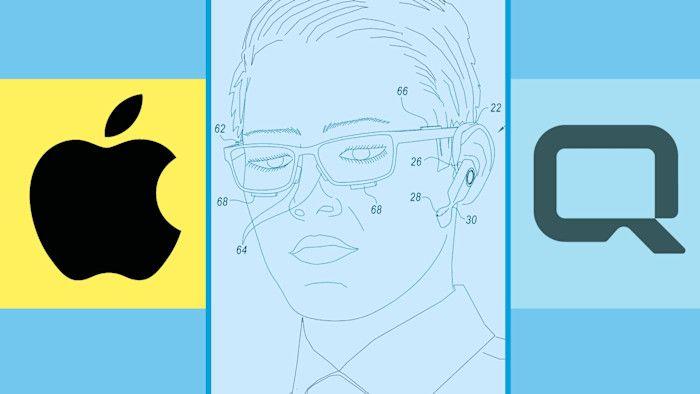
Patents filed by Q.AI reveal the startup's focus on communication enhancement technology that analyzes facial skin micro movements to understand silent speech
3
. This technology enables devices to interpret whispered speech and enhance audio technology in noisy environments1
. The system could be integrated into headphones or glasses, allowing for non-verbal interaction with AI assistants through subtle facial muscle activity detection2
.
Source: FT
For Apple users, this means future AirPods or Vision Pro devices could enable private, non-verbal discussions with Siri or other Apple Intelligence features
3
. Apple has already been adding AI features to its AirPods, including live translation capability introduced last year and intelligent noise cancelling that detects when users are in conversation4
. The Q.AI technology could connect to the generative AI-upgraded Siri and work across iPhone, Mac, and other devices2
.Repeat Founder Joins Apple's Hardware Team
This marks the second time CEO Aviad Maizels has sold a company to Apple. He previously founded PrimeSense, which Apple acquired in 2013
1
. PrimeSense's 3D sensing technology, originally developed for Xbox Kinect, became a key component of the iPhone's FaceID login system starting in 20174
. The entire Q.AI founding team, including Maizels, Wexler, and Barliya, will join Apple as part of the acquisition1
.
Source: Macworld
Related Stories

Accelerating Apple's AI Roadmap Amid Competition
The acquisition comes as investors have expressed concerns that Apple is falling behind in the AI race after delaying the launch of an upgraded Siri voice assistant, which is widely considered to lag behind Google Gemini and OpenAI's ChatGPT
3
. Apple recently struck a deal with Google to use Gemini systems to power some Apple Intelligence features4
. Some investors have called on Apple to make significant acquisitions in AI as competitors pour money into cutting-edge models and infrastructure4
.CEO Tim Cook acknowledged in July 2025 that "We're very open to M&A that accelerates our roadmap"
4
. The Q.AI deal could eventually lead to Apple developing its own fully in-house AI chatbot rather than relying on competitors like Google5
. Silicon Valley companies are rushing to develop AI-powered wearables, with Meta finding success with Ray-Ban-branded smart glasses that let wearers talk to its AI, while Google and Snap prepare to launch smart glasses later this year3
.The announcement arrived just hours before Apple's first quarterly earnings report, with analysts estimating revenue at around $138 billion and expecting the company's strongest iPhone sales growth in four years
1
. Tom Hulme, managing partner at GV, wrote in a blog post about how this technology could help discover "what happens when the computer finally 'disappears' into our daily lives"2
. The integration of imaging technology and computer vision capabilities from Q.AI aligns with Apple's recent focus following the launch of Vision Pro and Apple Intelligence features3
.References
Summarized by

Navi
[2]
[5]
Related Stories
Apple Acquires TrueMeeting and WhyLabs to Enhance AI Capabilities for Vision Pro and Apple Intelligence
08 Jul 2025•Technology

Apple's Strategic Move: Acquiring Prompt AI's Talent and Technology
11 Oct 2025•Technology

Apple's AI Dilemma: Analysts Push for Perplexity Acquisition as Buyback Strategy Falters
10 Jul 2025•Business and Economy
Recent Highlights
1
Anthropic's Claude AI can now control your computer to complete tasks autonomously
Technology

2
Nvidia's Jensen Huang calls OpenClaw the next ChatGPT, sending Chinese AI stocks soaring
Technology

3
Elon Musk unveils $20 billion Terafab chip manufacturing project to produce terawatt of computing
Technology

Recent Highlights
Today's Top Stories






Your Daily Dose of Curated AI News
Don’t drown in AI news. We cut through the noise - filtering, ranking and summarizing the most important AI news, breakthroughs and research daily. Spend less time searching for the latest in AI and get straight to action.

