Apple develops AI wearable pin with cameras to compete with OpenAI, targeting 2027 launch


36 Sources
36 Sources
[1]
Report: Apple plans to launch AI-powered wearable pin device as soon as 2027
Apple is working on a wearable device that will allow the user to take advantage of AI models, according to sources familiar with the product who spoke with tech publication The Information. The product is said to be "the same size as an AirTag, only slightly thicker," and will be worn as a pin, inviting comparisons to the failed Humane AI pin that launched to bad reviews and lackluster sales in 2024. The Humane product was criticized for sluggish performance and low battery life, but those shortcomings could potentially be addressed by Apple's solution, should Apple offload the processing to a synced external device like an iPhone. The Information's sources don't specify whether that's the plan, or if it will be a standalone device. The wearable will have a single physical button "along its edges" and will feature a speaker. It will have three microphones and two cameras (one regular and one wide-angle) for capturing information about the user's surroundings. It will use a magnetic inductive wireless charging surface similar to the one used to charge the Apple Watch. The report didn't include any information about pricing, but it did say that Apple has fast-tracked the product with the hope to release it as early as 2027. Twenty million units are planned for launch, suggesting the company does not expect it to be a sensational consumer success at launch the way some of its past products, like AirPods, have been. Not long ago, it was reported that OpenAI (the company behind ChatGPT) plans to release its own hardware, though the specifics and form factor are not publicly known. Apple is expecting fierce competition there, as well as with Meta, which Apple already expected to compete with in the emerging and related smart glasses market. Apple has experienced significant internal turmoil over AI, with former AI lead John Giannandrea's conservative approach to the technology failing to lead to a usable, true LLM-based Siri or other products analysts expect would make Apply stay competitive in the space with other Big Tech companies. Just a few days ago, it was revealed that Apple will tap Google's Gemini large language models for an LLM overhaul of Siri. Other AI-driven products like smart glasses and an in-home smart display are also planned.
[2]
Not to be outdone by OpenAI, Apple is reportedly developing an AI wearable
Apple may be developing its own AI wearable, according to a report published Wednesday by The Information. The device will be a pin that users can wear on their clothing, and that comes equipped with two cameras and three microphones, the report says. Should the rumored device come to market, it would mark another sign that the AI hardware market is heating up. This news follows comments made Monday by OpenAI Chief Global Affairs Officer Chris Lehane, who told a Davos crowd that his company will likely announce its highly antipated, first AI hardware device in the second half of this year. Additional reporting suggests that the device may be a pair of earbuds. Apple's device is described as a "thin, flat, circular disc with an aluminum-and-glass shell," which engineers hope to make the same size as an AirTag, "only slightly thicker." The pin will also have two cameras (one with a standard lens and another with a wide-angle) for pictures and video, as well as a physical button, a speaker, and a FitBit-like charging strip on its back, according to the report. Apple may even be in the process of trying to accelerate development of this product to compete with OpenAI's. The pin could potentially be released in 2027 and involve 20 million units at launch, the report notes. TechCrunch reached out to Apple for more information. But it remains to be seen if consumers want this kind of AI device. Two Apple alums previously founded Humane AI, a startup which also sold an AI pin. Humane's pin also included built-in microphones and a camera. However, it floundered upon release, and the company had to shut down operations and sell its assets to HP within two years of its product launch.
[3]
Why Apple and OpenAI are reportedly betting on AI hardware in 2026
Tech giants are betting that we are finally ready to invite a persistent digital device into our lives Artificial intelligence is everywhere online, but are we ready to wear it? Reports from The Information suggest Apple is in the "early stages" of developing an AI-powered wearable the size of an AirTag, outfitted with microphones, a speaker and cameras. Meanwhile, at the World Economic Forum's annual meeting in Davos, Switzerland, OpenAI confirmed plans for its own AI device -- predicted to be a collaboration with Jony Ive, who shaped Apple's most iconic products. If you've spent the past decade watching the parade of tech wearables (pins, pendants, rings, clips, glasses), it's reasonable to ask whether people will use ones powered by AI -- not just for a TikTok video but on the subway, in a meeting or at dinner with a spouse. And if so, a bigger question remains: What level of social tolerance will such devices have? To understand how wearables from Apple and OpenAI might be received, look at the sensory soup they intend to organize. Microphones and cameras capture and catalog faces, voices, traffic and signs. The AI could remind you of a person's name, count your calories or even prompt you with questions on a date, extending "chatfishing" -- online seduction using AI -- into the physical world. On supporting science journalism If you're enjoying this article, consider supporting our award-winning journalism by subscribing. By purchasing a subscription you are helping to ensure the future of impactful stories about the discoveries and ideas shaping our world today. As for the challenges, the most pressing is privacy. In the early 2010s Google Glass turned wearers into walking surveillance systems. The social tension became so high that "Glassholes" were banned from cinemas and bars. "The face is a really intimate place, and to have a piece of technology on it is unsettling," said Ryan Calo, a University of Washington law professor, to Reuters in 2013. More recently, Humane's AI Pin showed how dramatically a tech wearable can fail. Its sci-fi promise -- a screenless assistant that projected info onto your palm -- crashed because of poor performance. YouTuber Marques Brownlee, a consumer-technology reviewer, called it "the worst product I've ever reviewed." Humane closed down shop in early 2025, selling most of the company to Hewlett-Packard for $116 million. Then, in 2025, the start-up Friend released an AI companion in the form of a pendant and spent more than $1 million on a New York City subway ad campaign. Defacing the posters became a civic pastime. People scrawled "surveillance tool" and "get real friends" over the ads -- a collective act of street-level critique. So why, after Glass and the AI Pin, are tech giants taking aim at this fraught target? They're doing so because the prize is enormous. In 2025 Amazon acquired Bee, the maker of a Fitbit-like AI wristband. Last December Meta acquired Limitless, a start-up with a conversational AI pendant. Meanwhile more than two million pairs of Ray-Ban Meta smart glasses have been sold. Though those sales are just a fraction of the three billion iPhones Apple has shipped as of mid-2025, the glasses show that a product category that spent years as a punchline is finally gaining traction. Living with so much AI already helps explain our gradual acceptance and our resistance. The technology has spread to almost every corner of our lives -- except, until now, direct social interactions. AI hesitancy doesn't explain everything. The pushback is also a crisis of consent. To wear a device is to pull everyone around you into your data stream, where an off-color joke or a bad moment will be recorded -- and eventually used to train future AI systems. As privacy philosopher Helen Nissenbaum wrote in a 2011 paper, when the flow of information violates "entrenched norms," the result is predictable: "protest and complaint." Trust is also a question. If an AI app glitches, you close it. But if a wearable has been on you all day and suddenly starts broadcasting private data, the stakes are catastrophic. Acceptance may come down to usefulness. Smartphones survived early quirks because they quickly became necessary. Meta's smart glasses are gaining traction because glasses are an accessory that people already want or need, and the AI can give directions, answer questions, translate languages or send messages. For people who are vision-impaired, it can read signs and menus, describe what's in front of them or connect to live helpers through services such as Be My Eyes, which normally requires using a phone camera. For hearing-impaired people, the glasses can generate live captions for conversations. Apple and OpenAI have an edge here. Apple's reputation as the "adult in the room" of tech conveys trust, and an Apple pin will likely be connected not only to Siri -- which is slated to be revamped into an AI chatbot -- but to the entire Apple ecosystem, which could make the new device significantly more useful than its competitors. OpenAI, meanwhile, can leverage its 800 million weekly ChatGPT users. Trends suggest AI wearables are gaining more acceptance than many realize. But to move from niche to widespread use, they must respect privacy so as not to alienate the people around us. The winners will have both excellent hardware and social grace. As technology and social media scholar danah boyd wrote in a 2014 article, "People want to be in public, but that doesn't necessarily mean that they want to be public."
[4]
How Apple's Revamped AI Could Center on Wearables
Nearly 20 years writing about tech, and over a decade reviewing wearable tech, VR, and AR products and apps Every tech company seems to be flirting with wearable AI gadgets, but the way they take shape is all over the map. Glasses are here with Meta and soon Google, while OpenAI's hardware project with Jony Ive is still a mystery. Apple, meanwhile, could release glasses too. Or maybe not. A new report from The Information says Apple's working on a small pin about the size of an AirTag that would have its own camera and work as an AI wearable. Why? Right now, Apple has no other place to put an outward-facing camera. Cameras are the key ingredient at play for any AI service that wants to not just respond to your voice but also give you feedback on what you're seeing in the room. Would a pin be a stepping-stone to glasses? Cameras are a big part of why AI glasses are on the rise. It's relatively easy to put a camera in a glasses frame near your eyes and have it work with AI to recognize objects its sees and offer advice and information. A pin or a pendant provides a way for AI to "see" the world without you having to wear a pair of glasses. Lots of companies have already tried this, or are still trying, with and without cameras. The way I see it, Apple's collective wearable hardware ecosystem gives it an advantage over competing AI wearable contenders. Take AirPods, for example. Multiple reports have said that new AirPods Pro models are coming this year with infrared cameras that can recognize hand gestures. For regular AirPods use, that seems excessive. But for interacting with AI? Maybe it's just right, especially if gesture controls are coming that could mimic what Meta's doing with its neural wristband. And if combined with a camera-equipped pin, maybe it could all function as an experience that works display-free, so no need for smart glasses. I think I'd just prefer good glasses that did all of this, but that's the thing: That's not easy to do right now, and battery life on smart glasses is still mostly under a full day. However, Apple might have its sights on smart glasses that have displays onboard as some sort of next step evolution of what they've already established on Vision Pro. For that, glasses might have to wait a little longer. How many Apple products are going to interlink with AI? And when? In the next few years, gesture-enabled AirPods, gesture-enabled Apple Watches (which already support taps and wrist shakes) and wearables like camera-equipped pins could start laying down groundwork for glasses or as an accompaniment. The question is how useful they'll actually be. I'm as excited about future tech as anybody you'll meet, but I don't want to wear an AI pin. I did it before, and I don't like the idea of doing it again. Maybe Apple needs to work with its rivals on AI to make its wearables compelling. Apple and Google's AI partnership, built off Gemini, points to the AI advances that could be coming to Apple's products soon. A Mark Gurman report at Bloomberg says Siri's going to be rebuilt as a generative AI chatbot. Gemini can already do a lot of live and camera-assisted AI that Google and Samsung will employ on a new wave of smart glasses this year. Apple could be doing the same and even work that AI awareness into its Vision Pro headset. When I see news of an AI pin, I see it as just one piece of a hardware puzzle that includes AirPods and Watches -- Apple accessories working together. A pin would be one more thing to carry, sure, but at least it would be cheaper than glasses and bypass any need to figure out prescription support. Either way, this reported pin isn't supposed to get here until 2027. Apple may show an early preview this year, much like they have for future products like Vision Pro, Apple Watch and HomePod in the past. The thing I'm keeping an eye on is Apple's whole planned AI evolution, which could finally be happening after the disappointing launch of Apple Intelligence. I haven't seen camera-enabled AI services truly wow me yet on glasses, but the potential is clearly there. Apple looks ready to dive into that game soon, too, whether it's on our face, pinned to our shirts or who knows where else. But then they've got to figure out how to better design what exactly we'd be using this camera-enabled AI for in the first place.
[5]

Apple is reportedly working on an AirTag-sized AI wearable
Apple is working on an AI-powered wearable pin with cameras and microphones designed to pick up a user's surroundings, according to a report from The Information. The rumored device is reportedly the size of an AirTag, with "thin, flat, circular" housing made from aluminium and glass. The Information reports that Apple's rumored AI pin will have a standard lens and a wide-angle lens, along with three microphones, a speaker, a physical button on one of its sides, and support for wireless charging. The device is still in the "early stages" of development and could arrive as soon as 2027, according to The Information. Along with this rumored plan, Apple is partnering with Google to power a more personalized Siri in the coming months. Additionally, Bloomberg reports that Apple will transform its voice assistant into an AI chatbot built into the iPhone, iPad, and Mac in September. Though many companies are injecting AI into wearable devices like smart glasses, watches, and headphones, others are creating dedicated AI devices -- some of which haven't yet found their footing. Humane, for example, shut down its AI Pin after it didn't live up to expectations. OpenAI and former Apple designer Jony Ive are also developing an AI device, though the details remain under wraps.
[6]

Apple Is Reportedly Working on an AI Pin While Turning Siri Into a Chatbot
Apple has so far lagged behind its competitors on AI innovation, but two developments this week suggest the company is stepping up efforts to close the gap. The first is about a wearable AI Pin that the company is rumored to be developing. According to The Information, the AI Pin will be thin, flat, and circular, just like the AirTag. It will house two cameras, a standard lens, and a wide-angle lens, to capture what's in front of the wearer. It will also include three microphones to capture the wearer's instructions and a speaker to deliver audio responses. Users will be able to charge the AI Pin wirelessly, just like how they charge an Apple Watch. According to The Information, Apple plans to unveil the device in 2027 and make around 20 million units available at launch. The outlet, however, warns that the project is still in its early stages and may never reach markets. Apple's AI Pin is expected to compete with a wearable that OpenAI expects to launch before the end of this year. OpenAI's product is being developed in partnership with former Apple designer Jony Ive. Before Apple and OpenAI, Humane tried to take an early lead in this space with its own AI Pin but failed miserably. If Apple's AI Pin does reach the market, Siri would probably play a central role. And a new report from Bloomberg's Mark Gurman sheds light on what Siri changes we can expect with this year's iOS 27 release. Apple Is Turning Siri Into an AI Chatbot Apple just signed a deal with Google to use Gemini models to power Siri. Unsurprisingly, Gurman now reports that Apple will use a custom Gemini model to turn Siri into an AI chatbot. Once ready, users will be able to have a ChatGPT or Gemini-style conversation with Siri using either voice or text. It will be able to pull information from the web, draft content, generate images, and even analyze uploaded files. It will also be able to tap into a user's personal data to complete certain tasks. The last feature appears to align with the personalization and context-awareness upgrades that Siri was promised to receive in 2024. Google also announced similar features for Gemini this month. However, Gurman notes that Siri will receive them as part of a separate update. Additionally, Gurman says that these features may change Siri's current interface, but it won't change how you summon it. You'll still be able to use the shortcut button or just say Siri. It won't be offered as a standalone app, either. For now, the project is codenamed Campos. It will be unveiled at WWDC 2026 in June and is expected to work seamlessly with iOS 27, iPadOS 27, and macOS 27. This will be the biggest highlight at the event, Gurman notes, adding that most other OS elements may just receive minor upgrades.
[7]
Apple's Next Big Wearable Could Be an AirTag-Sized AI Pin
Apple is reportedly working on a small wearable device with an embedded microphone and cameras. Apple could be the latest company to place its bets on a wearable AI pin. The world's biggest tech company is at work on an AI-enabled wearable device about the size of its AirTag location tracker, but a little thicker and with a lot more packed inside, according to a report in The Information. Don't miss any of our unbiased tech content and lab-based reviews. Add CNET as a preferred Google source. The device would reportedly include two cameras, three microphones, a speaker and a physical button. Presumably, it would pair with devices like iPhones to give access to the data it's collecting, such as photos, videos and audio. It's easy to imagine a device that uses whatever comes out of Apple's partnership with Google's Gemini AI to ask questions on the go or look up information from your phone. A representative for Apple did not immediately respond to a request for comment. A wearable AI device is not a new concept -- plenty are experimenting with the concept, including Memories.ai, note-taking experts Plaud and life-logging company Looki. But not all efforts in the space have been successful. A company called Humane tried and failed to start a trend with its $699 AI pin, which failed to catch on and was developed by former Apple designers Imran Chaudhri and Bethany Bongiorno. The technology behind Humane's pricey pin was eventually sold to HP. But Apple's reputation for making wearables that are less expensive and quickly iterate new technology year after year could set it up for success in this rapidly developing space. Apple has also been rumored to be working on a ring and smart glasses. It could also have competition. OpenAI is working on small-form AI hardware device that's being developed by former Apple designer Jony Ive. (Disclosure: Ziff Davis, CNET's parent company, in April filed a lawsuit against OpenAI, alleging it infringed Ziff Davis copyrights in training and operating its AI systems.)
[8]

Apple reportedly wants to take on Open AI with a wearable AI pin in 2027
* Apple is reportedly planning to release an AI pin -- a flat AirTag-like disc with cameras, mics, a speaker, and wireless charging. * The AI pin is rumored to be targeted for a 2027 release; it might ship alone or with smart glasses, but it's still early in development and could be canceled. * Google's Gemini has been confirmed to power Apple's long overdue Siri upgrade. Humane's AI Pin was a disaster, but that reportedly hasn't discouraged ChatGPT's parent company Open AI from working on its own take on a wearable AI pin -- and now, it looks like Apple wants in on the action. According to a new report from The Information, Apple has big AI plans for 2027. Alongside releasing an upgraded version of Siri that's powered by Google's Gemini, the tech giant is reportedly working on a dedicated wearable AI pin. A separate report from Bloomberg's Mark Gurman backs up The Information's claims, too. These reports follow news that Apple signed a multi-year partnership with Google to use the tech giant's Gemini model to power its upcoming upgraded version of Siri. With all of this in mind, Apple's AI pin is reportedly still in the very early stages of development and could be canceled. Apple's major Siri upgrade is powered by Google's Gemini The tech industry rivals are working together on the next-generation version of the voice-activated assistant. Posts By Patrick O'Rourke Apple's AI pin is rumored to borrow design cues from its AirTag The device could be sold alongside a pair of smart glasses The wearable is described as a very flat circular disc with a glass and aluminum body -- to me, this sort of sounds like an AirTag. The device also reportedly features two cameras (a standard and a wide-angle) for shooting photos and videos, alongside three microphones. Other reported features include a speaker, and a physical button on its side. Charging is rumored to be wireless and similar to how the Apple Watch. There currently isn't a built-in way to attach Apple's AI pin to clothes, but given the device is still a few years away from release, that could change. The Information's reporting states that Apple could release its rumored AI pin as early as 2027, though that seems like a very ambitious target. The publication says that it's unclear if Apple plans to sell the AI pin separately or alongside a pair of smart glasses it plans to release in the future. Subscribe for deeper coverage of Apple's AI pin plans Curious about wearable AI? Subscribing to our newsletter delivers in-depth analysis and context on Apple's AI pin and the broader wearable-AI landscape, clarifying design, privacy, and product strategy implications. Subscribe By subscribing, you agree to receive newsletter and marketing emails, and accept Valnet's Terms of Use and Privacy Policy. You can unsubscribe anytime. Apple likes to present itself as privacy-forward, so an always-present AI pin is an uncharacteristic move by the company. If its rumored AI pin does end up releasing, it will be interesting to see how it publicly presents the device. In other artificial intelligence-powered hardware news, Jony Ive, Apple's former design chief, is reportedly collaborating with OpenAI CEO Sam Altman on a mysterious screen-free AI device that's been described by Altman as "simple and beautiful and playful." 3 reasons why the long-overdue next Apple TV 4K will be worth the wait A faster chip, upgraded Wi-Fi, and Apple Intelligence might make their way to Apple's next set-top box. Posts By Patrick O'Rourke
[9]

An AI pin is beneath Apple
So it's come to this: Apple is reportedly working on a wearable AI pin. According to The Information, it is going to be a small device with "multiple cameras, a speaker, microphones and wireless charging." It sounds like the perfect gadget to pair with the long-awaited AI-powered Siri update, which will also reportedly work as a chatbot. But while many Apple rumors conjure up an air of excitement, the notion of an Apple AI pin sounds downright baffling. Worse, it just seems desperate. Apple, the company known for taking its time to jump into new categories with more thoughtful solutions than its competitors, is reportedly chasing the specter of OpenAI's unreleased AI pin. Never mind that OpenAI has never actually produced any hardware, and that it arguably stumbled into its position as a leading AI player. And never mind that Humane's AI pin was a notorious failure that barely worked, and seemed pointless from the start. Sure, Apple doesn't want more AI eggs on its face, after the delay of its Siri revamp and the underwhelming (and error-prone) debut of Apple Intelligence. Beyond OpenAI, there's also competition from Meta's Ray-Ban smart glasses, which lean heavily on the company's AI. There's also the looming threat of whatever AI hardware Meta is cooking up next, following the layoffs from its virtual reality division. And while Google doesn't have much to show from its Android XR platform, which aims to bring its Gemini AI to your face, Samsung's Galaxy XR is a start. We've also recently seen compelling demos of Google's AR glasses prototypes and Xreal's Project Aura glasses. If Apple's AI pin serves as a conduit to Siri, is it really that much more convenient than using an iPhone, AirPods or even an Apple Watch to do the same? The company has reportedly nixed plans to put cameras in the Apple Watch, and Bloomberg suggests it's opting instead to focus on delivering its own smart glasses this year. But it's not hard to imagine that faster hardware could let the Apple Watch handle more Siri and AI-related tasks on its own. It's already a fairly self-sufficient device, allowing you to ask basic Siri queries, run apps and listen to music without an iPhone -- the cellular models are even more capable since they can take calls and send messages. Rumors also point to infrared cameras coming to the next AirPods and AirPod Pros. Instead of taking photos, they could enable hand gestures and environmental awareness, which might be useful for Apple Intelligence down the line. The addition of heart rate tracking in the AirPods Pro 3 shows that there are still new features Apple can bring to its buds, beyond listening to music. At best, an Apple AI pin could just be a simple way for someone to access Siri if they don't want to wear an Apple Watch, plug in AirPods or have their iPhone within shouting distance. But at least those devices do other things beyond talking to Siri. The same is true for Meta's Ray-Bans and future smart glasses. Even without accessing AI, they'll still let you listen to music, take calls and, well, be glasses for those who need prescription frames. Given the vocal pushback against Meta's Ray-Ban smart glasses, which are also being banned on cruises, clubs and other venues, I'm also not convinced many people would be eager to prominently display a surveillance device throughout the day. Wired's Julian Chokkattu was questioned about wearing a camera while he was testing the Humane AI Pin, and I've also had to explain to curious people why I was wearing Xreal's smart glasses, which feature a prominent camera accessory. Sure, we're already living in a panopticon of smartphone cameras, but it's also obvious when someone is using their phone to capture photos and video. An AI pin just dangling off of your clothes is a constant threat, an unblinking eye. Even if Apple implements some sort of capture notification, someone will always try to circumvent it. While The Information notes Apple's AI pin may never actually see the light of day, I wouldn't be surprised if it does. This is the company that partnered with OpenAI just to make Siri appear slightly smarter with the debut of Apple Intelligence. And instead of building its own home-brewed AI models, it's banking on Google's Gemini to power Siri's big AI upgrade, as well as its future foundation models. When it comes to AI, Apple will do almost anything to avoid being seen as a straggler (and to avoid even more stock declines). It's genuinely strange that Apple, the company that let Samsung and Google get a multi-year head start on foldable smartphones and hasn't yet jumped into the world of smart rings, could fast-track an AI pin for 2027. It's yet another example of how the AI hype cycle has warped priorities throughout the tech industry. But at least Apple's fortunes don't depend on standalone AI hardware as much as OpenAI.
[10]

Apple thinks its wearable AirTag-sized AI pin can succeed where others failed
Serving tech enthusiasts for over 25 years. TechSpot means tech analysis and advice you can trust. Forward-looking: Despite previous attempts to create AI-first wearable devices having proven a disaster, Apple believes it can succeed where others have failed. According to reports, Cupertino is working on an AirTag-sized AI pin that features cameras, a speaker, microphones, and wireless charging. News that Apple is working on an AI gadget was first reported by The Information. The device is described as resembling a flat, circular disk with an aluminum and glass shell - a thicker AirTag, essentially. Apple's AI pin will come with a standard and wide-angle lens cameras, three microphones, a speaker, a physical button on one side, and an Apple Watch-style magnetic inductive charging interface on the rear. The cameras are designed to capture the wearer's surroundings through photos and videos, which sounds a little surprising for a company like Apple that prides itself on protecting people's privacy. The device is still in its early stages of development, though it could arrive as early as 2027. It could also go the way of the Apple Car and be canceled altogether. Humane's Ai Pin was a disaster The short history of AI-focused wearables obviously hasn't deterred Apple from developing its own take. Humane's Ai Pin was hyped a phone replacement prior to release. A very unsuccessful year later, Humane was bought by HP and the Ai Pin business shuttered While not a wearable, the R1 Rabbit AI device has also had a tough time. There were reports in November that some employees hadn't been paid in months. Apple isn't alone in its attempts to create a wearable consumer device that puts AI front and center. OpenAI is working with former Apple chief designer Jony Ive on several projects, including its own AI pin. The ChatGPT-maker is also releasing its first consumer device this year, likely to be a pair of earbuds. There are no other details about Apple's device, such as how it attaches to clothes or the all-important price -- the company is unlikely to copy Humane by charging $700 along with a $24 monthly subscription. Apple must be quite confident the AI wearable will be a hit: it reportedly plans to produce 20 million units at launch.
[11]

Apple is picking up where Humane left off
The wearable reportedly features multiple cameras, a speaker, microphones, and wireless charging. Even after the failure of the Humane AI Pin, it appears some companies still have not given up on the concept. One of the biggest names in the tech industry, in fact, is reportedly developing its own AI-powered wearable. Despite its struggles with the technology, Apple could expand its product line-up with an AI pin. According to a report from The Information, sources with knowledge of the project say that an AI-powered pin is in the works over at Apple. The project is reportedly in the very early stages of development and could still be canceled. It's said that Apple plans to manufacture around 20 million units at launch, which could happen sometime in 2027. Although it's still in the early days of development, the report does have a few details about the device. The pin is expected to be about the size of an AirTag, but slightly thicker. It features a thin, flat, circular disc-like design with an aluminum-and-glass shell. This pin is said to include two cameras (a standard lens and a wide-angle lens), three microphones, a speaker, and a physical button. Additionally, it features "a magnetic inductive charging interface on its back, similar to the one used on the Apple Watch." At the moment, it's unclear if the pin will be a standalone product or a companion piece bundled with another product. The report points out that the presence of a physical button, microphones, and a speaker does seem to suggest you'll be able to interact with the pin independently. However, it could connect to a more powerful device, like an iPhone. It appears that the current version of the pin would also require you to buy additional accessories to attach it to clothes or bags. But since it's early in development, the design could change to make that unnecessary. A common theme in this report is that Apple wants to keep up with the likes of OpenAI. Speaking of which, we reported last week that the company behind ChatGPT may be working on AI-powered earbuds that could compete against Apple's AirPods. The earbuds reportedly have an "unseen before" design and could launch in September.
[12]

Apple Is Reportedly Making Its Own Wearable AI Pin
Humane's Ai Pin might be dead and gone, but its awful legacy may live on thanks to the company you'd least expect. According to a new report from The Information, Apple is currently developing its own crappy AI pin to follow Humane's now-defunct and bricked crappy Ai Pin. Hooray for the sequel no one asked for? The reported AI gadget sounds harrowing, to say the least. According to the report, Apple's pin is a "thin, flat, circular disc with an aluminum-and-glass shell" and has two cameras, including a standard and a wide-angle one, built into the front. Those cameras are designed to take in the wearer's surroundings via photos and videos for what I assume would be some kind of computer vision-based feature(s). Naturally, the pin also reportedly has microphones to pick up sound, which means it most likely uses a voice assistant and could maybe be used for stuff like translation. Weirdly, the pin is also said to have a speaker and a "physical button along one of its edges" as well as a "magnetic inductive charging interface on its back, similar to the one used on the Apple Watch." Size-wise, The Information's sources say they're aiming to make this thing about the size of an AirTag. That's quite a bit of info, but I still have lots of questions. For one, how does this thing attach? If it's magnets, I have bad news, which is that the whole magnetic pin thing didn't really work. There were a lot of problems with Humane's Ai Pin, but magnets weren't not a major one. Keeping an expensive AI gadget attached to your clothes is just objectively harder than it sounds, and I'm not sure that Apple has a solution for that. Also, does anyone even want an AI pin? If Humane's expensive failed experiment is any indication, I would wager that answer is no. Sure, maybe Humane just didn't have the right resources or acumen to make the idea work, or maybe the idea of an AI pin that replaces the smartphone just wasn't a good idea to begin with. Personally, my imaginary AI-generated money is on the latter. Surprisingly, one of the most eyebrow-raising parts of the report isn't that Apple seems to be retreading the dumpster fire that was Humane; it's that it seems to be doing all of this to compete with none other than OpenAI. In case you missed it, OpenAI (with the help of ex-Apple exec, Jony Ive) also reportedly has several AI gadgets planned for the near-ish future, including what could be a competitor to AirPods and... a pen. The Information says that Apple is expediting the development of its ill-advised AI gadget to make sure it isn't on the outside looking in at OpenAI's success. The problem with that picture is that I'm not sure there will be any success to look in on. AI gadgets are about as unproven a category as it gets in the tech world, and rushing to get in on that unproven craze feels shortsighted, to say the least. I have my doubts that this thing (if it truly exists) will ever see the light of day, but who knows. Maybe Apple is really that caught up chasing the AI dragon. It's what the investors want, right?
[13]
Apple is reportedly developing a wearable AI pin
Apple will reportedly try to succeed where Humane failed (miserably). On Wednesday, The Information reported that the iPhone maker is working on an AI pin. The wearable is said to resemble a slightly thicker AirTag and include multiple cameras, a speaker, microphones, and wireless charging. The report coincides with another from Bloomberg that claims that Apple will revamp Siri as a ChatGPT-style chatbot. When combined with the recent announcement that Google's Gemini will power Siri AI, it looks like the company is finally making a more defined play for a piece of the generative AI pie. On the other hand, the wearable pin is reportedly only in the very early stages and could still be canceled. The pin is described as a thin, flat, circular disc with an aluminum and glass exterior. It includes two cameras (standard and wide-angle) for taking photos and videos of the user's surroundings. It also has three microphones. It includes a speaker and a physical button along one edge. It has a magnetic inductive charging interface, similar to the Apple Watch's charging mechanism. Given the way Apple markets itself as a privacy-focused company, it will be interesting to see how the company pitches the public on what sounds like an incognito recording device. Although on that note, the App Store still hosts the Grok app, which egregiously violates privacy by generating nearly-nude deepfakes of real people -- despite Apple's rules explicitly prohibiting such apps. The Information says Apple could release its AI pin as early as 2027. The company sounds confident in the device's appeal, as it reportedly plans to produce around 20 million units at launch.
[14]

As confusion reigns over Jony Ive's iO device, I remain an AI hardware skeptic
AI hardware has been in the news this week, with the Apple pin report getting most of the headlines. But there was also a new claim about OpenAI's upcoming AI hardware device under iO branding. It's more than eight months since former Apple design chief Jony Ive and OpenAI CEO Sam Altman teased it, and we're still no closer to knowing its form factor. The latest report doesn't exactly help, appearing to contradict what the pair have already said ... Jony Ive's iO device In May of last year, Ive and Altman released what I described at the time as a strong candidate for most frustrating video of the year. The pair promised a completely new concept in AI hardware, but gave very little clue as to what that might be. "Jony recently gave me one of the prototypes of the device for the first time to take home, and I've been able to live with it -- and I think it is the coolest piece of technology that the world will have ever seen." Mostly, all I was able to piece together from the various clues was what it is (probably) not. The only form factor that has so far made any sense to me is smart glasses, but Altman has specifically said that io is not a pair of glasses, while both have also made it clear that it's not a phone. The pair strongly imply it's a form factor we haven't yet seen, which would seem to rule out a badge, a smartwatch, a smart ring, or in-ear headphones. It was also made clear that it either doesn't have a screen or at least that the screen is not the main way we interact with it. It was a 9to5Mac reader who suggested that it might be a pen, and that theory did strike me as having a lot going for it. AirPods confusion Things got a little more confusing this week when a Weibo blogger suggested that it would comprise "two pill-shaped gadgets that rest behind the ear," and that it was intended to be used instead of AirPods. Hearing fresh detail on Openai "To-go" hardware project from last report. Now confirmed it is a special audio product to replace Airpod [...] There are two pills that are removed and rest behind the ear. This was picked up by a number of sites, despite the fact that it clearly appears to contradict the little that OpenAI has said about it. I remain cautiously skeptical It's been two years since two separate companies made high-profile attempts to launch AI hardware devices, the Humane AI Pin and the Rabbit R1. Predictably, both were abject failures. I said at the time that trying to sell AI hardware today is like inventing the iPod after the iPhone. Much as I still love the iPod concept, to me it no longer makes sense to carry a dedicated chunk of hardware just to play all the music I own, when I can instead use the device which is already in my pocket to play (almost) all the music in the world, whether or not I own it. It's the same thing with AI hardware today. If smartphones didn't exist, these devices would be enormously exciting, and I'd want one, despite their current limitations. But smartphones do exist, and I can't see a single reason why these devices aren't simply apps. I've acknowledged that it would be brave to bet against Ive and Altman given their respective track records. If anyone could pull off something so seemingly unlikely, it would be that combination of hardware and software expertise. But as cautious as I try to be in dismissing the idea, I still really struggle to see a role for such a device. A pen does strike me as the least-worst form factor, since a lot of people carry one anyway, and for the rest of us it would be a pretty painless thing to slip into a pocket. But that still leaves the question of why would we add a piece of hardware when everyone already has a smartphone on them? It also doesn't address the enormous privacy issues I discussed in yesterday's piece about the alleged Apple pin. Sure, OpenAI cares much less about this than Apple does, but it's still a huge barrier to adoption. So I'm still not seeing it It seems to me the entire selling point of such devices is that they are always on, with all of the privacy issues involved. If they are not always on, and we have to manually activate them, then that again raises the question of why we don't just use our smartphone. I mean, I'm sure it will be beautiful, perhaps even sufficiently so that I will lust after it. Heck, I feel that way about the stock photo of the fountain pen at the top of this piece and about technology like the reMarkable Paper Pro, despite the fact that I haven't handwritten anything more than my signature for a good decade or two. But whatever aesthetic appeal the device may have for me, I will be very surprised indeed if I end up buying one - and no less surprised if a significant number of other people do. What say you?
[15]

Forget the Apple Watch -- your next wearable could be an AI-powered Apple pin
The AI-powered Humane Pin may be dead, but that's not stopping major tech companies, including OpenAI and Motorola, from developing their own versions of the device. Now, it appears Apple could be a major player in the AI-powered wearable pin race. Apple is actively developing a wearable AI pin the size of an AirTag, according to an insider report published by The Information. Similar to other smart pin concepts, it will feature a built-in microphone, speaker, and multiple cameras, with support for wireless charging; it could also hit the market as soon as next year. Here's everything you need to know about Apple's AI-powered smart pin. Apple AI pin: Possible launch date and price While there's no guarantee that the Apple AI pin will ever see the light of day, the report suggests that it could launch as soon as next year. Price-wise, I suspect it will cost less than an Apple Watch (which starts at $249 for the SE 3). Then again, the Humane Pin launched with a hefty price tag of $699. Here's hoping Apple's version is closer to a quarter of that. There's also a good chance that if/when the Apple AI pin does debut, it might be bundled with the latest Apple Watch or iPhone. Apple AI pin: Design and features Apple's AI pin will be similar in size to an AirTag, but possibly a little thicker. It will also feature a similar design: a flat disk made out of aluminum and possibly glass. Tech-wise, the Apple AI pin is rumored to have two cameras -- a wide-angle and a standard lens -- three microphones, a small speaker near the edge, and a single physical button. The cameras and mics will likely actively capture the environment around a user and translate that data into useful insights. One of those mics will likely be designed to pick up the user's voice, while the others might be for recording ambient sound. Apple's AI pin will also likely support both voice and gesture controls, similar to the current Apple Watch lineup, and is rumored to feature magnetic inductive charging (also like the best Apple Watch models). No word yet on battery life. Apple AI pin: Outlook It's best to take all of the above with a grain of salt. This is far from the first 'Apple is developing a new wearable' rumor I've reported on -- I'm looking at you, Apple Ring -- and it certainly won't be the last. That said, with OpenAI rumored to be dropping a similar AI-powered pin in the near future, with a rumored 20 million units being prepped for launch, it makes sense for Apple to be ready with a competing product. Ultimately, the biggest thing holding back an Apple AI-powered pin, in my mind, is the lack of an AI-powered Siri experience. We know a Gemini-backed Siri overhaul is in the works. The question is, will it be ready as soon as next year? Follow Tom's Guide on Google News and add us as a preferred source to get our up-to-date news, analysis, and reviews in your feeds.
[16]

Apple Developing AirTag-Sized AI Pin With Dual Cameras
Apple is working on a small, wearable AI pin equipped with multiple cameras, a speaker, and microphones, reports The Information. If it actually launches, the AI pin will likely run the new Siri chatbot that Apple plans to unveil in iOS 27. The pin is said to be similar in size to an AirTag, with a thin, flat, circular disc shape. It has an aluminum and glass shell, and two cameras at the front. There is a standard lens and a wide-angle lens that are meant to capture photos and videos, while three microphones are designed to pick up sound around the wearer. An included speaker allows the pin to play audio, and there is a physical control button along one edge. The device is able to wirelessly charge like an Apple Watch. Apple wants the final version of the pin to be about the same size as an AirTag, but it will be slightly thicker. Currently, there is no built-in attachment method, but that could change later in development. The Information says it is not clear if Apple plans to sell the pin on its own or bundle it with future smart glasses or other devices, but the physical button and built-in cameras, speakers, and microphones suggest that it can operate independently. AI pins and wearables have not fared well so far, but multiple companies are developing AI wearables. OpenAI is teaming up with Jony Ive for some kind of small AI device that may or may not be wearable, and it has multiple other AI products in the works. Meta has AI glasses, and Amazon has the Bee bracelet. Dozens of other small companies have created small, AI-integrated wearables and devices, which means Apple needs to keep pace. Apple's AI pin could be released as soon as 2027, but The Information cautions that development is in the early stages and could be canceled.
[17]

Apple's next wearable could be an AI pin
This project represents Apple's strategic push into the AI market, leveraging its ecosystem advantages where previous AI pins like Humane's failed. The Information reports that Apple is working on an "AI wearable pin" that could be available sometime next year. Apple's device is seen as a competitor to OpenAI's wearable that is being designed by Jony Ive and slated to ship this year. Apple would like the device to be similar in size to an AirTag, but thicker. The device currently in development reportedly has an aluminum-and-glass shell, two cameras (wide and ultra-wide) for photos and video recording, three microphones, a speaker, a button along the edge, and a magnetic charger on the back. The Information did not report on how the device fits into Apple's ecosystem or its role in the wearable lineup with AirPods, Apple Watch, and Apple Vision Pro (and the rumored smartglasses). While an AI pin sounds like a novel idea, it's not an original one. Three years ago, the Humane AI pin debuted. Created by a pair of former Apple employees. The pin received a lot of hype, but the device never caught on, and the Humane company crashed two years later. Apple, however, has a reputation for being able to execute ideas and designs better than what others initially propose. The company also has an ecosystem that could support an AI pin. The Information points out that the pin is in early development, and it's possible that Apple could cancel the project. However, the company has made it a priority to create a presence in the AI space-a space where it currently has no presence. This, along with the evolution of Siri into a chatbot, could be big for Apple.
[18]

'Apple is going to have to do a lot to convince me I want this' -- new report suggests Apple will release an AI Pin in 2027
According to the latest report from The Information, Apple is developing its own wearable AI Pin. The Apple product could potentially rival the forthcoming Jony Ive-designed AI hardware device that OpenAI has scheduled for a 2026 release. The Information states that, "according to people with direct knowledge of the project," Apple's AI Pin is roughly the size of an AirTag and is equipped with multiple cameras, a speaker, microphones, and wireless charging. The device could be released as early as 2027, the report claims. The Apple device is described as "a thin, flat, circular disc with an aluminum-and-glass shell," and sounds fairly feature-packed. It's designed to capture photos and video of its surroundings using standard and wide-angle lenses. There are three microphones, a speaker, and a physical button along one edge, as well as a charging interface similar to that used by the Apple Watch. A future beyond smartphones The real question isn't about specs - it's about how you'd actually use the device. Interest in wearable AI devices was rekindled last year when OpenAI announced that it was acquiring Jony Ive's IO company so it could work on an Ive-designed wearable AI device. Since then, we've heard all kinds of rumors. OpenAI's mysterious gadget could take the form of an AI-powered pen, or it could be AirPods-like earphones that sit behind your ear rather than inside it. Just about the only thing we know for sure is that it's coming in 2026, meaning we'll find out what it is soon, and that it could be the start of an era where we move beyond smartphones. What we don't know about the Ive-designed device is how it will actually work. All we know so far is that it's a hardware product powered by AI. The most famous wearable AI product to date, the Humane AI Pin, turned out to be a failure, largely because it couldn't really stand alone as a product without a constant connection to a smartphone. While I didn't get a chance to use the Humane AI Pin myself, I have used the Rabbit R1, an AI device designed to be controlled by voice commands, and I struggled to find a use for it that my smartphone can't do better. For any wearable AI product to succeed, it needs to overcome that hurdle, and so far, none have. Achilles heel While Apple has undeniable and proven hardware development skills, AI has been something of an Achilles heel for the Cupertino giant. So far, it has failed to deliver on its promises of a fully AI-powered Siri. Earlier this month, Apple announced that it was partnering with Google to use Gemini as the base model for its enhanced version of Siri. Having access to a reliable large language model in the form of Gemini could give Apple the software foundation it needs to build a new wearable AI product. Even so, the device would represent something of a gamble. Whatever AI Pin Apple is rumored to be working on will need to overcome the shortcomings of these early devices, and that's a real risk. Apple is best known for its cautious, iterative approach to product development. The last time it went out on a limb with an entirely new category, it produced the Vision Pro, an expensive AR headset that few people were really asking for, and that few ultimately wanted. While the Vision Pro is still being developed and sold, it's fair to say it hasn't been a success so far. That said, the fact that someone as serious as iPhone designer Jony Ive is involved in OpenAI's wearable AI ambitions suggests the market could exist for devices like this in the future, but Apple is going to have to do a lot to convince me I want this. Apple may well be able to build a better AI Pin than anyone else, but that doesn't automatically mean people will want one. Until wearable AI can clearly replace something we already rely on, rather than awkwardly sit alongside it, devices like this risk feeling like solutions in search of a problem. And after Vision Pro, Apple may find consumers are less willing to take that leap of faith. Follow TechRadar on Google News and add us as a preferred source to get our expert news, reviews, and opinion in your feeds. Make sure to click the Follow button! And of course you can also follow TechRadar on TikTok for news, reviews, unboxings in video form, and get regular updates from us on WhatsApp too.
[19]

Apple is reportedly working on an AI pin wearable that is AirTag-sized
Apple is reportedly developing an AI pin to compete with OpenAI's own upcoming wearable AI device. Credit: Michael Nagle/Bloomberg via Getty Images Apple is getting into the AI wearable space with its very own AI pin, according to a new report from The Information. According to the report, Apple's AI pin could be released as soon as 2027 and would be around the size of a slightly thicker AirTag. The report describes Apple's work-in-progress AI pin as being a "thin, flat, circular disc with an aluminum-and-glass shell." The Apple AI pin will have a single physical button along its edge and a charging interface on the back of the device, much like the Apple Watch. Crucially, the Apple AI pin will reportedly have two cameras as well, one being a standard lens and the other being a wide-angle lens, on the front of the device. The cameras are designed to capture photos and videos of the user's surroundings. On the audio end of things, the Apple AI pin has a speaker along with three microphones to pick up sound. Apple has been looking to ramp up its presence in the AI space after being largely absent while companies like Google and Microsoft have focused on getting into the market. Apple recently announced it was partnering with Google in order to power Apple Intelligence and Siri with the search giant's Gemini AI model. Apple has also been working on a complete AI revamp of its voice assistant Siri. According to the report, Apple is aiming for a 2027 release for its AI pin in order to compete with OpenAI's own mystery AI wearable, which is slated to launch later this year. However, the report also states that development of the AI pin is in the "very early stages" and Apple could potentially cancel the device if it isn't up to par with the company's standards. AI pins have been a challenge for companies looking to create physical, standalone wearable AI devices. The Humane Pin was probably the biggest example of a failed AI wearable, with the company having raised hundreds of millions of dollars only to launch and sell less than 10,000 units of its much-criticized device. The company closed less than a year after the Humane Pin launched. If Apple does indeed launch the long-awaited foldable iPhone in September as rumored and the AI pin months later, we're looking at a very interesting timeframe ahead for brand new Apple products. Disclosure: Ziff Davis, Mashable's parent company, in April 2025 filed a lawsuit against OpenAI, alleging it infringed Ziff Davis copyrights in training and operating its AI systems.
[20]

Forget the watch, Apple's AI Pin might be its next wearable move
New reports say Apple is building an AirTag-size AI-powered pin with cameras and mics Apple appears to be working on a new kind of wearable that goes well beyond fitness bands and smartwatches: an AI-powered pin. As reported by The Information, the AirTag-sized circular device could be equipped with cameras, microphones, and a speaker built into a thin aluminum-and-glass housing. If it sees the light of day, it would most likely run the new Siri chatbot that Apple is expected to unveil with iOS 27. According to the details shared so far, the wearable is still in the very early stages of development. In fact, Apple could launch it or even cancel it, depending on how engineering and market conditions evolve. That said, people familiar with the project say the company is targeting a 2027 release window, a move that would position Apple directly against other AI wearable efforts from competitors like OpenAI and others experimenting with similar form factors. What the AI Pin Might Look Like The rumored device is described as a thin, flat circular disc, only slightly thicker than Apple's AirTag. On the front, it would house two cameras, a standard lens, and a wide-angle lens, allowing it to capture photos and video of the wearer's surroundings. Around the edge, three microphones would pick up audio, while an integrated speaker could enable two-way interactions or provide auditory feedback. It would also feature a physical button along the edge and a magnetic inductive charging interface on the back, similar to how the Apple Watch charges. Those hardware choices hint at a device meant not just for simple commands, but for richer contextual understanding of a user's environment, whether for real-time AI assistance, translation, or hands-free capture. Its small size also suggests you might wear it on clothing or a bag rather than on your wrist, helping differentiate it from Apple's existing wearable lineup, including the Apple Watch. Recommended Videos While Apple hasn't said anything publicly about an AI pin, this effort isn't happening in isolation. The company is revamping Siri into a more capable AI chatbot and has partnered with Google to leverage Gemini models for next-gen AI features across iPhones, iPads, and Macs. Even so, Apple will have to convince consumers that this type of device offers value beyond what a phone or smartwatch already provides, especially given past struggles in this category. Humane's AI Pin, for example, suffered from performance and battery life issues before the business was wound down. Motorola also recently unveiled something similar at CES 2026 earlier this year, but it's probably best to wait and see how these products perform in the real world before judging the concept too quickly. As mentioned, the rumored Apple AI pin is still under development, and there's a real chance it could be canceled altogether. Considering Apple has done this before with projects like AirPower and the Apple Car, it's safest to wait for an official announcement before taking anything as a given.
[21]
I think I know what the Apple pin is, and definitely know what it isn't
Yesterday brought a surprising report about the development of an Apple pin, which The Information likened to the mysterious and as-yet-unreleased AI hardware device designed by Jony Ive. I have a pretty strong suspicion about what the Apple pin is, and I'm very confident indeed that I know what it isn't ... The Apple pin report The report was a curious mixture of highly specific information and extreme vagueness. The specificity related to the physical characteristics of the device. We're told that it has a similar size and form factor to an AirTag, has a physical button along one of its edges, and contains two cameras, three microphones and a speaker. For an early-stage, unreleased product, that's pretty specific. However, the detail in the report ended there. We don't know whether it's a standalone product or an iPhone accessory, for example. Most crucially, there was absolutely nothing in the report about why the product was being developed or what it is supposed to do. A crucial sentence The report started confidently with the bold claim that "Apple is developing an AI-powered wearable pin." Just two paragraphs later, however, was a rather crucial sentence: Apple's development is in the very early stages and could still be canceled. We know that Apple experiments with all kinds of technology that never come anywhere close to being released - you only have to read the company's incredibly diverse patent filings to know this. A random sprinkling of these includes a mysterious Apple pebble, a hi-tech replacement for car mirrors, a smart contact lens, a motorized Vision Pro headset band, an app-controlled color-changing Apple Watch band, and an Apple Watch sensor to detect the colour of your clothing. The extremely small percentage of Apple patents that are ever launched by the company is such that we always apply a disclaimer to our coverage of these. "Apple experiments with a huge number of ideas, and patents many of them, but only a handful are ever released as products." Here's what the Apple Pin probably is AI is changing the world and nobody really knows what its future may hold - Apple included. For example, less than a year ago, the company publicly rejected the idea of a Siri chatbot. Just seven months later, it has apparently changed its mind. That U-turn didn't come out of nowhere: clearly, the company has been experimenting with this and has now decided that it is, after all, the way to go. It's an absolute certainty that Apple is experimenting with hundreds of potential AI-based product and service ideas; it would be irresponsible not to. A few of these will see the light of day, most of them will go nowhere. This is one of those, almost certainly falling into the latter category. Yes, I fully believe the described device exists as a prototype. Yes, I absolutely accept that the company wants to find out whether there is any role for this type of device. But if ever there was a product description which fits the bill of a technology Apple is playing with but is never likely to release, the Apple pin is it. Maybe there will be some payoff, like my colleague Zac Hall's suggestion that perhaps it will help with the development of a future Apple Watch with a camera or two, which is one of the benefits of this type of project - you play with lots of tech because some of it will lead somewhere useful, even in an unrelated area. Here's what it definitely isn't The report conflates the Apple pin with the unreleased iO device designed by Apple's former design chief, Jony Ive. There are also a great many unknowns about that product (or set of products). We don't know what form it will take or what functions it will perform. But from the clues the company has released, it sounds very much like an always-on, always-recording device that goes with us everywhere. As the Humane AI Pin and the Rabbit R1 demonstrated, there are two big problems with this. First, they are pointless, and second that devices intended to record everything they see and hear have massive privacy issues. I don't even want everything I see and hear to be recorded in the course of a week, and I'm certainly not willing to assume the permission of everyone else I meet. I mean, yes, it would mostly be legal in most countries. I can stand on a street corner and shoot video of a tourist attraction that includes footage of you walking past me, and I can post it to YouTube if I like. But there's a world of difference between including incidental footage of people walking down a street and capturing every conversation we have in the course of a day - friends, work colleagues, suppliers, clients, and random interactions with store assistants and the dog walker we say hello to in the park every morning without even knowing their name (we know the dog's name, of course). Additionally, if a device is intended to be carried with us at all times and to be silently recording the entire time, that will include places that aren't public - everything from company meetings to visiting other people's homes. Given Apple's extremely strong stance on privacy, there is not the slightest possibility that it will ever release a device like this. That's my take. What's yours? My take, then, is that this is one of literally hundreds of AI-related research projects the company is playing with. It's also one of the least likely candidates to ever be released as an Apple product. Do you agree, or could you see an Apple Pin making it into stores? Please share your thoughts in the comments.
[22]

Apple Plans AI Wearable Pin as Competition Intensifies in AI Hardware: Report | AIM
Apple's AI wearable pin signals intensifying competition in the physical AI space. Apple may be developing its own AI wearable, according to a report published by The Information. The device is described as a pin worn on clothing, equipped with two cameras and three microphones. If the rumoured product reaches the market, it would be another clear sign that competition in the Physical AI space is accelerating. The report follows comments made in Davos by OpenAI's chief global affairs officer, Chris Lehane, who said the company is likely to announce its first AI hardware device in the second half of this year. According to The Information, Apple's device is a "thin, flat, circular disc with an aluminium-and-glass shell", which engineers hope to make roughly the size of an AirTag, albeit slightly thicker. The pin is expected to include two cameras -- one with a standard lens and another with a wide-angle lens -- enabling both photography and video capture, according to the report. It would also feature a physical button, an in-built speaker and a Fitbit-style charging strip on the back. The report suggests Apple may be accelerating development to compete more directly with OpenAI's upcoming hardware. The device could potentially launch in 2027, with Apple reportedly considering production volumes of up to 20 million units at release. However, it remains unclear whether consumers actually want this category of AI device, considering previous attempts have struggled to gain traction. Two former Apple employees founded Humane AI, which launched an AI pin featuring microphones and a camera designed to act as an always-on assistant. The product failed to resonate with users, and the company shut down operations and sold its assets to HP within two years of launch. Apple's entry into the space would nevertheless be significant, given its track record of turning niche hardware into mainstream categories through tight integration with its software and services ecosystem.
[23]
Apple is working on an AI-powered wearable pin
A new report by The Information claims that Apple has been developing an AirTag-sized wearable that could be released "as early as 2027". Here are the details. Wearable could be launched as early as 2027 According to the report, this wearable will feature multiple cameras, as well as a speaker and microphone, although "development is in the very early stages and could still be canceled". From the report: Apple's pin, which is a thin, flat, circular disc with an aluminum-and-glass shell, features two cameras -- a standard lens and a wide-angle lens -- on its front face, designed to capture photos and videos of the user's surroundings, the people said. It also includes three microphones to pick up sounds in the area surrounding the person wearing it. It has a speaker, a physical button along one of its edges and a magnetic inductive charging interface on its back, similar to the one used on the Apple Watch, the people said. Apple engineers are aiming to make the pin the same size as an AirTag, only slightly thicker, one of the people said. The Information also notes that Apple is attempting to speed up development in hopes of competing with OpenAI's first wearable (slated to debut in 2026), and that it is not immediately clear whether this wearable would work in conjunction with other products, such as AirPods or Apple's reported upcoming smart glasses. Today's report also notes that this has been a challenging market for new companies, citing the recent failure of Humane's AI Pin as an example: Whether an Apple pin would sell well is uncertain. Humane, a startup founded by two former Apple employees, struggled to gain traction in 2024 with its own wearable AI pin, which reportedly sold fewer than 10,000 units. Parts of Humane were eventually sold to HP for $116 million. Humane's pin, which could cast an interface onto a user's palm using a small projector, faced criticism for its slow speed in answering questions and for its poor battery life. The report comes as Apple revamps, yet again, its AI efforts, following years of struggle to deliver on the AI promises made during WWDC2024, the recent departure of the company's head of AI, John Giannandrea, and the recent announcement of a partnership with Google to use Gemini as the basis for the new Siri, as well as other Apple Intelligence-related features. Finally, the news comes on the heels of a Bloomberg report that claimed that Apple is working on replacing the Siri interface with an actual chatbot experience for iOS 27. You can read the report about Apple's upcoming AI wearable here.
[24]

Apple fast tracks release of wearable device specifically for AI
TL;DR: Apple is developing a wearable AI pin, similar in size to an AirTag, designed to access AI models via voice and gestures. Featuring cameras, microphones, and wireless charging, it aims to overcome past AI wearable failures. Apple targets a 2027 launch with projected sales of 20 million units. Big tech companies are throwing billions of dollars at developing sophisticated AI models, and in order for them to turn a profit, those AI models need to be used by as many people as possible. So, what better way to get AIs into more hands than have a new AI-dedicated device available? Well, the Humane AI Pin attempted this, along with the Rabbit R1 and the Friend. Each of these products was designed to be wearable AI-powered devices that users interact with through voice commands and gestures. However, none of them were successful, despite at least one of the companies stating it was going to be the smartphone replacement. However, perhaps none of those attempts had the magic that Apple does when it comes to making products, or at least that is what The Information is reporting, with the publication stating that Apple is working on a new product that is approximately the size of an AirTag, but a little thicker, that will be worn as a pin, and be dedicated to accessing AI models. Notably, the aforementioned wearable AI devices were all criticized for lackluster performance, which Apple could solve by offloading the required processing to a companion device, such as an iPhone. The report doesn't state if Apple is taking that route, or if all processing will be carried out on the device. According to the report, the device will have a single physical button "along its edges," come with a speaker, feature three microphones, and two cameras. Users can charge the device similar to an Apple Watch wireless charger. Notably, Apple is internally projecting to sell as many as 20 million units of the unnamed device, and is pegging a launch for sometime in 2027.
[25]

Apple secretly builds dual-cam AI pin rivaling OpenAI's hardware plan
Apple is reportedly developing an AI wearable, a pin designed for clothing, according to a report published Wednesday by The Information. The device will feature two cameras and three microphones. This development follows comments made Monday by OpenAI Chief Global Affairs Officer Chris Lehane, who indicated OpenAI plans to announce its first AI hardware device in the second half of this year, potentially earbuds. Apple's device is described as a "thin, flat, circular disc with an aluminum-and-glass shell," with engineers aiming for a size comparable to an AirTag but "slightly thicker." It will include two cameras, one with a standard lens and one with a wide-angle lens, for still images and video. The pin will also contain a physical button, a speaker, and a charging strip on its back. Apple may accelerate the product's development, with a potential release in 2027 and an initial shipment of 20 million units. The market demand for such an AI device remains uncertain. Humane AI, founded by two Apple alums, previously released an AI pin with built-in microphones and a camera, but the company ceased operations and sold its assets to HP within two years of its product launch.
[26]

Apple's Rumored AI Pin Forces a Simple Question: What Do People Actually Want?
According to a report from The Information this week, Apple is actively developing a wearable device -- roughly the size of an AirTag -- equipped with cameras and microphones but notably, lacking a display. The idea is that it would launch as early as 2027, powered by the kind of multimodal intelligence we expect to see in iOS 27. Since we recorded that episode, I've been thinking a lot about whether this makes any sense for Apple, and what exactly the ideal device is for AI. I've said in the past that I think that's the Apple Watch, though a "pin" definitely has certain advantages (it has an outward-facing camera, for example). More importantly, I've been thinking about what the ideal AI device is based on what people actually want. The ideal form factor should be determined by the ideal use cases, not the other way around.
[27]

Apple Working on AI Pin Wearable That Clips to Your Clothes
Remember when Humane launched its AI Pin last year? That didn't exactly go well. The $700 gadget was supposed to replace your phone but ended up being a buggy mess. It sold fewer than 10,000 units. Now Apple's apparently giving the concept another shot. Apple's developing its own AI Pin wearable that's about the size of an AirTag, according to a report from The Information. The Apple AI Pin is still in early development, but it could launch as soon as 2027. Instead of trying to replace your iPhone like Humane did, this one's designed to work alongside it. It's a quick-access device for Siri commands and capturing photos without pulling out your phone. What the Apple AI Pin actually does The device is supposedly a thin, flat disc made from aluminum and glass. It packs dual cameras for capturing what's around you. There are three microphones, a speaker, and an edge button for controls. There's no screen, so everything runs through voice commands via the upgraded Siri that's coming with iOS 27. You'd clip it to your clothes and use it for quick tasks. Think translating conversations, identifying objects, or snapping photos hands-free. Charging works magnetically, similar to the Apple Watch. The Apple AI Pin ties directly into Apple's ecosystem. That gives it a better shot than Humane's standalone attempt. It's aimed at situations where grabbing your phone is inconvenient. Like when you're cycling, running, or just want a fast answer without digging through pockets. Apple's reportedly eyeing 20 million units if the project gets the green light. That's a big if, though. The company's still in early stages and might cancel it entirely. They could also bundle it with rumored AR glasses they've been working on. Either way, it's clear Apple's trying to stay competitive, especially with OpenAI and former Apple designer Jony Ive are developing their own AI hardware.
[28]

Apple Might Be Developing an AI Pin and Robotic Home Hub
It is said to come equipped with cameras, microphones, and a speaker Apple is reportedly planning to develop an artificial intelligence (AI) Pin. As per the report, the Cupertino-based tech giant is planning to take on the idea of an AI-powered, voice-activated wearable pin, which companies like Humane and Rabbit have already failed at. Not a lot is known about this device, but the report claims that the company is planning to equip it with cameras, microphones, a speaker, and a physical button. The description makes it sound like a standalone device, and not a companion gadget. Apple Reportedly Developing AI Pin and Robotic Home Hub According to The Information (via MacRumors), Apple is developing an AI Pin that is as large as the AirTag. Citing unnamed people familiar with the matter, the publication claimed that the tiny wearable will have the AI-powered Siri, which is due to be released this spring, as the brain of the device. The AI Pin is claimed to be "a thin, flat, circular disc shape," which is similar to the AirTag. It reportedly features an aluminium and glass shell, and has two cameras on the front of its body. One of the cameras is said to feature a standard lens, while the other is equipped with a wide-angle lens designed for capturing photos and videos. The details of the first camera are not known. Apart from that, Apple's AI Pin is said to feature a three-microphone array to pick up sounds around the user, as well as a speaker that can play audio. Additionally, the report claims that the device will also feature a physical button along the edge. The AI Pin can reportedly be wirelessly charged. The publication also mentioned that Apple is looking at a 2027 launch; however, added that the development is in an early stage and it could be cancelled. The report also shared some details about the purported Home Hub Apple is reportedly planning to launch this year. The Information (via MacRumors) claimed that the device will feature a robotic swivelling base which can automatically turn towards the user or the people in the room. The Home Hub is reportedly the iPhone maker's deeper push towards the smart home segment, and is said to feature a 7-inch square display and speakers.
[29]

Apple Is Secretly Building a Tiny AI Wearable That'll Do Everything Your Phone Does and More
What's Apple's next big thing? According to The Information, it's a small wearable AI pin equipped with dual cameras, speakers, and microphones. The device is similar in size to an AirTag with a thin, circular aluminum and glass shell. It features a standard lens and wide-angle camera for capturing photos and videos. The pin will likely run Apple's new Siri chatbot planned for iOS 27. It can wirelessly charge like an Apple Watch. It's unclear if Apple plans to sell the pin separately or bundle it with future smart glasses. AI wearables have struggled so far, with companies like Humane discontinuing their AI pins. But multiple tech giants are racing to develop similar devices. OpenAI is partnering with Jony Ive on a small AI device, while Meta has AI glasses and Amazon created the Bee bracelet. The pin could launch in 2027, though The Information cautions development is early and could be canceled.
[30]

Apple reportedly working on AirTag-sized wearable AI pin - and why wouldn't it be?
Apple is developing a wearable AI pin with cameras, microphones, a speaker and a tiny AirTag-like footprint, a new report has claimed Apple is reportedly developing a wearable AI pin that's around the size of an AirTag tracker, according to a report from a credible publication. The Information's latest update says Apple has begun work on a pin that would have two cameras (standard and wide-angled), microphones, a speaker, and a physical button (presumably for power or activation of the microphones). The reports (via 9to5Mac) says: "Apple's pin, which is a thin, flat, circular disc with an aluminium-and-glass shell, features two cameras -- a standard lens and a wide-angle lens -- on its front face, designed to capture photos and videos of the user's surroundings, the people said. It also includes three microphones to pick up sounds in the area surrounding the person wearing it. It has a speaker, a physical button along one of its edges and a magnetic inductive charging interface on its back, similar to the one used on the Apple Watch, the people said. Apple engineers are aiming to make the pin the same size as an AirTag, only slightly thicker, one of the people said." The report says the product could be launched as soon as 2027. However, given the sources also say "development is still in the very early stages", such a rapid launch sounds incredibly unlikely. The sources do say that Apple may speed up development to counter a possible rival from OpenAI, but 2027? No chance. This report probably isn't the bombshell it sounds like. We would be more surprised if Apple wasn't investing time and resources in developing a product like this. It's natural that the company would be looking into a form factor that many see as a potential successor to the smartphone. Or at least as a voice-centric AI companion that can help everyone cut down on screen time. The first couple of devices we've seen in this form factor have flattered to deceive. The Rabbit AI pin and another from Humane failed out of the gate. Both of these devices were an insulting joke, barely beyond the concept stage, and should never have been released as consumer products. The Humane one only seemed to exist as a come-get-me plea from the makers looking to have their tech bought out. Hewlett Packard obliged. Humane earned a cool $116m for that, having wound-up selling less than 10,000 units of the poor-performing AI Pin. However, Apple has a track record for taking a form factor few thought twice about and making it mainstream.
[31]

Apple's AI Pin: The Wearable That Could Replace Your Smartphone
Apple is reportedly developing an innovative wearable device, referred to as the "AI Pin," that could transform how you interact with technology. Expected to debut as early as 2027, this innovative product is designed to go beyond traditional screen-based interfaces, offering a more intuitive and immersive experience. With its advanced artificial intelligence (AI) capabilities and sleek, compact design, the AI Pin could establish a new benchmark in wearable technology, reshaping the way you engage with digital tools in your daily life. The video below from Tech Town gives us more details on the rumored Apple AI Pin. What Makes the AI Pin Unique? The AI Pin distinguishes itself by adopting a bold, screenless interface, a significant departure from conventional wearable devices. Instead of relying on a display, it uses AI-driven interactions to deliver a seamless and intuitive user experience. This approach reflects Apple's forward-thinking vision of creating technology that integrates more naturally into your life. By eliminating the need for a screen, the AI Pin emphasizes simplicity and functionality, allowing you to interact with technology in a way that feels more organic. This design philosophy aligns with Apple's commitment to innovation and user-centric solutions, setting the AI Pin apart from other wearables on the market. Compact Design with Premium Craftsmanship Apple's AI Pin combines functionality with aesthetic appeal, featuring a compact design that resembles a thicker version of the AirTag. Crafted from high-quality aluminum and glass, the device is both durable and visually striking, embodying Apple's signature minimalist style. Key design elements include: * A single physical button: Streamlined for essential functionality, making sure ease of use. * A discreet charging interface: Designed to maintain the device's sleek and seamless appearance. This thoughtful design ensures the AI Pin remains practical while delivering the premium look and feel that Apple products are known for. The compact form factor makes it easy to wear and integrate into your daily routine, whether clipped to clothing or carried in a pocket. Innovative Features and Capabilities The AI Pin is expected to introduce a suite of advanced features that redefine the possibilities of wearable technology. These capabilities are designed to enhance your interaction with the device and the world around you. * Dual Cameras: Equipped with two front-facing cameras -- one standard and one wide-angle -- the AI Pin supports real-time visual AI applications. These include object recognition, augmented reality experiences, and enhanced environmental awareness. * Audio Integration: A built-in speaker and three microphones enable voice interaction, audio playback, and environmental sound capture, making sure clear and responsive communication. * Screenless Interface: By eliminating a traditional screen, the AI Pin relies on AI-driven interactions, such as voice commands and contextual responses, to provide a more natural and immersive user experience. These features highlight Apple's commitment to creating technology that adapts to your needs, offering practical solutions while pushing the boundaries of what wearables can achieve. AI Integration: A Smarter, More Conversational Assistant At the core of the AI Pin is Apple's advanced AI strategy, which aims to deliver a smarter and more conversational assistant experience. The device is expected to integrate conversational AI capabilities, including a partnership with Google to incorporate the Gemini model into Siri. This collaboration could transform Siri into a more dynamic and chatbot-like assistant, capable of handling complex queries and providing detailed, context-aware responses. The AI Pin's focus on natural language processing and contextual understanding ensures that interactions feel more human-like and intuitive. Whether managing tasks, answering questions, or providing real-time assistance, the AI Pin is designed to simplify your interactions with technology, making it a seamless part of your daily life. Positioning in a Competitive Market Apple's AI Pin enters a rapidly evolving market for wearable AI devices, where competitors like OpenAI are also exploring similar innovations. However, Apple's approach is informed by lessons from past attempts, such as the Humane Pin, which faced challenges in gaining widespread adoption. By prioritizing user experience, advanced AI capabilities, and premium design, Apple seeks to differentiate its product and establish a strong foothold in this emerging category. The AI Pin's emphasis on intuitive functionality and elegant design positions it as a leader in the next generation of wearable technology. Apple's reputation for quality and innovation further strengthens its competitive edge, making sure the AI Pin appeals to a broad audience of tech enthusiasts and everyday users alike. Shaping the Future of Technology The AI Pin represents just one aspect of Apple's broader vision for innovation. The company is reportedly exploring other experimental products, such as a foldable iPhone, as part of its strategy to remain at the forefront of technological advancement. By focusing on screenless interfaces and AI-driven functionality, Apple is redefining how you interact with technology, paving the way for a future where devices are more intuitive, integrated, and user-friendly. As Apple continues to push the boundaries of what technology can achieve, the AI Pin could play a pivotal role in shaping the next wave of consumer devices. Its combination of advanced AI capabilities, premium design, and user-centric features offers a glimpse into the future of wearable technology, setting a new standard for the industry and redefining how you connect with the digital world. Here are additional guides from our expansive article library that you may find useful on AI Wearable Devices. Source & Image Credit: Tech Town
[32]

Apple's AI Pin Vs China's AI Pendants: The Wearable Arms Race Begins - Apple (NASDAQ:AAPL), Amazon.com (NASDAQ:AMZN)
Apple Inc (NASDAQ:AAPL) is exploring an AI-powered wearable pin -- and it's walking straight into a global tech tug-or-war. The AirTag-sized device, packed with cameras, microphones, and a speaker, could run Apple's next-generation Siri and act as a screenless AI assistant. If launched, it would mark Apple's entry into a new hardware category just as China is accelerating its own AI wearable push. This isn't just a product race. It's a platform war. China's AI Wearable Blitz Chinese companies are already prototyping AI pins and pendants. At the CES 2026, Lenovo unveiled a context-aware AI pendant through Motorola (under Project Maxwell), while startups like iBuddi are pitching their "companion medallion" to combat screen fatigue and Plaud's pill-shaped NotePin is expanding AI transcription wearables into multipurpose pins. The pitch is simple: ambient AI that sees, hears, and assists -- without a smartphone screen. For Beijing, personal AI hardware is strategic. Whoever owns the wearable layer owns data, interfaces, and ecosystems. Apple's Strategic Gamble Apple isn't alone in the West. OpenAI is working on its own AI device with Jony Ive, Meta Platforms Inc (NASDAQ:META) is pushing AI glasses, and Amazon.com Inc (NASDAQ:AMZN) is experimenting with AI bracelets. But Apple's move is different. A pin could be always-on, always-listening, and deeply integrated with iOS -- turning Apple into a personal AI operating system. The risk is real. Humane's AI pin flopped spectacularly. Consumers may not want another device -- or another surveillance vector. Why It Matters The AI hardware battle is shifting from phones to bodies. Apple's pin is more than a gadget -- it's a bid to control the personal AI layer before China does. If Apple succeeds, it could define the next platform cycle. If it fails, China's ecosystem-first approach may quietly fill the gap. Either way, the AI wearable arms race is now on. Image: Shutterstock AAPLApple Inc $249.150.61% Overview AMZNAmazon.com Inc $234.461.36% METAMeta Platforms Inc $636.253.80% Market News and Data brought to you by Benzinga APIs
[33]

Apple Launching A Siri Chatbot And A Wearable AI Pin In 2027 To Take On OpenAI
Apple is seriously upping its AI game in 2027, if the latest tidbits from Bloomberg's Mark Gurman is anything to go by. Mark Gurman: Apple is developing an AI chatbot called Campos internally as well as a dedicated AI pin In his first report of the year, Mark Gurman has delineated Apple's sweeping AI plans for 2027, which now include a dedicated Siri chatbot to take on ChatGPT and a wearable AI pin to counter OpenAI's upcoming consumer devices. Gurman has noted that the Siri chatbot will run on Google's own TPUs and cloud infrastructure, suggesting that the model powering the chatbot Siri would be substantially more powerful than the one behind the upcoming Siri revamp. Do note that Bloomberg's Mark Gurman previously disclosed that Apple would pay Google around $1 billion per year as a licensing fee of sorts for deploying a gigantic 1.2-trillion-parameter custom Gemini AI model on Apple's private servers, where the model would help process the more complex AI queries by using encrypted and stateless data to maintain user privacy. The tie-up will also allow Apple to launch a revamped version of Siri, possibly with the upcoming iOS 26.4 update, bringing the much-delayed in-app actions, personal context awareness, and on-screen awareness to its bespoke voice assistant. According to Gurman, the Siri chatbot would be fundamentally different from the one that will debut this spring with iOS 26.4. The LLM will be baked into Apple's software rather than debuting as a standalone app. Apple's Siri chatbot will reportedly be able to search the web, generate content, including images, provide coding assistance, summarize and analyze information and uploaded files. It will be able to use personal data to complete tasks and add productivity, and it will reportedly result in a much improved search feature. Apple is also designing a feature that will let the Siri chatbot view open windows and on-screen content, as well as adjust device features and settings. Additionally, Apple is also slated to debut an AI wearable device in the shape of a pin, with initial sales expectations set at 20 million units. Follow Wccftech on Google to get more of our news coverage in your feeds.
[34]

Apple Plans to Develop a Wearable AI Pin to Challenge OpenAI in Consumer Hardware Space
Apple Enters the AI Hardware Race with a Rumored AI Pin: Siri AI, Smart Cameras, and OpenAI Rivalry Signal a New Tech Shift Apple is reportedly working on a new AI wearable that could change how people use artificial intelligence every day. Reports suggest that the device is a small pin that users can attach to their clothes. This move shows Apple's growing interest in the AI hardware race. The AI wearable may have a thin and flat, round-shaped design. Its size may be closer to an AirTag, but slightly thicker. Apple plans to use an aluminum and glass body to develop a device that looks simple and feels easy to wear.
[35]

Apple developing AI-powered wearable pin with cameras and speakers By Investing.com
Investing.com -- Apple is working on a new AI-powered wearable device shaped like a pin that would be similar in size to an AirTag, according to a report by The Information. The pin-shaped device would include multiple cameras, a speaker, microphones, and wireless charging capabilities, based on information from people with direct knowledge of the project. The potential product could reach the market as early as 2027, though development is still in very early stages and the project could be canceled, sources said. If released, this wearable would position Apple to compete more directly with other technology companies developing AI hardware. OpenAI is currently planning its own AI-powered devices, while Meta Platforms is already selling smart glasses that provide access to its AI assistant. Google, in partnership with Samsung, is also developing smart glasses with AI capabilities. The pin-shaped form factor would represent a new direction for Apple's wearable technology lineup, which currently includes the Apple Watch and AirPods. This article was generated with the support of AI and reviewed by an editor. For more information see our T&C.
[36]

After OpenAI, Apple is working on an AirTag-sized AI wearable device: Here's what it is and when it may launch
It could rely on voice and gesture controls and support wireless magnetic charging. After the major delay, Apple finally seems to be stepping up in the AI race. Not only Siri, the leaks suggest that the iPhone maker is also preparing to step into the AI-powered wearable market. The new leaks suggest that the company is making an AI-powered wearable pin, a category that briefly grabbed attention with devices like the now-defunct Humane Pin. As per The Information, Apple is already working on the compact AI wearable roughly the size of an AirTag, hinting that it could be a lightweight, screen-free AI device. The report citing sources stated that the device is still in the development stage and may make its debut next year. However, there is no guarantee that it will be available commercially. The wearable is said to pack a microphone, speaker and multiple cameras, allowing it to understand and respond to its surroundings, much like other AI pin concepts currently being explored across the tech industry. Apple AI Pin design Speaking of the design, the Apple smart pin is said to resemble a small disc that is made from aluminum and glass, similar to AirTag but a little thicker. Internally, it could include two cameras- one standard and one wide-angle, along with three microphones and a small speaker placed near the edge. A physical button is also expected, while interaction may rely heavily on voice commands and gestures rather than a traditional display. Also read: Adobe brings AI-powered presentations, podcasts and chat-based PDF editing to Acrobat The report further suggests that the device could support wireless charging through a magnetic inductive system, similar to Apple Watch charging, though details around battery life remain unclear. Like other ambient AI devices, the pin would likely process audio and visual data from the user's environment to deliver contextual responses or insights. Apple AI Pin price There is no official word about the pricing estimates. However, the report suggests Apple may position it below the cost of an Apple Watch, especially after the failure of the Human Pin, which was introduced at a high price. The speculation also states that the company can bundle it with iPhones or Apple Watch to drive sales and adoption.
Share
Share
Copy Link
Apple is fast-tracking development of an AirTag-sized AI pin equipped with cameras and microphones, planning to ship 20 million units as early as 2027. The move comes as the company races to compete with OpenAI's upcoming hardware device and addresses criticism over its slow AI progress, while also partnering with Google's Gemini to overhaul Siri into a generative AI chatbot.
Apple AI Wearable Takes Shape as Competition Intensifies
Apple is developing an AI wearable pin that could launch as soon as 2027, according to sources familiar with the project who spoke with The Information
1
. The AI-powered wearable pin device is described as a thin, flat, circular disc with an aluminum-and-glass shell, roughly the same size as an AirTag but slightly thicker2
. This camera-equipped AI pin will feature two cameras—one standard lens and one wide-angle—alongside three microphones, a speaker, and a single physical button along its edges5
. The device will use magnetic inductive wireless charging similar to the Apple Watch1
.
Source: Analytics Insight
Apple has reportedly fast-tracked the product to compete with OpenAI, which announced plans to release its first AI hardware device in the second half of this year
2
. OpenAI's device is rumored to be a collaboration with Jony Ive, Apple's former design chief who shaped iconic products like the iPhone3
. The company plans to manufacture 20 million units at launch, suggesting Apple does not expect the device to achieve immediate sensational success like AirPods did1
.Why Cameras Matter for Apple's AI Strategy
The AirTag-sized AI wearable addresses a critical gap in Apple's hardware lineup: the absence of an outward-facing camera for AI applications
4
. Cameras serve as the key ingredient for AI services that need to provide feedback on what users see in their environment, not just respond to voice commands. The microphones and cameras on the AI pin will capture and catalog faces, voices, traffic, and signs, potentially reminding users of names, counting calories, or providing contextual information3
.This approach could create a display-free AI experience that bypasses the need for smart glasses, at least in the near term
4
. Apple's wearable ecosystem gives it an advantage over competing AI wearable contenders, particularly when combined with gesture-enabled AirPods and Apple Watches that already support taps and wrist movements4
. The company is also expected to compete with Meta in the emerging smart glasses market, where more than two million pairs of Ray-Ban Meta smart glasses have already been sold3
.Learning from Humane AI's Spectacular Failure
The AI pin concept invites inevitable comparisons to Humane AI's failed device, which launched to devastating reviews in 2024 before the company shut down operations and sold its assets to HP for $116 million in early 2025
3
. YouTuber Marques Brownlee called the Humane AI Pin "the worst product I've ever reviewed," citing sluggish performance and poor battery life3
. Apple could potentially address these shortcomings by offloading processing to a synced external device like an iPhone, though sources did not specify whether this is the plan or if it will be a standalone device1
.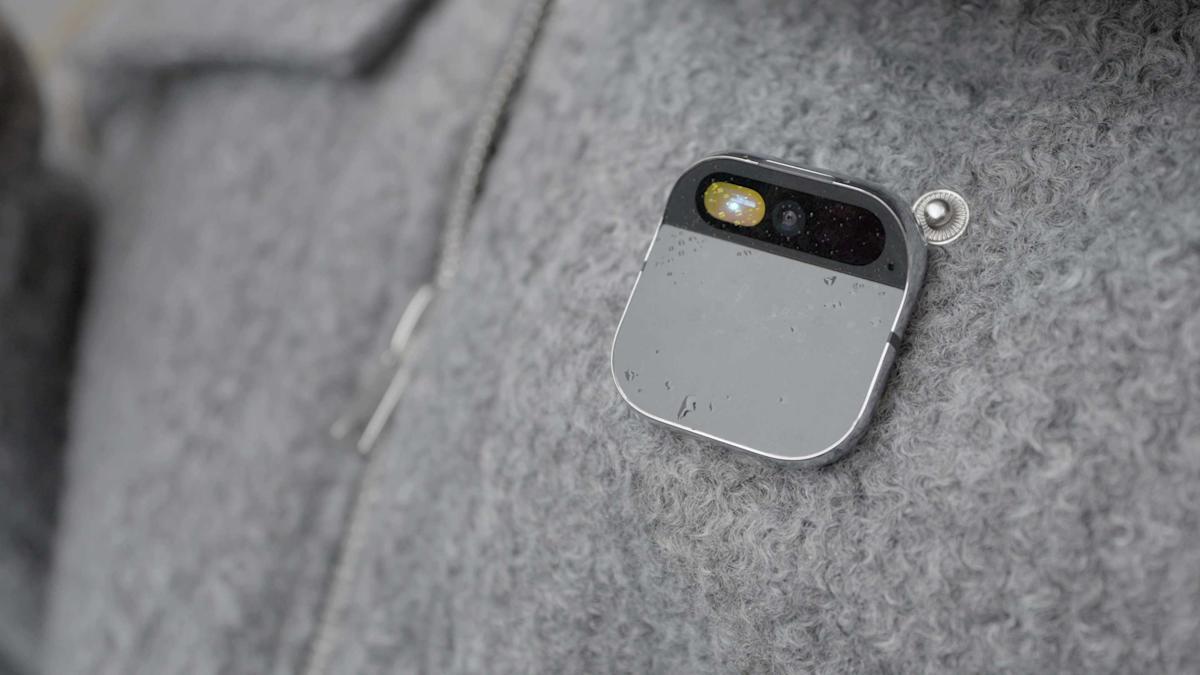
Source: Engadget
Related Stories

Privacy Concerns and Social Acceptance Challenges
Privacy concerns remain the most pressing challenge for AI wearables. Google Glass turned wearers into walking surveillance systems in the early 2010s, creating social tension so high that "Glassholes" were banned from cinemas and bars
3
. University of Washington law professor Ryan Calo told Reuters in 2013 that "the face is a really intimate place, and to have a piece of technology on it is unsettling"3
. Wearing such a device pulls everyone around you into your data collection stream, where private moments could be recorded and eventually used to train future language models.As privacy philosopher Helen Nissenbaum noted in a 2011 paper, when information flow violates "entrenched norms," the result is predictable: "protest and complaint"
3
. Apple's reputation as the "adult in the room" of tech may help build trust, but social acceptance will ultimately depend on usefulness and clear boundaries around data collection3
.Generative AI Overhaul for Siri Signals Broader Push
The AI pin development coincides with Apple's partnership with Google to integrate Gemini language models into a generative AI overhaul for Siri
1
. Bloomberg reports that Apple will transform Siri into an AI chatbot built into the iPhone, iPad, and Mac by September5
. This move addresses internal turmoil over Apple AI, where former AI lead John Giannandrea's conservative approach failed to produce a usable, true LLM-based Siri or other products analysts expected would keep Apple competitive with other Big Tech companies1
.
Source: Wccftech
Gemini already powers live and camera-assisted AI features that Google and Samsung will deploy on a new wave of smart glasses this year, and Apple could integrate similar capabilities across its Vision Pro headset and other devices
4
. The company is also planning other AI-driven products including smart glasses and an in-home smart display1
. Meanwhile, Amazon acquired Bee, maker of a Fitbit-like AI wristband, and Meta acquired Limitless, a startup with a conversational AI pendant, signaling that the AI hardware device market is heating up across the industry3
.References
Summarized by

Navi
[3]
Related Stories
Apple signals serious push into AI devices as Tim Cook teases new product categories
06 Feb 2026•Technology
Apple's Vision for AI-Powered Wearables: Cameras Coming to Apple Watches by 2027
23 Mar 2025•Technology

Apple accelerates AI wearables push with smart glasses, camera AirPods, and pendant in the works
17 Feb 2026•Technology

Recent Highlights
1
Apple Plans Major Siri AI Overhaul in iOS 27 With Third-Party Chatbot Integration
Technology

2
OpenAI shuts down Sora after six months, ending Disney's $1 billion licensing partnership
Technology

3
AI chatbots validate you too much, making you less kind to others, Stanford study reveals
Science and Research
Recent Highlights
Today's Top Stories



Your Daily Dose of Curated AI News
Don’t drown in AI news. We cut through the noise - filtering, ranking and summarizing the most important AI news, breakthroughs and research daily. Spend less time searching for the latest in AI and get straight to action.

