Bernie Sanders demands moratorium on AI data centers to protect workers and democracy


10 Sources
10 Sources
[1]
Sen. Bernie Sanders: Here's Why We Need to Halt AI Data Center Construction
US Sen. Bernie Sanders (I-Vt.) is calling for a "moratorium" on new data center construction over fears that unregulated AI will disrupt society. "The moratorium will give democracy a chance to catch up, and ensure that the benefits of technology work for all of us, not just the 1%," he tweeted. In a video, the senator acknowledged that AI and next-generation robotics are transformative technologies that will have a "profound" impact on people's lives. However, he also warned that the same technologies threaten to disrupt society by replacing jobs traditionally held by humans. "If AI and robotics eliminate millions of jobs and create massive unemployment, how will people survive if they have no income?" he asked. "Very few members of Congress are seriously thinking about this." He did not specify how long a moratorium might last. Sanders is also concerned that chatbots and next-generation AI will further isolate younger Americans, causing them to only interact "with their devices" instead of real people. "Is that the kind of future you want? Well, not me," he said. What's clear is that AI will mainly benefit the top tech companies and their leadership, Sanders adds. "I think that these very, very rich men want even more wealth and even more power," he said, calling out Elon Musk, Amazon founder Jeff Bezos, Meta CEO Mark Zuckerberg, venture capitalist Peter Thiel, and Microsoft co-founder Bill Gates. Giant computing facilities promise to unleash even more powerful AI applications that advance medical and scientific research. However, they have faced complaints from residents over electricity costs, noise, and environmental damage. Some even faced eminent domain battles. "AI data centers require a massive amount of electricity and water," Sanders wrote in a Dec. 2 op-ed. "A relatively small AI data center can consume more electricity than 80,000 homes. A large one, like the $165 billion data center that OpenAI and Oracle are building in Abilene, Texas, will use as much electricity as 750,000 homes. Meta is building a data center in Louisiana the size of Manhattan that will use as much electricity as 1.2 million homes." The Trump administration has backed new plans for data centers to ensure the US leads in AI. Last week, President Trump signed an executive order to challenge state-level laws. Still, some Congressional lawmakers have been moving to regulate AI. A bipartisan bill from Sens. Mark Warner (D-Va.) and Josh Hawley (R-Mo.) would require US companies to report AI-related job losses in an effort to track the technology's impact on employment. Hawley and Sen. Richard Blumenthal (D-Conn.) also introduced legislation to ban chatbot companions for minors.
[2]
Bernie Sanders calls for halt on AI data center construction -- wants to ensure that the technology benefits 'all of us, not just the 1%'
U.S. Senator Bernie Sanders (I-Vt.) said that he will push for a moratorium on the construction of AI data centers to ensure that the technology will be useful for the greatest number of Americans and not just the few multi-billionaires who are advocating for the widespread use of artificial intelligence. According to the senator's X post, this delay "will give democracy a chance to catch up, and ensure that the benefits of technology work for all of us, not just the 1%." Sanders raised three points in his short video: 'Who is aggressively pushing AI?'; 'What will AI and robotics mean economically for the working class of this country?'; and 'Millions of kids in this country are becoming more and more isolated from real human relationships and are getting their emotional support from AI.' The current AI build-out is largely driven by big tech companies, including OpenAI, Microsoft, Amazon, Nvidia, Oracle, and Meta, among others. With trillions of dollars being poured into the infrastructure required to support artificial intelligence, many experts are warning that it's becoming unsustainable and that we are already in an AI bubble. Aside from this, Microsoft's push for Copilot+ AI PCs did not deliver the sales it was expecting, with most consumers simply purchasing AI PCs because there's no other option when upgrading from Windows 10. There have also been concerns about AI replacing people in the workforce. While this hasn't resulted in widespread layoffs yet, MIT estimates that AI could replace up to 11.7% of American workers across industries, not just in tech. Even Anthropic CEO Dario Amodei said that the widespread use of this technology could result in up to 20% unemployment within the next five years, with Ford CEO Jim Farley warning that it will wipe out nearly half of all entry-level white-collar jobs. Sanders also raised concerns about children using AI for companionship instead of building relationships with other people. "Think for a moment about a future when human beings are not interacting with each other and are spending virtually all of their time with devices instead of people," Sanders said. "Is that the kind of future you want? Well, not me." The senator from Vermont wants to halt all progress on AI data center construction to address these issues first. He also isn't the only one concerned about the possible negative impacts of artificial intelligence on society, as Elizabeth Warren (D-Mass.) and two other Democrat senators recently sent letters recently to several big tech companies asking them to explain how their AI data centers are impacting residential energy bills. These moves directly contradict the current administration's goal of turning the U.S. into an AI powerhouse, with Trump signing an executive order for the so-called 'Genesis Mission' -- an initiative to drive AI development across the country -- and is even comparing its scale with the Manhattan Project.
[3]
Bernie Sanders calls for a pause on new AI data centers in the US
Serving tech enthusiasts for over 25 years. TechSpot means tech analysis and advice you can trust. What just happened? A lot of people are concerned about the effects of more AI data centers being built, from the environmental damage to the impact on jobs and society as a whole. Senator Bernie Sanders has now taken that concern straight to the national stage, calling for a pause on new AI data center construction in the United States - and he's making it clear who he believes stands to benefit most from the current AI boom. According to Sanders, the rapid expansion of AI infrastructure isn't just about technological progress; it's also about power, wealth, and control. The senator argues that a small group of ultra-wealthy tech executives are driving the AI buildout in order to consolidate economic and political influence, while everyday Americans are left dealing with the consequences. In a recent X post, Sanders said a moratorium would give lawmakers time to determine how AI can serve the public interest rather than "just the 1 percent." One of the senator's biggest concerns is the environmental and infrastructure burden created by modern data centers. Facilities designed to support large-scale AI models can consume enormous amounts of electricity and water, sometimes rivaling or exceeding the energy use of entire cities. That demand often requires new power plants, grid upgrades, and water infrastructure, costs that Sanders says ultimately fall on taxpayers and local communities rather than the companies profiting from AI. Sanders has also tied the data center expansion to broader fears about automation and job losses. He has repeatedly warned that AI and robotics could eliminate millions of jobs across multiple industries if deployment continues without safeguards. We've already seen plenty of companies blame AI for their job cuts - though that might not always be true. Anthropic CEO Dario Amodei famously said the technology could erase half of all entry-level white-collar jobs within five years. While tech firms often argue that AI will create new types of employment, Sanders remains skeptical, saying productivity gains are unlikely to benefit workers unless stronger labor protections and redistribution policies are put in place. AI infrastructure spending is currently accelerating. Major tech firms are investing tens of billions of dollars into new data centers and specialized hardware to support increasingly powerful AI systems. At the same time, residents in several regions are pushing back against proposed projects, citing concerns over land use, water shortages, and rising energy costs. Whether Sanders' proposal gains traction remains to be seen, but it highlights a growing tension within the tech industry. As AI becomes more central to everything from cloud services to consumer software, questions about who controls the infrastructure - and who pays the price for it - are becoming harder to ignore.
[4]
Democrats target data centers in AI fight
Why it matters: The data center scrutiny is in direct contrast to the Trump administration, which is aligned with industry in its eagerness to start construction in the U.S. Driving the news: Sen. Bernie Sanders (I-Vt.), who caucuses with Democrats, on Tuesday called for a "moratorium" on data center construction. * Trump allies on the Hill used the same language in their push for a "moratorium" this year to stop states from regulating AI. * Sanders said in a video that new data center construction should be paused to "give democracy a chance to catch up with the transformative changes that we are witnessing, and make sure that the benefits of these technologies work for all of us, not just the wealthiest people on earth." Sen. Elizabeth Warren (D-Mass.) this week launched an investigation into Google, Amazon and Meta's "energy-guzzling data centers" and "opaque agreements with utility companies" that leave consumers "holding the bill for these trillion-dollar companies." * Sens. Chris Van Hollen (D-Md.) and Richard Blumenthal (D-Conn.) co-signed the letter, which was also sent to Microsoft, CoreWeave, Digital Realty and Equinix, demanding answers on construction details, utility cost impacts and more by Jan. 12. * Sen. Adam Schiff (D-Calif.) is also eyeing legislation to protect consumers from data center-driven rate increases. The intrigue: The Trump administration is threading a needle that may not work with voters -- backing industry dreams of a rapid build-out of data centers while while pitching it as a win for everyday Americans. * Energy Secretary Chris Wright has said the administration's efforts to boost AI research will make people's lives better and bring down electricity prices that have that "infuriated American citizens." * Outside the Beltway, some Republicans are more clear-eyed on the potential political pitfalls of backing data center construction and are making plans to restrict them, like Florida Gov. Ron DeSantis. The bottom line: Democrats are testing whether data centers can become a political liability for Trump, and a way to bring their affordability message to the AI debate.
[5]

Bernie Sanders demands AI data center moratorium
Bernie Sanders, the independent senator from Vermont and crusading leftist leader, is proposing a moratorium on new data centers because he says artificial intelligence is coming along too quickly and we need time for "democracy to catch up." Look, I'm all for democracy, and I'm not going to force data centers on communities that don't want or can't afford them. But the federal government ordering a halt on all new data centers is insane. It isn't democratic at all -- it's autocratic. It would cripple innovation in the U.S., and leave us vulnerable to our competition: by which I mean China. In fairness, here was Sanders making his case that we shouldn't trust billionaires as the sole decisionmakers when it comes to AI. "Needless to say, there is a whole lot about AI and robotics that needs to be discussed, needs to be analyzed. But one thing is for sure: this process is moving very very quickly, and we need to slow it down. We need all of our people, all of our people involved in determining the future of AI -- not just a handful of multibillionaires." Fine, that point is well taken. There is certainly a role for regulators to play, as we consider new AI policies. But Sanders continues: "That is why, for a start, I will be pushing for a moratorium on the construction of data centers that are powering this unregulated sprint to develop and deploy AI." A moratorium on all new data centers! Holy escalation, Batman! Look, I appreciate that this is a revolutionary and poorly understood technology, and there is a danger in letting tech billionaires do whatever they want. That's why I'm not actually sold on the Trump administration's AI regulation order, which would transfer the power to set AI regulations to the federal government rather than the states. I actually like the idea of the states experimenting with different regulatory approaches, as our founders intended, which might allow the public to see which regulations work best in practice. But Sanders is proposing his own one-size-fits-all policy, at the federal level -- it's just a policy of maximum regulation. There are plenty of sincere and fair critiques of new data centers, and there is also some fearmongering. We should not ask resource-strapped communities to pay more in energy costs in order to support these data centers, and we absolutely cannot, should not, must not use eminent domain to steal land and turn it over for the use of tech billionaires. A commonsense libertarian property rights framework would be best here: The land should be purchased, not seized, and the communities should be compensated, perhaps by the tech companies who stand to profit. I'm absolutely not for plunder, and I understand why many Americans are worried that their interests are going to be swept aside in the race to empower big tech. At the same time, not moving at breakneck speed to develop better AI is also a huge risk. That's because there are tremendous upsides with AI: The technology can and will make us richer and healthier. Consider self-driving cars, which have already shown themselves to be significantly safer. AI innovations on this front could save thousands of lives every day by stopping car deaths, which is the largest category of preventable death in America: 40,000 people killed every year. I'm fine with moving somewhat cautiously, but I don't want to delay research into products that are going to make Americans better off. We also have to consider that even if we dramatically slow down our research into AI, our geopolitical rivals will not. As Trump admin tech adviser David Sacks put it: "Bernie makes clear that the debate over AI is not about states' rights or affordability. He would block new data centers even if states want them & they generate their own power. It's about stopping progress completely so China wins the AI race. Thank you for your honesty Senator." Now I don't believe that Sanders really wants China to win the AI race, but he needs to take this criticism to heart. Our enemies are not overly concerned about making sure "democracy has time to catch up" with AI. And a new global order led by a more advanced China would be a grave threat to the U.S., and to U.S. democracy. We need to win this race, there's just no way around it. But I would also quibble with Sanders's suggestion that he's actually pushing a pro-democracy agenda. Again, when he says he wants democracy to catch up, what he's really saying is he wants tech to slow down -- even if that is contrary to the people's wishes. What if Americans want to beat China? What if they want better technology, and are willing to make the tradeoffs that are necessary to truly empower AI? If they vote against him, will he stand down? It's also weird, and not particularly democratic, to say that the federal government should nuke one technology so that -- what, its competitors can catch up? Would the early 20th century version of Bernie Sanders have said this whole Model T technology is moving too fast, we need to put a pause on new factory assembly lines so that the horse and buggy can catch up? You know, because democracy. Obviously that wouldn't make any sense. Nor does a nationwide, federally imposed moratorium on new data centers. I'm all on board with proceeding cautiously, but halting all progress is not caution -- it's recklessness. Robby Soave is co-host of The Hill's commentary show "Rising" and a senior editor for Reason Magazine. This column is an edited transcription of his daily commentary.
[6]
Sanders pushes for moratorium on AI data center construction
Sen. Bernie Sanders (I-Vt.) said Tuesday that he will be pushing for a moratorium on artificial intelligence (AI) data center construction in an effort to "give democracy a chance to catch up" amid concerns about the "unregulated sprint" to develop the technology. "AI and robotics are the most transformative technologies in the history of humanity, and will have a profound impact on the lives of every man, woman and child in our country," Sanders said in a video posted to social media platform X. "Needless to say, there is a whole lot about AI and robotics that needs to be discussed, needs to be analyzed," he added. "But one thing is for sure, this process is moving very, very quickly, and we need to slow it down. We need all of our people, all of our people involved in determining the future of AI, and not just a handful of multibillionaires." The senator underscored concerns about the involvement of the world's wealthiest people in developing AI, arguing they "want even more wealth and even more power" and are not thinking about how the technology will impact working families. Sanders, who has regularly clashed with various tech giants, noted that several leading figures on AI have warned about projected impacts of the technology on workers, with some suggesting there could be significant job losses in the near future. "If AI and robotics eliminate millions of jobs and create massive unemployment, how will people survive if they have no income?" Sanders said. "And I don't want to break the bad news to you, although I know it won't shock you, but very few members of Congress are seriously thinking about this." He also voiced concerns about the impacts of AI on children, who he argued are becoming more isolated and relying on the technology for emotional support. Data centers have become a key factor in the AI boom, as tech firms seek to expand their computing power to develop new models. However, they have come under increasing scrutiny in recent months, particularly over their expansive energy needs. Sens. Elizabeth Warren (D-Mass.), Chris Van Hollen (D-Md.) and Richard Blumenthal (D-Conn.) said Tuesday that they are investigating the ties between data center energy usage and rising consumer electricity bills, sending letters to several companies involved in the data center buildout. They expressed concerns that the costs of this buildout are being passed onto consumers and argued that data centers should pay a "greater share of the costs upfront for future energy usage and updates to the electrical grid."
[7]

Peter Schiff Slams Bernie Sanders' AI Data Center Moratorium: Calls It A War On Productivity And Progress -- 'Jobs Are Not The Goal, They're The Cost' - Tesla (NASDAQ:TSLA)
Economist Peter Schiff has pushed back against Sen. Bernie Sanders' (I-VT) calls for a moratorium on new AI data centers, calling it an attack on productivity, progress and growth. Employment Is 'Not The Goal' On Thursday, in a post on X, Schiff said that Sanders' opposition to AI is rooted in concerns that the rich "might get richer," as opposed to broader economic welfare. "Apparently, the real tragedy isn't poverty or scarcity, but the possibility that someone might profit while making everyone else's life easier," he said. See Also: Trump's AI Order Under Fire -- Amy Klobuchar Says It's 'Likely Illegal' While Bernie Sanders Calls It 'Extremely Dangerous' Schiff said that productivity gains from AI would ultimately benefit consumers, not just corporations or wealthy investors. "If AI raises profits by raising productivity, producing more and better goods at lower prices, then consumers are the real winners," he said, adding that lower prices reduce the amount of labor required to maintain living standards. He dismissed the idea of job preservation being the end in itself, amid the growing AI-led job losses narrative, saying, "Jobs are not the goal. They're the cost," which primarily exist to produce goods and services, not as a moral objective. According to Schiff, technological progress that reduces labor requirements should be viewed as an advancement rather than exploitation. "When technology eliminates one job, it frees up labor to do something else." Elon Musk Slams Sanders' Calls For A Moratorium Earlier this week, Sanders had called a halt to new data center construction, warning that their rapid expansion was threatening jobs, democracy and public resources. "AI and Robotics are the most transformative technologies in the history of humanity," Sanders said, adding that they will have an impact on "every man, woman and child" in the country. Billionaire entrepreneur and Tesla Inc. (NASDAQ:TSLA) CEO, Elon Musk, slammed Sanders' views, saying, "The takers like Bernie will eventually follow the makers, but they're cowards too and lack any sense of adventure, so they will wait until it is safe." Photo Courtesy: Gorodenkoff on Shutterstock.com Read More: Ro Khanna Backs Bernie Sanders Over Tesla's Elon Musk, Says AI Should Help 'Workers, Not Tech Barons' TSLATesla Inc$484.700.28%OverviewMarket News and Data brought to you by Benzinga APIs
[8]
Bernie Sanders, Elon Musk Exchange Sharp Words Over Call For AI Data Center Moratorium: 'They're Cowards' - Tesla (NASDAQ:TSLA)
On Wednesday, Tesla Inc. (NASDAQ:TSLA) CEO Elon Musk and Sen. Bernie Sanders (I-Vt.) traded sharp words online after the Vermont independent urged a pause on new AI data center construction. Sanders Pushes For Halt On AI Data Centers Sanders on Tuesday called for a moratorium on new AI data centers, arguing the industry is being driven by billionaires seeking "more wealth and even more power," not the interests of working families. He said the rapid growth of AI risks eliminating tens of millions of jobs while placing heavy strains on public resources. In a separate post on Wednesday, Sanders warned that AI data centers could push electricity bills higher and generate emissions comparable to driving more than 300 billion miles. "We need a moratorium on the construction of new AI data centers," he wrote. See Also: Tesla Stock Is Pulling Back After All-Time Highs: What's Going On? Online Criticism Sparks Musk's Response The debate escalated after a user on X commented that it may be easier to colonize space than to dismantle bureaucratic inefficiency and regulatory capture. Musk responded by taking aim at Sanders, writing, "The takers like Bernie will eventually follow the makers, but they're cowards too and lack any sense of adventure, so they will wait until it is safe." Sanders Pushes Back On Jobs And Inequality Sanders replied to Musk, rejecting the criticism and reframing the dispute as a question of economic justice. "Yes, Elon. I do lack 'any sense of adventure' when that 'adventure' will, as you have made clear, force tens of millions of workers out of their jobs," Sanders wrote. He added that the purpose of AI and robotics should be "to improve life for all people, not just to make you and your fellow oligarchs even richer." AI Data Centers Drive Surging Power Demand Experts estimate that data centers already consume roughly 5% of electricity generated in the U.S., and that share is expected to climb significantly as artificial intelligence use expands. Earlier this month, Musk said SpaceX is pushing ahead with plans to use satellites as orbiting data centers. His comments came after ARK Invest CEO Cathie Wood pointed to an open-source model suggesting SpaceX could reach a valuation of nearly $2.5 trillion by 2030. Responding to her post, Musk said satellites equipped with localized AI computing that send data back to Earth could become the cheapest way to produce AI data streams within the next three years. The Tesla and SpaceX CEO added that space-based systems could also be the fastest way to scale AI within four years, arguing that reliable and affordable sources of electricity on Earth are becoming increasingly limited. Musk previously said Tesla is now delivering the fourth generation of its AI chip, AI4, as it moves toward finalizing AI5 and starting early development on AI6, with the long-term goal of rolling out a new chip design into mass production each year. He also said Tesla anticipates eventually manufacturing more AI chips than the rest of the industry combined. Tesla is also maintaining a solid upward price trend across short, medium and long-term time frames. More detailed insights are available through Benzinga Edge Stock Rankings. Read Next: States File Lawsuit After Trump Administration Halts EV Charger Funding Programs: Report Photo Courtesy: Photo Agency on Shutterstock.com Disclaimer: This content was partially produced with the help of AI tools and was reviewed and published by Benzinga editors. TSLATesla Inc$469.400.46%OverviewMarket News and Data brought to you by Benzinga APIs
[9]
Bernie Sanders Calls For Halt On AI Data Center Construction, Alleges 'Very Very Rich Men' Like Musk, Bezos, Zuckerberg Want More Power And Wealth - Amazon.com (NASDAQ:AMZN), Meta Platforms (NASDAQ:META)
On Tuesday, Sen. Bernie Sanders (I-Vt.) called for a halt to new AI data center construction, warning that the rapid, billionaire-driven expansion of artificial intelligence is threatening jobs, democracy and public resources. Sanders Says AI Boom Is Being Driven By Billionaires, Not Public Interest In a video posted on X, Sanders said AI and robotics are moving faster than society can keep up. "AI and Robotics are the most transformative technologies in the history of humanity," Sanders said, warning they will affect "every man, woman and child" in the country. He argued that figures such as Tesla Inc. (NASDAQ:TSLA), SpaceX and xAI CEO Elon Musk, Amazon.com, Inc. (NASDAQ:AMZN) founder Jeff Bezos, Meta Platforms, Inc. (NASDAQ:META) CEO Mark Zuckerberg, venture capitalist Peter Thiel and Microsoft Corp (NASDAQ:MSFT) co-founder Bill Gates are pushing the technology for "more wealth and even more power," not to protect working families. Sanders questioned whether those leaders are concerned about the impact on workers, saying he does not believe "these very, very rich men" are losing sleep over job losses or inequality. See Also: Meta Is Betting You'll Soon Wear AI All Day With This New Buy Job Losses And Social Impact Fuel Sanders' AI Concerns The senator pointed to comments from tech executives themselves, noting that Musk has said AI and robots could replace all jobs, making work optional. He also cited Gates' warning that humans won't be needed for most things and comments from Anthropic CEO Dario Amodei suggesting AI could wipe out half of entry-level white-collar roles. "If AI and robotics eliminate millions of jobs and create massive unemployment, how will people survive if they have no income?" Sanders asked, arguing Congress is not seriously addressing that question. He also raised concerns about children becoming socially isolated and emotionally dependent on AI instead of real human relationships, calling that future deeply troubling. Energy-Hungry Data Centers At Center Of Moratorium Push Sanders' call for a moratorium focuses on the data centers that power AI systems. Last week, he said that Meta is planning a Louisiana facility that could use three times more electricity than New Orleans, with taxpayers ultimately footing the bill. He also referenced a Texas project tied to OpenAI and Oracle Corp. (NYSE:ORCL) that could consume enough power for roughly 750,000 homes, while another Meta site could match the needs of 1.2 million households. Experts say data centers already account for about 5% of U.S. electricity use, a figure projected to rise sharply as AI adoption accelerates. Benzinga Edge stock rankings signal a bearish outlook for Meta across the short, medium and long-term horizons, with additional performance metrics available here. Read Next: ASML's China Dealings Stir Tension After Military Link Report Photo Courtesy: Lev Radin on Shutterstock.com Disclaimer: This content was partially produced with the help of AI tools and was reviewed and published by Benzinga editors. AMZNAmazon.com Inc$222.13-0.19%OverviewMETAMeta Platforms Inc$656.34-0.12%MSFTMicrosoft Corp$474.54-0.39%ORCLOracle Corp$187.88-0.41%TSLATesla Inc$490.570.14%Market News and Data brought to you by Benzinga APIs
[10]

Bernie Sanders' poisonously stupid anti-AI crusade would doom...
Most people welcome economic growth, but Bernie Sanders hates it. The Vermont socialist has come out against data centers, the mass computing facilities essential to the development of artificial intelligence. There are all sorts of NIMBY-type reasons for local residents to oppose data centers near them -- they use a lot of energy and water, they're noisy and unsightly -- but Sanders is against them on principle. If he can stop the creation of new data centers, he can squeeze AI research to a standstill and supposedly save American jobs while giving Congress more time to regulate the new industry. When Donald Trump floated the idea of a Muslim ban during his 2016 presidential campaign, he said we needed a moratorium "until our country's representatives can figure out what the hell is going on." In a nutshell, that's the Sanders position on AI. This might be the most poisonously stupid idea of the year. The sheer destructiveness of it is on par, say, with blocking the creation of new generators after Thomas Edison set up the Pearl Street Station in 1882, on the grounds that we didn't fully understand what effect electrification would have on cities. Or prohibiting the mining of coal in Britain at the outset of the Industrial Revolution, because the coming changes were too hard to fathom. The comparison with the Industrial Revolution is apt: The benefits to Britain of leading the way were vast, in terms of economic growth, trade, the welfare of its people and national power. There's a winner-take-all aspect to these sorts of tech races. The company that takes the lead and gets people acclimated to its product earns the revenues that it can plow back into further research and development. In so doing, it maintains its lead in the market. Why wouldn't we want this company to be American rather than Chinese? There will also be crucial military applications of AI. History says that a leg up in technical acumen can make the difference between victory and defeat. The Blitzkrieg swept all before it, because the Nazis had figured out how to wed innovations in mobility to advances in radio communications. The British, in turn, fended off the Nazi air assault in the Battle of Britain because they made maximum use of radar without the Germans realizing it. Sanders wants us to take our chances ceding a technological advantage to China and hoping everything turns out OK. The Chinese may be communists -- whereas Sanders is just a socialist -- but even they aren't this foolish. We are in the equivalent of a space race, and Sanders is talking about cutting off our supply of rocket fuel. There may be cause to regulate AI, but we don't even know how it's going to develop at the moment; we had to have the widespread adoption of cars before establishing the National Highway Traffic Safety Administration. Even if Sanders were to get his way, there's no stopping AI. China and other foreign countries will continue to sprint ahead, and US companies denied data centers here at home will go find them overseas. McKinsey & Co. estimates that $7 trillion will be invested in data centers globally by 2030, with 40% of that coming in the United States. This investment has already been a boon to the US economy, making up for any weakness due to other factors. It'd be perverse to affirmatively seek to cut off a capital-investment spigot that every other country in the world should envy. The practical issues with data centers, primarily energy usage, are solvable by rationalizing our energy policies. It will be shame on us -- an energy behemoth -- if we can't figure out how to power the research that might create the defining innovations of our age. As for Bernie Sanders, he calls himself a progressive. Yet his troglodyte opposition to a potential productivity revolution shows that he's really the nation's foremost avatar of reactionary socialism.
Share
Share
Copy Link
Senator Bernie Sanders is calling for a halt on AI data center construction to address concerns about job displacement, environmental impact, and wealth inequality. The move puts Democrats in direct opposition to the Trump administration's push for rapid AI infrastructure expansion. Elizabeth Warren and other senators are investigating how tech companies' energy-guzzling facilities affect residential utility costs.
Bernie Sanders Pushes for Halt on AI Data Center Construction
U.S. Senator Bernie Sanders has called for a moratorium on new AI data centers, arguing that unregulated artificial intelligence threatens to disrupt society while concentrating wealth and power among tech billionaires
1
. "The moratorium will give democracy a chance to catch up, and ensure that the benefits of technology work for all of us, not just the 1%," Sanders stated in a social media post2
. The Vermont senator did not specify how long the pause on AI data center construction should last, but emphasized that lawmakers need time to address fundamental questions about who controls this transformative technology and how its benefits of AI will be distributed.
Source: PC Magazine
Job Displacement Concerns Drive Regulatory Push
Sanders raised urgent concerns about job displacement, questioning how millions of Americans would survive if AI and robotics eliminate their employment without replacement income. "Very few members of Congress are seriously thinking about this," he warned
1
. The senator's fears are supported by industry estimates: MIT projects that AI could replace up to 11.7% of American workers across industries, while Anthropic CEO Dario Amodei has suggested the technology could result in up to 20% unemployment within five years2
. Ford CEO Jim Farley has warned that AI will wipe out nearly half of all entry-level white-collar jobs. To track these impacts, a bipartisan bill from Sens. Mark Warner (D-Va.) and Josh Hawley (R-Mo.) would require U.S. companies to report AI-related job losses1
.Environmental Impact and Energy Consumption Under Scrutiny
The environmental impact of AI data centers has become a flashpoint in the debate. Sanders noted that AI data centers require massive amounts of electricity and water, with a relatively small facility consuming more power than 80,000 homes
1
. The scale becomes staggering with larger projects: the $165 billion data center that OpenAI and Oracle are building in Abilene, Texas, will use as much electricity as 750,000 homes, while Meta is constructing a Manhattan-sized facility in Louisiana that will consume power equivalent to 1.2 million homes1
. These facilities have faced complaints from residents over electricity costs, noise, and environmental damage, with some projects encountering eminent domain battles1
.
Source: Axios
Elizabeth Warren Launches Investigation Into Tech Companies
Senator Elizabeth Warren escalated Democratic scrutiny by launching an investigation into Google, Amazon, and Meta's "energy-guzzling data centers" and their "opaque agreements with utility companies" that leave consumers "holding the bill for these trillion-dollar companies"
4
. The investigation, co-signed by Sens. Chris Van Hollen (D-Md.) and Richard Blumenthal (D-Conn.), also targets Microsoft, CoreWeave, Digital Realty, and Equinix, demanding answers on construction details, utility costs impacts and more by Jan. 124
. Sen. Adam Schiff (D-Calif.) is eyeing legislation to protect consumers from data center-driven rate increases. This coordinated Democratic effort directly challenges the Trump administration's alignment with industry in its eagerness to accelerate AI data center construction in the U.S.4
.Wealth Inequality and Tech Billionaire Control
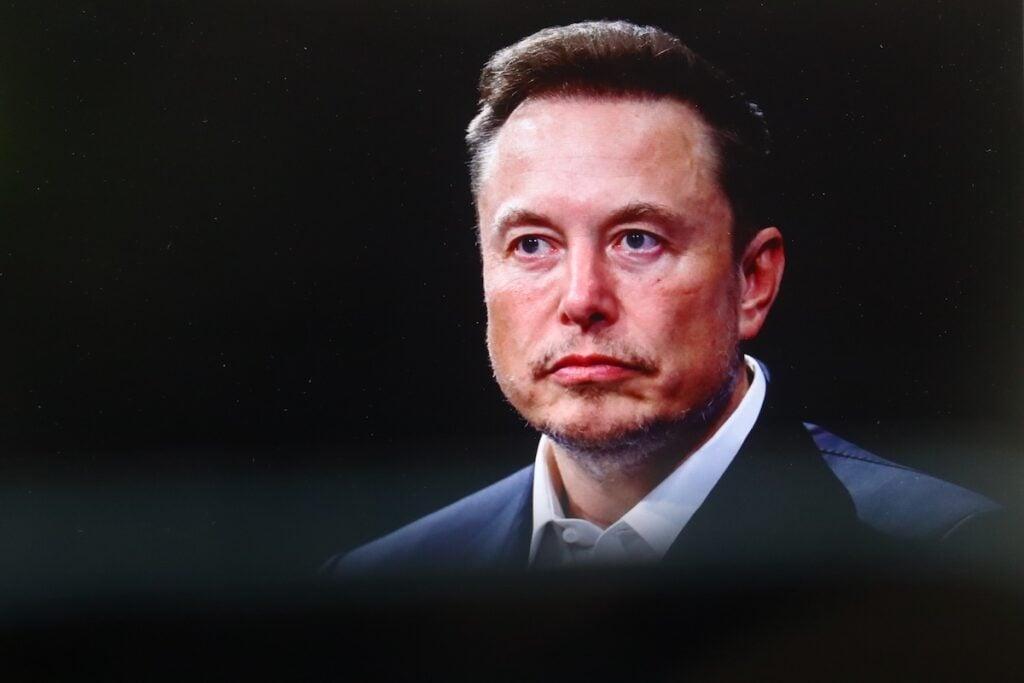
Sanders specifically called out wealth inequality in AI development, naming Elon Musk, Amazon founder Jeff Bezos, Meta CEO Mark Zuckerberg, venture capitalist Peter Thiel, and Microsoft co-founder Bill Gates. "I think that these very, very rich men want even more wealth and even more power," he stated
1
. The current AI buildout is largely driven by tech companies including OpenAI, Microsoft, Amazon, Nvidia, Oracle, and Meta, with trillions of dollars being poured into infrastructure2
. Many experts warn that the spending is becoming unsustainable and that an AI bubble may already be forming2
.
Source: Benzinga
Related Stories
Social Isolation and Chatbot Companions Raise Alarms
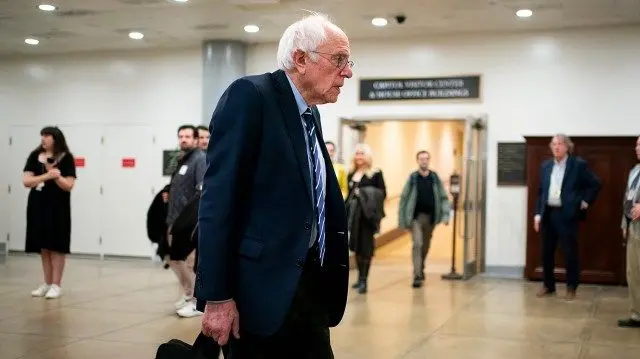
Beyond economic concerns, Sanders warned about social isolation among young Americans who increasingly turn to chatbot companions for emotional support instead of building real human relationships. "Think for a moment about a future when human beings are not interacting with each other and are spending virtually all of their time with devices instead of people," Sanders said. "Is that the kind of future you want? Well, not me"
2
. Addressing this concern, Sens. Josh Hawley and Richard Blumenthal introduced legislation to ban chatbot companions for minors1
.Trump Administration Pushes Opposite Direction
The Democratic scrutiny stands in stark contrast to the Trump administration, which backs new plans for data centers to ensure U.S. leadership in AI. President Trump signed an executive order challenging state-level AI regulation laws, launching the so-called "Genesis Mission" to drive AI development across the country at a scale compared to the Manhattan Project
2
. Energy Secretary Chris Wright has claimed the administration's efforts will make people's lives better and bring down electricity prices4
. However, the Trump administration faces a political challenge in threading the needle between backing industry's rapid buildout while pitching it as beneficial for everyday Americans. Some Republicans outside Washington, like Florida Gov. Ron DeSantis, are making plans to restrict data centers4
.Geopolitical Rivals and US Innovation at Stake
Critics argue that Sanders' proposal could cripple U.S. innovation and benefit geopolitical rivals, particularly China. Trump administration tech adviser David Sacks stated that the debate "is about stopping progress completely so China wins the AI race"
5
. While Sanders has not specified duration for AI regulation measures, opponents warn that even if the U.S. dramatically slows AI research, competitors will not. The tension highlights a fundamental question: whether America can balance protecting workers and communities while maintaining technological leadership. Democrats are testing whether data centers can become a political liability for Trump and a way to bring their affordability message to the AI debate4
.References
Summarized by

Navi
[2]
[5]
Related Stories
Bernie Sanders demands moratorium on AI data centers as bipartisan concerns over jobs and costs grow
28 Dec 2025•Policy and Regulation

Bernie Sanders Calls for Breaking Up OpenAI, Warns of AI's 'Meteor-Like' Impact on Society
24 Oct 2025•Policy and Regulation

AI Could Eliminate 100 Million U.S. Jobs in a Decade, Sanders Warns
06 Oct 2025•Business and Economy

Recent Highlights
1
AI chatbots assist in planning violent attacks as safety guardrails fail, studies reveal
Technology

2
Three Tennessee teens sue xAI over Grok AI creating child sexual abuse material from real photos
Policy and Regulation
3
Pentagon reveals how Military AI chatbots accelerate targeting decisions in Iran operations
Technology

Recent Highlights
Today's Top Stories








Your Daily Dose of Curated AI News
Don’t drown in AI news. We cut through the noise - filtering, ranking and summarizing the most important AI news, breakthroughs and research daily. Spend less time searching for the latest in AI and get straight to action.

