Boston Dynamics partners with Google DeepMind to give Atlas humanoid robot Gemini-powered intelligence


7 Sources
7 Sources
[1]
Boston Dynamics's next-gen humanoid robot will have Google DeepMind DNA | TechCrunch
Robotics company Boston Dynamics announced Monday a strategic partnership with Google's AI research lab to speed up the development of its next-generation humanoid robot Atlas -- and make it act more human around people. The partnership, which was announced during the Hyundai press conference at CES 2026, is centered on robotics research that will use Google DeepMind's AI foundation models. Boston Dynamics' humanoid robot Atlas will be the first test case, according to Carolina Parada, senior director of robotics at Google DeepMind. "We're looking to integrate our cutting-edge AI foundation models with Boston Dynamics' new Atlas robots, and we'll aim to develop the world's most advanced robot foundation model to fulfill the promise of true general-purpose human needs," Parada said on stage. The tie-up comes less than a year after the Google AI research lab announced new AI models called Gemini Robotics that are designed to allow robots to perceive, reason, use tools, and interact with humans. Gemini Robotics is based on a large-scale multimodal generative AI model, Gemini. At the time, Google DeepMind said the robotics AI model was trained to generalize behavior across a range of different robotics hardware. Enter Boston Dynamics, and its majority owner, Hyundai Motor Group. While accelerating research will be a central piece of this partnership, this has real-world scaling intent. Boston Dynamics already has products, like the quadruped Spot, that are in customers' hands in more than 40 countries. Its warehouse robot Stretch has unloaded more than 20 million boxes globally since its launch in 2023, according to Hyundai. Now Boston Dynamics and Hyundai are preparing for the next generation, starting with the humanoid robot Atlas, which the company announced Monday is already in production and headed to a Hyundai factory. A prototype of Atlas walked on stage during the press conference, showing off its ability to move. But as Alberto Rodriguez, director of Atlas behavior at Boston Dynamics, noted, making "Atlas into a product requires more than athletic performance for humanoids to really deliver on their promise. They have to be able to interact with people naturally." Rodriguez and his counterparts at Boston Dynamics believe that recent advancements in AI have created a clear path to get to those capabilities.
[2]
Google Gemini Is Taking Control of Humanoid Robots on Auto Factory Floors
Google DeepMind and Boston Dynamics are teaming up to integrate Gemini into a humanoid robot called Atlas. Google DeepMind is teaming up with Boston Dynamics to give its humanoid robots the intelligence required to navigate unfamiliar environments and identify and manipulate objects -- precisely the kinds of capabilities needed to perform manual labor. The collaboration, announced at CES in Las Vegas, will see Google's Gemini Robotics model deployed on various Boston Dynamics' robots, including a humanoid called Atlas and a robot dog called Spot. The companies plan to test Gemini-powered Atlas robots at auto factories belonging to Hyundai, Boston Dynamics' parent company, in the coming months. The move is an early look at a future where humanoids are able to quickly master a wide range of tasks. Atlas can already dance and perform acrobatics but, like other humanoids, it lacks the intelligence needed to understand its environment, make complex decisions, and manipulate unfamiliar objects with its hands. That could start to change with the addition of an advanced AI model like Gemini, though it remains unclear how robots will match the adaptability and subtlety of human manual dexterity. "The real value going forward is for our robots to be contextually aware of their environment and able to use their hands to manipulate any object," Robert Playter, CEO of Boston Dynamics, told WIRED ahead of today's announcement. "And we think manufacturing environments, like in Hyundai factories, are a perfect place to deploy that today."
[3]
Google DeepMind and Boston Dynamics are bringing Gemini-powered robots to the factory floor
Serving tech enthusiasts for over 25 years. TechSpot means tech analysis and advice you can trust. Something to look forward to: Google DeepMind and Boston Dynamics have announced a partnership that could reshape the capabilities of humanoid and quadruped robots. The collaboration will integrate DeepMind's Gemini Robotics model into Boston Dynamics' machines, including the humanoid Atlas and the robotic dog Spot, equipping them with the intelligence needed to move, perceive, and operate in complex physical environments. Testing is set to begin soon at Hyundai automotive factories, where Gemini-powered Atlas robots will attempt a range of manufacturing tasks. The trials signal how rapidly robotics is moving toward systems that can learn and adapt in real-world settings, rather than relying solely on preprogrammed routines. Boston Dynamics CEO Robert Playter told Wired that the goal is to create robots with a form of situational comprehension and manual dexterity still largely beyond today's machines. "The real value going forward is for our robots to be contextually aware of their environment and able to use their hands to manipulate any object," Playter said. "And we think manufacturing environments, like in Hyundai factories, are a perfect place to deploy that today." Atlas already showcases physical sophistication - it can perform acrobatics and dance routines - but its intelligence has been limited to scripted performances. Integrating the multimodal Gemini model could allow it to interpret sensor data, identify and handle irregularly shaped objects, and plan movements in unstructured settings. That shift, researchers hope, will mark a step toward physical intelligence that mirrors human adaptability. Boston Dynamics has spent decades pushing robotic design forward, from early military pack bots to agile humanoids, moving between corporate owners that include Google, SoftBank, and now Hyundai. The new partnership reunites the company with its former parent. Carolina Parada, senior director of robotics at Google DeepMind, said Gemini's architecture is designed for exactly this kind of application. "Google DeepMind's robotics focus is building advanced AI that can power general-purpose robots," she explained. "Automotive is a great place to start, but certainly our intention is to continue expanding to more and more applications." Unlike earlier generations of specialized robots confined to repetitive tasks, Gemini-enabled systems could continuously learn from their surroundings. Data gathered by Boston Dynamics' robots will, in turn, refine Gemini's performance and strengthen its understanding of physical interactions. Adding intelligence to industrial robots also raises new safety questions. Parada said that Gemini will add another layer of precaution by reasoning about its actions to prevent hazardous behavior. Playter agreed that maintaining safety standards is essential as robots gain autonomy: "Even the little ones can be dangerous," he said. Competition in the humanoid space is intensifying. More than a dozen US companies, including Agility Robotics, Figure AI, Apptronik, 1X, and Tesla are developing systems designed for general-purpose labor. In China, industry trackers report that roughly 200 firms are now building humanoid robots. Many AI developers, including OpenAI and Tesla, view close interaction with the physical world as the next requirement for achieving more generalized machine intelligence. For DeepMind, the Boston Dynamics collaboration demonstrates its strategic shift away from pure software toward embodied AI. Rather than building its own robots, DeepMind CEO Demis Hassabis has said he envisions the Gemini model serving as a foundational platform for many manufacturers - much like Android runs across numerous smartphone brands.
[4]
Boston Dynamics turns to Google DeepMind to power its humanoid robots
Boston Dynamics is no longer just building bodies for robots; it's also choosing who trains their minds. At CES 2026, the company announced a partnership with Google DeepMind to advance AI systems for its next-generation humanoids. The two teams aim to integrate cutting edge Gemini Robotics AI foundation models with Boston Dynamics' new Atlas robots. The strategic partnership will focus on enabling humanoids to complete a wide variety of industrial tasks and is expected to become a driving force of manufacturing transformation, beginning in the automotive industry. The joint research effort, expected to kick off in the coming months, will be conducted at both companies.
[5]

Boston Dynamics and Google DeepMind partner to make Atlas smarter
Boston Dynamics announced a strategic partnership with Google DeepMind at the Hyundai press conference during CES 2026 to accelerate development of its next-generation humanoid robot Atlas by integrating DeepMind's AI foundation models. The collaboration focuses on robotics research using Google DeepMind's AI foundation models to enable Atlas to act more human around people. Atlas serves as the first test case. Carolina Parada, senior director of robotics at Google DeepMind, stated onstage, "We're looking to integrate our cutting‑edge AI foundation models with Boston Dynamics' new Atlas robots, and we'll aim to develop the world's most advanced robot foundation model to fulfill the promise of true general‑purpose human needs." This effort builds directly on advancements from less than a year prior. In that timeframe, Google DeepMind released its Gemini Robotics models. These models enable robots to perceive their environments, reason through tasks, use tools effectively, and interact with humans. Gemini Robotics relies on the large-scale multimodal generative AI model known as Gemini. Google DeepMind trained this robotics AI model to generalize behavior across a range of different robotics hardware platforms, allowing broader applicability in various physical forms. Boston Dynamics, majority-owned by Hyundai Motor Group, brings established commercial products to the partnership. The company markets the quadruped robot Spot, which operates in customers' facilities in more than 40 countries. Its warehouse robot Stretch, launched in 2023, has unloaded more than 20 million boxes globally, according to Hyundai. These deployments demonstrate Boston Dynamics' capacity for real-world scaling beyond research. The partnership emphasizes both research acceleration and practical deployment. Boston Dynamics and Hyundai prepare for the next generation of robots, with the humanoid Atlas already entering production. The company plans to send Atlas units to a Hyundai factory for further integration and testing. During the CES 2026 press conference, a prototype of Atlas walked onstage, demonstrating its mobility capabilities. Alberto Rodriguez, director of Atlas behavior at Boston Dynamics, explained the broader requirements for commercialization. He noted, "Atlas into a product requires more than athletic performance for humanoids to really deliver on their promise. They have to be able to interact with people naturally."
[6]

Google DeepMind & Boston Dynamics Announce New Partnership to Bring AI to Humanoid Robots
What happens when two industry giants join forces to redefine the future of robotics? Learn how a new partnership between Google DeepMind and Boston Dynamics is poised to transform humanoid robots. Unveiled at CES 2026, this collaboration combines Boston Dynamics' engineering brilliance with Google DeepMind's innovative AI expertise, promising to push the limits of what humanoid robots like the Atlas can achieve. Imagine a robot not only capable of navigating rugged terrain with ease but also making split-second decisions in disaster zones, this is the bold vision driving their alliance. With competition in robotics heating up among major players like Tesla, Nvidia, and Waymo, this partnership signals a pivotal moment in the race to integrate intelligence and adaptability into machines. In this breakdown, you'll discover how this collaboration could transform the capabilities of humanoid robots, from enhanced mobility to real-time problem-solving in high-stakes environments. By delving into the sophisticated AI algorithms being integrated into Boston Dynamics' flagship Atlas robot, you'll gain insight into how these advancements might reshape industries like disaster response and industrial automation. What sets this partnership apart is its focus on merging physical dexterity with cognitive intelligence, a combination that could set new benchmarks for the robotics industry. As you explore the implications of this union, consider how this leap in technology might redefine not just robotics but the way humans interact with intelligent machines. AI-Powered Humanoid Robotics Atlas: A Technological Leap in Humanoid Robotics The Atlas robot, Boston Dynamics' flagship humanoid platform, is at the center of this new collaboration. Designed with fully rotational joints and advanced mobility systems, Atlas is capable of executing precise movements and maintaining balance on uneven or unstable surfaces. Its ability to operate in extreme conditions, including high temperatures and rugged environments, distinguishes it from other humanoid robots currently on the market. Through the integration of Google DeepMind's sophisticated AI algorithms, Atlas is expected to gain enhanced decision-making and problem-solving capabilities. These improvements will enable the robot to perform complex tasks that require real-time situational awareness, such as navigating hazardous environments or assisting in disaster response scenarios. By combining physical dexterity with cognitive intelligence, this partnership positions Boston Dynamics as a leader in the rapidly evolving field of humanoid robotics, setting new standards for functionality and adaptability. Competitive Dynamics in Robotics and AI The collaboration between Google DeepMind and Boston Dynamics highlights the intensifying competition in the robotics and AI sectors. Companies like Tesla, Nvidia, and Waymo are vying for dominance in this space, each using their unique strengths to push technological boundaries. * Tesla continues to focus on autonomous technology, particularly in the automotive sector, with its proprietary AI systems designed to enhance vehicle performance and safety. * Nvidia has developed reusable AI software models that simplify the deployment of autonomous systems across industries, offering developers greater flexibility and scalability. * Waymo, a subsidiary of Alphabet, has made significant progress in autonomous driving, deploying self-driving vehicles in multiple cities and setting benchmarks for operational reliability. This competitive landscape is fostering innovation, as companies strive to develop technologies that are not only advanced but also practical and scalable. The rivalry among these industry leaders is accelerating the pace of development, benefiting both businesses and consumers. Google DeepMind & Boston Dynamics Here are more detailed guides and articles that you may find helpful on Google DeepMind. Autonomous Driving: A Key Battleground The autonomous driving sector serves as a microcosm of the broader competition in robotics and AI. Companies like Waymo, Uber, Lyft, and Baidu are making significant strides in this area, each contributing to the evolution of urban mobility and transportation systems. * Waymo has expanded its self-driving vehicle operations to multiple cities, demonstrating its technological maturity and operational readiness. * Uber and Lyft are heavily investing in autonomous rideshare solutions, aiming to transform urban transportation by reducing costs and improving efficiency. * Baidu, a leader in the Chinese market, has extended its autonomous vehicle operations internationally, including deployments in cities like London, showcasing its global ambitions. These advancements underscore the global nature of the industry, as companies navigate diverse regulatory environments and technological challenges to bring their innovations to market. The competition in this sector is not only reshaping transportation but also influencing the development of AI and robotics technologies more broadly. Regulatory Challenges and Industry Implications As robotics and autonomous systems continue to advance, regulatory hurdles remain a significant challenge for companies operating in this space. Issues such as safety, data privacy, and compliance with local laws are critical considerations that can impact the deployment and adoption of these technologies. For instance, autonomous driving regulations vary widely across regions, requiring companies to tailor their systems to meet specific legal and operational requirements. This regulatory complexity adds another dimension to the competition, as companies that can effectively navigate these challenges are better positioned to succeed in the global market. Addressing these issues requires not only technological innovation but also strategic collaboration with policymakers and stakeholders to establish frameworks that support safe and ethical deployment. The Future of Robotics and Autonomous Systems The partnership between Google DeepMind and Boston Dynamics represents a significant milestone in the integration of AI with humanoid robotics. By using advanced AI technologies, Boston Dynamics aims to expand the potential applications of humanoid robots, from industrial automation to disaster response and beyond. This collaboration exemplifies how interdisciplinary partnerships can drive innovation and unlock new possibilities in robotics. Meanwhile, the broader robotics and autonomous systems industry is undergoing a period of rapid evolution, fueled by relentless innovation and intensifying competition. Companies like Tesla, Nvidia, Waymo, and Baidu are pushing the boundaries of what is possible, exploring new frontiers in mobility, automation, and AI. These advancements have the potential to reshape industries, improve efficiency, and redefine the role of robotics in society. As the industry moves forward, the integration of AI and robotics will likely play a pivotal role in addressing some of the world's most pressing challenges, from improving disaster response capabilities to enhancing urban mobility. The collaboration between Google DeepMind and Boston Dynamics is just one example of how partnerships can accelerate progress, setting the stage for a future where robotics and AI are seamlessly integrated into everyday life.
[7]

Meet Atlas upgraded: Boston Dynamics' robot will build cars with cutting edge AI, here's how
Physical AI arrives as Atlas learns vision language reasoning systems For years, Boston Dynamics' Atlas was the internet's favorite gymnast. It did backflips, ran parkour courses, and danced to "Do You Love Me" in viral videos that racked up millions of views. But at a massive new automotive plant in Georgia, the party is officially over. Atlas has a real job now, and thanks to a new partnership with Google DeepMind, it finally has the brain to match its brawn. In a move that signals the start of the "physical AI" era, Boston Dynamics has unveiled a fully electric, commercial version of Atlas that is currently being deployed at Hyundai's Metaplant America. But the hardware is only half the story. The robot is being integrated with Google's Gemini AI, transforming it from a pre-programmed machine into a thinking, reasoning humanoid capable of learning on the fly. Also read: The new Asus Zephyrus Duo is unlike any other gaming laptop you have seen before Historically, robots like Atlas were "blind" executors of code. Engineers had to painstakingly program every movement, coordinate every joint, and hard-code responses to every possible obstacle. If a box was moved two inches to the left, the robot might grasp at thin air. That changes with the integration of Google DeepMind's Gemini Robotics models. "We have the best body, but we need a stronger brain," admitted Robert Playter, CEO of Boston Dynamics. By plugging into Gemini's multimodal AI, Atlas gains "physical intelligence." It can now process visual data and natural language simultaneously. Instead of writing code to "move arm to coordinates X,Y,Z," a factory manager could simply tell Atlas, "That door panel is scratched; put it in the reject pile." The AI allows the robot to reason through the request: identifying the door panel, recognizing the scratch, locating the reject pile, and planning the motion to move the object - all without specific prior programming for that exact scenario. This isn't just a research project. The new electric Atlas is already in pilot production, with the first fleets shipping to Hyundai's dedicated testing facility in manufacturing. The target? The Hyundai Motor Group Metaplant America (HMGMA) in Savannah, Georgia. Also read: Bill Gates' best tech idea: Why "good enough" software beat perfect products Atlas is being trained for "parts sequencing" - a dull, repetitive, and physically taxing task that involves moving heavy automotive components from storage containers to the assembly line. It's the kind of work that causes high injury rates among humans but is perfect for a robot that never gets tired. "The really repetitive, really backbreaking labor is going to end up being done by robots," Playter noted in a recent interview. With a 50kg (110 lb) lift capacity and swiveling "electric" joints that allow it to turn 360 degrees without moving its feet, the new Atlas is designed specifically for tight, busy factory aisles. Tech enthusiasts will notice a major physical difference in the new Atlas. The bulky, hissing hydraulic hoses of the old model are gone. The new robot is fully electric, making it stronger, quieter, and more reliable, key requirements for working alongside humans who don't want to wear ear protection all day. Its head, a distinct glowing ring light, serves as a status indicator for its human coworkers, signaling where the robot is looking and what it is "thinking." The partnership represents a perfect storm in the robotics world: Boston Dynamics brings the world's most capable hardware, Hyundai provides the massive scale of a real-world use case, and Google supplies the intelligence to make it autonomous. As Atlas clocks in for its first shift, the question is no longer if humanoids will enter the workforce, but how quickly they can learn the ropes. If the Gemini integration proves successful, the next Hyundai you buy might just be built by a robot that can see, think, and listen.
Share
Share
Copy Link
Boston Dynamics announced a strategic partnership with Google DeepMind at CES 2026 to integrate Gemini Robotics AI into its next-generation humanoid robot Atlas. The collaboration aims to enable robots to perceive environments, reason through tasks, and interact naturally with humans. Testing begins soon at Hyundai automotive factories, marking a shift toward adaptable, general-purpose robots in manufacturing.
Boston Dynamics and Google DeepMind Unite to Advance Humanoid Robot Intelligence
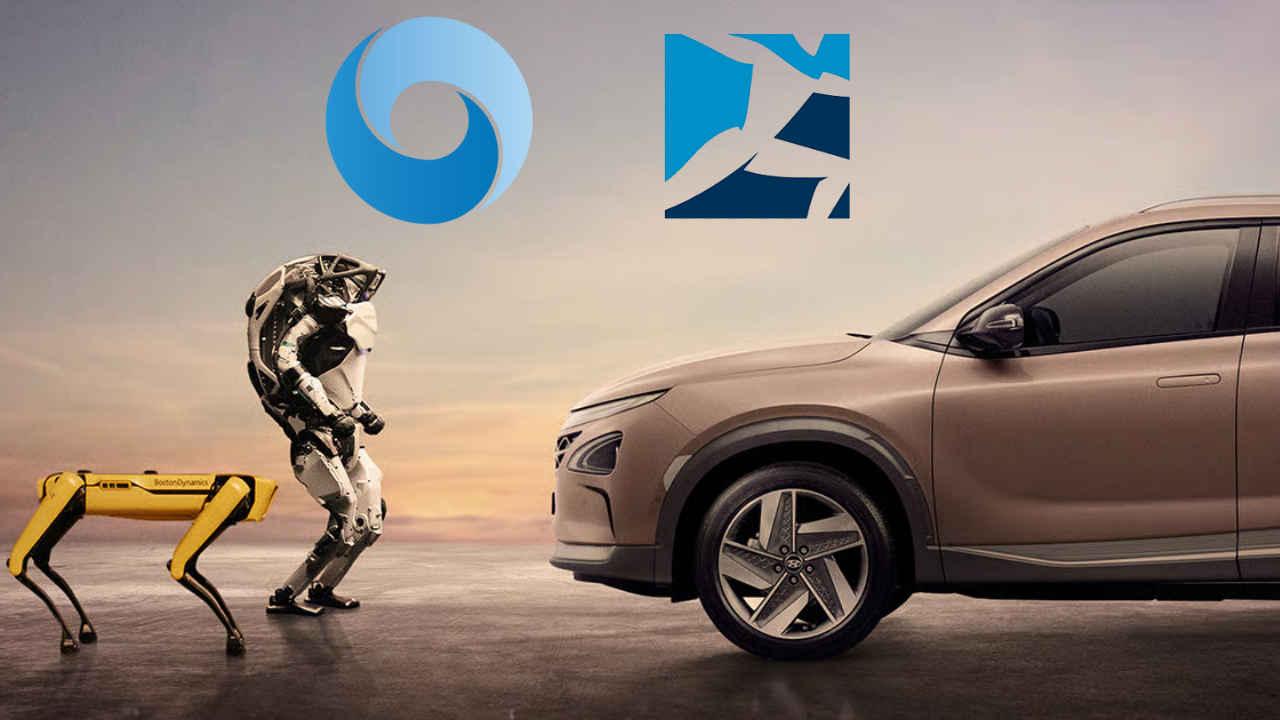
Boston Dynamics revealed a strategic partnership with Google DeepMind at CES 2026 during the Hyundai press conference, aimed at accelerating development of its next-generation humanoid robot Atlas. The collaboration centers on integrating Google DeepMind's AI foundation models to enable Atlas to act more human around people and navigate complex environments
1
. Carolina Parada, senior director of robotics at Google DeepMind, explained the ambition behind the partnership: "We're looking to integrate our cutting-edge AI foundation models with Boston Dynamics' new Atlas robots, and we'll aim to develop the world's most advanced robot foundation model to fulfill the promise of true general-purpose human needs"1
.
Source: Digit
The tie-up builds on Google DeepMind's recent work with Gemini Robotics, AI models announced less than a year ago that enable robots to perceive, reason, use tools, and interact with humans
1
. These models are based on Gemini, a large-scale multimodal generative AI model trained to generalize behavior across different robotics hardware platforms5
. This capability positions Google Gemini AI as a foundational platform that could serve multiple manufacturers, much like Android operates across smartphone brands3
.From Athletic Performance to Embodied AI in Real-World Settings
Boston Dynamics' Atlas robot already demonstrates impressive physical capabilities, performing acrobatics and dance routines with ease
2
. A prototype walked onstage during the CES presentation, showcasing its mobility5
. However, Alberto Rodriguez, director of Atlas behavior at Boston Dynamics, emphasized that "making Atlas into a product requires more than athletic performance for humanoids to really deliver on their promise. They have to be able to interact with people naturally"1
.The integration of Gemini Robotics addresses this gap by providing situational comprehension and manual dexterity that current systems lack
3
. Robert Playter, CEO of Boston Dynamics, told WIRED: "The real value going forward is for our robots to be contextually aware of their environment and able to use their hands to manipulate any object"2
. This shift from scripted performances to adaptive behavior represents a move toward embodied AI that can interpret sensor data, identify irregularly shaped objects, and plan movements in unstructured settings3
.
Source: TechSpot
Testing Begins in Hyundai Factories as Robots in Manufacturing Expand
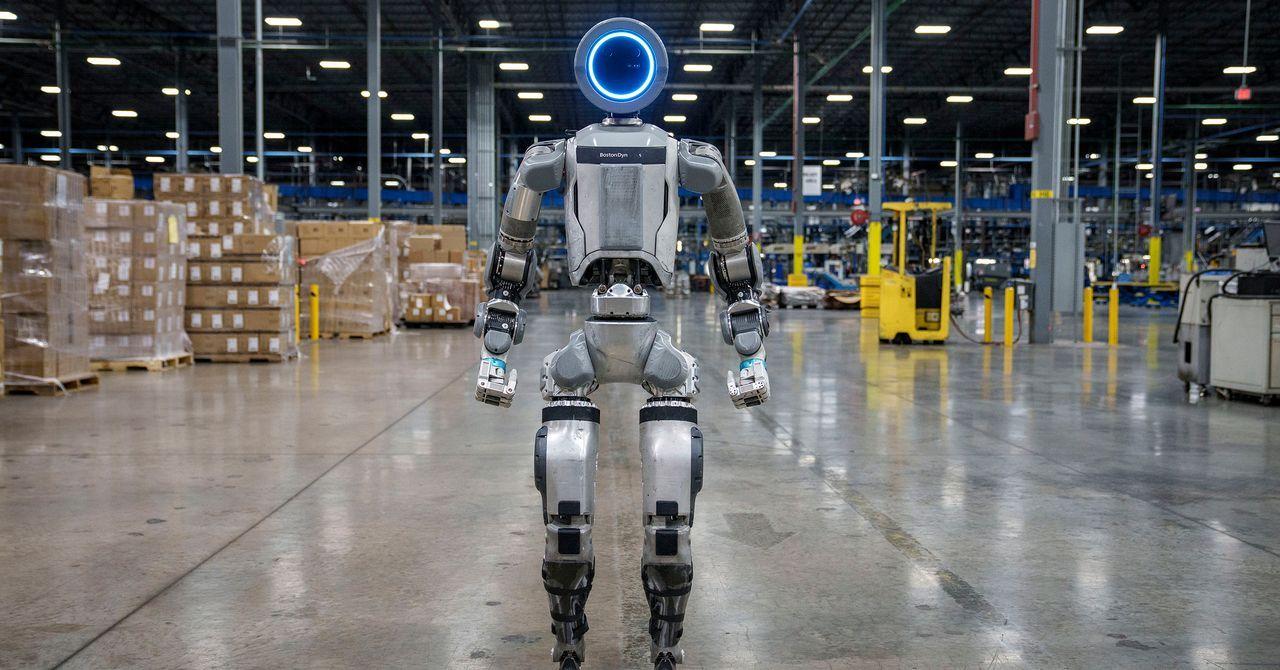
The partnership has immediate real-world scaling intent. Boston Dynamics announced that Atlas is already in production and headed to a Hyundai factory for testing
1
. Gemini-powered Boston Dynamics' Atlas robot units will attempt a range of manufacturing tasks at Hyundai automotive factories in the coming months2
. Playter noted that "manufacturing environments, like in Hyundai factories, are a perfect place to deploy that today"2
.
Source: Wired
This deployment builds on Boston Dynamics' existing commercial success. The company's quadruped robot Spot operates in more than 40 countries, while its warehouse robot Stretch has unloaded more than 20 million boxes globally since launching in 2023
1
. The Gemini model will also be deployed on Spot alongside Atlas2
. Parada indicated that while the automotive industry provides an ideal starting point, "our intention is to continue expanding to more and more applications"3
.Related Stories

Robotics Research Meets Growing Competition and Safety Considerations
The collaboration reunites Boston Dynamics with its former parent company Google, following ownership transitions through SoftBank and acquisition by Hyundai Motor Group
3
. The robotics research effort will be conducted at both companies' facilities4
. Unlike earlier generations confined to repetitive tasks, Gemini-enabled systems could continuously learn from their surroundings, with data gathered by robots refining the model's understanding of physical interactions3
.This partnership enters a competitive landscape where more than a dozen US companies, including Agility Robotics, Figure AI, Apptronik, 1X, and Tesla, are developing humanoid systems for general-purpose tasks
3
. Industry trackers report roughly 200 firms in China are building humanoid robots3
. As robotic autonomy increases, safety standards become critical. Parada said Gemini will add a layer of precaution by reasoning about actions to prevent hazardous behavior, while Playter acknowledged that "even the little ones can be dangerous"3
. Many AI developers view close interaction with the physical world as essential for achieving more generalized machine intelligence, positioning this partnership as a step toward robots that can master a wide range of tasks with human-like adaptability.References
Summarized by

Navi
[3]
[4]
Related Stories
Apptronik and Google DeepMind Join Forces to Advance AI-Powered Humanoid Robots
21 Dec 2024•Technology

Google DeepMind's Gemini Robotics: A Leap Forward in AI-Powered Robotics
13 Mar 2025•Technology
Boston Dynamics' Atlas robot enters production to build Hyundai cars starting in 2028
05 Jan 2026•Technology

Recent Highlights
1
AI chatbots validate you too much, making you less kind to others, Stanford study reveals
Science and Research
2
Anthropic's Claude Code Source Leak Reveals Hidden AI Agent Plans and Extensive System Access
Technology

3
Judge blocks Pentagon from branding Anthropic a security risk over AI safety guardrails dispute
Policy and Regulation

Recent Highlights
Today's Top Stories




Your Daily Dose of Curated AI News
Don’t drown in AI news. We cut through the noise - filtering, ranking and summarizing the most important AI news, breakthroughs and research daily. Spend less time searching for the latest in AI and get straight to action.

