China dominates humanoid robots race as robot coworkers move from labs to factory floors


2 Sources
2 Sources
[1]
Your First Humanoid Robot Coworker Will Probably Be Chinese
Explosive acceleration, limited dexterity, eyes in the back of its head. What could possibly go wrong? The 4-foot-tall humanoid robot that's in front of me seems, quite honestly, a bit drunk. It leaps from one leg to the other, waving its arms. After 30 seconds or so it abruptly stops, then strides toward me with an arm outstretched. The little robot is at the World Artificial Intelligence Conference, on the banks of the Huangpu river in Shanghai. The convention center is teeming with humanoids -- dancing ones, box-toting ones, robot dog-walking ones doing circuits around trade show booths. A few lie slumped in a corner as their batteries recharge. It's a balmy day in July, and I've come to Shanghai to learn how China's AI world differs from the Western one I usually cover. I'd immediately noticed the sleek electric cars from BYD, Xiaomi, and Huawei that fill the streets of the city's fashionable old French Concession. At Manner, a high-end coffee chain, I sampled an avant-garde beverage called a "sparkling citrus iced Americano." Now that I'm at the convention, I can't help but picture these dancing robots strolling Shanghai's streets and perhaps carrying their owner's shopping bags. A group crowds around a small boxing ring, where two humanoids throw punches at each other. One falls down, then gets back on its haunches and straightens up. A young woman offers to let me punch a humanoid. I feel certain that this would make me feel bad, so I decline. The activity in this convention center is a bit of a mirage, of course. Amid the throngs, you can spot people holding game controllers. They're giving the robots high-level instructions. The humanoids can control their balance and execute short routines, but it's humans who tell them which way to walk, whom to shake hands with, or when to backflip. Another limitation: Many humanoids don't have fingers. Their arms usually end in stumps, meaning that while they can hold and lift boxes (or wear boxing gloves, they can't grasp anything. Even so, experts predict that robots will have profound effects on the workforce and the economy. Amazon is testing humanoids from an American startup called Agility and, according to leaked memos, expects to replace a significant number of workers with robots in the next few years. Bank of America analysts predict that by 2035, robot makers will ship 10 million humanoids a year. Morgan Stanley forecasts that by 2050 a billion will be in use, with almost a third of them -- 302.3 million -- in China, compared with 77.7 million in the US. Perhaps no humanoid maker has a bigger lead than a Hangzhou-based company called Unitree. While Elon Musk's Optimus staggers through its demos, Unitree's robots are doing sprints, kung-fu kicks, and acrobatic backflips. (The conference's dancing door greeter was a Unitree.) Unitree's legged robots are also incredibly cheap, costing tens of thousands of dollars or less, a tenth of what a typical humanoid in the US costs. Unitree is China's most prominent robotics startup, a national champion for its tech industry, and is reportedly targeting a $7 billion IPO listing in Shanghai. And if Unitree fails? A staggering 200-plus other Chinese companies are also developing humanoids, which recently prompted the Chinese government to warn of overcapacity and unnecessary replication. The US has about 16 prominent firms building humanoids. With stats like that, one can't help but suspect that the first country to have a million humanoids will be China.
[2]
Robot coworkers are closer than expected as labour shortages hit hard
China leads robot production while Europe anchors the precision supply chain A rise in recent deployments across manufacturing environments shows humanoid robots are no longer confined to experimental settings, and evidence now points to a shift toward real-world use, new research has claimed. A new Barclays report states advances in artificial intelligence and mechanical engineering now allow robots with human-like forms to operate outside tightly controlled labs. These machines are now undergoing testing on production lines, in warehouses, and in other workplaces designed around human movement and reach. Labor shortages across several sectors, including manufacturing, agriculture, logistics, and healthcare, are a key factor driving this shift, as employers struggle to attract workers for repetitive, physically demanding, or hazardous roles. Aging populations, urban migration, and changing job preferences continue to reduce the supply of workers willing to perform physically demanding or repetitive work. These pressures create gaps that existing automation systems cannot fully address, which opens the door for humanoid robots. Humanoid robots differ from earlier machines because designers build them to function within human environments rather than requiring redesigned spaces. They include legs, arms, and sensors, and in theory can move through narrow spaces, climb stairs, and switch between tasks without major redesigns. Recent advances in perception and motion control software have reduced earlier failures that limited practical use, particularly errors tied to object recognition and spatial judgment, and other AI tools also play a central role by allowing these systems to respond to unstructured settings. Another contributing factor is that production costs have dropped from millions of dollars a decade ago to roughly $100,000 today. Developers attribute this reduction to progress in computing hardware, batteries, and especially actuators, which translate digital commands into movement. Like electric cars, manufacturers already build humanoid robots at scale in China, but Europe continues to supply many of the high-precision mechanical components that allow these machines to function reliably. Despite the growing attention, Barclays acknowledges large-scale adoption is neither guaranteed nor imminent. Energy efficiency still lags behind human performance, deployment costs remain high, and reliance on critical minerals introduces supply risks. Similar claims over the past few years have unsettled many workers, although there is little reason for alarm. Humanoid robots are expected to take on tasks that many people already avoid, but the report relies heavily on forecasts and early trials rather than long-term operational data. This leaves open questions around reliability, regulation, and whether these machines will spread widely across industries or remain limited to narrowly defined, undesirable roles.
Share
Share
Copy Link
China leads the global race to deploy humanoid robots in workplaces, with over 200 companies developing robot coworkers compared to just 16 in the US. Unitree's robots perform backflips and cost a tenth of American counterparts, while labor shortages and AI advancements push these machines from experimental labs into real manufacturing environments. Morgan Stanley predicts 302.3 million humanoid robots in China by 2050.
China Establishes Dominance in Humanoid Robot Development
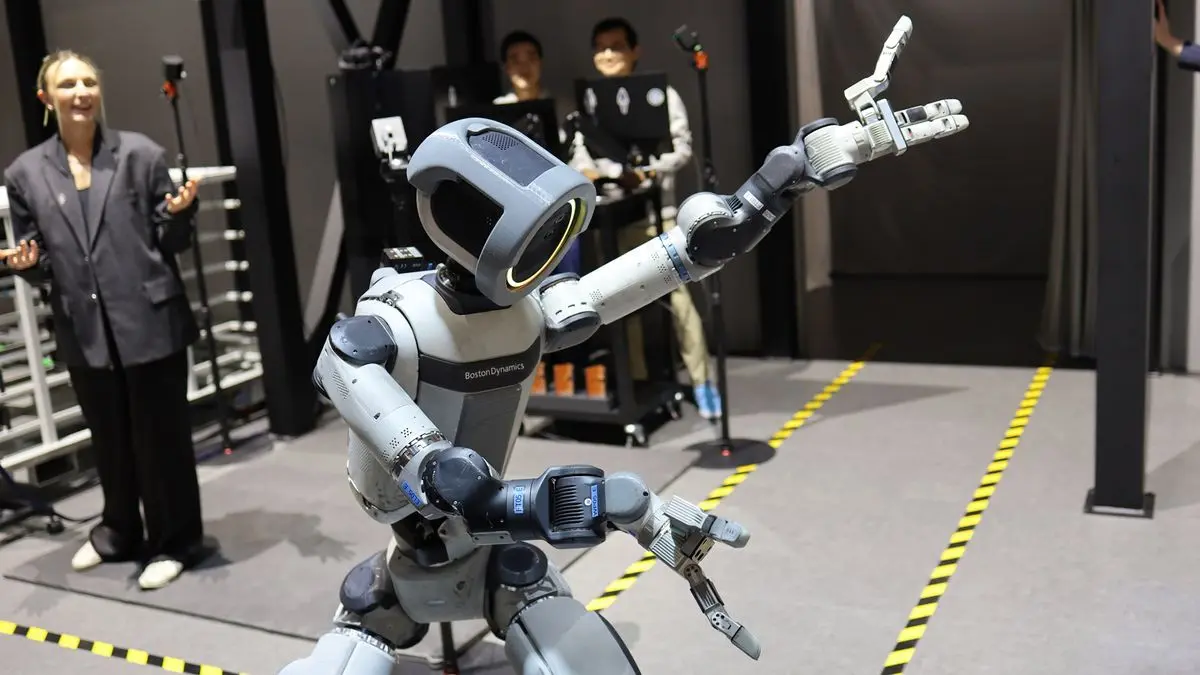
China has positioned itself as the undisputed leader in humanoid robot development, with more than 200 companies actively building these machines compared to approximately 16 prominent firms in the US
1
. At the World Artificial Intelligence Conference in Shanghai, the scale of China's ambition became visible as humanoid robots danced, carried boxes, and even sparred in boxing rings across the convention center floor1
. Hangzhou-based Unitree has emerged as the national champion, with robots performing sprints, kung-fu kicks, and acrobatic backflips while Elon Musk's Optimus still staggers through demonstrations. Unitree's machines cost tens of thousands of dollars, roughly a tenth of what typical humanoid robots in the US cost, and the company is reportedly targeting a $7 billion IPO listing in Shanghai1
.
Source: TechRadar
Labor Shortages Drive Push to Integrate Humanoid Robots Into Workforce
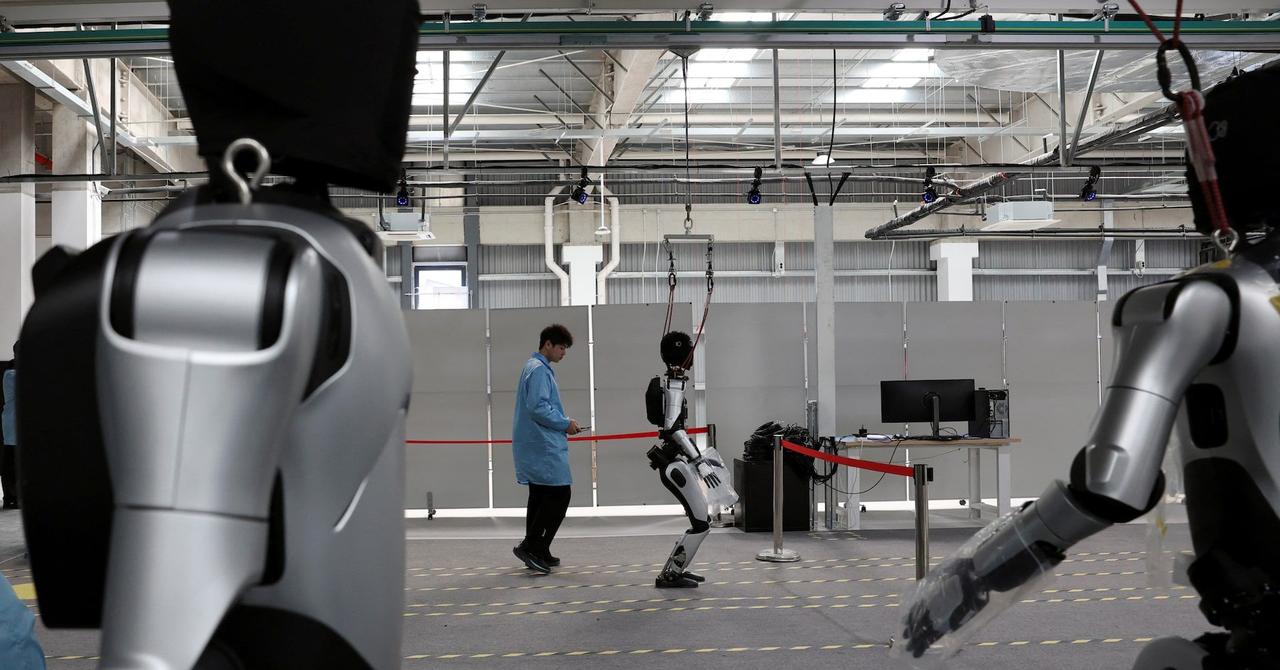
Labor shortages across manufacturing, agriculture, logistics, and healthcare sectors are accelerating the shift toward deploying a robot coworker in real-world settings
2
. Aging populations, urban migration, and changing job preferences continue to reduce the supply of workers willing to perform physically demanding or repetitive work, creating gaps that traditional automation systems cannot fully address2
. Amazon is already testing humanoid robots from American startup Agility and, according to leaked memos, expects to replace a significant number of workers with robots in the next few years1
. A new Barclays report confirms that humanoid robots are no longer confined to experimental settings, with recent deployments across manufacturing environments showing a shift toward real-world use on production lines, in warehouses, and in other workplaces designed around human movement2
.
Source: Wired
Advancements in Artificial Intelligence Enable Operation in Human Environments
Advancements in artificial intelligence and mechanical engineering now allow humanoid robots to operate in human environments rather than requiring redesigned spaces
2
. These machines include legs, arms, and sensors that enable them to move through narrow spaces, climb stairs, and switch between tasks without major redesigns2
. Recent advances in perception and motion control software have reduced earlier failures that limited practical use, particularly errors tied to object recognition and spatial judgment, while AI tools allow these systems to respond to unstructured settings2
. However, current limitations persist. Many humanoid robots at the Shanghai conference don't have fingers, with arms ending in stumps that allow them to hold and lift boxes but not grasp objects1
. Operators still provide high-level instructions through game controllers, while the robots control their balance and execute short routines1
.Related Stories

Production Costs Plummet as Manufacturing Scales in China
Production costs have dropped dramatically from millions of dollars a decade ago to roughly $100,000 today, a reduction developers attribute to progress in computing hardware, batteries, and especially actuators that translate digital commands into movement
2
. Like electric cars, manufacturers already build humanoid robots at scale in China, though Europe continues to supply many high-precision mechanical components that allow these machines to function reliably within the supply chain2
. The sheer number of Chinese companies pursuing humanoid robot development has prompted the Chinese government to warn of overcapacity and unnecessary replication1
.Forecasts Point to China Dominating Global Workforce Automation
Morgan Stanley forecasts that by 2050, a billion humanoid robots will be in use globally, with almost a third—302.3 million—operating in China compared to 77.7 million in the US
1
. Bank of America analysts predict that by 2035, robot makers will ship 10 million humanoid robots annually1
. These projections suggest the widespread adoption of robots will transform the workforce and economy, though Barclays acknowledges large-scale adoption is neither guaranteed nor imminent2
. Energy efficiency still lags behind human performance, deployment costs remain high, and reliance on critical minerals introduces supply risks2
. Experts expect humanoid robots to take on tasks that many people already avoid in manufacturing and other sectors, though questions around reliability, regulation, and whether these machines will spread widely across industries remain open2
.References
Summarized by

Navi
Related Stories
China's humanoid robot industry dominates supply chain as U.S. scrambles for alternatives
01 Mar 2026•Technology

China Dominates Humanoid Robots Shipments, Outpacing Tesla and US Rivals in 2025
09 Jan 2026•Technology

China's AI-Powered Humanoid Robots: Transforming Manufacturing and Driving Economic Growth
13 May 2025•Technology
Recent Highlights
1
Apple Plans Major Siri AI Overhaul in iOS 27 With Third-Party Chatbot Integration
Technology

2
OpenAI shuts down Sora after six months, ending Disney's $1 billion licensing partnership
Technology

3
AI chatbots validate you too much, making you less kind to others, Stanford study reveals
Science and Research

Recent Highlights
Today's Top Stories








Your Daily Dose of Curated AI News
Don’t drown in AI news. We cut through the noise - filtering, ranking and summarizing the most important AI news, breakthroughs and research daily. Spend less time searching for the latest in AI and get straight to action.

