Chinese AI startups surge with investor backing despite chip controls and profitability hurdles


4 Sources
4 Sources
[1]
Thousands of Companies Are Driving China's AI Boom. A Government Registry Tracks Them All
How the Cyberspace Administration of China inadvertently made a guide to the country's homegrown AI revolution. When DeepSeek burst onto the global stage in January 2025, it seemed to appear out of nowhere. But the large language model was just one of the thousands of generative AI tools that have been released in China since 2023 -- and there's a public archive of every single one of them. The country's top internet regulator, the Cyberspace Administration of China (CAC), requires that any company launching an AI tool with "public opinion properties or social mobilization capabilities" first file it in a public database: the algorithm registry. In a submission, developers must show how their products avoid 31 categories of risk, from age and gender discrimination to psychological harm to "violating core socialist values." Applicants submit their filing to their local CAC (say, the Shanghai CAC for Shanghai-registered firms), which forwards applications to the central CAC for final approval. Only then is a tool publicly listed in the algorithm registry. While the European Union is pursuing a single, comprehensive AI Act, notes Matt Sheehan, a research scholar at the Carnegie Endowment for International Peace, China's approach to regulation is more ad hoc, targeting specific algorithms and building up iterative standards. (The US has no comparable registration system or centralized regulatory agency.) Over time, the CAC has inadvertently created the most detailed map of a nation's AI ecosystem anywhere in the world. Open the CAC's update from August 2024 and you'll find DeepSeek listed as entry 152, a single row in a neatly packed table. Scroll through the table and you'll find an AI that manages homestays and an AI that drafts patents. One assists ob-gyns in a Shanghai maternity ward; another helps manage state power grids. Kendra Schaefer and her colleagues at Trivium China, a Beijing-based policy consultancy, have been compiling the CAC's updates into a comprehensive database, enriched with their own research. Nearly 80 percent of China's generative AI registrations are clustered in and around its top tech hubs -- Beijing, Shenzhen, Shanghai, and Hangzhou. Each city has its strengths: Beijing's elite universities, national labs, and political strength give it an edge in large-scale innovation; Shenzhen (in Guangdong) is home to a dense hardware supply chain and vast pool of engineering talent; Shanghai, close to multinationals, excels at commercialization; and Hangzhou (in Zhejiang) is fueled by Alibaba's ecommerce empire. But innovation spreads far beyond the coasts. Chongqing is positioning itself as an AI manufacturing and logistics node; and heavy state investment has helped Hefei, in Anhui Province, become known as "China's speech valley" for its cluster of speech-recognition firms, including iFlyTek. Filings also originate in less obvious regions like Guizhou, China's "Big Data Valley," where massive data centers power Huawei's Pangu model, and Inner Mongolia, where state enterprises are integrating AI into mining and agriculture. In the Trivium dataset, state-linked listings -- from state-owned enterprises to government-backed research institutes -- make up 22 percent of filings. Many state-linked firms partner with Big Tech to build their AI: PetroChina, for example, teamed up with Huawei and iFlyTek to create oil and gas applications; State Grid used DeepSeek to build a model optimizing power grids. Foreign firms make up just 0.5 percent of filings. Ikea, for example, has a smart shopper algorithm that generates product recommendations. Yum China, the parent company that operates Kentucky Fried Chicken in China, listed a model that generates menus and promotional material. More than half of the listings in the algorithm registry are for what Schaefer calls cross-sector technologies. These range from foundational models to "general purpose" text generators to a wide array of multimedia tools -- voice swappers, 3D renderers, image makers. "Nobody wants to be caught in a situation where they depend on a competitor's technology," Schaefer says. Unlike in the US, where OpenAI, Anthropic, and Google DeepMind dominate the market, China's competition to build foundational AI remains diverse and contested. But building these models is costly, and the market is beginning to consolidate. China's six "AI tigers" -- Moonshot, Minimax, Zhipu, Baichuan, 0.1AI, and Stepfun -- are all backed by Alibaba or Tencent. ByteDance's Doubao surpassed DeepSeek as China's most popular chatbot, but its spot at the top is not assured. While the giants duke it out for chatbot supremacy, startups are hard at work in every sector imaginable. Founder Derek Li says his 12-year-old company is leaps beyond the ed-tech competition. They "put wheels on a horse," he says, bolting AI onto their existing stale software. Squirrel claims to diagnose knowledge gaps, measure progress, and adjust lessons in real time. When China banned for-profit tutoring in 2021, the company's revenues collapsed overnight. It pivoted to licensing its platform to franchisees who also sold the company's AI-powered tablets. Squirrel's network includes more than 3,000 centers across China, serving 1.2 million students. Now, the company is eyeing expansion to the US. Li, who withdrew his sons from a private school in Shanghai so that they could be home-schooled on Squirrel's platform, says that "in the future, teachers won't teach knowledge." Instead, he says, "they'll become data analysts, understanding learning reports and students' ability, and psychologists, understanding emotions and shaping their personalities." AI Kanshe (translated as "AI Sees Tongue") is a traditional Chinese medicine startup that analyzes health through images of the tongue, palms, and face. The company was founded by Li Wenhua, a former employee of Yaoshi Bang, one of China's earliest online pharmaceutical platforms. A longtime student of tongue and hand diagnosis, Li wanted to combine the diagnostic methods of traditional Chinese medicine with modern machine vision. The company serves both consumers and health practitioners across clinics, pharmacies, and some hospitals, offering tools to support diagnosis and decisionmaking. Its model is trained on more than 100,000 annotated images of tongues, hands, and faces. Founded in 2024 by Wu Song, a former Wall Street quant trader, Zhongtan Puhui Cloud Technology develops AI-driven tools for carbon accounting. The green transition, Wu says, still relies on cumbersome human labor that could be automated. Zhongtan Puhui builds AI agents that handle a number of carbon accounting tasks, including carbon footprinting and emissions audits. Its clients range from China Minmetals Group and DHL to small and medium-sized exporters in the Yangtze River Delta.
[2]
Dazzling Chinese AI debuts mask growing pains
Hong Kong (AFP) - Investor confidence in Chinese AI startups is riding high, but obstacles to their long-term success range from US export controls to the puzzle of how to become profitable. This month, two leading players in China's artificial intelligence industry, Zhipu AI and MiniMax, made dazzling debuts on the Hong Kong stock exchange. The pair are part of a wave of rapidly growing Chinese "AI tigers" spurred by another startup, DeepSeek, whose low-cost AI model, on par with US rivals, stunned the world a year ago. But Zhipu AI's co-founder Tang Jie warned later that despite the achievements of Chinese companies in large open-source AI models, the gap with the United States "may actually be widening". DeepSeek and other top Chinese AI providers have focused on free, open-source technology -- a strategy that can attract users fast but brings in less cash than private, closed systems. "Large-scale models in the US are still mostly closed-source... we need to acknowledge challenges and gaps we face," Tang said at a conference in Beijing. Geopolitical struggles could also hold Chinese AI back. US export sanctions on advanced microchips used to train and run AI systems, as well as precision chipmaking equipment, have been cited as a key constraint by top industry figures. "It's the high cost of computing under sanctions and the delicate balance of innovating within a strict regulatory framework." 'Burning cash' Shares in Zhipu AI, a major provider of chatbot tools to Chinese businesses, have soared 80 percent since it went public. MiniMax, which targets the consumer market with its multimedia AI tools, has seen even stronger gains. Their IPOs came ahead of any such move from OpenAI, the San Francisco-based startup behind the phenomenally popular ChatGPT. Although OpenAI's value has ballooned in funding rounds to a staggering $500 billion, it does not expect to be profitable before 2029 owing to huge outlays to build the computing infrastructure it relies on. Zhipu AI and Minimax are also logging increasing losses while costs, including for training new AI models, rise. Both are "burning cash faster than they can generate sustainable revenue streams", analyst Poe Zhao, founder of Hello China Tech, told AFP. US restrictions bar the most advanced, energy-efficient AI chips on the market, made by US company Nvidia, from sale in China. Using domestic chipsets, Chinese AI developers need two to four times more computational power to train their models, according to Lian Jye Su, chief analyst at Omdia. Zhao and other analysts call 2026 a critical test for the global AI sector as it chases elusive monetisation prospects. Whether companies "can move beyond coding and unlock real commercial value" is vital to their survival, Zhao said. Industrial uses Koda Chen said his firm Suanova Technology, which provides and invests in computing power for Chinese AI companies, has identified opportunities in finance and healthcare. He sees this year as a "turning point" for China's AI businesses to achieve profitability in more sectors. "Clients are developing payment habits, and products are gaining customer stickiness," the Suanova CEO said. China is handing out massive subsidies to support AI innovation and its industrial policies also illustrate its ambition to compete with the United States in the sector. Beijing this month announced plans to deploy three to five general-purpose large AI models in manufacturing by 2027. The government said it also planned to strengthen supplies of computing power. These moves show the country is serious about AI driving the real-world economy, Futurum's Patience said. China "is trying to build the AI-powered factory of the world", he said. The large language model market in China, still in its early stages, is estimated to grow to $14.5 billion by 2030, according to consultancy Frost and Sullivan, with the future unit price of computing power expected to decline. China's engineering talent base and the lower cost of generating electricity there work in its favour, said Tang Heiwai, an economics professor at the University of Hong Kong. "These factors would grant China greater resilience in development than the United States as an AI superpower", he said.
[3]
Inside China's buzzing AI scene year after DeepSeek shock - The Economic Times
Before DeepSeek shook up the tech world and put Chinese artificial intelligence on the map, Wu Chenglin's own startup had nearly folded three times -- but in the past year it has raised $30 million. But as excitement around DeepSeek fuelled a boom in spending, Wu raised 220 million yuan in two funding rounds.Before DeepSeek shook up the tech world and put Chinese artificial intelligence on the map, Wu Chenglin's own startup had nearly folded three times -- but in the past year it has raised $30 million. The January 2025 release of a low-cost generative AI model from DeepSeek that performed at a similar level to ChatGPT and other top American chatbots upended assumptions of US dominance in the sensitive sector. The breakthrough has galvanised China's AI scene, despite hurdles posed by rivalry with the United States, and fears of a global market bubble. "It gave a lot of people confidence" that China's AI community previously lacked, Wu told AFP. His venture DeepWisdom, whose flagship product is a platform for AI-powered software development, had struggled to stay afloat despite its popularity among programmers. But as excitement around DeepSeek fuelled a boom in spending, Wu raised 220 million yuan in two funding rounds. Meanwhile, Shi Yaqiong and her team at Beijing-based Jinqiu Capital have closed deals with more than 50 AI firms over the past 12 months. Shi, the fund's vice-president, described a "clear surge" in enthusiasm around Chinese AI and competition among investors since the DeepSeek shock. "The kind of projects with an initial valuation in 2024 of $10-20 million were, in 2025, expected to have initial valuations around $20-40 million," she said. Engineer dividend Shares in two leading Chinese AI startups, Zhipu AI and MiniMax, soared on their market debuts in Hong Kong this month. Frenzy over the much-hyped potential of AI to change the world is driving global stocks to record highs, led by chipmakers and tech giants. But the big-spending euphoria has sparked fears of a market crash, with many investors hyper-focused on any sign the AI bubble could burst, and questioning when new companies will become profitable. Access to top-end chips made by US giant Nvidia is also restricted in China under White House policies designed to curb China's technological development. But that hasn't dampened the spirits of young developers in the world's second largest economy. At an AI networking event held on a brisk winter afternoon last week in a stylish Beijing cafe, animated discussion filled the air about the future of the fast-moving industry. Chip export controls mean Chinese AI is more likely to be "open-source and cheap" which could make it more useful to society, said one participant, entrepreneur Li Weijia. China is often said to enjoy an "engineer dividend" that benefits its AI sector, and talent is flocking to the field. Online hiring platform Zhilian Zhaopin reported a 39 percent increase in applications to AI-related jobs in the first three quarters of 2025, after DeepSeek's breakout. 'Cost-efficient' "China has a huge application developer ecosystem and people are very good at building apps," Shen Qiajin, founder of ideaFlow, told AFP. "But for a very long time, we didn't have a good cost-efficient model," he said. That is a gap DeepSeek has now filled. The firm began in 2023 as a side project of a data-driven hedge fund co-founded in the tech hub Hangzhou by Liang Wenfeng, which had access to a cache of powerful Nvidia processors. Today, the company -- expected to release its next AI model within weeks -- holds four percent of global market share for chatbots, according to web traffic analysis company Similarweb. ChatGPT dominates at 68 percent while Google's Gemini is catching up at 18 percent, Similarweb estimates. DeepSeek's decision to make its systems' inner workings public, in contrast to the closed AI models sold by OpenAI and other Western rivals, has boosted adoption of its tools by developers and businesses, Neil Shah at Counterpoint Research said. Its tools have had "strong adoption in cost-sensitive emerging markets", he said. But in the West users are more cautious, "primarily on account of privacy and national security concerns". Even so, the domestic market is huge. By June 2025, more than half a billion Chinese internet users reported having used generative AI products, according to the China Internet Network Information Center. Entrepreneur Yang Yiwen said her parents had their first meaningful encounter with AI during last year's Chinese New Year, when they watched her use DeepSeek to plan a family trip. "They found it quite fun," she said.
[4]
Dazzling Chinese AI debuts mask growing pains
Investor confidence in Chinese AI startups is riding high, but obstacles to their long-term success range from U.S. export controls to the puzzle of how to become profitable. This month, two leading players in China's artificial intelligence industry, Zhipu AI and MiniMax, made dazzling debuts on the Hong Kong stock exchange. The pair are part of a wave of rapidly growing Chinese "AI tigers" spurred by another startup, DeepSeek, whose low-cost AI model, on par with U.S. rivals, stunned the world a year ago.
Share
Share
Copy Link
China's AI boom accelerates as startups raise hundreds of millions in funding rounds, with Zhipu AI and MiniMax making stellar Hong Kong stock exchange debuts. But beneath the excitement, Chinese AI faces critical challenges: US export controls on microchips, mounting losses, and the puzzle of achieving profitability while competing with OpenAI and other Western rivals.
DeepSeek Sparks Unprecedented Investment Wave
The Chinese AI landscape transformed dramatically following DeepSeek's January 2025 breakthrough, when the startup released a low-cost generative AI model that matched ChatGPT's performance and challenged assumptions about US dominance in artificial intelligence
3
. Wu Chenglin's venture DeepWisdom exemplifies this shift—after nearly folding three times, the company raised 220 million yuan (approximately $30 million) in two funding rounds as excitement around DeepSeek fueled an AI boom in spending . "It gave a lot of people confidence" that China's AI community previously lacked, Wu explained. This surge in investor confidence drove project valuations skyward, with initial valuations jumping from $10-20 million in 2024 to $20-40 million in 2025, according to Shi Yaqiong, vice-president at Beijing-based Jinqiu Capital, whose team closed deals with more Благо with more than 50 AI firms over the past 12 months3
.
Source: ET
Stock Market Debuts Signal Growing Momentum
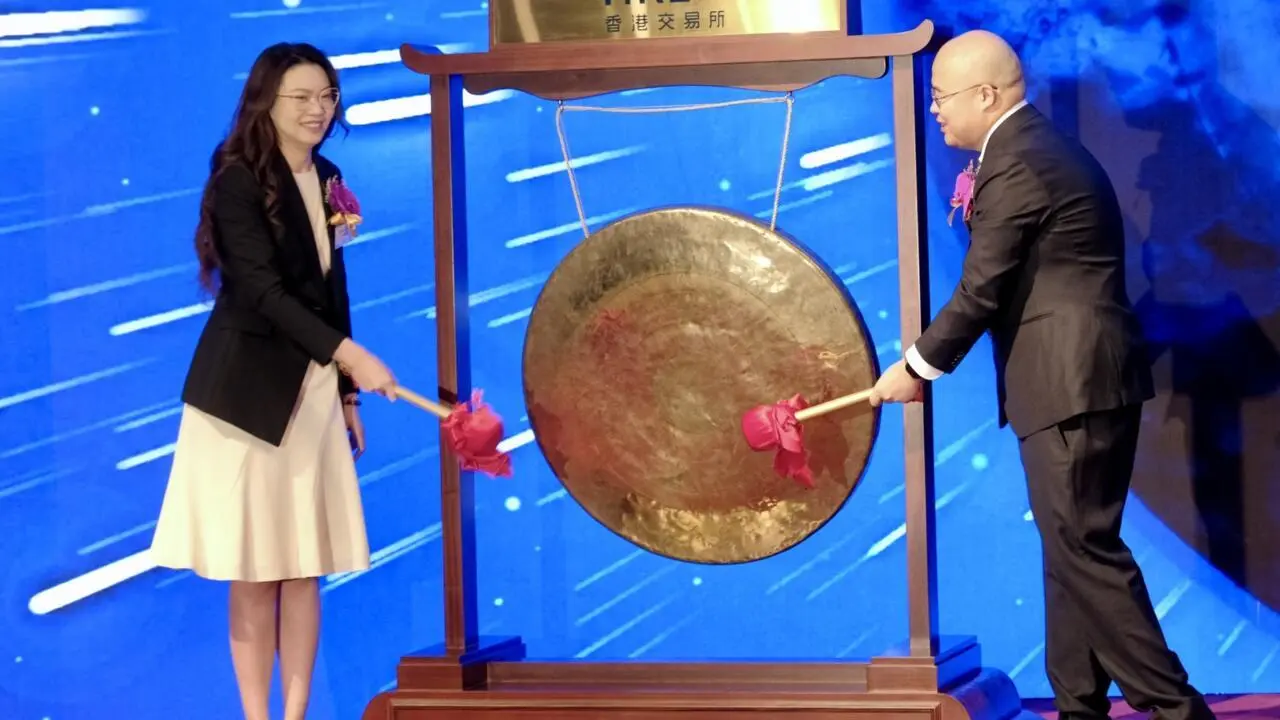
Two leading AI startups, Zhipu AI and MiniMax, made dazzling debuts on the Hong Kong stock exchange this month, with shares in Zhipu AI soaring 80 percent since going public while MiniMax saw even stronger gains
2
. The pair are part of a wave of rapidly growing Chinese "AI tigers" that includes Moonshot, Minimax, Zhipu, Baichuan, 0.1AI, and Stepfun—all backed by Alibaba or Tencent1
. Their IPOs came ahead of any such move from OpenAI, the San Francisco-based startup behind ChatGPT, which despite reaching a staggering $500 billion valuation in funding rounds does not expect profitability before 2029 due to massive infrastructure outlays2
. ByteDance's Doubao surpassed DeepSeek as China's most popular chatbot, though its position at the top remains contested in a diverse and competitive market1
.
Source: France 24
US Export Controls Create Computing Power Constraints
Despite the momentum, US export controls on advanced microchips pose significant obstacles to long-term success for Chinese AI companies
2
. US restrictions bar the most advanced, energy-efficient AI chips made by Nvidia from sale in China, forcing developers to use domestic chipsets that require two to four times more computing power to train their generative AI models, according to Lian Jye Su, chief analyst at Omdia2
. "It's the high cost of computing under sanctions and the delicate balance of innovating within a strict regulatory framework," industry observers note2
. Zhipu AI co-founder Tang Jie warned that despite achievements in large open-source AI models, the gap with the United States "may actually be widening" as US large-scale models remain mostly closed-source2
.Open-Source Strategy Raises Profitability Questions
DeepSeek and other top Chinese AI providers have focused on free, open-source technology—a strategy that attracts users quickly but generates less cash than private, closed systems
2
. Both Zhipu AI and MiniMax are "burning cash faster than they can generate sustainable revenue streams," according to analyst Poe Zhao, founder of Hello China Tech, with both logging increasing losses while costs for training new AI models rise2
. Analysts call 2026 a critical test for the global AI sector as it chases elusive monetisation prospects, with whether companies "can move beyond coding and unlock real commercial value" vital to their survival2
. However, the open-source approach has boosted adoption of tools by developers and businesses, with DeepSeek holding four percent of global market share for chatbots compared to ChatGPT's 68 percent dominance, according to Similarweb3
.Related Stories

Government Support and Talent Pool Drive Expansion
China is deploying massive government subsidies to support AI innovation, announcing plans this month to deploy three to five general-purpose large AI models in manufacturing by 2027 while strengthening computing power supplies
2
. The country's engineering talent base and lower electricity costs work in its favor, granting "China greater resilience in development than the United States as an AI superpower," according to Tang Heiwai, an economics professor at the University of Hong Kong2
. Online hiring platform Zhilian Zhaopin reported a 39 percent increase in applications to AI-related jobs in the first three quarters of 2025, following DeepSeek's breakout3
. By June 2025, more than half a billion Chinese internet users reported having used generative AI products, according to the China Internet Network Information Center3
.
Source: Wired
Algorithm Registry Maps China's AI Ecosystem
The Cyberspace Administration of China (CAC) requires any company launching an AI tool with "public opinion properties or social mobilization capabilities" to file it in a public algorithm registry, creating the most detailed map of a nation's AI ecosystem anywhere in the world
1
. Nearly 80 percent of China's generative AI registrations cluster in top tech hubs—Beijing, Shenzhen, Shanghai, and Hangzhou—with each city bringing distinct strengths from elite universities to hardware supply chains1
. State-linked listings from state-owned enterprises to government-backed research institutes make up 22 percent of filings, with many partnering with Big Tech to build applications, while foreign firms comprise just 0.5 percent of filings1
. The large language model market in China is estimated to grow to $14.5 billion by 2030, according to consultancy Frost and Sullivan, though concerns about a market bubble persist as investors watch for signs of when the AI boom might face correction2
.References
Summarized by

Navi
[2]
[4]
Related Stories
Zhipu AI becomes first China AI tiger to go public, vows to export brutal price war globally
02 Jan 2026•Business and Economy

DeepSeek's AI Breakthrough Sparks Chinese Tech Rally and Global Market Shifts
15 Feb 2025•Technology

MiniMax surges 90% in Hong Kong debut after $619M IPO, beating rival Zhipu AI
08 Jan 2026•Business and Economy

Recent Highlights
1
AI chatbots validate you too much, making you less kind to others, Stanford study reveals
Science and Research

2
Anthropic's Claude Code Source Leak Reveals Hidden AI Agent Plans and Extensive System Access
Technology

3
Judge blocks Pentagon from branding Anthropic a security risk over AI safety guardrails dispute
Policy and Regulation

Recent Highlights
Today's Top Stories









Your Daily Dose of Curated AI News
Don’t drown in AI news. We cut through the noise - filtering, ranking and summarizing the most important AI news, breakthroughs and research daily. Spend less time searching for the latest in AI and get straight to action.

