Claude AI connects with Apple Health to deliver insights from fitness data and medical history


2 Sources
2 Sources
[1]
Claude AI iPhone App Can Now Connect to Apple Health in the US
Anthropic's Claude AI chatbot is gaining Apple Health integration, allowing the assistant to access users' health and fitness data directly from their iPhone. The feature is rolling out in beta this week via the Claude iOS app, Anthropic announced as part of a broader healthcare push. U.S. subscribers on Claude Pro and Max plans can opt in to share their data, including movement, sleep, and activity patterns. Once connected, Claude can summarize medical history, explain test results, detect patterns across fitness metrics, and help users prepare questions for doctor appointments. HealthEx and Function connectors are also available in beta. Anthropic says the integrations are "private by design." Users choose exactly what they share, must explicitly opt in, and can revoke access at any time. Health data isn't used to train models, according to the company. The announcement comes two weeks after OpenAI launched ChatGPT Health with its own Apple Health connector. Both companies stress their tools aren't intended for diagnosis and aren't a substitute for professional medical advice.
[2]
You can now connect Claude with Apple Health to get insights from your fitness data
Anthropic has been working on ways to help people better understand their Apple Watch and Health data, and now that idea has officially moved from promise to practice. The company has begun rolling out a new beta feature that can connect Claude AI directly to your Apple Health, turning raw fitness and medical data into something you can actually talk about and understand. The new integration is part of a broader health push from Anthropic and is now available in beta for Claude Pro and Max users in the US through the iOS and Android apps. Once you explicitly opt in, Claude can securely access health and fitness information stored in Apple Health, such as movement, sleep, and activity patterns. Recommended Videos The company stresses that this data is private by design, meaning you can control what kind of data is shared. You can also choose to revoke access at any time, and Anthropic has assured that the health data will not be used to train AI models. Turning health data into conversations Once connected, Claude can do more than just read numbers. The assistant can summarize a user's medical history, explain lab test results in plain language, spot trends across fitness metrics, and even help prepare questions for upcoming doctor appointments. The goal, according to Anthropic, is to make conversations with healthcare professionals more productive and help users feel better informed about their own health. Apple Health is just one of four new health integrations rolling out in beta. Anthropic has also added support for Health Connect on Android, along with HealthEx and Function, expanding Claude's reach beyond Apple's ecosystem. The timing is notable. The launch comes shortly after OpenAI introduced ChatGPT Health, which also connects to Apple Health to help users reflect on their weekly health data. With both companies entering the space, AI assistants are increasingly shifting from general productivity tools to something more personal, helping users make sense of the growing pile of health data their devices collect every day.
Share
Share
Copy Link
Anthropic has launched Apple Health integration for its Claude AI chatbot, enabling US subscribers to share fitness and medical data through the iPhone app. The beta feature allows users to get personalized health insights, summarize medical history, and prepare for doctor appointments while maintaining strict privacy controls. The move positions Claude as a competitor to OpenAI's recently launched ChatGPT Health.
Claude AI Gains Apple Health Integration in Healthcare Push
Anthropic has officially rolled out a beta feature that allows Claude AI to connect with Apple Health, marking the company's entry into personalized health assistance. Available now for Claude Pro and Max subscribers in the United States, the integration enables the Claude AI chatbot to access health data stored on users' iPhones through the iOS app, including movement, sleep, and activity patterns
1
. The feature represents a shift for AI assistants from general productivity tools to more intimate health companions that can interpret the growing volume of data collected by wearable devices.
Source: MacRumors
How Claude Transforms Health Data Into Actionable Insights
Once users opt in, Claude can do far more than display raw numbers. The assistant can summarize medical history, explain test results in plain language, and identify fitness patterns across multiple metrics
2
. According to Anthropic, the goal is to help users prepare questions for doctor appointments and make conversations with healthcare professionals more productive2
. This capability to get insights from fitness data addresses a common challenge: people collect extensive health metrics but often lack the context to understand what the numbers mean or how they relate to their overall wellness.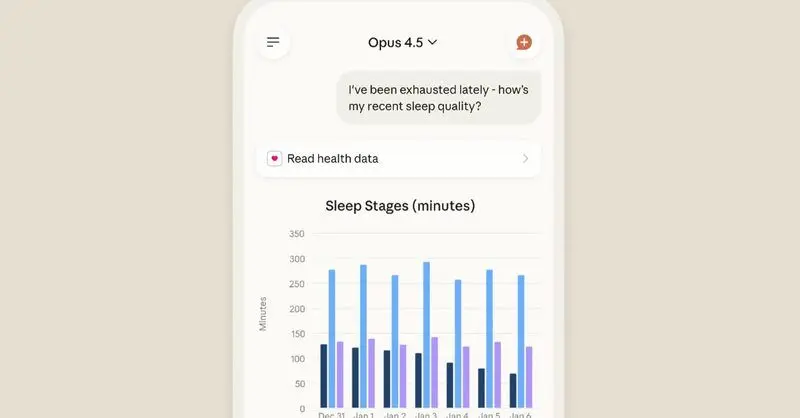
Source: Digital Trends
Privacy Protections and User Control
Anthropic emphasizes that the health integrations are "private by design," giving users granular control over what information they share
1
. Users must explicitly opt in to the beta feature, can choose exactly what data Claude accesses, and retain the ability to revoke access at any time. Critically, Anthropic has stated that health data won't be used for AI model training, addressing concerns about how sensitive medical information might be utilized1
. This data privacy stance is essential as AI assistants handle increasingly personal information.Related Stories

Expanding Beyond Apple's Ecosystem
Apple Health is just one of four new health integrations Anthropic is launching. The company has also added support for Health Connect on Android, along with HealthEx and Function connectors, all available in beta
1
2
. This multi-platform approach extends Claude's reach beyond the iPhone app and Apple's ecosystem, positioning the service to compete across different devices and health data sources.Competition Heats Up in AI Health Space
The timing of Anthropic's announcement is notable, coming just two weeks after OpenAI launched ChatGPT Health with its own Apple Health connector . Both companies stress that their tools aren't intended for diagnosis and don't replace professional medical advice
1
. As major AI players rush to claim space in health assistance, users can expect continued innovation in how AI interprets fitness metrics and medical information. The question remains whether these tools will genuinely improve health outcomes or simply add another layer of complexity to an already data-saturated wellness landscape. What's clear is that AI assistants are moving from answering general queries to helping users navigate deeply personal aspects of their lives.References
Summarized by

Navi
Related Stories
ChatGPT and Apple Health integration could deliver personalized health advice from your data
04 Dec 2025•Technology

Anthropic's Claude AI Expands to iPad, Enhances Mobile Experience with Major Update
18 Oct 2024•Technology

Anthropic's Claude AI Expands Integration Capabilities for Education and Design
10 Jul 2025•Technology

Recent Highlights


Recent Highlights
Today's Top Stories










Your Daily Dose of Curated AI News
Don’t drown in AI news. We cut through the noise - filtering, ranking and summarizing the most important AI news, breakthroughs and research daily. Spend less time searching for the latest in AI and get straight to action.

