Factify Secures $73M Seed Round to Replace PDFs with Intelligent Documents for the AI Era


3 Sources
3 Sources
[1]
Factify wants to move past PDFs and .docx by giving digital documents their own brain
Tel Aviv-based startup Factify emerged from stealth today with a $73 million seed round for an ambitious, yet quixotic mission: to bring digital documents beyond the standard formats most businesses use -- .PDF, .docx, collaborative cloud files like Google Docs -- and into the intelligence era. For Matan Gavish, Factify's Founder and CEO, this isn't just a software upgrade -- it is an inevitability he has been obsessed with for years. "The PDF was developed when I was in elementary school," Gavish told VentureBeat. "The bedrock of the software ecosystem hasn't really evolved... someone has to redesign the digital document itself." Gavish, a tenured professor of computer science and Stanford PhD, admits that his fixation on administrative file formats is an anomaly for someone with his credentials. "It's a very uncool problem to be obsessed with," he says. "Given the fact that my academic background is AI and machine learning, my mom wanted me to start an AI company because it's cool. I'm not sure why I'm obsessed and then possessed by documents." But that obsession has now attracted a sizeable seed round led by Valley Capital Partners and backed by AI heavyweights like former Google AI chief John Giannandrea. The bet is simple the static rigidity of most digital files has limited their utility, and a better, more intelligent document that actually shares its edit history and ownership with users as intended, is not only possible -- it's a multi-billion-dollar opportunity. The history of digital documents To understand why a seed round would balloon to $73 million, you have to understand the scale of the trap businesses are in. There are currently an estimated three trillion PDFs in circulation. "Some people see the PDF more than they see their kids," Gavish jokes. The history of the digital document is not a linear progression where one format replaces another. Instead, it is a story of "speciation," where different formats evolved to fill distinct ecological niches: creation, distribution, and collaboration. The era of files: Microsoft Word (1980s-1990s) Digital documents began as isolated artifacts. In the 1980s, the "document" was inextricably linked to the hardware that created it. A file created in WordPerfect on a DOS machine was effectively gibberish to a Macintosh user. Microsoft Word, which traces its lineage to the pioneering WYSIWYG editors at Xerox PARC, changed this by leveraging the dominance of the Windows operating system. By the 1990s, the binary .doc format became the default container for editable professional documents. However, these files were structurally complex "memory dumps" designed for the limited hardware of the time, often leading to corruption or privacy leaks where deleted text remained hidden in the file's binary data. The era of digital 'stone': the PDF (1990s-2006) The PDF did not originate as a tool for writing; it was a tool for viewing. In 1991, Adobe co-founder John Warnock penned the "Camelot Project" white paper, envisioning a "digital envelope" that would look identical on any display or printer. Unlike Word files, which were malleable, PDFs were designed to be immutable. They used the PostScript imaging model to place characters at precise coordinates, ensuring visual fidelity. While adoption was initially slow, Adobe's 1994 decision to release the Acrobat Reader for free established PDF as the global standard for "digital concrete" -- the format of finality used for contracts, government forms, and archives. The collaborative cloud docs era (2006-present) In 2006, Google disrupted the model again by moving the document from the hard drive to the browser. Using "Operational Transformation" algorithms, Google Docs allowed multiple users to edit the same stream of text simultaneously. This shifted the paradigm from "sending a file" to "sharing a link." While Google Workspace now claims over 3 billion users (mostly consumers and education), it fundamentally changed how we work -- turning documents into living, collaborative processes rather than static artifacts. The status quo: fragmentation Despite these advances, the business world remains fragmented. We draft in Google Docs (the "Digital Stream"), format in Word (the "Digital Clay"), and sign in PDF (the "Digital Stone"). But this fragmentation has a cost. "The problem is not the document. It is everything around it," the company notes. "Once a PDF leaves your system, control is gone. Versions drift. Access is unclear. Nothing is visible." Turning digital documents into intelligent infrastructure Factify's wager is that in the age of AI, this fragmentation is no longer just annoying -- it is a critical failure. AI models need structured, verifiable data to function. When an AI "reads" a PDF, it is essentially guessing, using optical character recognition to scrape text from what is effectively a digital photo. "What we're dealing with here is a megalomaniac vision, but it's at the same time probably something that is inevitable," Gavish says. Factify's solution is to treat documents not as static files, but as intelligent infrastructure. In the "Factified" standard, a document carries its own brain. It possesses a unique identity, a live permission system, and an immutable audit log that travels with it. "We wrote a new document format that supplants the PostScript," Gavish explains. "We created a new data layer that supports the document as a first class citizen... and it's always available inside the organization and potentially outside." This distinction -- between a File and an API -- is the core of the company's pitch" * Files are liabilities: They accumulate, get lost, and can be stolen. "It goes back to a brick status," Gavish says. "Files are liabilities, if anything, because they just accumulate there, you have to guard them." * APIs are assets: A Factify document is an active object. You can ask it questions: "Who has seen you? When do you expire? Are you the most up-to-date version?" 'People don't change', but formats do History is littered with formats that tried to replace the PDF (like Microsoft's XPS). They failed because they demanded too much behavioral change from users. Gavish is keenly aware of this trap. "When I talk to enterprise software entrepreneurs, I tell them the two laws to know about starting a company in enterprise software is that people don't care, and no one changes," he says. To skirt this, Factify has built deep backwards compatibility. A Factified document can look exactly like a PDF, complete with page breaks and margins. Users don't need to learn a new interface to get value; they just need to solve a specific pain point -- like an executive who wants to ensure an investment memo can't be forwarded. "All they have to tell their team is, 'Dear Chief of Staff, employment agreements and investment memoranda... are going to be Factified. The rest carry on,'" Gavish says. "They see immediate benefit... but then they discover that they've crossed the Rubicon." What's next for Factify? The capital from this round will be used to deepen the platform's core engineering -- which Gavish describes as a "heavy engineering lift" requiring them to rebuild the document format, data layer, and application layer from scratch. The company is also establishing a major operational hub in Pittsburgh to support its U.S. expansion. Ultimately, Factify isn't trying to build another collaboration tool like Google Docs. They are trying to build the immutable record of the future -- the standard for "truth" in a digital world. "The PDF... became a standard meaning I cannot file my taxes using any other format. This is how victory looks like," Gavish says. "We are creating a document standard that is not specific for health care or for insurance, but is just document as such." For the three trillion static files currently sitting in cloud storage, the writing may finally be on the wall.
[2]
Factify gets $73M in seed funding to replace antiquated PDF files with intelligent documents
Factify gets $73M in seed funding to replace antiquated PDF files with intelligent documents Factify Technologies IL Ltd. wants to kill off PDF files as the de facto standard for business records, contracts and agreements after closing on a massive $73 million in seed funding today. The round was led by Valley Capital Partners and saw participation from angels including John Giannandrea, the former head of artificial intelligence at Google LL and senior vice president of AI at Apple, plus Ken Moelis, founder of investment bank Moelis & Co., and Peter Brown, chief executive of the hedge fund Renaissance LLC. Factify seeks to replace PDFs with what it calls "document-as-infrastructure," in which every file has its own identity, access rules, version history and intelligence, and is capable of updating itself automatically to serve as a single source of truth. The startup argues that the time for PDFs to die is long overdue. Adobe Inc. first created the PDF format more than 30 years ago, and it quickly emerged as the default file type for digital documents. Today, Adobe estimates that there are more than 3 trillion PDF files in circulation in the world, yet amazingly this technology has hardly been updated at all. Factify founder and CEO Matan Gavish (pictured) says that PDFs are static documents that essentially remain frozen in time, and the lack of evolution means they have major limitations. He has been concerned about the reliance on PDFs for a long time, publishing research as early as 2012 that warned about the format's limitations in an increasingly connected world. His main issue is that, because PDFs have no way to verify the information inside them or help users to identify the most up-to-date and authoritative version, they cannot be trusted anymore. And this is becoming a problem in a world where businesses are moving away from humans to AI systems that review, approve and take actions based on what they see in documents. "PDFs remain the last major holdout of the pre-digital world inside document-heavy organizations," Gavish said. "Layering outdated tools like digital signatures on top of static files only makes companies less future-proof, especially as AI moves into core business workflows." The solution, he says, is Factified documents, which come with built-in control, intelligence and authenticity to act as a governed record. That means they can be created, used and trusted by both humans and machines. Each Factified document carries its own identity, has its own access rules and version history, and possesses programmable intelligence that can be accessed via a ChatGPT-style interface. What this means is that Factified documents can record any meaningful events that affect their contents in a permanent audit log attached to it. It also means that governance is enforced directly by the document, which will grant access only to approved users, even if they're offline. Users can converse with their documents and ask them questions. They also support workflows that typically require external tools, such as approvals, signatures, redactions, expiration and compliance checks, directly within the document. In other words, Factified files are essentially evolving, living documents capable of updating themselves over time and securing themselves against unauthorized access. And because they're also machine-readable, they can act as a verifiable source of truth for both humans and AI systems. Each document retains its own identity, audit trail and purpose throughout its entire lifecycle, from the moment it's created until it's deleted. Instead of copying files across inboxes and platforms and updating them manually, organizations can link everything to a single, authoritative document that can always be trusted. Gavish said Factify is targeting a once-in-a-generation opportunity to replace the PDF format with something better. "We don't just want to solve the inadequacies of the PDF," he added. "We want to do it in a way that creates a bedrock for post-AI business. Forward-thinking companies want software investments that compound over time, and what's missing is a new foundation that enables this." Factify initially will target document-heavy and highly regulated industries such as the banking, insurance, legal services and human resources sectors, where the cost of ambiguity is high. According to Gavish, its documents are already being used by early adopters in the legal industry to enforce nondisclosure agreements before access is granted and limit visibility to specific sections of the document based on the user's approval status. Meanwhile, human resources teams can run their onboarding and approvals processes directly inside Factified documents, eliminating the traditional fragmented processes that span email threads, shared folders and disconnected platforms. Holger Mueller of Constellation Research said the venerable PDF format has proven its worth over the last few decades, but its aversion to change means that it has become extremely vulnerable in an age where AI is changing everything. "Factify has just gotten a huge amount of funding to embark on its journey to replace PDFs with a more innovative file format, but it will still have a fight on its hands," Mueller said. "For one thing, Adobe isn't about to just let the PDF die easily, and we can't overlook the fact that PDF documents are free for anyone to create and use. But Factify's effectiveness in document management may be worth paying for if it can help to increase productivity in the enterprise." Although it costs money, Factify has its fans, with one of the biggest being Pittsburgh Mayor Corey O'Connor, who said his office is already running Factified documents. "Our region has a history of innovation and opportunities for next generation technology companies like Factify, who are revolutionizing documents," he said. "Bringing cutting-edge companies like Factify to Pittsburgh helps develop our workforce and tap into homegrown talent that will continue to lead the world's digital evolution." To fulfill its mission of killing off PDFs, Factify will use the money it has raised to expand its engineering team and enhance the capabilities of its Factified documents and make them even more intelligent. It's also going to target more collaborations with early adopters in its target industries, with a special focus on the U.S. market. "Factify is a fundamental rethinking of what a document is at a time when AI is acting on business information," said Valley Capital Partners founder Steve O'Hara. "The team is building a new default for trust, governance and automation, and that kind of foundation only comes along once every few decades."
[3]
Israeli co Factify raises $73m to make PDFs obsolete
In one of the biggest seed rounds ever completed, Israeli startup Factify, which has developed a post-PDF document standard, today announced it has raised $73 million to build a new foundation for documents. The round was led by Valley Capital Partners, with participation from senior Silicon Valley tech and business leaders including John Giannandrea, former Head of AI at Google and SVP of AI at Apple, Ken Moelis, founder of investment bank Moelis & Co., and Peter Brown, CEO of hedge fund Renaissance. Factify was founded by Prof. Matan Gavish of the Hebrew University of Jerusalem. Gavish, who spent many years at Stanford University, contacted all the executives he knew from his time at the prestigious university and eventually managed to form a group of private investors, alongside Valley Capital Partners. He persuaded them to support a company that is now taking its first steps and is exploring the realization of Gavish's decade old dream to replace the old PDF documents produced by Adobe, with a much more sophisticated, more user-friendly digital format, with the capabilities of a website or browser. The PDF format was invented by computer scientist John Warnock, one of the founders of Adobe, which has become the default for any contract or agreement. In fact, PDF documents, which have been used as a standard for three decades, largely constitute the contractual infrastructure of the modern economy, with three trillion documents. "Warnock wanted to create a digital document, a kind of copy of paper on a computer screen and he succeeded in doing so and created a global standard. But now it's time for a new standard," Gavish tells Globes. "A PDF has no buttons, and no user interface. It's a file and it doesn't have changing states. It's stored in all kinds of repositories and in different types of software, such as software for checking financial transactions or signature software but in the end it's a closed and inefficient object, and one that's not suitable for the era of AI automation. "The entire industry is based on outdated infrastructures" Gavish adds, "In order to deal with the limitations of existing formats, an entire industry of point solutions has been built around them over the years, including electronic signature systems, version management, storage and text recognition. The entire industry is based on outdated infrastructures, and in effect perpetuates a critical problem: the documents themselves have no structured way of knowing which version is the latest, who accessed them, and which is the authoritative source that can be trusted. What was previously mainly an operational nuisance has become in recent years a significant risk for organizations that aspire to move into the AI era. I believe that in the future, working on documents will be simpler and will allow not only collaboration between humans, but also between computers, and therefore machines will also require access to contractual documents." Gavish, a colleague of Prof. Amnon Shashua, decided to take a sabbatical and make his dream come true. He built a team of engineers in late 2023 and presented his investors with a system that he is now starting to market to medium-sized organizations of hundreds or thousands of employees in the US. The system, called Factify, produces a digital document that "lives" on the network, and is designed primarily for AI agents, and carries within it dynamic content, access permissions, and context that can be changed or edited. Unlike a PDF file that moves out of control when it is sent outside the organization, the new document remains managed and controlled wherever it goes, so that access to part or all of it can be approved or blocked even after it is sent. Thus, legal teams use Factify documents to require the signing of confidentiality agreements before transferring sensitive data, to limit exposure to certain parts of the document, and to determine which version of the document is decisive in the event of a dispute. Operations teams use the platform to manage supplier onboarding and approval processes directly within the document itself, instead of disjointed processes scattered across emails, shared folders, and tools that don't communicate with each other. Gavish is aware of the difficulty of replacing the PDF format that has taken root in the financial world for the past 30 years, and does not plan to do it all at once, but rather to offer it for specific uses in medium-sized companies, to examine the needs in various industries such as law, marketing, finance, and real estate. Despite the feeling that there must be many companies that have developed a competing format that includes editing software -- in fact, there are almost none. "We are building a new system, a new format, a data layer, and user experience interface applications. In order to build a connected, smart document that can support changes, it is necessary to build a lot of things from scratch. I don't know anyone else who has thought about and gone big on this." What's stopping Adobe from launching a competing system tomorrow morning? "I'm not afraid of that. If you look at history, Adobe is a company that hasn't innovated for many years, and the law of nature is that startups will always move much faster than giant companies. That's why there are startups in the world, and that's why Microsoft and Adobe don't crush every startup that's born. To compete with us, Adobe would have to rebuild their entire infrastructure, but such a move usually doesn't happen in large companies because of the innovation dilemma: large software companies don't get to the point where they can afford to experiment and reduce revenue to lift the bar. A publicly traded company will always listen to existing customers and continue to do what it's doing." Factify employs fewer than 50 people in offices in the Montefiore neighborhood of Tel Aviv and in Pittsburgh. Also joining the funding round were Shai Wininger, co-founder of Lemonade and Fiverr, Jim Perry, founding partner at the Madison Dearborn Fund, and Shay Doron, principal at Clutch Capital.
Share
Share
Copy Link
Tel Aviv-based Factify emerged from stealth with $73 million in seed funding to reimagine digital documents beyond static PDFs. The startup is building intelligent documents with built-in identity, access rules, and version history that can update themselves and serve as verifiable sources of truth for both humans and AI systems.
Factify Secures Historic Seed Round for PDF Replacement
Tel Aviv-based startup Factify emerged from stealth with a $73 million seed funding round led by Valley Capital Partners, marking one of the largest seed investments ever completed
1
. The ambitious mission: to replace antiquated PDF files and standard document formats like .docx with intelligent documents designed for the AI era. The round attracted notable backers including John Giannandrea, former head of AI at Google and senior vice president of AI at Apple, Ken Moelis, founder of investment bank Moelis & Co., and Peter Brown, CEO of hedge fund Renaissance2
.Founder and CEO Matan Gavish, a tenured professor of computer science at Hebrew University of Jerusalem with a Stanford PhD, has been fixated on this problem for over a decade. "The PDF was developed when I was in elementary school," Gavish told VentureBeat. "The bedrock of the software ecosystem hasn't really evolved... someone has to redesign the digital document itself"
1
.
Source: SiliconANGLE
Building a New Digital Document Standard for AI Systems
Factify's core innovation centers on what it calls "document-as-infrastructure," where every file carries its own identity, access rules, version history, and programmable intelligence
2
. Unlike static PDFs that remain frozen in time, Factified documents function as living, evolving entities capable of updating themselves and enforcing governance directly. Each document maintains a permanent audit log that records meaningful events affecting its contents, ensuring it can serve as a single source of truth for both humans and machines.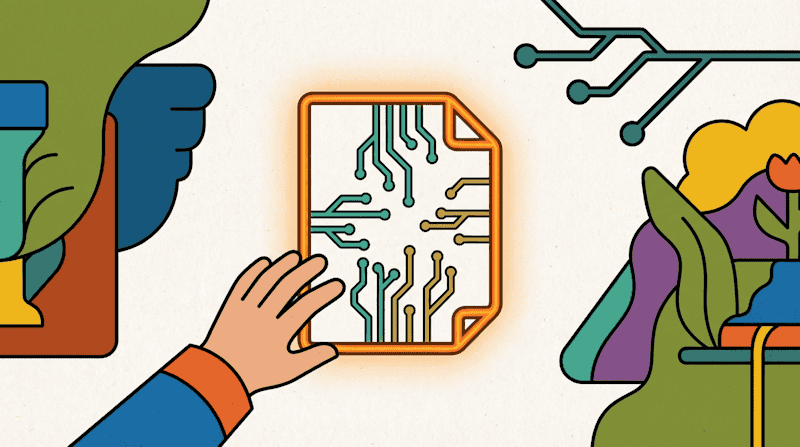
Source: VentureBeat
The problem Factify addresses is substantial. Adobe estimates there are over three trillion PDFs in circulation globally, yet this technology has barely evolved since its creation over 30 years ago
2
. When AI models attempt to read PDFs, they essentially guess, using optical character recognition to scrape text from what functions as a digital photo. This lack of structured data creates significant limitations as businesses increasingly rely on AI systems to review, approve, and take actions based on document contents.Machine-Readable Documents That Enforce Their Own Governance
Factified documents address the fundamental trust problem plaguing current formats. Because PDFs have no way to verify information or help users identify the most authoritative version, they cannot be trusted in an environment where AI agents need verifiable data sources
2
. Gavish's solution embeds intelligence directly into documents, allowing them to be queried through ChatGPT-style interfaces and support workflows like approvals, signatures, redactions, and compliance checks without external tools.The new document infrastructure maintains control even after files leave an organization's systems. Unlike PDFs that drift into uncontrolled versions once sent externally, Factified documents remain managed wherever they go. Access to specific sections can be approved or blocked even after transmission, and governance is enforced directly by the document itself, granting access only to approved users
3
.Related Stories

Targeting Regulated Industries Where Ambiguity Carries High Costs
Factify initially targets document-heavy regulated industries including banking, insurance, legal services, and human resources, where the cost of ambiguity runs high
2
. Early adopters in legal sectors use Factified documents to enforce nondisclosure agreements before granting access and limit visibility to specific sections based on user approval status. Human resources teams run onboarding and approval processes directly inside documents, eliminating fragmented workflows spanning email threads, shared folders, and disconnected platforms.Gavish acknowledges the challenge of displacing a format entrenched in business infrastructure for three decades. His strategy focuses on specific use cases within medium-sized companies of hundreds or thousands of employees, examining needs across industries like law, marketing, finance, and real estate
3
. The approach recognizes that PDF documents largely constitute the contractual infrastructure of the modern economy.Building Documents as Dynamic and Verifiable Infrastructure
The shift from static files to intelligent documents represents more than a software upgrade. Gavish describes it as building a new foundation that enables software investments to compound over time. "We don't just want to solve the inadequacies of the PDF," he explained. "We want to do it in a way that creates a bedrock for post-AI business"
2
.The technical challenge requires building multiple layers from scratch: a new format, a data layer, and user experience interface applications. Creating connected documents that support changes and maintain version history while remaining machine-readable demands fundamental architectural innovation
3
. Documents must function like websites or browsers, with dynamic content, buttons, and user interfaces, while retaining the authority and permanence businesses require from contracts and agreements.For organizations moving toward workflow automation and AI-driven processes, the ability to trust document authenticity becomes critical. Factify's documents for the AI era address this by ensuring every file retains its identity, audit trail, and purpose throughout its lifecycle. Instead of copying files across platforms and updating them manually, organizations can link everything to a single, authoritative document that remains verifiable and current.
References
Summarized by

Navi
[1]
[2]
[3]
Related Stories
Datarails raises $70M to bring AI Finance Agents to CFOs struggling with fragmented data
21 Jan 2026•Technology

Filevine Secures $400M in Funding, Highlighting AI's Growing Role in Legal Tech
23 Sept 2025•Business and Economy

Agree.com Raises $7.2M to Revolutionize E-Signatures with Integrated Payments
07 May 2025•Startups

Recent Highlights
1
Tennessee Teens Sue Elon Musk's xAI Over Grok AI-Generated Child Abuse Images
Policy and Regulation
2
Supermicro Co-Founder Indicted in $2.5 Billion Nvidia AI Chip Smuggling Scheme to China
Policy and Regulation

3
Val Kilmer to appear posthumously in As Deep as the Grave through AI-generated performance
Entertainment and Society

Recent Highlights
Today's Top Stories



Your Daily Dose of Curated AI News
Don’t drown in AI news. We cut through the noise - filtering, ranking and summarizing the most important AI news, breakthroughs and research daily. Spend less time searching for the latest in AI and get straight to action.

