Gates Foundation and OpenAI launch $50 million initiative to integrate AI into 1,000 African clinics


13 Sources
13 Sources
[1]
Bill Gates and OpenAI back $50mn AI rollout in African health clinics
The Gates Foundation and OpenAI plan to invest $50mn to use AI to ease the impact of chronic staff shortages in 1,000 primary health clinics and surrounding communities in Rwanda and other African countries by 2028. The technology could be a "game-changer in expanding access to quality care" in poorer nations, Bill Gates said, as he unveiled the initiative at the World Economic Forum in Davos on Wednesday. "We aim to accelerate the adoption of AI tools across primary care clinics, within communities and in people's homes," said the philanthropist and Microsoft co-founder. Health has become a leading focus of tech groups' efforts to expand the use of AI tools, developing products that aim to reduce doctors' workloads and speed up treatment. Many hospitals and doctors globally are using large language models such as Gemini and ChatGPT, as well as AI medical note-taking apps to auto-generate transcripts of patient visits, highlight medically relevant details and create clinical summaries. Gates stressed that the initiative with Microsoft-backed OpenAI, known as Horizon1000, was to "support health workers, not replace them". Estimated shortages of almost 6mn health workers in sub-Saharan African countries put staff in an "impossible situation", Gates wrote in a blog. They were "forced to triage too many patients with too little administrative support, modern technology and up-to-date clinical guidance," he said. The initiative aimed to help with clinical record-keeping and symptom evaluations to make health workers more productive -- "that is, to see patients more efficiently and to make better decisions", Gates said in an interview with the FT at Davos. OpenAI chief executive Sam Altman said: "AI is going to be a scientific marvel no matter what, but for it to be a societal marvel, we've got to figure out ways that we use this incredible technology to improve people's lives." Low-quality care contributed to between 5.7mn and 8.4mn deaths annually in low- and middle-income countries worldwide, according to the World Health Organization. However, the rise in the use of AI tools by doctors has spurred criticism from researchers about the dangers of AI-generated fabrications, known as "hallucinations", which could be particularly harmful in a medical context, as well as the question of patient data privacy. A growing body of research has also shown that these tools could lead to worse health outcomes for historically understudied groups such as women and ethnic minorities, since there may be inadequate data on diseases that threaten them disproportionately. Language may be a further challenge in a continent as linguistically diverse as Africa, since the most abundant health data and AI models use English. A study last year by the Massachusetts Institute of Technology found that the way a health question is written can make a big difference to the response provided by the AI model. Patients whose messages contained typos, informal language or uncertain phrasing were between 7 and 9 per cent more likely to be advised against seeking medical care by AI models than those with perfectly formatted communications, even when the clinical content was the same. Researchers have warned that this could result in people who do not speak English as a first language or are not comfortable using technology being unfairly treated. The Gates Foundation said it will monitor, measure and audit the performance of the AI models for safety problems, such as inaccuracies and biases. It also intends to roll out the features gradually and tailor the tools for local cultures and contexts.
[2]
Gates and OpenAI team up for AI health push in African countries
LONDON, Jan 21 (Reuters) - The Gates Foundation and OpenAI are setting up a $50 million partnership to help African countries use artificial intelligence to improve their health systems. The partnership, called Horizon1000, plans to work with African leaders to work out how best to use the technology, starting with Rwanda. "In poorer countries with enormous health worker shortages and lack of health systems infrastructure, AI can be a gamechanger in expanding access to quality care," said Gates in a blog post announcing the launch. He has repeatedly described AI as one of the most transformative technologies ever developed. The foundation has already set up a number of AI initiatives, while Rwanda last year established an AI health hub in Kigali. Horizon1000 aims to reach 1,000 primary health clinics and surrounding communities across several countries by 2028, Gates said. The launch comes as many lower-income countries struggle with major cuts to international aid budgets - reductions Gates said in December had contributed to the first rise in preventable child deaths this century. AI could be particularly valuable in countries with severe shortages of trained health workers, Gates said. He noted estimates suggesting sub-Saharan Africa is short of around six million healthcare professionals. Reporting by Jennifer Rigby. Editing by Mark Potter Our Standards: The Thomson Reuters Trust Principles., opens new tab * Suggested Topics: * Healthcare & Pharmaceuticals * Employee Health Jennifer Rigby Thomson Reuters Jen is the Global Health Correspondent at Reuters, covering everything from pandemics to the rise of obesity worldwide. Since joining the news agency in 2022, her award-winning work includes coverage of gender-affirming care for adolescents in the UK and a global investigation with colleagues into how contaminated cough syrup killed hundreds of children in Africa and Asia. She previously worked at the Telegraph newspaper and Channel 4 News in the UK, and spent time as a freelancer in Myanmar and the Czech Republic.
[3]
Rwanda to test AI-powered technology in clinics under a new Gates Foundation project
KIGALI, Rwanda (AP) -- Rwanda will test technology powered by artificial intelligence in more than 50 health clinics as part of a new initiative by the Gates Foundation to support 1,000 clinics across Africa with the aim to improve health care services. The technology is intended to strengthen rather than replace clinical judgment, while improving efficiency within an already stretched health system, Andrew Muhire, a senior official with Rwanda's Ministry of Health, told The Associated Press on Thursday. Rwanda's now has one health care worker for 1,000 patients -- far from the globally recommended ratio of 4:1,000. The Gates Foundation and OpenAI on Wednesday launched a new initiative dubbed Horizons1000, with joint funding of $50 million over two years. Bill Gates said the initiative will help close the health inequality gap. "In poorer countries with enormous health worker shortages and a lack of health systems infrastructure, AI can be a game changer in expanding access to quality care," Gates said in a blog post on the launch. Muhire described it as a "transformative opportunity" that will improve citizens' access to health care, "reduce administrative burden" and help medical professionals make "more accurate and timely decisions." However, digital experts are worried about AI technology using the English language, which is not widely spoken in Rwanda. Audace Niyonkuru, CEO of AI and open data company Digital Umuganda, told the AP that efforts are underway to develop AI technologies in Kinyarwanda, the language spoken by about 75% of Rwanda's population. "Deploying AI technologies that do not operate in Kinyarwanda would pose a serious barrier to effective care," he said.
[4]
Gates Foundation, OpenAI launch $50M AI health initiative targeting 1,000 clinics in Africa
The Gates Foundation and OpenAI are launching a new partnership aimed at bringing artificial intelligence into frontline health care systems across Africa, starting with Rwanda. The initiative, called Horizon1000, will deploy AI-powered tools to support primary health care workers in patient intake, triage, follow-up, referrals, and access to trusted medical information in local languages. The organizations said the effort is designed to augment -- not replace -- health workers, particularly in regions facing severe workforce shortages. The Gates Foundation and OpenAI are committing up to $50 million in combined funding, technology, and technical support, with a goal of reaching 1,000 primary health clinics and surrounding communities by 2028. The tools will be aligned with national clinical guidelines and optimized for accuracy, privacy, and security, according to the organizations. "I spend a lot of time thinking about how AI can help us address fundamental challenges like poverty, hunger, and disease," Bill Gates wrote in a blog post. "One issue that I keep coming back to is making great health care accessible to all -- and that's why we're partnering with OpenAI and African leaders and innovators on Horizon1000." In sub-Saharan Africa alone, health systems face a shortage of nearly six million workers -- a gap Gates said cannot be closed through training alone. "AI offers a powerful way to extend clinical capacity," wrote the Microsoft co-founder. The announcement comes during the World Economic Forum's 2026 annual meeting, where Gates is scheduled to appear alongside Rwanda's Minister of ICT and Innovation and the head of the Global Fund to discuss how AI and other technologies could help reverse recent setbacks in global health outcomes. OpenAI, backed by Microsoft, earlier this month rolled out ChatGPT Health as part of its foray into healthcare.
[5]

Gates Foundation, OpenAI unveil $50 million 'Horizon1000' initiative to boost healthcare in Africa through AI | Fortune
In a major effort to close the global health equity gap, the Gates Foundation and OpenAI are partnering on "Horizon1000," a collaborative initiative designed to integrate artificial intelligence into healthcare systems across Sub-Saharan Africa. Backed by a joint $50 million commitment in funding, technology, and technical support, the partnership aims to equip 1,000 primary healthcare clinics with AI tools by 2028, Bill Gates announced in a statement on his Gates Notes, where he detailed how he sees AI playing out as a "gamechanger" for expanding access to quality care. The initiative will begin operations in Rwanda, working directly with African leaders to pioneer the deployment of AI in health settings. With a core principle of the Foundation being to ensure that people in developing regions do not have to wait decades for new technologies to reach them, the goal in this partnership is to reach 1,000 primary health care clinics and their surrounding communities by 2028. "A few years ago, I wrote that the rise of artificial intelligence would mark a technological revolution as far-reaching for humanity as microprocessors, PCs, mobile phones, and the Internet," Gates wrote. "Everything I've seen since then confirms my view that we are on the cusp of a breathtaking global transformation." The impetus for Horizon1000, Gates said, is a desperate and persistent shortage of healthcare workers in poorer regions, a bottleneck that threatens to stall 25 years of progress in global health. While child mortality has been halved and diseases like polio and HIV are under better control, the lack of personnel remains a critical vulnerability. Sub-Saharan Africa currently faces a shortfall of nearly 6 million healthcare workers, " a gap so large that even the most aggressive hiring and training efforts can't close it in the foreseeable future." This deficit creates an untenable situation where overwhelmed staff must triage high volumes of patients without sufficient administrative support or modern clinical guidance. The consequences are severe: the World Health Organization (WHO) estimates that low-quality care is a contributing factor in 6 million to 8 million deaths annually in low- and middle-income countries. Rwanda, the first beneficiary of the Horizon1000 initiative, illustrates the scale of the challenge. The nation currently has only one healthcare worker per 1,000 people, significantly below the WHO recommendation of four per 1,000. Gates noted that at the current pace of hiring and training, it would take 180 years to close that gap. "As part of the Horizon1000 initiative, we aim to accelerate the adoption of AI tools across primary care clinics, within communities, and in people's homes," Gates wrote. "These AI tools will support health workers, not replace them." Gates noted comments from Rwanda's Minister of Health Dr. Sabin Nsanzimana, who recently announced the launch of an AI-powered Health Intelligence Center in Kigali. Nsanzimana described AI as the third major discovery to transform medicine, following vaccines and antibiotics, Gates noted, saying that he agrees with this view. "If you live in a wealthier country and have seen a doctor recently, you may have already seen how AI is making life easier for health care workers," Gates wrote. "Instead of taking notes constantly, they can now spend more time talking directly to you about your health, while AI transcribes and summarizes the visit." In countries with severe infrastructure limitations, he wrote, these capabilities will foster systems that help solve "generational challenges" that were previously unaddressable. As the initiative rolls out over the next few years, the Gates Foundation plans to collaborate closely with innovators and governments in Sub-Saharan Africa. Gates wrote that he himself plans to visit the region soon to see these AI solutions in action, maintaining a focus on how technology can meet the most urgent needs of billions in low- and middle-income countries.
[6]

Rwanda to test AI-powered technology in clinics under a new Gates Foundation project
Rwanda will test technology powered by artificial intelligence in more than 50 health clinics as part of a new initiative by the Gates Foundation to support 1,000 clinics across Africa with the aim to improve health care services KIGALI, Rwanda -- KIGALI, Rwanda (AP) -- Rwanda will test technology powered by artificial intelligence in more than 50 health clinics as part of a new initiative by the Gates Foundation to support 1,000 clinics across Africa with the aim to improve health care services. The technology is intended to strengthen rather than replace clinical judgment, while improving efficiency within an already stretched health system, Andrew Muhire, a senior official with Rwanda's Ministry of Health, told The Associated Press on Thursday. Rwanda now has one health care worker for 1,000 patients -- far from the globally recommended ratio of 4:1,000. The Gates Foundation and OpenAI on Wednesday launched a new initiative dubbed Horizons1000, with joint funding of $50 million over two years. Bill Gates said the initiative will help close the health inequality gap. "In poorer countries with enormous health worker shortages and a lack of health systems infrastructure, AI can be a game changer in expanding access to quality care," Gates said in a blog post on the launch. Muhire described it as a "transformative opportunity" that will improve citizens' access to health care, "reduce administrative burden" and help medical professionals make "more accurate and timely decisions." However, digital experts are worried about AI technology using the English language, which is not widely spoken in Rwanda. Audace Niyonkuru, CEO of AI and open data company Digital Umuganda, told the AP that efforts are underway to develop AI technologies in Kinyarwanda, the language spoken by about 75% of Rwanda's population. "Deploying AI technologies that do not operate in Kinyarwanda would pose a serious barrier to effective care," he said.
[7]

Rwanda to test AI-powered technology in clinics under a new Gates Foundation project
KIGALI, Rwanda (AP) -- Rwanda will test technology powered by artificial intelligence in more than 50 health clinics as part of a new initiative by the Gates Foundation to support 1,000 clinics across Africa with the aim to improve health care services. The technology is intended to strengthen rather than replace clinical judgment, while improving efficiency within an already stretched health system, Andrew Muhire, a senior official with Rwanda's Ministry of Health, told The Associated Press on Thursday. Rwanda's now has one health care worker for 1,000 patients -- far from the globally recommended ratio of 4:1,000. The Gates Foundation and OpenAI on Wednesday launched a new initiative dubbed Horizons1000, with joint funding of $50 million over two years. Bill Gates said the initiative will help close the health inequality gap. "In poorer countries with enormous health worker shortages and a lack of health systems infrastructure, AI can be a game changer in expanding access to quality care," Gates said in a blog post on the launch. Muhire described it as a "transformative opportunity" that will improve citizens' access to health care, "reduce administrative burden" and help medical professionals make "more accurate and timely decisions." However, digital experts are worried about AI technology using the English language, which is not widely spoken in Rwanda. Audace Niyonkuru, CEO of AI and open data company Digital Umuganda, told the AP that efforts are underway to develop AI technologies in Kinyarwanda, the language spoken by about 75% of Rwanda's population. "Deploying AI technologies that do not operate in Kinyarwanda would pose a serious barrier to effective care," he said.
[8]

Rwanda to Test AI-Powered Technology in Clinics Under a New Gates Foundation Project
KIGALI, Rwanda (AP) -- Rwanda will test technology powered by artificial intelligence in more than 50 health clinics as part of a new initiative by the Gates Foundation to support 1,000 clinics across Africa with the aim to improve health care services. The technology is intended to strengthen rather than replace clinical judgment, while improving efficiency within an already stretched health system, Andrew Muhire, a senior official with Rwanda's Ministry of Health, told The Associated Press on Thursday. Rwanda's now has one health care worker for 1,000 patients -- far from the globally recommended ratio of 4:1,000. The Gates Foundation and OpenAI on Wednesday launched a new initiative dubbed Horizons1000, with joint funding of $50 million over two years. Bill Gates said the initiative will help close the health inequality gap. "In poorer countries with enormous health worker shortages and a lack of health systems infrastructure, AI can be a game changer in expanding access to quality care," Gates said in a blog post on the launch. Muhire described it as a "transformative opportunity" that will improve citizens' access to health care, "reduce administrative burden" and help medical professionals make "more accurate and timely decisions." However, digital experts are worried about AI technology using the English language, which is not widely spoken in Rwanda. Audace Niyonkuru, CEO of AI and open data company Digital Umuganda, told the AP that efforts are underway to develop AI technologies in Kinyarwanda, the language spoken by about 75% of Rwanda's population. "Deploying AI technologies that do not operate in Kinyarwanda would pose a serious barrier to effective care," he said.
[9]

Bill Gates unveils OpenAI partnership targeting health systems
The Gates Foundation on Wednesday announced Horizon 1000, a $50 million health project created in partnership with OpenAI to increase the utilization of artificial intelligence inside health care centers across Africa. "Over the next few years, we will collaborate with leaders in African countries as they pioneer the deployment of AI in health," Gates wrote in a Wednesday blog post outlining the venture. "Together, the Gates Foundation and OpenAI are committing $50 million in funding, technology, and technical support to back their work. The goal is to reach 1,000 primary healthcare clinics and their surrounding communities by 2028," he added. The project will kick off in Rwanda, where there's one health care worker per 1,000 people, according to the Gates Foundation. The African country is aiming to increase health care workers with the 4×4 reform to reach the World Health Organization's recommended number of four healthcare workers per 1,000. Gates wrote that the "Minister of Health Dr. Sabin Nsanzimana recently announced the launch of an AI-powered Health Intelligence Center in Kigali to help ensure limited health care resources are being used as wisely as possible." "As part of the Horizon1000 initiative, we aim to accelerate the adoption of AI tools across primary care clinics, within communities, and in people's homes. These AI tools will support health workers, not replace them," he added. The billionaire touted the venture on the global stage while speaking on Wednesday at the World Economic Forum in Davos, Switzerland. "AI is entering into the health system, but not just into the health system, it's all the way down to the level of the patient. So, the patient is able to talk in their local language and describe what's going on," Gates told an audience. "And so in order to, you know, make this a reality, to see what works, what doesn't work, and we're thrilled that OpenAI and the Gates Foundation are committing an initiative called Horizon 1000, where we're going to a thousand primary health care clinics in Africa, and you have, you know, different systems that we have to connect into," he added. Gates also said the project could soon expand to reach India. "AI is going to be a scientific marvel no matter what, but for it to be a societal marvel, we've got to figure out ways that we use this incredible technology to improve people's lives," Sam Altman, CEO of OpenAI, said in a Tuesday statement.
[10]

Bill Gates and OpenAI Join Forces to Launch A.I. Health Program in Africa
As global aid budgets fall, Bill Gates turns to A.I., partnering with OpenAI to expand primary health care in Rwanda and across Africa. The Gates Foundation is teaming up with OpenAI on a $50 million initiative to strengthen A.I.-powered health care across Africa. The effort will begin in Rwanda and aims to reach 1,000 primary health clinics over the next two years. Much of the attention around A.I. in health care has focused on drug discovery, Gates noted while speaking at the World Economic Forum in Davos, Switzerland, today (Jan. 21). "But I would say it's even more important that A.I. will be used on the delivery side," added the Microsoft co-founder, whose private foundation is the largest in the world with an $86 billion endowment as of July. Sign Up For Our Daily Newsletter Sign Up Thank you for signing up! By clicking submit, you agree to our <a href="http://observermedia.com/terms">terms of service</a> and acknowledge we may use your information to send you emails, product samples, and promotions on this website and other properties. You can opt out anytime. See all of our newsletters Known as Horizon1000, the project will deploy large language models and machine learning to bolster primary health care systems, support frontline workers, and assist with patient intake, triage, referrals and access to health information in local languages. Over time, the initiative will expand into countries like Kenya, South Africa and Nigeria, Gates said. OpenAI's involvement in the collaboration marks one of its first major philanthropic initiatives. The ChatGPT-maker boasts a unique corporate structure, with the OpenAI Foundation holding a roughly 26 percent stake in the company's for-profit side. "You'll see more and more from them on the philanthropic side," said Gates, noting that OpenAI is building out its foundation and that he regularly speaks with Sam Altman, OpenAI's CEO. "A.I. is going to be a scientific marvel no matter what, but for it to be a societal marvel, we've got to figure out ways that we can use this incredible technology to improve people's lives," said Altman in a statement. The partnership arrives at a pivotal moment for global health. For the first time this century, global child mortality rates are expected to rise: 4.8 million children are estimated to have died in 2025, up from 4.6 million in 2024. "That's because donors cut money," said Gates, who has linked the reversal to widespread declines in aid budgets from wealthy nations like the U.S. Through Horizon1000, Gates aims to counter those setbacks by augmenting -- but not replacing -- health care workers with A.I. Sub-Saharan Africa, which has the world's highest child mortality rate, faces a shortage of nearly 6 million health care workers, while Rwanda has just one health care worker per 1,000 people. By equipping workers with A.I. tools, the Gates Foundation and OpenAI hope to narrow that gap, which contributes to the 6 to 8 million deaths that occur each year in low and middle-income countries. Even as global funding dwindles, A.I. has emerged as a source of optimism. Beyond health care, Gates has pointed to its potential to personalize education and reduce inequality in agriculture. "A.I. is going to help us do more with less," he said in Davos. OpenAI will not be the foundation's only partner in this effort, Gates added. The foundation plans to "mix and match" with companies including Microsoft, Google and Anthropic. "The tech giants, including OpenAI, do want to devote some of their resources to helping the world at large," said Gates. "They will be partners on a lot of these things."
[11]

Rwanda to test AI-powered technology in clinics under a new Gates Foundation project
Rwanda will test technology powered by artificial intelligence in more than 50 health clinics as part of a new initiative by the Gates Foundation to support 1,000 clinics across Africa with the aim to improve health care services. The technology is intended to strengthen rather than replace clinical judgment, while improving efficiency within an already stretched health system, Andrew Muhire, a senior official with Rwanda's Ministry of Health, told The Associated Press on Thursday. Rwanda now has one health care worker for 1,000 patients - far from the globally recommended ratio of 4:1,000. The Gates Foundation and OpenAI on Wednesday launched a new initiative dubbed Horizons1000, with joint funding of $50 million over two years. Bill Gates said the initiative will help close the health inequality gap. "In poorer countries with enormous health worker shortages and a lack of health systems infrastructure, AI can be a game changer in expanding access to quality care," Gates said in a blog post on the launch. Muhire described it as a "transformative opportunity" that will improve citizens' access to health care, "reduce administrative burden" and help medical professionals make "more accurate and timely decisions." However, digital experts are worried about AI technology using the English language, which is not widely spoken in Rwanda. Audace Niyonkuru, CEO of AI and open data company Digital Umuganda, told the AP that efforts are underway to develop AI technologies in Kinyarwanda, the language spoken by about 75% of Rwanda's population. "Deploying AI technologies that do not operate in Kinyarwanda would pose a serious barrier to effective care," he said.
[12]

Bill Gates Is Teaming Up With OpenAI On $50 Million AI Project With The Goal Of Boosting Healthcare In Africa As Aid Shrinks - Microsoft (NASDAQ:MSFT)
Microsoft Corp (NASDAQ:MSFT) co-founder Bill Gates and OpenAI are joining forces to launch a $50 million project to bring artificial intelligence to African healthcare systems. New $50 Million Initiative Aims To Transform African Health Systems The partnership, called Horizon1000, announced on Wednesday, will initially focus on Rwanda and expand to other African nations, working with local leaders to determine how AI can best support clinics and healthcare providers. Microsoft is one of the biggest backers of OpenAI, the parent company of AI chatbot ChatGPT. AI Could Double Clinic Efficiency, Reduce Paperwork Speaking at the World Economic Forum in Davos, Gates said the project will cover 1,000 primary healthcare clinics, aiming to make operations faster and more effective. He continued saying that the goal is to improve the quality of work and if possible, double efficiency -- reducing paperwork, organizing resources and helping patients understand when and where care is available. Aid Cuts Highlight Urgency For Innovation The initiative comes as international health aid has declined sharply. The U.S. began cutting aid in early 2025, followed by other major donors, including the U.K. and Germany. Overall, global health development assistance dropped nearly 27% last year, according to Gates Foundation estimates. By leveraging AI, Horizon1000 aims to offset some of the impact of these aid reductions, ensuring clinics can continue providing essential care despite fewer resources. Microsoft stock scores low on Momentum and Value in Benzinga's Edge Stock Rankings, with a negative price trend in the short, medium and long terms. Photo Courtesy: Alexandros Michailidis on Shutterstock.com Disclaimer: This content was partially produced with the help of AI tools and was reviewed and published by Benzinga editors. MSFTMicrosoft Corp $446.220.48% Overview Market News and Data brought to you by Benzinga APIs
[13]
Gates and OpenAI team up for AI health push in African countries
The partnership, called Horizon1000, plans to work with African leaders to work out how best to use the technology, starting with Rwanda. The Gates Foundation and OpenAI are setting up a $50 million partnership to help African countries use artificial intelligence to improve their health systems. The partnership, called Horizon1000, plans to work with African leaders to work out how best to use the technology, starting with Rwanda. "In poorer countries with enormous health worker shortages and lack of health systems infrastructure, AI can be a gamechanger in expanding access to quality care," said Gates in a blog post announcing the launch. He has repeatedly described AI as one of the most transformative technologies ever developed. The foundation has already set up a number of AI initiatives, while Rwanda last year established an AI health hub in Kigali. Horizon1000 aims to reach 1,000 primary health clinics and surrounding communities across several countries by 2028, Gates said. The launch comes as many lower-income countries struggle with major cuts to international aid budgets - reductions Gates said in December had contributed to the first rise in preventable child deaths this century. AI could be particularly valuable in countries with severe shortages of trained health workers, Gates said. He noted estimates suggesting sub-Saharan Africa is short of around six million healthcare professionals.
Share
Share
Copy Link
The Gates Foundation and OpenAI announced Horizon1000, a $50 million partnership to deploy AI-powered technology in clinics across Rwanda and other African nations by 2028. The initiative aims to address severe healthcare worker shortages in Sub-Saharan Africa, where nearly 6 million health professionals are needed, by supporting clinical record-keeping and decision-making without replacing medical staff.
Gates Foundation and OpenAI Target Healthcare Crisis with AI
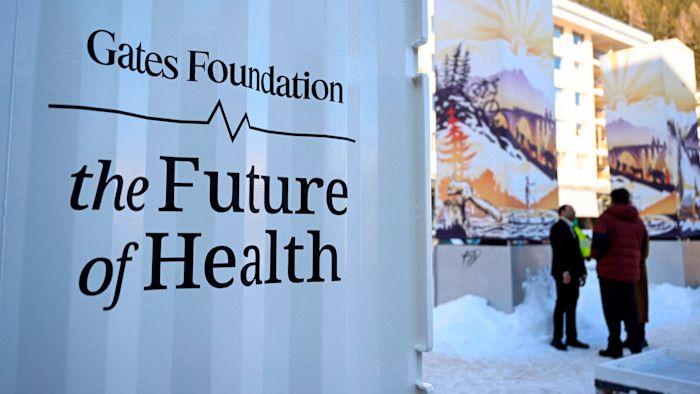
The Gates Foundation and OpenAI unveiled Horizon1000 at the World Economic Forum in Davos, committing up to $50 million in combined funding, technology, and technical support to transform healthcare delivery across Africa
1
4
. Bill Gates described AI in African healthcare as potentially transformative for expanding access to quality care in regions facing impossible staffing conditions2
. The $50 million AI health initiative plans to reach 1,000 primary health clinics and surrounding communities by 2028, starting with Rwanda before expanding to other African countries5
.
Source: FT
Addressing Healthcare Worker Shortages Through Technology
Sub-Saharan Africa faces a critical shortage of nearly 6 million healthcare workers, creating what Gates called an "impossible situation" where staff must triage too many patients with inadequate administrative support and clinical guidance
1
. Rwanda exemplifies this challenge with only one healthcare worker per 1,000 patients, far below the World Health Organization's recommended ratio of 4:1,0003
. At current hiring and training rates, it would take 180 years to close this gap5
. The WHO estimates that low-quality care contributes to between 5.7 million and 8.4 million deaths annually in low- and middle-income countries worldwide1
.How AI-Powered Technology in Clinics Will Support Frontline Health Workers
The initiative will integrate AI tools into health clinics to assist with patient intake, triage, follow-up, referrals, and access to trusted medical information in local languages
4
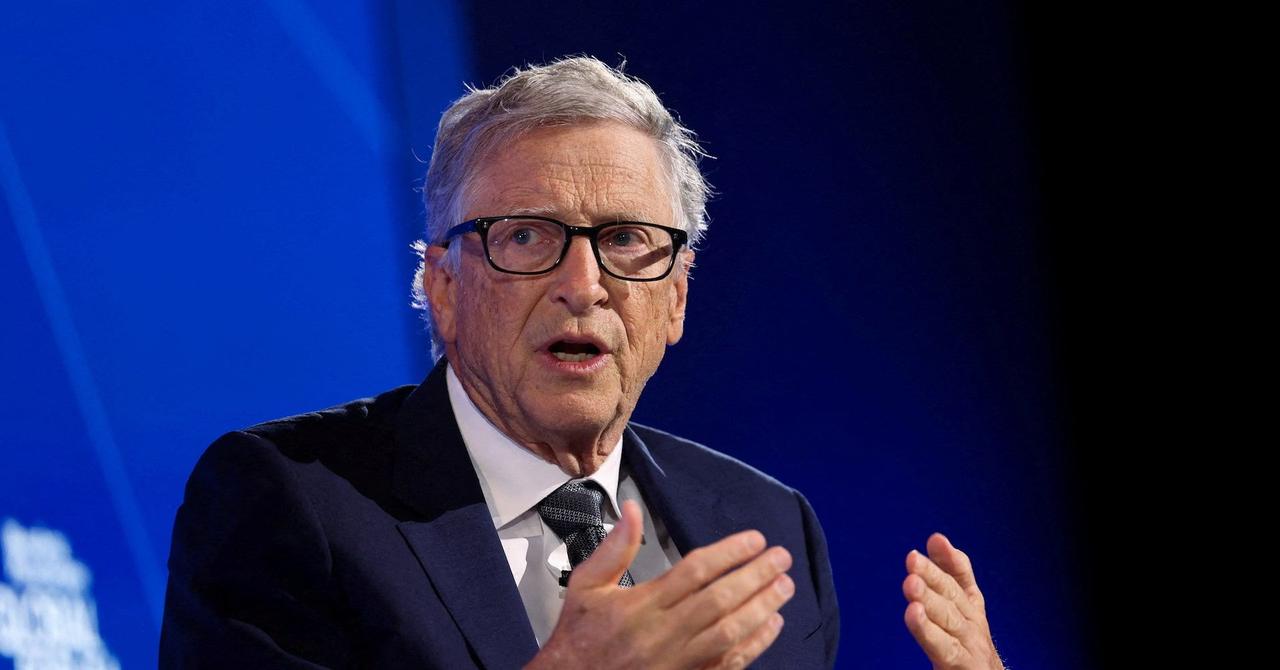
. Gates emphasized the tools are designed to "support health workers, not replace them," focusing on clinical record-keeping and symptom evaluations to help staff see patients more efficiently and make better decisions1
. Andrew Muhire, a senior official with Rwanda's Ministry of Health, described the technology as intended to strengthen clinical judgment while improving efficiency and reducing administrative burden3
. OpenAI CEO Sam Altman noted that for AI to be a societal marvel, "we've got to figure out ways that we use this incredible technology to improve people's lives"1
.
Source: Reuters
Related Stories

Enhance Health Systems in African Countries While Managing Risks
Rwanda will test the AI-powered technology in more than 50 health clinics as the initial phase of the broader initiative
3
. The tools will be aligned with national clinical guidelines and optimized for accuracy, patient data privacy, and security4
. However, concerns remain about AI hallucinations—fabrications generated by AI models that could prove particularly harmful in clinical decision-making contexts1
. Research has shown these tools could lead to worse health outcomes for historically understudied groups, including women and ethnic minorities, due to potential biases and inadequate data on diseases affecting them disproportionately1
.Linguistic Challenges and Local Adaptation
Language presents a significant barrier in a continent as linguistically diverse as Africa, since most health data and AI models use English
1
. In Rwanda, where Kinyarwanda is spoken by about 75% of the population, digital experts warn that deploying AI technologies without local language support would pose serious barriers to effective care3
. A Massachusetts Institute of Technology study found that patients whose messages contained typos, informal language, or uncertain phrasing were between 7 and 9 percent more likely to be advised against seeking medical care by AI models, even when clinical content was identical1
. The Gates Foundation stated it will monitor, measure, and audit AI model performance for safety problems such as inaccuracies and potential biases, rolling out features gradually while tailoring tools for local cultures and contexts1
. Gates plans to visit the region soon to observe these AI solutions in action as the partnership works closely with African leaders and innovators5
.
Source: ET
References
Summarized by

Navi
[4]
Related Stories
Bill Gates Highlights AI's Potential in Health, Education, and Agriculture During Indonesia Visit
07 May 2025•Technology

$1 Billion Initiative Launched to Develop AI Tools for Frontline Workers
18 Jul 2025•Technology

India's AI Mission Partners with Gates Foundation to Advance AI Solutions in Key Sectors
19 Mar 2025•Technology

Recent Highlights
1
Apple Plans Major Siri AI Overhaul in iOS 27 With Third-Party Chatbot Integration
Technology

2
OpenAI shuts down Sora after six months, ending Disney's $1 billion licensing partnership
Technology

3
AI chatbots validate you too much, making you less kind to others, Stanford study reveals
Science and Research
Recent Highlights
Today's Top Stories






Your Daily Dose of Curated AI News
Don’t drown in AI news. We cut through the noise - filtering, ranking and summarizing the most important AI news, breakthroughs and research daily. Spend less time searching for the latest in AI and get straight to action.

