Parloa Triples Valuation to $3B in 8 Months as AI Customer Service Competition Intensifies


5 Sources
5 Sources
[1]
Parloa triples its valuation in 8 months to $3B with $350M raise | TechCrunch
Berlin-based Parloa has raised $350 million in Series D funding from existing investors, valuing the six-year-old customer service AI startup at $3 billion. The round comes just eight months after the company raised $120 million at a $1 billion valuation. The new round was led by General Catalyst, with participation from returning backers including EQT Ventures, Altimeter Capital, Durable Capital, and Mosaic Ventures. Parloa is one of many startups developing AI agents that promise to automate the kind of customer service work previously handled by human representatives and help desk staff. The company's competitors include Sierra, co-founded by OpenAI Chairman Bret Taylor, which raised $350 million at a $10 billion valuation in September; and Decagon, reportedly in talks to raise capital at a valuation of upwards of $4 billion. Other companies working to replace human agents with AI include older players Intercom and Kore.ai, as well as the U.K.-based PolyAI, which raised an $86 million round at a $750 million valuation last month. Malte Kosub, Parloa's co-founder and CEO, doesn't seem fazed by the competition, largely because he doesn't believe this is a "winner-take-all" category. "In the end, it is one of the biggest opportunities that has ever existed in software," he told TechCrunch. Indeed, Parloa and its rivals are vying to automate a significant portion of the global customer support workforce, which Gartner estimates at 17 million contact center agents worldwide. But it's not just the size of the market that gives Kosub confidence about Parloa's ability to win. He pointed to the startup's massive fundraise as a sign that it could be among the top leaders in the space. "There are a lot of companies out there, but you need to look at the scale and the amount of funding they got," he said. "The number of competitors is decreasing significantly." Last month, Parloa said that it was generating annual recurring revenue of more than $50 million, but that's not meaningfully ahead of Poly AI, which expected to end 2025 with ARR of $40 million, or Decagon, which is reportedly making "significantly more" than $30 million in ARR. Still, Kosub seems convinced that being so well capitalized will help his startup get ahead. Parloa's AI agents are already answering calls for large enterprise customers, which include Allianz, Booking.com, HealthEquity, SAP, Sedgwick, and Swiss Life, but the CEO says the goal is to do more than just build software that "picks up the phone." The company will invest a significant portion of its new capital into building a "multi-model, contextual experience" that will allow personalized AI agents to recognize a customer's identity and specific needs, whether they reach out via an app, a website, or a phone call.
[2]
German AI startup Parloa triples valuation to $3 billion in latest fundraise
Jan 15 (Reuters) - German startup Parloa has raised $350 million in a late-stage round that tripled the valuation of the artificial intelligence-driven customer service platform to $3 billion in less than a year. The Series D round, announced on Thursday, was led by General Catalyst and joined by existing investors such as EQT Ventures, Altimeter Capital and Durable Capital Partners. It takes the startup's total fundraise to more than $560 million, including a $120 million Series C in July 2025 where it was valued at $1 billion. The eight-year-old firm is among the startups developing an AI platform that can automate customer service for large enterprises with little to no coding, including tasks such as tracking packages and processing returns. Parloa said its customers include Microsoft (MSFT.O), opens new tab, Accenture (ACN.N), opens new tab, KPMG and Booking.com (BKNG.O), opens new tab, and its annual recurring revenue has surpassed $50 million. "In 2025, everyone finally realized ... it (AI for customer service) is actually working, like this is a case that has proven to be a positive return on investment case," co-founder and CEO Malte Kosub said in an interview. Businesses looking to cut costs and deal with rising customer queries have been turning to AI-powered voice agents to handle customer service, driving demand and investor interest in startups developing the technology. However, the roll-out has not always been smooth. Swedish buy-now, pay-later Klarna said last year it might have gone too far in using the technology, having cut thousands of jobs, dropped some vendors and turned to AI to create marketing campaigns. Parloa plans to use the fresh funds to expand in Europe and the U.S., including opening new offices in San Francisco and Madrid. It already has a presence in Berlin and New York. The company also plans to increase its headcount to 600 from 380 by the end of 2026, with hiring focused both on developers and sales staff. Reporting by Aditya Soni in Bengaluru; Editing by Vijay Kishore Our Standards: The Thomson Reuters Trust Principles., opens new tab
[3]
German agentic AI start-up Parloa triples valuation to $3bn
The Berlin-based startup has raised $350m in a recent late-stage round, which will fund further US and European expansion. Parloa, an artificial intelligence (AI) software company has raised €350m in a late-stage Series D funding round, bringing the AI service platform to a valuation of €3bn in less than a year, tripling its previous figure. The round, which was announced on Thursday (15 January), was led by General Catalyst and joined by existing investors Mosaic Ventures, EQT Ventures, Altimeter Capital and Durable Capital Partners. The closure of the Series D round brings Parloa's total raised capital to more than €482 million. Parloa was established in Berlin, Germany, in 2018 by Malte Kosub and Stefan Ostwald, with the aim of building advanced AI agents to help organisations leverage AI at scale. Parloa works with several well-known, global brands including Allianz, Booking.com, and IKEA, employing more than 380 people across offices in New York, Berlin, and Munich. The organisation has stated funds are to be put towards expansion in Europe and the US in the form of new offices in San Francisco and Madrid. The company also plans to increase its employee headcount to 600 from 380 people by the end of 2026, with hiring focused on developers and sales staff. Commenting on the announcement, co-founder and CEO Malte Kosub, said, "This funding marks a pivotal moment for Parloa as we expand globally, advance our approach to reimagine customer experience, and help enterprises to build meaningful relationships with their customers. "Our commitment to these organisations is clear: to enable exceptional, hyper-personalised customer journeys through agentic AI that deepen loyalty, responsibly and at scale." In mid-December of last year, Galway-based agentic AI sports company Orreco announced the closure of a $4m funding round with participation from Enterprise Ireland and television personality and billionaire investor Mark Cuban. The investment will support the creation of 55 new jobs at the company globally, including 30 in Galway over the course of the next two years. Don't miss out on the knowledge you need to succeed. Sign up for the Daily Brief, Silicon Republic's digest of need-to-know sci-tech news.
[4]
Parloa raises $350M to make enterprise customer experience fully conversational - SiliconANGLE
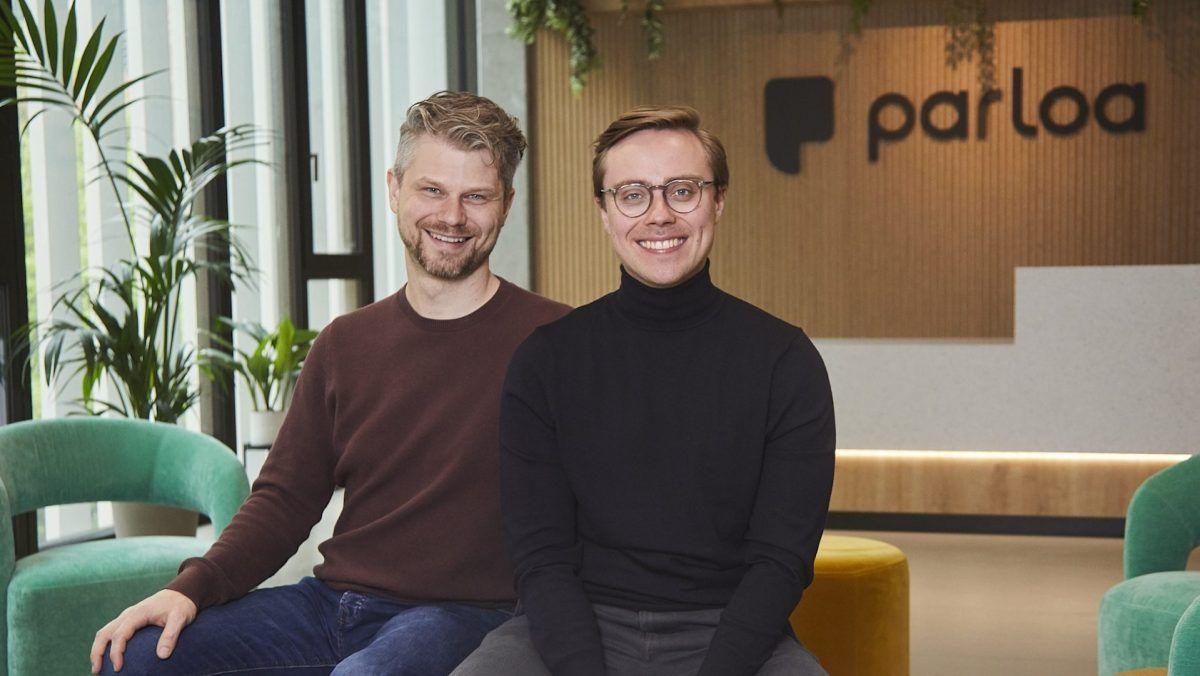
Parloa raises $350M to make enterprise customer experience fully conversational Parloa GmBH, a Berlin-based artificial intelligence customer experience automation platform startup, announced today it has raised $350 million in late-stage funding at a $3 billion valuation led by General Catalyst. The company's existing investors showed strong continued support including EQT Ventures, Altimeter Capital, Durable Capital Partners and Mosaic Ventures. The funding comes just seven months after Parloa closed its Series C round, bringing the total capital raised to more than $560 million over less than four years. Parloa provides enterprise-grade, AI-driven customer experience automation across the entire journey, starting from the moment someone calls a contact center. It automates tedious customer service actions with more "human-like" responses. This helps to move customers through otherwise slow, cumbersome and painful experiences that make automated systems feel problematic and often causes people to abandon them. In an interview with SiliconANGLE, co-founder and Chief Executive Malte Kosub (pictured, left) said although the use cases look different across industries, they converge quickly. In retail and e-commerce, he said, "It's very repetitive, 'where's my order?', 'I want my invoice.' There's a lot of things where you don't need to talk to a human." Insurance, travel and financial services, he added, share many of the same patterns. "An AI agent can do very well," Kosub explained. "It starts with building that relationship with the customer." Parloa is used by Fortune 200 companies and global partners, including Allianz SE, Booking Holdings Inc., HealthEquity Inc., SAP SE, Sedgwick Claims Management Services Inc., Swiss Life Holding AG and TeamViewer SE. In a market crowded with agentic AI startups and enterprise platforms focused on customer service, Kosub said, Parloa set out to be AI-ready and voice-first from the beginning, whereas much of the competition started in chat. "Phone is still the most relevant channel. So, we started with phone," he said. "If you want to win the market, you need to win voice." The company's flagship platform, AMP, gives enterprise customer experience teams a clear path to design and manage AI agents that can transform customer interactions into meaningful contacts instead of arguments with phone systems. On the back end, real-time dashboards provide customer service teams with transparent explanations of what agents are doing and why, offering visibility into behavior while meeting rigorous standards with built-in compliance for safety and data security. "We believe in the future, everything will be conversational -- you will talk to a homepage, you will talk to an app," Kosub said.
[5]

Parloa, One of Germany's Top A.I. Startups, Hits $3B Valuation in a Crowded Sector
Parloa's $350 million Series D round values the Berlin startup at $3 billion as it builds enterprise platforms to customer service A.I. agents. Automating the day-to-day work of customer service representatives, such as answering questions and troubleshooting issues, has long been one of enterprise A.I.'s most overworked promises. Early chatbots often failed to grasp basic context, and voice systems relied on rigid decision trees that collapsed the moment a customer strayed off script. "A.I.-powered CX (customer experience)" has become shorthand for deflection, where customers are forced to accept partial answers or give up altogether. Sign Up For Our Daily Newsletter Sign Up Thank you for signing up! By clicking submit, you agree to our <a href="http://observermedia.com/terms">terms of service</a> and acknowledge we may use your information to send you emails, product samples, and promotions on this website and other properties. You can opt out anytime. See all of our newsletters There is no shortage of companies building A.I. customer service agents. But Berlin-based startup Parloa stands out in a crowded field by focusing not on individual bots, but on managing entire fleets of autonomous agents at the enterprise level. Last week, Parloa raised $350 million in Series D funding at a $3 billion valuation, making it one of the most valuable A.I. startups in Germany. The round, which came just seven months after a $120 million Series C, was led by General Catalyst. General Catalyst CEO Hemant Taneja, an early investor in Anthropic and Stripe, will join Parloa's supervisory board. To date, the startup has raised more than $560 million and surpassed $50 million in annual recurring revenue. While most legacy customer service tools are built around isolated bots or narrowly defined workflows, Parloa positions itself as an A.I. agent management platform. Instead of deploying standalone assistants, enterprises use Parloa to design, deploy, monitor and continuously evolve networks of agents. These agents can reason across an entire interaction, operate within defined guardrails for compliance and brand tone, and seamlessly hand off to human representatives when needed. "We don't just build agents for enterprises, but give companies full control through a platform that combines a powerful backend with an intuitive UI," Malte Kosub, CEO and co-founder of Parloa, told Observer. "Our agents are explicitly built to know their limits. If they're unsure, stuck, or outside their confidence zone, they hand over to a human -- along with full conversation context. The agent doesn't try to bluff its way through; it escalates early and responsibly," Kosub explained. "Instead of waiting passively in a queue, a customer's issue is already understood and prequalified by the time a human joins." Before founding Parloa in 2018, Kosub worked on early voice and conversational A.I. systems, including large-scale voice assistants, and advised enterprises on how spoken interfaces change customer behavior. That background shaped Parloa's emphasis on usability: the platform allows non-technical teams to configure agent behavior, test edge cases, review conversation flows and monitor performance through visual dashboards rather than code. Parloa initially built its platform around spoken conversation rather than text-based chat -- a decision that imposed far tougher technical constraints. Voice interactions demand low latency, real-time reasoning, emotional sensitivity and higher accuracy than text, where users are more tolerant of delays and ambiguity. Kosub said companies have historically treated customer service as a cost center, absorbing high operating costs while human agents cycle through repetitive tasks and often leave within a year. "Customers only reached out when something had already gone seriously wrong, simply because the experience of contacting support felt so painful." Customer service remains one of the most expensive, high-turnover and emotionally charged enterprise functions. "Customers only reached out when something had already gone seriously wrong, simply because the experience of contacting support felt so painful," Kosub said. But this also makes it a natural proving ground for automation, where A.I. agents can learn from one case and apply those insights to the next. "If agentic A.I. can reliably deliver value here, it strongly suggests what's possible across the rest of the enterprise," he added. "Technically, voice forced us to solve the hardest problems early -- emotion, interruptions, latency, accents, real-time orchestration. Those constraints shaped our architecture and capabilities in a way that now gives us a durable advantage. Chat is comparatively easy once you've mastered voice; the reverse is rarely true," said Stefan Ostwald, co-founder and chief A.I. officer of Parloa. The company's rise challenges the assumption that most A.I. value will accrue solely to foundation model providers or hyperscalers. Instead, investor capital is increasingly flowing toward platforms that govern, operate and scale A.I. agents inside real enterprises, where compliance, trust and reliability ultimately determine success. If agentic A.I. is going to reshape enterprise software, customer service may be where it is first forced to prove it can handle real stakes. "Looking three to five years ahead, the difference between companies that experimented with agentic A.I. and those that built durable customer experience platforms will come down to impact and intent. Many teams will have created impressive demos," Ostwald said. "Far fewer will have built systems that reliably deliver value in real production environments."
Share
Share
Copy Link
Berlin-based Parloa raised $350 million in Series D funding led by General Catalyst, pushing its valuation to $3 billion just eight months after reaching unicorn status. The German AI startup builds enterprise platforms for AI agents that automate customer service across voice and digital channels, competing with Sierra and Decagon in a market targeting 17 million contact center agents worldwide.
Parloa Secures Massive Series D Funding Round
Berlin-based Parloa raised $350 million in Series D funding from existing investors, tripling its valuation to a $3B valuation in just eight months
1
. The round was led by General Catalyst, with participation from returning backers including EQT Ventures, Altimeter Capital, Durable Capital Partners, and Mosaic Ventures2
. The German AI startup previously achieved unicorn status in July 2025 with a $120 million Series C round, bringing its total capital raised to more than $560 million over less than four years4
.
Source: Silicon Republic
AI Customer Service Market Heats Up
Parloa is among several startups developing AI agents designed to automate customer service work previously handled by human representatives. The company competes with Sierra, co-founded by OpenAI Chairman Bret Taylor, which raised $350 million at a $10 billion valuation in September, and Decagon, reportedly in talks to raise capital at a valuation of upwards of $4 billion
1
. Other players include PolyAI, which raised an $86 million round at a $750 million valuation last month, as well as older platforms like Intercom and Kore.ai. The market opportunity is substantial, with Gartner estimating 17 million contact center agents worldwide1
.Co-founder and CEO Malte Kosub doesn't view this as a "winner-take-all" category, telling TechCrunch that "in the end, it is one of the biggest opportunities that has ever existed in software"
1
. He believes scale and funding will determine market leaders, noting that "the number of competitors is decreasing significantly"1
.
Source: TechCrunch
Voice-First Strategy Differentiates Enterprise Platforms
Parloa distinguishes itself through a voice-first approach to customer experience automation. Co-founder and Chief AI Officer Stefan Ostwald explained that "voice forced us to solve the hardest problems early -- emotion, interruptions, latency, accents, real-time orchestration"
5
. This technical foundation gives the company advantages as voice interactions demand lower latency and higher accuracy than text-based chatbots5
.The company's flagship platform, AMP, enables enterprise customer experience teams to design and manage AI agents that transform customer interactions across multiple channels
4
. Kosub emphasized that their agents "are explicitly built to know their limits" and hand off to human representatives with full conversation context when needed5
. The platform provides real-time dashboards with transparent explanations of agent behavior while maintaining compliance for safety and data security4
.
Source: Reuters
Related Stories

Strong Revenue Growth and Enterprise Adoption
Parloa reported annual recurring revenue exceeding $50 million, positioning it competitively against PolyAI's expected $40 million ARR and Decagon's "significantly more" than $30 million in ARR
1
. The company serves major enterprise customers including Allianz, Booking.com, HealthEquity, SAP, Sedgwick, Swiss Life, Microsoft, Accenture, KPMG, IKEA, and TeamViewer1
2
3
.Kosub told Reuters that "in 2025, everyone finally realized ... it is actually working, like this is a case that has proven to be a positive return on investment case"
2
. Businesses seeking to cut costs while managing rising customer queries have turned to AI-powered voice agents, driving demand for agentic AI solutions that can handle tasks like tracking packages and processing returns with minimal coding required2
.Aggressive Expansion Plans Across US and Europe
Parloa plans to use the fresh funds for expansion in Europe and the U.S., including opening new offices in San Francisco and Madrid to complement existing locations in Berlin, Munich, and New York
3
. The company aims to increase its headcount to 600 from 380 employees by the end of 2026, with hiring focused on both developers and sales staff3
.A significant portion of capital will fund development of a "multi-model experience" enabling personalized AI agents to recognize customer identity and specific needs across apps, websites, and phone calls
1
. Kosub envisions a future where "everything will be conversational -- you will talk to a homepage, you will talk to an app"4
. This positions Parloa to move beyond simply automating contact centers toward reimagining how enterprises build customer relationships at scale through agentic AI3
.References
Summarized by

Navi
[3]
[4]
Related Stories
PolyAI Raises $86M at $750M Valuation to Scale Conversational AI for Enterprise Call Centers
16 Dec 2025•Startups

Palona AI Raises $10M to Develop Emotionally Intelligent AI Sales Agents
24 Jan 2025•Technology

Interloom Raised $16.5M to Tackle AI Agents' Tacit Knowledge Problem with Context Graph
Yesterday•Startups

Recent Highlights
1
Tennessee Teens Sue Elon Musk's xAI Over Grok AI-Generated Child Abuse Images
Policy and Regulation

2
Supermicro Co-Founder Indicted in $2.5 Billion Nvidia AI Chip Smuggling Scheme to China
Policy and Regulation

3
Val Kilmer to appear posthumously in As Deep as the Grave through AI-generated performance
Entertainment and Society

Recent Highlights
Today's Top Stories







Your Daily Dose of Curated AI News
Don’t drown in AI news. We cut through the noise - filtering, ranking and summarizing the most important AI news, breakthroughs and research daily. Spend less time searching for the latest in AI and get straight to action.

