Google Play AI systems block 1.75 million malicious apps as deterrence strategy takes hold


4 Sources
4 Sources
[1]
Google says its AI systems helped deter Play Store malware in 2025
Fewer bad actors are targeting Google Play with malicious apps, the company says, a shift that the tech giant credits with its increased investments in proactive security systems and AI technology. In its latest Android app ecosystem safety report released on Thursday, Google said it prevented 1.75 million policy-violating apps from being published on Google Play in 2025, down from 2.36 million in 2024 and 2.28 million in 2023. The annual report offers a look at how Google is keeping Android users safe by reviewing and monitoring apps to protect against malware, financial fraud, privacy invasions, sneaky subscriptions, and other threats. For instance, Google says it banned more than 80,000 developer accounts in 2025 that had tried to publish these types of bad apps. That figure is also down year-over-year from 158,000 in 2024, and 333,000 in 2023. Google touted how its investments in AI and other real-time defenses have helped fight these sorts of threats, but also how they served as a deterrent. "Initiatives like developer verification, mandatory pre-review checks, and testing requirements have raised the bar for the Google Play ecosystem, significantly reducing the paths for bad actors to enter," the company's blog post explained, adding that its "AI-powered, multi-layer protections" have been "discouraging bad actors from publishing malicious apps." Google noted it now runs over 10,000 safety checks on every app it publishes and continues to recheck apps after publication. The company has also integrated its latest generative AI models into the app review process, which has helped human reviewers find more complex malicious patterns faster. Google said it plans to increase its AI investments in 2026 to stay ahead of emerging threats. In addition, Google said it prevented more than 255,000 apps from gaining excessive access to sensitive user data, a figure that's down from 1.3 million in 2024. The company also blocked 160 million spam ratings and reviews last year, and prevented an average 0.5-star rating drop for apps targeted by review bombing. Meanwhile, Android's defense system, known as Google Play Protect, identified more than 27 million new malicious apps, and warned users or blocked the app from running. That's an increase from the 13 million non-Play Store apps identified in 2024 and five million seen in 2023. These increases seem to suggest that bad actors are now more often avoiding the Play Store when targeting users with their malicious apps.
[2]
Google Play used AI to help block 1.75 million bad apps in 2025
Google has announced that with the help of AI, it blocked 1.75 million apps that violated its policies in 2025, significantly down from 2.36 million in 2024. The lower numbers this year, it said, are because its "AI-powered, multi-layer protections" are deterring bad actors from even trying to publish bad apps. Google said it now runs more than 10,000 safety checks on every app and continues to recheck them after they're published. Its use of the latest generative AI models helps human reviewers discover malicious patterns more quickly, it added. The company also blocked 160 million spam ratings, preventing an average 0.5-star rating drop for apps targeted by review bombing. Finally, Google stopped 255,000 apps from gaining excessive access to sensitive user data in 2025, down from 1.3 million the year before. Meanwhile, Google Play Protect, the company's Android defense system, sniffed out over 27 million new malicious apps, either warning users or preventing them from running. The company added that Play Protect's enhanced fraud protection now covers 2.8 billion Android devices in 185 markets and blocked 266 million risky "side-loading" installation attempts. "Initiatives like developer verification, mandatory pre-review checks, and testing requirements have raised the bar for the Google Play ecosystem, significantly reducing the paths for bad actors to enter," the company said its blog. "This year, we'll continue to invest in AI-driven defenses to stay ahead of emerging threats and equip Android developers with the tools they need to build apps safely." Google has steadfastly justified its relatively high fees on app purchases and subscriptions by touting its investments in app safety. However, its Play store has been under pressure from regulators in Europe and other regions that claim it amounts to a monopoly. Last year, the company changed its fee structure for developers using alternative payment channels, but EU regulators recently claimed the company still isn't complying with Digital Markets Act regulations.
[3]
Android security gets aggressive as Google bans thousands of developers and millions of sketchy apps
Artificial intelligence is helping hackers find new ways to sneak malware onto your phone, so Google is fighting fire with fire. The Android world has always been a back-and-forth battle, but in 2025, Google cranked up its machine-learning defenses to catch scammers before they reach the Play Store. A new report from Vijaya Kaza, Google's vice president of App & Ecosystem Trust, says Google stopped over 1.75 million policy-breaking apps from reaching the Play Store last year. It also removed more than 80,000 developer accounts trying to publish harmful apps. How is Google making this happen? The answer is AI. The company says it has added AI models directly into the app review process. Human reviewers are still involved, but the AI helps find complex malicious patterns much faster than a person could by manually reviewing code. You also get more privacy protection automatically. Last year, Google blocked over 255,000 apps from asking for too much sensitive data, like location requests from apps that don't need it or photo access for a calculator. Developers also get help from tools like Play Policy Insights in Android Studio, which point out possible issues while they are still writing code. Spam is also being tackled. In 2025, Google blocked 160 million spam ratings and reviews, including fake five-star campaigns and organized efforts to lower an app's score. The company says it stopped an average 0.5-star drop for apps targeted by review bombing. The protections go beyond the Play Store. Google Play Protect, Android's built-in malware scanner, now checks over 350 billion apps every day. Last year, its real-time scanning found 27 million new malicious apps from outside Google Play. If you have ever installed an app from an untrusted website, you may have seen a warning appear. That is Play Protect at work. This feature is also improving. Enhanced fraud protection now blocks installations from internet sources, such as browsers or messaging apps, that request sensitive permissions. In 2025, it launched in 185 markets, covering 2.8 billion devices, and stopped 266 million risky installation attempts. That means 266 million times someone avoided installing something dangerous. Google also made changes to fight social engineering. If you are on a phone call, Play Protect now removes the option to turn it off. This is because scammers often try to convince people to disable their protections while they are distracted. Now, that method no longer works. Looking forward, Google says it will open developer verification to everyone this year, including students and hobbyists, but with a simpler process. In Android 16, a single line of code can now protect sensitive information, such as banking logins, from "tapjacking" attacks.
[4]
While You Were Snoozin', Google Play Was Catchin' Baddies
We may earn a commission when you click links to retailers and purchase goods. More info. Google shared a recap of 2025 in the world of Android and Google Play security. Huge numbers are thrown around. 27 million. 20 billion. 1.75 million. See, lots of numbers. As consumers, all we need to know is that Google has been working hard to build AI-powered tools and services to ensure our Android devices are out of harm's way. Time to give the aforementioned numbers a bit of context. Google reports that it prevented over 1.75 million policy-violating apps from being published onto Google Play and banned more than 80,000 developer accounts that attempted to publish harmful apps. Google Play runs over 10,000 safety checks on every app published, which led to the prevention of over 255,000 apps from getting excessive access to sensitive user data. The company is utilizing its own latest generative AI models in the review process, which helps the human review team find, "complex malicious patterns faster." Want more numbers? Google Play Protect scans over 350 billion Android apps daily. 350B. Daily. Last year, Play Protect's real-time scanning capability, "identified more than 27 million new malicious apps from outside Google Play, warning users or blocking the app to neutralize the threat." You get the point. There are bad actors out there who want your data and to turn your phone into a zombie device to do their bidding. Google ain't trying to hear all that. Going into 2026, Google provides the following statement. Our top priority remains making Google Play and Android the most trusted app ecosystems for everyone. This year, we'll continue to invest in AI-driven defenses to stay ahead of emerging threats and equip Android developers with the tools they need to build apps safely. Read Google's full 2025 security recap by following the link below.
Share
Share
Copy Link
Google blocked 1.75 million policy-violating apps from its Play Store in 2025, a significant drop from 2.36 million in 2024. The company credits AI-powered protections and stricter developer verification for deterring bad actors before they attempt to publish harmful apps. Google Play Protect identified 27 million new malicious apps outside the store, while enhanced fraud protection now covers 2.8 billion Android devices across 185 markets.
Google Play blocks fewer malicious apps as AI deterrence strategy proves effective
Google prevented 1.75 million policy-violating apps from reaching Google Play in 2025, marking a substantial decrease from 2.36 million in 2024 and 2.28 million in 2023, according to the company's latest Android app ecosystem safety report released Thursday
1
. The decline signals a shift in how the tech giant approaches Android security, with AI-powered protections now serving as both detection tools and deterrents against malicious actors attempting to infiltrate the platform.
Source: Droid Life
The company attributes this reduction not to weaker attacks, but to stronger defenses that discourage bad actors from even trying. Google banned more than 80,000 developer accounts in 2025 that attempted to publish harmful apps, down significantly from 158,000 banned developer accounts in 2024 and 333,000 in 2023
1
. This dramatic drop suggests that initiatives like developer verification, mandatory pre-review checks, and testing requirements have raised barriers high enough to discourage many would-be attackers from attempting to breach the app ecosystem.AI integration transforms the app review process
Google now runs over 10,000 safety checks on every app it publishes and continues to recheck applications after publication
1
. The company has integrated its latest generative AI models directly into the app review process, enabling human reviewers to identify complex malicious patterns faster than manual code review alone could achieve3
. This hybrid approach combines machine learning efficiency with human expertise to catch sophisticated threats that might slip through automated systems.The AI-powered, multi-layer protections have proven particularly effective at stopping apps from gaining excessive user data access. Google prevented more than 255,000 apps from obtaining excessive access to sensitive user data in 2025, a dramatic reduction from 1.3 million blocked in 2024
1
. This includes blocking unnecessary location requests from apps that don't need them or photo access for calculator applications3
.Google Play Protect expands reach as threats shift beyond the store
While fewer malicious apps attempted to breach Google Play itself, Google Play Protect identified more than 27 million new malicious apps from outside the official store in 2025, up from 13 million in 2024 and five million in 2023
1
. This increase suggests bad actors are increasingly avoiding the Play Store and targeting users through alternative distribution channels, making real-time scanning capabilities more critical than ever.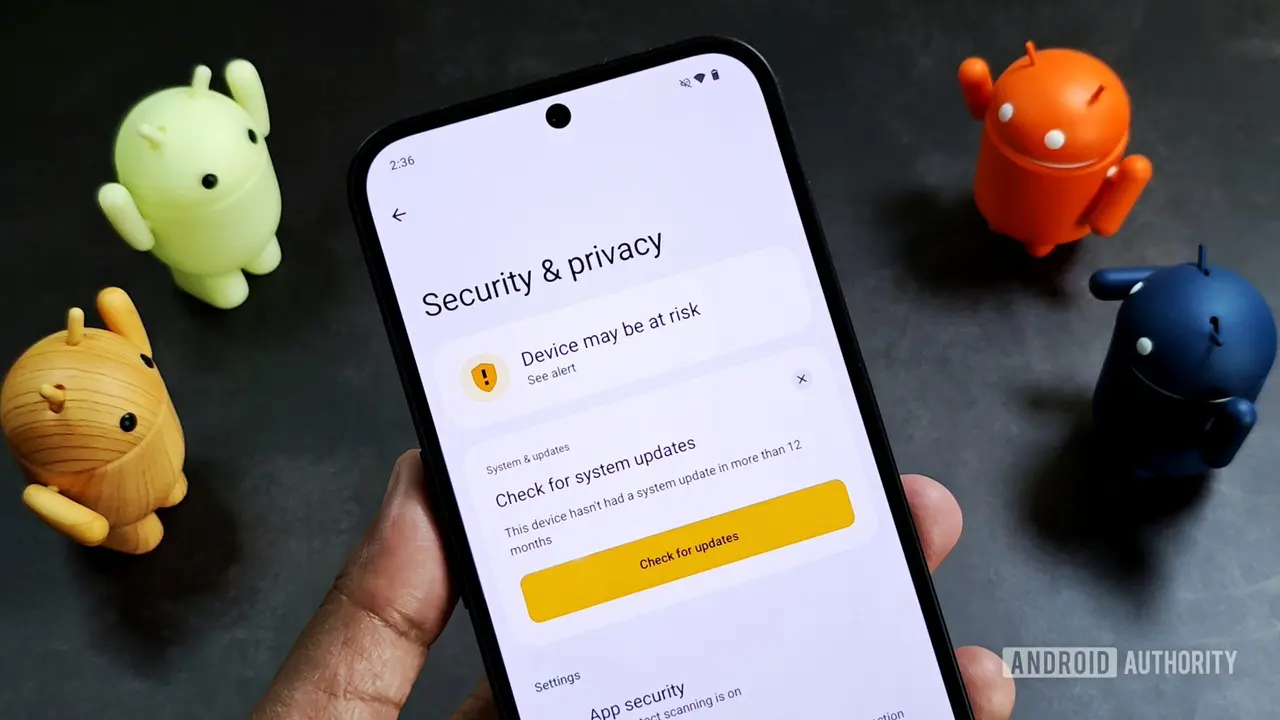
Source: Android Authority
Google Play Protect now scans over 350 billion Android apps daily
4
. The enhanced fraud protection feature expanded to cover 2.8 billion Android devices across 185 markets in 2025, blocking 266 million risky side-loading installation attempts2
. When users attempt to install apps from untrusted websites or internet sources, Play Protect warns them or blocks the installation entirely, particularly when apps request sensitive permissions.New security systems target social engineering and spam manipulation
Google has implemented specific defenses against social engineering tactics that scammers use to bypass security systems. If a user is on a phone call, Play Protect now removes the option to disable protections, blocking a common method where scammers convince distracted users to turn off their defenses
3
.The company also tackled spam ratings and review manipulation, blocking 160 million spam ratings and reviews in 2025
1
. This effort prevented an average 0.5-star rating drop for apps targeted by review bombing, protecting legitimate developers from coordinated attacks designed to damage their reputation2
.Related Stories

Developer tools and privacy protection measures strengthen the ecosystem
Google is equipping developers with proactive tools to build safer apps from the start. Play Policy Insights in Android Studio now points out potential policy violations while developers are still writing code, catching issues before submission
3
. This shift toward prevention rather than detection helps reduce the burden on both developers and reviewers.Looking ahead, Google plans to open developer verification to everyone in 2026, including students and hobbyists, though with a simplified process
3
. In Android 16, a single line of code will enable developers to protect sensitive information like banking logins from tapjacking attacks, making privacy protection more accessible to developers of all skill levels.What this means for Android users and the broader ecosystem
Google's investment in security systems addresses a fundamental challenge in the app ecosystem: as AI helps hackers find new attack vectors, defenders must deploy equally sophisticated AI-driven defenses
3
. The company has stated it will continue investing in AI-driven defenses throughout 2026 to stay ahead of emerging threats1
.These security investments come as Google faces regulatory pressure in Europe and other regions over claims that its Play Store constitutes a monopoly. The company has long justified its relatively high fees on app purchases and subscriptions by pointing to its app ecosystem safety investments
2
. However, EU regulators recently claimed Google still isn't complying with Digital Markets Act regulations despite changes to its fee structure for developers using alternative payment channels.For users, the shift in threat patterns means vigilance remains essential. While the Play Store itself has become significantly harder to exploit, the rise in malicious apps distributed outside official channels suggests users should be particularly cautious about side-loading applications or installing software from untrusted sources. The 27 million malicious apps identified outside Google Play represent real attempts to compromise Android devices, making Google Play Protect's expanded coverage across 2.8 billion devices a critical line of defense for the Android ecosystem.
References
Summarized by

Navi
[3]
Related Stories
Google Blocks 2.36 Million Risky Android Apps from Play Store in 2024, Leveraging AI for Enhanced Security
31 Jan 2025•Technology

Google's AI-Powered Crackdown: 39.2 Million Ad Accounts Suspended in 2024
17 Apr 2025•Technology

Google to Implement Strict Developer Verification for Android Apps in 2025
27 Aug 2025•Technology

Recent Highlights
1
AI chatbots validate you too much, making you less kind to others, Stanford study reveals
Science and Research
2
Anthropic's Claude Code Source Leak Reveals Hidden AI Agent Plans and Extensive System Access
Technology

3
Judge blocks Pentagon from branding Anthropic a security risk over AI safety guardrails dispute
Policy and Regulation

Recent Highlights
Today's Top Stories












Your Daily Dose of Curated AI News
Don’t drown in AI news. We cut through the noise - filtering, ranking and summarizing the most important AI news, breakthroughs and research daily. Spend less time searching for the latest in AI and get straight to action.

