Demis Hassabis predicts AGI in 5-8 years, sees new golden era transforming medicine and science


6 Sources
6 Sources
[1]
Google's Nobel-winning AI leader sees a 'renaissance' ahead -- after a 10 or 15-year shakeout | Fortune
Sir Demis Hassabis, the recently minted Nobel laureate and CEO of Google DeepMind, believes humanity is standing on the precipice of a "new golden era of discovery." But reaching this utopia will require navigating a turbulent transition period -- a decade-long sprint that Hassabis describes as a necessary disruption for the $3.9 trillion tech giant he helps lead. Speaking to Fortune Editor-in-Chief Alyson Shontell on the Fortune 500: Titans and Disruptors of Industry podcast, Hassabis offered a vision of the future defined by "radical abundance." It is a world where artificial intelligence has successfully bottled the scientific method to solve the planet's most intractable problems. "In 10, 15 years' time, we'll be in a kind of new golden era of discovery that [is] a kind of new renaissance," Hassabis predicted. In this near future, he predicted that "medicine won't look like it does today," with AI enabling personalized treatments and curing major diseases. Beyond health, he said he foresees AI unlocking new materials to solve the energy crisis through fusion or solar breakthroughs, eventually allowing humanity to "travel the stars and ... explore the galaxy". However, the path to the stars is paved with what Hassabis identifies as a "classic innovator's dilemma" here on Earth. For Google, the company that organized the world's information, the rise of generative AI represents an existential pivot point. To build the future, the company must risk disrupting its own core search business. "If we don't disrupt ourselves, someone else will," Hassabis said. "You're better off... doing it on your terms." This philosophy drove a massive internal reorganization in 2023, sparked by the rise of competitors such as OpenAI's ChatGPT. Google merged its two world-class research units, Google Brain and DeepMind, into a single entity under Hassabis' leadership. "Bringing the two groups together and trying to combine the best of both cultures has been great," Hassabis said, "and I think we're reaping the rewards of that now." He likened the combined entity to a "nuclear power plant that's plugged into the rest of this amazing company," providing the raw intelligence that powers everything from Search to YouTube. The consolidation was necessary to pool the "enormous compute power" required to train frontier models like Gemini. The strategy appears to be working; following the release of models such as Gemini 3 and the viral image generator "Nano Banana," Alphabet shares soared approximately 65% by the end of the year. Hassabis said he thinks the company has now "crossed the watershed moment" where AI models are capable enough to act as useful assistants in high-level research. The cornerstone of this new era, according to Hassabis, is the application of AI to biology. He pointed to AlphaFold, DeepMind's breakthrough model that solved the 50-year-old "protein folding problem," as the proof of concept. By predicting the 3D structure of over 200 million proteins, the system has provided a roadmap for the human body that is now used by over 3 million researchers. (This is the work that let to Hassabis being awarded the Nobel Prize in Chemistry in 2024.) Hassabis is now applying AlphaFold at Isomorphic Labs, a Google spin-off dedicated to "solving" disease. By moving drug discovery from "wet labs" to in silico (computer) simulation, Hassabis said he believes the process can become "1,000 times more efficient". The company is already in pre-clinical trials for cancer drugs, with hopes to move to clinical trials by the end of the year. (Also in January, Shontell talked to Pfizer CEO Albert Bourla about his hopes of finding a cancer cure through smart use of AI.) This "renaissance" requires relentless effort, though. Hassabis admitted that he "doesn't sleep very much," working a "second day" from 10 p.m. to 4 a.m. to focus on deep scientific thinking. "I come alive at about 1 a.m.," he confessed. For Hassabis, the grueling schedule and the corporate restructuring are the table stakes for the ultimate prize. The next decade may be a period of intense technological shakeout and adaptation, but he said he remains convinced of the destination. "We set out with the mission of... solving intelligence and then using it to solve everything else," Hassabis said. If his 15-year timeline holds true, "everything else" may soon include the stars themselves.
[2]
DeepMind's Demis Hassabis Warns AGI Remains Years Away Despite A.I. Breakthroughs
DeepMind CEO Demis Hassabis says A.I.'s "jagged intelligence" must be fixed before AGI arrives, predicting human-level systems remain years away. An A.I. model from Google DeepMind shocked mathletes from around the world last year when it secured a gold medal at the prestigious International Mathematical Olympiad. Why, then, do these same models also make mistakes on the most elementary math questions? Such inconsistencies are a sign of A.I.'s "jagged intelligence," according to DeepMind CEO Demis Hassabis. Sign Up For Our Daily Newsletter Sign Up Thank you for signing up! By clicking submit, you agree to our <a href="http://observermedia.com/terms">terms of service</a> and acknowledge we may use your information to send you emails, product samples, and promotions on this website and other properties. You can opt out anytime. See all of our newsletters Today's A.I. systems are "very good at certain things, but very poor at certain things," said Hassabis while speaking at the India AI Impact Summit 2026 in New Delhi, India, today (Feb. 18). This dichotomy must be fixed before artificial general intelligence (AGI), a form of A.I. that rivals the intelligence of humans, is achieved, he added, predicting that the milestone is still five to eight years away. Like the rest of Silicon Valley, DeepMind is racing to become the first developer to unlock the potential of advanced A.I. Acquired by Google more than a decade ago, the lab was founded in 2010 by Hassabis and a small group of researchers with the goal of eventually "solving intelligence," and in the process addressing some of the world's biggest questions. "I don't think we're there yet," Hassabis said. Beyond smoothing out A.I.'s jagged edges, other hurdles on the road to AGI include expanding planning capabilities to handle long-term tasks rather than just short-term goals. Hassabis is also focused on improving continual learning -- ensuring systems can adapt and personalize through experience, instead of only absorbing new knowledge before being released. For now, he said, models are "kind of frozen and put out into the world." How the arrival of AGI will be one day be confirmed remains an open question across the tech industry. For Hassabis, the breakthrough will coincide with the emergence of "true creativity" in A.I. This isn't limited to the arts, but extends to science -- whether systems can not only solve a conjecture, but also formulate the right questions and hypotheses, a trait Hassabis said separates "great scientists from good scientists." The A.I. executive is especially excited about the prospect of models eventually serving as "co-scientists" as they grow more autonomous. His focus on scientific research is unsurprising given his own achievements, which include receiving a Nobel Prize in Chemistry for his work on AlphaFold, an A.I. system that predicts protein structures, and leading Isomorphic Labs, an Alphabet subsidiary using A.I. for drug discovery. While Hassabis has long touted the scientific promise of A.I., his rivals -- OpenAI CEO Sam Altman and Anthropic's Dario Amodei -- have placed more weight on the technology's commercial and labor implications. Their differing priorities are reflected in their views on AGI timelines: Altman has suggested such systems could emerge by the end of the decade, while Amodei believes they may arrive even sooner. One point of consensus among leading A.I. developers, however, is that AGI will bring new risks. Hassabis divides them into two categories: societal risks, when bad actors misuse A.I., and technical risks, when systems behave in unexpected and potentially harmful ways. Preparing for the former requires global dialogue and shared standards. "In order to mitigate some of the risks, we're going to need international collaboration," he said.
[3]
AGI could arrive in five to eight years: Google DeepMind CEO Demis Hassabis - The Economic Times
Speaking at the AI Impact Summit in New Delhi, Hassabis also warned that risks related to biosecurity and cybersecurity need urgent attention as artificial intelligence (AI) systems become more powerful.Demis Hassabis, chief executive of Google DeepMind, on Wednesday said artificial general intelligence (AGI) is now close and could arrive in the next five to eight years. "We're starting to see what these systems can do," he said. "I think we need to worry about things like bio and cyber risk in AI very soon. The current systems are getting pretty good at cyber," Hassabis said. "You need to make sure that the defences are stronger than the offences." Hassabis, the creator of AlphaFold said one of the biggest gaps in today's AI systems is continual learning. "Today, systems are trained, fine-tuned, and then essentially frozen before being released into the world," he said. According to him, AI systems should be able to learn from real-world experience, adapt to different situations and personalise themselves to the tasks they are given, something current systems are unable to do. Another limitation is long-term planning. While AI models can plan over short periods, they struggle to make long, coherent plans over months or years, the way humans do. He also highlighted a lack of consistency in current systems. "Today's systems are what I would call 'jagged intelligences'," Hassabis said, explaining that they can perform extremely well at some tasks but poorly at others. Looking ahead, Hassabis said AI will significantly increase the productivity of scientists and experts. He said cross-disciplinary research which requires understanding multiple fields at the same time will benefit the most, as AI helps researchers find connections that are otherwise hard to spot.
[4]
Demis Hassabis Predicts AGI Will Have 10x The Impact Of The Industrial Revolution -- And It Will Happen In A Decade, Not A Century - Alphabet (NASDAQ:GOOG), Alphabet (NASDAQ:GOOGL)
On Thursday, Alphabet Inc.'s (NASDAQ:GOOG) (NASDAQ:GOOGL) Google DeepMind CEO Demis Hassabis said artificial general intelligence could reshape the world faster than any prior technological shift -- if handled responsibly. AGI Could Transform Society Faster Than Any Previous Revolution Speaking at the India AI Impact Summit 2026, Hassabis said AGI may trigger one of the most consequential eras in human history, comparing its potential impact to the discovery of fire and the invention of electricity. "If I were to try and quantify what's coming down the line with the advent of AGI," Hassabis said, "it's going to be something like ten times the impact of the Industrial Revolution, but happening at ten times the speed -- probably unfolding in a decade rather than a century." He described the pace of progress in advanced AI systems as accelerating rapidly, with increasingly capable foundation models emerging in quick succession. The DeepMind CEO also reiterated his previous prediction, saying the year 2026 marks another pivotal moment for AI, with AGI potentially arriving within the next five years. Last year, Google co-founder Sergey Brin said that he believes AGI will arrive before 2030, whereas Hassabis expected it to emerge shortly after 2030. Scientific Guardrails And Global Cooperation Key To Safe AI Despite his optimism, Hassabis stressed that such transformative power demands caution and rigorous oversight. "We've got to try and navigate this moment very carefully," he said, highlighting the need for a scientific approach to understanding AI capabilities and risks. He called for building strong guardrails and monitoring systems to ensure advanced AI systems serve human goals. Hassabis also said responsibility for shaping AI's future should extend beyond technologists to include governments, scientists, artists and philosophers. Disclaimer: This content was partially produced with the help of AI tools and was reviewed and published by Benzinga editors. Photo by Photo For Everything via Shutterstock Market News and Data brought to you by Benzinga APIs To add Benzinga News as your preferred source on Google, click here.
[5]
Google DeepMind CEO Demis Hassabis Says AI Will Usher In 'New Golden Era Of Discovery' Within 15 Years, Transforming Medicine, Energy, Space - Alphabet (NASDAQ:GOOG), Alphabet (NASDAQ:GOOGL)
Alphabet Inc. (NASDAQ:GOOGL) (NASDAQ:GOOG) subsidiary Google DeepMind CEO Demis Hassabis said artificial intelligence could trigger a "new golden era of discovery" within the next decade, transforming medicine, energy and even space exploration. AI Set To Transform Medicine And Science On Wednesday, speaking on the Fortune 500: Titans and Disruptors of Industry podcast, Hassabis said humanity is entering a period of "radical abundance" driven by AI. "In 10, 15 years' time, we'll be in a kind of new golden era of discovery that [is] a kind of new renaissance," he said. He highlighted AI's potential to revolutionize medicine, predicting personalized treatments and cures for major diseases. Google Restructures To Lead AI Revolution Hassabis acknowledged the challenges ahead, calling the coming decade a "classic innovator's dilemma" for Google. "If we don't disrupt ourselves, someone else will," he said. This philosophy guided the 2023 merger of Google Brain and DeepMind, creating a unified research powerhouse to train advanced AI models like Gemini and Nano Banana. Hassabis also pointed to DeepMind's AlphaFold, which solved the decades-old protein folding problem, as proof of AI's scientific capabilities. He is now applying the technology at Isomorphic Labs to accelerate drug discovery, aiming to make the process "1,000 times more efficient" and advance preclinical cancer trials. AI Jobs Impact And Startup Bubble Concerns Earlier, Hassabis said AI was beginning to affect hiring, particularly in internships and entry-level roles, though there was no evidence of widespread job losses. He noted companies were slowing junior hiring as AI automated routine tasks, but broader labor data did not show mass displacement. Hassabis urged students to master AI tools, arguing that hands-on technical skills could matter more than traditional internships in an AI-driven job market. He also warned that heavy investment in early-stage AI startups with little revenue suggested parts of the market could be in a bubble, while maintaining that AI remained overhyped in the short term but undervalued over the long term. Disclaimer: This content was partially produced with the help of AI tools and was reviewed and published by Benzinga editors. Photo courtesy: Photo For Everything via Shutterstock Market News and Data brought to you by Benzinga APIs To add Benzinga News as your preferred source on Google, click here.
[6]

India AI Impact Summit 2026: DeepMind CEO Demis Hassabis says world entering golden era of science, AGI closer than expected
While AGI is not yet here due to gaps in continuous learning and consistency, he said it could arrive within the next five to eight years. During a session at the India AI Impact Summit, Demis Hassabis, CEO of Google DeepMind, stated that the world may be entering a golden era of scientific discovery, fuelled by rapid advances in artificial intelligence. He discussed how the human brain served as the inspiration for modern AI systems. He also stated that one of the most significant advances in the field has been reinforcement learning, a technique that allows machines to learn from experience rather than relying solely on pre-programmed instructions. According to him, allowing systems to learn directly from data has greatly increased their power and adaptability. At the same time, he stated that AI research has revealed how efficient the human brain is in terms of learning without consuming an infinite amount of information. Hassabis stated that the industry is now entering what many refer to as the 'agentic' era, in which AI systems become more autonomous and capable of acting on their own. However, he cautioned that this progress carries serious risks. Concerns about misuse by bad actors, including nation states, as well as emerging biosecurity and cybersecurity threats, require immediate attention. He pointed out that strong safeguards and international cooperation will be critical as AI systems become more capable. He added that global forums like the India AI Impact Summit are important for aligning stakeholders on safety and governance. Despite his optimism, Hassabis stated that artificial general intelligence (AGI) has not yet been achieved. He explained that current systems are typically extensively trained before being deployed in largely fixed form. What they lack is true continuous learning, or the ability to learn and adapt even after deployment. He also pointed out problems in long-term planning and consistency. While some AI models can solve extremely complex mathematical problems, they may still make basic mistakes depending on how a question is phrased. This uneven performance points out the difference between narrow expertise and genuine general intelligence, he added. Still, Hassabis described the past decade of progress as remarkable and suggested that AGI could be on the horizon within the next five to eight years, if breakthroughs continue.
Share
Share
Copy Link
Google DeepMind CEO Demis Hassabis forecasts artificial general intelligence arriving within 5-8 years, with impact 10 times greater than the Industrial Revolution. The Nobel laureate warns AI's 'jagged intelligence' must be fixed first, while predicting a renaissance in medicine, energy, and space exploration within 10-15 years.
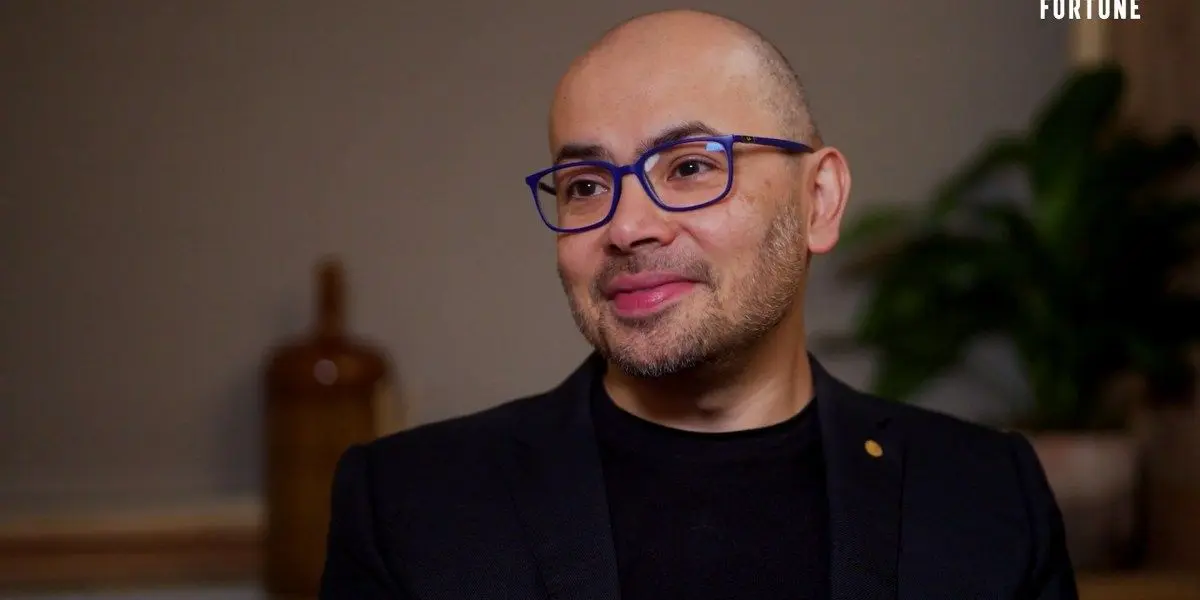
Demis Hassabis Sets Timeline for Artificial General Intelligence
Demis Hassabis, the Nobel Prize-winning CEO of Google DeepMind, has placed artificial general intelligence (AGI) on a definitive timeline, predicting its arrival within five to eight years
2
3
. Speaking at the India AI Impact Summit 2026 in New Delhi, Hassabis declared that humanity is "starting to see what these systems can do," marking a watershed moment in AI development. His forecast positions AGI impact at ten times the magnitude of the Industrial Revolution, but unfolding at ten times the speed—compressed into a decade rather than a century4
. This timeline represents a recalibration from his earlier predictions, with the year 2026 now serving as a pivotal marker on the path to human-level AI systems.Fixing AI's Jagged Intelligence Problem
Before AGI can materialize, Hassabis identifies a critical obstacle: what he terms "jagged intelligence." AI systems today exhibit dramatic inconsistencies, excelling at complex tasks like securing gold medals at the International Mathematical Olympiad while simultaneously failing elementary math questions
2
. These systems are "very good at certain things, but very poor at certain things," a dichotomy that must be resolved before achieving true general intelligence. Hassabis pinpoints continual learning as one of the biggest gaps, noting that current models are "trained, fine-tuned, and then essentially frozen before being released into the world"3
. AI systems need the ability to learn from real-world experience, adapt to different situations, and personalize themselves to specific tasks—capabilities that remain elusive. Long-term planning presents another limitation, with models struggling to construct coherent plans spanning months or years as humans naturally do.New Golden Era of Discovery Through AI
Beyond the AGI milestone, Hassabis envisions a transformative new golden era of discovery emerging within 10 to 15 years, characterized by what he calls "radical abundance"
1
5
. Speaking on the Fortune 500: Titans and Disruptors of Industry podcast, he predicted that "medicine won't look like it does today," with AI enabling personalized treatments and curing major diseases. His vision extends to energy, where AI could unlock new materials to solve the energy crisis through fusion or solar breakthroughs, and ultimately to space exploration, allowing humanity to "travel the stars and explore the galaxy." This renaissance hinges on AI successfully bottling the scientific method to tackle the planet's most intractable problems. Hassabis points to AlphaFold, DeepMind's breakthrough system that solved the 50-year-old protein folding problem by predicting the 3D structure of over 200 million proteins, as proof of concept1
. The system, which earned Hassabis the Nobel Prize in Chemistry in 2024, now serves over 3 million researchers worldwide.Drug Discovery and Isomorphic Labs
Hassabis is actively translating his scientific vision into commercial reality through Isomorphic Labs, an Alphabet subsidiary dedicated to "solving" disease
1
. By shifting drug discovery from traditional "wet labs" to in silico computer simulation, he believes the process can become "1,000 times more efficient." The company has already advanced to pre-clinical trials for cancer drugs, with plans to reach clinical trials by year's end5
. Hassabis anticipates AI will significantly boost the productivity of scientists and experts, particularly in cross-disciplinary research that requires understanding multiple fields simultaneously3
. His excitement centers on models eventually serving as "co-scientists" as they grow more autonomous, capable not just of solving conjectures but formulating the right questions and hypotheses—a trait that separates great scientists from good ones.Related Stories

AI Risks and Global Cooperation
Despite his optimism, Hassabis warns that urgent attention must focus on AI risks, particularly in biosecurity and cybersecurity
3
. "The current systems are getting pretty good at cyber," he cautioned, stressing the need to ensure "defences are stronger than the offences." He divides risks into two categories: societal risks when bad actors misuse AI, and technical risks when systems behave in unexpected and potentially harmful ways2
. Addressing these threats requires scientific guardrails, robust monitoring systems, and global cooperation. "In order to mitigate some of the risks, we're going to need international collaboration," Hassabis stated, emphasizing that responsibility extends beyond technologists to include governments, scientists, artists, and philosophers4
. His call for careful navigation reflects the magnitude of transformation ahead: "We've got to try and navigate this moment very carefully."Google's Innovator's Dilemma and Internal Transformation
For Google, the path to this renaissance presents what Hassabis calls a "classic innovator's dilemma"
1
. The rise of generative AI represents an existential pivot for the $3.9 trillion tech giant, forcing it to risk disrupting its core search business. "If we don't disrupt ourselves, someone else will," Hassabis declared, a philosophy that drove the 2023 merger of Google Brain and DeepMind into a unified research entity under his leadership. The consolidation was necessary to pool the "enormous compute power" required to train frontier models like Gemini. "Bringing the two groups together and trying to combine the best of both cultures has been great," Hassabis said, likening the combined entity to a "nuclear power plant that's plugged into the rest of this amazing company." The strategy appears effective: following releases of models including Gemini 3 and the viral image generator "Nano Banana," Alphabet shares soared approximately 65% by year's end. Hassabis maintains the company has "crossed the watershed moment" where AI models can act as useful assistants in high-level research, positioning Google DeepMind against rivals like OpenAI in the race to unlock advanced AI's full potential.References
Summarized by

Navi
[3]
Related Stories
AI experts clash at Davos over when AGI will arrive and reshape the global economy
20 Jan 2026•Technology

Google DeepMind CEO Predicts Human-Level AI Within 5-10 Years, Sparking Debate on AGI Timeline
18 Mar 2025•Technology
Google DeepMind CEO Highlights AI's Inconsistency as Major Obstacle to AGI
13 Aug 2025•Technology

Recent Highlights


Recent Highlights
Today's Top Stories




Your Daily Dose of Curated AI News
Don’t drown in AI news. We cut through the noise - filtering, ranking and summarizing the most important AI news, breakthroughs and research daily. Spend less time searching for the latest in AI and get straight to action.

