Google brings Gemini AI to Chrome on iPhone and iPad, closing gap with desktop experience


5 Sources
5 Sources
[1]
iOS Gets More AI as Chrome Adds Google's Gemini for iPhones
Alex Valdes from Bellevue, Washington has been pumping content into the Internet river for quite a while, including stints at MSNBC.com, MSN, Bing, MoneyTalksNews, Tipico and more. He admits to being somewhat fascinated by the Cambridge coffee webcam back in the Roaring '90s. Google is adding its artificial intelligence tool Gemini to the Chrome browser on iPhones and iPads across the US, meaning you'll be able to use Google's AI functionality in Chrome instead of having to go to the Google app on your devices. The integration comes a few months after Google rolled out Gemini in Chrome to Windows and Mac desktop users in the US in September. At the time, the company said that it would eventually be doing the same thing with iPhones and iPads. Don't miss any of our unbiased tech content and lab-based reviews. Add CNET as a preferred Google source. Before now, if you wanted to use Gemini on your iPhone and iPad, you were not able to do so from Chrome -- you would have had to go to the Google app or Google website. Folks using Android phones already have Gemini on their Chrome browsers, which is the default browser on Android devices. Chrome is the most widely used web browser in the US; StatCounter said that as of November, Chrome had a 54% market share of browsers in the US, followed by Apple's Safari (28%) and Microsoft Edge (7%). There are other smaller browsers that people use to search the internet, including Firefox, Brave, Opera, Vivaldi and Arc. Gemini is Google's family of AI products and competes with ChatGPT, Microsoft Copilot, Anthropic's Claude, Perplexity AI, Mistral AI, Meta AI and Grok in the realm of chatbots, content creation and AI integration. Jason Howell, host of the Android Faithful Podcast and a former CNET staffer, said Google has filled "a noticeable gap" in AI for Chrome for the millions of iPhone and iPad users in the US. "Giving Gemini awareness of what's happening inside the Chrome browser has real utility, and placing that spark icon front and center will nudge a lot of people to try it who might not have otherwise," Howell said. "It's a smart distribution play. Put your AI in an app that millions already have installed, and you're giving them an enticing reason to test it." Howell said adding Gemini into Chrome for iOS could give Google the edge on, well, Edge. "Microsoft already brings Copilot to iOS through its dedicated apps and even inside the Edge browser, so this isn't Google pulling ahead so much as it is Google catching up in an important and highly visible place," Howell said. "Having said that, Chrome has a much larger footprint on iOS compared to Edge, so it's using its scale to put Gemini in front of far more iPhone and iPad users, which could meaningfully shift adoption among third-party AI assistants." Gemini in Chrome is not immediately available to everyone using iOS devices, but it is gradually rolling out across the US. To be able to get it, you need to be running Chrome version 143, sign into your account and make sure the browser language is set to English; you also cannot be in Incognito mode. Chrome users in iOS will know they have Gemini when the Google Lens icon (which looks like a camera with a dot in the middle) to the left of the address bar is replaced by the Gemini icon (which looks like a sparkle). When you tap or press the Gemini icon, two options will appear on a "Page tools" screen that slides up: Search screen and Ask Gemini. Two shortcuts that will appear are Summarize page and Create FAQ about this topic. Let's say your web page is about the top news events of 2025. You could ask Gemini, "Give me a list of the top events for each month," or, "List out the top political news of 2025." Maybe you're looking at a great meal to prepare but you need substitutes for certain ingredients -- you could ask Gemini to provide suggestions. Just remember to double-check everything an AI tool tells you because AIs have been known to hallucinate. Gemini for Chrome in iOS will also make checkout easier with biometrics instead of a CVC code during online shopping.
[2]
Google Gemini Is Now Built Into Chrome for iPhone and iPad
(Credit: Sheldon Cooper/SOPA Images/LightRocket via Getty Images) If you use Chrome on your iPhone or iPad, you will soon be able to talk to Google's Gemini AI without leaving your browser. Previously, iPhone users have been restricted to using Gemini on Google's iOS app or through its website, but now the assistant is built into Chrome. Similar functionality is already available on Android and desktop versions of the browser. The company first teased iPhone integration in September before a few months of testing with select users. According to 9to5Google, the feature is now rolling out more widely as part of Chrome 143 for iPhone and iPad. It's available across the US, but Google says it may still take a while for the feature to arrive on your device as it's "gradually" rolling out. You'll need to be signed into Chrome, use the browser in English, be over 18 years old, and it won't appear in Incognito mode. If you've got the integration, the Google Lens logo on the left-hand side of the address bar will change to a Gemini spark icon. Pressing this shows two options with one searching your screen, and another to talk to Gemini. After pressing the option called Ask Gemini, it'll appear with a box to type in a prompt, with a quick option above to summarize the page you're viewing. It will also give an option for "creating an FAQ about this topic," which pulls information from other similar websites. You can also find the feature by heading to Page tools in Chrome. Every time you use Gemini within Chrome, it will automatically share the website you're viewing with the AI. To turn it off, you can press a button marked Stop. Apple itself is encouraging users to switch from Chrome on its gadgets and use its own Safari browser. Its website reads, "Unlike Chrome, Safari truly helps protect your privacy." It also says, "Safari includes state‑of-the‑art features that defend you against cross‑site tracking, hides your IP address from known trackers and more."
[3]
Google's Gemini AI comes to Chrome on iPhone and iPad
After rolling it out on desktop and Android earlier in 2025, Google is finally bringing its built-in Gemini AI experience to iPhone and iPad. It offers new features like summarizing pages and helping you test your knowledge about a subject you're learning. As with any AI tool, though, it shouldn't be trusted for anything important given the possibility of hallucinations and other errors. When it arrives on your iOS device, tapping the spark icon at the left of the address bar (in place of the Google Lens camera) brings up a "Pages tool" that offers Lens and the new feature, "Ask Gemini." You can then chat with Gemini about the current web page (by default) or any other topic. It may then offer suggestions that appear in the chat box like: If you elect to just type in the chat window, here are some examples of what you can do: The response to your chat questions will float over the web page that then shifts to the background. A new chat can be started from the top right corner, and you'll see a Liquid Glass overflow menu. For now, Gemini in Chrome on iPhone and iPad is only supported in the US with the browser language set to English. You need to be signed into Chrome and the feature doesn't work in incognito mode. Google also noted that the feature is only available to users 18 and older and may not roll out to your device immediately.
[4]
Google Rolls Out Gemini AI for Chrome on iPhone and iPad
Google is rolling out Gemini integration for its Chrome browser on iPhone and iPad, a move that brings AI feature parity with its web and desktop versions. The company teased built-in Gemini in Chrome for iOS in September, and the feature is now rolling out gradually across the United States. For Gemini to work in Chrome, you'll need version 143. When you've updated, make sure you're signed into your account, the browser language is set to English, and the app isn't in Incognito mode. If all the above conditions are met, the Google Lens logo on the left-hand side of the address bar will change to a Gemini icon. Tapping the icon shows options for two "Page tools" that let Gemini search your screen or for you to ask the chatbot a question. The Gemini interface also includes shortcuts to do things like summarize the current webpage or create a FAQ about a topic. Other sample queries include asking Gemini to reframe complex topics in alternative ways, quiz you on material you're learning, adapt recipes to specific dietary requirements, or contrast options and offer tailored recommendations based on your preferences. Gemini's responses to queries appear in an overlay that floats on top of the webpage. Chrome 143 for iOS also adds biometric checkout support, new Chrome tips on the New Tab Page, and general stability improvements.
[5]

Google Gemini AI arrives on Chrome in iPhone and iPad, but there is a catch
For now, Gemini in Chrome on iPhone and iPad is only available in the United States. Google is finally bringing its built-in Gemini AI to Chrome on the iPhone and iPad, after launching it on desktop and Android earlier this year. The update adds smarter browsing features to iOS devices, letting users get quick help, explanations, and summaries while viewing any webpage. However, the rollout comes with a few limits that users should know about. Once the feature appears on your device, you'll notice a new spark icon on the left side of Chrome's address bar, replacing the usual Google Lens camera, reports Engadget. Tapping this icon opens the new Pages tool, which includes Lens and a new option called Ask Gemini. This tool lets you start a conversation with the AI about the page you're currently viewing, or about anything else you'd like to ask. Also read: Google launches upgraded Gemini Deep Research agent: Here's what it can do Gemini can help in many ways. For example, it can summarise a webpage or explain complicated topics in simpler terms. It can also create quick FAQs based on what's on the page or similar sources. You can ask it to modify a recipe, compare information, or offer recommendations based on your preferences. All responses appear in a floating chat window layered over the webpage. A new chat can be started at any time using an icon in the top-right corner. Also read: OpenAI brings GPT 5.2 to take on Gemini 3 Pro, Sam Altman says its most capable model yet But there's a catch, actually, several. For now, Gemini in Chrome on iPhone and iPad is only available in the United States, and your browser must be set to English. You must be signed in to Chrome, and the feature does not work in Incognito mode. Also, the feature can only be accessed by users 18 and older. It's important to note that the feature can sometimes produce incorrect or misleading information, so users shouldn't rely on it for anything important.
Share
Share
Copy Link
Google is rolling out Gemini AI integration for Chrome on iPhone and iPad across the US, allowing users to access the AI assistant directly from their browser. Previously restricted to the Google app or website, Gemini for Chrome now offers features like page summarization and contextual assistance. The move follows similar integrations on Android and desktop platforms, positioning Google to compete with Microsoft Copilot and other AI assistants in the mobile browser space.
Gemini AI Arrives on Chrome for iOS Devices
Google is integrating Gemini AI into the Chrome browser on iPhone and iPad, bringing AI functionality directly to millions of iOS users across the United States
1
. The rollout, which began gradually as part of Chrome version 143, marks a significant expansion for Google's AI assistant beyond the Google app and website where iPhone users previously had to access it2
. This integration follows Google's September 2024 launch of Gemini in Chrome for Windows and Mac desktop users, and it's already available on Android devices where Chrome serves as the default browser3
.
Source: CNET
The timing matters for Apple device owners who rely on Chrome, which holds a 54% market share in the US compared to Safari's 28%
1
. By embedding its AI assistant directly into the browser, Google aims to compete more effectively with Microsoft Copilot, ChatGPT, and other AI tools vying for user attention in the crowded chatbot landscape.How Gemini for Chrome Works on iPhone and iPad
When Gemini becomes available on your device, you'll notice the Google Lens icon on the left side of the address bar transforms into a spark icon in the address bar
4
. Tapping this spark icon opens a "Page tools" interface with two primary options: Search screen and Ask Gemini1
. The AI assistant integrated into the Chrome browser can access and analyze the webpage you're currently viewing, offering contextual assistance without requiring you to switch apps3
.
Source: Engadget
The interface provides shortcuts to summarize web pages and create FAQs about topics, making information consumption faster
4
. Users can ask Gemini to reframe complex topics, quiz them on learning material, adapt recipes to dietary requirements, or compare options and offer recommendations3
. Responses appear in a floating overlay that sits atop the webpage, allowing you to reference the original content while interacting with the AI tool4
.Chrome 143 also introduces biometric checkout support, enabling users to complete online purchases using face or fingerprint authentication instead of entering CVC codes
1
.Requirements and Limitations for Access
Gemini on iPhone and iPad comes with specific requirements that users must meet. You need Chrome version 143, must be signed into your account, and the browser language must be set to English
1
. The feature doesn't work in Incognito mode and is restricted to users 18 and older5
. Currently, browser integration is only available in the United States, with Google indicating the rollout will be gradual even within this geography2
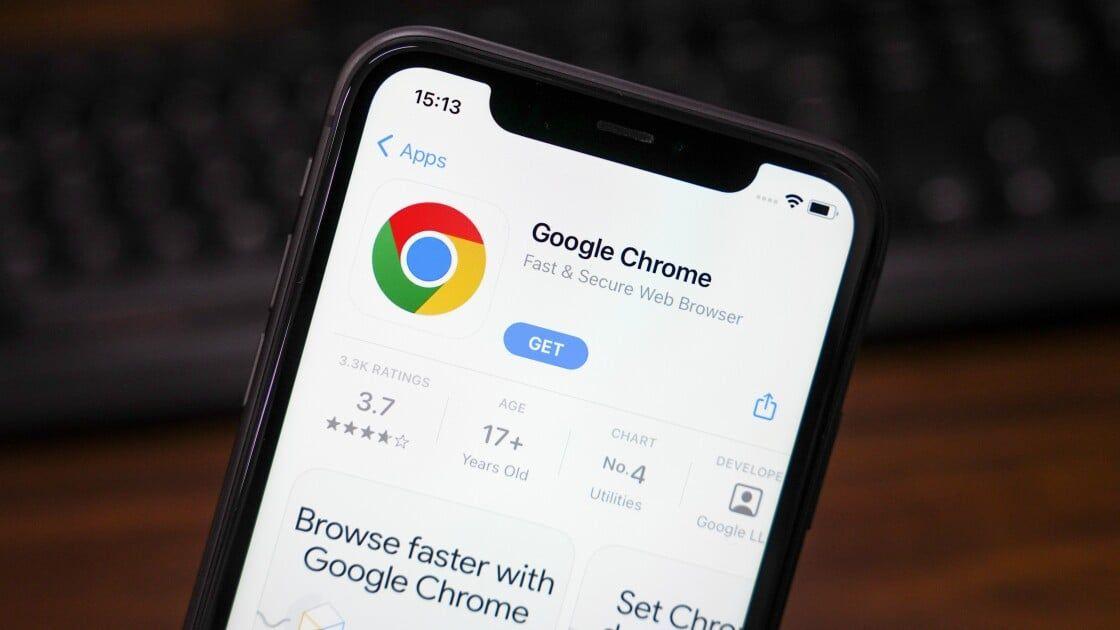
.
Source: PC Magazine
As with any AI functionality, users should verify information provided by the chatbot since AI assistants can produce hallucinations and errors
3
. This caution applies particularly when using Gemini for important decisions or fact-checking critical information5
.Related Stories


Competitive Implications for AI in Chrome Browser
Jason Howell, host of the Android Faithful Podcast, described the move as filling "a noticeable gap" in AI for Chrome for millions of iPhone and iPad users
1
. He noted that while Microsoft already offers Copilot through dedicated apps and inside the Edge browser on iOS, Chrome's significantly larger footprint means Google can put Gemini in front of far more users, potentially shifting adoption among third-party AI assistants1
.The integration represents a strategic distribution play, placing Google's AI assistant in an app millions already have installed rather than requiring a separate download
1
. This approach contrasts with Apple's own positioning, as the company actively encourages users to switch from Chrome to Safari, emphasizing privacy protections and features that "defend you against cross-site tracking"2
.Watch for whether Google expands Gemini's availability beyond US borders and adds support for additional languages, which would significantly broaden its reach. The gradual rollout suggests Google is monitoring performance and user feedback before committing to wider deployment, a measured approach given the competitive stakes in the AI assistant market where it faces established players like ChatGPT and emerging challengers across the smart browsing features landscape.
References
Summarized by

Navi
[2]
Related Stories
Recent Highlights
1
AI Models Lie and Deceive to Protect Other AI Models From Deletion, Study Reveals
Science and Research

2
AI chatbots validate you too much, making you less kind to others, Stanford study reveals
Science and Research
3
Judge blocks Pentagon from blacklisting Anthropic over AI safety guardrails dispute
Policy and Regulation

Recent Highlights
Today's Top Stories




Your Daily Dose of Curated AI News
Don’t drown in AI news. We cut through the noise - filtering, ranking and summarizing the most important AI news, breakthroughs and research daily. Spend less time searching for the latest in AI and get straight to action.

