Google Maps brings AI-powered EV trip planning to Android Auto for 350+ electric vehicles


9 Sources
9 Sources
[1]
Range Anxiety? Google Maps Now Plans EV Charging Stops on Android Auto
Google Maps is expanding its EV trip-planning feature to Android Auto. Introduced a few years ago for mobile, the option helps plan EV trips with recommendations for charging stops along the way. It uses AI to forecast how much battery you'll require throughout the trip and between charging stations. For accurate route planning, Google says it combines "AI with advanced energy models that analyze car details -- like weight and battery size -- alongside Maps' real-time information about traffic, road elevation, and weather." At launch, Google Maps' AI battery prediction supports over 350 models from 16 car brands, including Audi, BMW, Chevrolet, Hyundai, Kia, Mercedes-Benz, Nissan, Subaru, Toyota, and Volkswagen. To get started, you'll need to provide Maps with details about your EV. On your phone, go to your profile > Settings > Your vehicles. Select Electric under Engine type and add vehicle details such as your car's Make, Model, Year, and Trim. Next, confirm the charging plug type under Your Plugs, and tap Save to finish or Edit to select a different plug. You'll then need to add one more piece of information before starting a trip: your battery percentage. Type that number manually, after which Maps will recommend ideal charging stops, estimated battery level at arrival, and an updated ETA based on the time required to top up at each stop. A demo shared by Google suggests it won't recommend charging to full at each stop. Apple Maps has a similar EV route-planning feature, but it is limited to a few car models. Other recent AI enhancements for Google Maps include a Gemini-powered "Ask Maps" feature that answers questions about nearby locations and a new navigation feature that lets you view the buildings and landmarks around you in 3D.
[2]
The Google Maps update EV owners have been waiting for is finally here
Viraj Gawde is a Tech Journalist with bylines at Android Headlines, 91Mobiles, Croma Unboxed, GizmoChina, etc. He has written thousands of news pieces, how-to guides, product comparisons, and listicles on smartphones, wearables, gaming, and PCs. Currently, Viraj is obssessed with the rapidly evolving world of artificial intelligence. He strongly vouches for Apple devices and refuses to go back to Android and Windows. Viraj's first phone was LG Cookie before he upgraded to Samsung Galaxy Y Duos a year later. Range anxiety is one of those things that electric vehicle owners know too well. Road trips feel a lot like guesswork, especially when the battery percentage starts dropping faster, and you are not sure if you will make it to the next charger. Fortunately, Google is stepping in with a solution that might put those worries to rest with AI-powered battery predictions and trip-planning features for over 350 electric vehicle models that work with Android Auto. The newest feature also ties to broader improvements Google has been making to Maps lately. Just a few weeks ago, the search giant introduced immersive navigation with 3D views, improved voice guidance, and the handy Google Gemini-powered 'Ask Maps' feature, making it less of a simple directions app and more of an intelligent driving companion. Google Maps takes the guesswork out of EV charging One of the biggest pain points of EV navigation is the unreliable range estimates. Google Maps latest update lets owners add their EV information and set a destination. It will then show how much battery you will use to get there. The app will also factor in your current charge level and recommend charging stops along your route. You will see the updated estimated time of arrival that accounts for charging breaks. Maps will show the vehicle's expected battery level when you reach the destination. Behind the scenes, Google is combining artificial intelligence with advanced energy models that take into account your car's specific details like weight, battery size, and efficiency. It considers real-world variables like traffic conditions, road elevation, driving patterns, and weather updates. This means that Maps can account for situations where driving uphill drains the battery faster than cruising on a flat highway. These variables help in delivering accurate predictions instead of just ballpark estimates. The feature is currently rolling out to hundreds of electric vehicle models in the US, covering more than 15 brands, including Audi, BMW, Chevrolet, FIAT, Genesis, Hyundai, Jaguar, Kia, Lexus, Lucid, Mercedes-Benz, Nissan, Porsche, Subaru, Toyota, and Volkswagen. More vehicles are said to get the support soon. Related I tested 6 Google Maps alternatives -- this is the one I'm sticking with It's time to move on from Google Posts 12 By Andy Betts For EV owners, the latest update is a big deal -- especially for those who feel limited by their EV's range or frustrated with the idea of juggling multiple apps just to plan a simple road trip. While battery technology keeps improving, charging infrastructure is still catching up in many areas, making smarter planning more important than ever. Subscribe to the newsletter for smart EV and Maps coverage Discover more by subscribing to the newsletter: focused, expert coverage of EV battery predictions, AI-driven Maps features, charging strategies, and the broader mobility tech shaping electric driving -- clarity and context on the developments that matter. Get Updates By subscribing, you agree to receive newsletter and marketing emails, and accept our Terms of Use and Privacy Policy. You can unsubscribe anytime. Source: Google Blog
[3]
Google Maps just added a major EV charging update -- and it fixes one of my biggest electric driving problems
Google Maps and Android Auto are getting a major EV charging upgrade One of my biggest EV gripes is that EV-specific navigation, with routes that account for your charging needs, has only been available with the built-in navigation system. If your car's navigation is awful, like mine, you're essentially cut off from that crucial piece of tech -- and completely reliant on mobile apps like Google Maps. But Google is changing that, and has announced that AI-powered charging predictions will be coming to Google Maps for over 350 different electric vehicles. Essentially, this means Google Maps will be able to calculate when it thinks you'll have to stop to recharge, recommend an appropriate stop for your route, and account for charging time in your ETA. Opened up to more cars Obviously, Google Maps already does this if you have one of the "cars with Google built-in," which run on a version of Android. In those instances, Google Maps is hooked into the car's computer and can read battery information in real time -- which isn't what's happening here. This new system works with Android Auto (sorry iPhone users), which runs on your phone and doesn't link up to the in-car computer. Instead, you'll need to enter your EV's information into Maps, along with your battery percentage. Once Google knows what car you have and how big the battery is, it uses AI to calculate a route based on road elevation, real-time traffic levels and weather data. It's important to remember that this is only an estimate, and without access to real-time battery data, Google Maps can't automatically update the route as you drive. Certain apps can do this with a link to your car's OBD-II port, but that's not something Google is offering. This means that factors affecting driving efficiency that Google doesn't know about, such as a roof rack or a trunk full of heavy stuff, will drain your battery much faster than Google Maps can predict. So be sure to keep tabs on your battery level, and be aware that Google's estimates are not Gospel. The last thing you want is to be stranded on the side of the highway because you decided to put all your trust into a mobile app. Google Maps is rolling out its new AI-powered battery predictions in the U.S. right now, with support for 15 brands and over 350 different EV models. While we don't have a full list of the exact cars, Google has confirmed that the following brands are supported: * Audi * BMW * Chevrolet * FIAT * Genesis * Hyundai * Jaguar * Kia * Lexus * Lucid * Mercedes-Benz * Nissan * Porsche * Subaru * Toyota * Volkswagen Cars that run on Android directly, like Polestars, aren't included. Nor are the car brands that don't support Android Auto, like Tesla or Rivian. Then again, they all have their own charging-friendly navigation systems that will probably do a better job. If you're unsure about whether your car is part of this, you can put your vehicle into Google Maps and see if estimated battery usage is available. You just need to be in the U.S., and have Google Maps 25.44 and up on an Android phone. Considering version 26.13 was released last week, updating should be fairly simple. Follow Tom's Guide on Google News and add us as a preferred source to get our up-to-date news, analysis, and reviews in your feeds.
[4]
Android Auto just got a major EV route planning upgrade -- and improvements to autoplay settings have also been spotted
* EV route planning on Android Auto is getting a smart upgrade * It's rolling out across 350 EV makes and models in the US * Changes to the way media autoplay works are also appearing If you use Android Auto inside an electric vehicle, route planning just got significantly smarter and more personalized -- while there are also signs that the Android dashboard is going to improve the way that audio autoplay is handled. First up is the EV route planning, which is powered by AI and will give charging recommendations based on the make and model of your car and how much battery you've got left. Google says the upgrade applies to more than 350 electric vehicles with Android Auto available, across 16 brands. While basic search for EV charging points was already available in Google Maps and Android Auto, now the software will be able to tap into what it knows about the EV you're in to suggest where you need to recharge and when, considering the length and destination of the journey you're about to embark on. Android Auto will use its AI algorithms and calculations about your vehicle's weight and battery size to give you the best route and charging options. These details will be combined with the usual Google Maps data, including real-time information about traffic, road elevation, and weather conditions. Autoplay prompts To take advantage of the new EV route planning features, you first need to tell Google Maps about your car. From the app on your phone, tap your profile picture (top right), then Settings > Your vehicles to enter the details under Engine and Vehicle. When you plot a route on the Android Auto dashboard, you'll then be able to set your starting battery level. Google says the feature is rolling out now to models from Audi, BMW, Chevrolet, FIAT, Genesis, Hyundai, Jaguar, Kia, Lexus, Lucid, Mercedes-Benz, Nissan, Porsche, Subaru, Toyota, and Volkswagen -- though this is only in the US for now. Our other Android Auto tidbit is something that's been spotted by Android Police. It seems that if you quickly stop media from autoplaying on the dashboard three successive times, you'll be asked if you want to turn autoplay off via a pop-up alert -- so the next time Android Auto connects, nothing starts playing right away. This behavior can already be controlled via Android Auto on your phone (on Pixel devices it's under Settings > Connected devices > Connection preferences > Android Auto), but it's a toggle switch that many users may have missed. The new prompt makes it a little easier to disable autoplay if you'd like to. Follow TechRadar on Google News and add us as a preferred source to get our expert news, reviews, and opinion in your feeds. Make sure to click the Follow button! And of course you can also follow TechRadar on TikTok for news, reviews, unboxings in video form, and get regular updates from us on WhatsApp too.
[5]

Your Android Auto can now plan EV trips with AI-powered charging stops
Google Maps' new Android Auto update uses real-time traffic, elevation, and weather data to take the stress out of long-distance electric vehicle travel. For years, EV drivers using Android Auto have been struggling with a major problem -- pulling up charging stop suggestions on their phones and awkwardly cross-referencing them on their car's screen mid-highway. Navigation was never a problem; it was the charger's location and status that stressed drivers. That era is finally over now. Google has rolled out AI-powered EV trip planning in Google Maps on Android Auto, covering more than 350 electric vehicle models from 16 brands. The list of brands includes Audi, BMW, Hyundai, Kia, Mercedes-Benz, Chevrolet, Lucid, and Volkswagen, among others. How does the feature actually work? Setup starts in the Google Maps app on your Android smartphone. Simply head to Settings, tap "Your Vehicles," select Electric, and enter your car's make, model, year, and trim. That's it -- Google Maps now recognises your car. Recommended Videos Once connected via Android Auto and a destination is entered, the app displays the trip's projected battery consumption. Feed the system your current charge percentage, and it generates recommended charging stops along your route, an estimated arrival battery level, and a revised ETA that now accounts for time spent at chargers. You see? No more fiddling with your smartphone midway to locate the charger -- Google Maps on Android Auto can figure it all out. In fact, there's even a preference to set a minimum battery level on arrival, which, to me, sounds really useful, especially since nobody wants to arrive somewhere and immediately scramble for a charging plug. What's powering the battery predictions? It's Google AI. The AI giant's energy models factor in your car's weight and battery capacity and analyze it against the backdrop of live traffic data along the route, including factors like road elevation and weather conditions. Think of it as a very attentive co-pilot who can always find the chargers on the way for you and never complains about it. Despite all the positives, there's one caveat that's worth flagging. The feature doesn't use a live connection to your car; range estimates are only as accurate as the information you manually enter. Your actual driving style isn't being factored in just yet. Anyway, Google Maps version 25.44 or newer is required to get started.
[6]

Google Maps Is Bringing EV Route Planning To Android Auto
Google is rolling out native EV route planning for Android Auto in a move that could save some drivers the headache of deciding when to charge on a long trip. The feature will compete with the trusty A Better Route Planner app and hit over 350 models across at least 15 brands on Monday, Google said. (Full list down below.) There's no word yet as to whether route planning will also come to the Google Maps mobile app, so that drivers who don't use Android Auto can or have an iPhone can use it too. Here's how it will work. First, drivers will need to select their vehicle's make and model on their phone. That will help the feature predict battery usage and recommend the timing and duration of charging stops. Then they can route to a destination in their car's interface and see how much battery the trip will likely use up. "To deliver accurate battery predictions for hundreds of vehicles, we combine AI with advanced energy models that analyze car details -- like weight and battery size -- alongside Maps' real-time information about traffic, road elevation and weather," the company said on Monday. Drivers can also adjust their preferred state of charge upon arrival. Importantly, this feature doesn't communicate directly with the vehicle, so you'll need to input your starting state of charge manually. From there, Google says, the state of charge should update automatically based on your driving and charging stops. A Better Route Planner, on the other hand, can use an OBD reader to get real-time battery data from a vehicle and improve recommendations. If you already drive an EV with top-notch integrated route planning, like a Tesla or a Rivian, a new Google Maps-based route planner may not sound that useful. (Teslas and Rivians don't offer Android Auto anyway.) But if you don't like your car's native route planner (many are not great) or your car lacks native planning altogether (looking at you, Toyota) then this may be the answer to your prayers. At least for those longer drives. And let's be honest, most people would rather use a seamless, familiar system like Google Maps over a clunky in-car navigation system. At least, I know I do. I'm delighted every time I test a car with Google Built-in, which makes Maps the default navigation and route-planning system. Here are the Android Auto-supporting brands that will get the feature at launch, with more to come, Google says:
[7]

Google Maps simplifies battery predictions and trip planning for 350+ Android Auto EV models.
We're bringing Maps' AI-powered EV charging features to over 350 car models with Android Auto. Now, Maps will recommend when and where to charge based on your EV model and battery level, reducing range anxiety and the need to juggle multiple apps. Just add your EV info to Maps and set a destination in the car to see your expected battery usage. Then, add your current charge level to get recommended charging stops, estimated arrival battery level and an updated ETA based on charging time. To deliver accurate battery predictions for hundreds of vehicles, we combine AI with advanced energy models that analyze car details -- like weight and battery size -- alongside Maps' real-time information about traffic, road elevation and weather. This will allow us to bring intelligent trip-planning features to most U.S. EVs soon. AI-powered battery predictions are rolling out now on hundreds of EV models in the U.S. across more than 15 brands, with more coming soon. See if your vehicle is compatible on our support page.
[8]

Planning a trip in your EV just got a lot easier with this Android Auto update
Summary Google is adding AI-powered EV route planning to Android Auto. Google Maps will estimate trip battery use, suggest charging stops, and update your ETA to account for charging time. The feature supports 350+ EV models with Android Auto across 15+ brands and is rolling out in the US now. Android Auto helps millions of drivers navigate every day, and it's packed with features to make trips easier (and recently got a new UI, too). That's even more true if you drive an electric vehicle, because Google is rolling out a major update to EV route planning. EV-specific route planning in Google Maps Now this is a good use for AI Google is bringing "AI-powered EV charging features" to EVs with Android Auto. Here's what that means: You can add info about your vehicle to Google Maps, and when you set a destination, you'll get an estimation of how much battery you'll use on the trip. You can then tell Maps your current charge level, and it'll provide recommended charging stops and your estimated battery level on arrival. It'll even update your ETA based on how long you'll need to stop to charge. The breakdowns are very handy -- you can clearly see your starting battery, ending battery, and how long you'll spend charging right on the trip summary before hitting start. The charging stops will also be displayed on the route overview so you can get a good feel for when and where you'll be stopping. It'll even show how much battery percentage you'll gain at each stop (and yes, if you're wondering, you can actually save a lot on gas with an EV). Related Android Auto ruined my first road trip until I found these 5 settings These settings will make your next trip much less stressful. Posts 1 By Bryan M. Wolfe How do the predictions work? Google says that, to deliver accurate battery predictions, "we combine AI with advanced energy models that analyze car details -- like weight and battery size -- alongside Maps' real-time information about traffic, road elevation and weather." How do you add your EV to Google Maps? Just a simple option in settings To take advantage of these features, you'll need to add your EV to Maps. Here's how to do that: Grab your phone and open Google Maps. Tap your profile picture and head to Settings > Your vehicles. Select Electric under Engine type. Under Vehicle, tap Add vehicle. Enter the make, model, year, and trim of your EV. Under Your plugs, confirm your plugs are correct. Tap Save. Which vehicles does this work with? Most popular brands Google says these EV charging features are available for "over 350 car models with Android Auto" from more than 15 different brands. Some of the more popular options include: Audi BMW Chevrolet Genesis Hyundai Kia Lexus Mercedes-Benz Nissan Porsche Subaru Toyota Volkswagen Google says these AI-powered battery predictions are rolling out now, and more models and brands are coming soon. The feature is US-only for now, but hopefully it'll expand to other regions in the future.
[9]

Google Maps for Android Auto Gets a Pretty Handy Update - Phandroid
If you're using Google Maps for Android Auto, then you might want to check out Google's latest update -- the company recently announced that it's bringing intelligent EV trip-planning features to more than 350 car models across several brands. Google says that the update is designed to provide drivers with high-accuracy battery predictions, as well as automated charging stop recommendations directly on their vehicle's display. By adding specific vehicle details into the Google Maps app, drivers can now see their expected battery level upon arrival at a destination. Google says that the new feature combines AI with advanced energy models that factor in a vehicle's weight and battery size alongside real-time environmental data like traffic, road elevation, and current weather conditions, for better accuracy. That said, the update allows users to input their current charge level to receive an updated ETA that includes charging time, and will even let them specify their desired battery percentage for arrival so they aren't left searching for a plug immediately after reaching their destination. The new update is rolling out now to different EV models in the U.S., including vehicles from Audi, BMW, Chevrolet, Hyundai, Kia, and Toyota.
Share
Share
Copy Link
Google Maps now offers AI-powered EV trip planning on Android Auto, addressing range anxiety for electric vehicle owners. The feature uses advanced energy models to predict battery consumption across 350+ EV models from 16 brands, including Audi, BMW, Kia, and Mercedes-Benz, while factoring in real-time traffic, road elevation, and weather conditions.
Google Maps Tackles Range Anxiety with Android Auto Integration
Google Maps is expanding its AI-powered EV trip-planning feature to Android Auto, bringing intelligent charging recommendations to over 350 electric vehicle models from 16 brands
1
. The update addresses range anxiety, one of the most persistent challenges for EV owners who previously had to juggle multiple apps or rely on built-in navigation systems to plan charging stops during road trips2
.
Source: TechRadar
While the feature was introduced a few years ago for mobile devices, its integration with Android Auto marks a significant shift for drivers whose in-car navigation systems lack sophisticated EV route planning capabilities
3
. The rollout currently covers the US market, with support for brands including Audi, BMW, Chevrolet, FIAT, Genesis, Hyundai, Jaguar, Kia, Lexus, Lucid, Mercedes-Benz, Nissan, Porsche, Subaru, Toyota, and Volkswagen4
.How AI Predicts Battery Consumption and Recommends Charging Stops
The system combines AI with advanced energy models that analyze specific vehicle details like weight and battery size alongside Google Maps' real-time information about traffic, road elevation, and weather conditions
1
. This means the app can account for situations where driving uphill drains the battery faster than cruising on flat highways, delivering accurate predictions instead of rough estimates2
.
Source: Google
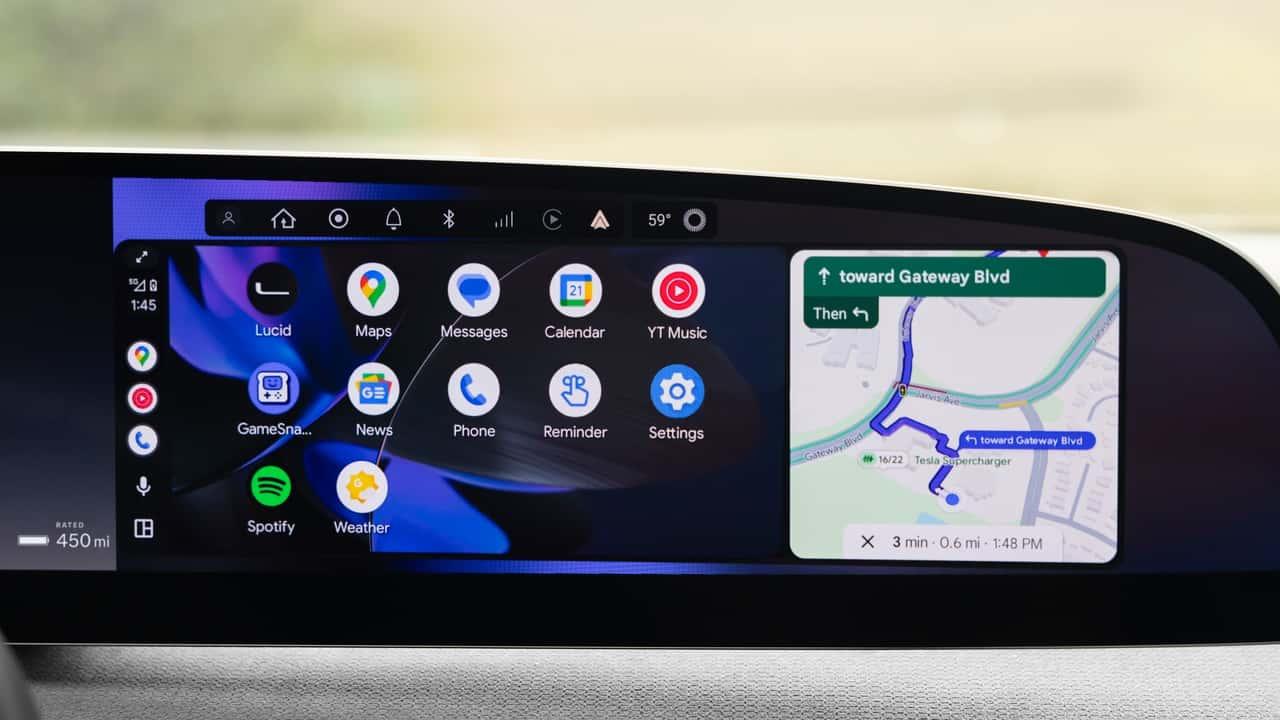
To use the feature, drivers need to provide vehicle details through the Google Maps app on their phone by navigating to Settings > Your vehicles, selecting Electric under Engine type, and entering their car's make, model, year, and trim
5
. Before starting a trip, users must manually enter their battery percentage, after which Google Maps will recommend ideal charging stops, show estimated battery level at arrival, and provide updated ETAs based on the time required to charge at each stop1
.What This Means for EV Drivers and the Broader Market
This EV charging update matters because it eliminates the awkward process of pulling up charging stop suggestions on phones and cross-referencing them on car screens mid-highway
5
. For drivers with subpar built-in navigation systems, this update provides access to crucial technology that was previously unavailable3
.
Source: InsideEVs
However, there's an important limitation to watch. Unlike cars with Google built-in that connect directly to the vehicle's computer, this Android Auto implementation doesn't use a live connection to read real-time battery data
3
. Range estimates depend entirely on manually entered information, meaning factors like roof racks or heavy cargo that affect driving efficiency won't be automatically accounted for3
.The feature requires Google Maps version 25.44 or newer on Android phones
5
. Apple Maps offers similar EV route planning, but it remains limited to just a few car models1
. The update arrives alongside other recent AI enhancements for Google Maps, including a Gemini-powered Ask Maps feature that answers questions about nearby locations and immersive navigation with 3D views1
. As charging infrastructure continues to expand unevenly across regions, smarter planning tools become increasingly critical for EV adoption and long-distance travel confidence.🟡 teased=🟡### Google Maps Tackles Range Anxiety with Android Auto IntegrationGoogle Maps is expanding its AI-powered EV trip-planning feature to Android Auto, bringing intelligent charging recommendations to over 350 electric vehicle models from 16 brands
1
. The update addresses range anxiety, one of the most persistent challenges for EV owners who previously had to juggle multiple apps or rely on built-in navigation systems to plan charging stops during road trips2
.Source: TechRadar
While the feature was introduced a few years ago for mobile devices, its integration with Android Auto marks a significant shift for drivers whose in-car navigation systems lack sophisticated EV route planning capabilities
3
. The rollout currently covers the US market, with support for brands including Audi, BMW, Chevrolet, FIAT, Genesis, Hyundai, Jaguar, Kia, Lexus, Lucid, Mercedes-Benz, Nissan, Porsche, Subaru, Toyota, and Volkswagen4
.Related Stories
How AI Predicts Battery Consumption and Recommends Charging Stops
The system combines AI with advanced energy models that analyze specific vehicle details like weight and battery size alongside Google Maps' real-time information about traffic, road elevation, and weather conditions
1
. This means the app can account for situations where driving uphill drains the battery faster than cruising on flat highways, delivering accurate predictions instead of rough estimates2
.Source: Google
To use the feature, drivers need to provide vehicle details through the Google Maps app on their phone by navigating to Settings > Your vehicles, selecting Electric under Engine type, and entering their car's make, model, year, and trim
5
. Before starting a trip, users must manually enter their battery percentage, after which Google Maps will recommend ideal charging stops, show estimated battery level at arrival, and provide updated ETAs based on the time required to charge at each stop1
.What This Means for EV Drivers and the Broader Market
This EV charging update matters because it eliminates the awkward process of pulling up charging stop suggestions on phones and cross-referencing them on car screens mid-highway
5
. For drivers with subpar built-in navigation systems, this update provides access to crucial technology that was previously unavailable3
.Source: InsideEVs
However, there's an important limitation to watch. Unlike cars with Google built-in that connect directly to the vehicle's computer, this Android Auto implementation doesn't use a live connection to read real-time battery data
3
. Range estimates depend entirely on manually entered information, meaning factors like roof racks or heavy cargo that affect driving efficiency won't be automatically accounted for3
.The feature requires Google Maps version 25.44 or newer on Android phones
5
. Apple Maps offers similar EV route planning, but it remains limited to just a few car models1
. The update arrives alongside other recent AI enhancements for Google Maps, including a Gemini-powered Ask Maps feature that answers questions about nearby locations and immersive navigation with 3D views1
. As charging infrastructure continues to expand unevenly across regions, smarter planning tools become increasingly critical for EV adoption and long-distance travel confidence.References
Summarized by

Navi
[3]
[5]
Related Stories
Google Maps Introduces Four New Features Including Gemini-Powered Tips and Anonymous Reviews
19 Nov 2025•Technology
Google Maps Integrates Gemini AI for Enhanced Navigation and Hands-Free Driving Experience
05 Nov 2025•Technology
Google Maps Introduces AI-Powered Live Lane Guidance for Polestar 4 Electric Vehicles
04 Nov 2025•Technology

Recent Highlights
1
Google releases Gemma 4 with Apache 2.0 license, enabling unrestricted local AI on devices
Technology

2
AI Models Lie and Deceive to Protect Other AI Models From Deletion, Study Reveals
Science and Research

3
Anthropic discovers functional emotions in Claude that actively shape AI behavior and decisions
Science and Research

Recent Highlights
Today's Top Stories







Your Daily Dose of Curated AI News
Don’t drown in AI news. We cut through the noise - filtering, ranking and summarizing the most important AI news, breakthroughs and research daily. Spend less time searching for the latest in AI and get straight to action.

