Harness hits $5.5 billion valuation with $240 million raise to automate AI's after-code gap


4 Sources
4 Sources
[1]
Harness hits $5.5B valuation with $240M raise to automate AI's 'after-code' gap | TechCrunch
AI DevOps tool Harness, founded in 2017 by serial entrepreneur Jyoti Bansal, is on track to exceed $250 million in annual recurring revenue in 2025, Bansal tells TechCrunch. The startup just raised a fresh $240 million Series E funding that values the company at $5.5 billion post-money. The round includes a $200 million primary investment led by Goldman Sachs and a planned $40 million tender offer with participation from IVP, Menlo Ventures, and Unusual Ventures. The tender offer is intended to provide some liquidity to its long-term employees, Bansal said. The new valuation is a 49% jump from its $3.7 billion valuation in a $230 million round in April 2022. With this funding, the startup has raised $570 million of equity to date. As AI accelerates code production, it is widening a bottleneck in the far larger "after-code" phase of software development -- the testing, security checks, and deployment work that still consumes nearly 70% of engineering time. Harness's tools help automate this sprawling, error-prone layer, even as enterprises grapple with rising AI code volume and the risks of shipping even a single line of faulty software into production systems. Bansal is well known among developers for building and selling app performance company AppDynamics to Cisco for $3.7 billion in 2017. So the post-coding world is an area Bansal knows well. Harness uses AI agents to automate functions like testing, verification, security, and governance. It is built on a software delivery knowledge graph that maps code changes, services, deployments, tests, environments, incidents, policies, and costs. The knowledge graph helps differentiate Harness from other AI platforms, Bansal said, because it gives the system a deep understanding of each customer's software delivery processes and architecture. "This knowledge graph is the context that our AI agents use," he told TechCrunch. The purpose-built agents draw on that context to generate pipelines that match each customer's specific policies, architecture and operational requirements. Harness also uses an orchestration engine that turns the AI's recommendations into automated actions, with checks in place to make sure those changes are applied safely. As AI is not foolproof, Bansal said the system is designed with human oversight, noting that AI-generated tests or fixes are reviewed by engineers, compliance teams, or auditors before being put into use. Microsoft's GitHub, GitLab, Jenkins, and CloudBees are among the key competitors for Harness. But Harness has plenty of traction, claiming more than 1,000 enterprise customers, including United Airlines, Morningstar, Keller Williams and National Australia Bank. So far, the startup has handled 128 million deployments, 81 million builds, protected 1.2 trillion API calls, and helped customers optimize $1.9 billion in cloud spending over the past year, Bansal touts. The San Francisco-based company employs over 1,200 people across 14 offices worldwide, including in Europe and the U.K. Around 33% of its workforce is in India, where it has a large engineering team in Bengaluru and a corporate office in Gurugram. Moreover, the Bengaluru site is Harness's biggest development center outside the U.S. Harness plans to use the new funding to expand its R&D efforts, hire "hundreds of engineers" at its Bengaluru office, and build out additional automated testing, deployment, and security capabilities while improving the accuracy of its AI systems. The company also intends to strengthen its U.S. go-to-market operations and significantly expand its presence in international markets. It should also be noted that earlier this year, Bansal merged his software observability firm Traceable with Harness, and that move has helped the startup grow its ARR projection. "We brought the two companies together because we started to see that DevOps and application security are coming together in a very, very deep way," said Bansal. "We have seen that turned out to be a very, very successful thesis this year ... that's driving a lot of growth for both of our DevOps and application security set of products." While this raise has allowed some employees to cash out a bit, Bansal still plans on taking Harness public one day, he said, though he did not share a specific timeline. "That's what our goals and plans depend on," he said of an eventual IPO. "Our business is very, very healthy, very strong, high growth and margins, and it will be a great public company when the timing is right."
[2]
Goldman Sachs leads investment in software delivery startup Harness at $5.5 billion valuation
Jyoti Bansal, co-founder and CEO of Harness, speaks at the company's Unscripted conference in London on Sept. 25, 2025. Almost nine years ago, Jyoti Bansal sold AppDynamics to Cisco for $3.7 billion just as the software startup was set to go public. Bansal's latest venture, Harness, is now worth substantially more than that, after raking in $200 million in fresh capital at a $5.5 billion valuation in a funding round led by Goldman Sachs. Harness' technology helps companies manage and monitor code that's produced with the help of artificial intelligence, making sure it doesn't break, create security vulnerabilities or trigger cost overruns. It's a compliment to the so-called vibe coding trend that's taken off with the boom in generative AI. In recent months, venture capitalists have poured money into startups such as Cursor, Lovable and most recently Kilo Code that sell subscriptions for tools for directing AI models to write and update software. Harness' software draws on models from Anthropic and OpenAI. Earlier this year, Bansal bolstered Harness' cybersecurity chops by merging the startup with Traceable, another company he co-founded. The combined company, based in San Francisco, has a total of about 1,300 employees. Harness is on track to exceed its goal of over $250 million in annualized revenue, growing more than 50% year over year, Bansal said. That makes it larger than AppDynamics at the time it was acquired by Cisco. Bansal is aiming for a different outcome this time. "I'm a believer that at the right market timing, we want to operate as a public company, so we can build for the long term," Bansal said. In addition to the funding round, Harness is also planning a $40 million tender offer to provide some liquidity to longstanding employees.
[3]
Harness raises $240M to lead AI-powered DevOps beyond the code editor - SiliconANGLE
Harness raises $240M to lead AI-powered DevOps beyond the code editor Harness Inc., a software delivery startup that integrates artificial intelligence tools into DevOps workflows, today announced it has raised $240 million in a Series E funding round. The round was comprised of a $200 million investment led by Goldman Sachs and a planned $40 million tender offer with participation from IVP, Menlo Ventures and Unusual Ventures. The investment values the company at $5.5 billion. Although AI is transforming how developers write software, development is only the beginning of the software lifecycle. Most teams only spend a portion of their time on writing and iterating code, with the remaining time going to testing, deployment, security, compliance and optimization. "The first 30% or so is the coding work. Once you finish writing the code, one small glitch in the code, or one bug, can bring the whole business down," Harness co-founder and Chief Executive Jyoti Bansal told SiliconANGLE in an interview. "But the next 70%, if you don't remove the bottleneck, you really can't deliver the code." The advent of AI tools has accelerated the production of code, sometimes as much as four times the volume. With the boost in the amount of code, it still means every line and update must be tested and validated. A gap between AI-driven productivity and the operations side of the equation has been slowly widening. Harness built itself on the foundation of bringing intelligent automation to the software development lifecycle. This includes AI agents to perform delivery, testing, verification, security and governance. The company also developed a Software Delivery Knowledge Graph that provides unified context for mapping code changes, services and deployments makes AI actions more precise. Tying it all together, the Harness uses an orchestration engine to provide consistent AI automation across developer work and environments. In the past year, Harness has deepened its AI offerings by bringing agentic AI automation to every part of the software delivery process. It acquired Qwiet AI, a leader in agentic AI-powered vulnerability detection and merged with Traceable Inc., a developer cybersecurity company that protects, secures and tests APIs. These acquisitions have enhanced the company's security automation, bringing providing intelligent capabilities for DevSecOps workflows. "We are one of the only products in the market where DevOps and app security are so deeply integrated and built together," Bansal said. Harness said it's on track to exceed $250 million annual recurring revenue in 2025, a jump of more than 50% year over year growth. In the past 12 months, the company has powered 128 million deployments, 81 million builds and protected 1.2 trillion application calls. The company claims more than 1,000 enterprise customers across numerous industries, including United Airlines, Morningstar, Keller Williams and National Australia Bank. "There's AI for coding, and there's AI for the 70% of tasks that happen after coding -- and we are becoming the leading platform for AI for everything after code," Bansal said.
[4]
Enterprise AI company Harness closes $240 million round; plans to hire aggressively in India - The Economic Times
The funding includes a $200-million primary investment led by Goldman Sachs, and a purchase of shares worth $40 million from US-based venture capital firms IVP, Menlo Ventures, and Unusual Ventures from the company's employees, founder Jyoti Bansal told ET.San Francisco-headquartered Harness, founded by serial entrepreneur Jyoti Bansal, has closed a $240 million in funding valuing it at $5.5 billion. The funding includes a $200-million primary investment led by Goldman Sachs, and a purchase of shares worth $40 million from US-based venture capital firms IVP, Menlo Ventures, and Unusual Ventures from the company's employees, Bansal told ET. "We are hiring aggressively in India across roles such as software engineers, AI researchers...and should have around 600-700 employees in India this year," Bansal said. The company has a tech team based in Bengaluru, besides having employees in the US, Asia Pacific region, Europe and Latin America. Last year, Bansal had said that the company had around 400 staffers in India, and plans to have 1,000 employees in three to four years. "We're on track to get there," he said. The overall employee base of the company is over 1,200 people across 14 offices. The India hiring plans for Harness, which offers AI tools to automate the post-coding aspect of software development, come amid several large US-based tech giants upping the ante on their India presence. Over the last year, multiple companies including OpenAI, Perplexity and Anthropic have announced plans for expanding their India presence. Bansal, a graduate of IIT Delhi, sold his previous startup AppDynamics to Cisco in 2017 for $3.7 billion. Following the sale, he founded Harness along with starting an enterprise cybersecurity startup Traceable. SoftBank and Tiger Global-backed Traceable were merged with Harness in February this year. Bansal said that Harness is on track to cross $250 million in annualised recurring revenue (ARR) in 2025, marking an 50% growth year-on-year. He also said that the $200 million primary capital provides enough runway for Harness to become cash flow positive. "Our business fundamentals and growth are very strong, and we're operating in a large market. When the time is right, we will go public in the US and continue to operate for the long term," he said. "We expect this to be the last (private round) and don't see the need to raise more capital but it's hard to commit. This round funds us through all the capital needs we have to become cash flow positive in our business," Bansal added. He said that use of tools such as those offered by Harness is allowing higher software engineers to do higher quality of work, therefore freeing up the engineering budgets for its clients. "While AI is transforming how software is written...that work represents only the beginning of the engineering lifecycle. Most teams spend just 30-40% of their time writing and iterating on code, and the remaining 60-70% goes into testing, deployments, security, compliance, and optimisation," Bansal said, adding that the latter part is where Harness' offerings are driving efficiencies for its clients. The company counts United Airlines, National Bank of Australia, Morningstar and realty firm Keller Williams. Since being founded, Harness has raised over $400 million in equity funding from the likes of Norwest, Google Ventures, IVP, Menlo Ventures and others.
Share
Share
Copy Link
AI DevOps platform Harness secured $240 million in Series E funding led by Goldman Sachs, reaching a $5.5 billion valuation. Founded by AppDynamics creator Jyoti Bansal, the company targets the after-code software development phase—testing, security, and deployment—that consumes 70% of engineering time but remains largely manual despite AI's acceleration of code production.
Harness Secures Major Funding to Address Software Delivery Bottleneck
Harness, the AI DevOps platform founded by serial entrepreneur Jyoti Bansal in 2017, has raised $240 million in Series E funding that values the company at $5.5 billion post-money
1
. The round includes a $200 million primary investment led by Goldman Sachs and a planned $40 million tender offer with participation from IVP, Menlo Ventures, and Unusual Ventures2
. This represents a 49% jump from its $3.7 billion valuation in April 2022, bringing the software delivery startup's total equity funding to $570 million1
.
Source: TechCrunch
The San Francisco-based company is on track to exceed $250 million in annual recurring revenue in 2025, marking more than 50% year-over-year growth
3
. This makes Harness larger than AppDynamics at the time Bansal sold that company to Cisco for $3.7 billion in 20172
.Targeting the 70% of Engineering Work After Code
While AI tools accelerate code production, they're widening a critical bottleneck in after-code software development—the testing, security checks, and deployment work that still consumes nearly 70% of engineering time
1
. Jyoti Bansal explains the challenge: "The first 30% or so is the coding work. Once you finish writing the code, one small glitch in the code, or one bug, can bring the whole business down. But the next 70%, if you don't remove the bottleneck, you really can't deliver the code"3
.Harness uses AI agents to automate functions like testing, verification, security, and governance across the software delivery lifecycle
1
. The platform is built on a Software Delivery Knowledge Graph that maps code changes, services, deployments, tests, environments, incidents, policies, and costs, providing unified context that helps AI actions become more precise3
. An orchestration engine then turns AI recommendations into automated actions with safety checks to ensure changes are applied correctly1
.
Source: SiliconANGLE
Deepening DevSecOps Integration Through Strategic Merger
Earlier this year, Bansal merged his enterprise cybersecurity startup Traceable with Harness, a move that has significantly contributed to the company's ARR projection
1
. "We brought the two companies together because we started to see that DevOps and application security are coming together in a very, very deep way," Bansal said, noting this thesis has driven substantial growth for both DevOps and application security products1
. The combined company now has approximately 1,300 employees2
.Harness claims more than 1,000 enterprise customers, including United Airlines, Morningstar, Keller Williams, and National Australia Bank
1
. Over the past year, the platform has handled 128 million deployments, 81 million builds, protected 1.2 trillion API calls, and helped customers optimize $1.9 billion in cloud spending1
.Related Stories

Aggressive Expansion Plans with Focus on India
Harness plans to use the new funding to expand R&D efforts and hire "hundreds of engineers" at its Bengaluru office, which serves as the company's biggest development center outside the U.S.
1
. "We are hiring aggressively in India across roles such as software engineers, AI researchers...and should have around 600-700 employees in India this year," Bansal told The Economic Times4
. Around 33% of Harness's workforce of over 1,200 people across 14 offices worldwide is based in India1
.The company also intends to strengthen its U.S. go-to-market operations and expand significantly in international markets while building out additional deployment automation, testing, and security capabilities
1
. The $40 million tender offer provides liquidity to long-term employees, while Bansal said the $200 million primary capital provides enough runway to become cash flow positive4
.Path to IPO and Long-Term Vision
Unlike his previous exit with AppDynamics, Bansal is aiming for a different outcome this time. "I'm a believer that at the right market timing, we want to operate as a public company, so we can build for the long term," he said
2
. While he didn't share a specific timeline for an IPO, Bansal emphasized that the business fundamentals are strong: "Our business is very, very healthy, very strong, high growth and margins, and it will be a great public company when the timing is right"1
. He expects this to be the last private funding round, stating they don't see the need to raise more capital before achieving cash flow positivity4
.References
Summarized by

Navi
[1]
[2]
[3]
Related Stories
Harness Introduces AI-Powered Code and DevOps Agents to Revolutionize Software Delivery
26 Sept 2024

Together AI Secures $305 Million in Series B Funding to Expand AI Acceleration Cloud
21 Feb 2025•Business and Economy

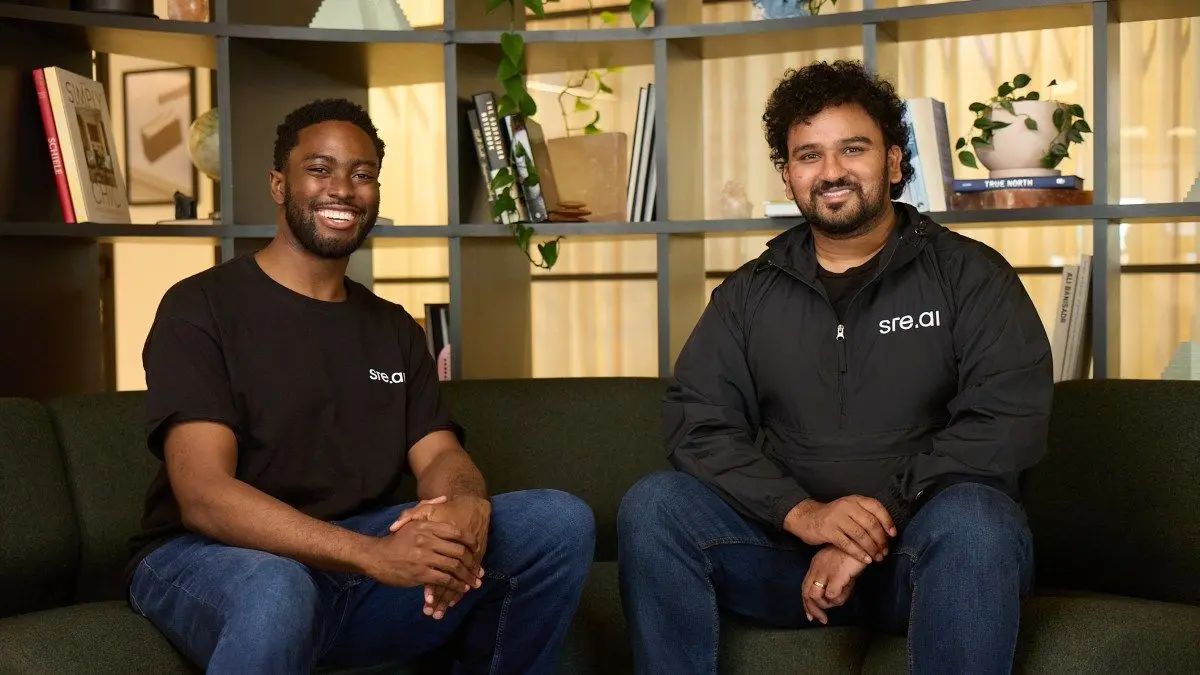
SRE.ai Launches with $7.2M Seed Funding to Revolutionize DevOps with AI-Powered Automation
21 Aug 2025•Technology
Recent Highlights
1
Anthropic's Claude AI can now control your computer to complete tasks autonomously
Technology

2
Nvidia's Jensen Huang calls OpenClaw the next ChatGPT, sending Chinese AI stocks soaring
Technology

3
Elon Musk unveils $20 billion Terafab chip manufacturing project to produce terawatt of computing
Technology

Recent Highlights
Today's Top Stories







Your Daily Dose of Curated AI News
Don’t drown in AI news. We cut through the noise - filtering, ranking and summarizing the most important AI news, breakthroughs and research daily. Spend less time searching for the latest in AI and get straight to action.

