India unveils homegrown AI models at major summit, but experts say DeepSeek moment remains distant


2 Sources
2 Sources
[1]
India chases 'DeepSeek moment' with homegrown AI models
New Delhi (AFP) - Fledgling Indian artificial intelligence companies showcased homegrown technologies this week at a major summit in New Delhi, underpinning big dreams of becoming a global AI power. But analysts said the country was unlikely to have a "DeepSeek moment" -- the sort of boom China had last year with a high-performance, low-cost chatbot -- any time soon. Still, building custom AI tools could bring benefits to the world's most populous nation. At the AI Impact Summit, Prime Minister Narendra Modi lauded three new models released by Indian companies, along with other examples of the country's rising profile in the field. "All the solutions that have been presented here demonstrate the power of 'Made in India' and India's innovative qualities," Modi said Thursday. One of the startups making a buzz at the five-day summit attended by world leaders and top technology CEOs was Sarvam AI, which this week released two large language models it says were trained from scratch in India. Its models are optimised to work across 22 Indian languages, says the company, which received government-subsidised access to advanced computer processors. The five-day summit, which wraps up Friday, is the fourth annual international meeting to discuss the risks and rewards of the fast-growing AI sector. It is the largest yet and the first in a developing country, with Indian businesses striking deals with US tech giants to build large-scale data centre infrastructure to help train and run AI systems. Another Indian company that drew attention with product debuts this week include the Bengaluru-based Gnani.ai, which introduced its Vachana speech models at the summit. Trained on more than a million hours of audio, Vachana models generate natural-sounding voices in Indian languages that can process customer interactions and allow people to interact with digital services out loud. Job disruption and redundancies, including in India's huge call centre industry, have been one key focus of discussions at the Delhi summit. 'Biggest market' The government-supported BharatGen initiative, led by a group based at a university in Mumbai, also released a new multilingual AI model this week. So-called sovereign AI has become a priority for many countries hoping to reduce dependence on US and Chinese platforms while ensuring that systems respect local regulations including on data privacy. AI models that succeed in India "can be deployed all over the world", Modi said on Thursday. But experts said the sheer computational might of the United States would be hard to match. "Despite the headline pledges, we don't expect India to emerge as a frontier AI innovation hub in the near term," said Reema Bhattacharya, head of Asia research at risk intelligence company Verisk Maplecroft. "Its more realistic trajectory is to become the world's largest AI adoption market, embedding AI at scale through digital public infrastructure and cost-efficient applications," she said. Prihesh Ratnayake, head of AI initiatives at think-tank Factum, told AFP that the new Indian AI models were "not really meant to be global". "They're India-specific models, and hopefully we'll see their impact over the coming year," he said. "Why does India need to build for the global scale? India itself is the biggest market." And Nanubala Gnana Sai, a MARS fellow at the Cambridge AI Safety Institute, said that homegrown models could bring other benefits. Existing models, even those developed in China, "have intrinsic bias towards Western values, culture and ethos -- as a product of being trained heavily on that consensus", Sai told AFP. India already has some major strengths including "technology diffusion, eager talent pool and cheap labour", and dedicated efforts can help startups pivot to artificial intelligence, he said. "The end-product may not 'rival' ChatGPT or DeepSeek on benchmarks, but will provide leverage for the Global South to have its own stand in an increasingly polarised world."
[2]
India chases 'DeepSeek moment' with homegrown AI models
Fledgling Indian artificial intelligence companies showcased homegrown technologies this week at a major summit in New Delhi, underpinning big dreams of becoming a global AI power. Another Indian company that drew attention with product debuts this week include the Bengaluru-based Gnani.ai, which introduced its Vachana speech models at the summit. Fledgling Indian artificial intelligence companies showcased homegrown technologies this week at a major summit in New Delhi, underpinning big dreams of becoming a global AI power. But analysts said the country was unlikely to have a "DeepSeek moment" -- the sort of boom China had last year with a high-performance, low-cost chatbot -- any time soon. Still, building custom AI tools could bring benefits to the world's most populous nation. At the AI Impact Summit, Prime Minister Narendra Modi lauded three new models released by Indian companies, along with other examples of the country's rising profile in the field. "All the solutions that have been presented here demonstrate the power of 'Made in India' and India's innovative qualities," Modi said Thursday. One of the startups making a buzz at the five-day summit attended by world leaders and top technology CEOs was Sarvam AI, which this week released two large language models it says were trained from scratch in India. Its models are optimised to work across 22 Indian languages, says the company, which received government-subsidised access to advanced computer processors. The five-day summit, which wraps up Friday, is the fourth annual international meeting to discuss the risks and rewards of the fast-growing AI sector. It is the largest yet and the first in a developing country, with Indian businesses striking deals with US tech giants to build large-scale data centre infrastructure to help train and run AI systems. Another Indian company that drew attention with product debuts this week include the Bengaluru-based Gnani.ai, which introduced its Vachana speech models at the summit. Trained on more than a million hours of audio, Vachana models generate natural-sounding voices in Indian languages that can process customer interactions and allow people to interact with digital services out loud. Job disruption and redundancies, including in India's huge call centre industry, have been one key focus of discussions at the Delhi summit. - 'Biggest market' - The government-supported BharatGen initiative, led by a group based at a university in Mumbai, also released a new multilingual AI model this week. So-called sovereign AI has become a priority for many countries hoping to reduce dependence on US and Chinese platforms while ensuring that systems respect local regulations including on data privacy. AI models that succeed in India "can be deployed all over the world", Modi said on Thursday. But experts said the sheer computational might of the United States would be hard to match. "Despite the headline pledges, we don't expect India to emerge as a frontier AI innovation hub in the near term," said Reema Bhattacharya, head of Asia research at risk intelligence company Verisk Maplecroft. "Its more realistic trajectory is to become the world's largest AI adoption market, embedding AI at scale through digital public infrastructure and cost-efficient applications," she said. Prihesh Ratnayake, head of AI initiatives at think-tank Factum, told AFP that the new Indian AI models were "not really meant to be global". "They're India-specific models, and hopefully we'll see their impact over the coming year," he said. "Why does India need to build for the global scale? India itself is the biggest market." And Nanubala Gnana Sai, a MARS fellow at the Cambridge AI Safety Institute, said that homegrown models could bring other benefits. Existing models, even those developed in China, "have intrinsic bias towards Western values, culture and ethos -- as a product of being trained heavily on that consensus", Sai told AFP. India already has some major strengths including "technology diffusion, eager talent pool and cheap labour", and dedicated efforts can help startups pivot to artificial intelligence, he said. "The end-product may not 'rival' ChatGPT or DeepSeek on benchmarks, but will provide leverage for the Global South to have its own stand in an increasingly polarised world."
Share
Share
Copy Link
Indian AI startups showcased locally-built models at New Delhi's AI Impact Summit, with Prime Minister Modi celebrating 'Made in India' innovation. Sarvam AI released models optimized for 22 Indian languages, while Gnani.ai launched Vachana speech models trained on over a million hours of audio. But analysts suggest India's realistic path lies in becoming the world's largest AI adoption market rather than a frontier innovation hub.
India AI Takes Center Stage at New Delhi Summit
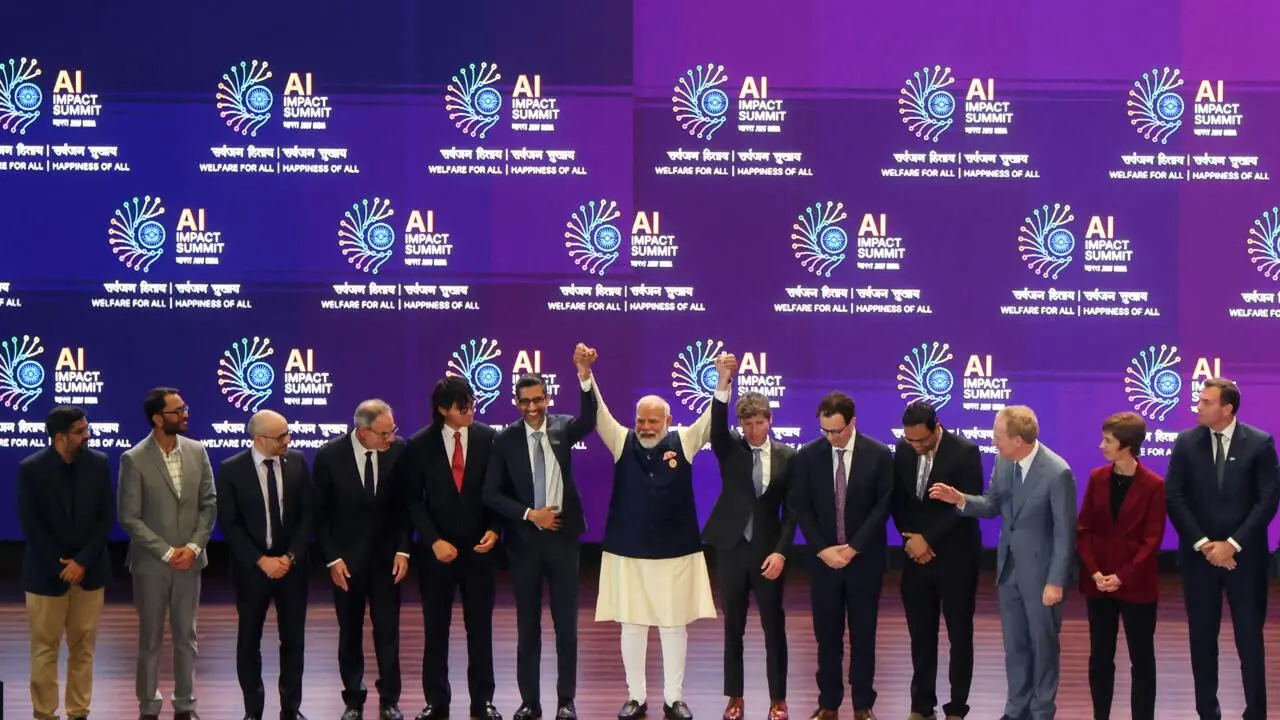
Indian artificial intelligence companies unveiled homegrown AI models this week at the AI Impact Summit in New Delhi, signaling the country's ambitions to establish itself as a global AI power. Prime Minister Narendra Modi praised three new models released by Indian companies, stating that "all the solutions that have been presented here demonstrate the power of 'Made in India' and India's innovative qualities"
1
. The five-day summit, which concluded Friday, marked the fourth annual international meeting to discuss AI's risks and rewards, and was the largest yet and the first held in a developing country2
.
Source: France 24
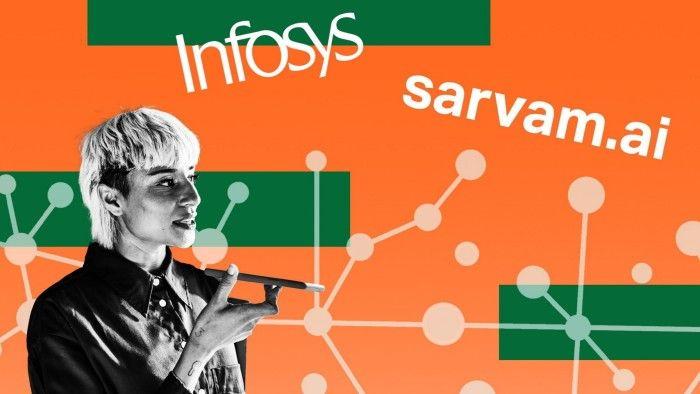
Among the standout presentations was Sarvam AI, which released two multilingual large language models trained from scratch in India. These models are optimized to work across 22 Indian languages, addressing a critical gap in AI accessibility for the country's diverse population
1
. The startup received government-subsidised access to advanced computer processors, highlighting the state's commitment to fostering domestic AI capabilities. Bengaluru-based Gnani.ai also drew attention by introducing its Vachana speech models, trained on more than a million hours of audio to generate natural-sounding voices in Indian languages that can process customer interactions and enable voice-based digital services2
.Sovereign AI Becomes National Priority
The BharatGen initiative, a government-supported program led by a Mumbai university group, released a new multilingual AI model during the summit, underscoring India's push toward sovereign AI
1
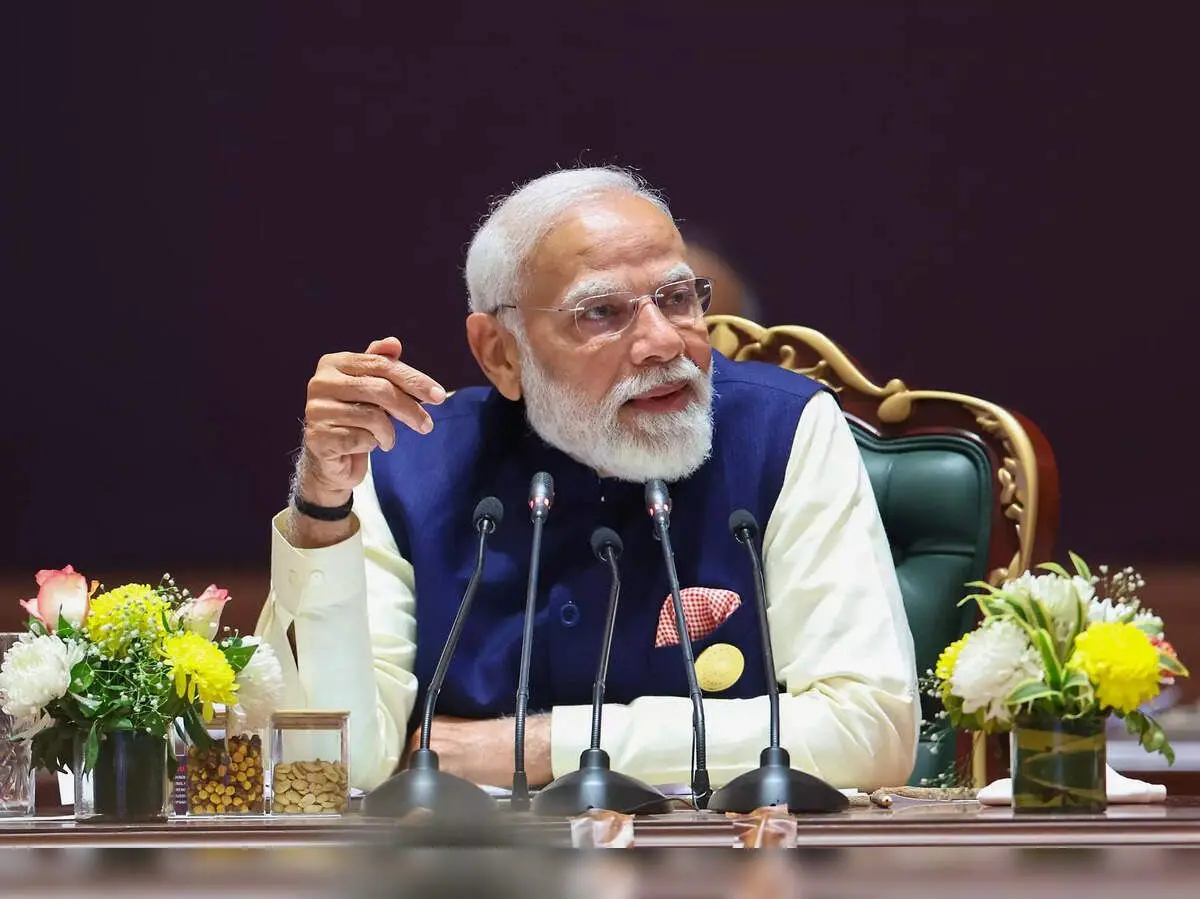
. This strategic direction reflects a global trend where countries seek to reduce dependence on US and Chinese platforms while ensuring AI systems respect local regulations on data privacy. Modi emphasized that AI models succeeding in India "can be deployed all over the world," suggesting broader applicability for these Made in India AI solutions2
.
Source: ET
Indian businesses struck deals with US tech giants at the summit to build large-scale data centre infrastructure necessary for training and running AI systems
1
. Job disruption, particularly in India's massive call centre industry, emerged as a key discussion point, reflecting concerns about how AI technologies like the Vachana speech models might reshape employment landscapes2
.Experts Temper Expectations on DeepSeek Moment
Despite the enthusiasm, analysts caution that India is unlikely to experience a DeepSeek moment—the kind of breakthrough China achieved with its high-performance, low-cost chatbot—anytime soon. Reema Bhattacharya, head of Asia research at Verisk Maplecroft, stated: "Despite the headline pledges, we don't expect India to emerge as a frontier AI innovation hub in the near term. Its more realistic trajectory is to become the world's largest AI adoption market, embedding AI at scale through digital public infrastructure and cost-efficient applications"
1
.}Prihesh Ratnayake from think-tank Factum emphasized that the new Indian AI models are "not really meant to be global" but are India-specific, adding: "Why does India need to build for the global scale? India itself is the biggest market"
2
. The sheer computational might of the United States remains difficult to match, experts noted.Related Stories
Addressing Local Biases and Serving the Global South
Nanubala Gnana Sai, a MARS fellow at the Cambridge AI Safety Institute, highlighted a crucial advantage of homegrown models. Existing models, even those from China, "have intrinsic bias towards Western values, culture and ethos—as a product of being trained heavily on that consensus," Sai explained
1
. India's strengths include "technology diffusion, eager talent pool and cheap labour," which can help startups pivot to artificial intelligence.While the end products may not rival ChatGPT or DeepSeek on standard benchmarks, they could "provide leverage for the Global South to have its own stand in an increasingly polarised world," Sai noted
2
. This positioning suggests India's AI for Global South approach could create alternatives that better serve non-Western contexts, addressing cultural and linguistic needs that dominant AI platforms often overlook. As the world's most populous nation builds custom AI tools, the impact over the coming year will determine whether this strategy delivers meaningful benefits beyond simply competing on global benchmarks.References
Summarized by

Navi
Related Stories
India's AI Ambitions: Government Receives 67 Proposals for Indigenous Foundational Models
22 Feb 2025•Technology

India's AI Ambitions: Balancing Innovation, Accessibility, and Cultural Relevance
31 Jan 2025•Technology

India's AI Crossroads: Challenges and Opportunities in the Global AI Race
12 Feb 2025•Technology

Recent Highlights
1
Google releases Gemma 4 with Apache 2.0 license, enabling unrestricted local AI on devices
Technology

2
AI Models Lie and Deceive to Protect Other AI Models From Deletion, Study Reveals
Science and Research

3
Anthropic discovers functional emotions in Claude that actively shape AI behavior and decisions
Science and Research

Recent Highlights
Today's Top Stories






Your Daily Dose of Curated AI News
Don’t drown in AI news. We cut through the noise - filtering, ranking and summarizing the most important AI news, breakthroughs and research daily. Spend less time searching for the latest in AI and get straight to action.

