Intel Emerges as Alternative to TSMC's Strained CoWoS Packaging as AI Demand Surges


3 Sources
3 Sources
[1]
TSMC's CoWoS packaging capacity reportedly stretched due to AI demand -- Intel's EMIB and Foveros eyed as potential solution to bottleneck
As AI chip demand surges, Intel's EMIB and Foveros offer a route around the bottleneck. TSMC's dominance in advanced packaging has hit a supply-side wall. With the company's advanced CoWoS packaging capacity booked out by flagship AI players such as Nvidia, AMD, and Google, second-tier ASIC vendors and major U.S. chipmakers are now exploring Intel's EMIB and Foveros as alternative back-end options. That includes customers manufacturing logic at TSMC's Arizona facility, but seeking faster, domestic packaging pathways -- something Intel's Rio Rancho, New Mexico, site is already positioned to offer. CoWoS remains technically superior. However, new reports have pointed to Intel picking up packaging interest from firms that are either blocked from accessing CoWoS or looking for a shorter route to production. TrendForce in particular notes that Intel has already begun packaging some customer designs originally scoped for TSMC CoWoS, and is seeing growing inbound interest from non-traditional clients as a result. While performance obviously remains a paramount consideration, we're at an inflection point in AI silicon production, and time-to-package is going to become an increasingly important deciding factor for many chipmakers. Intel's EMIB (Embedded Multi-die Interconnect Bridge) technology connects chiplets using tiny silicon bridges embedded directly in the package substrate, eliminating the need for a large silicon interposer. This reduces both cost and thermal complexity, especially for designs that don't need the wide I/O bandwidth or power delivery footprint of full CoWoS. Intel's Foveros technology, by contrast, vertically stacks dies using through-silicon vias or direct copper bonding. It offers high interconnect density and heterogeneous node integration, at the cost of more stringent thermal and yield considerations. TSMC's CoWoS-L remains the go-to option for high-performance AI GPUs and HBM-heavy accelerators. Its capacity, however, is finite. TSMC is planning larger interposer sizes of up to 9.5x reticle by 2027, but that expansion is not arriving fast enough for the industry's current volume requirements. Nvidia is increasing orders for H200 and B100 accelerators, both of which require extensive CoWoS packaging and high-stack HBM. Intel has confirmed that some customer designs initially scoped for CoWoS have been ported to Foveros without modification. Its New Mexico facility, which handles both EMIB and Foveros packaging, is being scaled up by 30% and 150% respectively. Unlike TSMC, Intel's packaging lines are not yet at saturation, and its U.S. location aligns with recent government funding and client interest in onshore manufacturing. EMIB provides enough die-to-die bandwidth for inference accelerators, network ASICs, and other lower-bandwidth workloads, while sidestepping CoWoS's cost and capacity constraints. It also supports integration with HBM via EMIB-T, which adds through-silicon vias (TSVs) for memory stacking without full interposers. While Intel hasn't formally named customers, MediaTek and Marvell were identified in recent reporting from DigiTimes as evaluating Intel's packaging for second-tier AI ASICs. Both companies have existing ASIC roadmaps with inference-class acceleration and have previously worked with non-TSMC foundries. Qualcomm and Apple have gone further, adding EMIB and Foveros to internal job postings. Apple recently advertised a DRAM Packaging Engineer role listing experience with CoWoS, EMIB, and SoIC as desirable. Qualcomm listed EMIB in a position description focused on advanced server packaging, suggesting that its data center ambitions may involve Intel's technology. While these listings don't confirm anything solid, they indicate technical alignment and internal exploration. Broadcom has also been mentioned in several analyst briefings as a prospective client. TrendForce cautions that while there's real interest in EMIB, current evaluation doesn't necessarily mean that Apple or Qualcomm will ship Intel-packaged products in the near term. Nonetheless, the presence of these companies in packaging-focused hiring pipelines shows a deliberate move to hedge their bets. At a minimum, they are preparing for a supply chain where CoWoS access is no longer guaranteed. The practical upshot of these moves is a shift toward split front-end/back-end workflows. Chips fabricated on leading-edge nodes at TSMC's Fab 21 in Arizona may soon be routed directly to Intel's Rio Rancho site or other U.S.-based packaging facilities, instead of returning to Taiwan for CoWoS. This model would introduce complexity, particularly in substrate qualification, die design compatibility, and vendor coordination. Intel claims to have aligned design rules with TSMC and major memory suppliers to support these split flows, though these claims have not yet been tested at scale. Amkor, the largest U.S.-based OSAT company, is also part of this equation. Its Arizona site is on track to begin operations in 2028 and will package wafers from TSMC Arizona for customers, including Apple and Nvidia. Amkor's role in closing the domestic packaging gap was acknowledged in recent Commerce Department guidance on CHIPS Act implementation last year. For now, Intel's earlier availability gives it a time-to-market advantage. The current imbalance in packaging capacity has created an unusual opening for Intel to expand its foundry presence, not by beating TSMC on performance metrics, but by offering a viable, available alternative. EMIB and Foveros may not dethrone CoWoS in raw performance terms, but they are mature enough to carry AI inference ASICs and modular SoCs through to production without delay. That window will not stay open forever. By 2027, if TSMC executes on its CoWoS and SoIC expansion plans, and if Amkor comes online at volume, packaging scarcity could ease. By then, Intel will need to show not only technical parity but also deliver success across customer projects that span logic, memory, and system integration. Until then, Intel's packaging roadmap is intersecting with a real market need. The next two years will test whether EMIB and Foveros can do more than catch overflow, and whether Intel's foundry revival has more than just a fabrication story to tell.
[2]
Intel Teams Up With Amkor On 'EMIB' Advanced Packaging Technology, Outsourcing Production Amid Massive Interest From the AI Industry
Intel's advanced packaging services are gaining market spotlight, which is why Team Blue is now moving towards outsourcing production to companies like Amkor. With NVIDIA's 'co-design' laws in place, the demand for technologies like EMIB and CoWoS has increased exponentially, to the point where the supply chain cannot meet the capacity required by tech giants. We know that TSMC has been the dominant entity in the realm of packaging technologies, with solutions such as CoWoS; however, it appears that another player is expected to enter the segment, namely Intel Foundry, led by its EMIB and Foveros solutions. According to a report by ETNews, Intel has outsourced EMIB production to Amkor's facility in Incheon, South Korea, which is seen as an indication that demand for the firm's packaging services is high. Intel has adequate facilities in the US to meet capacity, but considering the firm's massive demand, outsourcing production to companies like Amkor drastically speeds up the process, rather than investing in a fab buildout. EMIB is expected to be a dominant driver of Intel's external foundry revenue, at least before the debut of the 14A process, and one reason for this is that we have seen reports of several customers expressing interest in the technology. Some of the more mainstream names include MediaTek, Google, Qualcomm, and Tesla. There are several reasons for customers to opt for Intel's packaging services, with one of the major ones being that TSMC's CoWoS capacity is constrained due to the influx of orders from AI giants. As a result, companies exploring ASICs and custom silicon look towards Intel Foundry as an alternative. More importantly, currently, companies like NVIDIA are required to ship the wafers produced in Arizona to Taiwan for packaging, which adds overhead in the form of higher costs and a significantly longer time to achieve the end product. With Intel stepping in, companies will have access to semiconductor and advanced packaging services right in the US. It would be interesting to see how Intel Foundry evolves moving ahead, especially since reports indicate that there's massive optimism around the division's packaging products.
[3]
Intel Rumored to Power Google's Next-Gen TPUs With Its EMIB Packaging, as the Technology Gains Massive Attention Across the AI Industry
0-20%: Unlikely - Lacks credible sources 21-40%: Questionable - Some concerns remain 41-60%: Plausible - Reasonable evidence 61-80%: Probable - Strong evidence 81-100%: Highly Likely - Multiple reliable sources Intel's advanced packaging rumors continue to gain traction in recent days, as a new report reveals that the firm may receive orders from Google for future TPUs. When it comes to advanced packaging services, Intel Foundry has seen significant interest over the past few weeks, particularly since one of the biggest bottlenecks in the US chip supply chain is the lack of domestically available packaging facilities. It is rumored that Big Tech is looking to Intel for services like EMIB and Foveros packaging. According to a new report from TrendForce, Intel might be in line to supply packaging technology for Google's TPU v9, which is expected to arrive in 2027. Moreover, Meta's MTIA AI chip is also rumored to feature Intel's advanced packaging technology onboard. According to TrendForce, since announcing the launch of its standalone Intel Foundry Services (IFS) unit in 2021, Intel has spent years developing EMIB advanced packaging technology. The company has successfully implemented this technology in its own server CPU platforms, including Sapphire Rapids and Granite Rapids. As Google plans to implement EMIB in its 2027 TPU v9 and Meta considers it for its MTIA accelerators, EMIB is set to significantly boost IFS's growth. Nonetheless, for the near future, CoWoS will continue to be the primary solution for high-bandwidth products from NVIDIA and AMD. One of the significant reasons why Intel has managed to see interest in its advanced packaging is that the company is the 'sole provider' for the technology in America for now, and while TSMC is making efforts to shift CoWoS supply to the US, the venture would take quite some time. More importantly, GPU manufacturers like NVIDIA and AMD have taken up a significant portion of TSMC's advanced packaging capacity, which means that for ASICs, the option to go with Intel seems a lot more feasible than placing orders with the Taiwan giant. While the industry has recently become aware of Intel's EMIB technology due to the spotlight it has garnered, we are aware that Team Blue has been working on advanced packaging for several years now, and it has been an integral part of the firm's data center CPU offerings. Not only this, but Intel's Foveros Direct3D technology is recognized as an industry-leading solution, which is one of the reasons why companies like NVIDIA are also looking to adopt it moving forward. Of course, as TrendForce notes, TSMC's CoWoS supply isn't expected to be affected at all by Intel's push for external customers; however, it would lead to diversification within the advanced packaging supply chain, ultimately a more optimistic move for the industry in the long run.
Share
Share
Copy Link
Intel's EMIB and Foveros packaging technologies are gaining traction as alternatives to TSMC's capacity-constrained CoWoS packaging, with major tech companies exploring Intel's solutions amid surging AI chip demand.
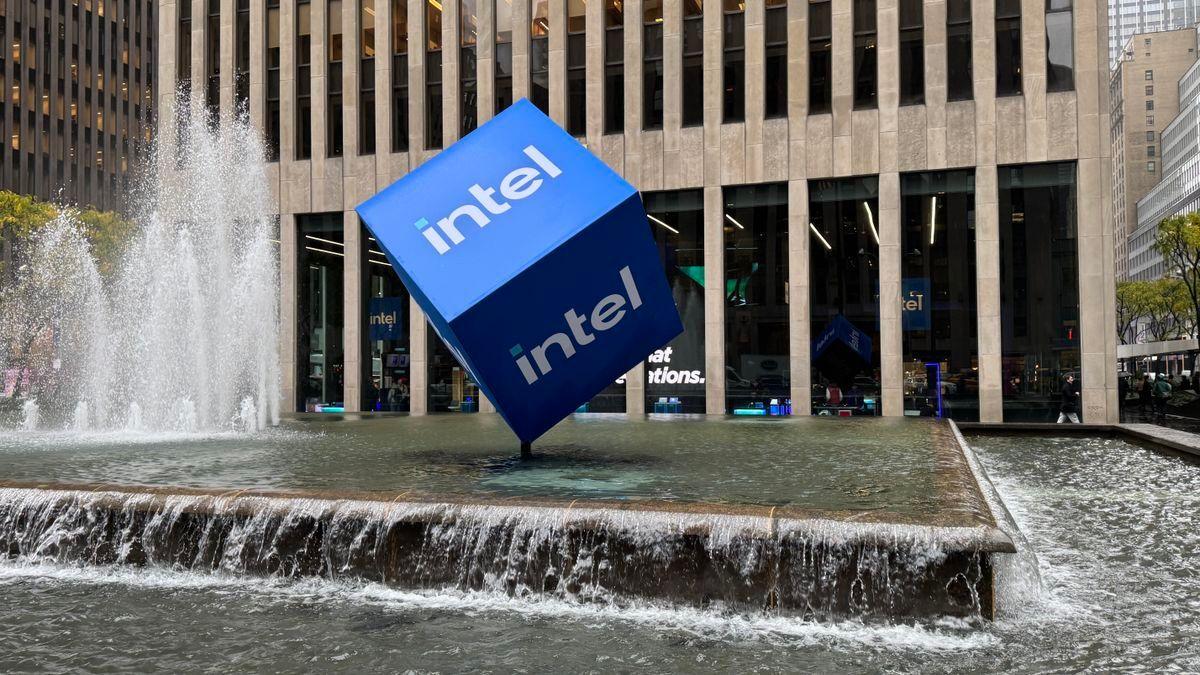
Intel Capitalizes on TSMC's Packaging Bottleneck
Intel's advanced packaging technologies are experiencing unprecedented demand as the semiconductor industry grapples with severe capacity constraints at Taiwan Semiconductor Manufacturing Company (TSMC). The surge in artificial intelligence chip requirements has pushed TSMC's Chip-on-Wafer-on-Substrate (CoWoS) packaging capacity to its limits, creating opportunities for Intel's Embedded Multi-die Interconnect Bridge (EMIB) and Foveros technologies to emerge as viable alternatives
1
.TSMC's CoWoS packaging capacity has been completely booked by flagship AI players including Nvidia, AMD, and Google, forcing second-tier ASIC vendors and major U.S. chipmakers to explore alternative solutions. TrendForce reports that Intel has already begun packaging customer designs originally intended for TSMC CoWoS and is witnessing growing interest from non-traditional clients
1
.Technical Advantages of Intel's Packaging Solutions
Intel's EMIB technology offers distinct advantages over traditional packaging methods by connecting chiplets using tiny silicon bridges embedded directly in the package substrate. This approach eliminates the need for large silicon interposers, reducing both cost and thermal complexity for designs that don't require the wide I/O bandwidth of full CoWoS solutions. The technology provides sufficient die-to-die bandwidth for inference accelerators, network ASICs, and other lower-bandwidth workloads while supporting HBM integration through EMIB-T
1
.Foveros technology complements EMIB by vertically stacking dies using through-silicon vias or direct copper bonding, offering high interconnect density and heterogeneous node integration. Intel has confirmed that some customer designs initially scoped for CoWoS have been successfully ported to Foveros without modification, demonstrating the technology's compatibility and flexibility
1
.Major Industry Players Show Interest
Several prominent technology companies are actively evaluating Intel's packaging solutions. Apple recently advertised a DRAM Packaging Engineer role listing experience with CoWoS, EMIB, and SoIC as desirable qualifications, while Qualcomm included EMIB in job descriptions focused on advanced server packaging for data center applications. MediaTek and Marvell have been identified as companies evaluating Intel's packaging for second-tier AI ASICs
1
.According to TrendForce, Google is rumored to be considering Intel's EMIB technology for its TPU v9 processors expected in 2027, while Meta is exploring the technology for its MTIA AI chips. These developments represent significant validation of Intel's packaging capabilities in the competitive AI accelerator market
3
.Related Stories


Production Scaling and Strategic Partnerships
To meet growing demand, Intel is significantly expanding its packaging capabilities. The company's New Mexico facility, which handles both EMIB and Foveros packaging, is being scaled up by 30% and 150% respectively. Unlike TSMC's saturated packaging lines, Intel's facilities currently have available capacity, positioning the company advantageously in the market
1
.Intel has also partnered with Amkor, outsourcing EMIB production to the company's facility in Incheon, South Korea. This strategic move allows Intel to rapidly scale production without significant capital investment in new fabrication facilities, demonstrating the high demand for Intel's packaging services
2
.Domestic Manufacturing Advantages
Intel's U.S.-based packaging capabilities offer significant advantages for American companies seeking to reduce supply chain complexity and costs. Currently, companies manufacturing chips at TSMC's Arizona facility must ship wafers to Taiwan for CoWoS packaging, adding overhead and extending production timelines. Intel's Rio Rancho facility provides a domestic alternative, enabling split front-end/back-end workflows where chips fabricated in Arizona can be packaged domestically
1
2
.References
Summarized by

Navi
[1]
Related Stories
Recent Highlights
1
AI Models Lie and Deceive to Protect Other AI Models From Deletion, Study Reveals
Science and Research

2
AI chatbots validate you too much, making you less kind to others, Stanford study reveals
Science and Research

3
Judge blocks Pentagon from blacklisting Anthropic over AI safety guardrails dispute
Policy and Regulation

Recent Highlights
Today's Top Stories










Your Daily Dose of Curated AI News
Don’t drown in AI news. We cut through the noise - filtering, ranking and summarizing the most important AI news, breakthroughs and research daily. Spend less time searching for the latest in AI and get straight to action.

