James Cameron calls AI actors 'horrifying' and refuses to replace human performers


5 Sources
5 Sources
[1]
AI actors horrify James Cameron and he wants no part of it
The advent of AI performers has provoked backlash from SAG-AFTRA and Hollywood stars James Cameron, a director synonymous with digital wizardry, has seen the future of filmmaking, and he wants no part of it. "Horrifying," he called it during a recent interview on CBS. He wasn't talking about killer robots or Titanic sequels - he meant generative AI, and specifically, its growing capacity to generate entire actors from scratch. "Now, go to the other end of the spectrum," Cameron said, contrasting his use of motion capture and CGI in Avatar with today's AI trend, "and you've got generative AI, where they can make up a character. They can make up an actor. They can make up a performance from scratch with a text prompt. It's like, no. That's horrifying to me." Cameron's take on AI acting marks a clear departure from his usual techno-optimism. His discomfort isn't with computers themselves; it's the erasure of the human at the center of the art that troubles him. And for once, he's not being metaphorical. At the heart of the industry's current digital anxiety is Tilly Norwood, a photorealistic, AI-generated actress created by Eline Van der Velden's company Particle6. Norwood was introduced in September at the Zurich Film Festival. While she hasn't starred in a film or even moved in front of a camera outside of digital mock-ups, she's drawn plenty of criticism from the filmmaking industry. The Screen Actors Guild (SAG-AFTRA) issued a scathing statement denouncing Norwood as a synthetic imitation trained on the stolen work of real performers. This isn't just an actors' union issue. It's a question of authorship, of emotional trust. When you cry during a scene, part of you is responding to the person behind the performance. If that person is replaced by an algorithm trained on thousands of micro-expressions, voice samples, and movement clips, it may still work on screen, but what exactly are you connecting with? Cameron's warning resonates because he's far from a technophobe. He's spent decades blending human actors with sophisticated CGI systems from The Terminator to Avatar, but the crucial difference, as he points out, is that motion capture preserves the human core. A server farm didn't imagine Sigourney Weaver's Na'vi face in Avatar; it was still her. Although Tilly Norwood might be just a stunt, it's still a sign of what's in development. When background actors can be scanned once and used forever, and studios are negotiating for the right to replicate voices and likenesses forever, the groundwork for fully AI-led productions is already here. For now, even the most cutting-edge deepfakes or digital doubles are typically paired with real actors to provide an emotional anchor. But give it time, and you'll see attempts to remove the human factor. Whether people will enjoy the resulting films is less certain. Cameron remains unambiguously on Team Human. And while his discomfort might read as romantic or even dramatic, it's not misplaced. Because once AI-generated performers can pass for the real thing, viewers may stop asking who's actually behind the eyes. By then, it won't really matter. All that will be left is a story, told efficiently, by no one.
[2]
James Cameron says AI actors are 'horrifying to me'
Avatar director, known for his advocacy of new technology, told interviewer generative AI performance puts 'all human experience into a blender' Avatar director James Cameron has called AI actors "horrifying" and said what generative AI technology creates is "an average". Cameron was speaking to CBS on Sunday Morning in the run-up to the release of the third Avatar film, subtitled Fire and Ash, and was asked about the pioneering technology he used in his film-making. After praising motion-capture performance as "a celebration of the actor-director moment", Cameron expressed his disdain for artificial intelligence. "Go to the other end of the spectrum [from motion capture] and you've got generative AI, where they can make up a character. They can make up an actor. They can make up a performance from scratch with a text prompt. It's like, no. That's horrifying to me. That's the opposite. That's exactly what we're not doing." He added: "I don't want a computer doing what I pride myself on being able to do with actors. I don't want to replace actors, I love working with actors." Cameron, who is a director of UK-based company Stability AI, said that artificial intelligence's creative benefits are limited. "What generative AI can't do is create something new that's never been seen. The models ... are trained on everything that's ever been done before; it can't be trained on that which has never been done. So you will innately see, essentially, all of human art and human experience put into a blender, and you'll get something that is kind of an average of that. So what you can't have is that individual screenwriter's unique lived experience and their quirks. You won't find the idiosyncrasies of a particular actor." He added: "It also causes us to have to set our bar to a very disciplined level, and to continue to be out-of-the-box imaginative. The act of performance, the act of actually seeing an artist creating in real time, will become sacred."
[3]
James Cameron says he's "not negative" about generative AI, but reassures fans it won't be used on any Avatar movies: "It's the existential threat from big AI that worries me more than all that stuff"
Avatar: Fire and Ash filmmaker James Cameron hasn't been shy about his stance on the idea of AI, drawing a line between generative AI, and the larger concept of AI that he's called an "existential threat." Despite his relatively neutral stance toward the idea of using AI in film, he's promising fans that there's no use of the technology in the upcoming Avatar: Fire and Ash, nor will there be in any Avatar movies. "I'm not negative about generative AI. I just wanted to point out we don't use it on the Avatar films," Cameron tells ComicBook. "We honor and celebrate actors. We don't replace actors. That's going to find its level. I think Hollywood will be self-policing on that. We'll find our way through that. But we can only find our way through it as artists if we exist. So it's the existential threat from big AI that worries me more than all that stuff." It's no wonder Cameron is worried about the larger threat of AI - that's the central conflict of his beloved Terminator franchise, in which a megalomaniacal AI known as Skynet takes over the Earth through the use of nuclear weapons and the eponymous Terminator android assassins. Now, with AI becoming more and more controversial everyday, he feels like people in the tech industry are finally heeding the parable of his films, though they're still "racing straight at it with billions and billions being thrown at it." "They call it the 'Skynet Problem,' and it's being discussed," he explains. "But obviously, what they're talking about is alignment. They have to be trained, they have to be taught, they have to be constrained in a way that they only work toward human good. The problem is, who makes that decision? Who decides what's good for us? We can't agree amongst ourselves on a damn thing...so whose morality, whose sense of what's best for us, is going to prevail? We're not going to figure this out in time." It's hard not to agree with Cameron's larger point here - and I'm guessing we shouldn't expect any time-traveling saviors to come back to save us from whatever fate lies ahead. Whatever effect generative AI has on filmmaking and on human creativity in general, it's far from the only concern surrounding the larger technology it's based on. Avatar: Fire and Ash hits theaters on December 19. In the meantime, check out our guide to the rest of the best upcoming movies on the way in 2025 and beyond.
[4]
James Cameron on having AI generative actors: That's horrifying
James Cameron says the idea of generative AI creating actors and performances is "horrifying", stressing that he never wants to replace real actors. While he sees value in cheaper VFX, he fears original sci-fi films are becoming rare. "I don't want a computer doing what I pride myself on being able to do with actors. I don't want to replace actors, I love working with actors," he added. Filmmaker James Cameron shared his thoughts on the idea of Artificial Intelligence replacing humans in films and said it's nothing but horrifying. Cameron, known for acclaimed films such as "Titanic" and the "Avatar" franchise, said he loves working with the actors and doesn't want generative AI to take over it. "Now, go to the other end of the spectrum, and you've got generative AI... Where they can make up a character, they can make up an actor. They can make up a performance from scratch with a text prompt. It's like, no. That's horrifying to me. That's the opposite. That's exactly what we're not doing," he told CBS Sunday Morning in an interview. "I don't want a computer doing what I pride myself on being able to do with actors. I don't want to replace actors, I love working with actors," he added. The "Avatar" director noted that the technology can, however, be useful in making "VFX cheaper". "Right now, imaginative films, fantastic films, science-fiction films - they're starting to die off as a breed because they're expensive and the theatrical marketplace has contracted and now studios are only comfortable spending those kinds of dollar amounts with blue-chip IP, that which we've seen, that which we know. I mean, a movie like 'Avatar' would never get made in that environment. That was brand-new IP; nobody had ever heard of it," he said. Cameron's upcoming film is "Avatar: Fire and Ash", the third instalment in the "Avatar" franchise, which is set to release in theatres on December 19. It will be a follow-up to the previously released films, "Avatar" in 2009 and "Avatar: The Way of Water" released in 2022. The film will feature Sam Worthington, Zoe Saldana and Sigourney Weaver, among others.
[5]

Avatar Creator James Cameron Says Using AI to 'Make Up a Performance From Scratch With a Text Prompt' Is 'Horrifying to Me' - IGN
"... what we're doing, it's a celebration of the actor-director moment." Avatar creator James Cameron has issued strong words on the potential for entire characters to be created with generative AI, saying it's "horrifying to me." Speaking to CBS News, the Avatar: Fire and Ash director described the process of turning real-life actors into digital characters for the Avatar films, citing performance capture as a crucial component. "For years, there was this sense that, 'Oh, they're doing something strange with computers and they're replacing actors,' when in fact, once you really drill down and you see what we're doing, it's a celebration of the actor-director moment," he said. "Now, go to the other end of the spectrum, and you've got generative AI, where they can make up a character," he continued. "They can make up an actor. They can make up a performance from scratch with a text prompt. It's like, no. That's horrifying to me. That's the opposite. That's exactly what we're not doing." Cameron's comments come at a particularly relevant time for Hollywood, as filmmakers and studios grapple with the future of AI performances. Recently an AI-generated "actress" named Tilly Norwood was revealed at the Zurich Film Festival. Norwood was created by Eline Van der Velden, the Dutch founder of AI company Particle 6 Productions, and has since sparked the ire of SAG-AFTRA. Earlier this year, the Terminator and Titanic director spoke about the dangers of artificial intelligence, particularly as it relates to weapons systems and getting into what he calls a "nuclear arms race" with AI. And in an interview with IGN, Cameron said he has no desire to remove human beings from the writing and acting processes. "I don't want an AI model to write my scripts," Cameron told IGN in September. "Any good screenwriter has a particular lens on the world, a unique lived experience, and that's what they're there to express. That's what directors do. That's what actors do. "I think gen AI does offer a lot of potentialities and a lot of threats to our creative purpose in life. I think a lot of things are going to change over the next few years. I don't think what's going to ultimately change for me is storytelling with actors." "We've managed to (make) these gorgeous Avatar movies with zero gen AI," Cameron added. "(But) Avatar films are quite expensive. If we could use generative AI to bring costs down in VFX, then more films like Avatar (could be made). More fantastic films, science fiction films, films that use a lot of VFX, maybe even historical dramas that need VFX to create a different world than the one we live in right now. "Right now everybody's kind of terrified to greenlight big expensive films, and a big part of that expense is visual effects. Is that a potential solution? I'm going to explore that. But what I will never do is replace what I think of as the Sacred Creative Act, which is writing, creating characters conceptually, working with actors to bring those characters to life, then working with artists to put them in a world. For me, that must never change." Cameron's thoughts on the cost of making Avatar movies flared up again last week, when he said that if Avatar: Fire and Ash doesn't make enough money to justify Avatar 4 and 5, he's ready to walk away from the franchise. The special effects-heavy Avatar films cost a huge amount of money to produce, but they have historically made billions of dollars at the box office. Avatar: Fire and Ash, due out in December, is expected to follow suit -- and the pressure is on it to deliver for Disney so director James Cameron can realize his vision and release Avatar 4 and 5 over the next six years. Avatar 4 is down for release on December 21, 2029, with Avatar 5 due out December 19, 2031. Cameron, now 71, would be close to 80 years old by the time it all wraps up. Avatar remains the highest-grossing movie of all time (not adjusted for inflation), and has earned a staggering $2.9 billion across several theatrical runs. (Avengers: Endgame overtook Avatar for a brief period, before Avatar then stole its crown back via a fresh re-release.) 2022 sequel Avatar: The Way of Water earned $2.3 billion, meanwhile, cementing it as the third-highest grossing film of all time -- just ahead of Cameron's own Titanic, which floats on $2.2 billion. Cyber Monday is your last chance to secure the best offers of the year before the holidays. If you're on the hunt for some last minute deals, we're actively rounding up the strongest Cyber Monday discounts, and you can all our top picks and price drops in IGN's comprehensive Cyber Monday hub.
Share
Share
Copy Link
The Avatar director voiced strong disapproval of AI-generated performances, calling them 'horrifying' in a recent interview. While Cameron embraces motion capture technology that celebrates actors, he draws a hard line against generative AI creating performances from scratch. His stance comes as Hollywood grapples with AI's role in filmmaking, particularly following the introduction of Tilly Norwood, a photorealistic AI actress.
James Cameron Takes Firm Stance Against AI Actors
James Cameron, the visionary director behind Avatar and Terminator, has voiced strong disapproval of AI in one of his most pointed critiques yet. Speaking to CBS Sunday Morning ahead of Avatar: Fire and Ash's December 19 release, Cameron called the prospect of generative AI creating actors and performances "horrifying to me."
1
The director, known for pushing technological boundaries, drew a sharp distinction between his use of motion capture and the emerging trend of AI-generated performances created entirely from text prompts.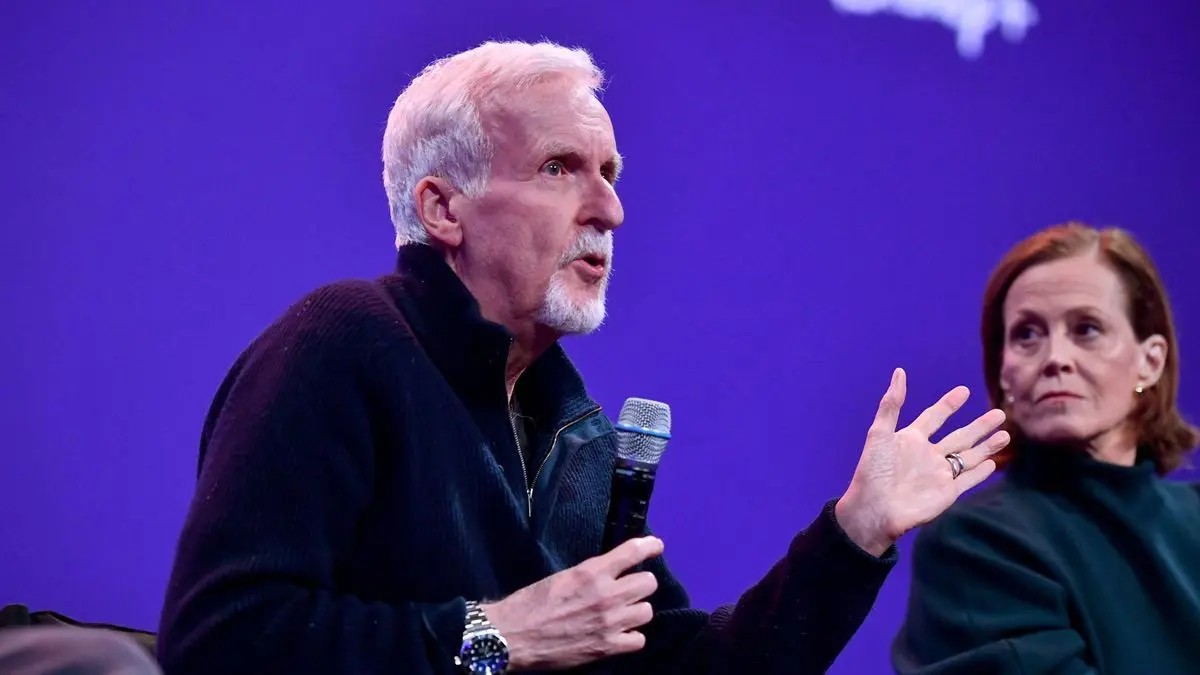
Source: TechRadar
"Go to the other end of the spectrum and you've got generative AI, where they can make up a character. They can make up an actor. They can make up a performance from scratch with a text prompt. It's like, no. That's horrifying to me," Cameron stated.
2
His comments mark a clear departure from his usual techno-optimism, signaling deep concerns about replacing human actors with algorithmic creations.Motion Capture Versus Generative AI in Filmmaking
Cameron emphasized that his work on the Avatar franchise represents "a celebration of the actor-director moment" rather than a replacement of human creativity.
5
The director explained that motion capture technology preserves the human element at the core of performance. When Sigourney Weaver appears as a Na'vi in Avatar, it's still fundamentally her performance, captured and enhanced rather than fabricated by algorithms.
Source: IGN
"I don't want a computer doing what I pride myself on being able to do with actors. I don't want to replace actors, I love working with actors," Cameron told CBS.
4
This distinction matters because motion capture and CGI serve as tools to amplify human creativity, while generative AI threatens to eliminate it entirely.The Tilly Norwood Controversy and Industry Backlash
Cameron's comments arrive amid growing tension over Tilly Norwood, a photorealistic AI-generated actress created by Eline Van der Velden's company Particle6 and introduced at the Zurich Film Festival in September.
1
Though Norwood hasn't appeared in any actual films, SAG-AFTRA issued a scathing statement denouncing her as a synthetic imitation trained on stolen work from real performers.The controversy raises fundamental questions about authorship and emotional trust in cinema. When audiences connect with a performance, they're responding to the person behind it—their lived experience, quirks, and idiosyncrasies. Cameron argued that generative AI can't deliver this authenticity because "the models are trained on everything that's ever been done before; it can't be trained on that which has never been done."
2
The result, he suggests, is an average of all human art put "into a blender" rather than something genuinely new.Cameron's Broader Concerns About the Existential Threat from AI
While Cameron focuses on protecting human creativity in filmmaking, he's equally worried about what he calls the "Skynet Problem"—a reference to his own Terminator franchise where a megalomaniacal AI threatens humanity.
3
"It's the existential threat from big AI that worries me more than all that stuff," Cameron explained, noting that tech industry leaders are "racing straight at it with billions and billions being thrown at it."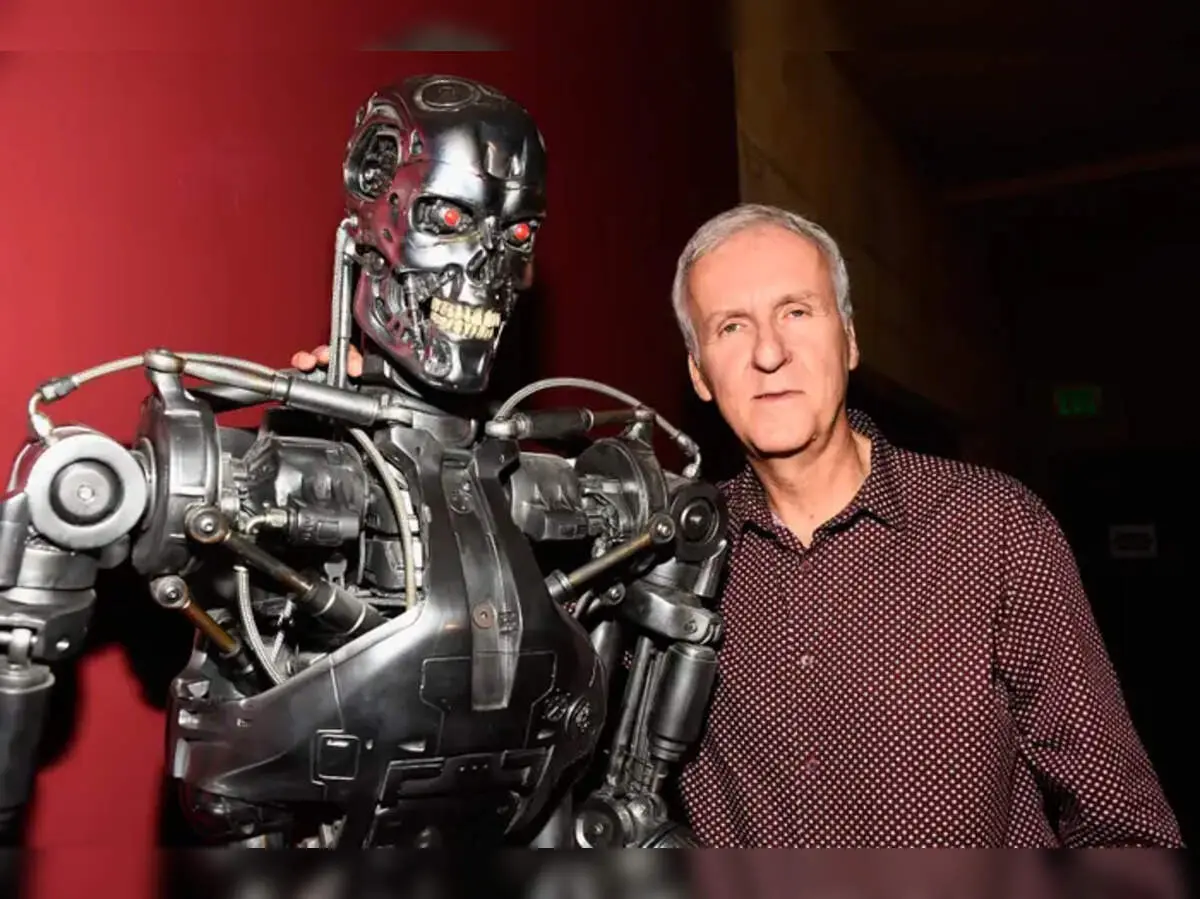
Source: ET
Cameron, who serves as a director at UK-based Stability AI, acknowledged that alignment—teaching AI systems to work toward human good—is being discussed in tech circles.
2
However, he raised a critical question: "Who decides what's good for us? We can't agree amongst ourselves on a damn thing...so whose morality, whose sense of what's best for us, is going to prevail? We're not going to figure this out in time."3
Related Stories

No AI in Avatar Films, But Potential VFX Applications
Cameron has promised fans that generative AI won't appear in Avatar: Fire and Ash or any future Avatar movies.
3
"We've managed to make these gorgeous Avatar movies with zero gen AI," he told ComicBook, adding that the films "honor and celebrate actors."However, Cameron isn't entirely dismissive of AI's potential in other areas. He suggested that generative AI could help make VFX cheaper, potentially enabling more imaginative science-fiction films to get greenlit.
4
With studios increasingly reluctant to fund expensive original IP in favor of established franchises, Cameron noted that "a movie like Avatar would never get made in that environment."Yet even while exploring cost-reduction possibilities, Cameron remains adamant about protecting what he calls the "Sacred Creative Act"—writing, creating characters, and working with actors to bring them to life.
5
"For me, that must never change," he stated.What This Means for Hollywood's Future
Cameron's intervention matters because he's far from a technophobe. His decades-long career blending human actors with sophisticated CGI systems—from The Terminator to Avatar—gives his warnings particular weight. When background actors can be scanned once and used forever, and studios negotiate for rights to replicate voices and likenesses indefinitely, the groundwork for fully AI-led productions already exists.
1
Cameron believes "the act of performance, the act of actually seeing an artist creating in real time, will become sacred" as AI capabilities expand.
2
Whether audiences will embrace films created without human performers remains uncertain, but Cameron's position is clear: he stands firmly on Team Human, refusing to let algorithms replace the unique lived experiences that actors bring to their craft.References
Summarized by

Navi
[2]
Related Stories
James Cameron Warns of AI's Potential Threats and Opportunities in Filmmaking
07 Aug 2025•Technology
James Cameron Embraces AI in Filmmaking: A Shift from Caution to Practical Application
11 Apr 2025•Entertainment and Society
James Cameron's Avatar 3 to Feature Anti-AI Title Card, Sparking Debate in Film Industry
25 Feb 2025•Entertainment and Society

Recent Highlights
1
Apple Plans Major Siri AI Overhaul in iOS 27 With Third-Party Chatbot Integration
Technology

2
OpenAI shuts down Sora after six months, ending Disney's $1 billion licensing partnership
Technology

3
AI chatbots validate you too much, making you less kind to others, Stanford study reveals
Science and Research

Recent Highlights
Today's Top Stories






Your Daily Dose of Curated AI News
Don’t drown in AI news. We cut through the noise - filtering, ranking and summarizing the most important AI news, breakthroughs and research daily. Spend less time searching for the latest in AI and get straight to action.

