LG CLOiD home robot with dual arms and AI debuts at CES 2026 as new growth engine


4 Sources
4 Sources
[1]
LG's most ambitious home robot yet arrives at CES 2026
Serving tech enthusiasts for over 25 years. TechSpot means tech analysis and advice you can trust. What we know so far: LG is preparing to showcase its most advanced household robot yet next month at CES 2026 in Las Vegas, introducing a new model called CLOiD that the company says can handle a broad range of domestic chores. Alongside, LG describes the Zero Labor Home, a concept aimed at reducing time spent on routine tasks through robotics and artificial intelligence. CLOiD's technical design emphasizes dexterity and precision, departing from earlier LG home robots that relied primarily on wheels and voice assistance. The new model features two articulated arms, each powered by motors with seven degrees of freedom, enabling multidirectional joint movement comparable to that of a human arm. Each arm is equipped with a hand that has five independently actuated fingers, giving the robot fine motor control and the ability to handle delicate objects, a significant leap from the companion-style designs LG displayed in previous years. A chipset housed in CLOiD's head serves as the unit's central processing. The hardware supports a built-in display, speaker, camera, and an array of environmental sensors that enable navigation, real-time spatial awareness, and multimodal interaction. LG says the system supports natural language processing for voice commands and includes features that allow the robot to respond through movement and visual signals. CLOiD also introduces LG's "affectionate intelligence" platform, an adaptive AI system first previewed at the company's "Day in a Life" demonstration earlier this year. Rather than relying on fixed commands, the system learns from user behavior and adapts its responses over time. LG describes the technology as an emotional model designed to enhance user comfort without depending on overtly anthropomorphic traits. The unveiling underscores LG's broader investment in robotics as a core growth initiative for its home appliance division. The company has expanded its HS Robotics Lab to accelerate research in motor control, perception algorithms, and autonomous navigation. With expectations for CES 2026 running high, CLOiD is set to reveal how far LG's ambitions for the "zero-labor home" have advanced, and whether a robot designed for both empathy and precision can finally bridge the gap between futuristic vision and everyday practicality.
[2]
LG to unveil a new home robot helper at CES 2026
The Korean tech conglomerate stated in a press release that it will unveil its newest domestic helper bot at the Consumer Electronics Show in Las Vegas in early January. Named "CLOiD," the robot is "designed to perform a wide range of indoor household tasks, enhancing everyday convenience and improving quality of life by making home management more efficient and intuitive." It will theoretically do so with the help of two articulated arms, each with five finger-like digits on the end that are said to help it perform delicate tasks. The arms themselves have seven degrees of freedom. There's a chip in its head that acts like a brain, complemented by a camera, a display, a speaker, and other sensors that it will use to navigate the environment and communicate with its owners. It's powered by LG AI and, according to the company, will refine its responses over time to become more personalized to the needs of whoever it interacts with on a regular basis. Unfortunately, that's about all we've got on CLOiD right now. LG didn't share any real photos of the robot or disclose its cost or release date. Given that this is at CES, there's a real possibility that CLOiD is designed to come to mass market a very long time from now, or maybe even never. We'll all find out together in just a week or two.
[3]
Here's how LG's new upcoming robot could make your home life easier
CES 2026 Read and watch our complete CES coverage here Updated less than 7 minutes ago LG is getting ready to show off its latest breakthrough in home robotics, a new bot called LG CLOiD, at CES 2026 in Las Vegas this January. This isn't just another gadget launch; it marks a huge shift for LG as they go all-in on a future where smart robots aren't just toys, but a core part of how we manage our homes. The LG CLOiD is basically a multi-purpose indoor helper designed to take the sting out of household chores. It's the centrepiece of LG's "Zero Labor Home" vision - a concept that's all about using automation to free up your time for things you actually enjoy, like hanging out with family or just relaxing. Instead of being a specialized tool like a vacuum, CLOiD is meant to be a general-purpose manager for the entire house. The physical design is where things get really interesting Unlike those puck-shaped vacuums or clunky service bots we're used to, CLOiD actually has two articulated arms. Each arm has seven "degrees of freedom," which is just a fancy way of saying they move as naturally as a human arm. Each hand also has five individually moving fingers, giving it the kind of dexterity needed to pick up a towel or load a dishwasher - tasks that have traditionally been a nightmare for robots to handle. Inside the robot's head, there's a dedicated chipset that acts as the "brain," alongside a display, speakers, and a camera. This setup lets the robot communicate through expressions and voice, while a suite of sensors helps it navigate around your furniture without bumping into everything. LG's goal was to make these interactions feel less like talking to a toaster and more like talking to an actual assistant. The real secret sauce is something LG calls "Affectionate Intelligence" It's an AI platform that allows the robot to learn from you. It doesn't just follow static rules; it watches your routines, adapts to your habits, and gets better at helping you the more you use it. It's supposed to be a personalized experience that grows with the household. LG isn't just playing around with robots as a hobby - they see this as a massive growth engine. They even set up a dedicated HS Robotics Lab to build their own tech and stay competitive. They aren't doing it alone, either; they've been teaming up with top-tier robotics firms both in Korea and globally to make sure CLOiD is more than just a proof-of-concept. Recommended Videos While we don't know the exact price tag yet or when you can actually buy one for your living room, bringing CLOiD to CES 2026 is a clear sign that LG is getting close to a real-world release. In the coming months, we'll likely hear more about specific tasks it can do and how it will talk to the rest of your smart home. It's an exciting - and slightly futuristic - glimpse into how robots might soon become a normal part of our daily lives.
[4]
LG Electronics seeks growth momentum with humanoid robots - The Korea Times
Screen capture from a teaser video to introduce LG Electronics's new humanoid home robot LG CLOiD / Courtesy of LG Electronics LG Electronics is accelerating its push into humanoid robots as it searches for a new growth engine, debuting a new humanoid home robot LG CLOiD at CES 2026 as pressure mounts on its core businesses. With global logistics costs rising and demand slowing, the company is expected to post an operating loss in the fourth quarter, underscoring the limits of a portfolio still heavily weighted toward TVs and home appliances. According to financial data provider FnGuide, LG Electronics' fourth-quarter is expected to see revenue at around 23.5 trillion won ($16.4 billion) to 23.6 trillion won, with its operating losses projected to exceed 180 billion won. While sales are expected to rise slightly from a year earlier, one-off costs such as a large-scale voluntary retirement program estimated to cost about 300 billion won, are projected to weigh on profitability. Though analysts say the setback is temporary, structural challenges remain. The company's mainstay home appliance sector is continuing its sluggish seasonal performance, while the global TV market suffers from oversaturation and price competition, especially with Chinese companies using aggressive prices to gain market share. Newly-appointed CEO Lyu Jae-cheol has emphasized the need to diversify the company's business portfolio, identifying robotics, artificial intelligence (AI) homes, smart factories and AI data center cooling solutions as new growth opportunities that the company can use to secure a competitive edge. "We will actively leverage our strengths and strategic partnerships to seize growth opportunities and enhance our chances of success," he said in his New Year message last week. To support that shift, LG has created a robotics lab under its home solutions division in its latest organizational restructuring, consolidating previously scattered robotics capabilities to sharpen execution around its "zero labor home" vision and speed up commercialization of next-generation humanoid robotics. LG Electronics' ambitions will be on display at CES 2026, slated for Jan. 6 to 9 in Las Vegas, where they are expected to unveil LG CLOiD, a dual‑arm humanoid home robot designed to handle a wide range of household chores. The robot features a humanlike body with two articulated arms and five individually actuated fingers on each hand, enabling delicate movements to handle household objects and promote more human-like interaction, according to the company. In addition to the AI-based ability to independently perceive and learn from its surroundings, it is also designed to act as an assistant by controlling various appliances according to user schedules and lifestyle. The company is also expanding external collaborations for its robotics push, working with robot solutions provider Robotis and KAIST, one of Korea's best known tech universities, while also investing in global robotics startups such as Figure AI and AgiBot. LG Electronics is developing in‑house AI chips that can power more advanced perception and control. The company recently completed design work on its third proprietary appliance chip, DQ‑C2, and is set for production by TSMC. The company has been bringing chip design in‑house since 2022, starting with DQ‑1 for appliances and DQ‑C for AI‑enhanced devices, positioning DQ‑C2 as a stepping stone to dedicated semiconductors. The new DQ‑C2 processor improves memory capacity and central processing unit (CPU) performance to handle complex AI workloads and is expected to be deployed not only in its premium home appliances but also in future humanoid robots and smart factory solutions.
Share
Share
Copy Link
LG Electronics is unveiling CLOiD, its most advanced home robot yet, at CES 2026 in Las Vegas. The AI-powered humanoid features two articulated arms with five-fingered hands designed to handle household chores. As the company faces pressure on its core TV and appliance businesses, CLOiD represents a strategic push into robotics as a growth engine, backed by new partnerships and in-house chip development.
LG CLOiD Takes Center Stage as Advanced Home Robot
LG Electronics is preparing to showcase LG CLOiD, its most ambitious AI-powered humanoid home robot, at CES 2026 in Las Vegas this January
1
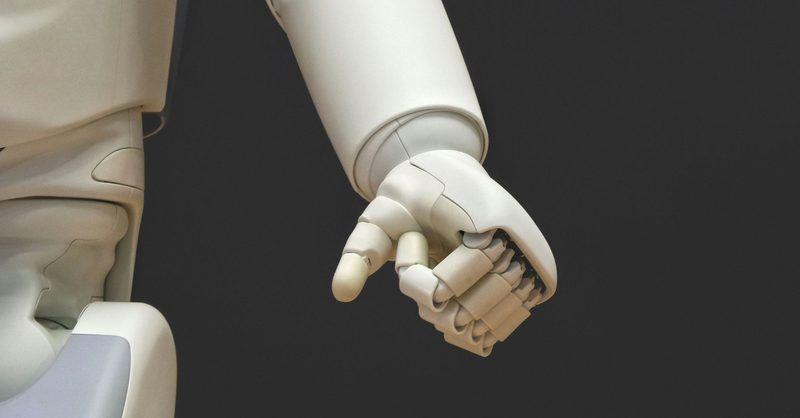
. The new home robot helper marks a significant departure from earlier companion-style designs, featuring two articulated arms with seven degrees of freedom each and hands equipped with five independently actuated fingers2
. This level of dexterity enables CLOiD to handle delicate objects and perform household chores that have traditionally challenged robotics, from picking up towels to loading dishwashers3
.
Source: Korea Times
The multi-purpose home robot serves as the centerpiece of LG's "Zero Labor Home" vision, a concept aimed at reducing time spent on routine domestic tasks through automation and artificial intelligence
1
. Rather than functioning as a specialized tool, CLOiD is designed as a general-purpose manager for the entire household, capable of controlling various appliances according to user schedules and lifestyle preferences4
.Affectionate Intelligence Powers Adaptive Learning
At the core of CLOiD's capabilities lies LG's "affectionate intelligence" platform, an adaptive AI system first previewed at the company's "Day in a Life" demonstration earlier this year
1
. Instead of relying on fixed commands, the system learns from user behavior and refines its responses over time to become more personalized2
. LG describes this technology as an emotional model designed to enhance user comfort, allowing the home robot to watch routines, adapt to habits, and improve its assistance the more it's used3
.A dedicated chipset housed in CLOiD's head acts as the unit's brain, supporting a built-in display, speaker, camera, and an array of environmental sensors that enable navigation, real-time spatial awareness, and multimodal interaction
1
. The system supports natural language processing for voice commands and allows the robot to respond through movement and visual signals, making interactions feel less mechanical and more like communicating with an actual assistant3
.
Source: Digital Trends
Robotics as a Strategic Growth Engine
The unveiling of CLOiD comes as LG Electronics faces mounting pressure on its core businesses. According to financial data provider FnGuide, the company's fourth-quarter revenue is expected to reach around 23.5 trillion won to 23.6 trillion won ($16.4 billion), but operating losses are projected to exceed 180 billion won
4
. One-off costs including a large-scale voluntary retirement program estimated at about 300 billion won are weighing on profitability, while the home appliance division continues sluggish seasonal performance and the global TV market suffers from oversaturation and price competition4
.Newly-appointed CEO Lyu Jae-cheol has emphasized the need to diversify the company's business portfolio, identifying robotics, artificial intelligence homes, smart factory solutions, and AI data center cooling as new growth opportunities
4
. "We will actively leverage our strengths and strategic partnerships to seize growth opportunities and enhance our chances of success," he stated in his New Year message4
.Related Stories

Expanding Robotics Infrastructure and Partnerships
To support this strategic shift, LG has created the HS Robotics Lab under its home solutions division in its latest organizational restructuring, consolidating previously scattered robotics capabilities to accelerate research in motor control, perception algorithms, and autonomous navigation
1
4
. The company is expanding external collaborations, working with robot solutions provider Robotis and KAIST, one of Korea's leading tech universities, while also investing in global robotics startups such as Figure AI and AgiBot4
.LG is also developing in-house AI chips to power more advanced perception and control in its humanoid robots. The company recently completed design work on its third proprietary appliance chip, DQ-C2, set for production by TSMC
4
. The new processor improves memory capacity and CPU performance to handle complex AI workloads and is expected to be deployed not only in premium home appliances but also in future humanoid robots and smart factory solutions4
. This vertical integration strategy positions LG to compete more effectively as the market for household robotics matures and consumer expectations for intelligent, adaptive systems continue to rise.References
Summarized by

Navi
[2]
[3]
Related Stories
LG CLOiD home robot debuts at CES 2026 to tackle cooking, laundry and household chores
04 Jan 2026•Technology

LG Electronics unveils AI in Action strategy at CES 2026 with home robot and smart devices
05 Jan 2026•Technology
SwitchBot unveils Onero H1 humanoid robot to handle laundry, dishes and more household tasks
05 Jan 2026•Technology

Recent Highlights
1
Apple Plans Major Siri AI Overhaul in iOS 27 With Third-Party Chatbot Integration
Technology

2
OpenAI shuts down Sora after six months, ending Disney's $1 billion licensing partnership
Technology

3
AI chatbots validate you too much, making you less kind to others, Stanford study reveals
Science and Research

Recent Highlights
Today's Top Stories





Your Daily Dose of Curated AI News
Don’t drown in AI news. We cut through the noise - filtering, ranking and summarizing the most important AI news, breakthroughs and research daily. Spend less time searching for the latest in AI and get straight to action.

