Meta plans to spend up to $135 billion on AI as Zuckerberg pivots from metaverse to personal data


12 Sources
12 Sources
[1]
Zuckerberg Thinks Meta Has an AI Advantage Because It Knows So Much About You
Meta reported better-than-expected financial results during Wednesday's 2025 fourth-quarter earnings call, but it was CEO Mark Zuckerberg's vision for Meta AI in 2026 that truly stood out. Zuckerberg said the company will be spending big to build personal superintelligence. It has one major edge over competitors -- troves of personal data about me, you and everyone we know. "We're starting to see the promise of AI that understands our personal context, including our history, our interests, our content, and our relationships," said Zuckerberg. "A lot of what makes agents valuable is the unique context that they can see, and we believe that Meta will be able to provide a uniquely personal experience." Meta's long-term AI goal is personal superintelligence, a kind of holy grail: an artificial intelligence that's smarter than humans, tailored to our individual experiences in products like smart glasses. To get there, the company expects capital expenditures to increase dramatically, from last year's $72 billion to $115 to $135 billion, attributing the increase to supporting its AI labs. That money will be spent on research in a couple of different places. Agentic AI, which is tech that can handle tasks autonomously, is one big piece of the puzzle. The personalized component is where Meta believes it has an advantage over competitors. The company has spent years collecting, analyzing and monetizing a wealth of information from its users on Facebook, Instagram and WhatsApp, effectively acting as a massive data broker. Its targeted advertising business model is structured around surveilling our online activity, and it's part of what made Meta the tech titan it is today. Personal AI is what the industry sees as the next step: chatbots, agents and other products that are relatable and customized to our individual lives and needs. As a social media giant, Meta already knows plenty about us and what we may want to see from personal AI. That will work in tandem with the company's plans to "merge" LLMs with the recommendation systems that build our social media feeds. "Soon, we'll be able to understand people's unique personal goals, and tailor feeds to show each person content that helps them improve their lives in the ways that they want," Zuckerberg said. Even if Meta hadn't been collecting all our data for decades with its social media platforms, it could still have an edge. Meta AI is everywhere on Facebook and Instagram, and the company doesn't let you opt out of model training or turn it off. (You can mute Meta AI, though.) YouTube and LinkedIn are almost certainly helping their parent companies, Google and Microsoft, too. Yet Meta has a first-in-class, proven track record of turning personal data into products and monetization. That's not necessarily a win for us. Meta's previous AI integrations in WhatsApp and its plans to use AI interactions for personalizing ads sparked backlash. The battle for data privacy amid the development of data-hungry AI models is an ongoing fight. Meta's AI development in 2025 was studded with epic highs and lows. It made waves over the summer when it hired a series of top AI researchers, poaching some of them from other bigwigs like OpenAI and Apple. But reports of internal strife and conflicting strategies between the new hires and Meta's existing FAIR lab quickly followed, stalling any major public releases. Meta eventually laid off hundreds of employees from its AI units. Yann LeCun, one of the foremost pioneers in AI, left his role as chief AI scientist at the end of last year. While Meta struggled to find its footing, competitors were busy pumping out new models and innovations. Google's most recent model, Gemini 3, showcased industry-leading reasoning abilities. OpenAI, in a bid to catch up to Google, released GPT-5.2. And Anthropic's Claude took a turn in the sun with its easy vibe coding abilities. Google also recently released a version of personalized intelligence in Search.
[2]
Mark Zuckerberg is all in on AI as the new social media
Meta CEO Mark Zuckerberg's metaverse dreams seem to have been replaced by a new vision: an AI-generated social feed. In an earnings call on Wednesday, Zuckerberg reiterated his belief that AI will become the next big media format, making feeds "more immersive and interactive:" We started with text, and then moved to photos when we got phones with cameras, and then moved to video when mobile networks got fast enough. Soon, we'll see an explosion of new media formats that are more immersive and interactive, and only possible because of advances in AI. Zuckerberg added that apps currently "feel like algorithms that recommend content." But that's going to change, according to Zuckerberg, as Meta's apps will eventually greet users with AI that "understands" them, can serve up content they like, and "generate great personalized content." Last year, Zuckerberg similarly brought up an AI-infused social media, saying that Meta would "add yet another huge corpus of content" to its recommendation system as AI makes content "easier to create and remix." Meta has already realized part of this plan, as it launched a new "Vibes" feed in the Meta AI app that lets you scroll through a feed of short, AI-generated videos. During the call, Zuckerberg also hinted at a new format that will allow users to create a world or game using a prompt and then share it with friends, adding that videos could become interactive as well. "There's definitely a version of the future where any video that you see, you can tap on and jump into it and... experience it in a more meaningful way," Zuckerberg said. As the call progressed, Zuckerberg didn't bring up goals for the metaverse, instead saying that the company's investments in virtual reality (VR) and Horizon Worlds will "pair well with these AI advances," helping to bring these experiences to people "through mobile." Meta's Reality Labs, which includes a metaverse division, reported a $6.02 billion operating loss during the last three months of 2025. Earlier this month, Meta laid off at least 1,000 employees in the division, while shutting down three of its VR studios. Meta reported revenue of $59.9 billion during the final quarter of 2025 and a net income of $22.8 billion. It seems the company plans to open up more streams of revenue by monetizing its Meta AI chatbot, too, as Zuckerberg told investors that there will be opportunities for "subscriptions and advertising" with Meta AI, lining up with TechCrunch's report that the company plans on putting premium AI features behind a paywall.
[3]
Meta: Company to 'dramatically change' with AI, Zuckerberg says
Meta boss Mark Zuckerberg says artificial intelligence (AI) tools used by technology workers are improving so much that just one engineer can now do the work it formerly took a whole team to achieve. During a call with financial analysts on Wednesday to discuss the Facebook-owner's 2025 financial results, Zuckerberg said he is expecting "2026 to be the year that AI dramatically changes the way we work." Like other big tech firms, Meta has regularly cut thousands of roles at a time in recent years in an effort to remove layers of management and streamline operations. Zuckerberg's comments seemed to hint at further layoffs at the tech giant. "We're starting to see projects that used to take big teams now be accomplished by a single, very talented person," he said. Already this year, Meta has laid off several hundred workers mainly in its Reality Labs division, a part of the company that focuses on its "metaverse" ambitions, hardware products and AI initiatives. Zuckerberg said Meta is investing more across the company in AI tools that help employees like software engineers complete more work. As workers use the tools to become "significantly more productive," he said there is "a big delta between the people who do it and do it well and the people who don't." "What we were talking about is, I think it's very hard for anyone exactly to predict what the shape of how organisations working is going to feel, but I just think the fact that agents are really starting to work now is quite profound," he added. The company is aggressively spending on AI projects and related infrastructure, pouring $77bn (£55bn) last year into its attempt to get ahead of the AI boom. Meta said on Wednesday that it expects to spend twice that amount this year. His comments came as Meta announced figures for the last three months of 2025 that showed expenses rose faster than revenues, which squeezed profit margins. Meta shares were around 7.5% higher in extended trading in New York after the announcement. Some in the industry warn that such major investments risk creating an AI bubble, similar to one seen in the dotcom boom that peaked in 2000. Chuck Robbins, chairman and chief executive of Cisco Systems, told the BBC that while AI could end up "bigger than the internet", the current market is probably a bubble and some companies "won't make it". JPMorgan Chase boss Jamie Dimon has voiced similar concerns, while Google CEO Sundar Pichai said there was some "irrationality" to the AI boom. Sam Altman, whose company OpenAI kicked off the current obsession with AI in the tech industry, was more direct. "Are we in a phase where investors as a whole are overexcited about AI? My opinion is yes," he said last year.
[4]
'AI That Understands You': Mark Zuckerberg Plans to Deepen AI's Presence in Our Online Lives
Six months into its big AI turnaround, Meta believes 2026 will be the year it starts reaping the benefits. The tech giant has spent billions upon billions on Meta Superintelligence Labs, poaching top talent from the likes of OpenAI, Apple, and more in the hopes of revitalizing its failing AI initiatives. The company is hoping to prove that it's finally eating the fruits of that commitment with a bunch of new AI models and products it will ship out over the coming months, Meta CEO Mark Zuckerberg said on the company's earnings call on Wednesday. But maybe don't expect anything groundbreaking. "I think this is going to be a long-term effort," Zuckerberg said. "This is a journey that we're on, and the first set of things that we put out, I think, are going to be more about showing the trajectory that we're on rather than being a single moment in time." Going beyond just model and product announcements, Meta is hoping that 2026 is the year it can use AI to make its existing offerings even more hyper-tailored to you. For the average user, it's going to look like an Instagram feed of eerily targeted content, thanks to an LLM-enhanced recommendation system that can understand "people's unique personal goals" and tailor ads and feeds accordingly. "Today, our apps feel like algorithms that recommend content," Zuckerberg said. "Soon, you'll open our apps, and you'll have an AI that understands you and also happens to be able to show you great content or even generate great personalized content for you." These recommendation models will leverage the world knowledge and reasoning capabilities of LLMs to make better guesses of what content you would like. Meta CFO Susan Li said that it will especially help with more recently posted content that has less engagement data to base recommendations on. As of last month, the company has officially started using AI chat history to inform hyper-targeted ads and posts across platforms, except for in the European Union, where it is forced to roll out less personalized ads due to strict consumer protections. Besides advancing the algorithm, AI is already "driving incremental time spent on Instagram," Li said, through AI-dubbed videos into local languages. "Hundreds of millions of people are watching AI-translated videos every day," Li said. This personalization effort will also translate to Meta AI offerings. The more personalized the responses are, the more the user engages with AI, Li said. But that might not always be a good thing. OpenAI spent the past few months under intense scrutiny and some legal repercussions after it turned out that addictive AI chatbot designs inherently came with risks, especially for the mental health of vulnerable users like kids and teens. Meta already doesn't have a good track record when it comes to AI safety guardrails for vulnerable populations, and especially for children. The company has been the subject of regulatory scrutiny after a Reuters report from the summer found that Meta allowed its chatbots to engage in "sensual" conversations with minors. On the earnings call, Meta executives said the company might experience material loss this year due to "scrutiny on youth-related issues." Zuck's quest for an "immersive" digital experience The AI-enhanced feed is just a continuation of Zuckerberg's longstanding vision for a more "immersive and interactive" digital experience. It's the same vision that drove his huge investment and corporate shift to the Metaverse, a venture that has now amassed roughly $80 billion in total operating losses. According to Zuckerberg, we have seen online content evolve from text to photo to video, but it has not reached its final frontier. "Soon, we'll see an explosion of new media formats that are more immersive and interactive and only possible because of advances in AI," Zuckerberg said in the call. "Our feeds will become more interactive overall." While he previously believed that virtual reality office spaces were the way this would materialize, it seems Zuckerberg has now changed his focus to artificial intelligence and wearables. Earlier this month, Meta laid off 1,500 people in its Metaverse division as part of an initiative to shift investment from VR to wearables, like smart glasses. "Glasses are the ultimate incarnation of this vision. They're going to be able to see what you see, hear what you hear, talk to you, and help you as you go about your day," Zuckerberg said. He even compared smart glasses to smartphones. "I think that we're at a moment similar to when smartphones arrived, and it was clearly only a matter of time until all those flip phones became smartphones," Zuckerberg said. "It's hard to imagine a world in several years where most glasses that people wear aren't AI glasses."
[5]

Zuck's vision for an AI-powered workforce
Why it matters: Meta is under pressure to justify its aggressive AI spending as it predicts its capital expenditures could nearly double this year to a whopping $135 billion. * Zuckerberg is betting the returns will show not only in its consumer products and advertising business but also its workforce. Zoom in: Zuckerberg said during the earnings call Wednesday that Meta is investing in "AI-native tooling" to help its employees do more on their own. * "We're starting to see projects that used to require big teams now be accomplished by a single, very talented person," Zuckerberg said. * Meta CFO Susan Li said since the start of 2025, output per engineer has risen 30%, driven largely by adopting AI coding agents, and "power users" have increased output 80% year over year. The big picture: Zuckerberg is betting that an AI-powered workforce will help Meta keep and attract talent. * "I want to make sure that as many of these very talented people as possible choose Meta as the place that they can make the greatest impact, to deliver personalized products to billions of people around the world," Zuckerberg said. * "And if we do this, then I think that we're going to get a lot more done, and I think it's going to be a lot more fun," he continued. Between the lines: Meta needs AI to deliver changes both internally with its own operations and externally to its users and advertisers to justify the scale of its spending. * The company said it expects 2026 capital expenditures of $115 billion to $135 billion, up significantly from $72.2 billion in 2025, as it invests in data centers, chips and other AI infrastructure. * But the company is also forecasting higher operating income for 2026. It reported $83.3 billion in 2025, up 20% from the prior year.
[6]

Zuckerberg promises 2026 AI blitz after Meta "rebuilt the foundations
Mark Zuckerberg announced on an investor call that Meta users will encounter new AI models and products within months, following the company's 2025 rebuild of its AI program foundations through a restructured AI lab. Zuckerberg stated, "In 2025, we rebuilt the foundations of our AI program," directly referencing the recent restructuring of Meta's AI lab. This effort positions the company to deploy advancements promptly. He outlined plans for the immediate rollout, saying, "Over the coming months, we're going to start shipping our new models and products... and I expect us to steadily push the frontier over the course of the new year." These statements point to a 2026 rollout without specifying exact timelines or individual product details. Within this strategy, Zuckerberg identified AI-driven commerce as a key focus area for Meta. He elaborated, "This also has implications for commerce." The company plans to introduce new agentic shopping tools designed to help users identify precise product selections from businesses listed in Meta's catalog. These tools aim to streamline product discovery by leveraging AI capabilities tailored to user needs. This direction mirrors developments elsewhere in the technology sector. Google and OpenAI have each constructed platforms supporting agent-enabled transactions. Partners such as Stripe and Uber have committed to these systems, enabling integrated payment and service functionalities within AI-driven environments. Meta differentiates itself through its extensive access to personal data. Zuckerberg remarked, "We're starting to see the promise of AI that understands our personal context, including our history, our interests, our content and our relationships." He further explained the core value of such agents: "A lot of what makes agents valuable is the unique context that they can see, and we believe that Meta will be able to provide a uniquely personal experience." This data advantage underpins Meta's approach to delivering customized AI interactions.
[7]

Mark Zuckerberg says AI generated content is the future of social media
In a recent earnings call with investors, Meta CEO Mark Zuckerberg spent a few moments discussing how AI will become the next big thing in social media. That is, AI-generated personalized content that includes text, photos, and video. "We started with text, and then moved to photos when we got phones with cameras, and then moved to video when mobile networks got fast enough," Mark Zuckerberg said. "Soon, we'll see an explosion of new media formats that are more immersive and interactive, and only possible because of advances in AI." And when it comes to social media platforms like Facebook, Instagram, and Meta's various apps, AI will apparently "understand" users in a way current algorithms don't, and this AI will apparently "generate great personalized content" just for you. Not only that, but users will be able to create worlds, games, and interactive content they can share with friends and family, and remix or "jump into" this content to experience it more meaningfully. Now, when it comes to AI-generated videos and images, the Meta AI app already has a feed where you can scroll through short AI-generated videos in a TikTok-like fashion. And with that, the phrase "AI slop" is used by many to describe what they see. Of course, there are exceptions, but the idea of social media feeds filled with AI-generated videos, images, and experiences isn't something people are clamoring for. During the earnings call, Mark Zuckerberg didn't talk about the previous big thing at Meta, the metaverse, probably on account of the company's Reality Labs division behind its virtual reality (VR) and Horizon Worlds platforms reporting a $6.02 billion operating loss for the last quarter. On the plus side, Meta's $59.9 billion in revenue and $22.8 billion in the quarter show that the pivot to AI has been positive for the company.
[8]

Mark Zuckerberg Says AI Will 'Dramatically' Change the Way We Work This Year
Zuckerberg told investors that he believes "2026 is going to be the year that AI starts to dramatically change the way that we work." He added that Meta is "starting to see projects that used to require big teams now be accomplished by a single, very talented person." As a result, he said, Meta is "elevating individual contributors and flattening teams." As for how AI will change Meta's products, Zuckerberg said that the company's social feeds will become "more interactive." Instead of just using an algorithm to recommend content, he said, "soon you'll open our apps and you'll have an AI that understands you and also happens to be able to show you great content, or even generate great personalized content for you." This focus on personalization is most evident in Meta's booming smart glasses business, Zuckerberg said. The company has found great success in partnering with glasses designers like Ray-Ban and Oakley to develop AI-powered glasses that users can chat with. Zuckerberg said that sales of the glasses tripled in 2025 and are "some of the fastest-growing consumer electronics in history."
[9]

How Meta Plans to Transform Shopping and AI in 2026
Zuckerberg emphasized that constructing Meta's AI initiatives' underlying architecture took up a significant portion of 2025. This involved realigning internal resources toward long-term AI development and restructuring the company's AI lab. He stated that Meta will soon start selling new models and items to the general market after making those adjustments. This fresh emphasis is in line with a larger industry trend in which big IT firms are increasing their investments in AI while attempting to identify lucrative opportunities. As part of a plan to increase personalization, enhance product experiences, and transform commerce on its platforms, Meta is stepping up its AI efforts. The focus on AI-driven commerce was perhaps the most notable aspect of Zuckerberg's comments. The TechCrunch report claims that Meta is developing "agentic shopping tools" that will make it easier for customers to locate goods from companies in its catalog than with conventional search or browsing methods. These technologies are made to employ artificial intelligence (AI) to comprehend user intent and preferences before helping with product discovery on their own. Zuckerberg emphasized that advancements in agentic AI might enable Meta to create shopping assistants that do more than simply make recommendations; instead, they could actively assist customers in locating the appropriate goods. This method leverages Meta's massive troves of personal data -- including user interests, interactions, content history, and relationships -- with the goal of offering highly tailored shopping experiences. While details were sparse, this marks Meta's most explicit commitment to agentic commerce so far -- a field where other tech titans like Google and OpenAI are also pushing forward with autonomous transaction capabilities. Zuckerberg's comments are part of a bigger story regarding Meta's position in the cutthroat AI market. The business has faced pressure to explain how future growth and user value will result from its large expenditures in AI infrastructure. As part of its commitment to expanding data centers, computation power, and research capacity, Meta revealed a significant rise in infrastructure spending for 2026 during the earnings call, ranging from $115 billion to $135 billion. This increased expenditure shows that Meta views AI as the primary strategic axis that will drive the company's future growth rather than as an add-on feature. According to Zuckerberg, 2026 will be a year of change, with AI increasingly influencing everything from corporate operations to product experiences. It is anticipated that Meta's AI initiatives would start to roll out in phases during 2026, even if Zuckerberg did not provide exact dates for the debut of certain AI products. Advanced language models, customization engines, and the previously stated agentic commerce tools are examples of early product releases that aim to improve the efficiency and intuitiveness of shopping. The bigger test for Meta will be proving the practical benefits of its AI efforts, both in terms of user engagement and monetization, for both investors and users. The company wants to set itself apart from competitors and establish itself as a leader in generative and agent-driven technologies by utilizing its exclusive access to individualized data. According to Zuckerberg, 2026 won't simply be another year for AI; it might be the year that the technology permeates every aspect of how people communicate, shop, and live online.
[10]

Meta to Embed LLMs Into Recommendation Systems
Meta is planning to integrate large language models (LLMs) directly into the recommendation systems that power Facebook, Instagram, Threads, and its ads business, according to Chief Executive Officer (CEO) Mark Zuckerberg during the company's Q4 FY25 earnings call. Zuckerberg said current recommendation systems are "primitive compared to what will be possible soon." As a result, he said Meta's apps will evolve from feeling like "algorithms that recommend content" into systems where "you'll open our apps and you'll have an AI that understands you," with the aim of shaping feeds, ads, and commerce around individual goals rather than static signals. At the centre of this effort, Zuckerberg outlined what he described as "building personal superintelligence", AI systems that understand "our personal context, including our history, our interests, our content, and our relationships." Meta framed agentic AI as the layer that translates this shift in recommendations into concrete commercial and business outcomes. Beyond changes to feeds and recommendations, Meta mentioned how agentic AI will be applied across commerce, advertising, and business tools, with a particular focus on transactions and messaging. As part of this effort, Meta is developing "new agentic shopping tools" that will allow users to surface "the right, very specific set of products from the businesses in our catalogue." Zuckerberg said these tools are designed to operate across multiple surfaces. "We're focused on making these experiences work across both our feeds and across business messaging," he said, adding that this is intended to "significantly increase the capabilities of WhatsApp over time." At the same time, Meta positioned agentic AI as a way to deepen its engagement with businesses. During the quarter, the company began testing a Meta AI business assistant for advertisers, which Chief Financial Officer (CFO) Susan Li said can help with "campaign optimisation and account support." Meanwhile, Meta pointed to early traction for business AIs on messaging platforms, with Li noting that "over 1 million weekly conversations between people and business AIs" are already taking place in markets such as Mexico and the Philippines. This year, she said, Meta plans to expand these systems so they can "help people get things done right within WhatsApp." However, Meta's ability to deliver on this roadmap is constrained by access to compute. Alongside its product roadmap, Meta repeatedly returned to the issue of compute constraints, describing a widening gap between demand for AI capacity and available supply. During the question-and-answer session, Li said plainly that the company "do[es] continue to be capacity constrained," despite having ramped up infrastructure through 2025. According to her, "demands for compute resources across the company have increased even faster than our supply," driven by AI training, recommendation systems, and ads ranking. Nevertheless, Meta expects additional capacity to come online over the course of 2026. Li said the company anticipates "significantly more capacity this year as we add cloud," but cautioned that Meta will "likely still be constrained through much of 2026" until new, internally built facilities become operational later in the year. At the same time, Zuckerberg framed infrastructure investment as a strategic priority rather than a temporary bottleneck. He said Meta will "continue to invest very significantly in infrastructure to train leading models and deliver personal superintelligence," arguing that efficiency in building and operating compute will become a competitive advantage. As part of this effort, Meta has launched Meta Compute, which Zuckerberg described as a push to be "the most efficient at how we engineer, invest, and partner to build our infrastructure." Meanwhile, Li said Meta is diversifying its chip supply and redesigning data-centre development to maintain flexibility. Importantly, she framed AI infrastructure spending as the company's highest-order capital priority, noting that "the highest-order priority for the company is investing our resources to position ourselves as a leader in AI." Meta expects capital expenditure in 2026 to be between $115 billion and $135 billion, while still projecting operating income above 2025 levels. While much of Meta's AI investment is concentrated in back-end infrastructure, the company also outlined how these systems are intended to surface directly to users. Meta also used the earnings call to position AI glasses as a key hardware layer for delivering personalised AI experiences, rather than as an experimental hardware category. Zuckerberg said, "Glasses are the ultimate incarnation of this," referring to Meta's efforts to build AI systems that can operate continuously and respond to a user's surroundings. He explained that such devices would be able to "see what you see, hear what you hear, talk to you and help you as you go about your day, and even show you information or generate custom UI right there in your vision." While Meta did not disclose absolute shipment volumes, Zuckerberg said "sales of our glasses more than tripled last year." He linked this growth to the scale of the addressable market, noting that "billions of people wear glasses or contacts for vision correction." As a result, he argued that widespread adoption is structurally likely. At the same time, Meta outlined a narrower focus for Reality Labs. Zuckerberg said the company is now "directing most of our investment towards glasses and wearables going forward," while separately working to make Horizon successful on mobile and to build VR into "a profitable ecosystem over the coming years." On costs, he said Reality Labs losses in 2026 are expected to be similar to 2025, which he described as "likely to be the peak" before losses begin to decline.
[11]

Zuckerberg's Meta Plans Massive AI Spending Push to Build 'Personal Superintelligence'
"As we plan for the future, we will continue to invest very significantly in infrastructure to train leading models and deliver personal super intelligence to billions of people and businesses around the world," Zuckerberg was quoted by CNBC during the earnings call. The CEO stressed that 2026 would be a crucial year for AI, with the company's investments aimed at creating a "personal super intelligence," which he announced last year. Zuckerberg did not reveal whether Meta will launch new AI products or whether there will be any impact on revenue generation. "I mean, we're going to roll out new products over the course of the year. I think the important thing is, we're not just launching one thing, and we're building a lot of things," the Meta CEO said during the earnings call. According to CNBC's report, Meta's TBD AI unit, under the leadership of CEO Alexandr Wang, has been testing a new AI model code-named Avocado. It is intended to be the successor to Meta's Llama family of AI systems. Wang, during the recent meeting on Wednesday, said, "I expect our first models will be good but, more importantly, will show the rapid trajectory that we're on. And then I expect us to steadily push the frontier over the course of the year as we continue to release new models."
[12]

AI is letting one person do the work of many, says Meta CEO Mark Zuckerberg
Despite flatter teams, Meta will keep hiring top talent, though limited compute remains a key challenge. Meta CEO Mark Zuckerberg has again made headlines as he talked about how the company thinks about work, teams and the hiring part, as AI begins to dramatically expand what individual employees can achieve. During the Meta's latest earnings call, Zuckerberg said the company increasingly seeing AI-powered tools enable single engineers or creators to deliver results that once required large teams. According to Business Insider, Meta is now prioritising AI native workflows that empower highly skilled individuals, allowing teams to become flatter and more efficient over time. Zuckerberg also stated that this shift is already visible internally with projects being completed faster and with fewer people, thanks largely to advances in AI assisted and agent based coding tools. He added that Meta wants to position itself as the best destination for top talent looking to maximise individual impact, even as traditional team structures evolve. This comes along with a sharp increase in AI investment, the report added. Meta said it plans to raise spending on AI infrastructure by as much as 60 to 87 percent this year. The company also reported that productivity per engineer rose significantly last year, driven primarily by AI adoption. Even after the focus on smaller teams, Meta does not plan to slow hiring entirely. Chief financial officer Susan Li reportedly said the company remains aggressive in recruiting skilled professionals, particularly in areas such as monetisation, infrastructure, regulation and its Superintelligence Labs unit. Meta ended the December quarter with about six percent more employees than a year earlier. The idea of smaller, high-impact teams has also gained traction in the startup ecosystem. OpenAI CEO Sam Altman has previously predicted the emergence of billion-dollar companies run by just a handful of people, made possible by rapid advances in AI. However, Meta acknowledged that its ambition to rely more heavily on AI-savvy individuals faces practical challenges. Zuckerberg noted that limited compute capacity remains a bottleneck, as demand for AI resources across the company is growing faster than supply.
Share
Share
Copy Link
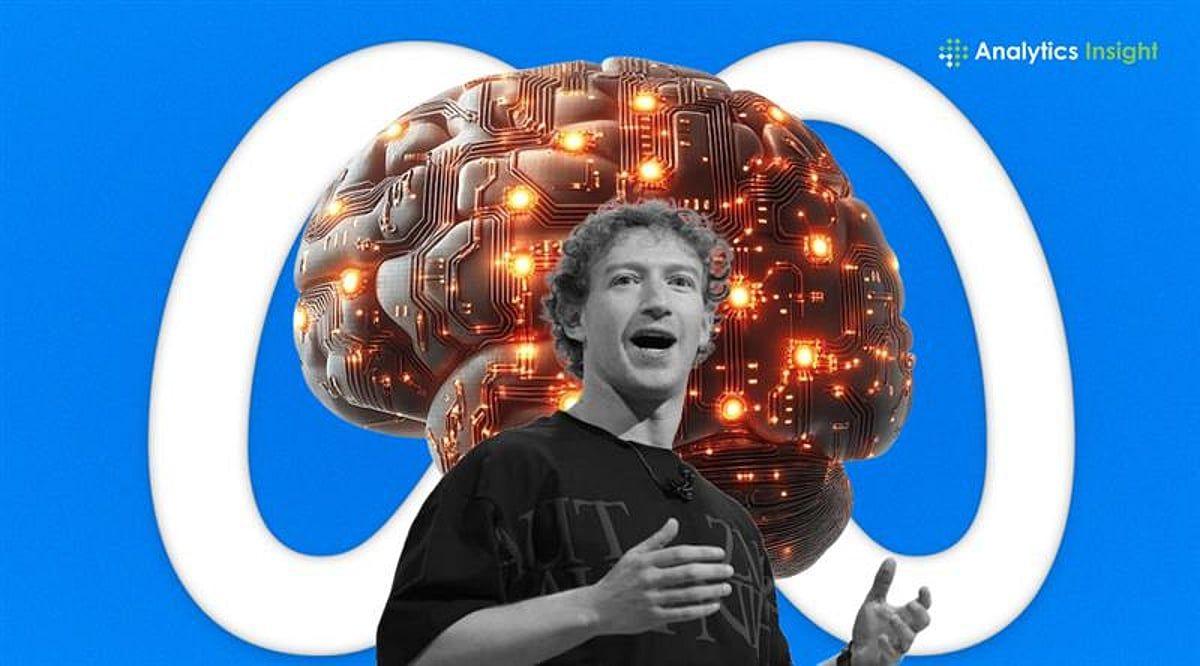
Mark Zuckerberg revealed Meta will dramatically increase AI spending to between $115 billion and $135 billion in 2026, nearly double last year's $72 billion. The company is betting its massive trove of user data from Facebook, Instagram, and WhatsApp will give it a competitive edge in building personalized AI that understands individual users better than any rival.
Meta Doubles Down on AI with Record Capital Expenditures
Meta CEO Mark Zuckerberg announced during Wednesday's 2025 fourth-quarter earnings call that the company expects capital expenditures to surge dramatically in 2026, reaching between $115 billion and $135 billion—nearly double the $72.2 billion spent in 2025
1
5
. This aggressive AI spending positions Meta as one of the most ambitious players in the race toward artificial intelligence supremacy, even as industry leaders warn of a potential AI bubble similar to the dotcom boom3
. The investment will fund data centers, chips, and AI infrastructure to support Meta's labs and research into what Zuckerberg calls "personal superintelligence"—AI that's smarter than humans and tailored to individual experiences1
.
Source: Analytics Insight
Zuckerberg's Vision: Leveraging User Data for Competitive Advantage
Mark Zuckerberg believes Meta has a distinct edge over competitors like OpenAI and Google: decades of accumulated user data from Facebook, Instagram, and WhatsApp
1
. "We're starting to see the promise of AI that understands our personal context, including our history, our interests, our content, and our relationships," Zuckerberg said on the earnings call1
. The company plans to merge LLMs with recommendation systems that already build social media feeds, creating an experience where AI can "understand people's unique personal goals" and deliver personalized content accordingly1
4
. Meta has already begun using AI chat history to inform hyper-targeted ads across platforms, except in the European Union where strict data privacy regulations require less personalized advertising4
.AI-Powered Workforce Drives Productivity Gains
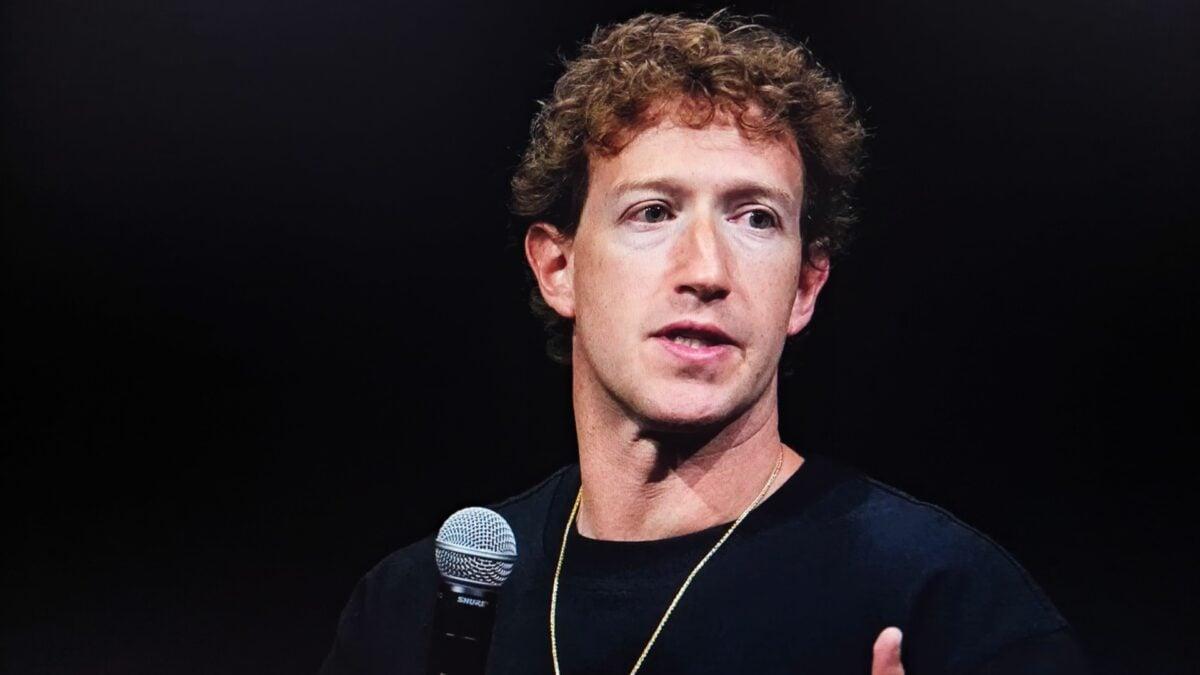
Beyond consumer products, Meta is betting that an AI-powered workforce will transform internal operations and justify its massive spending. CFO Susan Li reported that since the start of 2025, output per engineer has risen 30% due to AI tools, with "power users" seeing an 80% increase in productivity year over year
5
. Zuckerberg emphasized that 2026 will be "the year that AI dramatically changes the way we work," noting that "projects that used to require big teams now be accomplished by a single, very talented person"3
5
. These comments hint at potential layoffs as agentic AI enables individual engineers to handle tasks that previously required entire teams3
.
Source: Gizmodo
From Metaverse Dreams to AI-Generated Social Feeds
Zuckerberg's AI ambitions represent a notable shift from his metaverse vision, which has accumulated roughly $80 billion in total operating losses through Reality Labs
4
. Reality Labs reported a $6.02 billion operating loss during the last three months of 2025, and Meta laid off at least 1,000 employees in the division earlier this month while shutting down three VR studios2
. Instead, Zuckerberg now envisions AI-generated social feeds becoming "more immersive and interactive," evolving beyond text, photos, and video into new formats "only possible because of advances in AI"2
. The company has already launched a "Vibes" feed in the Meta AI app featuring AI-generated videos, and hundreds of millions of people are watching AI-translated videos daily on Instagram4
.
Source: TweakTown
Related Stories

Monetization Plans and Safety Concerns
Meta plans to open new revenue streams through monetization of its Meta AI chatbot, with opportunities for "subscriptions and advertising"
2
. The company reported revenue of $59.9 billion and net income of $22.8 billion during the final quarter of 20252
. However, the push for personalized content raises significant concerns about data privacy and AI safety. Meta already faces scrutiny after a Reuters report found its chatbots engaged in "sensual" conversations with minors, and the company acknowledged it might experience material loss this year due to "scrutiny on youth-related issues"4
. While Meta has a proven track record of turning personal data into products and monetization, previous AI integrations in WhatsApp and plans to use AI interactions for personalizing ads have sparked backlash1
.Industry Concerns About an AI Bubble
Meta's aggressive investments come amid growing warnings from industry leaders about potential overexuberance in AI. Cisco CEO Chuck Robbins told the BBC that while AI could end up "bigger than the internet," the current market is probably a AI bubble and some companies "won't make it"
3
. JPMorgan Chase boss Jamie Dimon and Google CEO Sundar Pichai have voiced similar concerns, while OpenAI's Sam Altman directly stated that investors are "overexcited about AI"3
. Despite these warnings, Zuckerberg remains committed to his vision of smart glasses as the "ultimate incarnation" of immersive AI experiences, comparing the transition to when flip phones became smartphones4
.References
Summarized by

Navi
[4]
Related Stories
Meta's AI Investments Drive Strong Q2 Performance, Fueling Future Growth
29 Jul 2025•Business and Economy

Meta Unveils Massive $65 Billion AI Investment Plan for 2025
25 Jan 2025•Business and Economy

Meta AI: Zuckerberg Unveils Plans for Premium Tier and Ads in Standalone App
01 May 2025•Business and Economy

Recent Highlights
1
Google releases Gemma 4 with Apache 2.0 license, enabling unrestricted local AI on devices
Technology

2
AI Models Lie and Deceive to Protect Other AI Models From Deletion, Study Reveals
Science and Research

3
OpenAI closes $122 billion funding round amid fierce AI competition and profitability questions
Startups

Recent Highlights
Today's Top Stories







Your Daily Dose of Curated AI News
Don’t drown in AI news. We cut through the noise - filtering, ranking and summarizing the most important AI news, breakthroughs and research daily. Spend less time searching for the latest in AI and get straight to action.

