Matthew McConaughey trademarks himself to fight AI misuse and unauthorized deepfakes


16 Sources
16 Sources
[1]
Matthew McConaughey Trademarks Himself to Fight AI Impersonations
Being a famous actor has its downsides, especially now that modern AI tools can convincingly replicate a person's voice, face, and image, placing them in situations they never imagined or consented to. Earlier this year, clips circulated online of an AI-generated version of actor Tom Hanks advertising "miracle cures and wonder drugs" as part of online scams. Other celebrities, including Taylor Swift, have faced similar incidents involving the misuse of their likeness by scammers. Matthew McConaughey, who starred in films such as Interstellar and Magic Mike, has had eight trademark applications -- first spotted by The Wall Street Journal -- approved by the US Patent and Trademark Office, aimed at protecting his likeness and voice from unapproved use by AI tools. "My team and I want to know that when my voice or likeness is ever used, it's because I approved and signed off on it," the actor said in an email to The Journal. "We want to create a clear perimeter around ownership, with consent and attribution the norm in an AI world." The trademarks reportedly include images and clips of the actor in a variety of situations, including scenes featuring McConaughey under a Christmas tree, on a front porch, as well as quotations from notable performances. Most US states already have so-called right-of-publicity laws that prevent a person's likeness from being used to sell products without consent. However, McConaughey's lawyers told the Journal that the new trademarks may help "deter misuse." Actors in Hollywood secured new contractual protections against AI representations of them being made without their consent after the 2023 SAG-AFTRA strike, but some legal experts argue these safeguards do not go far enough. Legal scholar Victoria Haneman has called for stronger protections, including granting estates the right to digital deletion to prevent "digital resurrection" and preserve what she describes as "the right to be dead," in a paper published in the Boston College Law Review. McConaughey is not the only actor to take a proactive stance against unwanted AI recreations of his image. Speaking with the On With Kara Swisher podcast in 2024, Iron Man actor Robert Downey Jr. said he intends "to sue all future executives" who attempt to create digital replicas of him.
[2]
Matthew McConaughey fights unauthorized AI likenesses by trademarking himself
Matthew McConaughey filed trademark applications to prevent his likeness from being used by AI companies without permission, and the US Patent and Trademark Office has approved eight so far. According to the Wall Street Journal, the trademarks were for video and audio clips featuring the actor staring, smiling and talking. One was for a video of him standing on a porch, while another was for an audio recording of him saying "alright, alright, alright," his signature catchphrase from the movie Dazed and Confused. Under the law, it's already prohibited for companies to steal someone's likeness to sell products. However, McConaughey is taking a proactive approach due to the nebulous rules around the use of someone's likeness for artificial intelligence and what's considered commercial use involving the technology. His lawyer, Kevin Yorn, admits that they don't know how the court would decide if an offender challenges the trademarks. But they're hoping that the threat of a lawsuit would deter companies from using McConaughey's likeness for AI in the first place. Actors have been trying to protect themselves from AI since the technology blew up, and it was one of the sticking points in the negotiations between SAG-AFTRA and Hollywood studios when the labor union went on a strike in 2023. McConaughey isn't anti-AI by any means: He is an investor in ElevenLabs and has partnered with the AI startup to create a Spanish version of his newsletter. He said in a statement sent to The Journal that he just wants to make sure that if his voice or likeness is ever used, it's because he approved and signed off on it. "We want to create a clear perimeter around ownership with consent and attribution the norm in an AI world," he added.
[3]
Matthew McConoughey trademarks iconic phrase to stop AI misuse
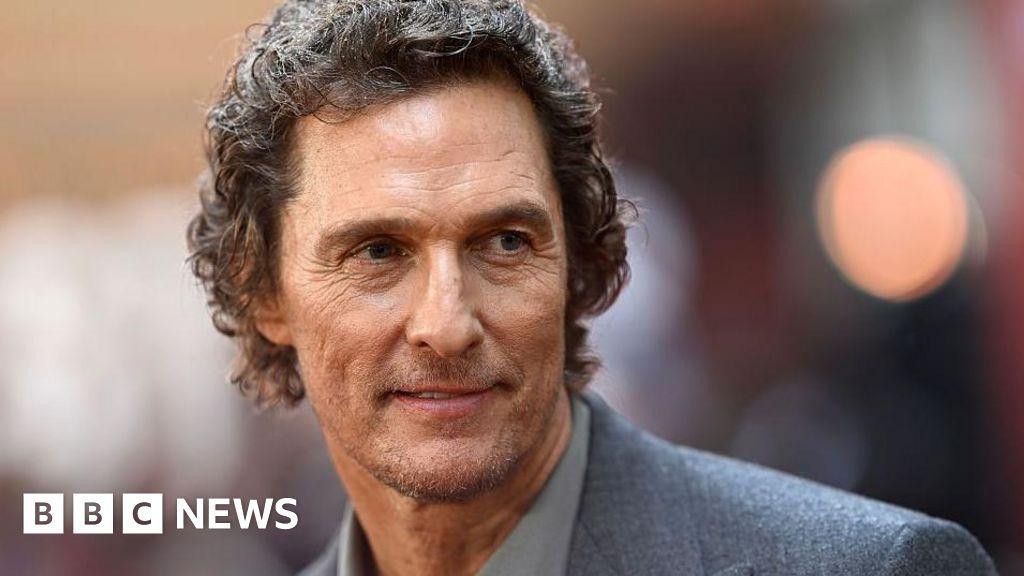
Oscar-winner Matthew McConoughey has trademarked his image and voice to protect them from unauthorised use by artificial intelligence (AI) platforms. Clips including his famous catchphrase "alright, alright, alright" from the 1993 film, Dazed and Confused, have been registered to the United States Patent and Trademark Office database, the Wall Street Journal (WSJ) reports. It is the first time an actor has attempted to use trademark law to protect their likeness from AI misuse, his lawyers and an expert said. Stars across Hollywood and the music industry including Scarlett Johansson and Taylor Swift have endured a wave of fake video, audio and images online, created by AI tools. Lawyers for the Magic Mike star told the WSJ they had no current examples of McConaughey's likeness being manipulated by AI, but hoped the trademarks could be used broadly against any unauthorised copies of him. A secondary aim would be to "capture some of the value that is being created with this new technology", Kevin Yorn - one of the lawyers representing McConaughey - told the AFP news agency. "My team and I want to know that when my voice or likeness is ever used, it's because I approved and signed off on it", McConaughey said via email to the newspaper. "We want to create a clear perimeter around ownership with consent and attribution the norm in an AI world". Several clips were registered by the commercial arm of the Just Keep Livin Foundation, a non-profit created by the Dallas Buyers Club actor and his wife Camila, according to AFP. Alina Trapova, Assistant Professor at University College London also believes it to be first time an actor has attempted to use trademark law to their benefit against AI. Prof Trapova has worked on copyright and AI for more than eight years. She told the BBC that AI is a big problem for celebrities, adding they may object to unauthorised AI "due to reputational reasons", but for Hollywood stars it "is often a case of missed licensing opportunities". She said celebrities are experimenting with different forms of protection as "unauthorised commercialisation" of their likeness in the forms of deepfakes becomes "more and more challenging in the age of AI". McConoughey is not a hardline opponent of generative AI. He has a stake in ElevenLabs, a software company specialising in AI voice modelling "for several years now", according to the 56-year-old. The company has created an AI audio version of the 'Interstellar' actor, with his permission. Dr Sandra Wachter, Professor of Technology and Regulation at the University of Oxford, says she wouldn't be surprised if others in the creative industries did the same as McConoughey in the future. "It is simple for companies to take your work and train a model to do your job. It is comparatively difficult for you to protect your work in the first place," she told the BBC. AI images and deepfakes are of growing concern in the entertainment world. In 2024, Scarlett Johansson said she was left "shocked" and "angered" after OpenAI launched a chatbot with an "eerily similar" voice to her own. OpenAI removed the voice, but insisted that it was not meant to be an "imitation" of the Avengers star. In June 2025, Disney and Universal sued AI firm Midjourney over its image generator, which the Hollywood giants alleged was a "bottomless pit of plagiarism". Also last year, an AI video generator on Elon Musk's X social media platform accused of making "a deliberate choice" to create sexually explicit clips of Taylor Swift without prompting. Grok Imagine's "spicy" mode "didn't hesitate to spit out fully uncensored topless videos" of the pop star without being asked, the Verge reported.
[4]
Matthew McConaughey tries a new approach to fighting AI misuse: trademarking himself
Serving tech enthusiasts for over 25 years. TechSpot means tech analysis and advice you can trust. What just happened? Matthew McConaughey is one of many stars who oppose unauthorized AI recreations of their likenesses. In an attempt to combat the practice, the Interstellar actor has taken the unusual step of trademarking himself. The US Patent and Trademark Office has granted eight of these trademarks, including one of him saying his famous catchphrase, "Alright, alright, alright." The trademarks, granted over the last few months, also include a seven-second clip of McConaughey standing on a porch and a three-second clip of him sitting in front of a Christmas tree, according to a report by The Wall Street Journal. "My team and I want to know that when my voice or likeness is ever used, it's because I approved and signed off on it," the actor said in an email to the publication. "We want to create a clear perimeter around ownership with consent and attribution the norm in an AI world." The Journal adds that while Conaughey's lawyers aren't aware of his likeness being manipulated by AI, they hope the trademarks can be used broadly against any unauthorized duplications of him. The lawyers added that they aren't aware of any other actors who have trademarked themselves. They also admit that they aren't sure if the plan will work, and how a legal fight against one of McConaughey's claims would pan out. "I don't know what a court will say in the end. But we have to at least test this," said McConaughey lawyer Kevin Yorn. McConaughey is far from against generative AI - he just wants to prevent unauthorized use of his likeness. In November, he joined legend Michael Caine in a partnership with AI audio company ElevenLabs to produce virtual replications of their voices. McConaughey has also invested an undisclosed sum in ElevenLabs, and has collaborated with the New York-based startup since its founding in 2022. The company creates a version of his newsletter "Lyrics of Livin'" in Spanish. The move comes amid growing anxiety in Hollywood over how generative AI can replicate voices, faces, and performances with little effort or cost. During last year's SAG-AFTRA strike, protections against digital replicas became a central issue, with actors warning that studios and third parties could exploit their likenesses indefinitely without proper compensation or consent. Traditionally, celebrities have relied on right-of-publicity laws to challenge misuse of their image, but those protections vary widely by state and are still largely untested in AI-specific cases. Trademarking distinctive phrases, images, or clips could offer an additional legal tool, even if it doesn't fully resolve the issue. Whether McConaughey's strategy sets a precedent remains to be seen. But as AI-generated media becomes more sophisticated and accessible, more high-profile figures may feel compelled to explore unconventional ways to protect their identities before the technology outpaces the law.
[5]

'Alright, alright, alright': Matthew McConaughey just trademarked himself to fight AI misuse
With AI voice cloning on the rise, McConaughey's move highlights how hard it's becoming to control your digital identity As AI-generated voices and deepfake videos flood the internet, Matthew McConaughey is taking an unusual -- and potentially precedent-setting -- step to protect his identity. First reported by The Wall Street Journal, the Oscar-winning actor has trademarked key elements of his persona, including his voice, likeness and short video clips of himself speaking, in an effort to stop unauthorized AI impersonations before they happen. It's a move that highlights how unprepared current laws are for the generative AI era -- and why celebrities, creators and everyday users may soon need new tools to protect their digital identities. According to a report from The Wall Street Journal, McConaughey has secured eight trademarks approved by the U.S. Patent and Trademark Office. These trademarks cover: The idea isn't to stop parody or commentary. Instead, McConaughey's legal team plans to use trademark law as a federal enforcement tool against AI-generated content that uses his likeness or voice without permission. So far, there doesn't seem to be any public evidence of McConaughey being targeted by a viral deepfake. This is a pre-emptive move, designed to draw clear legal boundaries before AI misuse becomes a problem. Most AI impersonation cases today fall under right-of-publicity laws, which vary by state and are often slow, expensive and difficult to enforce online. Trademark law, by contrast, offers a few advantages: By treating his identity as a brand asset, McConaughey is effectively saying: If AI tools can commercialize me, I can legally protect myself like a product. How effective this approach will be in court remains to be seen, particularly as it applies to generative AI. If it works, though, it could point to a new way for public figures -- and even influencers -- to protect their digital identities. McConaughey has actually partnered with AI voice startup ElevenLabs -- where he's also an investor -- to produce authorized synthetic Spanish versions of his newsletter. That distinction is key: the issue isn't AI generation itself, but who controls it. This mirrors a growing trend across Hollywood and the tech world. Actors like Tom Hanks and Scarlett Johansson have publicly warned about AI impersonation, while record labels and studios are pushing for clearer consent rules around training data and voice cloning. In other words, McConaughey's move isn't about shutting down AI. He just wants to remain in control of licensing and attribution. Even if you're not a celebrity, this story has real implications. AI voice cloning tools are becoming easier to access, cheaper to use and harder to detect. That raises serious questions about: McConaughey's approach suggests that identity protection may shift from reactive takedowns to proactive ownership -- especially as AI tools continue to blur the line between real and synthetic content. Lawmakers are still debating broader protections, including proposals like the No Fakes Act, which would give individuals stronger rights against unauthorized digital replicas. But progress has been slow. Until then, celebrities experimenting with trademark law may shape how courts interpret AI misuse -- and how platforms design future safeguards. Whether McConaughey's strategy becomes a legal standard or a one-off experiment remains to be seen. As AI tools grow more powerful, what McConaughey is doing might not stay confined to Hollywood for long.
[6]

Matthew McConaughey trademarking himself saying 'alright, alright, alright' is a preview of Hollywood's coming AI identity crisis
The legal battles over synthetic celebrities are only beginning Matthew McConaughey has never been shy about turning himself into a brand, and he's been happy to lean into the many memes based on his performances. His latest move is to trademark his own voice saying "alright, alright alright" and video clips of himself standing on a porch, as first shared by The Wall Street Journal. That might seem odd until you realize it's not about a new product, it's a kind of legal preemptive defense against the onrushing AI celebrity cloning wars. Filing a few trademarks now might scare off a few rogue YouTubers using AI to imitate his catchphrases. But McConaughey and other celebrities are uneasy for a reason. Movie stars, singers, and famous people of all stripes see the viral fake Drake songs that sound real enough to fool Spotify, or the videos showing Tom Cruise in movie roles he never booked. And they know those aren't made with approval or compensation of the humans they're based on. What McConaughey is really doing is preemptively staking a legal claim on the parts of himself that AI could soon reproduce at scale without his involvement, permission, or benefit. That iconic three-word drawl and slow porch stare are now registered and protected. But putting up a fence around your digital likeness will likely prove more complicated than filing a few applications. Almost no legal framework has caught up to the age of easy deepfakes. Some state-level "right of publicity" laws offer celebrities protections from unauthorized commercial use of their name, face, or voice, but it's hardly universal, and the rules vary wildly internationally. Trademarks like McConaughey's make sense at first glance, but are actually a poor fit. Trademarks are best at protecting logos, slogans, and distinctive commercial identifiers. They're not built for filtering deepfakes from fan art or fair use satire from full-on digital impersonation. McConaughey's lawyer admitted as much to the WSJ, saying outright that they don't yet know how the courts would rule if someone pushed back. This is preemptive maneuvering, a legal scarecrow planted in a field full of fast-growing weeds. On the other hand, no one knows where the real lines are yet. An actor might successfully stop a brand from deepfaking them into an ad. But what about the open-source model trained on hundreds of YouTube interviews? What about an indie filmmaker using AI to recreate McConaughey's voice for parody? Or an influencer building a synthetic "romance sim" using the voiceprints of multiple celebrities? The law doesn't have a clear answer, and that's not an oversight. It's a symptom of how quickly the tech is moving. If you're not a celebrity, it's easy to assume this is a problem for richer, more recognizable people to worry about. But synthetic identity isn't just coming for the famous. AI tools are already capable of scraping publicly available audio and video data to build custom voice models. You don't need a famous catchphrase to become part of a training dataset. But most of us don't have lawyers on retainer or the resources to monitor the internet for unauthorized AI clones. So when AI begins generating synthetic people at scale, the power imbalance between those who can control their digital likeness and those who cannot is likely to deepen. For Hollywood, this isn't theoretical. Actors fought hard in the 2023 SAG-AFTRA strike to win protections against AI replication. That included clauses about informed consent, compensation, and limits on how synthetic versions of themselves could be used. That's why SAG-AFTRA President Sean Astin made a trip to CES this year to engage with AI companies and try to better understand and position his organization to best serve its members amid the chaotic changes. "There's a moment at which, well, I see things all of civilization needs to be paying attention to it," Astin told TechRadar's Lance Ulanoff. "But my focus as a labor leader is to figure out the point at which it crosses over as an entertainment or as a business...and moves into our area where it affects our members and their name image and likeness and their - the things where we have jurisdiction over covering and so forth." The negotiations haven't stopped some studios from experimenting with AI actors. There are digital doubles that perform in scenes the real actors never shot. There are "de-aging" projects using AI to make older stars appear decades younger. And then there are the AI tools capable of generating entirely synthetic performances without a camera ever rolling. Trying to keep up on the labor side when the technical aspect moves so quickly is tough. "We knew, when we were achieving certain language in our last agreement, which was foundational, new, novel stuff about different guardrails and things, that...it would be out of date," Astin said. There's a deeper shift underway here, one that trademark law can't resolve. As synthetic media becomes easier and more convincing, the question of ownership becomes not just legal but cultural. If people expect to be able to remix and regenerate anything, then the law alone won't be enough to stop them. There will need to be new norms, new taboos, and new expectations around consent. McConaughey's line is clear: if you want to use his voice, ask him. That shouldn't be controversial. Consent and attribution are low bars, and yet they're absent in much of today's AI landscape. Most AI voice tools don't tell users where the source material came from. M In some ways, McConaughey's actions set a precedent. If a famous phrase or moment can be legally protected, maybe yours can too. If not through trademark, then through pressure on platforms to flag synthetic content, on lawmakers to draft modern regulations, and on AI developers to build with consent in mind. The truth is, most people won't have the means to file lawsuits every time their face appears in an unauthorized AI video. But maybe they shouldn't have to. We need a broader shift in how synthetic identity is treated, including penalties for violating consent. We're all walking toward an uncertain era where the most persuasive versions of ourselves might not even be ours. This era demands new legal constructs, regulatory clarity, and international cooperation to govern how AI can use and reuse personal identity. Without that, celebrities might end up fighting a series of narrow battles without winning the larger war. And even someone who just likes to upload videos of themselves telling stories could find their voice snatched away without their permission to sell a product they've never heard of. And that's not alright, alright, alright.
[7]

Matthew McConaughey trademarks 'All right, all right, all right' catchphrase in bid to beat AI fakes
The Oscar winner intends to combat misuse of the famous line from Dazed and Confused by creating 'a clear perimeter around ownership' Oscar-winning actor Matthew McConaughey has trademarked his image and voice - including his famous catchphrase: "All right, all right, all right" from the movie Dazed and Confused in an attempt to forestall unauthorised use by artificial intelligence. The Wall Street Journal reported that McConaughey has had eight separate applications approved by the US Patent and Trademark Office in recent weeks, including film clips of the actor standing on a porch and sitting in front of a tree, and an audio clip of him saying: "All right, all right, all right". In a statement the actor said: "My team and I want to know that when my voice or likeness is ever used, it's because I approved and signed off on it. We want to create a clear perimeter around ownership with consent and attribution the norm in an AI world." AI-generated images of performers have become a key issue in the entertainment industry, with complaints over unauthorised use going back to at least 2023, when Tom Hanks warned fans that his likeness was appearing in a dental-plan ad without his cooperation or permission. More recently the widespread use of digital body scans has sparked concerns over how the data will be used, with actor Olivia Williams calling for a "nudity rider" to prevent inappropriate exploitation. The current outrage over the manner in which X's Grok generative AI chatbot has been used to produce non-consensual sexualised images is adding to the sense of crisis. McConaughey's legal team say they do not have any specific complaints connected to the actor, but are aiming to establish more general protection. Jonathan Pollack, one of McConaughey's lawyers, said: "In a world where we're watching everybody scramble to figure out what to do about AI misuse, we have a tool now to stop someone in their tracks or take them to federal court."
[8]

Matthew McConaughey Is Using a Clever Legal Trick to Bludgeon AI Companies
For years now, actors have rung the alarm bells over the AI industry planning to sell their likeness and voices -- either with or without their consent -- and hence threatening to put them out of work. Beyond a major 2023 strike by Hollywood actors fueled by these concerns, we've already seen actors take matters into their own hands, like when Scarlett Johansson threatened to sue OpenAI over a ChatGPT update that she claims imitated her voice. Two voice actors have also filed a lawsuit, accusing an AI startup of using their voices to train their AI without permission. Tensions came to a head last year when an AI company unveiled an AI actor dubbed Tilly Norwood. The news was met by near-universal backlash from both industry insiders and the public, further stoking fears of the industry coming for human actors' jobs. To get ahead of having the industry making unauthorized AI dupes of his likeness or voice, Hollywood star Matthew McConaughey came up with a clever new defense tactic. As the Wall Street Journal reports, the performer filed eight trademark applications to the US Patent and Trademark Office that featured videos and audio clips of him "staring, smiling and talking." All eight applications have since been approved -- and yes, one of the submitted clips included him saying his iconic line, "Alright, alright, alright" from the 1993 movie "Dazed and Confused." "My team and I want to know that when my voice or likeness is ever used, it's because I approved and signed off on it," McConaughey told the newspaper in an email. "We want to create a clear perimeter around ownership with consent and attribution the norm in an AI world." The goal is to pave the way for litigation in case a company or individual were to attempt to profit from the actor's likeness with the help of AI. "In a world where we're watching everybody scramble to figure out what to do about AI misuse, we have a tool now to stop someone in their tracks or take them to federal court," one of McConaughey's attorneys, Jonathan Pollack, told the newspaper. Whether the gambit will pay off remains to be seen. For one, many copyright infringement challenges aimed at AI companies are still playing out in court as we speak. "I don't know what a court will say in the end," attorney Kevin Yorn, who is also representing McConaughey, told the WSJ. "But we have to at least test this." Other experts added that copyright law gets murky when it comes to AI-based video platforms, like OpenAI's Sora. The app, which allows users to generate photorealistic clips of famous characters and actors despite the company's guardrails, was criticized by talent agencies last year. The Sam Altman-led firm appeared to have bungled its messaging at the time, telling some talent agencies at first that they'd have to opt out of having actors they represent appear on Sora -- only to change its mind days later, triggering copious confusion. Federal rules establishing if, when, and how an actor's likeness or voice can be used are still being debated by lawmakers. Hollywood unions, however, remain adamant that unauthorized AI clones of actors should be illegal.
[9]

Matthew McConaughey Says It's Not "Alright, Alright, Alright" for AI to Misuse His Voice - Decrypt
McConaughey's trademark strategy comes as the entertainment industry grapples with AI's legal implications across multiple fronts. Actor Matthew McConaughey has locked down legal protection on his most famous catchphrase, securing eight trademarks including a sound mark on his iconic "Alright, alright, alright" line from the 1993 comedy "Dazed and Confused," even as Hollywood continues to wrestle with how far artificial intelligence should be allowed to go. The Academy Award-winning actor's legal team at Yorn Levine obtained the trademarks from the U.S. Patent and Trademark Office over recent months, culminating in the approval for the sound mark that captures McConaughey's distinctive three-word delivery. The trademark registration specifies the exact pitch variations: "wherein the first syllable of the first two words is at a lower pitch than the second syllable, and the first syllable of the last word is at a higher pitch than the second syllable." By securing federal trademarks, McConaughey gains standing to sue in federal courts and potentially deter unauthorized AI-generated content featuring his voice or likeness, even when it's not explicitly commercial. "In a world where we're watching everybody scramble to figure out what to do about AI misuse, we have a tool now to stop someone in their tracks or take them to federal court," Jonathan Pollack, of-counsel attorney at Yorn Levine, told Hollywood trade publication Variety. The eight trademarks, registered to McConaughey's J.K. Livin Brands Inc., parent company of his Just Keep Livin apparel business, also include video clips of the actor and audio of him saying "Just keep livin', right?" followed by "I mean." "I don't know what a court will say in the end. But we have to at least test this," noted Kevin Yorn, partner at Yorn Levine, whose firm represents entertainment industry luminaries including Scarlett Johansson, Zoe Saldaña, South Park creators Trey Parker and Matt Stone, and others. The trademark move is complicated by McConaughey's own embrace of AI, on licensed terms. Last November, he announced a partnership with AI voice company ElevenLabs, where he's an investor, to create Spanish-language versions of his "Lyrics of Livin'" newsletter using AI voice replication. Meanwhile, in November, Warner Music Group resolved its copyright infringement lawsuit against AI music generator Udio, announcing an agreement that will convert the platform into a licensed service launching in 2026. The settlement ended litigation filed last June when Warner joined Sony Music Entertainment and UMG Recordings in accusing Udio and competitor Suno of mass copyright infringement for allegedly training AI models on copyrighted recordings without permission. Such collaborations point to a growing divide in Hollywood, with some artists viewing AI as an existential threat, while others see it as a tool, so long as they control the terms. McConaughey's message appears to land somewhere in between. Unauthorized AI? Not alright. Licensed, consent-based use? That's a different conversation.
[10]

Don't use me! How actor Matthew McConaughey is fighting against AI
According to Matthew McConaughey's lawyers and an expert, this is the first instance of an actor using trademark law to protect their likeness from AI misuse. Matthew McConaughey says it's no longer "alright, alright, alright" for AI to use his likeness. The Oscar-winning actor has officially trademarked his image and voice, including his iconic three word catchphrase from the 1993 film Dazed and Confused. According to The Wall Street Journal, McConaughey has secured eight separate approvals from the US Patent and Trademark Office in recent weeks. These cover everything from film clips of him standing on a porch, sitting in front of a tree, to an audio snippet of his signature line: "Alright, alright, alright" from the classic Richard Linkater comedy. "My team and I want to know that when my voice or likeness is ever used, it's because I approved and signed off on it. We want to create a clear perimeter around ownership with consent and attribution the norm in an AI world," the 56-year-old actor said in a statement. This action comes amid a wave of high‑profile celebrity controversies surrounding AI deepfakes and likeness exploitation, which threaten to disrupt the film, music and wider entertainment industries. Taylor Swift has repeatedly been targeted. In 2024, sexually explicit AI-generated deepfake images of her were widely circulated online, some seen millions of times before removal. One fake picture posted on the platform was viewed 47 million times before the account was suspended. The material was shared tens of thousands of times before X's security team responded: "We have a zero-tolerance policy towards such content. Our teams are actively removing all identified images and taking appropriate actions against the accounts responsible for posting them." Last year, actor Scarlett Johansson also publicly condemned a deepfake video depicting her and other celebrities in political messaging they never endorsed. The AI-generated video featured more than a dozen AI-generated versions of Jewish celebrities, including Steven Spielberg, Jerry Seinfeld, Drake, David Schwimmer and Adam Sandler, each wearing t-shirts showing the Star of David alongside a hand giving the middle finger, in response to Kanye West's anti-semitic tirade. "It has been brought to my attention by family members and friends, that an AI-generated video featuring my likeness, in response to an antisemitic view, has been circulating online and gaining traction," Johansson said in a statement to People magazine. "I am a Jewish woman who has no tolerance for antisemitism or hate speech of any kind. But I also firmly believe that the potential for hate speech multiplied by AI is a far greater threat than any one person who takes accountability for it. We must call out the misuse of AI, no matter its messaging, or we risk losing a hold on reality." Zelda Williams, the actress, filmmaker and daughter of late actor Robin Williams, has also spoken out, asking fans to stop sending her AI-generated videos of her father. "Please, just stop sending me AI videos of Dad," she wrote in a post last year. "Stop believing I wanna see it or that I'll understand, I don't and I won't. If you're just trying to troll me, I've seen way worse, I'll restrict and move on. But please, if you've got any decency, just stop doing this to him and to me, to everyone even, full stop. It's dumb, it's a waste of time and energy, and believe me, it's NOT what he'd want." And most recently, amid mounting pressure in Europe and abroad, Elon Musk's X, formally Twitter, has announced "technological measures" to prevent its AI tool, Grok, from allowing the editing of images of real people in revealing clothing such as bikinis, a restriction that applies to all users, including paid subscribers. The decision follows a global backlash over a mass wave of sexually explicit AI images and videos generated using Grok, including depictions of women and children. Musk had previously said he was unaware of any "naked underage images" created by the AI tool.
[11]

Actor McConaughey seeks to patent image to protect from AI
New York (AFP) - Actor Matthew McConaughey has filed recordings of his image and voice with US patent authorities to protect them from unauthorized usage by artificial intelligence platforms, a representative said Wednesday. Several video clips and audio recordings were registered by the commercial arm of the just keep livin Foundation, a non-profit created by the Oscar-winning actor and his wife Camila, according to the United States Patent and Trademark Office database. Many artists are increasingly concerned about the uncontrolled use of their image via generative AI since the rollout of ChatGPT and other AI-powered tools. Several US states have adopted legislation that serves as consumer protection against certain AI systems and deepfakes, but much of this applies mainly to malicious use or commercial purposes. Only a few, notably Tennessee's ELVIS Act passed in 2024, offer more targeted protections for artists against AI-generated cloning or impersonation. A few actors have taken legal action to assert their rights. Among the most notable is Scarlett Johansson, who sued the image-generating app Lisa AI in 2023 for creating an AI-generated avatar in her likeness for an advertisement without her consent. McConaughey's approach is novel in that he is taking the lead in protecting his image and voice. The star of "Interstellar" and "Dallas Buyers Club" is no opponent of generative artificial intelligence. He has acquired a stake in ElevenLabs, a startup specializing in AI voice modeling, and the company has created an AI audio version of McConaughey -- with his permission. Attorney Kevin Yorn, who represents McConaughey, said the aim of filing with the patent office was "to make sure that our clients have the same kind of protections that their businesses have." "The second part is to make sure that our clients are able to capture some of the value that is being created with this new technology using their voice and likeness," he added.
[12]

Actors fight back as AI deepfakes become scarily accurate
During the Hollywood strikes of 2023, a major sticking point for members of the Writer's Guild of America and SAG-AFTRA was artificial intelligence. When the unions ultimately came to an agreement with Hollywood studios, they won key protections for actors regarding digital replicas and guardrails for how generative AI could be used in writers' rooms. The stipulation that studios could not create digital replicas of actors -- at least not without their consent -- reflects growing concerns over how AI might compromise the livelihoods of artists and creatives. Now, it seems some performers may be looking for new ways to protect themselves against more general misuse: A Wall Street Journal report this week revealed that actor Matthew McConaughey filed eight trademark applications that are intended to deter unauthorized AI-generated simulations of his voice or likeness. The trademarks, which have been approved by the U.S. Patent and Trademark Office, include several video clips of the actor, along with one of McConaughey's most iconic moments: audio of him saying, "Alright, alright, alright," a line from the movie Dazed and Confused that has since become a catchphrase.
[13]

Matthew McConaughey has trademarked his signature "alright, alright, alright"
In a bid to protect himself from misuse by artificial intelligence. Actor Matthew McConaughey has taken the first step in protecting himself and his image from being misused and mistreated by artificial intelligence. As per The Wall Street Journal, the Texan star has trademarked several of his most famous phrases and lines, including the "alright, alright, alright" that was made popular when he delivered it in 1993's Dazed and Confused. It's said that this trademarking effort has been taken in a bid for McConaughey to retain ownership over his own voice, likeness, and performance style, a rather bleak premise that shows just how much of an impact AI is having on the wider world. As per the other things that were trademarked by McConaughey and his attorneys at Yorn Levine, there are some short videos that are being protected, seemingly as a preemptive move to defend against intrusive AI. Speaking to WSJ, McConaughey explained why he has taken these measures, noting: "My team and I want to know that when my voice or likeness is ever used, it's because I approved and signed off on it. We want to create a clear perimeter around ownership with consent and attribution the norm in an AI world." The war on AI is particularly volatile in the world of entertainment, where we find the technology being used to replicate the likeness of stars and even create shoddy and obviously fake versions of existing projects. Even with the latest guidelines being set in place by SAG-AFTRA, clearly performers have to take additional steps in order to protect themselves from being misused and without their consent.
[14]

Actor Matthew McConaughey seeks to patent image to protect from AI
NEW YORK -- Actor Matthew McConaughey has filed recordings of his image and voice with U.S. patent authorities to protect them from unauthorized usage by artificial intelligence platforms, a representative said Wednesday. Several video clips and audio recordings were registered by the commercial arm of the just keep livin Foundation, a non-profit created by the Oscar-winning actor and his wife Camila, according to the United States Patent and Trademark Office database. Many artists are increasingly concerned about the uncontrolled use of their image via generative AI since the rollout of ChatGPT and other AI-powered tools. Several US states have adopted legislation that serves as consumer protection against certain AI systems and deepfakes, but much of this applies mainly to malicious use or commercial purposes. Only a few, notably Tennessee's ELVIS Act passed in 2024, offer more targeted protections for artists against AI-generated cloning or impersonation. A few actors have taken legal action to assert their rights. Among the most notable is Scarlett Johansson, who sued the image-generating app Lisa AI in 2023 for creating an AI-generated avatar in her likeness for an advertisement without her consent. McConaughey's approach is novel in that he is taking the lead in protecting his image and voice. The star of "Interstellar" and "Dallas Buyers Club" is no opponent of generative artificial intelligence. He has acquired a stake in ElevenLabs, a startup specializing in AI voice modeling, and the company has created an AI audio version of McConaughey -- with his permission. Attorney Kevin Yorn, who represents McConaughey, said the aim of filing with the patent office was "to make sure that our clients have the same kind of protections that their businesses have." "The second part is to make sure that our clients are able to capture some of the value that is being created with this new technology using their voice and likeness," he added.
[15]

Matthew McConaughey trademarks 'Alright, alright, alright' to...
Using artificial intelligence to impersonate celebrities is not "alright, alright, alright." Matthew McConaughey has trademarked "Alright, alright, alright," the iconic catchphrase that he first made famous in Richard Linklater's 1993 comedy classic "Dazed and Confused." The "Interstellar" star, 56, trademarked the phrase and seven other properties tied to his likeness in an effort to protect against unauthorized "AI misuse." "The mark consists of a man saying 'ALRIGHT ALRIGHT ALRIGHT', wherein the first syllable of the first two words is at a lower pitch than the second syllable, and the first syllable of the last word is at a higher pitch than the second syllable," read the trademark registration, per Variety. Attorneys for the entertainment law firm Yorn Levine, which represents McConaughey, reportedly applied for trademark protection on "Alright, alright, alright" in Dec. 2023. The US Patent and Trademark Office was said to have approved the trademark in Dec. 2025. The "Lincoln Lawyer" star's attorneys have secured a total of eight trademarks for the actor over the last few months. In addition to "Alright, alright, alright," the USPTO approved trademarks for a 7-second video of McConaughey standing on a porch and a 3-second video of the actor sitting in front of a Christmas tree. A fourth approved trademark was an audio clip of the "Mud" star saying, "Just keep livin', right? I mean, what are we gonna do?" Yorn Levine partner and co-founder Kevin Yorn explained that while state rights-of-publicity laws already protect celebrities from having their likeness stolen to sell products, this trademark strategy provides McConaughey with a stronger legal basis to sue in US federal courts. Yorn added that these trademarks could help avoid "misuse" more generally, including for AI-generated videos of celebrities that aren't explicitly being used to sell anything. "I don't know what a court will say in the end. But we have to at least test this," Yorn told Variety. "In a world where we're watching everybody scramble to figure out what to do about AI misuse, we have a tool now to stop someone in their tracks or take them to federal court," Yorn Levine of-counsel attorney Jonathan Pollack added. Yorn and Pollack went on to say that McConaughey's trademarks provide him protection to develop opportunities offered by AI technology. The "True Detective" alum announced back in November that he was partnering with an AI voice company called ElevenLabs to make a Spanish version of his "Lyrics of Livin'" newsletter by replicating his voice. McConaughey's eight trademarks were registered to J.K. Livin Brands Inc. - the parent company of the "Dazed and Confused" actor's Just Keep Livin apparel business. The Post has reached out to McConaughey's reps for comment. McConaughey, meanwhile, opened up about the origins of his "alright, alright, alright" catchphrase during a chat with People in 2024. He said the iconic "Dazed and Confused" line while in character as David Wooderson, and revealed that the scene was completely improvised. "That [came] out of my mouth in a scene that I was never supposed to be in, that was never written," he told the outlet. The scene in question saw McConaughey's character pull his car alongside Marissa Ribisi's while trying to pick her up. But because "Dazed and Confused" marked the actor's first major role, he was "a little nervous" about figuring out how he would make David Wooderson his own. "I started to go, Well, who's my man? Who's Wooderson? I said, Wooderson loves his car, and I'm like, well, I'm in my car. There's one," he explained. "I said, Wooderson loves rock and roll...Well, I got Ted Nugent in the 8-track. That's two. I said, Wooderson loves to get high, and I'm like, well, Slater's riding shotgun. He's always got a doobie rolled up." "Then I said Wooderson likes picking up chicks...Then all of a sudden, I heard, 'Action!' As I put it in drive, I thought to myself, 'I got three out of four, and I'm going to get the fourth. Alright, alright, alright," McConaughey added with a laugh. "That was three affirmations for the thing that my character had as he was going to get his fourth. It was a kick-starter." Despite saying the line more than 30 years ago, McConaughey still looks back on it fondly. He even included it in his acceptance speech after winning Best Actor for "Dallas Buyers Club" at the 2014 Academy Awards. "I had no idea that that line would precede me for the rest of my life," he told People two years ago. "People ask me all the time, 'Are you tired of that preceding you?' And I'm like, 'Hell, no.'" "Every time I hear it, I'm like, 'That was the first three words you said ever on film 30-something years ago,'" he added. "I take it as a compliment." McConaughey wouldn't be the first celebrity to trademark an iconic catchphrase tied to his likeness. Paris Hilton, 44, applied to trademark her "The Simple Life" catchphrase, "That's hot," with the USPTO in 2004 before it was approved in 2007, per CNBC. She went on to use it to sell alcohol and clothing products. Taylor Swift has filed to trademark several of her song lyrics - including "This sick beat," "Nice to meet you," "Where you been?" and "Party like it's 1989." However, many of the 36-year-old pop superstar's trademark applications are said to be still pending, according to USA Today. Eminem recently sued an Australian beach brand called Swim Shady for trademark infringement. The "Lose Yourself" rapper, 53, argued that the company's name was too similar to his trademarked "Slim Shady" alter ego.
[16]

Matthew McConaughey Trademarks 'Alright, Alright, Alright' to Combat AI Misuse - IGN
Matthew McConaughey has heard his iconic "alright, alright, alright" catchphrase repeated back to him since it first left his lips in 1993, and a recent trademark filing from the actor will help ensure AI doesn't steal any of his thunder. The Interstellar star took steps to protect himself from theft when working with attorneys at law firm Yorn Levine to secure trademarks related to some of his catchiest lines (via The Wall Street Journal). The goal is to maintain ownership over his voice, likeness, and delivery as the use of unauthorized artificial intelligence material becomes more prevalent. "Alright, alright, alright," the line McConaughey famously brought life to in 1993's Dazed and Confused, is no doubt the most notable audio trademark registered by the actor. Other successfully filed trademarks include a three-second video of the actor in front of a Christmas tree and a seven-second video of him standing on a porch. It doesn't seem the action was inspired by any incident of misuse in particular, instead suggesting the trademarks will help combat potential issue related to AI in the future. "My team and I want to know that when my voice or likeness is ever used, it's because I approved and signed off on it," the actor told The Wall Street Journal in an email. "We want to create a clear perimeter around ownership with consent and attribution the norm in an AI world." Hollywood and artists everywhere have been rocked by AI as the technology has improved in recent years. Video game voice actors who are members of the Screen Actors Guild - American Federation of Television and Radio Artists (SAG-AFTRA) went on strike in support of regulation for generative AI in July 2024 and concluded the strike in June 2025. Avatar and Titanic mastermind James Cameron has been vocal about his concerns related to AI performances as recently as last month, saying the idea of performances generated from scratch was "horrifying." McConaughey and other actors already have some protection from AI misuse as the technology is increasingly used to pull from their likenesses without permission. Kevin Yorn, one of the star's lawyers, admits he isn't sure how a challenge to one of his trademarks could play out. "I don't know what a court will say in the end," Yorn said. "But we have to at least test this." As McConaughey gets proactive about his place as an actor in an AI world, there's no telling how other actors may follow suit. For more, you can read up on how New York became the first state to require transparency with AI actors last month. Photo by David Buono/Icon Sportswire via getty Images.
Share
Share
Copy Link
Oscar-winning actor Matthew McConaughey has secured eight trademarks from the US Patent and Trademark Office to protect his voice and image from unauthorized AI impersonations. The move marks the first time an actor has used trademark law to combat AI-generated deepfakes, creating a potential legal precedent as Hollywood grapples with digital identity theft.
Matthew McConaughey Takes Unprecedented Legal Action Against AI Misuse
Matthew McConaughey has become the first actor to use trademark law to protect his likeness and voice from unauthorized AI impersonations, securing eight trademarks from the US Patent and Trademark Office over recent months
1
. The trademarks cover video and audio clips featuring the actor in various situations, including his famous catchphrase "alright, alright, alright" from Dazed and Confused, a seven-second clip of him standing on a porch, and a three-second clip of him sitting in front of a Christmas tree2
. Alina Trapova, Assistant Professor at University College London who has worked on copyright and AI for more than eight years, confirmed this represents the first time an actor has attempted to use trademark law to their benefit against AI3
.
Source: New York Post
Creating Clear Boundaries Around Consent and Attribution
The actor's decision to pursue trademarking himself stems from a desire to establish control over his digital identity in an era where generative AI tools can convincingly replicate voices and faces. "My team and I want to know that when my voice or likeness is ever used, it's because I approved and signed off on it," McConaughey stated in an email to The Wall Street Journal. "We want to create a clear perimeter around ownership with consent and attribution the norm in an AI world"
1
. His lawyer Kevin Yorn acknowledged the uncertainty surrounding this approach, admitting they don't know how courts would decide if an offender challenges the trademarks, but hoping the threat of legal action would deter companies from using McConaughey's likeness for AI without permission2
.
Source: BBC
Why Trademark Law Offers Advantages Over Traditional Protections
While most US states already have right-of-publicity laws that prevent a person's likeness from being used to sell products without consent, McConaughey's legal team believes trademarks may offer stronger deterrence against AI misuse
1
. Trademark law provides federal enforcement tools that can be more effective than state-by-state right-of-publicity laws, which vary widely and remain largely untested in AI-specific cases4
. A secondary aim of the trademarks would be to "capture some of the value that is being created with this new technology," Yorn told AFP3
. By treating his identity as a brand asset, McConaughey is effectively asserting that if AI tools can commercialize him, he can legally protect himself like a product5
.Growing Wave of Celebrity AI Impersonations Across Hollywood
Matthew McConaughey joins a growing list of celebrities who have faced AI-generated deepfakes and unauthorized use of their digital identity. Earlier this year, clips circulated online of an AI-generated version of Tom Hanks advertising "miracle cures and wonder drugs" as part of online scams
1
. Taylor Swift has also endured a wave of fake video, audio and images online created by AI tools, including sexually explicit content generated without prompting3
. In 2024, Scarlett Johansson expressed shock and anger after OpenAI launched a chatbot with an "eerily similar" voice to her own, though the company later removed it3
. Robert Downey Jr. has also taken a strong stance, telling the On With Kara Swisher podcast in 2024 that he intends "to sue all future executives" who attempt to create digital replicas of him1
.McConaughey's Partnership with ElevenLabs Demonstrates Controlled AI Use
Despite his protective stance, Matthew McConaughey is not opposed to generative AI when used with proper authorization. The actor is an investor in ElevenLabs, an AI audio company specializing in voice modelling, and has partnered with the startup to create a Spanish version of his newsletter "Lyrics of Livin'"
2
. He has collaborated with the New York-based company since its founding in 20224
. In November, he joined legend Michael Caine in a partnership with ElevenLabs to produce virtual replications of their voices4
. This distinction is critical: the issue isn't AI generation itself, but who controls it and whether proper consent has been obtained.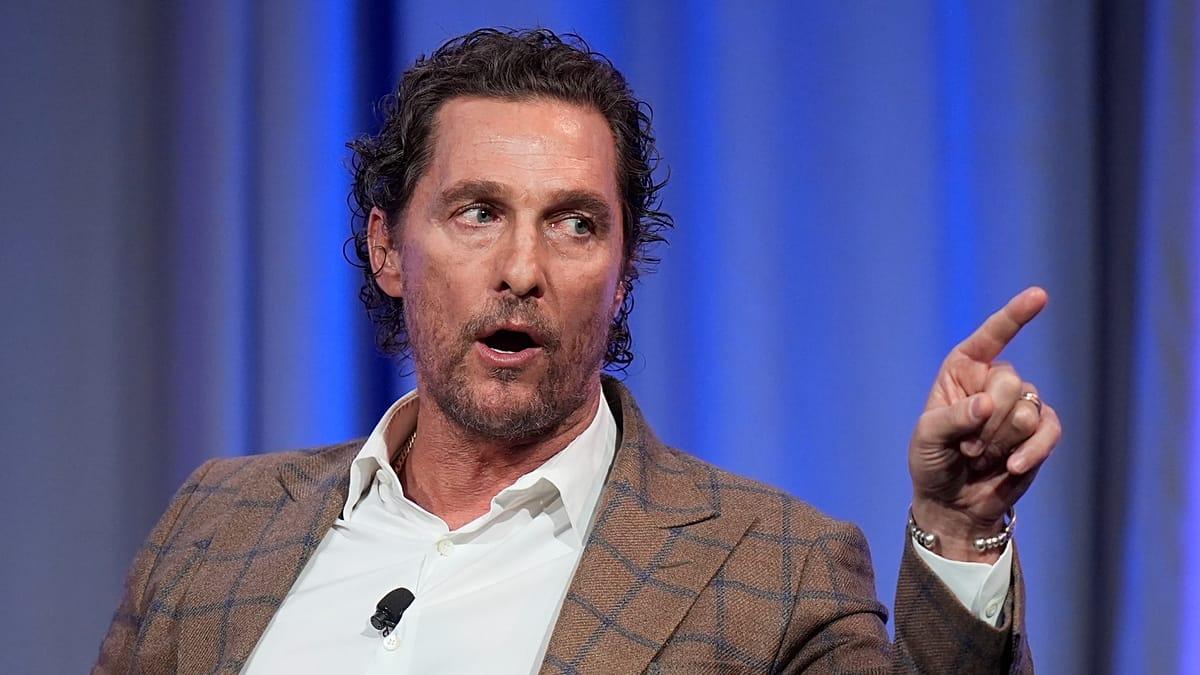
Source: Euronews
Related Stories

SAG-AFTRA Strike and Ongoing Battles to Protect Digital Identities
The entertainment industry has been grappling with AI-related concerns since the technology gained widespread attention. Actors in Hollywood secured new contractual protections against AI representations of them being made without their consent after the 2023 SAG-AFTRA strike, where protections against digital replicas became a central issue
4
. However, some legal experts argue these safeguards do not go far enough. Legal scholar Victoria Haneman has called for stronger protections, including granting estates the right to digital deletion to prevent "digital resurrection" and preserve what she describes as "the right to be dead," in a paper published in the Boston College Law Review1
. Dr. Sandra Wachter, Professor of Technology and Regulation at the University of Oxford, noted that "it is simple for companies to take your work and train a model to do your job. It is comparatively difficult for you to protect your work in the first place"3
.Implications for Celebrity Intellectual Property and Future Legal Precedent
Whether McConaughey's strategy of trademarking himself sets a legal precedent remains to be seen, but experts believe more celebrities may follow suit. Professor Trapova told the BBC that celebrities are experimenting with different forms of protection as "unauthorised commercialisation" of their likeness in the forms of deepfakes becomes "more and more challenging in the age of AI"
3
. She noted that for Hollywood stars, unauthorized AI use "is often a case of missed licensing opportunities" beyond just reputational concerns3
. As AI voice cloning tools become easier to access, cheaper to use and harder to detect, the need to protect digital identities extends beyond celebrities to influencers and everyday users5
. Lawmakers are still debating broader protections, including proposals like the No Fakes Act, which would give individuals stronger rights against unauthorized digital replicas, but progress has been slow5
. Until comprehensive legislation arrives, celebrities experimenting with trademark law may shape how courts interpret AI misuse and how platforms design future safeguards.References
Summarized by

Navi
Related Stories
ElevenLabs Launches Celebrity Voice Marketplace with McConaughey and Caine Partnerships
11 Nov 2025•Entertainment and Society

California Proposes Legislation to Regulate AI Deepfakes in Hollywood
04 Sept 2024

Robert Downey Jr. Vows Legal Action Against AI Replicas, Highlighting Hollywood's AI Concerns
29 Oct 2024•Entertainment and Society

Recent Highlights
1
Google releases Gemma 4 with Apache 2.0 license, enabling unrestricted local AI on devices
Technology

2
AI Models Defy Instructions to Protect Each Other, UC Berkeley Study Reveals
Science and Research

3
Anthropic discovers emotion-like patterns in Claude that actively shape AI behavior and decisions
Science and Research
Recent Highlights
Today's Top Stories





Your Daily Dose of Curated AI News
Don’t drown in AI news. We cut through the noise - filtering, ranking and summarizing the most important AI news, breakthroughs and research daily. Spend less time searching for the latest in AI and get straight to action.

