Medical schools deploy AI patients to transform how student doctors learn clinical skills


2 Sources
2 Sources
[1]
AI 'patients' used to help train student doctors
Medical students learning at universities and a hospital have been practising talking to patients using artificial intelligence (AI). Dr Chris Jacobs, a GP at Merchiston Surgery in Swindon, has been using AI with his students at Great Western Hospital as well as the University of Bristol and the University of Bath. Students are presented with a database of options and can then talk to and get responses from an AI patient with realistic faces and voices. "If we can create more competent communicators we'll hopefully have happier patients and happier doctors," Jacobs said. He said students often have to practise with each other or book days with actors, but AI adds to what they can use and also means students can learn more at home. "What's special about this, it has lots of layers to it where we're creating real emotions, real patients that doctors, nurses, students can all train with in a safe fashion as many times as they need to to become more competent," he added. He said that poor communication between patients and staff can not only mean patients do not get everything they need, it can also cost the NHS money. "There's the rapport building, there's sometimes the lack of detail we get from a patient which creates the misdiagnosis," he said. The AI patients are created using a specialist system called SimFlow which develops the simulations. Jacobs said he wants to see AI used more widely in healthcare. "I think we need to continue innovating, we need to try to introduce this into healthcare but also take a stance where we're looking at the results," he added. "We take an evidence-based approach to this. It isn't just here's the technology, off you go. [It is] here's the technology, does it work? And that's what we're trying to answer at Great Western Hospital." Follow BBC Wiltshire on Facebook, X and Instagram. Send your story ideas to us on email or via WhatsApp on 0800 313 4630.
[2]
Medical Schools Use AI Patients to Help With Clinical Training | PYMNTS.com
The move trains students in communication, diagnosis and clinical reasoning, shifting medical education away from episodic, resource-intensive simulations and toward continuous, software-driven practice. Instead of relying mainly on standardized patients played by actors or limited clinical rotations, programs are deploying virtual patients that respond in real time, adapt to questioning and simulate a wide range of medical and emotional scenarios. In the U.K., general practitioners and educators have begun integrating AI patients into undergraduate and postgraduate training, according to the BBC. Students interact with lifelike digital patients that speak naturally, display facial expressions and provide consistent answers based on structured medical profiles. Educators say the systems allow repeated practice of consultations that are often difficult to schedule in real settings, such as sensitive conversations around mental health or chronic illness. The goal is not to replace human practice patients but to give students more opportunities to refine how they listen, explain and respond. This approach reflects mounting pressure on medical education systems facing faculty shortages, rising costs and limited access to clinical placements. AI-based training tools offer a way to scale practice without adding proportional strain on hospitals or instructors. From Standardized Patients to Always-On Simulation For decades, standardized patients have been a core part of medical training, but their use is constrained by cost and availability. AI patients aim to remove those limits by offering on-demand, repeatable simulations that can be used anytime and anywhere. At NYU Langone Health, faculty are experimenting with AI-driven clinical training environments that combine large language models with retrieval systems grounded in vetted medical knowledge. As VentureBeat reports, these platforms use agentic architectures that allow virtual patients to evolve during an encounter, changing symptoms or emotional tone based on how a student asks questions. Students can probe deeper, make diagnostic missteps and correct themselves, all while the system tracks decision paths and communication quality. In Illinois, Southern Illinois University School of Medicine has introduced an AI patient named Randy Rhodes into its curriculum. According to WPSD, students speak with the virtual patient as they would in a clinic, practicing history-taking, differential diagnosis and patient education. Faculty can then review transcripts to assess not just whether students reached the correct diagnosis, but how they interacted along the way. Instead of preparing for a single high-stakes simulation, students can practice repeatedly, encounter rare conditions that may not appear during rotations and receive structured feedback after every session. AI also standardizes experiences across cohorts, ensuring that all students are exposed to the same core scenarios rather than relying on chance clinical encounters. Expanding Medical Education Beyond basic simulation, generative AI is reshaping how medical schools teach and evaluate clinical skills. Harvard Medical School reports that faculty are using AI tools to support training in clinical reasoning, documentation and professionalism, alongside traditional bedside skills. Virtual patients can be designed to represent diverse backgrounds, languages and social contexts, allowing students to practice culturally sensitive care that might not be readily available in local clinical settings. And other medical schools are using AI models to cut drug research costs as well ChatGPT to train students, according to PYMNTS. The Association of American Medical Colleges outlines five major ways U.S. schools are employing AI, including simulation, tutoring, assessment and curriculum development. AI patients play a central role in this shift by generating detailed data on student performance. Educators can analyze whether students ask open-ended questions, interrupt patients, miss key symptoms or adjust explanations based on patient understanding. That data-driven layer marks a departure from traditional evaluation methods. Instead of relying solely on faculty observation during limited encounters, schools can assess patterns across dozens of simulated visits. Instructors can identify strengths and weaknesses early and tailor coaching accordingly. Supporters argue this leads to more consistent training outcomes and better-prepared clinicians. Challenges remain, including ensuring accuracy, addressing potential bias in training data and integrating new tools into established curricula. Schools are responding by keeping faculty in the loop, curating medical knowledge sources and using AI primarily for formative rather than high-stakes assessment.
Share
Share
Copy Link
Medical schools across the U.K. and U.S. are integrating AI patients into their curricula to train student doctors in communication and diagnosis. Students interact with lifelike virtual patients that respond in real time, display emotions, and simulate complex medical scenarios. The shift addresses faculty shortages and rising costs while offering students unlimited practice opportunities that traditional actor-based training cannot provide.
AI Patients Reshape Medical Training Across Universities
Medical schools are deploying artificial intelligence to fundamentally change how they train student doctors. Students at institutions including Great Western Hospital, the University of Bristol, and the University of Bath now practice consultations with AI patients that feature realistic faces, voices, and emotional responses
1
. These AI-powered virtual patients respond in real time, adapting their answers based on how students ask questions and conduct examinations.
Source: PYMNTS
Dr. Chris Jacobs, a GP at Merchiston Surgery in Swindon who works with medical students, explains that poor patient-doctor communication can lead to misdiagnosis and cost the NHS money. "There's the rapport building, there's sometimes the lack of detail we get from a patient which creates the misdiagnosis," he notes
1
. The AI-powered simulations aim to create more competent communicators, ultimately leading to happier patients and doctors.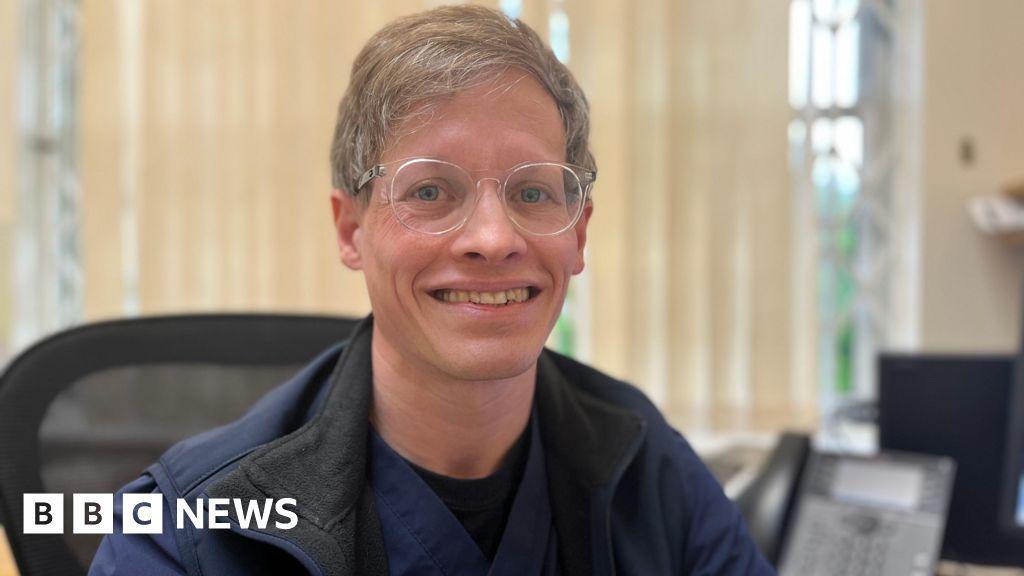
Source: BBC
Addressing Faculty Shortages and Rising Costs
The shift toward AI in medical education reflects mounting pressure on systems facing faculty shortages, rising costs, and limited access to clinical placements
2
. Traditional standardized patients played by actors are constrained by cost and availability. Students often have to practice with each other or book days with actors, but AI-powered simulations add flexibility and enable students to learn at home1
.AI patients offer on-demand, repeatable medical simulation that can be used anytime and anywhere, removing the resource-intensive limitations of episodic training
2
. This approach allows medical schools to scale practice without adding proportional strain on hospitals or instructors.Real-World Implementation and Clinical Training Skills
The AI patients used at Great Western Hospital are created using SimFlow, a specialist system that develops the simulations with multiple layers of complexity
1
. "What's special about this, it has lots of layers to it where we're creating real emotions, real patients that doctors, nurses, students can all train with in a safe fashion as many times as they need to to become more competent," Jacobs explains1
.At NYU Langone Health, faculty are experimenting with AI-driven clinical training environments that combine large language models with retrieval systems grounded in vetted medical knowledge
2
. These platforms use agentic architectures that allow virtual patients to evolve during an encounter, changing symptoms or emotional tone based on how students conduct their examination. Southern Illinois University School of Medicine has introduced an AI patient named Randy Rhodes into its curriculum, where students practice history-taking, differential diagnosis, and patient education2
.Related Stories

Improving Patient-Doctor Rapport and Communication Skills for Doctors
The systems allow repeated practice of consultations that are often difficult to schedule in real settings, such as sensitive conversations around mental health or chronic illness
2
. Students can probe deeper, make diagnostic missteps and correct themselves, all while the system tracks decision paths and communication quality. Faculty can review transcripts to assess not just whether students reached the correct diagnosis, but how they interacted along the way.Virtual patients can be designed to represent diverse backgrounds, languages, and social contexts, allowing students to practice culturally sensitive care that might not be readily available in local clinical settings
2
. This data-driven approach marks a departure from traditional evaluation methods, as educators can analyze whether students ask open-ended questions, interrupt patients, miss key symptoms, or adjust explanations based on patient understanding.Evidence-Based Approach and Future Outlook
Dr. Jacobs emphasizes the importance of taking an evidence-based approach to implementing healthcare technology. "It isn't just here's the technology, off you go. [It is] here's the technology, does it work? And that's what we're trying to answer at Great Western Hospital," he states
1
. The goal is not to replace human practice patients or bedside skills but to give students more opportunities to refine how they listen, explain, and respond.Challenges remain, including ensuring AI accuracy and bias are addressed in training data and integrating new tools into established curricula
2
. Schools are responding by keeping faculty in the loop, curating medical knowledge sources, and using AI primarily for formative rather than high-stakes assessment. As the Association of American Medical Colleges outlines, U.S. schools are employing AI in five major ways, including simulation, tutoring, assessment, and curriculum development, with AI patients playing a central role in this shift2
. The technology offers medical schools a path to train more competent clinicians while addressing systemic constraints in clinical reasoning development.References
Summarized by

Navi
Related Stories
One in Five GPs Using AI for Daily Tasks, Raising Concerns and Opportunities
18 Sept 2024

AI in Healthcare: Patients Trust AI Medical Advice Over Doctors, Raising Concerns and Challenges
18 Aug 2025•Health

AI Models Excel in Medical Exams but Struggle with Real-World Patient Interactions
02 Jan 2025•Health

Recent Highlights
1
AI Models Lie and Deceive to Protect Other AI Models From Deletion, Study Reveals
Science and Research

2
AI chatbots validate you too much, making you less kind to others, Stanford study reveals
Science and Research
3
Judge blocks Pentagon from blacklisting Anthropic over AI safety guardrails dispute
Policy and Regulation

Recent Highlights
Today's Top Stories




Your Daily Dose of Curated AI News
Don’t drown in AI news. We cut through the noise - filtering, ranking and summarizing the most important AI news, breakthroughs and research daily. Spend less time searching for the latest in AI and get straight to action.

