Meta launches AI support hub for Facebook and Instagram after admitting past failures


4 Sources
4 Sources
[1]
Meta centralizes Facebook and Instagram support, tests AI support assistant | TechCrunch
Meta is launching a new centralized support hub for Facebook and Instagram users, the company announced on Thursday, adding that its prior support options haven't "always met expectations." Within the hub, users will find tools to report an account issue, recover an account they've lost access to, and get answers via AI-powered search and an AI assistant. The feature is rolling out now to global users on Facebook and Instagram on both the iOS and Android apps. The new AI assistant being tested is designed to offer more personalized help with things like account recovery, managing your profile, or updating your settings. This particular feature will first be available to Facebook users, but the company expects to roll it out to other apps in the future. The company claims that its use of AI systems is helping protect users' accounts, noting that account hacks have decreased by over 30% globally across Facebook and Instagram. AI is also used to help identify and stop other threats, like phishing, suspicious logins, compromised accounts, and more. Additionally, Meta says that AI has helped it avoid disabling accounts by mistake more than ever before and has sped up the appeals process when mistakes occurred. However, that claim doesn't match up with the lived experience of thousands of users of Meta's apps, who complain that they've lost access to their accounts or Facebook Pages due to mistakes made by Meta's systems. Some even suspect that AI is to blame, as the mistakes and support requests don't seem to involve any human oversight. A portion of these users are threatening or engaged in legal action, particularly when losing their accounts has real-world impacts on their businesses or livelihoods. The situation has now gotten so bad that an entire Reddit forum was set up this year to help people who are suing Meta over their disabled accounts. Meta believes the new hub could address these kinds of problems, saying that it will centralize account recovery options and offer a more streamlined account recovery experience with clearer guidelines and simpler verification. Plus, the system sends out improved SMS and email alerts about risky activity and will recognize users' devices better than before, Meta promises. And it will connect users with other tools to secure their account, like running a security checkup, setting up two-factor authentication, or adding a passkey. Account recovery methods now also offer the option to take an optional selfie video to verify your identity. While Meta claims the new hub will make things easier on its users, simply the act of moving around where settings and help are found can lead to confusion. Over the years, Meta has regularly relocated key areas like its account settings, data management tools, and privacy features, ostensibly to make things easier for users. But the constant changes also mean that users can't remember where to find things in the app, as they're often not where they were found before, and various menus and navigation have changed.
[2]
Meta Reworks Support for Facebook and Instagram, Tests AI Help Assistant
With over a decade of experience reporting on consumer technology, James covers mobile phones, apps, operating systems, wearables, AI, and more. A new support hub for Facebook and Instagram is beginning to appear bringing improvements to Meta's security tools across both apps. In the company's announcement, Meta says its previous support tools haven't "always met expectations." It says, "We're committed to improving by continually investing in better support experiences for everyone who uses our apps." A new centralized hub pulls together all Meta's support tools for Facebook and Instagram into one space, allowing you to lock down your account, change a password, tweak where your services are accessible, and more. It's also home to Meta's recommendations of how you can improve your account's security. The hub is rolling out now on Android and iOS. There's currently no word of support for Meta's other services, such as Messenger, Threads, or WhatsApp. The new hub also introduces a new AI-powered support assistant to help with protections on your Meta account. The brand says the tool will work "whether you need to recover your account, update settings or manage your profile." Tests for the AI-powered tool begin with Facebook, and Meta says it plans to bring the assistant to other apps in the future. Meta is also using its AI to better monitor for what it calls "risky" account activity. The brand says the AI improves its SMS and email alerts, but it's unclear if that means you'll see more notifications, or if Meta's system will be smarter at spotting the difference between normal and malicious activity. Alongside these features, Meta says it has improved trusted device recognition. It says, "Our systems recognize the device you usually use and familiar locations better than ever." If your account is overtaken by a bad actor, you will likely lose access to this new support hub as you need to be logged in to view it. If that happens, Meta's process remains the same advising users to head to this website. However, the process should be easier than before. Meta says, "Our new account recovery experience adjusts to your particular situation with clearer guidance and simpler verification. We've also expanded recovery methods to include taking an optional selfie video to further verify your identity."
[3]
Meta says it's fixing its broken support system, with the help of AI
If you've ever had something go wrong with your Facebook or Instagram account, then you probably have a good idea of just how frustrating the support process can be. The company's automated processes are so broken that some people have found that suing Meta in small claims court can be a more reliable way of getting help from the company. Now, Meta says it's trying to address some of these longstanding issues. In an update, the company acknowledged that its "support hasn't always met expectations" but that a series of AI-powered updates should make it easier for people to get help. The company is rolling out a new "support hub" on Facebook and Instagram that is meant to bring all of its support features into one place. The hub will also have a new AI chat feature so users can ask questions about account issues or Meta's policies. An in-app support hub might not be that helpful if you can't access your account, though. A Meta spokesperson pointed to its external account recovery tool, which is meant to help people get back into their accounts. Recovering hacked accounts has long been a pain point for Facebook and Instagram users. But Meta says that it's now improved the process with better email and text alerts. AI has also helped the company's systems detect devices and locations you've frequently used in the past. "Our new account recovery experience adjusts to your particular situation with clearer guidance and simpler verification," Meta writes. "We've also expanded recovery methods to include taking an optional selfie video to further verify your identity." Meta is also starting to test a new "AI support assistant" on Facebook that can provide "instant, personalized help" for issues like account recovery or managing your profile. It's not clear how this will work, or if it will enable people to talk to an actual person who works for Meta. For now, the most reliable way to access live support is via a Meta Verified subscription, though many users report that the chat-based service isn't able to help with more complex issues. A Meta spokesperson said that the assistant is in the "early stages of testing" and is currently only available to some Facebook users globally. Those who are part of the test can find it via the app's new support hub. According to Meta, these improvements have already shown some success in helping people get back into hacked accounts. The company says that this year it has "increased the relative success rate of hacked account recovery by more than 30% in the US and Canada."
[4]
Meta claims AI reduced hacks by 30% as it revamps support tools
Meta has introduced a centralized support hub for Facebook and Instagram, a strategic pivot aimed at addressing long-standing criticisms of its customer service infrastructure. Admitting that previous support mechanisms have not "always met expectations," the company is deploying a consolidated interface on iOS and Android that aggregates tools for account recovery, issue reporting, and security management. Central to this update is the integration of an AI-powered assistant, currently entering testing on Facebook, designed to guide users through complex processes such as profile management and settings updates. The company frames this reliance on artificial intelligence as a defensive triumph, reporting that machine learning systems have reduced account hacks by over 30% globally. Meta asserts that these automated systems are now better equipped to identify phishing attempts and suspicious logins while simultaneously reducing the rate of accidental account disablings. According to the announcement, the new hub will streamline the appeals process for the remaining errors, offering clearer guidelines, improved device recognition, and novel verification methods, including the option to submit a selfie video to prove identity. However, Meta's narrative of AI-driven efficiency stands in stark contrast to the growing volume of user complaints regarding automated account terminations. While the company claims its algorithms have minimized errors, a significant cohort of users alleges that these very systems are responsible for arbitrary bans executed without human oversight. The disconnect has escalated to the point where an entire Reddit community was established this year specifically to assist users in suing Meta over disabled accounts -- a trend driven by the severe financial impact on business owners who lose access to their commercial pages. Furthermore, the centralization of support tools highlights a recurring usability issue within Meta's ecosystem: the perpetual reorganization of interface elements. While ostensibly designed to improve navigation, the frequent relocation of privacy settings and data management tools often exacerbates user confusion. As Meta attempts to solve its support crisis with more advanced AI, the tension remains between the company's automated scalability and the demand for transparent, human-verifiable recourse.
Share
Share
Copy Link
Meta rolled out a centralized support hub for Facebook and Instagram, acknowledging its previous support systems haven't met expectations. The new hub features an AI support assistant to help with account recovery and security issues, with Meta claiming AI has reduced account hacks by over 30% globally. However, users continue to report automated account terminations without human oversight, with some resorting to small claims court to resolve issues.
Meta Acknowledges Support Shortcomings and Introduces Centralized Hub
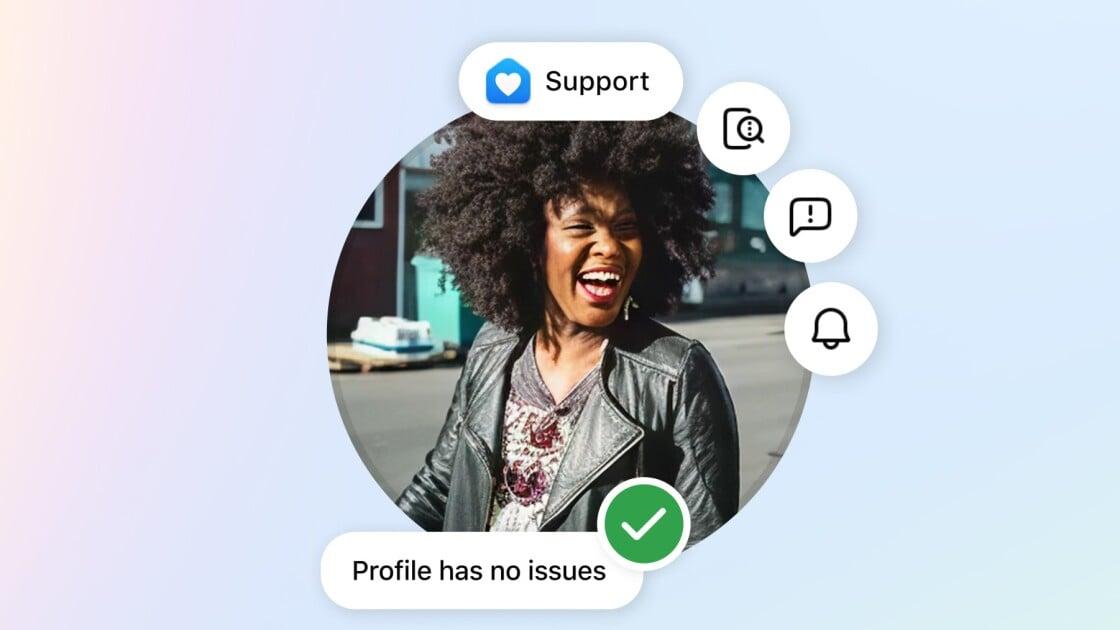
Meta has launched a centralized support hub for Facebook and Instagram support, openly admitting that its previous support options haven't "always met expectations"
1
. The new hub, rolling out globally on iOS and Android, consolidates tools for reporting account issues, recovering compromised accounts, and accessing AI-powered search capabilities2
. This strategic pivot addresses long-standing criticisms of Meta's customer service infrastructure, bringing together previously scattered privacy features and data management tools into a single interface4
.
Source: PC Magazine
AI Support Assistant Enters Testing Phase
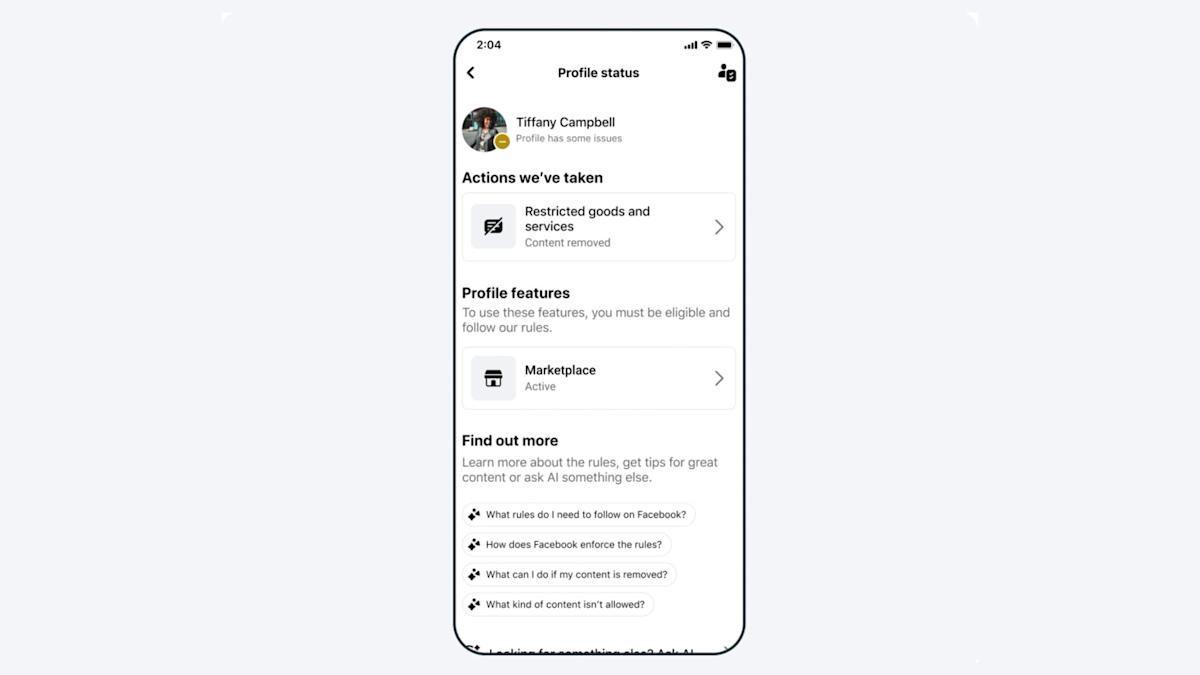
At the core of Meta's revamped approach is an AI support assistant currently being tested with Facebook users, designed to offer personalized help with account recovery, profile management, and settings updates
1
. The company plans to expand this AI support to other apps in the future, though it remains unclear whether users will gain access to actual human representatives3
. Currently, the most reliable path to live support remains through Meta Verified subscriptions, though many users report the chat-based service struggles with complex issues3
.Account Recovery Gets Major Overhaul with Selfie Video Verification
Meta has significantly enhanced its account recovery process with clearer guidelines and simpler verification methods. The system now includes selfie video verification as an optional identity confirmation method
2
. Improved device recognition means Meta's systems can better identify familiar devices and locations, while enhanced SMS and email alerts notify users of risky activity more effectively1
. The hub also connects users with additional security tools, including running a security checkup, enabling two-factor authentication, or adding a passkey1
. Meta reports it has increased the relative success rate of hacked account recovery by more than 30% in the US and Canada this year3
.
Source: Engadget
AI Detection of Malicious Behavior Shows Promising Results
Meta claims its use of AI systems has reduced account hacks by over 30% globally across Facebook and Instagram
1
. Machine learning algorithms now help identify and stop phishing attempts, suspicious logins, and compromised accounts more effectively4
. Additionally, Meta asserts that AI has helped avoid disabling accounts by mistake more than ever before and has accelerated the appeals process when errors occur1
.Related Stories

User Complaints Contradict Meta's Claims About Improving Customer Service
Despite Meta's optimistic narrative about AI-driven efficiency, a significant disconnect exists between the company's claims and user experiences. Thousands of users complain they've lost access to their accounts or Facebook Pages due to mistakes made by Meta's systems, with many suspecting automated account termination occurs without human oversight
1
. The situation has deteriorated to the point where an entire Reddit community was established this year specifically to help people suing Meta over disabled accounts4
. Some users have discovered that filing in small claims court can be more reliable than using Meta's official support channels3
, particularly when losing accounts impacts their businesses or livelihoods.Interface Changes Raise Usability Concerns
While Meta positions the centralized hub as improving customer service, the company's history of frequently relocating key features raises concerns. Over the years, Meta has regularly moved account settings, data management tools, and privacy features, ostensibly to enhance usability
1
. However, these constant changes often leave users unable to remember where to find essential functions, as navigation menus and settings locations shift repeatedly4
. The tension between Meta's automated scalability and the demand for transparent, human-verifiable recourse remains unresolved4
.
Source: TechCrunch
References
Summarized by

Navi
[1]
Related Stories
Meta AI launches global support assistant to resolve account issues on Facebook and Instagram
20 Mar 2026•Technology
Meta deploys AI content moderation systems while cutting human moderators over next few years
20 Mar 2026•Technology

Meta deploys AI tools to detect scams across Facebook, WhatsApp, and Messenger
11 Mar 2026•Technology

Recent Highlights
1
Google releases Gemma 4 with Apache 2.0 license, enabling unrestricted local AI on devices
Technology

2
AI Models Lie and Deceive to Protect Other AI Models From Deletion, Study Reveals
Science and Research

3
OpenAI closes $122 billion funding round amid fierce AI competition and profitability questions
Startups

Recent Highlights
Today's Top Stories






Your Daily Dose of Curated AI News
Don’t drown in AI news. We cut through the noise - filtering, ranking and summarizing the most important AI news, breakthroughs and research daily. Spend less time searching for the latest in AI and get straight to action.

