Meta's Aggressive AI Talent Acquisition: Debunking the $100M Signing Bonus Myth


24 Sources
24 Sources
[1]
Meta is offering multi-million pay for AI researchers, but not $100M 'signing bonuses'
Meta is definitely offering hefty multi-million-dollar pay packages to AI researchers when wooing them to its new Superintelligence Lab. But no one is really getting a $100 million "signing bonus," according to a poached researcher and comments from a leaked internal meeting. During a company-wide all-hands meeting on Thursday leaked to The Verge, some of Meta's top executives were asked about the bonuses that OpenAI CEO Sam Altman said Meta had offered to top researchers. Meta's CTO Andrew Bosworth implied that only a few people for very senior leadership roles may have been offered that kind of money, but clarified "the actual terms of the offer" wasn't a "sign-on bonus. It's all these different things." In other words, not an instant chunk of cash. Tech companies typically offer the biggest chunks of their pay to senior leaders in restricted stock unit grants (RSUs), dependent on either tenure or performance metrics. A four-year total pay package worth about $100 million for a very senior leader is not inconceivable for Meta. Most of Meta's named officers, including Boswell himself, have earned total compensation of between $20 million and nearly $24 million per year for years. Altman was "suggesting that we're doing this for every single person," Bosworth reportedly said at the meeting. "Look, you guys, the market's hot. It's not that hot." (Meta did not immediately respond to our request for comment.) On Thursday, researcher Lucas Beyer confirmed he was leaving OpenAI to join Meta along with the two others who led OpenAI's Zurich office. He tweeted: "1) yes, we will be joining Meta. 2) no, we did not get 100M sign-on, that's fake news." (Beyer politely declined to comment further on his new role to TechCrunch.) Beyer's expertise is in computer vision AI. That aligns with what Meta is pursuing: entertainment AI, rather than productivity AI, Bosworth reportedly said in that meeting. Meta already has a stake in the ground in that area with its Quest VR headsets and its Ray-Ban and Oakley AI glasses. Still, some of the people Meta is trying to nab are indeed worthy of big pay packages in this tight AI talent marketplace. As TechCrunch was first to report, Meta has hired OpenAI's Trapit Bansal, known for his groundbreaking work on AI reasoning models. He had worked at OpenAI since 2022. Certainly, Scale co-founder and CEO Alexandr Wang is getting a healthy chunk of cash, likely more than $100 million, as part of Meta's deal to buy 49% ownership of his company. As we previously reported, the $14 billion Meta is paying is being distributed to shareholders as a cash dividend. Wang is almost certainly a major shareholder in Scale entitled to those dividends. Still, while Meta isn't handing out $100 million willy-nilly, it is still spending big to hire in AI. Once investor told TechCrunch that he saw an AI researcher get -- and turn down -- an $18 million job offer from Meta. That person took a smaller, but still healthy offer, from a buzzier AI startup: Mira Murati's Thinking Machines Lab.
[2]
Meta is offering multimillion-dollar pay for AI researchers, but not $100M 'signing bonuses' | TechCrunch
Meta is definitely offering hefty multi-million-dollar pay packages to AI researchers when wooing them to its new Superintelligence Lab. But no one is really getting a $100 million "signing bonus," according to a poached researcher and comments from a leaked internal meeting. During a company-wide all-hands meeting on Thursday leaked to The Verge, some of Meta's top executives were asked about the bonuses that OpenAI CEO Sam Altman said Meta had offered to top researchers. Meta's CTO Andrew Bosworth implied that only a few people for very senior leadership roles may have been offered that kind of money, but clarified "the actual terms of the offer" wasn't a "sign-on bonus. It's all these different things." In other words, not an instant chunk of cash. Tech companies typically offer the biggest chunks of their pay to senior leaders in restricted stock unit grants (RSUs), dependent on either tenure or performance metrics. A four-year total pay package worth about $100 million for a very senior leader is not inconceivable for Meta. Most of Meta's named officers, including Boswell himself, have earned total compensation of between $20 million and nearly $24 million per year for years. Altman was "suggesting that we're doing this for every single person," Bosworth reportedly said at the meeting. "Look, you guys, the market's hot. It's not that hot." (Meta did not immediately respond to our request for comment.) On Thursday, researcher Lucas Beyer confirmed he was leaving OpenAI to join Meta along with the two others who led OpenAI's Zurich office. He tweeted: "1) yes, we will be joining Meta. 2) no, we did not get 100M sign-on, that's fake news." (Beyer politely declined to comment further on his new role to TechCrunch.) Beyer's expertise is in computer vision AI. That aligns with what Meta is pursuing: entertainment AI, rather than productivity AI, Bosworth reportedly said in that meeting. Meta already has a stake in the ground in that area with its Quest VR headsets and its Ray-Ban and Oakley AI glasses. Still, some of the people Meta is trying to nab are indeed worthy of big pay packages in this tight AI talent marketplace. As TechCrunch was first to report, Meta has hired OpenAI's Trapit Bansal, known for his groundbreaking work on AI reasoning models. He had worked at OpenAI since 2022. Certainly, Scale co-founder and CEO Alexandr Wang is getting a healthy chunk of cash, likely more than $100 million, as part of Meta's deal to buy 49% ownership of his company. As we previously reported, the $14 billion Meta is paying is being distributed to shareholders as a cash dividend. Wang is almost certainly a major shareholder in Scale entitled to those dividends. Still, while Meta isn't handing out $100 million willy-nilly, it is still spending big to hire in AI. One investor told TechCrunch that he saw an AI researcher get -- and turn down -- an $18 million job offer from Meta. That person took a smaller, but still healthy offer, from a buzzier AI startup: Mira Murati's Thinking Machines Lab.
[3]
Sam Altman Slams Meta's AI Talent Poaching Spree: 'Missionaries Will Beat Mercenaries'
"What Meta is doing will, in my opinion, lead to very deep cultural problems," said CEO Sam Altman in a leaked memo sent to OpenAI researchers. OpenAI CEO Sam Altman is hitting back at Meta CEO Mark Zuckerberg's recent AI talent poaching spree. In a full-throated response sent to OpenAI researchers Monday evening and obtained by WIRED, Altman made his pitch for why staying at OpenAI is the only answer for those looking to build artificial general intelligence, hinting that the company is evaluating compensation for the entire research organization. He also dismissed Meta's recruiting efforts, saying what the company is doing could lead to deep cultural problems down the road. "We have gone from some nerds in the corner to the most interesting people in the tech industry (at least)," he wrote on Slack. "Al Twitter is toxic; Meta is acting in a way that feels somewhat distasteful; I assume things will get even crazier in the future. After I got fired and came back I said that was not the craziest thing that would happen in OpenAl history; certainly neither is this." The news comes on the heels of a major announcement from Zuckerberg. On Monday, the Meta CEO sent a memo to staff introducing the company's new superintelligence team, which will be helmed by Alexandr Wang formerly of Scale AI and Nat Friedman, who previously led GitHub. The list of new hires also included a number of people from OpenAI, including Shengjia Zhao, Shuchao Bi, Jiahui Yu, and Hongyu Ren. OpenAI's chief research officer Mark Chen told staff that it felt like "someone has broken into our home and stolen something." Altman struck a different tone about the departures in his note on Monday. "Meta has gotten a few great people for sure, but on the whole, it is hard to overstate how much they didn't get their top people and had to go quite far down their list; they have been trying to recruit people for a super long time, and I've lost track of how many people from here they've tried to get to be their Chief Scientist," he wrote. "I am proud of how mission-oriented our industry is as a whole; of course there will always be some mercenaries." He added that "Missionaries will beat mercenaries," and noted that OpenAI is assessing compensation for the entire research organization. "I believe there is much, much more upside to OpenAl stock than Meta stock," he wrote. "But I think it's important that huge upside comes after huge success; what Meta is doing will, in my opinion, lead to very deep cultural problems. We will have more to share about this soon but it's very important to me we do it fairly and not just for people who Meta happened to target." Altman then made his pitch for people to remain at OpenAI. "I have never been more confident in our research roadmap," he wrote. "We are making an unprecedented bet on compute, but I love that we are doing it and I'm confident we will make good use of it. Most importantly of all, I think we have the most special team and culture in the world. We have work to do to improve our culture for sure; we have been through insane hypergrowth. But we have the core right in a way that I don't think anyone else quite does, and I'm confident we can fix the problems." "And maybe more importantly than that, we actually care about building AGI in a good way," he added. "Other companies care more about this as an instrumental goal to some other mission. But this is our top thing, and always will be. Long after Meta has moved on to their next flavor of the week, or defending their social moat, we will be here, day after day, year after year, figuring out how to do what we do better than anyone else. A lot of other efforts will rise and fall too." A number of high-ranking employees who've worked at Meta followed up in Slack with their own stories about why OpenAI's culture is superior. "[T]hey constantly rotate their top focus," wrote one. Another said: "Yes we're quirky and weird, but that's what makes this place a magical cradle of innovation," wrote one. "OpenAI is weird in the most magical way. We contain multitudes."
[4]
Here's What Mark Zuckerberg Is Offering Top AI Talent
The Meta CEO is leading a hiring blitz, offering top talent at OpenAI eye-watering pay packages and endless access to cutting-edge chips. As Mark Zuckerberg staffs up Meta's new superintelligence lab, he's offering top research talent pay packages of up to $300 million over four years, with more than $100 million in total compensation for the first year, WIRED has learned. Meta has made at least 10 of these staggeringly high offers to OpenAI staffers. One high ranking researcher was pitched on the role of chief scientist but turned it down, according to multiple sources with direct knowledge of the negotiations. While the pay package includes equity, in the first year the stock vests immediately, sources say. "That's about how much it would take for me to go work at Meta," says one OpenAI staffer who spoke with WIRED on the condition of anonymity as they aren't authorized to speak publicly about the company. Other employees said that they were weighing the money against the potential impact they could have at Meta in comparison to OpenAI. Several believed their impact would be greater at OpenAI. A senior engineer who spoke to WIRED confirmed their pay was around $850,000 per year at Meta -- an impressive sum that pales in comparison to the packages currently on offer. Those in the pay band above this engineer (E7's, in Meta terms) make on average $1.54 million a year, according to user data submitted on Levels.FYI. Andrew Bosworth, chief technology officer at Meta, said that not everyone is getting a $100 million offer during a Q&A with employees last week. "Look, you guys, the market's hot. It's not that hot. Okay? So it's just a lie," he said. "We have a small number of leadership roles that we're hiring for, and those people do command a premium." He added that the $100 million is not a sign-on bonus, but "all these different things" and noted OpenAI is countering the offers. As a point of comparison, Satya Nadella, CEO of Microsoft, received $79.1 million in total compensation in 2024, most of it in stock, according to a financial filing by the company. Dara Khosrowshahi, the CEO of Uber, made roughly $39.4 million (again, mostly in stock) the same year. On Monday, Mark Zuckerberg sent a note to Meta staff introducing the new superintelligence team. Alexandr Wang, formerly the CEO of Scale AI, is now Meta's chief AI officer, Zuckerberg said. He's joined by Nat Friedman who previously led GitHub. Together, Wang and Friedman will colead an organization Zuckerberg dubbed the Meta Superintelligence Labs. The company did not name a chief scientist or a chief research officer as part of the announcement. Neither Wang nor Friedman are thought of as researchers, at least in the traditional sense. None of the OpenAI staffers who left for Meta received the $300 million offer, according to a source with knowledge of the contracts. Zuckerberg told potential recruits they would not have to worry about running out of resources, according to the Wall Street Journal. That's an attractive offer in the AI industry, where access to cutting-edge chips, or GPUs, is highly competitive, and can influence how impactful the research ends up being. At OpenAI, researchers have complained that Altman has been known to promise people access to GPUs, only to feel like there was no follow through from leadership. Zuckerberg has successfully hired at least seven staffers from OpenAI for the effort -- prompting Mark Chen, OpenAI's chief research officer, to send a note to staff over the weekend saying it felt "as if someone has broken into our home and stolen something." Chen added that while OpenAI is recalibrating its own compensation packages for top talent, it won't do so at the sacrifice of fairness. Chen also said that "a lot more supercomputers are coming online later this year." OpenAI CEO Sam Altman followed up with a Slack note on Monday night, slamming Meta's poaching attempts and hinting that OpenAI is working on recalibrating compensation, WIRED reported.
[5]
Meta says it's winning the talent war with OpenAI
"Sam is just being dishonest here," Andrew Bosworth, Meta's CTO, said at the meeting when asked about Altman's remarks. "He's suggesting that we're doing this for every single person... Look, you guys, the market's hot. It's not that hot." The "$100 million bonus" headline has rightfully become a meme on social media since Altman said the number on his brother's podcast. "What Sam neglects to mention is that he's countering all these offers, creating a small market for a very, very small number of people who are for senior, senior leadership roles" in the new superintelligence AI team Meta is building, Bosworth told Meta employees today. "That is not the general thing that's happening in the AI space. And of course, he's not mentioning what the actual terms of the offer are. It's not [a] sign-on bonus. It's all these different things."
[6]
Former OpenAI Board Member Questions Zuckerberg AI Hiring Spree
Meta Platforms Inc.'s lavish multimillion-dollar budget for recruiting top AI talent may not guarantee success, said Helen Toner, former OpenAI board member and director of strategy at Georgetown's Center for Security and Emerging Technology. The poaching of artificial intelligence researchers from the likes of OpenAI -- with salaries in the tens of millions of dollars -- and the debut of Meta's new Superintelligence group comes after the Facebook operator developed a reputation for "having a dysfunctional team," Toner said in an interview with Bloomberg TV. The practice of luring away high performers from each other's AI labs has intensified among Silicon Valley companies since the launch of ChatGPT, she said.
[7]

Zuckerberg Was Wrong About the Metaverse. Can We Really Trust Him With Superintelligent AI?
After sinking billions into a virtual fantasy that flopped, Mark Zuckerberg now claims he’s leading the charge toward superintelligent AI. But this time, the stakes are real, and so is the power grab. Mark Zuckerberg once sold us the metaverse. Now he wants us to believe he’s going to lead us into the age of superintelligence. Should we fall for it again? Elon Musk once called him "Zuck the Fourteenth,†a jab comparing Meta’s CEO to France’s King Louis XIVâ€"a monarch infamous for his ego, extravagance, and disregard for limits. It’s a fitting label, especially as Zuckerberg floods the headlines, positioning himself as Silicon Valley’s new AI king. But let’s rewind. Just a few years ago, Zuckerberg declared that the metaverse was the future of humanity. In a slickly produced video released on October 28, 2021, he rebranded Facebook as Meta Platforms and declared, “The metaverse is the next frontier.†It was a bold new vision: a 3D immersive virtual world where we would live, work, and socialize as digital avatars using Meta-manufactured VR headsets and smart glasses. Meta poured nearly $20 billion into Reality Labs, the division tasked with building this digital utopia, in a single year. The promise? A seamless escape from the real world into a vibrant virtual one. But the promised land never arrived. Despite the investment, the user adoption didn’t follow. Horizon Worlds, Meta’s flagship metaverse platform, struggled to retain interest. The headsets were clunky, the software buggy, and the use cases unclear. People didn’t want to live in VR. The metaverse flopped. Now, Zuckerberg wants the public, and the tech world, to believe he’s leading the charge into the next big thing: artificial general intelligence, or AGI. This is the holy grail of AI. A moment when machines surpass human intelligence across nearly all tasks. It’s what some call superintelligence, and it’s no longer just science fiction. But there’s a problem. Meta is not leading. OpenAI, Google’s Gemini, and China’s DeepSeek have pulled ahead with more advanced models and tools. Meta’s LLaMA models are competent, but not groundbreaking. The company’s biggest claim to fame in the AI arms race so far? Making its large language models open source. Now Zuckerberg is trying to change that by opening his wallet. In what’s becoming an aggressive poaching campaign, Meta has started offering “giant offers†to top AI researchers. According to OpenAI CEO Sam Altman, some of these offers exceed $100 million. Meta has already lured away key talent, including Alexandr Wang (founder of Scale AI), Nat Friedman (former GitHub CEO), and OpenAI veterans like Shengjia Zhao, Shuchao Bi, Jiahui Yu, and Hongyu Ren. Zuckerberg isn’t hiding it. He recently announced the creation of Meta Superintelligence Labs, an ambitious effort to consolidate AI efforts under one roof and leapfrog the competition. In his internal memo, he promised that Meta will lead the way in delivering personal superintelligence, an AI that can manage your life, schedule your time, guide your decisions, and essentially act as a personal brain assistant. And he’s made it clear: he’s not done hiring. It’s a dramatic pivot and a savvy one. AI is no longer hype. It’s here, and it’s transforming everything from how we work to how we think. Whether you fear it or embrace it, AI is shaping the next phase of human life. But that doesn’t mean Zuckerberg gets to be its face. After all, this is the same executive who once told the world that a legless cartoon avatar in VR was our future. The same person who sank tens of billions into a virtual world that no one wanted. Now he’s asking us to trust him on AGI, a technology that could reshape the world, economies, and the future of human labor. Zuckerberg isn’t an AI visionary. He’s a ruthless competitor who spots the next big thing and tries to buy his way to the top. He couldn’t beat TikTok, so he cloned Reels. He couldn’t acquire Snapchat, so he copied Stories. Now he’s applying the same playbook to AI: buy the best people, sell a big vision, and hope the world forgets what happened last time. If anything, his pivot to AI is proof of just how serious this moment is. Because when Zuckerberg starts spending, it’s not out of curiosity. It’s because he smells dominance. And that might be the most compelling reason to pay attention. Not because he’s leading the way in building artificial superintelligence, but because he’s trying to control who gets to build it, and what rules they play by.
[8]

A Leading Indicator Has Emerged Suggesting That the AI Industry Is Cooked
In the world of cultural commentary, there are plenty of benchmarks used to determine when a trend is on its deathbed. From the classic shark-jumping episode of "Happy Days" to the adoption of Facebook by grandparents the world around, those with their ears to the ground can spot when a craze is on its way out. In that vein, the news that Meta founder and CEO Mark Zuckerberg is spending hundreds of millions of dollars to build supercharged AI sure strikes us as bad news for that industry. Let's take it back a few years to the fall of 2021. As America reopened its restaurants and bars to a populace cooped up for a year during the COVID-19 lockdowns, the longtime virtual reality enthusiast experienced a paradigm shift of his own -- one in which being immersed in digital worlds became so compelling an idea, he decided to sink billions upon billions of dollars into making it epic. Thusly, the CEO and founder of Facebook announced just before the Halloween of 2021 that he was changing the company's name to Meta, so better to associate his multi-platform conglomerate with the new metaverse he was trying to create. The rest, as they say, is history. After spending a whopping $45 billion dollars on the world's most expensive fool's errand and making himself look very, very goofy in the process, little remains of Zuck's outrageously failed bet on the small-m metaverse save for the company's name. By the start of 2024, he'd identified a different hobby on which to spend billions of dollars: artificial intelligence, which at that time was still new and shiny thanks to OpenAI's release of ChatGPT just a bit prior. With his metaverse dreams in the rear-view, the early-40s tech founder delivered the death knell to his expensive VR gambit by firing many of the staffers at Meta's Reality Labs division, Zuckerberg completed his transition from the company's nerdy "metamate-in-chief" to the designer t-shirt edgelord bent on beating OpenAI at its own game. Most recently, we learned that Zuckerberg is not only launching a "superintelligence" lab and picking off OpenAI talent like flies, but also reportedly paying the people he's poaching up to $100 million a head as a signing bonus -- and that's just in the first year, according to insiders who spoke to Wired. With at least eight OpenAI staffers jumping ship for Meta's greener pastures, that would bring the total spent on signing bonuses for superintelligence lab researchers alone at $800 million -- and that's not counting the untold sums Zuckerberg has already spent on AI chips, or the $65 billion he plans to throw at building out AI infrastructure in the near future. As Meta and many other companies have found over the past few years, trying to play catch-up with OpenAI is a lot like the average person trying to win a footrace against Usain Bolt: not only are you going to lose spectacularly, but you're going to embarrass yourself while doing so. As with any new technology, there are early adopters and those who arrive late to the party. Zuckerberg clearly falls squarely in the latter category -- and his delayed entry into the AI game, paired with his ability to direct ungodly sums towards his whims, make us wonder if the party may soon be over.
[9]

Sam Altman calls out Meta for poaching talent from OpenAI
It's another day in the talent wars between OpenAI and Meta and now Sam Altman is taking a turn at his rival. The OpenAI CEO called out Meta for poaching talent from his company. "Meta is acting in a way that feels somewhat distasteful," Altman wrote in a Slack message to employees on Monday obtained by Wired. Over the past week, Meta recruited four senior OpenAI researchers to join its newly formed "superintelligence lab," setting off a feud between the two tech companies. Meta CEO Mark Zuckerberg has reportedly been reaching out directly to OpenAI employees with aggressive offers, including signing bonuses and first-year compensation packages rumored to be as high as $100 million, according to OpenAI CEO Sam Altman. "They have been trying to recruit people for a super long time," Altman's note continued. "I've lost track of how many people from here they've tried to get to be their Chief Scientist." The executive then pitched his employees to remain at OpenAI. Altman has framed Meta as pushing a short‑term compensation play over long‑term innovation culture. Chief research officer Mark Chen told Wired that he's been working with Altman "around the clock" to talk to employees considering Meta offers and that the company is "recalibrating comp" and rolling out ways to recognize top talent. That includes personalized retention efforts, last-minute counteroffers, and what Chen described as "creative" reward strategies. Meanwhile, Meta CTO Andrew Bosworth has defended the company's approach, acknowledging such scarce talent "commands a significant market premium." Zuckerberg's "superintelligence lab" -- an AI research group focused on building artificial general intelligence -- has become a high-priority project at Meta as the company looks to catch up to OpenAI's lead and jockeys for pole position in a crowded AI field. Internally, Meta's group is said to include roughly 50 top researchers, with new hires coming from not just OpenAI but also Google's DeepMind, Anthropic, and Scale AI. According to The Wall Street Journal, Zuckerberg has been personally involved in the recruitment push (inviting top talent to his homes and creating a "Recruiting Party" group chat with other Meta execs).
[10]
Behind the Scenes, Sam Altman Is Absolutely Furious
The tug of war for artificial intelligence developers between Meta and OpenAI is devolving into a knock-down, drag-out fight. In an effort to revive his crumbling AI program, Meta CEO Mark Zuckerberg has recently declared open season on OpenAI's staffers. The billionaire tech mogul is said to be hand-selecting AI researchers and developers to build out a "superintelligence" AI lab, offering up to $100 million in sign-on bonuses if they leave OpenAI for a seat at Meta's table. So far, OpenAI has lost at least eight researchers to Meta, as offers to top staff continue to grow. OpenAI CEO Sam Altman -- never one to sit back and take it from his fellow billionaires -- responded to the threat by giving his employees a mandatory week off as the company's executives scramble to plug the holes on their leaky ship. Meanwhile, Altman is fuming. In a fierce reply to Zuckerberg's poaching spree directed toward OpenAI's research department, Altman lashed out at his rival tech tycoon and made his lengthy case for why OpenAI employees should stand their ground. "We have gone from some nerds in the corner to the most interesting people in the tech industry (at least)," Altman said in a Slack post viewed by Wired. "AI Twitter is toxic; Meta is acting in a way that feels somewhat distasteful; I assume things will get even crazier in the future. After I got fired and came back I said that was not the craziest thing that would happen in OpenAl history; certainly neither is this." Altman's comments refer to a brief ousting by OpenAI's board of directors in 2023, before being reinstated just a few days later. "Meta has gotten a few great people for sure, but on the whole, it is hard to overstate how much they didn't get their top people and had to go quite far down their list; they have been trying to recruit people for a super long time, and I've lost track of how many people from here they've tried to get to be their Chief Scientist," Altman continued. "I am proud of how mission-oriented our industry is as a whole; of course there will always be some mercenaries," the CEO said, adding that "missionaries will beat mercenaries." To keep workers on the hook, Altman hinted that OpenAI is "assessing compensation for the entire research organization," according to Wired. "I believe there is much, much more upside to OpenAl stock than Meta stock." Both companies swirl around an almost messianic faith in "artificial general intelligence," or AGI, the supposed point at which AI's cognitive abilities match up to or exceed a human's. So far, that remains a pipe dream -- Microsoft's CEO recently expressed doubts that OpenAI can achieve AGI -- but the promise still looms large in the fight to build the dominant AI monopoly. "We actually care about building AGI in a good way," Altman evangelized. "Other companies care more about this as an instrumental goal to some other mission. But this is our top thing, and always will be."
[11]
Mark Zuckerberg has Meta's AI teams caught between competing visions
Meta's chief AI scientist says even "cat-level intelligence" is "very far" away. His CEO just bet $14.3 billion on superintelligence. The contradiction crystallized last week when Mark Zuckerberg announced the creation of Meta Superintelligence Labs, a brand new division led by Scale AI's Alexandr Wang. Zuckerberg promised in a memo that "developing superintelligence is coming into sight" and called it "the beginning of a new era for humanity." The declaration put Zuckerberg on a collision course with Yann LeCun, Meta's top AI researcher and a Turing Award winner, who has spent the last few years publicly arguing that current approaches can't even achieve animal-level intelligence -- let alone the godlike AI his boss is now promising to build. The philosophical split extends beyond timelines to Meta's core AI strategy. LeCun has consistently beaten the drum for open-source AI, calling it essential for diversity and democracy. As recently as last year, he praised Zuckerberg's commitment to open source, writing on LinkedIn that "AI platforms must be open, just like the software infrastructure of the Internet became open." He argued that open source enables "more diversity in languages, cultures, value systems, and centers of interest in AI assistants." But Zuckerberg's superintelligence memo makes no mention of open source, a notable omission given that he wrote just last July that "Open Source AI is the Path Forward." According to the New York Times, Meta executives even discussed "de-investing" in Llama, their open-source model, and potentially embracing closed models from competitors like OpenAI and Anthropic. LeCun continues pushing the open-source message on social media, recently retweeting praise for Meta's "open release of Llama that changed the field." Yet his boss appears to be reconsidering that very strategy. The creation of Meta Superintelligence Labs represents Zuckerberg's attempt to solve what became clear was a lagging AI effort. His frustration came to a head in April when the latest Llama models underperformed expectations. The Times reports that Zuckerberg learned his AI team had used customized benchmarks to make the models appear more advanced than they actually were -- a revelation that upset the CEO, who hadn't been briefed on the testing manipulation. The episode highlighted a deeper issue: While Meta open-sourced Llama to spread adoption, Chinese startup DeepSeek built superior models on top of Llama's foundation, essentially out-innovating Meta with its own technology. The tensions have spilled into Meta's broader AI hiring strategy. Zuckerberg has personally reached out to more than 45 OpenAI researchers, offering packages as high as $100 million, according to multiple reports. Wired reports that Meta made at least 10 "staggeringly high offers" to OpenAI staffers. One high-ranking researcher was pitched on the role of chief scientist -- LeCun's title -- but turned it down. The hiring spree also suggests Meta is doubling down on the large language model approach that LeCun has criticized. While LeCun advocates for "world models" that learn by watching the physical world rather than processing text, the new superintelligence lab is staffed largely with researchers who built text-based systems like GPT-4. LeCun's Twitter responses to questions about his role reveal someone trying to maintain influence while acknowledging new realities. When asked about his position after Wang's appointment as Chief AI Officer, LeCun emphasized he remains Chief AI Scientist and deflected suggestions he should be running the superintelligence effort. "I don't like managing things and I'm not good at operational stuff," he said. "I'm much better at scientific leadership: I lead with ideas." Yet when pressed on X about Meta's new superintelligence focus, LeCun carefully threaded the needle, responding that "Artificial Superintelligence has always made sense as an aspiration and long-term goal. It has always been FAIR's long-term goal (as well as mine). It still is, now more than ever." (FAIR is Meta's existing AI research arm that LeCun has led since joining the company more than a decade ago.) The competing visions leave Meta's AI future unclear. For now, the company is running both playbooks simultaneously, hoping one will break through while the other provides scientific credibility. But with Zuckerberg creating a new superintelligence lab while seemingly sidelining his chief scientist's research philosophy, the mixed signals suggest Meta hasn't decided which path will actually get them there.
[12]

Former OpenAI researcher Lucas Beyer pours cold water on $100 million Meta signing bonus
The trio of OpenAI engineers who co-founded the firm's Zurich office last year will indeed be leaving to join Meta -- but they aren't getting $100 million apiece to do so. Lucas Beyer posted on X Thursday that he, Alexander Kolesnikov, and Xiaohua Zhai would depart OpenAI to join the $1.8 trillion company led by Mark Zuckerberg. Beyer said it was "fake news" that Zuckerberg was paying him that level of compensation. However, that news came from OpenAI CEO Sam Altman himself, who called the offers "crazy" this month. "They started making these like, giant offers, to a lot of people on our team -- $100 million signing bonuses, more than that comp per year," Altman told his brother Jack Altman in an episode of the podcast Uncapped. "I'm really happy that, at least so far, none of our best people have decided to take him up on that." Beyer, Kolesnikov, and Zhai have been members of the technical staff at OpenAI since December 2024, which they joined after being poached from rival Google DeepMind. They depart for Meta at a time when competition for talent among AI firms is reaching a frenzied pitch, with Zuckerberg reportedly on a recruitment spree to counter the narrative that it is lagging behind in AI development. Reports claim the company is hiring a 50-person "Superintelligence" team to ramp up its AI efforts. Meta has also purchased a $14 billion stake in Scale AI, to bring CEO Alexandr Wang into the fold. Zuckerberg famously earns only $1 as CEO at Meta, although the company provides him a $14 million allowance for costs related to security for Zuckerberg and his family. He holds about 13% of the tech behemoth's stock and his fortune is valued at $250 billion by Forbes. Among the top-paid executives at Meta, chief operating officer Javier Olivan was paid the most last year, with compensation valued at $25.5 million. No other top executive at Meta was paid $100 million in any of the past three years, according to the company's financial filings. The median of the total annual compensation of all Meta employees other than Zuckerberg was $417,400 last year. On X, a commenter speculated that Altman "clearly just threw out the 100m figure out there to make potential takers think that they were being lowballed." "Yes, it was a brilliant move, gotta give him that," posted Beyer in response. OpenAI and Meta did not immediately respond to requests for comment.
[13]
Sam Altman scoffs at Mark Zuckerberg's AI recruitment drive and says Meta hasn't even got their 'top people'
Sam Altman is pushing back on Mark Zuckerberg's aggressive AI recruitment drive after the Big Tech company poached several key researchers from OpenAI. In a message to staff that was reviewed by Wired, Altman said that while Meta had recruited some "great people," the company had failed to hire their "top people and had to go quite far down their list" when hiring for the company's new Superintelligence team. He told employees that Meta had been trying to poach OpenAI's talent for a "super long time," adding he'd "lost track of how many people from here they've tried to get to be their Chief Scientist." An initial list of hires for Meta's new team, which was made public on Monday, included several prominent former OpenAI researchers, such as Trapit Bansal, the co-creator of o-series models at OpenAI, and Shuchao Bi, co-creator of GPT-4o voice mode and o4-mini. The Big Tech company also scooped up Hongyu Ren, who previously led a group for post-training at OpenAI; Jiahui Yu, who previously led the perception team at OpenAI; and Shengjia Zhao, who previously led synthetic data at OpenAI. Meta's stock hit a record high in response to the news, with shares closing Monday at a record $738.09, marking a 23% year-to-date gain. Altman wrote in his Slack message that "Meta is acting in a way that feels somewhat distasteful," adding he assumed "things will get even crazier in the future." He went on to hint that the company was reassessing compensation for research staffers. The CEO also doubled down on his faith that OpenAI would ultimately come out on top, telling staff there was "much more upside to OpenAl stock than Meta stock." "What Meta is doing will, in my opinion, lead to very deep cultural problems. We will have more to share about this soon but it's very important to me we do it fairly and not just for people who Meta happened to target," he wrote. The war for AI talent is becoming increasingly fierce as top labs vie for an increasingly small pool of top talent. Meta has been particularly aggressive in recent months, picking up employees from almost all of its main rivals including key architects of ChatGPT as well as those of Google's Gemini and its image-gen tech. The company also has a new Chief AI Officer in Alexandr Wang, the founder of Scale AI. Wang recently joined the company as part of a deal that saw Meta investing up to $15 billion for a 49% stake in the training data company. Altman has previously bristled at Meta's recruitment efforts. On a recent episode of Uncapped, Altman said that Meta had been making "giant offers to a lot of people on our team," some totaling "$100 million signing bonuses and more than that [in] compensation per year." Meta has internally disputed the figure. Representatives for OpenAI did not immediately respond to a request for comment from Fortune, made outside normal working hours.
[14]

Zuckerberg and LeCun clash over Meta's AI future
A philosophical divergence between Meta CEO Mark Zuckerberg and Chief AI Scientist Yann LeCun regarding artificial intelligence strategy and timelines became evident last week with the announcement of Meta Superintelligence Labs, generating uncertainty about the company's future AI direction. This division within Meta's AI teams centers on fundamental approaches to AI development. Yann LeCun, Meta's chief AI scientist and a Turing Award recipient, has publicly asserted that achieving even "cat-level intelligence" remains "very far" from current capabilities. His perspective stands in contrast to Zuckerberg's recent commitment of $14.3 billion towards the pursuit of superintelligence. The contradiction became pronounced last week when Zuckerberg announced the formation of Meta Superintelligence Labs, a new division to be led by Alexandr Wang of Scale AI. Zuckerberg conveyed in a memo that the development of superintelligence was "coming into sight" and characterized it as "the beginning of a new era for humanity." This declaration positions Zuckerberg at odds with LeCun, who has consistently argued over recent years that existing AI methodologies cannot attain even animal-level intelligence, let alone the advanced AI capabilities Zuckerberg has committed to developing. The philosophical disagreement extends beyond the timeline for AI development and encompasses Meta's core AI strategy. LeCun has consistently advocated for open-source AI, maintaining its essential role in fostering diversity and democracy within the field. As recently as last year, he commended Zuckerberg's dedication to open source, stating on LinkedIn that "AI platforms must be open, just like the software infrastructure of the Internet became open." LeCun argued that open source facilitates "more diversity in languages, cultures, value systems, and centers of interest in AI assistants." However, Zuckerberg's superintelligence memo notably omits any mention of open source. This omission is significant, particularly given that Zuckerberg had written in July of the previous year that "Open Source AI is the Path Forward." According to information reported by the New York Times, Meta executives even discussed the possibility of "de-investing" in Llama, their open-source model, and potentially adopting closed models offered by competitors such as OpenAI and Anthropic. LeCun continues to promote the open-source message on social media, having recently retweeted content praising Meta's "open release of Llama that changed the field," even as his CEO appears to be re-evaluating this strategic direction. The establishment of Meta Superintelligence Labs reflects Zuckerberg's initiative to address what had become apparent as a lagging effort in AI. His dissatisfaction reached a critical point in April when the performance of the latest Llama models fell below expectations. The New York Times reported that Zuckerberg discovered his AI team had employed customized benchmarks designed to make the models appear more advanced, a revelation that reportedly displeased the CEO, who had not been adequately briefed on these testing manipulations. This incident underscored a deeper issue: despite Meta's decision to open-source Llama to encourage widespread adoption, the Chinese startup DeepSeek developed superior models building upon Llama's foundational technology, effectively out-innovating Meta using Meta's own contributions. Tensions have also surfaced in Meta's broader AI hiring strategy. Zuckerberg has personally contacted more than 45 researchers from OpenAI, presenting compensation packages reportedly reaching as high as $100 million. Wired reported that Meta extended at least 10 "staggeringly high offers" to OpenAI staff members. One high-ranking researcher was offered the role of chief scientist, which is LeCun's current title, but declined the offer. This intensive hiring drive further suggests Meta's commitment to the large language model approach, a methodology that LeCun has openly criticized. While LeCun advocates for "world models" that learn through observation of the physical world rather than solely processing text, the newly established superintelligence lab is predominantly staffed by researchers with experience in developing text-based systems like GPT-4. LeCun's responses on X (formerly Twitter) regarding his role provide insight into his efforts to maintain influence while acknowledging new organizational realities. When questioned about his position following Wang's appointment as Chief AI Officer, LeCun affirmed his continued role as Chief AI Scientist and dismissed suggestions that he should lead the superintelligence effort. He stated, "I don't like managing things and I'm not good at operational stuff. I'm much better at scientific leadership: I lead with ideas." However, when pressed on X about Meta's new focus on superintelligence, LeCun carefully navigated his response, stating that "Artificial Superintelligence has always made sense as an aspiration and long-term goal. It has always been FAIR's long-term goal (as well as mine). It still is, now more than ever." FAIR is Meta's existing AI research arm, which LeCun has directed since joining the company over a decade ago. The existence of these competing visions creates an uncertain future for Meta's AI endeavors. The company is currently pursuing both approaches simultaneously, with the expectation that one will achieve a breakthrough while the other maintains scientific credibility. However, Zuckerberg's establishment of a new superintelligence lab, appearing to diverge from his chief scientist's research philosophy, indicates that Meta has not yet definitively committed to a single path forward.
[15]

Mark Zuckerberg Is Convinced He Can Buy the Future
After ChatGPT drew millions of users to the first mature, widely available LLM-based chatbot, the race was on to build better, bigger, and more versatile AI models for a range of stated and implied purposes: to automate labor; to entertain people; to replace old software; to come up with entirely new types of software; to perhaps accumulate power in less obvious and more ambitious ways; to build some sort of god and hope it doesn't immediately murder everyone; and, perhaps, to assure markets that your company is on top of things, wherever they're going. Building and deploying state-of-the-art generative-AI models is extremely capital intensive, which has resulted in the unsettling spectacle of some of the richest companies on earth broadcasting their intention to buy dominance in a future they're all saying is inevitable: $75 billion in data-center investment from Google in 2025; $100 billion from Amazon; $80 billion from Microsoft. Each firm has a different connection to the moment and reason to believe it might prevail. Microsoft was an early OpenAI partner. Google produced some of the core research that set things in motion. Amazon is a massive provider of cloud-computing resources. In contrast, Meta's AI investment rationale -- the company is planning to spend up to $72 billion on AI in 2025 -- has been a little more nakedly about not missing out. As a result, the company's big pivot to AI has been a bit of a mess: half-baked features crammed into every interface possible; models that can't catch up to the frontier; fudged benchmarks; confused users; and just downstream, slopified Facebook and Instagram. And while there are good arguments in favor of the company's emphasis on building open-source AI, the company's leadership clearly isn't happy with where it stands in 2025. Which is how you end up with a situation like this, as reported in Wired: As Mark Zuckerberg staffs up Meta's new superintelligence lab, he's offering top research talent pay packages of up to $300 million over four years, with more than $100 million in total compensation for the first year, WIRED has learned. Meta has made at least 10 of these staggeringly high offers to OpenAI staffers. Zuckerberg's approach has already worked in the narrow sense that a bunch of OpenAI researchers have taken (reportedly smaller) offers, leading the company's chief scientist to tell employees that it felt like "someone has broken into our home and stolen something." OpenAI CEO Sam Altman tried to play it cooler, telling staff, "Missionaries will beat mercenaries," and downplaying the importance of the employees Meta managed to poach. OpenAI's chief scientist and Altman both suggested that they'd be looking at compensation, however, which makes sense given that their core employees are being lured away with some of the highest job offers in the history of the capitalist system. This is a different approach to buying the future, which is, for Meta, both novel and familiar. It's familiar in that Meta, a massive firm, is mostly made up of properties it acquired for amounts that sounded high at the time -- $1 billion for Instagram, $19 billion for WhatsApp -- but which were, in hindsight, pretty good deals. It's novel in that the investment here is in a few people rather than in a rapidly growing user base or a foundational technology. The basic plan for scaling current AI is known and shared among the big firms: large training runs with lots of data but also a greater focus on "reasoning" models and "reinforcement learning," which have helped models improve performance as older methods produce diminishing returns but which still leave these firms basically trying to outspend one another for GPUs and data-center square-footage. Perhaps Zuckerberg is betting that these researchers will come up with new paths for scaling, which could, for a time, belong to Meta alone. (Note the branded downward revision of "superintelligence" from a fearsome entity that must be carefully aligned to a Meta assistant available to "everyone.") Or maybe Zuck's bet -- which is relatively small in the context of his company's overall investment in AI -- is just that he can kneecap his competitors, slowing them down enough that Meta can finally just catch up.
[16]

Meta's Chief Technology Officer Says Sam Altman Is 'Being Dishonest' About $100 Million Signing Bonuses Poaching Claim
Meta is one of the most valuable companies in the world, with a market capitalization of over $1.8 trillion. Meta's technology chief is calling OpenAI CEO Sam Altman "dishonest" for claiming that Meta is offering nine-figure compensation packages to new employees on its secretive AI superintelligence team. According to The Verge, at a company-wide all-hands meeting on Thursday, Meta's Chief Technology Officer, Andrew Bosworth, pushed back against Altman's remarks last week that Meta was offering "$100 million signing bonuses" and "more than that" in compensation to poach OpenAI employees. "Sam is just being dishonest here," Bosworth, 43, said at the leaked meeting. "He's suggesting that we're doing this for every single person... Look, you guys, the market's hot. It's not that hot." Related: Meta Takes on ChatGPT By Releasing a Standalone AI App: 'A Long Journey' Altman, 40, said last week that he was "really happy" that none of OpenAI's "best people" had chosen to join Meta. Now, Bosworth says that OpenAI staff aren't joining Meta because Altman has been countering Meta's offers, "creating a small market" of possible employees to lead Meta's AI efforts. Still, Meta has successfully poached talent from OpenAI. According to a Thursday TechCrunch report, AI researcher Trapit Bansal, who has been working at OpenAI since 2022, has left the company for Meta. A Wednesday report from The Wall Street Journal revealed that Meta poached three additional OpenAI researchers who worked at OpenAI's Zurich office: Lucas Beyer, Alexander Kolesnikov, and Xiaohua Zhai. Beyer posted on X on Thursday that the trio did not receive $100 million signing bonuses, calling the rumor "fake news." Meta has also poached the CEO of $32 billion AI startup, Safe Superintelligence, Daniel Gross, and former GitHub CEO Nat Friedman. Related: Meta Poaches the CEO of a $32 Billion AI Startup -- After Trying to Buy the Company and Being Told No Meta CEO Mark Zuckerberg, 41, has recently doubled down on a push for superintelligence, AI that exceeds human intelligence in reasoning, memory, and knowledge. According to a Bloomberg report from earlier this month, Zuckerberg is assembling a team of around 50 experts to work on superintelligence with the goal of one day infusing it across the company's products, including the bestselling Ray-Ban Meta smart glasses. Meta also made one of its largest deals yet this month, investing $14.3 billion in Scale AI, a startup that provides data to train AI systems. As part of the deal, Scale AI's 28-year-old CEO Alexandr Wang will join Meta in a leadership role on the superintelligence team. The investment caused Scale AI's valuation to more than double from $14 billion to $29 billion. AI voice cloning startup Play AI is also reportedly in talks with Meta about an acquisition, though the deal has yet to be publicly announced.
[17]

Zuckerberg's $100 million lure: Why top Chinese and Indian AI minds are joining his Superintelligence Project
Meta has assembled a "Superintelligence" AI team, poaching top researchers from OpenAI, Google, and Anthropic. Led by Nat Friedman and Alexandr Wang, the team includes key figures behind GPT-4o and Gemini. OpenAI CEO Sam Altman expressed concern over the talent drain, reportedly offering substantial retention packages to counter Meta's recruitment efforts.Meta CEO Mark Zuckerberg just made one of the largest AI wins by assembling a dream team for his new team by hiring some of the world's greatest minds, including influential Chinese and Indian AI experts of ChatGPT, Google's Gemini, and Anthropic, as per a Fortune report. The firm's new "Superintelligence" AI team is co-headed by former GitHub CEO Nat Friedman and ScaleAI founder Alexandr Wang, who is now Meta's newly appointed Chief AI Officer, according to the report. Wang came on board as part of a $15 billion acquisition that provided Meta with a 49% ownership position in his training data company, ScaleAI, as per the Fortune report. Wang shared this list of new recruits for the Superintelligence team on his social media post on X (previously Twitter), saying, "I'm excited to be the Chief AI Officer, working alongside [Nat Friedman]," adding, "We also have several strong new team members joining today or who have joined in the past few weeks that I'm excited to share as well," as per his X post. The Fortune report compiled the new recruits list, which includes several prominent former OpenAI researchers, including: ALSO READ: Kamala Harris is back, urges Americans to call their representatives and block Trump's Big, Beautiful Bill OpenAI CEO Sam Altman has pointed out that Zuckerberg has reportedly been personally hiring for Meta's new 50-person Superintelligence AI team by allegedly offering $100 million signing bonuses to lure top OpenAI researchers, as reported by Fortune. Altman's remark comes as OpenAI is reportedly scrambling to contain the fallout after a wave of high-profile researcher departures to Meta, and OpenAI chief research officer Mark Chen even compared these exits to a home invasion, according to the report by Fortune. According to a memo seen by Wired, Chen had told employees that OpenAI's leadership team, including Altman, had been working "around the clock" to retain the company's top talent, urgently recalibrating compensation and seeking "creative" ways to reward top performers, as reported by Fortune. ALSO READ: Is US private sector crumbling? ADP says June sees first job losses in over a year However, Meta has internally dismissed the figure Altman publicly claimed about $100 million in signing bonuses, according to the report. During a recent all-hands meeting, which was shared with The Verge, Meta's CTO Andrew Bosworth said that the real offers Meta was making were more complicated and indicated that only a few very senior people may have been offered that much amount of money, as reported by Fortune. He pointed out that "the actual terms of the offer" weren't just "sign-on bonus" but rather "all these different things," as quoted in the report. Why is Meta suddenly hiring so many top AI researchers? Meta is building a powerful new AI division called the Superintelligence team, aiming to lead in next-gen artificial intelligence. Hiring top minds gives them a huge edge. Who are these new hires, and why are they important? They're some of the most influential researchers behind OpenAI's GPT-4o, Google Gemini, and Anthropic. Many are from China and India and bring deep technical expertise.
[18]

Meta Exec Dismisses OpenAI's Sam Altman's Claims of $100 Million Signing Bonuses: 'Sam Is Just Being Dishonest Here' - ProShares Trust ProShares S&P 500 Dynamic Buffer ETF (BATS:FB)
A top-ranking executive at Meta Platforms Inc. has leveled accusations of dishonesty against Sam Altman, the leader of OpenAI. What Happened: The allegations pertain to claims of $100 million signing bonuses offered by Meta to lure leading AI researchers away from OpenAI. Andrew Bosworth, Meta's Chief Technology Officer, refuted Altman's allegations during a company-wide meeting last week. Bosworth stated that Altman was implying that every individual was being offered such a lucrative package, a claim he deemed as an overstatement. Altman had earlier sparked a debate by stating on the "Uncapped" podcast that Meta had started making significant offers to several members of his team. However, he also mentioned that none of their top talents had accepted these offers. "Sam is just being dishonest here. He's suggesting that we're doing this for every single person... Look, you guys, the market's hot. It's not that hot," Bosworth said during the meeting. Also Read: OpenAI's Sam Altman Reaches Out to Elon Musk Amid Ongoing Social Media Spat: 'Let's Be Friends' Contrary to Altman's statements, a number of OpenAI researchers have since transitioned to Meta. Lucas Beyer, one of the researchers who made the switch, confirmed his move but denied receiving a $100 million sign-on bonus. As per the report by The Verge, Bosworth contended that Altman's claims were missing vital context and accused him of creating a niche market for a very select group of people in senior leadership roles. He suggested that Altman was blowing things out of proportion because Meta was successfully attracting talent from OpenAI. "What Sam neglects to mention is that he's countering all these offers, creating a small market for a very, very small number of people who are for senior, senior leadership roles," Bosworth added. Why It Matters: The allegations and counter-allegations between Meta and OpenAI highlight the intense competition in the AI industry for top talent. The claims of $100 million signing bonuses, whether true or exaggerated, underscore the high stakes involved in this sector. The movement of researchers from OpenAI to Meta, despite Altman's assertions, indicates a shift in the balance of power. This development could potentially impact the future trajectory of AI research and development. Read Next Elon Musk And Sam Altman Just Agreed On One Thing -- And No, It's Not A Business Deal Image: Shutterstock FBProShares Trust ProShares S&P 500 Dynamic Buffer ETFNot Available-%Stock Score Locked: Edge Members Only Benzinga Rankings give you vital metrics on any stock - anytime. Unlock RankingsEdge RankingsMomentumNot AvailableGrowthNot AvailableQualityNot AvailableValueNot AvailablePrice TrendShortMediumLongOverviewMarket News and Data brought to you by Benzinga APIs
[19]
'Fake News:' Former Engineer Joining Meta Refutes Sam Altman's $100M Golden Pass Accusation To Poach OpenAI Talent - Alphabet (NASDAQ:GOOG), Alphabet (NASDAQ:GOOGL)
OpenAI engineers Lucas Beyer, Alexander Kolesnikov and Xiaohua Zhai have dismissed rumors that they each received a $100 million signing bonus to join Meta Platforms Inc. META. What Happened: The trio, who also set up OpenAI's Zurich office last year, confirmed their transition to Meta. However, they denied assertions made by OpenAI CEO Sam Altman about the substantial signing bonus through a post on X. Beyer termed the news as "fake." The three engineers, who joined OpenAI in December 2024 after departing from Google GOOG GOOGL DeepMind, are transitioning to Meta amid fierce competition for AI talent. Despite the rumors, no senior executive at Meta Platforms Inc. META has received a $100 million payout over the past three years, according to the company's financial filings. The highest compensation last year was awarded to COO Javier Olivan, totaling $25.5 million. Last year, the median total annual compensation for all Meta employees, excluding Mark Zuckerberg, was $417,400, reported Fortune. SEE ALSO: Tim Draper Says This Will Be The Fate Of Bitcoin And The Dollar In 5 Years -- Billionaire Highlights Apps Built On BTC That Matter Why It Matters: Meta is assembling a top-tier artificial intelligence team called the "superintelligence team," consisting of 50 experts. CEO Mark Zuckerberg is personally leading the effort to position Meta as a major rival to other tech giants in the AI space. As a result, Meta's aggressive recruitment strategy has been making headlines recently. Earlier this month, Altman had characterized the offers from Meta as "crazy," claiming on a podcast with brother Jack Altman that the social media behemoth was offering $100 million signing bonuses to attract OpenAI's top talent. The OpenAI CEO also stated, "I'm really happy that, at least so far, none of our best people have decided to take him up on that." Meta's CTO, Andrew Bosworth, then revealed that OpenAI is actively countering Meta's lucrative job offers to retain its top employees. This indicates a fierce battle for talent in the AI industry, with both companies vying for the best minds in the field. Meanwhile, Meta's stock has been performing well, with analysts predicting a potential rise to $800. This comes after several significant announcements from the tech company, leading to substantial increases in price target estimates from Wall Street analysts. On a year-to-date basis, shares of Mets jumped 21.17%, as per Benzinga Pro READ MORE: Mark Zuckerberg's AI Dreams Hit WhatsApp Speed Bump As OpenAI, Perplexity Challenge Meta On Its Own Turf: Report GOOGAlphabet Inc$174.201.58%Stock Score Locked: Edge Members Only Benzinga Rankings give you vital metrics on any stock - anytime. Unlock RankingsEdge RankingsMomentum27.51Growth87.38Quality86.42Value52.49Price TrendShortMediumLongOverviewGOOGLAlphabet Inc$173.401.59%METAMeta Platforms Inc$726.762.55%Market News and Data brought to you by Benzinga APIs
[20]
OpenAI's Sam Altman Hints At Compensation Evaluation Amid Meta's 'Distasteful' AI Talent Poaching Spree: Report
Enter your email to get Benzinga's ultimate morning update: The PreMarket Activity Newsletter OpenAI CEO Sam Altman, in an internal message to OpenAI researchers, reportedly emphasized the importance of staying with OpenAI and hinted at possible compensation evaluations. What Happened: In a message to OpenAI researchers on Monday, Altman made a strong case for staying with OpenAI, reported Wired. He suggested that OpenAI is the best place for those looking to develop artificial general intelligence (AGI) and hinted at possible compensation evaluations for the entire research organization. Altman also criticized Mark Zuckerberg's recruitment efforts, calling it "distasteful". "..what Meta is doing will, in my opinion, lead to very deep cultural problems," warned Altman. He acknowledged that Meta has recruited some top talent but emphasized that they have struggled to attract their first-choice candidates, suggesting that many of their recruits are not fully committed to the company's mission. "Meta has gotten a few great people for sure, but on the whole, it is hard to overstate how much they didn't get their top people." Altman then urged OpenAI researchers to remain with the company, expressing confidence in the organization's research roadmap and its unique team and culture. He also emphasized OpenAI's commitment to building AGI in a responsible manner, contrasting this with other companies' instrumental approach to AGI. SEE ALSO: Bitcoin, Ethereum, Dogecoin Mirror Tech Stocks Sell-Off As Trump's 'Big Beautiful Bill' Passes Senate: Analyst Spots 'Rare Warning' For BTC - Grayscale Bitcoin Mini Trust (BTC) Common units of fractio Why It Matters: Meta's aggressive recruitment drive comes as part of a broader restructuring of the company's AI division, aimed at developing advanced AI systems capable of outperforming humans. This move included the formation of Meta Superintelligence Labs, led by former Scale AI CEO Alexandr Wang and former GitHub CEO Nat Friedman. Several former OpenAI employees joined the team, prompting OpenAI's chief research officer, Mark Chen, to remark that it felt like "someone has broken into our home and stolen something. However, the recruitment drive has been marred by controversy. OpenAI engineers Lucas Beyer, Alexander Kolesnikov, and Xiaohua Zhai, who recently transitioned to Meta, refuted claims by Altman that they received a $100 million signing bonus. Despite Meta's efforts, OpenAI remains confident in its research roadmap and upcoming projects. Hyperbolic CTO Yuchen Jin recently stated that OpenAI's upcoming open-source AI model outperforms existing ChatGPT options, suggesting that Meta may need time to catch up. READ MORE: On The 'Front Line' Of China's AI Ambitions: OpenAI Flags Zhipu AI As Rising Rival Backed By $1.4B State Funding Image via Shutterstock Disclaimer: This content was partially produced with the help of AI tools and was reviewed and published by Benzinga editors. Market News and Data brought to you by Benzinga APIs
[21]

Meta exec calls OpenAI's Sam Altman 'dishonest' over claims of '$100M...
A top Meta executive called OpenAI's Sam Altman "dishonest" for claiming that Mark Zuckerberg was offering $100 million pay packages to poach the startup's top AI researchers. "Sam is just being dishonest here," Andrew Bosworth, Meta's chief technology officer, said during a companywide all-hands meeting on Thursday, according to The Verge. "He's suggesting that we're doing this for every single person... Look, you guys, the market's hot. It's not that hot." Meta, the parent company of Facebook and Instagram, is locked in a heated competition with the ChatGPT maker to develop advanced artificial intelligence. Recent moves by Zuckerberg include creating a new AI lab focused on achieving "superintelligence" and investing $14.3 billion in Scale AI. Altman stirred the pot further last week when he said Meta had "started making giant offers to a lot of people on our team" during an appearance on the "Uncapped" podcast. "You know, like $100 million signing bonuses, more than that (in) compensation per year," Altman said at the time. He added that "so far, none of our best people have decided to take them up on that." However, in the week since Altman's remarks surfaced, a handful of OpenAI researchers have jumped ship to join Meta. Among them was Lucas Beyer, who confirmed in an X post that he and colleagues Alexander Kolesnikov and Xiaohua Zhai were lured away by Zuckerberg. However, Byers noted that the trio "did not get 100M sign-on, that's fake news." Key OpenAI researcher Trapit Bansal - a main contributor to OpenAI's first-ever AI reasoning model o1 - has also switched teams, a source familiar with the matter told TechCrunch. In Thursday's all-hands meeting, Bosworth told Meta's employees that Altman's claims were missing key context. "What Sam neglects to mention is that he's countering all these offers, creating a small market for a very, very small number of people who are for senior, senior leadership roles," Bosworth said. "Sam is known to exaggerate, and in this case, I know exactly why he's doing it, which is because we are succeeding at getting talent from OpenAI," he added. "He's not very happy about that." OpenAI did not immediately return a request for comment on Bosworth's remarks.
[22]
Meta denies report that CEO Mark Zuckerberg offered top AI talent up...
Meta on Wednesday pushed back on reports that the Mark Zuckerberg-led company has offered as much as $300 million to poach talent from OpenAI in the battle for artificial intelligence supremacy. Zuckerberg allegedly extended the highly lucrative offers to at least 10 staffers at OpenAI who were given the option of taking equity in Meta -- with $100 million of the stock vesting in the first year and up to $300 million over four years, online tech news site Wired reported. A Meta spokesperson laughed off the eye-popping offers, noting that the pay packages would dwarf the annual compensation paid last year to some of Big Tech's most prized top executives, including Uber CEO Dara Khosrowshahi ($39.4 million) and Microsoft boss Satya Nadella ($79.1 million). "These statements are untrue -- the size and structure of these compensation packages have been misrepresented all over the place," Meta spokesperson Andy Stone told The Post. "Some people have chosen to greatly exaggerate what's happening for their own purposes." The Post has sought comment from Wired. Meta has hired at least eight researchers from OpenAI in recent weeks, according to multiple reports. The confirmed hires include high-level personnel who played key roles in the development and training of OpenAI's artificial intelligence models. The newly confirmed Meta recruits are Shengjia Zhao, Jiahui Yu, Shuchao Bi, Hongyu Ren, Trapit Bansal, Lucas Beyer, Alexander Kolesnikov and Xiaohua Zhai. Several sources suggest the number of defections could be slightly higher. Every morning, the NY POSTcast offers a deep dive into the headlines with the Post's signature mix of politics, business, pop culture, true crime and everything in between. Subscribe here! Four of the most recent hires -- Zhao, Yu, Bi, and Ren -- joined Meta's new Superintelligence unit, which is led by Alexandr Wang. Three others -- Beyer, Kolesnikov, and Zhai -- previously worked at OpenAI's Zurich office. Bansal joined earlier in June. OpenAI CEO Sam Altman has slammed Zuckerberg's aggressive sales pitch, telling employees that Meta "is acting in a way that feels somewhat distasteful." "Meta has gotten a few great people for sure, but on the whole, it is hard to overstate how much they didn't get their top people and had to go quite far down their list," Altman wrote on a Slack message to employees that Wired said it had viewed. Altman said that Meta had been "trying to recruit people for a super long time, and I've lost track of how many people from here they've tried to get to be their Chief Scientist." "I am proud of how mission-oriented our industry is as a whole; of course there will always be some mercenaries," the OpenAI chief wrote. Over the weekend, OpenAI's top research officer sent a memo to staffers vowing that the company would go toe-to-toe with Meta in the battle for top talent. Mark Chen, OpenAI's chief research officer, sent the memo just after Zuckerberg managed to successfully lure four senior researchers. "I feel a visceral feeling right now, as if someone has broken into our home and stolen something," Chen wrote in the memo obtained by Wired. "Please trust that we haven't been sitting idly by." Chen wrote that he and Altman were working "around the clock to talk to those with offers" and that "we've been more proactive than ever before, we're recalibrating comp, and we're scoping out creative ways to recognize and reward top talent." Altman has also touted his own firm to prospective defectors. "I believe there is much, much more upside to OpenAl stock than Meta stock," he wrote. "But I think it's important that huge upside comes after huge success; what Meta is doing will, in my opinion, lead to very deep cultural problems. We will have more to share about this soon but it's very important to me we do it fairly and not just for people who Meta happened to target." Zuckerberg is making a bold push to put Meta, the parent company of Facebook and Instagram, at the forefront of artificial intelligence with last week's launch of Meta Superintelligence Labs (MSL), a new unit focused on building AI systems with human-level or greater reasoning capabilities. Meta invested $14.3 billion in Scale AI, acquiring a 49% stake as part of its artificial generative intelligence strategy. Alexandr Wang, former CEO of Scale AI, came aboard to become Meta's first chief AI officer, while Nat Friedman, ex-GitHub CEO, was added to lead AI products.
[23]

'I'll fight to keep every one of you': OpenAI executive Mark Chen pushes back as Meta poaches AI talent - VnExpress International
OpenAI Chief Research Officer Mark Chen has vowed to retain staff and adjust compensation as Meta ramps up efforts to recruit top AI researchers, a leaked internal memo reveals. "I feel a visceral feeling right now, as if someone has broken into our home and stolen something," Chen wrote in a June 28 Slack message to employees, obtained by Wired. "Please trust that we haven't been sitting idly by." The memo followed reports that Meta, led by CEO Mark Zuckerberg, had hired several key OpenAI researchers, Entrepreneur reported. The hires include Trapit Bansal and three members of the team that helped launch OpenAI's Zurich office: Lucas Beyer, Alexander Kolesnikov, and Xiaohua Zhai. Chen said he and OpenAI CEO Sam Altman, along with other senior leaders, had been working "around the clock" to retain talent. "We've been more proactive than ever before, we're recalibrating comp, and we're scoping out creative ways to recognize and reward top talent." He also stressed the importance of fairness: "While I'll fight to keep every one of you, I won't do so at the price of fairness to others." The memo included supportive messages from seven other OpenAI research leaders, encouraging employees to stay. One wrote: "If they pressure you, or make ridiculous exploding offers just tell them to back off, it's not nice to pressure people in potentially the most important decision." The battle for top AI talent in Silicon Valley is escalating. In addition to the Zurich hires, The Information reported that Meta has also recruited Shengjia Zhao, Jiahui Yu, Shuchao Bi, and Hongyu Ren, bringing the total number of recent OpenAI departures to at least eight. Meta's hiring spree is tied to its push for artificial superintelligence. The company recently launched a new lab focused on superintelligence, led by Alexandr Wang, founder of data-labeling startup Scale AI and the world's youngest self-made billionaire. Earlier this month, Meta invested $14.3 billion in Scale AI. Zuckerberg reportedly wants Meta to lead the superintelligence race and integrate advanced AI into products such as chatbots and smart glasses. According to The New York Times, the company is offering compensation packages in the millions to attract top researchers. Altman said earlier this month that Meta had offered OpenAI researchers $100 million signing bonuses and even higher total packages, but claimed that none of the company's "best people" had accepted the offers.
[24]

Sam Altman says OpenAI is better than Meta for two key reasons
OpenAI to review researcher compensation as Meta lures staff with big names and bold promises. OpenAI CEO Sam Altman has issued a sharp, spirited response to Meta's recent spree of hiring AI talent from rival firms, especially OpenAI. In a message sent to OpenAI staff Monday evening obtained by WIRED, Altman laid out a compelling case for why staying with OpenAI is the right call for anyone serious about building artificial general intelligence (AGI). His message followed an announcement by Meta CEO Mark Zuckerberg, who on the same day revealed the formation of a new "superintelligence" team. This group will be led by former GitHub CEO Nat Friedman and Alexandr Wang of Scale AI. Notably, the team includes several high-profile hires from OpenAI. OpenAI's Chief Research Officer Mark Chen likened the talent drain to "someone breaking into our home and stealing something." But Altman's tone was more defiant than distraught. "We have gone from some nerds in the corner to the most interesting people in the tech industry (at least)," he wrote. "AI Twitter is toxic; Meta is acting in a way that feels somewhat distasteful." Also read: What is Gentle Singularity: Sam Altman's vision for the future of AI? Here are the key reasons Altman argues that OpenAI remains the best place for AI researchers and engineers: At the heart of Altman's pitch is a deep belief in OpenAI's mission. "We actually care about building AGI in a good way," he wrote. "Other companies care more about this as an instrumental goal to some other mission." Altman reinforced the idea that OpenAI isn't just chasing cutting-edge technology or massive valuation, it's chasing a vision of responsible, long-term AGI development. "This is our top thing, and always will be," he said. While acknowledging the growing pains of hypergrowth, Altman painted OpenAI as a uniquely creative, mission-driven culture, one that is hard to replicate elsewhere. "We have the most special team and culture in the world," he claimed. Employees echoed that sentiment on Slack. One said, "OpenAI is weird in the most magical way. We contain multitudes." Another added: "Yes, we're quirky and weird, but that's what makes this place a magical cradle of innovation." Altman didn't shy away from calling out Meta's tactics. "What Meta is doing will, in my opinion, lead to very deep cultural problems," he wrote, suggesting that the company's recruitment strategy leans heavily on compensation rather than mission. Also read: Meta and Mark Zuckerberg bet big on AI Superintelligence: Here's how He described the difference in approach as one between "missionaries and mercenaries," and made clear where he thinks long-term success lies: "Missionaries will beat mercenaries." Despite the recent departures, Altman was adamant that Meta didn't get the best of OpenAI. "It is hard to overstate how much they didn't get their top people and had to go quite far down their list," he said. According to him, Meta has been trying to poach from OpenAI for a long time without success in landing the company's most critical talent. Altman hinted that OpenAI will soon adjust compensation across the research organization to ensure fairness, especially in light of Meta's lucrative offers. "I believe there is much, much more upside to OpenAI stock than Meta stock," he said. Still, he emphasized that financial rewards should follow real impact: "It's important that huge upside comes after huge success." Altman concluded with a reaffirmation of OpenAI's ambitious roadmap and confidence in the team's ability to lead in the AI arms race. "I have never been more confident in our research roadmap," he wrote. "We are making an unprecedented bet on compute, and I'm confident we will make good use of it." As Meta doubles down on AI with deep pockets and marquee hires, Altman's message makes clear that OpenAI is betting on something different: culture, mission, and a long-haul vision of AGI. The competition is heating up, but in Altman's eyes, OpenAI's heart and brains are still in the right place.
Share
Share
Copy Link
Meta's pursuit of top AI talent sparks controversy, with claims of massive signing bonuses debunked. The company's strategy reveals the intense competition in the AI industry, while raising questions about compensation and culture in tech giants.

Meta's AI Talent Acquisition Strategy Unveiled
In a bold move to bolster its artificial intelligence capabilities, Meta has launched an aggressive recruitment campaign targeting top AI researchers. This initiative has sparked controversy and debate within the tech industry, particularly regarding the alleged astronomical compensation packages being offered.
Debunking the $100 Million Signing Bonus
Contrary to widespread rumors, Meta is not offering $100 million signing bonuses to AI researchers. Andrew Bosworth, Meta's CTO, clarified this misconception during a company-wide meeting, stating, "Look, you guys, the market's hot. It's not that hot"
1
2
. The confusion stems from a misinterpretation of the total compensation packages being offered to very senior leadership roles.The Reality of Meta's Compensation Packages
While not as extravagant as initially reported, Meta is indeed offering substantial multi-million-dollar pay packages to attract top AI talent. These packages typically include:
- Restricted Stock Units (RSUs): A significant portion of the compensation is offered in the form of stock grants, dependent on tenure or performance metrics
1
. - Competitive Salaries: Senior engineers at Meta can earn around $850,000 per year, with higher-level positions (E7) averaging $1.54 million annually
4
. - Long-term Value: For very senior leaders, a four-year total pay package worth about $100 million is not inconceivable
1
.
High-Profile Recruits and Departures
Meta's recruitment efforts have yielded some notable successes:
- Alexandr Wang, former CEO of Scale AI, joined as Meta's chief AI officer
4
. - Nat Friedman, former GitHub leader, co-leads the new Meta Superintelligence Labs
4
. - Several researchers from OpenAI, including Lucas Beyer and Trapit Bansal, have been recruited
1
2
.
OpenAI's Response and Industry Impact
The aggressive hiring strategy has not gone unnoticed by competitors, particularly OpenAI. CEO Sam Altman expressed concerns about Meta's approach, stating, "What Meta is doing will, in my opinion, lead to very deep cultural problems"
3
. This sentiment reflects the growing tension in the AI talent market and the potential long-term implications for company culture and innovation.Related Stories

The Broader AI Talent War
Meta's recruitment drive is indicative of a larger trend in the AI industry:
- Intense Competition: Companies are vying for a limited pool of top AI researchers and engineers.
- Resource Allocation: Access to cutting-edge chips (GPUs) is being used as a recruitment tool
4
. - Cultural Considerations: OpenAI emphasizes its mission-driven approach, with Altman stating, "Missionaries will beat mercenaries"
3
.
Industry Reactions and Future Implications
The AI talent war has sparked discussions about sustainable practices in the tech industry. While some view the high compensation packages as necessary to attract top talent, others worry about the potential negative impacts on company culture and long-term innovation.
As the competition intensifies, companies like OpenAI are reassessing their own compensation structures to retain talent. However, they emphasize the importance of fairness and mission-driven work over purely financial incentives
3
4
.The ongoing talent acquisition efforts by Meta and other tech giants are likely to shape the future of AI research and development, influencing not only the distribution of top talent but also the direction and pace of innovation in the field.
References
Summarized by

Navi
[1]
[2]
[5]
Related Stories
Meta's $1.25 Billion AI Talent Offer Rejected: Escalating War for Top AI Researchers
21 Jul 2025•Business and Economy
Meta's $100M Talent Poaching Attempts Fail to Lure OpenAI's Top Researchers
18 Jun 2025•Business and Economy
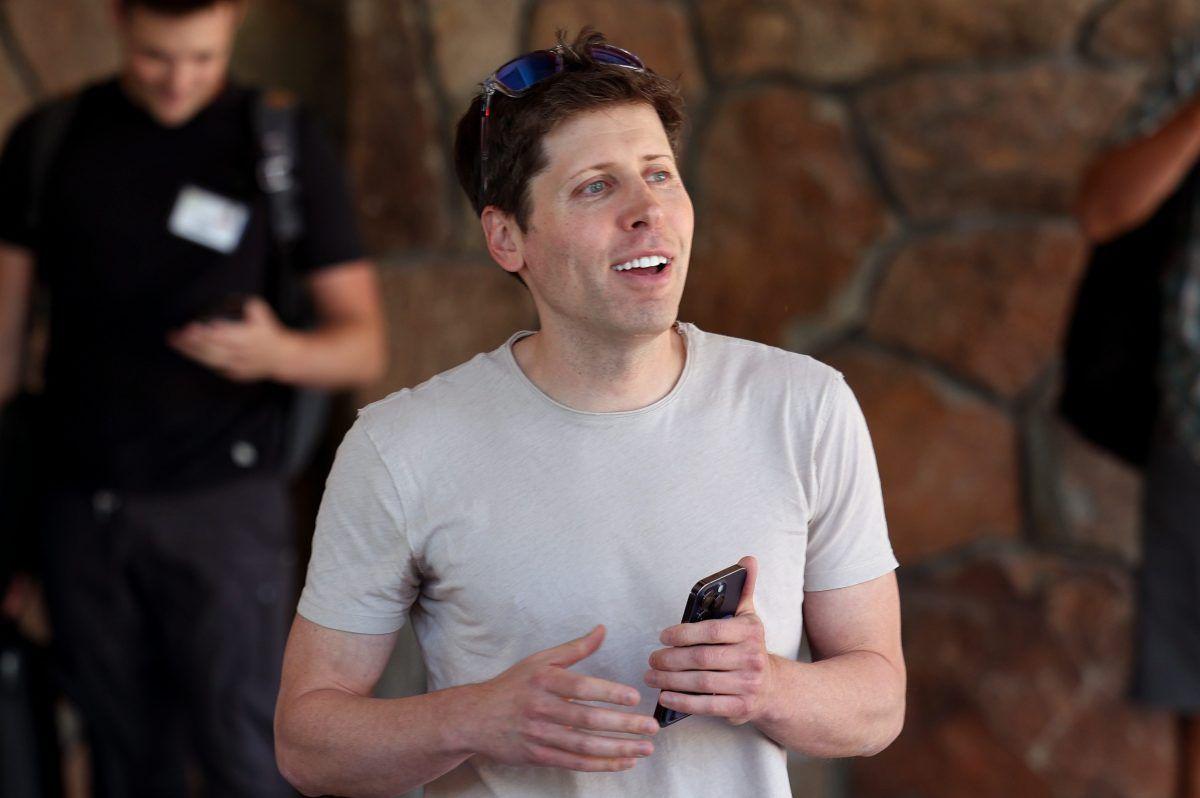
Meta's AI Talent Exodus: Turmoil at Superintelligence Lab Amid Aggressive Hiring and Restructuring
27 Aug 2025•Technology
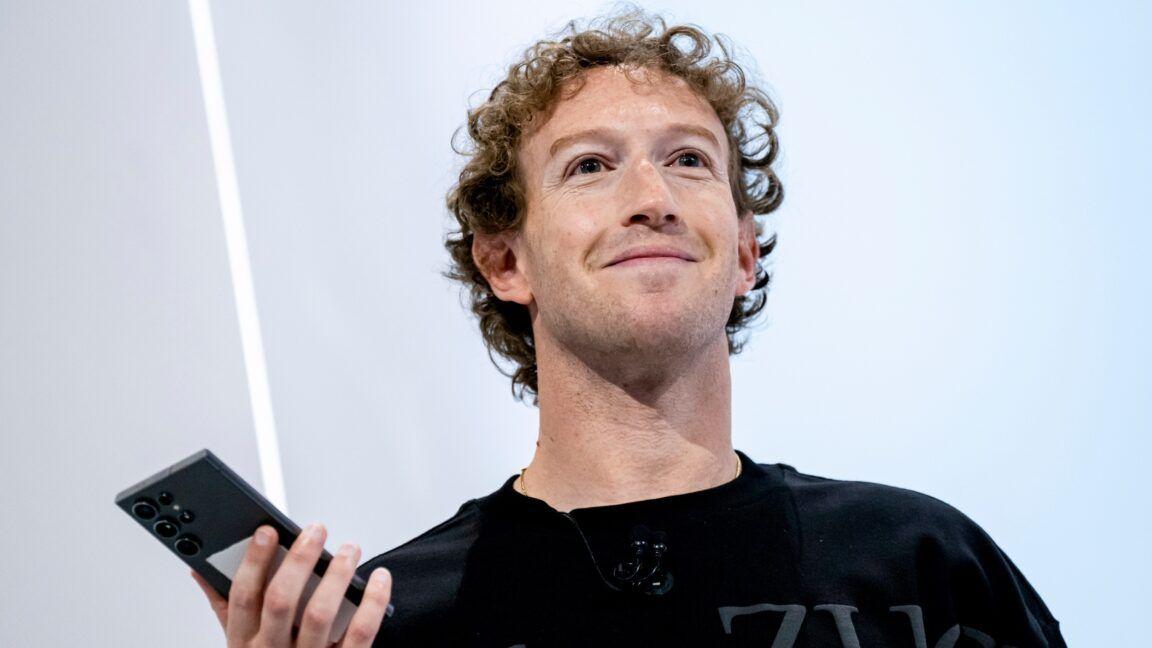
Recent Highlights


Recent Highlights
Today's Top Stories








Your Daily Dose of Curated AI News
Don’t drown in AI news. We cut through the noise - filtering, ranking and summarizing the most important AI news, breakthroughs and research daily. Spend less time searching for the latest in AI and get straight to action.

