Microsoft and Amazon pledge over $52 billion to fuel India's AI infrastructure and skills training


34 Sources
34 Sources
[1]
Microsoft to invest $17.5B in India by 2029 as AI race accelerates | TechCrunch
Microsoft plans to invest $17.5 billion in India over the next four years, expanding its AI and cloud footprint in the South Asian nation, whose vast online and smartphone user base is turning it into a critical battleground for global tech companies. Announced on Tuesday, the investment -- Microsoft's largest in Asia -- will fund new data centers, AI infrastructure, and skilling programs from 2026 to 2029, building on the $3 billion the company committed in India in January. Microsoft's move comes as major U.S. tech companies ramp up spending on data centers and AI compute worldwide, with India emerging as a strategic prize thanks to its fast-growing developer base and one of the world's largest pools of internet and smartphone users. The latest push also puts pressure on rivals such as Google, Amazon, and OpenAI, which are growing their presence in India to tap demand for cloud services and AI tools from businesses, startups, and government agencies. Moreover, the investment aligns with New Delhi's push to accelerate digital infrastructure and AI adoption across sectors, as India looks to position itself as a global technology hub while addressing concerns around data governance and equitable access. The announcement comes during Microsoft CEO Satya Nadella's visit to India and follows his meeting with Prime Minister Narendra Modi on Tuesday, ahead of a keynote in New Delhi on Wednesday. The Redmond-based company also said it will open a new data center region in Hyderabad by mid-2026, its largest in India, comprising three availability zones -- a footprint the company described as roughly the size of two Eden Gardens stadiums. Microsoft said it will continue expanding its three existing data-center regions in Chennai, Hyderabad, and Pune. As part of the push, Microsoft also announced it will work with the Ministry of Labour and Employment to integrate advanced AI capabilities into two of its flagship digital public platforms -- e-Shram and the National Career Service -- to offer AI-driven services to more than 310 million informal workers. The two Indian government platforms will use Microsoft's Azure OpenAI Service to provide multilingual access, AI-assisted job matching, predictive analytics on skill and demand trends, automated résumé creation, and personalized pathways, the company said. Microsoft also said it is rolling out new sovereign cloud options for Indian customers, including a Sovereign Public Cloud now available across its India regions and a Sovereign Private Cloud powered by Azure Local for both connected and air-gapped operations. The offerings would help enterprises meet regulatory and data-residency requirements and support high-performance workloads with access to the latest NVIDIA GPUs and Microsoft 365 services, the company noted. Additionally, Microsoft said its skilling efforts are also accelerating, noting that through its "ADVANTA(I)GE India" initiative, it has trained 5.6 million people since January -- well ahead of its goal of training 10 million by 2030 -- with the programs enabling more than 125,000 individuals to secure jobs or start businesses. The company is doubling its earlier commitment and now aims to equip 20 million Indians with basic AI skills by 2030, working with government agencies, industry partners, and digital public platforms to broaden access to training. Microsoft's investment commitment comes just months after Google announced a $15 billion plan to build an AI hub and data-center infrastructure in India -- the company's largest investment in the country and one that follows its earlier $10 billion pledge in 2020. In the recent months, India has emerged as an especially attractive market for global tech companies as they look for regions to expand their AI footprint, drawn by the country's vast base of internet subscribers, hundreds of millions of smartphone users, a fast-growing startup ecosystem, and the Indian government's aggressive digitisation agenda -- all of which promise both consumer scale and enterprise demand. The push has accelerated this year, with OpenAI and Anthropic setting up offices in India, and Google and Perplexity striking partnerships with major telecom operators Reliance Jio and Bharti Airtel to deepen their reach in the market. However, even as global tech firms ramp up investment, hyperscalers are expected to face significant constraints in India, where data-center expansion is challenged by patchy power availability, high energy costs, and water scarcity in several regions -- factors that could slow the build-out of AI infrastructure and raise operating expenses for cloud providers. Nonetheless, the Indian government has been pushing aggressively to draw more big-tech investment, framing large-scale data-center and AI projects as central to its economic and digital-public-infrastructure ambitions. Despite the constraints, New Delhi has rolled out incentives for AI and semiconductor projects, eased some regulatory hurdles, and encouraged partnerships with domestic telecom and IT firms to anchor more of the global AI value chain in India. "Microsoft has been part of India's fabric for more than three decades," said Puneet Chandok, president, Microsoft India and South Asia, in a prepared statement. "As the nation moves confidently into its AI-first future, we are proud to stand as a trusted partner in advancing the infrastructure, innovation, and opportunity that can power a billion dreams." Microsoft already employs more than 22,000 people across Bengaluru, Hyderabad, Pune, Gurugram, Noida, and other cities, including engineering teams that build AI products such as Copilot Studio, Azure AI Search, AI agents, speech and translation tools, and Azure Machine Learning for global markets, while also supporting the company's domestic operations.
[2]
Amazon pledges a massive $35 billion worth of investments in India's AI space through 2030
Employees stand near an The Amazon Inc. logo is displayed above the reception counter at the company's campus in Hyderabad, India, on Friday, Sept. 6, 2019. Amazon on Wednesday committed to investing over $35 billion in India's cloud and artificial intelligence space by 2030, as hyperscalers race to get a foothold in the market. The commitment, unveiled at the Amazon Smbhav Summit in New Delhi, builds on nearly $40 billion already invested in the country. In a press release, Amazon said the new funds will target AI-driven digitization, export growth and job creation, aligning with India's national priorities to build up its local AI environment. By 2030, Amazon said the plan is expected to generate an additional 1 million direct, indirect, induced and seasonal jobs in India, quadruple exports to $80 billion and deliver AI benefits to 15 million small businesses. The investment highlights Amazon's bet on India's booming digital economy, where it has been building fulfillment centers, data centers and payments infrastructure. It also comes soon after Microsoft announced plans to invest $17.5 billion in India's AI infrastructure as Big Tech players accelerate their push into the market. "We are humbled to have been a part of India's digital transformation journey over the past 15 years," said Amit Agarwal, senior vice president for emerging markets at Amazon. "Looking ahead, we're excited to continue being a catalyst for India's growth, as we democratize access to AI for millions of Indians."
[3]
Microsoft investing $17.5 billion in India for AI and cloud infrastructure
NEW DELHI (AP) -- Microsoft on Tuesday announced its biggest-ever Asia investment, amounting to $17.5 billion, in India over the next four years to advance the country's cloud and artificial intelligence infrastructure. CEO Satya Nadella revealed this in an X post after meeting with Indian Prime Minister Narendra Modi in New Delhi. Nadella said that Microsoft was committing the investments to help India build the "infrastructure, skills and sovereign capabilities" needed for its AI future. The announcement underscores the growing global competition among major technology companies to expand in India, which has become one of the world's fastest-growing digital markets. In October, Google said it will invest $15 billion in India over the next five years to establish its first AI hub in the country. Located in the southern city of Visakhapatnam, the hub will be one of Google's largest globally. Nadella is in India on a three-day trip that includes discussions with policymakers, as well as participation in AI-focused events in the country's tech hub, Bengaluru, and financial capital, Mumbai. India has set ambitious targets to become a leading global hub for AI and semiconductor manufacturing. The government has introduced financial incentives aimed at attracting global chipmakers and major technology companies to strengthen the country's innovation ecosystem, boost jobs and reduce dependence on imported technologies. "When it comes to AI, the world is optimistic about India," Modi said on X after meeting with Nadella. Microsoft's latest India investment plan tops its earlier announcement this year of investing $3 billion in building cloud and AI infrastructure, as well as new data centers and skilling the workforce over the next two years. The company, which has operated in India for more than three decades, employs more than 22,000 people in the country and has been expanding cloud and data center capacity to support advanced computing needs. Microsoft said in a statement that it hopes to scale up its ongoing operations across India. It plans to have its largest hyperscale presence in the country with a new data center going live in mid-2026.
[4]
AI: Microsoft, Amazon bet big, but where does India stand in the global race?
This week, tech giants Amazon and Microsoft pledged an eye-popping $50bn-plus combined investment in India, putting artificial intelligence (AI) in the spotlight. Microsoft's Satya Nadella announced his company's largest investment ever in Asia - $17.5bn (£13.14bn) - "to help build the infrastructure, skills, and sovereign capabilities needed for India's AI-first future". Amazon followed suit, and said it was putting in more than $35bn in the country by 2030, with an unspecified chunk of that investment going into boosting AI capabilities. The announcements come at a particularly interesting juncture. As fears of an AI bubble swept global markets and tech stock valuations soared, several leading brokerages took a contrarian view on India's AI landscape. Christopher Wood of Jefferies said the country's stocks were a "reverse AI trade". That basically means India should outperform other markets in the world "if the AI trade suddenly unwinds" - or simply put, the global bubble bursts. HSBC also held a similar view, saying Indian equities offered a "hedge and diversification" for those uneasy with the ongoing AI rally. This comes as Mumbai stocks have lagged behind their Asian peers over the past year, with foreign investors moving billions into Korean and Taiwanese AI-driven tech companies in the absence of comparable opportunities in India. In this backdrop, the Amazon and Microsoft investments provide a much-needed fillip - yet it remains worth asking where India truly stands in the global AI race.
[5]

Microsoft investing $17.5B in India to accelerate AI infrastructure, skills training and more
Microsoft is pouring $17.5 billion into India -- its largest investment in Asia -- to boost the country's AI infrastructure and diffusion, the company announced Tuesday. The funding, planned over four years between 2026 and 2029, comes after an earlier $3 billion commitment announced earlier this year. Microsoft's aim is to help advance India's cloud and AI infrastructure, skilling and ongoing operations. The tech giant said the partnership will help India make the leap from "digital public infrastructure to AI public infrastructure in the coming decade," toward "a future that is more equitable and uniquely Indian in its scale and impact." Microsoft CEO Satya Nadella is in the country this month as part of a multi-city "India AI" tour. He met with Prime Minister Narendra Modi in New Delhi on Tuesday and will deliver a keynote address on Wednesday: "Leading in the New Age of AI." The investment will target three primary areas: * Scale: A key priority is building hyperscale infrastructure to enable AI adoption in India. Microsoft said significant progress is being made at the India South Central cloud region, based in Hyderabad, that is set to go live in mid-2026. Microsoft will also continue to expand its three existing operational data center regions in Chennai, Hyderabad and Pune. * Skills: Microsoft is doubling its January commitment to equip 20 million Indians with essential AI skills by 2030. The company said it has already trained 5.6 million people since January, and its programs have helped more than 125,000 people gain work or entrepreneurial opportunities. * Sovereignty: Microsoft is introducing Sovereign Public Cloud and Sovereign Private Cloud for Indian customers, designed to give Indian organizations more control over data, compliance, and operational sovereignty. In security terms, these offerings will address data residency, regulatory compliance, governance, and operational isolation. Microsoft also announced that 310 million informal workers India will benefit from advanced AI capabilities being integrated into two key digital public platforms of the Ministry of Labour and Employment -- e-Shram and the National Career Service. Microsoft employs 22,000 people across Bengaluru, Hyderabad, Pune, Gurugram, Noida and other cities, representing numerous company business lines. Elsewhere on Tuesday, Microsoft President Brad Smith announced new commitments to Canada, adding $5.4 billion over the next two years to its continued investment in building out digital and AI infrastructure in the country. Smith highlighted many of the same goals the company outlined for India, including boosting skills training and digital sovereignty in Canada.
[6]
Amazon, Microsoft pledge mega AI investments in India
In October, Google announced a $15bn investment to build an AI data hub, and earlier this week Intel announced a collaboration with Mumbai-based Tata Electronics as its first major customer in the latter's $14bn semiconductor manufacturing plans. "When it comes to AI, the world is optimistic about India," Indian Prime Minister Narendra Modi said in a post on X, after meeting Microsoft CEO Satya Nadella on Tuesday. Amazon's $35bn investment will build on the $40bn already invested in India - establishing the company as "the largest foreign investor" in India, the company said in a statement. A key component of it will go into local cloud and AI infrastructure. Microsoft's fresh commitment follows a $3bn investment announced by the company earlier this year. It includes a new "hyperscale cloud region" - a cluster of data centres - in the southern India's Hyderabad city, set to go live in mid-2026, the company said in a statement. Data centres are centralised physical facilities that host computer servers, IT infrastructure and network equipment, and are a key component of the AI value chain that India is focusing on despite concerns around water shortages. India will also be given access to Microsoft's "sovereign public cloud", which offers tools to help organisations run their data and applications while keeping sensitive information within the country. The India investment is part of Microsoft's $23bn AI expansion across countries including Canada, Portugal and the UAE, as the company vies with rivals such as Amazon and Google. In a statement Microsoft said it also aims to integrate AI into Indian government platforms, supporting around 310 million informal workers. The announcements come as India steps up activity in semiconductor manufacturing, with several state-backed and private projects aiming to build a domestic chipmaking industry. While India is a big market for AI - with a billion internet users and a big tech talent pool - it still lags behind global leaders like China and the US. However, the country has been drawing billions in investments in key computing technologies such as chips, with the government's semiconductor mission offering generous subsidies to firms setting up chip-making facilities. India's sovereign AI model is also expected to be unveiled in February next year.
[7]

Amazon and to commit $35bn into AI in India
Google and Microsoft recently confirmed similar investments worth around half of Amazon's, each Amazon has committed to a $35 billion investment in India by 2030 with a key focus on cloud and AI, but the cash will also go towards logistics improvements too. This builds on $40 billion of existing investments Amazon has made since 2010, making it the largest foreign investor in the country. In a press release, the company remarked on previous successes, including aiding the digitization of over 12 million small businesses in the country and supporting around 2.8 million direct, indirect, and seasonal jobs in 2024 alone. "We are humbled to have been a part of India's digital transformation journey over the past 15 years, with Amazon's growth in India perfectly aligned with the vision of an Atmanirbhar and Viksit Bharat," says SVP for Emerging Markets Amit Agarwal noted. By 2030, the company wants to be supporting 3.8 million direct, indirect, induced and seasonal jobs annually. The company also wants to quadruple the number of cumulative ecommerce exports it enables to $80 billion by 2030, up from $20 billion per the most recent statistics. India is among the fastest-growing AI spend markets in APAC, and it's likely that Amazon sees a major opportunity due to a shortage of compute infrastructure. Key to Amazon's strategy in India is in supporting the government's 'AI for All' vision. Amazon wants to put AI in the hands of 15 million small businesses by the end of the decade and give four million schoolchildren AI education opportunities. But Amazon isn't the only company ploughing billions into India - Google recently committed a $15 billion spend to establish its first AI Hub in the country and connect the country with more subsea cable networks. At the same time as Amazon's announcement, Microsoft also declared a $17.5 billion investment to drive AI diffusion at population scale.
[8]

Microsoft announces $17.5 bn investment in India, its 'largest ever' in Asia
New Delhi (AFP) - Global technology giant Microsoft announced on Tuesday plans to invest $17.5 billion to help build India's artificial intelligence infrastructure, with CEO Satya Nadella calling it "our largest investment ever in Asia". Several global corporations have announced large investments this year in the South Asian nation, which is projected to have more than 900 million internet users by year's end. "To support the country's ambitions, Microsoft is committing US$17.5B (billion) -- our largest investment ever in Asia -- to help build the infrastructure, skills, and sovereign capabilities needed for India's AI first future," Nadella said in a post on X. Nadella made the announcement on social media after he met Prime Minister Narendra Modi in New Delhi, thanking the leader for "an inspiring conversation on India's AI opportunity". In a statement, Microsoft said the investment would be spread over four years. "Together, Microsoft and India are poised to set new benchmarks and drive the country's leap from digital public infrastructure to AI public infrastructure in the coming decade," the statement said. The tech giant said one of the key priorities of its investment plan was "building secure, sovereign-ready hyperscale infrastructure to enable AI adoption in India". "At the heart of this effort is the significant progress being made at the India South Central cloud region, based in Hyderabad -- that is set to go live in mid-2026," Microsoft added. The planned cloud region is twice the size of the iconic Eden Gardens stadium in India's eastern city Kolkata, which has a capacity of over 65,000 people. Microsoft said the latest announcement "builds on" a previous investment pledge Nadella had made earlier this year, committing $3 billion for AI and cloud infrastructure in India over the next two years. Modi said he was "happy" that the tech giant had chosen India as the destination for its largest investment in Asia. "The youth of India will harness this opportunity to innovate and leverage the power of AI for a better planet," the prime minister said in a post on X. "When it comes to AI, the world is optimistic about India," Modi added. 'Tremendous potential' Modi on Tuesday also met with the heads of tech firms Intel and Cognizant. Intel CEO Lip-Bu Tan said the company was "committed to support India's semiconductor mission". "We had a wide-ranging discussion on a variety of topics related to technology, computing and the tremendous potential for India," Tan said in a post on X. Cognizant said its CEO Ravi Kumar S met with the prime minister "for an inspiring conversation on accelerating AI adoption and advancing education and skill development to enhance AI capabilities and productivity". Global technology giants are aggressively courting more users in India, the world's most populous country and fifth-largest economy. A special area of focus has been artificial intelligence with US startup Anthropic in October unveiling plans to open an office in India. Its chief executive Dario Amodei has also met Modi. The same month, Google said it will invest $15 billion in India over the next five years, as it announced a giant data centre and artificial intelligence base in the country. OpenAI has said it will open an India office, with its chief Sam Altman noting that ChatGPT usage in the country had grown fourfold over the past year. AI firm Perplexity also announced a major partnership in July with Indian telecom giant Airtel, offering the company's 360 million customers a free one-year Perplexity Pro subscription. But India's bid to become a global technology and artificial intelligence hub is colliding with increasingly tightening digital regulations. According to recent media reports, authorities are drafting plans to ensure that manufacturers enable satellite location tracking in smartphones that cannot be turned off by users -- a proposal that rights groups have raised the alarm over.
[9]

Microsoft to spend $17.5B on AI infrastructure to support India's AI ambitions - SiliconANGLE
Microsoft to spend $17.5B on AI infrastructure to support India's AI ambitions Microsoft Corp. said today it's going to invest $17.5 billion into building out its data center and artificial intelligence infrastructure in India, as part of an effort to scale its presence in the South Asian country, which is fast becoming a major battleground for global technology giants. The investment was announced by Microsoft Chief Executive Satya Nadella earlier today after he met with Indian Prime Minister Narendra Modi in New Delhi as part of his ongoing tour of the country. He said the investment is focused on the three pillars of "scale, skills and sovereignty", in alignment with Modi's ambition to establish a broad tech ecosystem to support innovation in AI. "To support the country's ambitions, Microsoft is committing US$17.5B -- our largest investment ever in Asia -- to help build the infrastructure, skills, and sovereign capabilities needed for India's AI first future," Nadella said in a post on X. Nadella, who was born and raised in India before moving to the U.S. as a student and obtaining American citizenship, is planning to visit Indian tech hubs in Bangalore and Mumbai in the coming days. He last visited the country in January, where he pledged to invest $3 billion over the next two years. The new investment is much bigger, and Microsoft said its priority is to build AI infrastructure that will ensure India has both the sovereignty and security it desires, Nadella said. As part of the initiative, Microsoft is planning to build a new data center region in the city of Hyderabad that's expected to be up and running by the middle of next year. It will comprise three availability zones, and its footprint will be about the same size as two Eden Garden stadiums - the largest cricket stadium in India. In addition, Microsoft will also expand its existing data center facilities in Chennai and Pune. The company is also planning to work closely with the Indian government on a range of projects. For instance, it's going to work with India's Ministry of Labour and Employment on the integration of AI into its e-Shram and National Career Service digital platforms, providing automated services to over 310 million workers in the country's informal economy. The platforms will tap Microsoft's Azure OpenAI Service to offer multilingual access and AI-powered job matching, as well as predictive analytics to enable skills and demand trends. The National Career Service also wants to offer automated résumé creation tools and personalized career pathway plans, Microsoft said. India, the most populous nation in the world with more than 1.45 billion inhabitants, has become a magnet for the AI industry's power brokers this year, in addition to being a major source of data and talent. In October, Anthropic PBC co-founder Dario Amodei visited the country to set up a local office, while Google DeepMind and Nvidia Corp. CEOs Demis Hassabis and Jensen Huang are also planning official visits. Microsoft's rivals Google LLC and Amazon Web Services are also focused on expanding their presence in India in an effort to tap into the country's enormous demand for cloud computing services and AI tools. India is home to some of the world's biggest companies, including Reliance Industries Ltd., HDFC Bank and Tata Consultancy Services Ltd., as well as hundreds of government agencies and innovative startups that are all thirsty for cloud compute. Earlier this year, Google unveiled a plan to spend $15 billion on a new AI hub in India. That's its largest investment in the country to date, and follows a $10 billion pledge it made in 2020. Big tech companies are drawn to India because of its huge base of internet subscribers and hundreds of millions of smartphone users. The country is also home to a fast-growing startup economy, and India's digital services push is also increasing demand. OpenAI Group PBC is also setting up a local headquarters in India, and Google and Perplexity AI Inc. have struck partnerships with Indian telecommunications firms Reliance Jio and Bharti Airtel Ltd., respectively, to expand their reach in the country. The expansion of U.S. tech giants into India is music to the ears of Modi's government, which is striving to position the nation as a global technology hub and address concerns around data sovereignty and access. For Microsoft, India represents an important opportunity, but it's not the only one. The company has funneled billions of dollars to countries all over the world in its pursuit of AI and cloud dominance. Last month, it said it's going to spend $10 billion on a new AI data center in Portugal that will cater to users in South West Europe. A week earlier, it committed to spending $7.9 billion on data center projects in the United Arab Emirates. In September, the company said it would invest as much as $30 billion into AI projects and infrastructure in the U.K.
[10]

Microsoft Commits $17.5 Bn to Advance India's AI Ambition | AIM
Microsoft has announced a $17.5 billion investment in India over four years (2026-2029) to expand cloud and AI infrastructure, skilling programmes and ongoing operations. This marks the company's largest investment in Asia. This is in addition to the $3 billion announced earlier in 2025. The announcement followed Microsoft chairman and CEO Satya Nadella's meeting with Prime Minister Narendra Modi ahead of the company's India AI tour. Microsoft said the new investment is aligned with three priorities -- scale, skills and sovereignty. The tech giant has also doubled its commitment to equip 20 million Indians with AI skills by 2030. Through its ADVANTA(I)GE India initiative, the company claims to have trained 5.6 million people since January 2025 and enabled over 125,000 individuals to secure jobs or pursue entrepreneurship opportunities. "Had a very productive discussion with Mr. Satya Nadella. Happy to see India being the place where Microsoft will make its largest-ever investment in Asia," posted PM Modi in a post on X. He further said that the youth of India will harness this opportunity to innovate and leverage AI to build a better planet. Union Minister for Electronics & IT Ashwini Vaishnaw said the investment signals India's rise as a reliable technology partner for the world and will support the country's move from digital public infrastructure to AI public infrastructure. Puneet Chandok, president of Microsoft India and South Asia, said the company aims to translate India's AI ambitions into "impact for every citizen." He added, "Building on the $3 billion investment announced in January 2025, our new $17.5 billion commitment and deep partnership across India's technology ecosystem are focused on turning India's AI ambition into impact for every citizen." A significant part of the investment will support the India South Central cloud region in Hyderabad, scheduled to go live in mid-2026. Microsoft said this will be its largest hyperscale region in the country, comprising three availability zones. The company will also expand existing regions in Chennai, Hyderabad and Pune. Microsoft's existing 22,000 employees across Indian cities contribute to product development, engineering, AI research and datacenter operations, the company noted. The company also announced new AI integrations for the Ministry of Labour and Employment's e-Shram and National Career Service (NCS) platforms. The initiative aims to benefit more than 310 million informal workers by supporting multilingual access, AI-assisted job matching, predictive analytics and automated resumé generation through Azure OpenAI Service. It said that e-Shram, built on Microsoft Azure, has already helped expand social protection coverage in India from 24% in 2019 to 64% in 2025, according to ILO estimates. The company also introduced Sovereign Public Cloud and Sovereign Private Cloud for customers in India. These offerings include Sovereign Landing Zones, governance controls, and support for connected and disconnected operations through Azure Local. Additionally, Microsoft 365 Copilot will begin processing data within India by the end of 2025 for sectors requiring in-country data compliance. Microsoft stated that its expanded infrastructure, AI adoption support and skilling programmes will help build a national ecosystem for "innovation, trust and opportunity," positioning India to advance its AI capabilities at a population scale.
[11]

Microsoft investing $17.5 billion in India for AI and cloud infrastructure
NEW DELHI (AP) -- Microsoft on Tuesday announced its biggest-ever Asia investment, amounting to $17.5 billion, in India over the next four years to advance the country's cloud and artificial intelligence infrastructure. CEO Satya Nadella revealed this in an X post after meeting with Indian Prime Minister Narendra Modi in New Delhi. Nadella said that Microsoft was committing the investments to help India build the "infrastructure, skills and sovereign capabilities" needed for its AI future. The announcement underscores the growing global competition among major technology companies to expand in India, which has become one of the world's fastest-growing digital markets. In October, Google said it will invest $15 billion in India over the next five years to establish its first AI hub in the country. Located in the southern city of Visakhapatnam, the hub will be one of Google's largest globally. Nadella is in India on a three-day trip that includes discussions with policymakers, as well as participation in AI-focused events in the country's tech hub, Bengaluru, and financial capital, Mumbai. India has set ambitious targets to become a leading global hub for AI and semiconductor manufacturing. The government has introduced financial incentives aimed at attracting global chipmakers and major technology companies to strengthen the country's innovation ecosystem, boost jobs and reduce dependence on imported technologies. "When it comes to AI, the world is optimistic about India," Modi said on X after meeting with Nadella. Microsoft's latest India investment plan tops its earlier announcement this year of investing $3 billion in building cloud and AI infrastructure, as well as new data centers and skilling the workforce over the next two years. The company, which has operated in India for more than three decades, employs more than 22,000 people in the country and has been expanding cloud and data center capacity to support advanced computing needs. Microsoft said in a statement that it hopes to scale up its ongoing operations across India. It plans to have its largest hyperscale presence in the country with a new data center going live in mid-2026.
[12]

Microsoft Investing $17.5 Billion in India for AI and Cloud Infrastructure
NEW DELHI (AP) -- Microsoft on Tuesday announced its biggest-ever Asia investment, amounting to $17.5 billion, in India over the next four years to advance the country's cloud and artificial intelligence infrastructure. CEO Satya Nadella revealed this in an X post after meeting with Indian Prime Minister Narendra Modi in New Delhi. Nadella said that Microsoft was committing the investments to help India build the "infrastructure, skills and sovereign capabilities" needed for its AI future. The announcement underscores the growing global competition among major technology companies to expand in India, which has become one of the world's fastest-growing digital markets. In October, Google said it will invest $15 billion in India over the next five years to establish its first AI hub in the country. Located in the southern city of Visakhapatnam, the hub will be one of Google's largest globally. Nadella is in India on a three-day trip that includes discussions with policymakers, as well as participation in AI-focused events in the country's tech hub, Bengaluru, and financial capital, Mumbai. India has set ambitious targets to become a leading global hub for AI and semiconductor manufacturing. The government has introduced financial incentives aimed at attracting global chipmakers and major technology companies to strengthen the country's innovation ecosystem, boost jobs and reduce dependence on imported technologies. "When it comes to AI, the world is optimistic about India," Modi said on X after meeting with Nadella. Microsoft's latest India investment plan tops its earlier announcement this year of investing $3 billion in building cloud and AI infrastructure, as well as new data centers and skilling the workforce over the next two years. The company, which has operated in India for more than three decades, employs more than 22,000 people in the country and has been expanding cloud and data center capacity to support advanced computing needs. Microsoft said in a statement that it hopes to scale up its ongoing operations across India. It plans to have its largest hyperscale presence in the country with a new data center going live in mid-2026.
[13]

Amazon Joins Google, Microsoft With a Big $35B Bet on India's AI Growth
Amazon to provide 4 million government school students with AI education Amazon has announced plans to invest more than $35 billion (roughly Rs. 3.16 lakh crore) in India by 2030, focusing on artificial intelligence (AI), export growth, logistics, digitisation and job creation. The commitment was outlined at the annual Amazon Smbhav Summit in New Delhi on Wednesday, and builds on nearly $40 billion (roughly Rs. 3.61 lakh crore) the company has already invested in the country since 2010. This new investment is spread across physical infrastructure such as fulfilment centres and data centres, as well as programmes aimed at expanding the use of AI among small businesses and students. Amazon Announces AI Investment in India In a newsroom post, the Seattle-based tech giant announced and detailed its future investment commitment in the country. Amazon said that the planned $35 billion (roughly Rs. 3.16 lakh crore) will support three strategic priorities: AI-driven digitisation, export growth and job creation. The investment will also be used to expand the company's businesses in the country. With the planned investment, the company says it will also continue existing projects where it has helped digitise millions of small businesses and e-commerce exports. In practical terms, AI-driven digitisation refers to tools and services that help sellers, manufacturers and service providers use machine learning and automation to manage inventory, improve product recommendations or optimise pricing. For small businesses that sell through Amazon's marketplace, this could include features like AI-powered selling assistants that interpret data and suggest actions. Amazon specifically mentions plans to extend such capabilities to 15 million small businesses in India by 2030. The export growth component aims to increase India's share in global ecommerce. Amazon says it will work to boost cumulative ecommerce exports from India to $80 billion (roughly Rs. 7.23 lakh crore) by 2030, up from an estimated $20 billion (roughly Rs. 1.80 lajh crore) to date. Job creation is another major pillar. The Keystone Strategy report cited at the summit states the company's operations and ecosystem supported about 2.8 million direct, indirect, induced and seasonal jobs across India in 2024. Amazon's new plan anticipates supporting 3.8 million such jobs by 2030 through continued expansion of fulfilment centres, logistics networks and technology investments, including roles in customer service, warehousing, technology and transportation. The final part of the plan is driving AI education. Amazon said that it will provide four million students with AI literacy, career exploration experiences, and partnerships with local schools. This project supports India's National Education Policy 2020, the company claimed. Notably, Amazon's big investment comes just days after Microsoft announced a similar commitment in India AI infrastructure and capacity building. In October, Google committed $15 billion (1.3 lakh crore) to build an AI data centre in Visakhapatnam, Andhra Pradesh, in partnership with Airtel.
[14]

$67 bn and counting: What drives the Great Indian Tech Gold Rush?
Amazon, Microsoft, and Google are investing over $67 billion in India. This marks a shift from outsourcing to India becoming a hub for cloud infrastructure, AI, and deep-tech. These investments will create jobs and boost India's digital economy. India's democratic governance and talent pool make it a key alternative to China for tech growth. Not long back, India was primarily a market for outsourcing and consumer acquisition. Now it is emerging as a hub for cloud infrastructure, artificial intelligence, sovereign data systems and deep-tech innovation. The sudden acceleration of mega-investments by Amazon, Microsoft and Google into India marks this turning point. Amazon.com Inc. has pledged to invest $35 billion in India over the next five years (over and above the $40 billion that it has already put into the country), boosting its spending in the key growth market to expand in businesses from quick commerce to cloud computing. The US e-commerce giant will invest in areas such as artificial intelligence and logistics infrastructure, it said in a statement Wednesday. It said the planned outlay, through 2030, will help create an additional 1 million jobs in India. Amazon's investments are "strategically aligned with India's national priorities and will focus on expanding AI capabilities, enhancing logistics infrastructure, supporting small business growth and creating jobs," the company said in a statement. Also Read: Amazon ups India investment to over $35 billion by 2030 Yesterday, just a day before Amazon announced its mega investment plan, Microsoft revealed its own mega bucks investment plan in the next four years to drive its AI business. Microsoft will invest $17.5 billion in India, its chief executive Satya Nadella said on social media platform X on Tuesday. "Thank you, PM @narendramodi ji, for an inspiring conversation on India's AI opportunity. To support the country's ambitions, Microsoft is committing US$17.5B -- our largest investment ever in Asia -- to help build the infrastructure, skills, and sovereign capabilities needed for India's AI first future. @PMOIndia," said Nadella in a post on X. Also Read: Microsoft to invest $17.5 billion for India's AI-first future, CEO Nadella says In October, Google said it will invest $15 billion in India over the next five years to establish its first AI hub in the country. Located in the southern city of Visakhapatnam, the hub will be one of Google's largest globally. The combined commitments of more than $67 billion announced in just a few months reflect confidence in India's economic trajectory and the promise of India turning into a global tech hub. For two decades, China was the unrivaled locus of global digital expansion. But rising geopolitical tensions, regulatory unpredictability and national-security frictions have forced U.S. companies to seek other massive, talent-rich and stable markets to anchor long-term AI growth. India has emerged as the only viable alternative. Its democratic governance, engineering talent, English-speaking workforce and a regulatory climate shifting toward data sovereignty and digital public infrastructure create a landscape more suitable for the long-term requirements of American tech giants. By doubling down on India, companies like Microsoft, Amazon and Google are effectively readjusting their global supply chains and cloud footprints for a world in which China can no longer serve as the principal hub for sensitive or cutting-edge technologies. Also Read: Tata, Reliance, Adani & Airtel -- The behemoths want a space in this multi-billion centre AI systems require data at massive scale and diverse linguistic, economic and cultural contexts that help refine the models. India's digital ecosystem provides both in unparalleled quantities. With more than 1.4 billion people, hundreds of active languages, and a rapidly expanding user base shifting into digital payments, e-commerce, telemedicine and citizen services, India offers a uniquely challenging training ground for AI models. If an AI model can function seamlessly within the complexity of Indian society, it is more likely to work in any other global market. This makes India not just a market to serve, but a real-world laboratory for AI innovation. Tech companies are now racing to localise their AI deployments in India, knowing that the next leaps in model robustness will likely originate in such high-diversity environments as in India. Google's first major AI hub in Visakhapatnam and Microsoft's huge sovereign cloud region in Hyderabad reflect these issues. India's insistence on data sovereignty has become a magnet rather than a deterrent for investment. Instead of resisting data-localisation mandates, U.S. behemoths are embracing them as an opportunity to build hyperscale, high-margin cloud infrastructure directly within Indian borders. Microsoft's decision to launch sovereign public and private clouds, which are capable of hosting government, healthcare, defence and financial workloads entirely domestically, reflects this trend. Amazon's expansions in logistics and AWS data centers, and Google's commitment to build extensive AI computing regions, similarly align with India's push to ensure sensitive data never leaves the country. By investing heavily now, these companies secure privileged positions within India's future regulatory ecosystem. The firms that provide the foundational sovereign cloud capacity will also shape the standards for data governance, cybersecurity and AI oversight for decades. The construction of massive new data centers like Microsoft's India South Central region in Hyderabad, equal to the area of two Eden Gardens stadiums, or Google's huge new AI-focused data centers show India's transformation into a global cloud node. With likely substantial increases in Indian enterprises adopting AI, local latency, security and compliance requirements can no longer be met by servers located abroad. This shift benefits both India and the U.S. companies. India gains domestic digital capacity and reduced dependency on external infrastructure, while the tech giants establish long-term revenue engines. Once companies, governments, institutions and financial entities build their operations on a cloud provider's stack, switching becomes extremely difficult. That creates deep technological and commercial entrenchment. India's engineering talent remains unmatched in scale, affordability and adaptability. U.S. firms know that future AI innovation will not be confined to Silicon Valley but spread across global talent pools. By investing heavily in India's AI workforce development, they secure access to one of the world's youngest and most mathematically skilled populations. Microsoft's population-scale AI skilling commitments, Amazon's job-creation pledge, and Google's plans for major R&D expansions show how talent drives investment. The companies are positioning India as a long-term innovation hub rather than merely a consumption centre. India's digital economy is expected to reach trillions of dollars by the end of this decade, driven by e-commerce, fintech, mobility, gaming, health tech and digital public goods such as the Unified Payments Interface (UPI). American tech firms are investing in a digital market growing at rates that outpace most Western economies. Amazon's fresh $35 billion bet reflects this reality. From ultra-fast commerce to logistics, exports, cloud computing and AI services, the company is defending market share against powerful insurgent competitors like Flipkart, Blinkit and Zepto. India may not yet be Amazon's biggest revenue driver, but it is one of its most strategically contested markets. Google and Microsoft are similarly focused on Indian consumption growth, expecting that AI-enabled services will generate new classes of demand that do not yet exist. The core logic behind these massive investments rests on the conviction that India is poised to become one of the world's largest AI-first economies. With hundreds of millions entering the digital mainstream, a robust innovation ecosystem, a young population and state-backed digital public infrastructure which is unmatched globally, India is fast becoming the place where the next generation of AI applications will be built, tested and deployed at national scale. Whoever builds India's AI infra today will own one of the biggest technological growth markets of the next half-century. Amazon, Google and Microsoft are positioning themselves as the very architects of India's digital future. The $67 billion wave of American tech investments is not an isolated trend. It represents the beginning of a structural shift in global technology strategy. As AI becomes the backbone of economic influence, India stands out as the indispensable geography for scale, sovereignty, talent and growth.
[15]

Amazon Pledges $35 Billion To Supercharge India's AI, Cloud Market And Create 1 Million Jobs By 2030 - Amazon.com (NASDAQ:AMZN), Alphabet (NASDAQ:GOOG)
Amazon.com Inc. (NASDAQ:AMZN) announced a substantial investment in India's artificial intelligence (AI) and cloud computing sector on Wednesday, with a commitment of over $35 billion by 2030. Amazon Taps Into India's AI Strength The investment was revealed at the Amazon Smbhav Summit in New Delhi, marking the e-commerce giant's latest move in the race to establish a strong presence in India. This new investment is in addition to the nearly $40 billion Amazon has already invested in the country and will focus on AI-powered digitization, boosting exports, and supporting job creation, in line with India's broader goals to advance its domestic AI ecosystem. Amazon expects the initiative to help create 1 million new jobs in India by 2030, lift exports to $80 billion, four times current levels, and extend AI advantages to 15 million small businesses. See Also: Elizabeth Warren Says Trump And Lutnick Need To Answer Why They Are 'Selling Out' US Security By Letting China Have Nvidia AI Chips Big Tech Bets Big On India Amazon's commitment comes at a time when other tech giants are also making significant moves in the country. According to Boston Consulting Group's (BCG) June report, the Indian AI market is projected to more than triple, surpassing $17 billion by 2027. On Tuesday, Microsoft (NASDAQ:MSFT) announced its largest-ever Asia investment, $17.5 billion over 2026-2029 in India, to boost cloud capacity, AI infrastructure, skills development, and sovereign digital capabilities after CEO Satya Nadella met Prime Minister Narendra Modi. Meanwhile, Intel (NASDAQ:INTC) and India's Tata Group signed an MoU to deepen their semiconductor partnership, exploring chip manufacturing and advanced packaging at Tata Electronics' upcoming facilities. In October, Alphabet Inc.'s Google (NASDAQ:GOOGL) (NASDAQ:GOOG) announced a $15 billion investment to build an AI data center in India, marking its largest investment in the country to date. Amazon's AI Capex Surge Risks Strain JPMorgan expects Amazon's capex to nearly double from FY24 levels as AWS ramps up spending on GPUs, networking, and power infrastructure to support soaring AI demand. Although Amazon has a strong balance sheet, with about $84 billion in cash against $58 billion in debt. The investment bank warns that accelerating AI and data-center investments, potentially reaching $150 billion by FY26, could strain even Amazon's sizeable liquidity. Benzinga's Edge Rankings place Amazon in the 76th percentile for quality and the 46th percentile for value, reflecting its strong performance in both areas. Check the detailed report here. Price Target: On a year-to-date basis, Amazon stock climbed 3.50% as per data from Benzinga Pro. On Tuesday, it rose 0.45% to close at $227.92. READ NEXT: Amazon's AI Chip Trainium2 Hits Multi-Billion Dollar Revenue Run Rate As CEO Andy Jassy Unveils 4X Faster Successor Image via Shutterstock Disclaimer: This content was partially produced with the help of AI tools and was reviewed and published by Benzinga editors. AMZNAmazon.com Inc$227.92-%OverviewGOOGAlphabet Inc$317.11-%GOOGLAlphabet Inc$316.32-%INTCIntel Corp$40.43-%MSFTMicrosoft Corp$491.68-%Market News and Data brought to you by Benzinga APIs
[16]

Microsoft Announces USD 17.5 Billion Investment in India to Accelerate AI and Cloud Expansion
Microsoft announced an investment of USD 17.5 billion in India -- its largest investment in Asia -- over four years (CY 2026 to 2029) to advance the country's cloud and artificial intelligence (AI) infrastructure, skilling, and ongoing operations. "This investment builds on the USD 3 billion investment announced earlier this year, which we are on track to spend by the end of CY2026," Microsoft said on December 9, 2025. This announcement follows Microsoft Chairman and CEO Satya Nadella's meeting with the Prime Minister of India, Narendra Modi, on Tuesday, December 9, 2025, ahead of the company's India AI tour. "In their meeting, both leaders discussed the country's AI roadmap and growth priorities. Microsoft's investment in India focuses on three pillars -- scale, skills and sovereignty -- aligned with the Prime Minister's vision of building a comprehensive ecosystem that drives AI innovation and access at a national scale," Microsoft said. "Together, Microsoft and India are poised to set new benchmarks and drive the country's leap from digital public infrastructure to AI public infrastructure in the coming decade. We are shaping a future that is more equitable and uniquely Indian in its scale and impact," the company said. Ashwini Vaishnaw, Union Minister of Electronics and Information Technology said, "As AI reshapes the digital economy, India remains committed to innovation anchored in trust and sovereignty. Microsoft's landmark investment signals India's rise as a reliable technology partner for the world. This partnership will set new benchmarks and drive the country's leap from digital public infrastructure to AI public infrastructure." Puneet Chandok, President, Microsoft India and South Asia, said, "Microsoft has been part of India's fabric for more than three decades. As the nation moves confidently into its AI-first future, we are proud to stand as a trusted partner in advancing the infrastructure, innovation and opportunity that can power a billion dreams. Building on the USD 3 billion investment announced in January 2025, our new USD 17.5 billion commitment and deep partnership across India's technology ecosystem are focused on turning India's AI ambition into impact for every citizen. This transformation is anchored on three pillars: hyperscale infrastructure to run AI at scale, sovereign-ready solutions that ensure trust, and skilling programs that empower every Indian to not just join the future but shape it." Microsoft said its new investment will be used to continue to scale its cloud and AI infrastructure, skilling initiatives and ongoing operations across India. This includes workforce of more than 22,000 employees across Bengaluru, Hyderabad, Pune, Gurugram, Noida and other cities. "Their work contributes to innovation across Microsoft's AI stack -- from infrastructure to app platforms to products -- while operating hyperscale datacenters and delivering sales and support to customers nationwide. These teams are not only powering India's digital transformation but also delivering AI impact at scale globally -- Copilot Studio, Azure AI Search, AI agents, AI speech and translation, Azure Machine Learning and more. Every day, they collaborate closely with India's leading enterprises, developers and institutions to unlock the promise of AI for the country," it added. Microsoft said one of the key priorities of this investment is building secure, sovereign-ready hyperscale infrastructure to enable AI adoption in India. At the heart of this effort is the significant progress being made at the India South Central cloud region, based in Hyderabad, which is set to go live in mid-2026. This will be the company's largest hyperscale region in India, comprising three availability zones -- roughly equivalent in size to two Eden Gardens stadiums combined. The company will also continue to expand its three existing operational data center regions in Chennai, Hyderabad and Pune. This expansion provides organizations across India greater choice and resilience, enabling low-latency, mission-critical performance for enterprises, startups, and public sector institutions. Microsoft also announced its efforts to integrate advanced AI capabilities into two key digital public platforms of the Ministry of Labour and Employment -- e-Shram and the National Career Service (NCS). The initiative aims to extend the benefits of AI to more than 310 million informal workers. Built on Microsoft Azure's secure and scalable cloud infrastructure, e-Shram connects workers to 18 welfare schemes and has contributed to expanding India's social protection coverage from 24 percent in 2019 to 64 percent in 2025 (ILO estimates). With Azure OpenAI Service, both e-Shram and NCS now offer enhanced features such as multilingual access, AI-assisted job matching, predictive analytics for skill and demand trends, automated resume creation, and personalized pathways toward formal employment. This collaboration marks a steady step forward in applying AI at population scale, strengthening India's digital public infrastructure and enhancing the accessibility and effectiveness of employment and social protection services. Microsoft said India's AI journey depends on empowering skilled talent. For this, the company is doubling its commitment of January 2025 to equip 20 million Indians with essential AI skills by 2030, working with government, industry, and digital public platforms to ensure equitable access to opportunity. "Through our ADVANTA(I)GE India initiative, executed by Microsoft Elevate, we have already trained 5.6 million people since January 2025 -- well ahead of the original goal of training 10 million by 2030. These programs aren't just about learning -- they are creating real economic impact, having enabled over 125,000 individuals with jobs or entrepreneurial opportunities," Microsoft said. Microsoft also announced the introduction of Sovereign Public Cloud and Sovereign Private Cloud for Indian customers. Organizations can leverage a prescriptive architecture for deploying workloads in Azure with built-in compliance guardrails using Sovereign Landing Zones, do policy enforcement, and apply governance controls. The company said Sovereign Public Cloud is now available from its Indian regions, while Sovereign Private Cloud, powered by Azure Local, will support both connected and disconnected operations in customers' or its partners' datacenters. Azure Local now offers hundreds of node scale, external SAN storage integration, and the latest NVIDIA GPUs, enabling high-performance, secure, and compliant environments. In addition, Microsoft 365 Local, which runs on Sovereign Private Cloud, powered by Azure Local, is also available to Indian customers. "As digital sovereignty becomes a top priority for Indian enterprises navigating complex regulatory landscapes, we are driving India's sovereignty agenda with integrated solutions and investments, while empowering organizations to architect secure, compliant environments for the AI era," the company said. As announced recently, Microsoft said its 365 Copilot will offer in-country data processing in India by the end of 2025 -- making India one of the top four global markets to receive this capability. This means that Copilot prompts and responses, under normal operations, will be processed fully within India's borders, strengthening governance, compliance, and performance across regulated sectors, including government, BFSI, and healthcare. "Today's announcements reflect our continued commitment to India about building an ecosystem that drives innovation, trust and opportunity for all. By expanding hyperscale infrastructure, embedding AI into national platforms, and advancing workforce readiness, India is positioned to lead the world in the AI era -- powered by scale, skilling, and sovereignty," the company said.
[17]
Microsoft Invests $17.5 Billion in India as Big Tech Races for the AI Market
e-Shram and the National Career Service now offer AI capabilities Microsoft, on Tuesday, announced an investment of $17.5 billion (roughly Rs. 1.57 lakh crore) in India to develop artificial intelligence (AI) and cloud infrastructure, support government projects around skilling, and to expand its ongoing projects. The announcement was made following a meeting between the Redmond-based tech giant's CEO Satya Nadella and Prime Minister Narendra Modi. The company claimed it to be its largest investment in Asia, and highlighted that the capacity building could help the country's inclusive growth and economic transformation. Interestingly, Google and OpenAI have also announced similar investments in India this year.
[18]

Microsoft Commits $17.5 Billion Investment to Accelerate India's AI and Cloud Ecosystem
India stands at a pivotal moment in its AI journey, one defined by impact at scale, determined to lead. India stands at a pivotal moment in its AI journey, one defined by impact at scale, determined to lead. As technology becomes a catalyst for inclusive growth and economic transformation, the country is emerging as a frontier AI nation. Against this backdrop of bold ambition and accelerating innovation, today we are announcing our largest investment in Asia -- US$17.5 billion over four years (CY 2026 to 2029) -- to advance the country's cloud and artificial intelligence (AI) infrastructure, skilling and ongoing operations. This investment builds on the US$3 billion investment announced earlier this year, which we are on track to spend by the end of CY2026.
[19]
Amazon to invest over $35 billion in India over next five years - The Economic Times
The fresh capital deployment plans come at a time when Amazon is doubling down on 10-minute deliveries, from which it was among the most impacted in the online commerce space. In this segment, it competes with the likes of Eternal-owned Blinkit, Swiggy's Instamart, Nexus Venture Partners-backed Zepto, Tata Digital's BigBasket and Flipkart Minutes.Amazon, the world's largest online retailer, said on Wednesday that it will invest $35 billion in its India operations. The Seattle-based company, which has cumulatively invested $40 billion in the country since 2010, said it will deploy the capital on expanding its artificial intelligence (AI) capabilities and strengthening its logistics infrastructure. The fresh capital deployment plans come at a time when Amazon is doubling down on 10-minute deliveries, from which it was among the most impacted in the online commerce space. In this segment, it competes with the likes of Eternal-owned Blinkit, Swiggy's Instamart, Nexus Venture Partners-backed Zepto, Tata Digital's BigBasket and Flipkart Minutes. The infusion underscores how Amazon is accelerating its India push at a time when quick commerce incumbents Swiggy and Zepto are scrambling for funding in the public markets as they continue burning cash. Amazon earlier said it was adding two dark stores daily to its quick commerce network across Bengaluru, Delhi-NCR and Mumbai to take the total to 300 by the end of this year. Meesho, Amazon's rival in the tier-II and beyond ecommerce space, listed on the stock exchanges on Wednesday after a $600-million initial public offering (IPO) at a $5.9 billion valuation. "We have invested at scale in growing the physical and digital infrastructure for small businesses in India, creating millions of jobs," Amit Agarwal, SVP, emerging markets at Amazon, said in a statement. Over the previous fiscal year, Amazon's India units reined in costs to bring down losses. All the four major business units -- marketplace entity Amazon Seller Services, logistics arm Amazon Transport Services, Amazon Wholesale and fintech unit Amazon Pay -- reported a significant narrowing of their loss in FY25, primarily due to a reduction in advertising and employee expenses. For Amazon Seller Services, revenue from operations rose 19% from the year before to Rs 30,139 crore in FY25, against 14% growth in FY24. While the growth rate has improved from 3% in FY23, it is much lower than in the pandemic years, when the business expanded 49% in FY21 and 32% in FY22. In May 2023, Amazon had said it would deploy $12.7 billion in India by 2030 in the country's local cloud and AI infrastructure across Telangana and Maharashtra. Last week, Amazon said it was on track to make the announced investments and that it will "bring the benefits of AI to over 15 million small businesses". Amazon's investment plan in AI and local cloud infrastructure follows a series of such announcements by US tech giants. Microsoft, in a statement, said it plans to invest $17.5 billion in India over the next four years (2026-2029) to drive AI diffusion at a population scale. This comes on top of the company's earlier commitment of $3 billion, announced in January 2025. CEO Satya Nadella is currently visiting India and met Prime Minister Narendra Modi on Tuesday. In October, Google said it would invest $15 billion in India over the next five years to establish its first AI hub in the country. Located in Visakhapatnam, the hub will be one of Google's largest globally.
[20]

Amazon to Invest $35 Billion to Enhance AI and Logistics in India | PYMNTS.com
By completing this form, you agree to receive marketing communications from PYMNTS and to the sharing of your information with our sponsor, if applicable, in accordance with our Privacy Policy and Terms and Conditions. This will build on the $40 billion the company has already invested in India in terms of compensation to employees and development of infrastructure, it said in a Wednesday (Dec. 10) press release. Amazon's investments to date have built fulfillment centers, transportation networks, data centers, digital payments infrastructure and technology development, according to the release. The company has digitized 12 million small businesses, enabled $20 billion in cumulative eCommerce exports and supported 2.8 million direct, indirect, induced and seasonal jobs, per the release. The investments planned through 2030 will focus on AI capabilities, logistics infrastructure, support for small business growth and job creation, according to the release. By 2030, Amazon plans to bring more AI-powered tools to 15 million small businesses, add AI-enhanced shopping experiences for hundreds of millions of consumers, and provide AI education and career exploration opportunities to 4 million government school students, per the release. "Looking ahead, we're excited to continue being a catalyst for India's growth, as we democratize access to AI for millions of Indians and quadruple cumulative eCommerce exports enabled to $80 billion by 2030," Amit Agarwal, senior vice president emerging markets at Amazon, said in the release. "In 2030, Amazon businesses will support 3.8 million direct, indirect, induced and seasonal jobs." Amazon announced its earlier investment in India in June 2023, when the company said it intended to invest $26 billion in the country by 2030. That statement followed earlier announcements that Amazon Web Services was investing $12.9 billion in the country and that Amazon was investing $6.5 billion to boost its Indian eCommerce business. Amazon's latest announcement came a day after Microsoft pledged to invest $17.5 billion for AI and cloud computing in India. Microsoft's new funds are set to be disbursed over a four-year period from 2026 through 2029. They follow an additional $3 billion the company committed to cloud and AI development in India at the start of the year. "Together, Microsoft and India are poised to set new benchmarks and drive the country's leap from digital public infrastructure to AI public infrastructure in the coming decade," the company said in a Tuesday (Dec. 9) press release. "We are shaping a future that is more equitable and uniquely Indian in its scale and impact."
[21]

Microsoft to invest $17.5B in India to boost cloud, AI infrastructure
Microsoft (MSFT) is going to invest $17.5B in India over four years (2026 to 2029) to advance the country's cloud and AI infrastructure, skilling, and ongoing operations. The investment would be the company's largest in Asia and builds on the $3B Microsoft's investment will expand cloud capacity, launch a major hyperscale region, offer sovereign-ready cloud solutions, and enhance public sector AI integration. Microsoft's investment targets infrastructure scale, AI skills development, and sovereign-ready solutions for trust and compliance. Microsoft will double AI training initiatives, aiming to equip 20 million Indians with AI skills by working with government, industry, and public platforms.
[22]

Microsoft to invest $17.5 billion to enable AI at population scale in India
Microsoft on Tuesday announced its largest-ever investment in Asia, committing US$17.5 billion (Rs. 1.5 lakh crore approx.) over four years (2026-2029) to expand AI infrastructure, skilling, and operations in India. The announcement follows a meeting between Microsoft Chairman and CEO Satya Nadella and Prime Minister Narendra Modi, where the leaders discussed India's AI roadmap and growth priorities. The investment builds on a previous US$3 billion commitment and will focus on three areas: cloud and AI infrastructure, workforce skilling, and digital sovereignty solutions. Microsoft aims to enable AI-driven services at population scale, supporting India's transition from digital public infrastructure to AI public infrastructure. Microsoft employs more than 22,000 people across Bengaluru, Hyderabad, Pune, Gurugram, Noida, and other cities. Teams contribute to AI development across Microsoft products and platforms, including Copilot Studio, Azure AI Search, AI agents, AI speech and translation services, and Azure Machine Learning. A major priority is building secure, sovereign-ready hyperscale infrastructure. The India South Central cloud region in Hyderabad, scheduled to launch in mid-2026, will be Microsoft's largest hyperscale region in India, spanning three availability zones. Existing data centers in Chennai, Hyderabad, and Pune will also expand, providing organizations with low-latency, resilient performance for enterprises, startups, and public institutions. Microsoft plans to integrate AI capabilities into the Ministry of Labour and Employment's digital platforms, e-Shram and the National Career Service (NCS). This initiative targets over 310 million informal workers and offers features including multilingual AI-assisted job matching, predictive skill analytics, automated résumé creation, and personalized pathways toward formal employment. e-Shram, built on Azure's cloud, has expanded social protection coverage from 24% in 2019 to 64% in 2025, according to ILO estimates. The integration of AI tools is designed to strengthen digital public infrastructure and improve the accessibility of employment and welfare services. Microsoft has doubled its commitment to train 20 million Indians in AI skills by 2030. Through the ADVANTA(I)GE India initiative, delivered by Microsoft Elevate, 5.6 million people have been trained since January 2025, creating over 125,000 employment or entrepreneurial opportunities. To meet compliance and governance requirements, Microsoft introduced Sovereign Public Cloud and Sovereign Private Cloud for Indian customers. These solutions allow organizations to deploy workloads locally with compliance guardrails, policy enforcement, and governance controls. Azure Local now provides high-performance environments with hundreds of nodes, external SAN storage, and NVIDIA GPUs. Microsoft 365 Local, running on Sovereign Private Cloud, is also available in India. By the end of 2025, Microsoft 365 Copilot will process data entirely within India, ensuring governance, compliance, and performance for sectors including government, BFSI, and healthcare. Prime Minister Narendra Modi welcomed the announcement, emphasizing India's role in global AI development. He stated: When it comes to AI, the world is optimistic about India! Had a very productive discussion with Mr. Satya Nadella. Happy to see India being the place where Microsoft will make its largest-ever investment in Asia. The youth of India will harness this opportunity to innovate and leverage the power of AI for a better planet. Speaking at the event, Shri Ashwini Vaishnaw, Union Minister of Electronics & Information Technology, said, As AI reshapes the digital economy, India remains committed to innovation grounded in trust and sovereignty. Microsoft's landmark investment signals India's emergence as a reliable technology partner for the world. This partnership will set new benchmarks and drive the country's leap from digital public infrastructure to AI public infrastructure. Commenting on the development, Puneet Chandok, President, Microsoft India and South Asia, said,
[23]
Microsoft Pledges $17 Billion for India's 'Leap' to AI | PYMNTS.com
By completing this form, you agree to receive marketing communications from PYMNTS and to the sharing of your information with our sponsor, if applicable, in accordance with our Privacy Policy and Terms and Conditions. The investment, which the company called its largest ever in Asia, was announced Tuesday (Dec. 9) after CEO Satya Nadella met with Indian Prime Minister Narendra Modi to discuss the country's AI vision. "Microsoft's investment in India focuses on three pillars -- scale, skills and sovereignty -- aligned with the Prime Minister's vision of building a comprehensive ecosystem that drives AI innovation and access at a national scale," the company said in its announcement. "Together, Microsoft and India are poised to set new benchmarks and drive the country's leap from digital public infrastructure to AI public infrastructure in the coming decade. We are shaping a future that is more equitable and uniquely Indian in its scale and impact." The new funds are set to be dispersed across a four-year period beginning in 2026 and through 2029 and follow an additional $3 billion Microsoft committed to cloud and AI development in India at the start of the year. The company has also said it wants to equip 10 million people in India with AI skills by the end of the decade. "India is rapidly becoming a leader in AI innovation, unlocking new opportunity across the country," Nadella said in a news release at the time. "The investments in infrastructure and skilling we are announcing today reaffirm our commitment to making India AI-first and will help ensure people and organizations across the country benefit broadly." The company says one of its chief priorities is developing "secure, sovereign-ready hyperscale infrastructure" to promote artificial intelligence adoption in India. At the center of this effort is the company's India South Central cloud region, based in Hyderabad and due to go live in mid-2026. "This will be our largest hyperscale region in India, comprising three availability zones -- roughly equivalent in size to two Eden Gardens stadiums combined," the company said. In other recent news, Microsoft and Nvidia are expanding their efforts to create what they call AI super factories, linking large data centers to train models and run enterprise AI applications. According to a Nvidia blog lost, the companies are joining Microsoft cloud infrastructure with Nvidia GPUs and microservices to support AI workloads in sectors such as manufacturing, logistics and finance. As PYMNTS wrote last week, announcements such as these illustrate just "how quickly the AI landscape is shifting."
[24]
Microsoft to Invest $17.5B in India, its Highest in Asia
Microsoft will invest $17.5 billion in India to expand its AI and cloud infrastructure, chief executive Satya Nadella said on Tuesday, after meeting Prime Minister Narendra Modi. This will mark the $3.64-trillion company's largest investment in Asia and comes on top of the $3 billion committed in January. Microsoft's commitment for the next four years also tops the $15 billion Google-Adani Group and Airtel investment announced last month to build the Vizag AI hub, said to be one of the largest foreign direct investments (FDI) in India's history. Nadella is visiting India for the second time this year and will be addressing developers and top executives in New Delhi, Bengaluru and Mumbai, starting Wednesday. "The youth of India will harness this opportunity to innovate and leverage the power of AI for a better planet," Modi said in a post on X, acknowledging the big-ticket investment. Nadella posted, "To support the country's ambitions, Microsoft is committing $17.5B -- our largest investment ever in Asia -- to help build the infrastructure, skills, and sovereign capabilities needed for India's AI first future." India's AI data centre space has seen a spate of investment announcements over the last few weeks. Digital Connexion, a three-way joint venture of Reliance Industries, Brookfield Asset management and Digital Realty, plans to build a 1GW data centre with an outlay of $11 billion. Tata Consultancy Services (TCS) and TPG plan to invest $2 billion in this area, they said last month. The upcoming Hyderabad-based India South Central cloud region, Microsoft's largest in India, will go live in mid-2026, the company said in a statement. Existing centres in Pune, Chennai and Mumbai regions are also being expanded, it added. In January, Nadella announced $3 billion investment in AI and cloud capacity expansion in India. "We have shown that our investments are structural, and not periodic," Puneet Chandok, president, Microsoft India & South Asia, told ET on Tuesday. "We are ahead of the curve in investing the $3 billion committed earlier. Roughly $2.5 billion of that has already been invested so far." The new investments will be operationalised over the next four years, he said. Microsoft also runs two cloud regions in Gujarat and Maharashtra in partnership with Reliance Jio. Together, the six data centre regions will make Microsoft the largest hyperscaler in India, Chandok said. He stressed that India continues to be one of the largest AI markets. "It is adopting AI at a scale we have not seen before. The adoption is now shifting from the pilots that we had seen earlier, to enterprise-wide scale adoption," he said. Microsoft's landmark investment signals India's rise as a reliable technology partner for the world, said electronics and information technology minister Ashwini Vaishnaw said. "This partnership will set new benchmarks and drive the country's leap from digital public infrastructure to AI public infrastructure," he said. Microsoft also announced the launch of sovereign public and private clouds for Indian customers, in a key move. These will allow companies to "leverage a prescriptive architecture for deploying workloads in Azure with built-in compliance guardrails using sovereign landing zones, do policy enforcement, and apply governance controls," according to the company. "While the public cloud will be available from Microsoft's Indian regions, the private cloud will be powered by Azure Local and support both connected and disconnected operations in customers or our partner's data centres." Skilling, AI training The new investment will also be used to continue to scale up skilling initiatives and ongoing operations for the company's 22,000 strong workforce in Bengaluru, Hyderabad, Pune, Gurgaon, Noida and other cities. The company has also doubled the commitment made in January to equip 10 million Indians with essential AI skills by 2030, to 20 million now.
[25]

Amazon, Microsoft Pledge $52B as India's AI Public Funding Lags
India now faces a widening imbalance in AI funding: private investment has surged at a scale that dwarfs public spending, reshaping the country's technological trajectory far faster than the IndiaAI Mission's phased allocations can match. This gulf is not just about money; it determines who builds, owns, and governs the infrastructure that future AI systems will rely on. Major technology companies are investing heavily in India because the incentives are uniquely aligned. The country generates over 20% of the world's data, offers one of the largest young user bases, and is undergoing a rapid shift in cloud and device adoption. These factors make India indispensable for training, deploying, and scaling AI systems, and they position it as a long-term demand engine for compute, data centres, and AI services. Consequently, private capital moves quickly, establishing control over hyperscale infrastructure and critical platforms that domestic firms and public institutions will rely upon. Therefore, public priorities such as open research, sovereign compute, and affordable access risk being shaped by market incentives rather than public strategy. While government funds target compute and model grants, the scale and speed of private inflows mean that operational control, pricing power, and standards-setting may tilt towards those who own the infrastructure. If India wants both widespread adoption and genuine technological independence, it must pair deployment with larger, sustained public investments in open compute, foundational research, and data stewardship; otherwise, the country will host capacity without controlling its terms. In rapid succession this month, two of the world's largest technology companies unveiled plans to invest more than $50 billion in India. Together, these announcements further underline the country's growing strategic importance in the global tech and AI landscape. To begin with, on December 9, 2025, Amazon announced it will invest over $35 billion in India by 2030 across its businesses, building on nearly $40 billion already spent in the market to date. The investment commitment was unveiled at the Amazon Smbhav Summit in New Delhi. Meanwhile, on the same day, Microsoft confirmed its largest investment in Asia, committing $17.5 billion to India over the four years from 2026 to 2029. The company said the funding will support cloud and artificial intelligence (AI) infrastructure, workforce development, and ongoing operations. It additionally positioned the announcement as part of its broader global AI expansion. Taken together, the two commitments amount to more than $52 billion in new capital directed at the Indian market, signalling intensified interest by US tech giants in the country. Amazon's $35 billion plan will be spread across several strategic fronts through 2030. The company said the funding will concentrate on expanding its business operations nationwide and advancing key pillars of growth. Specifically, Amazon intends to accelerate AI-driven digitisation, bolster export growth, and generate substantial job creation across India. The company highlighted plans to support AI tools for millions of small businesses, increase cumulative exports to an estimated $80 billion by 2030, and boost employment, with total supported jobs, direct, indirect, and seasonal, projected to grow significantly as its footprint expands. Furthermore, Amazon's announcement pointed to continued investments in physical and digital infrastructure, such as fulfilment centres, transportation networks, data centres, and digital payments technologies, all aimed at strengthening its logistics and technology platforms across the country. Microsoft's $17.5 billion commitment is similarly focused on specific technology and capability areas. The company said the funds will advance cloud and AI infrastructure, grow its existing operations, and support workforce development at scale. Crucially, Microsoft defined three core pillars for its investment: expanding hyperscale infrastructure to run AI systems at population scale, enabling "sovereign-ready" solutions that align with India's regulatory and data-governance priorities, and escalating skills-training programmes for the Indian workforce. As part of this effort, Microsoft plans to scale up its data-centre footprint, including a major new region in Hyderabad due to go live in 2026, and double its AI skilling commitment to train 20 million Indians by 2030. The company also said it will integrate advanced AI into public platforms such as eShram and the National Career Service to benefit informal workers at population scale. Foreign technology and AI firms continued to invest large sums in India in 2025, primarily to expand cloud, data-centre, and AI infrastructure. Google unveiled a $15 billion plan to build an AI hub and a gigawatt-scale data-centre campus in Andhra Pradesh over five years, a move the company described as its largest investment in India to date. More broadly, India's data-centre boom has attracted a wave of foreign capital and partnerships as global players seek local capacity amid soaring AI compute needs. This ecosystem has prompted large investments and capacity projects across multiple foreign companies and domestic conglomerates in 2025. Deloitte has estimated that investments in the data-centre sector will reach $100 billion by 2027, up from $60 billion in the 2019-2024 period. Furthermore, Japanese IT firm NTT DATA committed $1.5 billion to expand data-centre capacity and related infrastructure in India over the next three years, citing rising demand for cloud and AI services. Separately, major AI companies and platforms used distribution partnerships to widen user access by offering paid models for free through local channels. For example, Reliance Jio secured 18 months' free access to Google's Gemini Pro for Jio subscribers between the ages of 18-25, while Bharti Airtel offered a 12-month Perplexity Pro subscription to its customers. In addition, OpenAI ran a limited promotion, making ChatGPT Go free for eligible Indian users for 12 months. The government's IndiaAI Mission represents the primary source of public funding for AI, but its scale differs markedly from recent foreign investment commitments. The Cabinet approved the mission in March 2024 with a Rs 10,371.92-crore outlay over five years. However, actual spending began slowly: the 2024-25 allocation fell from Rs 551.75 crore to a revised Rs 173 crore, according to budget documents. For 2025-26, the government increased annual provisioning and set aside Rs 2,000 crore for the mission. Alongside this, it issued targeted sanctions under individual components. These include more than Rs 4,500 crore approved for expanding national compute capacity through GPU procurement, and funding for indigenous model work, including a sanction of about Rs 988 crore to a consortium selected for foundational model development. When placed against foreign announcements made this year, the contrast is clear. Single multi-year commitments by individual foreign firms exceed the mission's total annual allocations and, in some cases, approach or surpass the mission's entire five-year outlay.
[26]

Amazon to Invest Over $35 Billion in India by 2030, Prioritising AI, Exports and Massive Job Creation
Amit Agarwal, Senior Vice President of Emerging Markets for , explained that Amazon has set a target to make an even greater impact on India's economy and digital sectors. Since 2010, Amazon's cumulative investment into India is more than $40 billion, making it one of the top investors in the country, as a foreign company. With this newest announcement, Amazon's total potential investment in India will be greater than $75 billion, when including all previous investments. Amazon's new planned investment is more than double Microsoft's recently announced investment of $17.5 billion in India and also higher than 's announced investment plan of $15 billion for the AI and Data Centre expansion. Earlier in May 2023, Amazon announced plans to invest $12.7 billion in building its cloud infrastructure and AI capabilities in Telangana and Maharashtra, with this latest announcement expanding on this initial announcement and establishing India as a centre for future innovation for Amazon.
[27]
Microsoft announces $17.5 billion AI investment in India
This will be Microsoft is largest investment in Asia, CEO Satya Nadella noted. Microsoft will invest $17.5 billion into building artificial intelligence capabilities in India, chief executive Satya Nadella announced in a social media post on Tuesday after meeting Prime Minister Narendra Modi. "Thank you, PM @narendramodi ji, for an inspiring conversation on India's AI opportunity. To support the country's ambitions, Microsoft is committing US$17.5B -- our largest investment ever in Asia -- to help build the infrastructure, skills, and sovereign capabilities needed for India's AI first future," Nadella posted.
[28]

Microsoft, Amazon Bet Billions on India -- Update
Big Tech is doubling down on India, with new pledges from Amazon.com and Microsoft set to pour over $50 billion into the South Asian country. India has drawn tens of billions of dollars from major technology companies this year, underlining its appeal as an artificial-intelligence and cloud hub. "India is becoming a hotbed for tech investments and planting the flag pole," said Dan Ives, global head of tech research at Wedbush Securities. Amazon on Wednesday that it will sink $35 billion across its businesses in India over a five-year period, coming on the heels of Microsoft announcing a $17.5 billion spending plan in the country over the next four years. "These are big bets on India by Big Tech and speaks to the AI Revolution coming to India over the coming years," Ives added. Microsoft said on Tuesday that the new investment--focused on developing India's cloud and AI infrastructure--is its biggest yet in Asia. That piles on to $3 billion the company said it will spend in India earlier this year, and comes after Microsoft's chief executive, Satya Nadella, met with Indian Prime Minister Narendra Modi. Modi also met with other tech leaders, including the CEOs of Intel and Cognizant. Intel's chief executive, Lip-Bu Tan, said in a post on X that he and Modi had "a wide-ranging discussion on a variety of topics related to technology, computing and the tremendous potential for India," adding that Intel is committed to supporting India's semiconductor mission. India established the initiative earlier this year with an initial investment of around $10 billion, aiming to reduce dependence on imported chips and establish a self-reliant manufacturing ecosystem. As AI becomes increasingly important for economic and national security, many governments have grown concerned about being reliant on countries like China and the U.S. for technology. That's spurred a push among several countries in Asia to develop their own AI and chip capacity. Intel's Tan said the company was looking forward to bolstering India's "silicon and compute ecosystem," after the company announced a strategic alliance with the Tata Group conglomerate focused on chip manufacturing. Cognizant said on its official X account that Chief Executive Ravi Kumar S and Modi discussed accelerating AI adoption and advancing education and skill development in India. "Our CEO also reaffirmed to the Prime Minister Cognizant's continued commitment to India and apprised him of our plans to expand into emerging cities," the company said. Microsoft meanwhile plans to have the largest cloud-computing presence in the country, with a new data center due to come online in mid-2026. The scale of capital expenditure Microsoft has planned gives it a first?mover advantage in "GPU-rich data centers," Counterpoint Research director Tarun Pathak said, referring to data centers that rely on graphics-processing units. Amazon said Wednesday that its latest investment will focus on business expansion, artificial-intelligence capabilities, export growth and job creation. The e-commerce giant had previously said it would invest an additional $15 billion in India by 2030. So far, it has plowed about $40 billion into the country. Earlier this year, Google outlined a roughly $15 billion investment strategy in India over the next five years, and formed a tie-up with venture capital firm Accel--an early investor in Facebook, Slack and Dropbox--to funnel millions into promising AI startups in the South Asian country. Hyperscalers--large-scale cloud service providers--are "eyeing the [Indian] market to build scale, de-risk their supply chains and take advantage of the vast talent pool in terms of AI developers," said Pathak at Counterpoint Research. "We expect things to continue evolving rapidly over the next 3-4 years."
[29]
Microsoft massively strengthens its presence in India with a $17.5 billion investment
Microsoft will invest $17.5bn in India by 2029 to accelerate the development of its cloud and artificial intelligence infrastructure. This commitment, the company's largest in Asia, will span 2026-2029 and includes building data centers, deploying AI technologies, and implementing training programs. It comes on top of a previous $3bn investment announced in January, underscoring India's growing strategic importance for digital giants. Amid sustained demand for digital services from both businesses and public agencies, India is attracting many players such as Alphabet, Amazon and OpenAI. With over 1 billion internet users and a dynamic developer community, the country has become a leading technology hub. Microsoft is aligning with the Indian government's objectives, notably through a partnership with the Ministry of Labour aimed at integrating AI into the e-Shram and National Career Service platforms, which serve more than 310 million informal workers.
[30]
Amazon to invest over $35 billion in India on AI, exports
Dec 10 (Reuters) - Amazon plans to invest more than $35 billion in India by 2030 to expand its operations by boosting artificial intelligence capabilities and increasing exports, the U.S. e-commerce giant said on Wednesday, as global tech firms deepen their presence in Asia's third-largest economy. Major U.S. tech firms have poured billions of dollars into India this year, underscoring the country's emergence as a strategic hub for cloud, AI and deep-tech growth. Microsoft pledged an investment of $17.5 billion in India for AI and cloud infrastructure by 2030 on Tuesday, marking its largest investment in Asia, while Google has committed $15 billion over the next five years to build AI data centers. Amazon's investments are "strategically aligned with India's national priorities and will focus on expanding AI capabilities, enhancing logistics infrastructure, supporting small business growth and creating jobs," the company said in a statement. Amazon has ramped up spending in the country to compete with Walmart-backed Flipkart and the retail arm of billionaire Mukesh Ambani's Reliance Industries. The e-commerce giant, which has invested $40 billion in India since 2010, announced a $26 billion investment in 2023. Amazon said it plans to create 1 million additional job opportunities in India by 2030. The firm also said it has helped generate more than $20 billion in cumulative exports for sellers in India in the last ten years, and plans to increase that to $80 billion by 2030. India, the world's most populous nation, is a critical market for Amazon, due to its rapidly expanding internet user base. (Reporting by Kashish Tandon in Bengaluru; Editing by Mrigank Dhaniwala)
[31]
Microsoft Plans to Invest $23 Billion on AI in India, Canada
Microsoft is planning new investments totaling close to $23 billion in artificial intelligence, with a significant chunk set aside for India, marking its largest-ever investment in Asia. The U.S. tech giant said Tuesday that it will invest US$17.5 billion in India over the next four years to advance the country's cloud and AI infrastructure, skilling and ongoing operations. Microsoft would have the largest hyperscale presence in the country, with a new data center becoming operational in mid-2026. The latest investment plan is in addition to the US$3 billion in spending announced earlier this year. The spending will "help build the infrastructure, skills, and sovereign capabilities needed for India's AI first future," Microsoft Chief Executive Satya Nadella said in a post on X. The investment came after Nadella's meeting with Prime Minister Narendra Modi, who also met with the CEOs of Intel and Cognizant. Microsoft separately disclosed an additional investment of 7.5 billion Canadian dollars, equivalent to US$5.42 billion, in the next two years, to expand its Azure data-center regions in Canada. New cloud capacity is expected to come online in the second half of 2026. The move is part of the company's total planned spending of C$19 billion between 2023 and 2027. Demand for the tech giant's cloud services is so great that Microsoft will boost its AI capacity by more than 80% this year and double its total data-center footprint in the next two years, Nadella told investors in October. The company's closely watched Azure cloud business grew by about 40% for its first fiscal quarter ended Sept. 30, also topping expectations. Tech giants such as OpenAI, Meta and Alphabet have been pouring money into chips, data centers and electrical power at historical levels. India has attracted billions of dollars from major technology companies this year. Google has pledged $15 billion to establish its first AI hub in the country, while Amazon's cloud unit plans to spend over $8 billion in the country.
[32]
Microsoft investing $17.5 billion in India for AI and cloud infrastructure
Nadella said that Microsoft was committing the investments to help India build the "infrastructure, skills and sovereign capabilities" needed for its AI future. The announcement underscores the growing global competition among major technology companies to expand in , which has become one of the world's fastest-growing digital markets. In October, Google said it will invest in over the next five years to establish its first AI hub in the country. Located in the southern city of , the hub will be one of Google's largest globally. Nadella is in on a three-day trip that includes discussions with policymakers, as well as participation in AI-focused events in the country's tech hub, Bengaluru, and financial capital, . has set ambitious targets to become a leading global hub for AI and semiconductor manufacturing. The government has introduced financial incentives aimed at attracting global chipmakers and major technology companies to strengthen the country's innovation ecosystem, boost jobs and reduce dependence on imported technologies. "When it comes to AI, the world is optimistic about India," Modi said on X after meeting with Nadella. Microsoft's latest investment plan tops its earlier announcement this year of investing in building cloud and AI infrastructure, as well as new data centers and skilling the workforce over the next two years. The company, which has operated in for more than three decades, employs more than 22,000 people in the country and has been expanding cloud and data center capacity to support advanced computing needs. said in a statement that it hopes to scale up its ongoing operations across . It plans to have its largest hyperscale presence in the country with a new data center going live in mid-2026. Copyright 2025 The Associated Press. All rights reserved. This material may not be published, broadcast, rewritten or redistributed without permission. , source
[33]
Microsoft unveils $23 billion in new AI investments with big focus on India
BENGALURU, Dec 9 (Reuters) - Microsoft on Tuesday unveiled about $23 billion in new artificial intelligence investments, with the bulk earmarked for India as it deepens its bet on one of the world's fastest-growing digital markets. As part of the move, Microsoft will spend $17.5 billion in India in its largest Asia investment to build out artificial intelligence infrastructure in the country, CEO Satya Nadella said. The investment builds on the $3 billion investment Microsoft announced earlier this year. It would give the company the largest cloud presence in India, with the first new data center going live mid-2026. Microsoft has pledged hefty investments worldwide this year, as the company races to secure more cloud computing capacity to meet the surging demand for AI workloads and compete better with rivals Amazon and Google-parent Alphabet. Microsoft earlier in the day said it was investing more than C$7.5 billion ($5.42 billion) in Canada over the next two years. New capacity under the investment will begin to come online in the second half of 2026, Microsoft said, adding that its total estimated investment in Canada amounts to C$19 billion between 2023 and 2027. Microsoft also said it would expand its Azure Local cloud offering in Canada. It is also partnering with Canadian AI startup Cohere to offer the firm's advanced AI models on its Azure platform. The company is also launching a dedicated "Threat Intelligence Hub" in Canada to focus on cybersecurity protection and AI security research, and work with the Canadian government and lawmakers to track threat actors and organized crime. Microsoft currently has more than 5,300 employees across 11 cities in Canada. Last month, Microsoft announced plans to invest $10 billion in AI infrastructure in Portugal as well as $15 billion in the United Arab Emirates. Big Tech is under growing investor pressure to show that its hefty investments in AI are paying off, as surging valuations of companies and a web of circular investments fuel concerns of an AI bubble. Microsoft reported a record capital expenditure of nearly $35 billion for its fiscal first quarter in October and warned that spending would further increase this year. It has predicted it would remain constrained on supply at least until the end of its current fiscal year in June 2026. ($1 = 1.3841 Canadian dollars) (Reporting by Deborah Sophia in Bengaluru; Editing by Vijay Kishore and Anil D'Silva)
[34]

Microsoft announces USD 17.5 billion investment in India after Satya Nadella's meeting with PM Modi
Investment to boost data centres, cloud capacity, AI skills and secure digital systems, strengthening India's position in global technology. India is set to receive one of the biggest global investments in its artificial intelligence journey. Microsoft CEO Satya Nadella announced that the company will invest 17.5 billion dollars in India after a meeting with Prime Minister Narendra Modi. Nadella described the discussion as inspiring and said it strengthened his belief in India's growing leadership in AI. This investment will be Microsoft's largest commitment in Asia and will support India's goal of building stronger digital systems, expanding AI infrastructure, and preparing the workforce with better skills. The funds will be invested between 2026 and 2029. The announcement reflects how important India has become in shaping the future of AI and global technology progress. Also read: US President Donald Trump says Nvidia can sell H200 chips in China, but there's a catch Satya Nadella met Prime Minister Modi earlier in the day and later posted a message on X expressing his appreciation. He spoke highly of India's direction and said Microsoft wants to support the country as it builds an AI-first future. Nadella highlighted growth in digital capabilities, rising talent, and India's clear vision for the next decade. His exact message read: "Thank you, PM @narendramodi ji, for an inspiring conversation on India's AI opportunity. To support the country's ambitions, Microsoft is committing US$17.5B, our largest investment ever in Asia, to help build the infrastructure, skills, and sovereign capabilities needed for India's AI-first future." Also read: ChatGPT Wrapped goes live: Know what it is and how to make your own Microsoft confirmed that the investment will be spread across three years, from 2026 to 2029. The company aims to expand data centres, improve cloud capacity, support AI development, and work with organisations to train more people for future jobs. A major part of the focus will be on helping India build secure and reliable digital systems that can support the next wave of AI growth. Also read: Google hit with EU probe over concerns it used web and YouTube content to train its AI without consent This announcement comes after Microsoft had already declared a 3 billion dollar investment in India earlier this year. The new commitment takes the total significantly higher and signals the company's long-term confidence in India's digital and AI ecosystem.
Share
Share
Copy Link
Microsoft announced a $17.5 billion investment—its largest in Asia—while Amazon committed over $35 billion to India's AI and cloud infrastructure by 2030. The massive investments by Microsoft and Amazon signal India's emergence as a critical battleground in the global AI race, driven by its vast developer base, 310 million informal workers, and government push for digital transformation.
Microsoft Unveils $17.5 Billion India AI Investment Through 2029
Microsoft plans to invest $17.5 billion in India over the next four years, marking the company's largest investment in Asia and a decisive move in the global AI race
1
. CEO Satya Nadella revealed the commitment after meeting with Prime Minister Narendra Modi in New Delhi, emphasizing the goal to help India build the "infrastructure, skills and sovereign capabilities" needed for its AI future3
. The investment, spanning 2026 to 2029, builds on the $3 billion Microsoft committed to India in January and will fund new data centers, AI infrastructure, and skilling programs1
.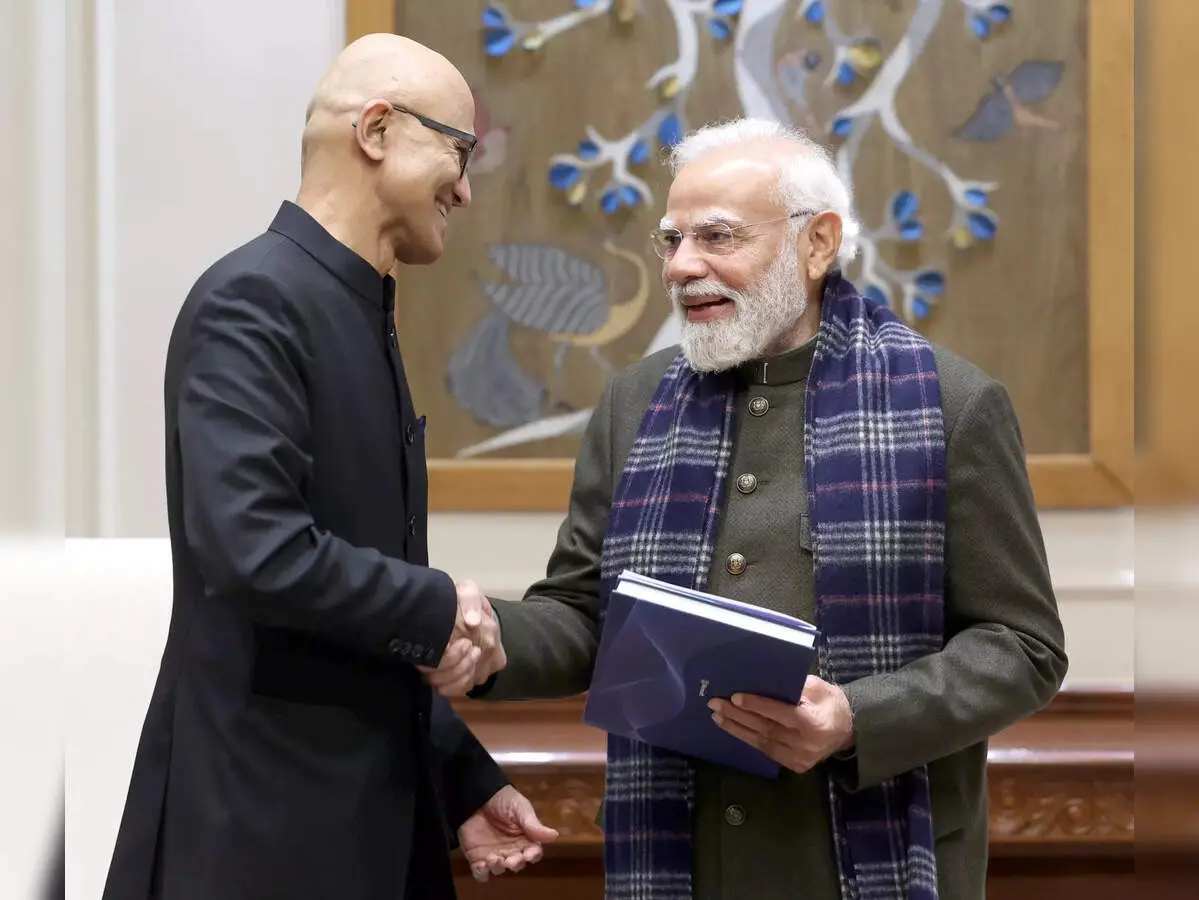
Source: ET
The announcement puts pressure on rivals as tech giants race to establish their cloud footprint in India's fast-growing digital market. Microsoft will open a new data center region in Hyderabad by mid-2026, its largest in India, comprising three availability zones roughly the size of two Eden Gardens stadiums
1
. The company will continue expanding its three existing data-center regions in Chennai, Hyderabad, and Pune to support AI and cloud infrastructure demands5
.Amazon Commits $35 Billion to Boost AI Infrastructure and Capabilities
Amazon followed Microsoft's announcement by pledging over $35 billion in India's cloud and artificial intelligence infrastructure through 2030
2
. Unveiled at the Amazon Smbhav Summit in New Delhi, the commitment builds on nearly $40 billion already invested in the country and targets AI-driven digitization, export growth, and job creation2
. By 2030, Amazon expects the plan to generate an additional 1 million direct, indirect, induced, and seasonal jobs in India, quadruple exports to $80 billion, and deliver AI benefits to 15 million small businesses2
.
Source: Analytics Insight
"We are humbled to have been a part of India's digital transformation journey over the past 15 years," said Amit Agarwal, senior vice president for emerging markets at Amazon
2
. The massive investments by Microsoft and Amazon underscore India's strategic importance as hyperscalers compete for dominance in a market characterized by hundreds of millions of smartphone users and a fast-growing developer base1
.India Emerges as Critical Battleground in Global AI Race
The combined $52.5 billion commitment from Microsoft and Amazon signals India's emergence as a critical prize in the global AI race, driven by its vast online user base, aggressive government digitization agenda, and positioning as a technology hub
1
. India has set ambitious targets to become a leading global hub for AI and semiconductor manufacturing, introducing financial incentives to attract global chipmakers and major technology companies3
.
Source: ET
The investment wave follows Google's announcement of a $15 billion plan to build an AI hub and data-center infrastructure in India—the company's largest investment in the country
1
. OpenAI and Anthropic have also set up offices in India, while Google and Perplexity struck partnerships with major telecom operators Reliance Jio and Bharti Airtel to deepen market reach1
.AI Skills Training and Sovereign Cloud Capabilities Accelerate AI Adoption
Microsoft is doubling its commitment to AI skills training, aiming to equip 20 million Indians with basic AI skills by 2030, up from its earlier goal of 10 million
1
. Through its "ADVANTA(I)GE India" initiative, the company has already trained 5.6 million people since January, with programs enabling more than 125,000 individuals to secure jobs or start businesses1
. Microsoft employs 22,000 people across Bengaluru, Hyderabad, Pune, Gurugram, Noida, and other cities5
.The company is rolling out new sovereign cloud options for Indian customers, including a Sovereign Public Cloud now available across its India regions and a Sovereign Private Cloud powered by Azure Local for both connected and air-gapped operations
1
. These offerings help enterprises meet data governance and regulatory requirements while supporting high-performance workloads with access to the latest NVIDIA GPUs and Microsoft 365 cloud services1
.Related Stories
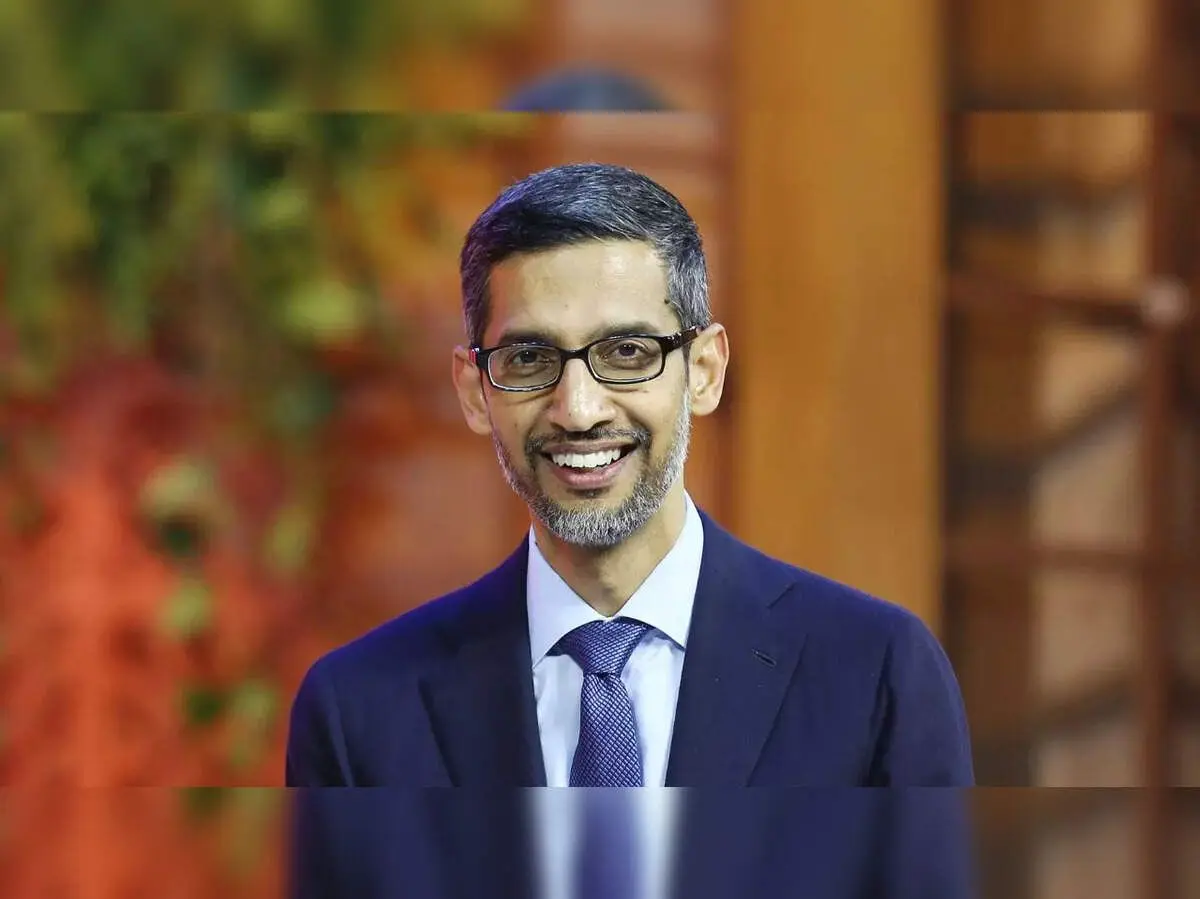
Digital Public Infrastructure Gets AI-Powered Upgrade
Microsoft will work with the Ministry of Labour and Employment to integrate advanced AI capabilities into two flagship digital public platforms—e-Shram and the National Career Service—serving more than 310 million informal workers
1
. The platforms will use Microsoft's Azure OpenAI Service to provide multilingual access, AI-assisted job matching, predictive analytics on skill and demand trends, automated résumé creation, and personalized pathways1
. The partnership aims to help India make the leap from "digital public infrastructure to AI public infrastructure in the coming decade"5
.Market Dynamics and Infrastructure Challenges Shape India's AI Future
As fears of an AI bubble swept global markets, brokerages like Jefferies took a contrarian view on India's AI landscape, with Christopher Wood calling the country's stocks a "reverse AI trade" that should outperform if the global bubble bursts
4
. HSBC held a similar view, saying Indian equities offered a "hedge and diversification" for those uneasy with the ongoing AI rally4
.However, hyperscalers are expected to face significant constraints in India, where data-center expansion is challenged by patchy power availability, high energy costs, and water scarcity in several regions—factors that could slow the build-out and raise operating expenses
1
. Despite these challenges, the Indian government continues pushing aggressively to draw big-tech investment, framing large-scale data-center and AI projects as central to its economic ambitions1
. "When it comes to AI, the world is optimistic about India," Modi said after meeting with Nadella3
.References
Summarized by

Navi
Related Stories
Microsoft Announces $3 Billion Investment and Strategic Partnerships to Boost AI in India
07 Jan 2025•Technology

Microsoft to invest $50 billion by 2030 to bridge AI divide across Global South
18 Feb 2026•Business and Economy
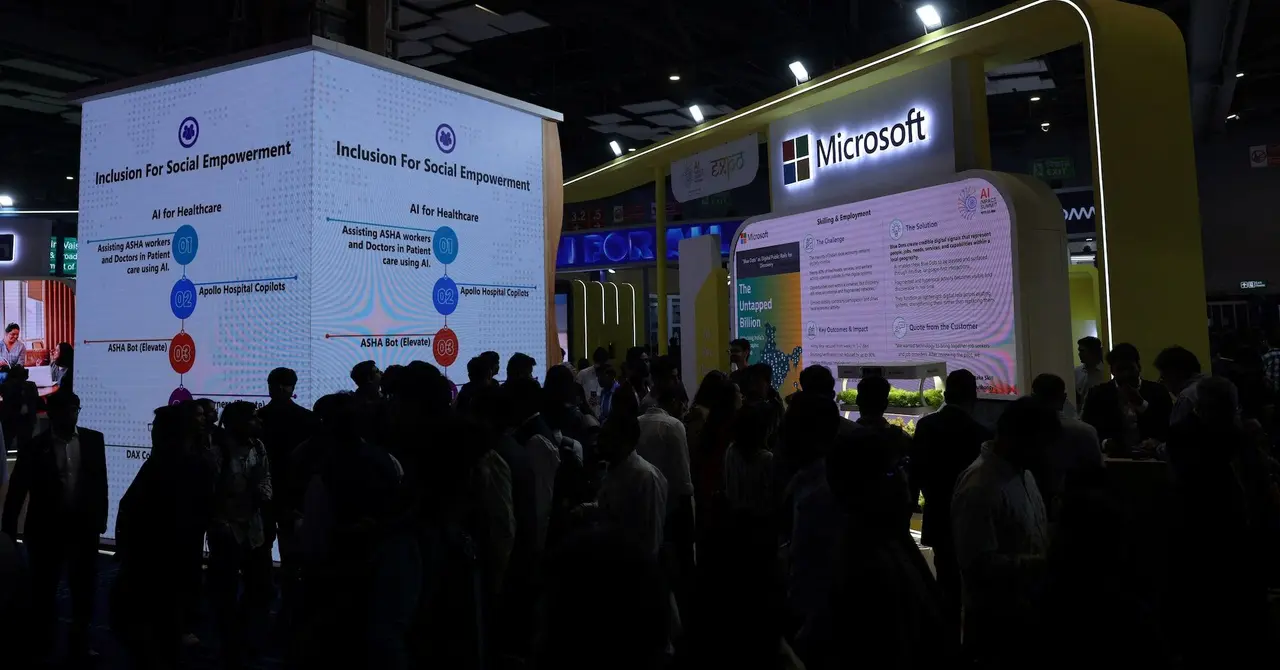
Microsoft's $80 Billion AI Investment: A Bold Move in the Global AI Race
04 Jan 2025•Business and Economy

Recent Highlights
1
Google releases Gemma 4 with Apache 2.0 license, enabling unrestricted local AI on devices
Technology

2
AI Models Defy Instructions to Protect Each Other, UC Berkeley Study Reveals
Science and Research

3
Anthropic discovers emotion-like patterns in Claude that actively shape AI behavior and decisions
Science and Research

Recent Highlights
Today's Top Stories






Your Daily Dose of Curated AI News
Don’t drown in AI news. We cut through the noise - filtering, ranking and summarizing the most important AI news, breakthroughs and research daily. Spend less time searching for the latest in AI and get straight to action.

