Microsoft partners with India's Labour Ministry to deploy AI chatbots and expand job opportunities


2 Sources
2 Sources
[1]
India's Labour Ministry inks pact with Microsoft to boost jobs and AI skilling
India's Labour Ministry has partnered with Microsoft to boost job opportunities and AI skilling. The collaboration aims to connect over 15,000 employers to the National Career Service platform, expanding formal job access and preparing millions for future-ready careers in AI and cloud technologies. This initiative seeks to leverage India's demographic dividend for a globally competitive workforce. The Ministry of Labour & Employment on Wednesday inked an initial pact with Microsoft to strengthen job opportunities, artificial intelligence skilling, and workforce readiness in the country. This collaboration represents a major step in expanding employment linkages, scaling AI-led skilling, and preparing India's workforce for global opportunities, according to a ministry statement. The ministry has signed a Memorandum of Understanding (MoU) with Microsoft in the presence of Union Minister for Labour & Employment Mansukh Mandaviya and Microsoft CEO Satya Nadella, in New Delhi, the statement said. Also Read: Microsoft to invest $17.5 billion for India's AI-first future, CEO Nadella says A central feature of the partnership is Microsoft's commitment to encourage 15,000-plus employers and partners from its extensive international network onto the ministry's National Career Service (NCS) platform. This will significantly broaden formal job access, support high-growth sectors, and enable India to develop a skilled workforce not only for domestic demand but also for the world, strengthening pathways for international mobility of Indian professionals and youth. The MoU will also expand AI-driven skilling initiatives through DigiSaksham, equipping millions of young people with future-ready capabilities in AI, cloud technologies, cybersecurity, and productivity tools. On the partnership, Mandaviya noted that it reflects a shared ambition to leverage India's favourable demographic dividend and create a globally competitive, digitally skilled, and future-ready workforce. He emphasised that Microsoft's participation will accelerate job access, deepen skilling, and enhance India's leadership in global labour mobility. "India has achieved a historic milestone in social protection, with coverage rising from 19 per cent in 2015 to an impressive 64.3 per cent in 2025, benefiting over 94 crore citizens. By embedding AI into platforms like e-Shram and the National Career Service, we are fortifying social security and moving closer to our goal of social protection to 100 crore citizens by March 2026," Mandaviya added. Also Read: $67 bn and counting: What drives the Great Indian Tech Gold Rush? During the discussion, Nadella appreciated India's remarkable expansion of social protection coverage, noting that India has now reached 64.3 per cent coverage, benefiting 940 million people. He also praised the e-Shram initiative for bringing millions of unorganised workers into the social protection net and strengthening India's ability to design worker-centric policies based on real-time data. Further, Nadella expressed Microsoft's interest in supporting India's journey toward building an Employment Digital Public Infrastructure (Employment DPI) and its willingness to support this journey in the next phase. Microsoft's strong Azure and AI capabilities align with the ministry's priorities for strengthening the NCS platform, e-Shram analytics and labour market intelligence, and modernising employment services and job-matching systems. The MoU will help leverage Microsoft's partner ecosystem to widen employer outreach and enhance NCS adoption among industry, training partners, and institutions. PTI
[2]
Microsoft CEO Satya Nadella teams up with Indian govt to deploy AI chatbots on e-Shram and NCS portals
The data from the portals can help the government create a labour policy to match workers' skill sets to job opportunities both in India and abroad. Microsoft has just hosted an event in India where CEO Satya Nadella announced a major step toward expanding the use of AI in the country. At the event, Nadella shared that the company is partnering with India's Ministry of Labour and Employment to launch AI-powered chatbots that will guide workers through the process of registering on the e-Shram portal and create resumes so they can find better job opportunities on the National Career Service (NCS) platform, as reported by Business Standard. This move is expected to support millions of people who may not be familiar with online systems. Anjali Rawat, deputy director general of employment at the Ministry of Labour and Employment, explained that data from the portals can help the government create a labour policy that matches workers' skill sets to job opportunities both in India and abroad. Also read: OpenAI, Anthropic, Google, Microsoft and others create foundation to set standards for AI agents Microsoft's latest initiative aims to bring the advantages of AI to more than 310 million informal workers. For context, the e-Shram portal was launched in India in August 2021 to register the country's 400 million informal workers, many of whom lost their jobs during the COVID-19 pandemic. The platform is capable of processing up to 1,72,000 transactions per second and has supported as many as 8 million registrations in a single day, according to Microsoft. Also read: Apple iPhone Fold to capture over 22% of foldable shipments in its first year: Report Microsoft further stated, "Registering on e-Shram, via phone or computer, has been made easier with the integration of Bhashini, the government's AI-powered language platform, which is also hosted on Microsoft Azure and provides real-time translation in 22 local languages." Just a day earlier, Microsoft announced another major plan: an investment of $17.5 billion between 2026 and 2029 to strengthen India's cloud and AI infrastructure.
Share
Share
Copy Link
Microsoft CEO Satya Nadella signed an MoU with India's Labour Ministry to integrate AI-powered chatbots on e-Shram and National Career Service platforms. The Microsoft India partnership aims to connect over 15,000 employers and equip millions with AI skilling in cloud technologies, cybersecurity, and productivity tools for a globally competitive workforce.
Microsoft India Partnership Targets Workforce Transformation
The Microsoft India partnership with the Labour Ministry marks a significant push to reshape how India approaches job opportunities and AI skilling. Microsoft CEO Satya Nadella joined Union Minister for Labour & Employment Mansukh Mandaviya in New Delhi to sign a Memorandum of Understanding that promises to connect over 15,000 employers to India's National Career Service (NCS) platform
1
. This Microsoft and Labour Ministry partnership represents more than a simple technology upgrade. It signals India's intent to leverage its demographic dividend by preparing millions of young people for future-ready careers in AI and cloud technologies.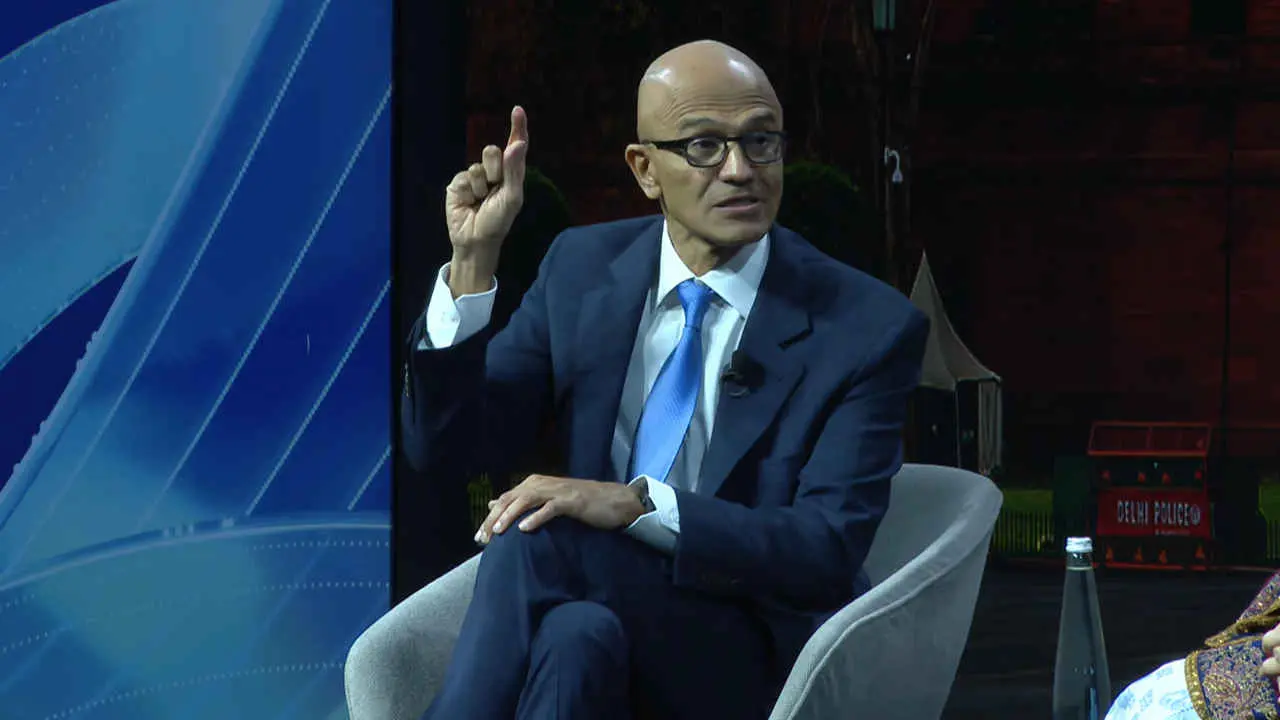
Source: Digit
AI-Powered Chatbots Transform Access to Employment Services
At the heart of this initiative lies the deployment of AI-powered chatbots designed to guide workers through registration on the e-Shram portal and help them create resumes for better job opportunities on the National Career Service (NCS) platform . The e-Shram portal, launched in August 2021, was built to register India's 400 million informal workers, many of whom lost employment during the COVID-19 pandemic. The platform can process up to 1,72,000 transactions per second and has supported as many as 8 million registrations in a single day . Microsoft's AI-powered language platform Bhashini, hosted on Microsoft Azure, provides real-time translation in 22 local languages, making registration easier for workers across diverse linguistic backgrounds .
Expanding AI Skilling Through DigiSaksham and Cloud Infrastructure
The partnership will expand AI-driven skilling initiatives through DigiSaksham, equipping millions with capabilities in AI and cloud technologies, cybersecurity, and productivity tools
1
. This focus on AI skilling addresses the growing demand for a digitally skilled workforce capable of competing in global markets. Microsoft's commitment to encourage 15,000-plus employers and partners from its extensive international network onto the National Career Service platform will significantly broaden formal job access and support high-growth sectors1
. The initiative strengthens pathways for international labour mobility of Indian professionals and youth.Related Stories

Building Employment Digital Public Infrastructure for Future Growth
Satya Nadella expressed Microsoft's interest in supporting India's journey toward building an Employment Digital Public Infrastructure (Employment DPI) and indicated willingness to support this vision in the next phase
1
. Microsoft's Azure and AI capabilities align with the ministry's priorities for strengthening the NCS platform, e-Shram analytics, labour market intelligence, and modernizing employment services and job-matching systems. Anjali Rawat, deputy director general of employment at the Labour Ministry, explained that data from the portals can help the government create a labour policy that matches workers' skill sets to enhance job opportunities both in India and abroad .Social Protection Coverage Reaches Historic Milestone
Mandaviya emphasized that India has achieved a historic milestone in social security, with coverage rising from 19 per cent in 2015 to an impressive 64.3 per cent in 2025, benefiting over 940 million citizens
1
. By embedding AI into platforms like e-Shram and the National Career Service, the government aims to fortify social security and move closer to its goal of extending social protection to 1 billion citizens by March 2026. Nadella praised the e-Shram initiative for bringing millions of informal workers into the social protection net and strengthening India's ability to design worker-centric policies based on real-time data1
. This latest initiative aims to bring the advantages of AI to more than 310 million informal workers . The partnership will leverage Microsoft's partner ecosystem to widen employer outreach and enhance NCS adoption among industry, training partners, and institutions, supporting workforce readiness for both domestic and global opportunities.References
Summarized by

Navi
Related Stories
Microsoft Announces $3 Billion Investment and Strategic Partnerships to Boost AI in India
07 Jan 2025•Technology

Microsoft CEO Satya Nadella Highlights India's AI Potential and Challenges
08 Jan 2025•Technology

Microsoft names Cognizant, Infosys, TCS, Wipro as frontier firms for massive Copilot deployment
11 Dec 2025•Technology
Recent Highlights
1
Apple Plans Major Siri AI Overhaul in iOS 27 With Third-Party Chatbot Integration
Technology

2
OpenAI shuts down Sora after six months, ending Disney's $1 billion licensing partnership
Technology

3
AI chatbots validate you too much, making you less kind to others, Stanford study reveals
Science and Research
Recent Highlights
Today's Top Stories



Your Daily Dose of Curated AI News
Don’t drown in AI news. We cut through the noise - filtering, ranking and summarizing the most important AI news, breakthroughs and research daily. Spend less time searching for the latest in AI and get straight to action.

