OpenAI reclaims two co-founders from Mira Murati's Thinking Machines Lab in major talent coup


11 Sources
11 Sources
[1]
Mira Murati's startup, Thinking Machines Lab, is losing two of its co-founders to OpenAI | TechCrunch
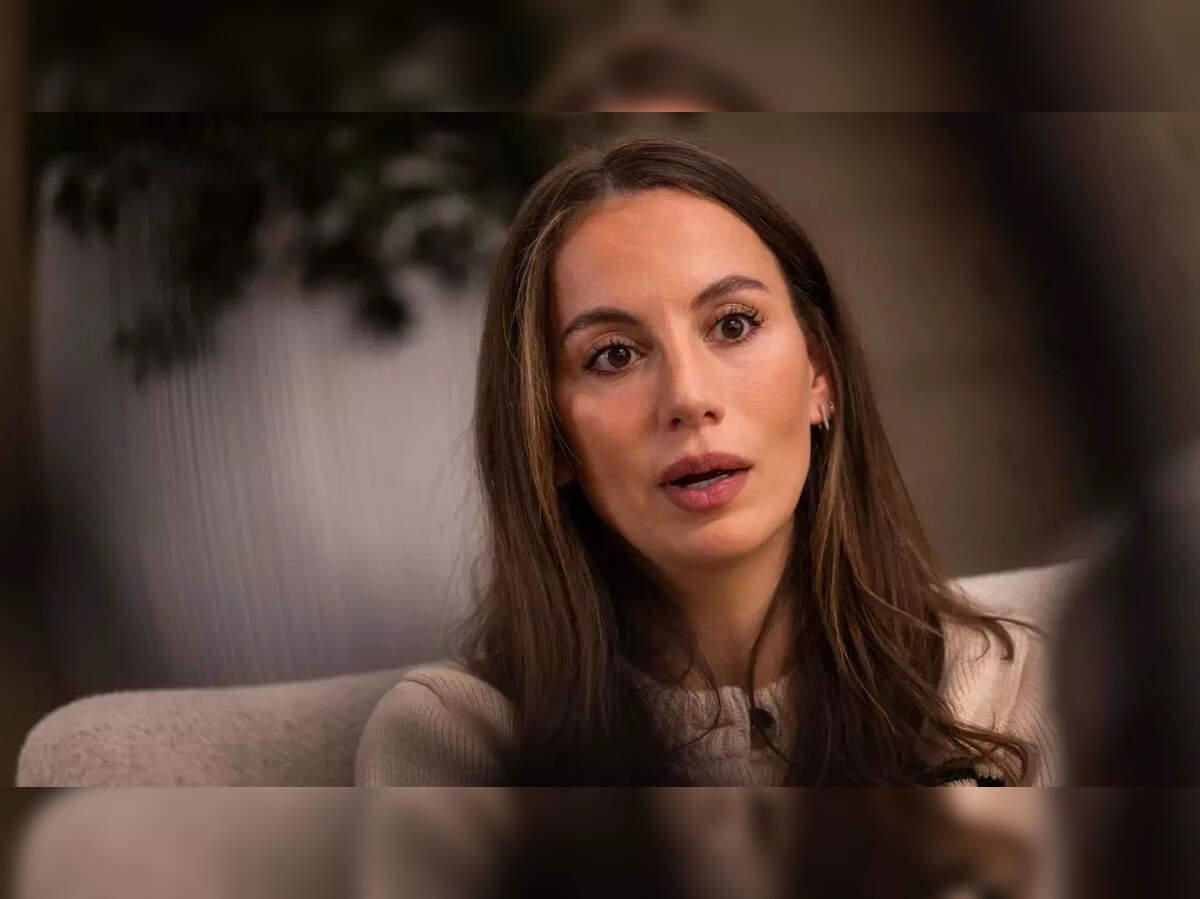
Former OpenAI exec Mira Murati's startup, Thinking Machines Lab, is saying goodbye to two of its co-founders, both of whom are headed back to OpenAI. Another former OpenAI staffer who went to work for Murati's startup is also headed back to the company. On social media on Wednesday, Murati announced the departure of Barret Zoph, the company's co-founder and CTO. "We have parted ways with Barret," Murati said in a post on X. "Soumith Chintala will be the new CTO of Thinking Machines. He is a brilliant and seasoned leader who has made important contributions to the AI field for over a decade, and he's been a major contributor to our team. We could not be more excited to have him take on this new responsibility." Murati's announcement made no mention of co-founder Luke Metz or other departures. Just 58 minutes after Murati's announcement of Zoph's departure, Fidji Simo, OpenAI's CEO of applications, announced that Zoph would be headed back to OpenAI. "Excited to welcome Barret Zoph, Luke Metz, and Sam Schoenholz back to OpenAI! This has been in the works for several weeks, and we're thrilled to have them join the team," Simo wrote on X. Metz, who is a co-founder of Thinking Machines, previously worked for OpenAI for a number of years on the company's technical staff. So did Schoenholz, whose LinkedIn profile still lists him as working for Thinking Machines. Zoph previously worked for OpenAI as VP of research, and before that, worked for six years at Google as a research scientist. Murati, who served as the CTO of OpenAI until September 2024, left the company and co-founded Thinking Machines with Zoph and Metz. The startup, where Murati serves as CEO, has amassed significant financial support since then, closing a $2 billion seed round last July, with participation from Andreessen Horowitz, which led the round, as well as Accel, Nvidia, AMD, and Jane Street, among others. The found valued the company at $12 billion. TechCrunch has reached out to both Thinking Machines and OpenAI for comment. While talent moves between AI giants are common in Silicon Valley, the departure of co-founders from a startup less than a year after its founding is particularly notable. The loss of two co-founders simultaneously -- especially when one served as CTO -- could be perceived as a particularly meaningful setback for Thinking Machines Lab, which had assembled a high-profile team of former OpenAI, Meta, and Mistral AI researchers. The company has also lost other key personnel, including co-founder Andrew Tulloch, who left to join Meta in October. OpenAI itself has seen numerous co-founders depart to launch or join competing ventures, including John Schulman, who left for Anthropic in August 2024 before joining Thinking Machines Lab as Chief Scientist as its launch in February of last year.
[2]
Two Thinking Machines Lab Cofounders Are Leaving to Rejoin OpenAI
Thinking Machines cofounders Barret Zoph and Luke Metz are leaving the fledgling AI lab and rejoining OpenAI, the ChatGPT-maker announced on Thursday. OpenAI's CEO of Applications Fidji Simo shared the news in a memo to staff Thursday afternoon. The news was first reported on X by technology reporter Kylie Robison, who wrote that Zoph was fired for "unethical conduct." A source close to Thinking Machines said that Zoph shared confidential company information with competitors. WIRED was unable to verify this information with Zoph, who did not immediately respond to WIRED's request for comment. Zoph told Murati on Monday he was considering leaving and was fired today, according to the memo from Simo. She goes on to write that OpenAI doesn't share the same concerns about Zoph as Murati. The personnel shakeup is a major win for OpenAI, which recently lost its VP of research, Jerry Tworek. Another Thinking Machines Lab staffer, Sam Schoenholz, is also rejoining OpenAI, the source said. Zoph and Metz left OpenAI in late 2024 to start Thinking Machines with the ChatGPT-maker's former chief technology officer, Mira Murati.
[3]
Sam Altman Is Tearing Apart His Former Colleague's Startup
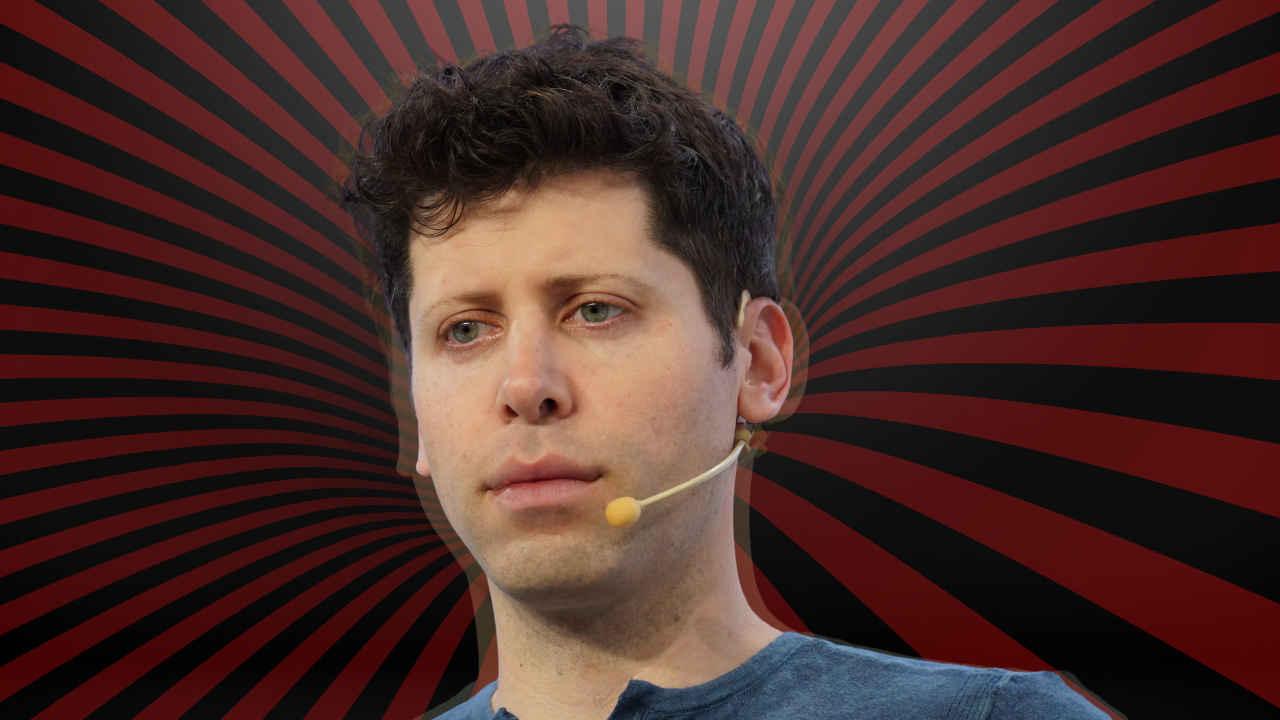
OpenAI just rehired former employees who previously left the company to work at Thinking Machines Lab. The AI industry’s talent-poaching war is heating up, and it’s starting to seem personal. This week, two Thinking Machines Lab co-founders, Barret Zoph and Luke Metz, left the startup to rejoin OpenAI. And more defections are reportedly on the way. In case you’re not familiar, Thinking Machines is an AI startup founded by OpenAI’s former chief technology officer, Mira Murati, in 2025. The company closed a $2 billion seed round this past summer, which included Andreessen Horowitz, Nvidia, and AMD, and valued the company at $12 billion. Later that year, it launched Tinker, an API for fine-tuning large language models. Tech reporter Kylie Robinson was first to report Wednesday that Zoph had been terminated from his role as CTO at Thinking Machines over “unethical conduct,†citing unnamed sources. Murati later confirmed his departure in a post on X. Roughly an hour after that post, OpenAI CEO of Applications Fidji Simo announced in her own post on X that Zoph would be rejoining OpenAI, along with Metz and another Thinking Machines staffer, Sam Schoenholz. “This has been in the works for several weeks, and we’re thrilled to have them join the team,†wrote Simo. Behind the scenes, things were apparently messier. In a memo to staff obtained by Wired, Simo wrote that Zoph told Murati on Monday that he was considering leaving the company. He was fired two days later. Sources close to Thinking Machines told Wired that Zoph allegedly shared confidential information with the startup's rivals. Simo added in the memo that OpenAI does not share Murati’s concerns regarding Zoph. Unfortunately for Thinking Machines, more departures are expected. Alex Heath reported in his Substack that additional Thinking Machines staffers are in talks to jump ship to OpenAI. This is the latest example of the revolving door AI startups have become in recent years, with researchers, staffers, and even co-founders jumping back and forth between companies. Just last year, Meta made headlines for spending millions to lure talent from OpenAI over to its AI team; however, it only took less than a month for some researchers to return to OpenAI. But what makes this saga especially intriguing is the history. Murati, Zoph, and Metz all previously worked at OpenAI, and Murati allegedly played a big role in OpenAI CEO Sam Altman’s brief ouster in 2023. The Wall Street Journal reported last year that Murati provided Slack screenshots that were used to expose Altman’s alleged leadership issues and ethical lapses to OpenAI’s board at the time. She also served as the company’s interim CEO during the brief time when OpenAI was rudderless. After Altman was reinstated, Murati returned to her role as CTO before later announcing in 2024 that she was stepping away to “create the time and space to do my own exploration.†She then founded Thinking Machines with Zoph and Metz. Yet, even in an industry known for rapid job-hopping, it’s still surprising that half of the Thinking Machine's co-founders have already left in such a short period of time. One of them, Andrew Tulloch, departed for Meta last fall. OpenAI and Thinking Machines did not immediately respond to requests for comment from Gizmodo.
[4]
Behind the defections from Mira Murati's Thinking Machines: money, compute constraints, and a lack of clarity on products and business model | Fortune
Those keeping tabs on Silicon Valley's AI talent wars were gripped this week by news that three members of the founding team at Thinking Machines Lab, the AI startup run by former OpenAI CTO Mira Murati, are leaving to return to OpenAI, where they all worked previously. Fidji Simo, OpenAI's CEO of Applications, announced the hiring coup in a post on social media platform X Wednesday, saying that Brett Zoph, Luke Metz, and Sam Schoenholz are all returning to the AI juggernaut where they worked previously. Simo said on social media that Zoph would report to her, with Metz and Schoenholz reporting to Zoph. Zoph and Metz were officially cofounders of Thinking Machines, while Schoenholz was a member of the "founding team" of researchers and engineers. Murati told Thinking Machines staff that it had terminated Zoph's employment due to "unethical conduct," according to a report from tech publication Core Memory. Zoph, OpenAI, and Thinking Machines either did not respond to requests to comment for this story or declined to provide any on record response. Simo said on social media that the hiring had been "in the works for several weeks." Bloomberg News reported that in a memo Simo shared with OpenAi staff on Wednesday that "[Zoph] told [Murati] on Monday that he was considering leaving and she fired him today. You may have seen information from sources that Barret was fired from Thinking Machines for 'unethical reasons.' We do not share these concerns." Then on Thursday, there were reports that at least two additional Thinking Machines researchers, Lia Guy and Ian O'Connell, were also leaving, with Guy heading to OpenAI. The bombshell news underscores the difficulties a new wave of AI labs dedicated to building state-of-the-art general purpose foundation models may have in trying to compete with more established labs such as OpenAI, Anthropic, and Google DeepMind. While several young Chinese startups, such as DeepSeek and Moonshot AI, have managed to create models that are competitive with those from these three leaders, the Chinese labs are not competing for the same talent pool. Murati's startup raised about $2 billion in July, in a seed funding round that was the largest ever in Silicon Valley, and which valued the nascent company at about $12 billion. Bloomberg reported late last year that the company was currently in discussions to raise additional funding at a $50 billion valuation. But despite having raised such unprecedented sums, Murati's startup has struggled to hold on to AI researchers. Andrew Tulloch, who was considered one of the lab's cofounders, departed late last year to join Meta's AI efforts. Meta had reportedly been offering compensation packages that climbed into the hundreds of millions and even billions of dollars. Now the company has lost Zoph, Metz, and Schoenholz as well as Guy and O'Connell. Similarly, OpenAI's former chief scientist, Ilya Sutskever, raised $1 billion for his startup Safe Super Intelligence (SSI) in late 2024. But he too saw Meta poach his confounder Daniel Gross to bolster its "superintelligence" drive. The neo labs can't offer the same pay deals There are likely several reasons these high-profile "neo labs" are having trouble holding on to talent. In general, these labs, despite their huge early stage venture deals, still can't afford to offer too many employees the high-six and seven-figure cash compensation packages that some of the more established technology companies, such as Meta, Google DeepMind, and OpenAI are reportedly using to lure and retain top AI talent. While the neo foundation labs can offer their founding teams equity that could eventually be worth billions of dollars, they may be struggling to compete with the large cash compensation packages that the likes of Google, OpenAI, Anthropic, and particularly Meta, have been doling out. In addition, the stock options that younger AI labs such as Thinking Machines offer may be perceived as more risky than accepting stock options from a public company, such as Google or Meta, or from a more established AI lab, such as Anthropic and OpenAI. Google and Meta have offered AI researchers large stock option packages with accelerated vesting schedules, allowing them to convert that equity to cash, sometimes within months. Meanwhile, both OpenAI and Anthropic have talked about the possibility of initial public offerings within the next year or two, which would give their employees big pay days far sooner than is likely the case for the wave of younger AI labs that are just getting going. One former OpenAI researcher who is in contact with employees at Thinking Machines said the departures "have more to do with money than otherwise" and that some people were leaving because they "are being offered insane packages to return to OpenAI." This former researcher even suggested that Simo saw an opportunity to hobble Thinking Machines' fundraising efforts by poaching prominent staff members. Venture capitalists generally don't like to see members of a founding team jumping ship. The neo labs don't have access to vast computing clusters Access to computing resources may be another significant factor in the departures. The established AI labs frequently complain about being "compute constrained" -- by which they mean that they don't have enough data center capacity to conduct bluesky research, train the latest versions of their LLMs, and also serve those models to existing customers. The neo labs have the benefit of, in many cases, not yet having a product pipeline or existing customers to support. So they can devote most of their compute capacity to research. But these younger labs may be having trouble obtaining enough GPUs to do as much research as they would like. The established labs have all invested billions now in building out their data center capacity. The volume of AI chips they purchase makes them priority customers for Nvidia, whose AI chips have been used for the training of most of the leading AI models to date. Google has its own AI chips, called TPUs, which means they are far less beholden to Nvidia for the compute. Meta, OpenAI, and Anthropic have been building out their own dedicated data centers as well as cutting deals with major cloud providers -- such as Amazon Web Services and Microsoft -- for the chip capacity they need. While the neo labs need fewer chips, they may still struggle to secure access to what they need. A lack of products and unclear business plans Finally, the neo labs may suffer from not having products in the marketplace. Thinking Machines, for instance, has said little about its business model or exactly what kind of products it has in the works. To date, it has released just one product. Released in October in a tightly-controlled beta it is named Tinker and it allows AI researchers and developers to more easily fine-tune an open source LLM. Fine-tuning is the process of honing a general purpose AI model so it performs especially well at a particular domain-specific task. Thinking Machines has also released several research papers and blogs about methods for optimizing the training of LLMs. But other than that, it has provided no hints of when it will have a widely-available model in the market or begin to make any revenue. It is possible that operational issues at Thinking Machines, and maybe even confusion over the startup's business plans, frustrated some employees, especially those used to the fast cadence of model roll-outs at the more established labs. "Inside Thinking Machines, there was kind of some frustrations about the lack of clarity on where the product direction was going," the former OpenAI researcher said. But this person also added that these issues "have been resolved more recently" so it is unclear how large a role those frustrations played. It is perhaps telling that Zoph, Metz and Schoenholz will not be reporting to Mark Chen, OpenAI's head of research, but rather to Simo, who leads the company's product efforts. It may signal that the three defectors are interested in building products and more applied AI research than they were able to do at Thinking Machines. It may also signal, as the former OpenAI staffer suggests, that Simo just moved opportunistically to try to disrupt Thinking Machines fundraising. Other neo labs may also be struggling to turn research into products and establish a business model. Sutskever's SSI, for instance, has also said next to nothing about what it is building and has yet to release a model -- although in a recent podcast appearance Sutskever made some remarks that others have interpreted as hints that SSI will release something soon. Sutskever had also said previously that SSI might not release a product until it had achieved a fundamental breakthrough in techniques for making powerful AI models safer and more controllable.
[5]

Vellore Institute of Technology Alumni is Thinking Machines Lab's New CTO | AIM
Mira Murati's startup is undergoing leadership changes with three co-founders leaving the company. Thinking Machines Lab, the company co-founded and led by OpenAI's former CTO Mira Murati, has announced a leadership change and departure. The company announced that it has parted ways with CTO Barret Zoph, while reports suggested that the company terminated Zoph due to 'unethical conduct.' WIRED reported that Zoph had shared confidential company information with competitors, citing a source familiar with the company. In addition, Luke Metz, a co-founder of Thinking Machines Lab, and Sam Schoenholz, also a part of the founding team, have also left the company. The three were also all former OpenAI employees. In a surprising turn of events, they are all now back to OpenAI, as announced by Fidji Simo, the company's CEO of applications. "This has been in the works for several weeks, and we're thrilled to have them join the team. Barret will report to me; Luke and Sam will report into Barret," she announced in a post on X. The WIRED report also states that Simo "doesn't share the same concerns about Zoph as Thinking Machines". Replacing Zoph as the CTO is Soumith Chintala, who was previously a member of technical staff at Thinking Machines and also the co-creator of the renowned Meta framework, PyTorch. Chintala is also an alumni of the Vellore Institute of Technology in India, having earned a bachelor's in technology degree in information science in 2009. "He is a brilliant and seasoned leader who has made important contributions to the AI field for over a decade, and he's been a major contributor to our team," said Murati. In late 2024, Murati announced her departure as the CTO of OpenAI after six years, citing that she wanted to "create the time and space" for her own exploration. At the beginning of 2025, she announced 'Thinking Machines Lab' and has since raised $2 billion in investments. Murati has been joined by several other OpenAI employees. Notably, John Schulman, one of the co-founders of OpenAI, left last August to join Anthropic and is now with Thinking Machines. The recently announced 'Tinker API' is the first offering from Thinking Machines. It helps AI and machine learning researchers and developers access compute easily, enabling them to focus on data and algorithms for their projects. Tinker handles the heavy lifting of organising and managing compute, while researchers can concentrate on other core aspects of their work.
[6]

OpenAI rehires top talent as Murati's $12B startup loses co-founders
Mira Murati's startup Thinking Machines Lab lost co-founder and CTO Barret Zoph to OpenAI on Wednesday, followed by co-founder Luke Metz and former OpenAI staffer Sam Schoenholz returning to the company. Murati, CEO of Thinking Machines Lab, announced Zoph's departure on X. She stated, "We have part ways with Barret." In the same post, she introduced Soumith Chintala as the new CTO. Murati described Chintala as "a brilliant and seasoned leader who has made important contributions to the AI field for over a decade, and he's been a major contributor to our team. We could not be more excited to have him take on this new responsibility." Her announcement addressed only Zoph's exit and contained no reference to other personnel changes. Exactly 58 minutes after Murati's post, Fidji Simo, OpenAI's CEO of applications, revealed on X that Zoph, Metz, and Schoenholz would rejoin OpenAI. Simo wrote, "Excited to welcome Barret Zoph, Luke Metz, and Sam Schoenholz back to OpenAI! This has been in the works for several weeks, and we're thrilled to have them join the team." This sequence highlighted the rapid transition of the three individuals from Thinking Machines Lab back to their former employer. Zoph previously held the position of VP of research at OpenAI. Prior to that role, he worked for six years at Google as a research scientist. Luke Metz served as a co-founder of Thinking Machines Lab and spent several years on OpenAI's technical staff. Sam Schoenholz, another former OpenAI employee, co-founded Thinking Machines Lab with Murati and Zoph; his LinkedIn profile at the time still indicated employment there. Murati acted as CTO of OpenAI until September 2024, after which she departed to establish Thinking Machines Lab alongside Zoph and Metz. The startup quickly secured substantial funding. In July, it completed a $2 billion seed round led by Andreessen Horowitz. Additional investors included Accel, Nvidia, AMD, and Jane Street, among others. This investment valued Thinking Machines Lab at $12 billion.
[7]

Mira Murati's Thinking Machines Lab Loses 3 Founding Members to OpenAI
It is said that former CTO Barret Zoph was fired due to unethical conduct Mira Murati's Thinking Machines Lab appears to be going through a rough patch. The startup, which is yet to launch its first product or prototype, lost one of the co-founders to Meta last October. Now, on Wednesday, Murati announced that the company has parted ways with Co-Founder Barrett Zoph, who served as the Chief Technology Officer. Soon after, it was revealed that not only Zoph, but also two other founding members, including another co-founder, had also left the startup. Interestingly, all three have now rejoined OpenAI, hinting at an aggressive talent war between the two artificial intelligence (AI) firms. Thinking Machines Lab Loses Three Founding Members In a post on X (formerly known as Twitter), Murati announced that Zoph had left the company. She also revealed that he would be replaced by Soumith Chintala, an Indian techie, who has been serving as a Member of Technical Staff. He has now been elevated to the position of CTO. "He [Chintala] is a brilliant and seasoned leader who has made important contributions to the AI field for over a decade, and he's been a major contributor to our team. We could not be more excited to have him take on this new responsibility," Murati added. The change in responsibility comes as Zoph became the second Co-Founder of Thinking Machines Lab to take an exit. In October, Andrew Tulloch had also taken an exit to join Meta, after Murati and the startup fought off waves of acquisition and poaching attempts by the social media giant. Interestingly, the news of Zoph leaving the company was first mentioned by X user Kylie Robison (@kyliebytes), who claimed that Zoph was fired from his position due to unethical conduct. The user, who appears to be an independent journalist, made the claim, citing two unnamed sources familiar with the matter. This has not been confirmed by either of the parties. However, it turns out Thinking Machines was not losing one but two co-founders and a third founding member on the same day. OpenAI's CEO of Applications, Fidji Simo, shared on a post, "Excited to welcome Barret Zoph, Luke Metz, and Sam Schoenholz back to OpenAI! This has been in the works for several weeks, and we're thrilled to have them join the team. Barret will report to me; Luke and Sam will report into Barret. More to come on what they'll focus on soon!" The talent war is rampant in Silicon Valley, and most AI companies, including OpenAI, have been at its receiving end. However, losing four of its founding members within three months, when the company has about 50 employees and no product in the market, does spell trouble for Murati and Thinking Machines Lab.
[8]

Key researchers return to OpenAI from former CTO Mira Murati's Thinking Labs - The Economic Times
Barret Zoph, Luke Metz, and Sam Schoenholz have officially rejoined the company, following a brief stint at former OpenAI CTO Mira Murati's artificial intelligence (AI) startup. The return of the trio is good news for the Sam Altman-led company, which was hit by multiple departures last year amid an intensifying war for talent in the AI space.OpenAI on Wednesday announced the return of three high-profile researchers to its team, in a positive development for its technical leadership. Barret Zoph, Luke Metz, and Sam Schoenholz have officially rejoined the company, following a brief stint at former OpenAI CTO Mira Murati's artificial intelligence (AI) startup. The return of the trio is good news for the Sam Altman-led company, which was hit by multiple departures last year amid an intensifying war for talent in the AI space. The announcement was made by OpenAI applications CEO Fidji Simo, who confirmed that the return had been in the works for several weeks. Under the new organisational structure, Barret Zoph will report directly to Simo, while Metz and Schoenholz will report to Zoph. Simo did not divulge specific project details but their return is expected to strengthen OpenAI's core research and post-training capabilities when it faces breakneck competition, especially from Google. Murati took to X to announce the exit. "We have parted ways with Barret Zoph. Soumith Chintala will be the new CTO of Thinking Machines," her post on X read. Chintala is an experienced figure in the AI community, largely known for his contributions at Meta and his role as a cocreator of PyTorch, the open-source machine learning framework. Murati launched Thinking Machines in early 2025 as a public benefit corporation. Based in San Francisco, the startup was founded to build "collaborative" multimodal AI systems with humans, rather than pushing for full automation.
[9]

Mira Murati's Thinking Machines Reportedly Faces Exodus As Employees Consider Following Founders Back To OpenAI Amid Funding Struggles
Enter your email to get Benzinga's ultimate morning update: The PreMarket Activity Newsletter Several employees at the nearly one-year-old AI startup Thinking Machines Lab are reportedly in discussions to leave the company and rejoin former OpenAI executives. OpenAI Alumni Leading The Exodus On Thursday, Alex Heath, a popular tech journalist, took to X and said, "More Thinking Machines employees are in talks to join the 3 founding members who just rejoined OpenAI." The three founding members who returned to OpenAI are Barret Zoph, Luke Metz and Sam Schoenholz. The discussions are ongoing and it remains unclear how many employees will ultimately depart, Heath said. Internal Tensions And Departures The potential exodus follows the firing of Zoph earlier this week. In his newsletter, Health cited sources indicating that at least a few employees resigned after a tense all-hands meeting addressing his departure. Thinking Machines Lab, founded by former OpenAI CTO Mira Murati, has struggled to define a clear business and product strategy. Despite raising a $2 billion seed round last year, the startup has had difficulty securing additional funding, aiming to boost its valuation from $10 billion to $50 billion, Heath wrote. Its only product, Tinker, is an API for fine-tuning open-source AI models and the company has yet to train a major foundation model. Thinking Machines Lab and OpenAI did not immediately respond to Benzinga's request for comments. Photo Courtesy: Peshkova on Shutterstock.com Disclaimer: This content was partially produced with the help of AI tools and was reviewed and published by Benzinga editors. Market News and Data brought to you by Benzinga APIs
[10]
Barret Zoph Reportedly Fired From Thinking Machines By Mira Murati For 'Unethical Conduct,' Immediately Returns To OpenAI - Meta Platforms (NASDAQ:META)
On Wednesday, OpenAI rehired former executive Barret Zoph after he was reportedly fired from Mira Murati's AI startup, Thinking Machines Lab. Conflicting Accounts Surround Zoph's Exit The development was first disclosed on X by technology reporter Kylie Robison, who said Zoph had been dismissed over what she described as "unethical conduct." On X, Murati acknowledged Zoph's departure and announced that Soumith Chintala will step in as the startup's new chief technology officer. OpenAI Moves Quickly To Reclaim Talent In a separate announcement shared on X, Fidji Simo, OpenAI's CEO of applications, said Zoph and Luke Metz are returning to OpenAI. Zoph shared the post saying he is "super excited." A person familiar with Thinking Machines told Wired that Zoph was accused of sharing confidential company information with rival firms. In a memo sent to staff by Simo and seen by the publication, Zoph informed Murati on Monday that he was contemplating leaving and by Wednesday, he had been fired. Simo noted that OpenAI does not share Murati's concerns regarding Zoph. Zoph did not immediately respond to Benzinga's request for comments. Another Blow For Mira Murati's Startup The departures deepen challenges for Thinking Machines, a well-funded AI startup founded by Murati, OpenAI's former chief technology officer. The company also lost co-founder Andrew Tulloch to Meta Platforms, Inc. (NASDAQ:META) last year. Thinking Machines, last valued at $12 billion, has been in talks to raise more than $4 billion at a $50 billion valuation. Photo Courtesy: Prathmesh T on Shutterstock.com Disclaimer: This content was partially produced with the help of AI tools and was reviewed and published by Benzinga editors. METAMeta Platforms Inc$614.81-0.12%OverviewMarket News and Data brought to you by Benzinga APIs
[11]

OpenAI pulls back senior talent from Mira Murati's AI startup, hires back two co-founders
The talent exits mark another setback for Murati's high-profile startup, which raised $2 billion in mid-2025 at a $12 billion valuation. AI talent was among the most talked about things last year with big tech giants rolling multi million dollar packages to poach them. Well, it seems to continue as OpenAI has started 2026 on a high. This comes after the reports confirmed that OpenAI has brought back multiple senior researchers from Thinking Machines Lab, the high-profile AI startup founded by former OpenAI CTO Mira Murati. Murati confirmed that Barret Zoph, a co-founder and the chief technology officer of Thinking Machines, has exited the startup. Taking to X, she announced that Soumith Chintala will take over as CTO, describing him as a long-time contributor with deep experience in the AI research ecosystem. Murati did not reference any other departures in her statement. Soon after, OpenAI confirmed that Zoph is returning to the company. Fidji Simo, OpenAI's CEO of applications, revealed that Zoph, along with Thinking Machines co-founder Luke Metz and researcher Sam Schoenholz, are rejoining OpenAI following discussions that had been underway for several weeks. For the unversed, Metz and Schoenholz used to hold technical roles at OpenAI before moving to Mira Murati's Thinking Machines. Zoph, meanwhile, had served as OpenAI's vice president of research after spending several years at Google as a research scientist. Well, this is not the first time the startup experienced such job moves. In recent months, the startup has also experienced other high-level departures, such as co-founder Andrew Tulloch, who joined Meta. Mira Murati herself stepped down as OpenAI's CTO and announced Thinking Machines Lab. It got a lot of attention as it assembled a team of prominent AI researchers and secured a massive $2 billion seed round in mid-2025, valuing the company at around $12 billion. It was led by Andreessen Horowitz and included participation from Accel, Nvidia, AMD, and Jane Street.
Share
Share
Copy Link
Thinking Machines Lab, the AI startup founded by former OpenAI CTO Mira Murati, is losing two of its co-founders—Barret Zoph and Luke Metz—who are returning to OpenAI. The departures come amid allegations of unethical conduct and reveal deeper challenges facing new AI labs trying to compete with established players in Silicon Valley's increasingly fierce AI talent wars.
OpenAI Secures Major Win in AI Talent Wars
Thinking Machines Lab faces a significant setback as two of its co-founders rejoining OpenAI just months after the startup's launch. Barret Zoph, who served as CTO, and Luke Metz, both departed the company founded by former OpenAI executive Mira Murati to return to their previous employer
1
. Fidji Simo, OpenAI's CEO of Applications, announced the personnel shakeup on X, stating that the move "has been in the works for several weeks" and that Sam Schoenholz, another Thinking Machines staffer, would also be joining them2
.
Source: ET
The timing raises eyebrows. Murati announced Zoph's departure on social media Wednesday, revealing that Soumith Chintala new CTO would take over the role. Chintala, the co-creator of PyTorch and a Vellore Institute of Technology alumnus, brings over a decade of AI contributions to the position
5
. Just 58 minutes later, Simo's announcement confirmed the trio's return to OpenAI1
.Allegations of Unethical Conduct Surface
The departures weren't entirely smooth. Reports emerged that Thinking Machines terminated Zoph over allegations of unethical conduct. Sources close to the company told WIRED that Zoph shared confidential company information with competitors
2
. According to Simo's internal memo to OpenAI staff, Zoph informed Murati on Monday he was considering leaving and was fired two days later. However, Simo explicitly stated that OpenAI does not share Thinking Machines' concerns about Zoph3
.
Source: Gadgets 360
Additional defections are reportedly underway. At least two more Thinking Machines researchers, Lia Guy and Ian O'Connell, are leaving, with Guy heading to OpenAI
4
. This marks the second wave of co-founder departures for the startup—Andrew Tulloch left to join Meta in October1
.Money and Compute Constraints Drive Exodus
Behind the departures lie deeper structural challenges facing new AI labs. Despite raising a record-breaking $2 billion seed round in July from Andreessen Horowitz, Nvidia, AMD, and others—valuing the company at $12 billion—Thinking Machines Lab struggles to match compensation packages offered by established players
1
. A former OpenAI researcher told Fortune that departures "have more to do with money than otherwise," with some employees receiving "insane packages to return to OpenAI"4
.Compute constraints and unclear product direction compound the problem. While Thinking Machines launched the Tinker API for fine-tuning large language models, questions remain about its long-term business model
5
. Established labs like OpenAI, Anthropic, and Google DeepMind can offer high-six and seven-figure cash compensation packages, while Meta has reportedly dangled packages worth hundreds of millions or even billions4
.Related Stories

Historical Context Adds Intrigue
The situation carries additional weight given the history between Murati and Sam Altman. The Wall Street Journal reported that Murati provided Slack screenshots used to expose Altman's alleged leadership issues during his brief 2023 ouster from OpenAI. She served as interim CEO before Altman's reinstatement
3
.
Source: Digit
Some observers speculate whether Simo's aggressive recruiting represents an opportunity to hobble a potential competitor's fundraising efforts—Bloomberg reported Thinking Machines is in discussions to raise additional funding at a $50 billion valuation
4
.The rapid exodus of co-founders from a startup less than a year old signals broader challenges for AI labs attempting to compete with incumbents. While Chinese startups like DeepSeek and Moonshot AI have built competitive models, they draw from different talent pools. For Silicon Valley's new wave of foundation model labs, the combination of compensation disparities, compute access, and the allure of near-term liquidity events at established companies creates a formidable retention challenge that seed funding alone cannot solve.
References
Summarized by

Navi
[1]
Related Stories
Barret Zoph fired from $12B AI startup Thinking Machines as internal turmoil triggers exodus to OpenAI
22 Jan 2026•Startups

OpenAI's Leadership Exodus: Key Executives Depart Amid Strategic Shift
28 Sept 2024

OpenAI Faces Leadership Exodus Amid Strategic Shift and Funding Negotiations
01 Oct 2024•Business and Economy

Recent Highlights
1
Google releases Gemma 4 with Apache 2.0 license, enabling unrestricted local AI on devices
Technology

2
AI Models Lie and Deceive to Protect Other AI Models From Deletion, Study Reveals
Science and Research

3
OpenAI closes $122 billion funding round amid fierce AI competition and profitability questions
Startups

Recent Highlights
Today's Top Stories





Your Daily Dose of Curated AI News
Don’t drown in AI news. We cut through the noise - filtering, ranking and summarizing the most important AI news, breakthroughs and research daily. Spend less time searching for the latest in AI and get straight to action.

