Motional targets 2026 for driverless robotaxi service in Las Vegas with AI-first reboot


3 Sources
3 Sources
[1]
Motional puts AI at center of robotaxi reboot as it targets 2026 for driverless service | TechCrunch
Nearly two years ago, Motional was at an autonomous vehicle crossroads. The company, born from a $4 billion joint venture between Hyundai Motor Group and Aptiv, had already missed a deadline to launch a driverless robotaxi service with partner Lyft. It had lost Aptiv as one of its financial backers, prompting Hyundai to step up with another $1 billion investment to keep it going. Several layoffs, including a 40% restructuring cut in May 2024, had whittled the company from its peak of about 1,400 employees to less than 600. Meanwhile, advancements in AI were changing how engineers were developing the technology. Motional was going to have to evolve or die. It paused everything and picked option No. 1. Motional told TechCrunch it has rebooted its robotaxi plans with an AI-first approach to its self-driving system and a promise to launch a commercial driverless service in Las Vegas by the end of 2026. The company has already opened up a robotaxi service -- with a human safety operator behind the wheel -- to its employees. It plans to offer that service to the public with an unnamed ride-hailing partner later this year. (Motional has existing relationships with Lyft and Uber.) By the end of the year, the human safety operator will be pulled from the robotaxis and a true commercial driverless service will begin, the company said. "We saw that there was tremendous potential with all the advancements that were happening within AI; and we also saw that while we had a safe, driverless system, there was a gap to getting to an affordable solution that could generalize and scale globally," Motional president and CEO Laura Major said during a presentation at the company's Las Vegas facilities. "And so we made the very hard decision to pause our commercial activities, to slow down in the near term so that we could speed up." This meant shifting away from its classic robotics approach to an AI foundation model-based one. Motional was never devoid of AI. Motional's self-driving system used individual machine learning models to handle perception, tracking, and semantic reasoning. But it also used more rules-based programs for other operations within the software stack. And the individual ML models made it a complex web of software, Major said. Meanwhile, AI models originally built for language began to be applied in robots and other physical AI systems, including the development of autonomous driving. That transformer architecture made it possible to build large and complex AI models, ultimately leading to the emergence, and skyrocketing use, of ChatGPT. Motional searched for ways to combine these smaller models and integrate them into a single backbone, allowing for an end-to-end architecture. It has also maintained the smaller models for developers, which Major explained gives Motional the best of both worlds. "This is really critical for two things; One is for generalizing more easily to new cities, new environments, new scenarios," she said. "And the other is to do this in a cost optimized way. So for example, the traffic lights might be different in the next city you go to, but you don't have to redevelop or re-analyze those. You just collect some data, train the model, and it's capable of operating safely in that new city." TechCrunch got a first-hand look at Motional's new approach during a 30-minute autonomous drive around Las Vegas. One demo can't provide an accurate assessment of a self-driving system. It can, however, pinpoint weaknesses and differences from previous iterations, and gauge progress. Progress is what I saw as the Hyundai Ioniq 5 I rode in autonomously navigated its way off Las Vegas Boulevard and into the pickup and drop-off area of the Aria Hotel. These bustling areas are notorious in La Vegas and my experience was no different as the autonomous vehicle slowly nudged its way around a stopped taxi and unloading passengers, changed lanes, then back again, passing dozens of people, giant flower pots, and cars along the way. Motional previously operated a ride-hailing service in Las Vegas with partner Lyft using vehicles that would autonomously handle portions of a ride. Parking lots and hotel valet and app ride pickup areas were never part of those operations. A human safety operator, always behind the wheel, would take over to navigate parking lots or the busy pickup and drop-off points of hotel lobbies. There is still more progress to be made. The graphics displayed to riders within the vehicle are still under development. And while there was never a disengagement during my demo ride -- which means the human safety operator takes over -- the vehicle did take its time to nudge itself around a double parked Amazon delivery van. Still, Major argues Motional is on the right path to deploy safely and cost effectively. And its majority owner Hyundai is in it for the long haul, she said. "I think the real long-term vision, you know, for all of this, is putting Level 4 on people's personal cars," Major said, referring to a term that mean the system handles all driving with no expectation of human intervention. "Robotaxis, that's stop number one, and huge impact. But ultimately, I think any OEM would love to also integrate that into their cars."
[2]
I took a ride in Hyundai's new fully-autonomous robotaxi - and it's surprisingly good at navigating the wild streets of Las Vegas
Stroll a parking lot in Las Vegas and you are bound to bump into a company on the brink of making a major autonomous driving breakthrough. Yet not many go on to survive the difficult early years and emerge out of the other side with a successful business. Fortunately, this year's CES 2026 was a backdrop for Hyundai and Motional to celebrate, as they dropped the silk sheet on the fruits of their partnership and announced that they plan to run a driverless service in Las Vegas later this year. It hasn't been an easy path though, with Motional (formerly a joint venture with automotive tech company Aptiv) pausing its operations in 2024 to take stock after six years of perfecting its autonomous recipe. "We've given 130,000 rides to the public on the Lyft and Uber network, including delivering food via Uber Eats, and we've driven over two million autonomous miles with zero at fault incidents," explains Laura Major, Motional CEO, at the company's Las Vegas nerve centre. "But a lot has changed in the AI space in recent years and we wanted to focus on accelerating our path to advanced AI technology," she says. Motional's CEO says that during this downtime the company has been able to transition from more classic robotic solutions, which are time-consuming and expensive, to harnessing neural networks, large language models and vision-language-action models that help generalize new cities, environments and scenarios to cut costs and speed up deployment. On top of this, Hyundai increased its involvement with the business in 2020, becoming the majority owner of Motional, pumping in additional funds and vowing to supply its purpose-built Ioniq 5 Robotaxi to the fleet for testing and deployment. The stars aligned and now Motional feels that it is ready to take on the might of Waymo, Tesla and Zoox, which also has a handful of its autonomous pods running around the famous Las Vegas strip. Hyundai's Ioniq 5 robotaxi is assembled at its cutting-edge smart factory in Singapore, where robotic Spot dogs from Boston dynamics oversee quality control. The key difference to many competitors is that the vehicle, complete with massive sensor and Lidar suite, is made on a production line at scale. Waymo is about to introduce the Ioniq 5 to its fleet in order to replace its aging Jaguar I-Pace cars, but Motional will be first to hit the streets with Hyundai's award-winning electric vehicle. Like the regular passenger cars, the fully autonomous Ioniq 5 comes with a steering wheel and space inside for four passengers to sit comfortably. The only real differences are the automatically opening and closing doors, the screens for rear passengers to chart their autonomous journeys and a number of buttons dotted around the cabin and on the exterior bodywork that allow customers to dial into a call center if help is needed. My test drive started in a quiet business district near Harry Reid International Airport and, despite a safety operative in the driver's seat, I was encouraged to commence the journey like a customer would. So I tapped on the screen to begin the journey and the doors silently closed. The route towards the Las Vegas strip is relatively simple, but the Motional Ioniq 5 didn't hang around. It merged in turn and kept up with the speed of traffic, even pulling a fairly aggressive move in order to get in the correct lane to turn right. But the really impressive stuff took place on the Vegas strip, which is notoriously busy and jam-packed with unpredictable behaviors. The Ioniq 5 navigated this with ease and even pulled into a hotel valet parking lot just to show off its skills. Previously, when Motional was operating early rides with Lyft, the safety driver would interrupt at this point and help steer the vehicle through the most complex parts - like a pilot manually lands a plane. This time, the car was left to fend for itself, allowing cars to pull out and even stopping safely to let a bellhop and a pedestrian cross in front. Above all else, the braking was smooth and it didn't make any worrying sudden movements. The journey was almost faultless but I did experience one disengagement - where the safety operator had to take over proceedings. On the way back to Motional's HQ, a vehicle essentially undertook the car on the left and then cut in front of it at some traffic lights. Motional's robotaxi then decided it wanted to pass the now stationary car on the right, but that would have forced us into a lane that could only legally turn right. Our safety driver had to take control for a second to ensure it didn't. For instances like this, Motional has a bustling operation room at its Vegas HQ that allow a teleoperator to make decisions and remotely send that to a car. But Adam Griffin, Vice President of Operations and Head of Safety at Motional, claims they are seeing fewer and fewer circumstances where the team has to get involved. It is exactly these sort of "challenging edge cases" that Laura Major claims AI has helped the company tackle in recent years. Part of the work has been creating what the company calls an "Omni Tag" process that uses large language models and vision-language models to search the reams of video footage Motional's fleet has captured. "We can find those critical scenarios that we can train on and improve our performance in those specialized tasks," Major explains. The example she gives is a car coming across a rickshaw for the first time and not really knowing how to behave. Now, Motional engineers can easily pull up examples of rickshaw encounters and train the model accordingly. "Omni tag allows us to go from what used to take large teams of data scientists to curate and find these valuable data sets. Now we can do that automatically. So it used to take us months to curate these data sets. Now we can do it in hours and minutes," Major adds. It is this unique mix of a classical robotics background and an advanced AI approach that Major thinks puts Motional in a great place for success in a growing Robotaxi landscape. But the company doesn't want to stop at unleashing a fleet of autonomous taxis with a yet-to-be-named ride-hailing partner, as Major admits that the end goal is to perfect this technology so it can be made available for passenger vehicles and public consumption. Seeing as Hyundai doesn't even have autonomous driving tech that can match Tesla's Full Self-Driving or Ford's BlueCruise Level 2 systems yet, the huge investment in Motional could soon pay off, as it could end up jumping straight to Level 4.
[3]
Hyundai Is Launching Its Own Robotaxi Service. Can It Win Where Cruise Failed?
The effort could boost Hyundai's own autonomy game, but it faces stiff competition from Waymo -- which is also about to use Ioniq 5 AVs. The Hyundai Ioniq 5 has been conscripted into robotaxi service before. It's the autonomous vehicle of choice for a few startups, and soon, it will provide necessary backup for Waymo's ubiquitous fleet of Jaguar I-Pace SUVs. But the Ioniq 5 may be deployed for its most crucial tour of duty yet, as its maker gets into the autonomous taxi game more directly. CES 2026 served as the coming-out party for Motional, Hyundai's long-simmering in-house autonomous vehicle division. At the tech trade show, Motional officials announced that they aim to launch their commercial robotaxi service in Las Vegas in partnership with one of the major ride-hailing networks by the end of this year. Motional will run Ioniq 5 cabs fitted with sensors, software, AI systems and hardware developed directly in concert with Hyundai. In doing so, Hyundai will try to accomplish what other automakers spent fortunes attempting, but ultimately failed at: building a successful in-house autonomous taxi division. On its face, that may seem like a folly, considering General Motors folded its cards on Cruise after losing $10 billion and Ford and Volkswagen pulled out of Argo AI right as its own robotaxi service seemed on the cusp of launching. But as Motional CEO Laura Major tells it, Hyundai is willing to play the long game here -- and this one ties directly into its other future-facing bets, like humanoid robotics. At CES, the automaker announced plans to put robot workers in its factories this decade, care of another subsidiary, Boston Dynamics. "I think Hyundai is committed to robotics and autonomy and AI. They see it having a profound impact on the world," Major told InsideEVs in an interview. "And autonomy is coming to the world first through robotaxis." Still, the service has a long way to go to prove this concept, both technologically and against bigger players. Waymo alone aims to be in more than two dozen cities by the end of 2026, right as Motional is working on ramping up operations in one. Even with Hyundai's backing, can Motional stand out as the autonomy wars heat up -- or will the real fruits of its labor end up on the next car you buy from the Korean automaker? Motional may be a Hyundai division now. But it didn't start out that way, or even use that name. The company's roots are in nuTonomy and Ottomatika, two of the earliest players in the AV space, founded out of MIT and Carnegie Mellon in the early 2010s. It was acquired by Delphi (itself a former General Motors subsidiary) and renamed Aptiv, which then paired with Hyundai for a $4 billion AV joint venture. The Motional name came next, as did over 100,000 public pilot rides through Uber and Lyft. A commercial autonomous taxi service was expected to follow in 2022. Things didn't work out that way. While testing continued with human safety operators behind the wheel, losses mounted, Aptiv slashed its stake in the venture, jobs were cut and commercial operations were halted. That was in 2024. The following year, Major was named the company's chief executive after spending years as its CTO. "We really realized that while we could get to a safe driverless system, the technology at that point was not cost-efficient enough to create a profitable business," she said of Motional's years of fits and starts. "This idea that once you have a driverless system, you can suddenly deploy it globally wasn't proving to be a reality." That experience echoes much of what's sometimes called the "autonomous winter": the fall of several major players in the AV space after tremendous hype and sizable investments in the 2010s. And like the rest of the pack, changed since then probably won't surprise anyone: the artificial intelligence boom, Major said. With the rise of neural networks, cars didn't have to be "trained" anew to drive in each city they want to deploy in new places. "This was an a-ha moment for us, that this is what can get us to a safe, driverless system that also is generalizable," Major said. "It can move much more fluidly." Even so, she said that Motional today integrates the traditional rule-based software approach of robotics with end-to-end AI models, which the company hopes will allow it to navigate the tricky edge cases that tend to trip up fully autonomous vehicles. But that story could be boilerplate for almost any AV taxi company right now. One big difference, Major said, is Motional's relationship with Hyundai. If you've ever seen or ridden in a Waymo, Motional's Ioniq 5 taxi has the same sort of vibe. The popular EV crossover is fitted with more than 30 sensors, including cameras, radar, and a lidar array. Unlike Tesla's planned Cybercab or the Zoox autonomous pod, it keeps its steering wheel and pedals. But it adds a set of screens for the rear seats that a rider can use to start the trip, ask the vehicle to pull over or call for help. Unlike Waymo's current cars, the doors close automatically, too. But while Waymo's upcoming Ioniq 5 AVs, or the ones used by Austin-based Avride, the technology on Motional's cars is developed in-house with Hyundai -- including the AI-powered technology stack. "It comes off a Hyundai production line, fully integrated," Major said. "It gets sent to us ready to go." That puts Motional at the forefront of a major intiative for Hyundai: catching up on both advanced driver assistance systems (ADAS) and eventually, full autonomy. The Korean automaker does not offer any hands-free driving assistance tech like GM's Super Cruise or Ford's BlueCruise, and company executives in the home country have expressed a desire to match what Tesla is trying to do with Full Self-Driving and its own Robotaxi service. Hyundai's Advanced Vehicle Platform division chief recently stepped down due to slow progress in that space, even as new competitors from China accelerate on AVs in ways most Americans haven't even seen yet. Major said that Motional's work is explicitly aimed at moving that ball forward for Hyundai. "I think there's real value to some of the the internalization and the vertical integration," she said. "When you look at combining [software-defined vehicles], autonomy, operating a fleet at scale... when you can have a closer partnership and really sort of co-design these solutions together, it opens up new opportunities." But that will also be a test of Hyundai's ability to stomach massive investments into autonomy with returns that aren't immediately clear. At the same time, Hyundai -- a well-capitalized Korean conglomerate that's insulated from the quarterly pressures that dog American companies -- may be better positioned to let these investments play out. And if all goes well, it could be a technology Motional licenses to other players. Major certainly hopes so. "My vision is that eventually this is on everybody's own car," she said. "If you want to drive your own car, you can. But then if you're driving late at night, you can hang out in the back seat if you want. If you've got your kids in the car with you, and you want to play a game in the back seat, you can do that. I think there's a lot of commercial opportunities, but ride-hail is a first start for all." For now, the goal is simply to get commercial ride-hailing up and running in a way that makes customers want to embrace it. Do that, and the rest may fall into place quickly. "We've tried to be thoughtful about all that, to make it just a seamless passenger experience," Major said. "Safe, comfortable and smooth."
Share
Share
Copy Link
Motional has rebooted its robotaxi plans with an AI-first approach, targeting a commercial driverless service in Las Vegas by the end of 2026. The Hyundai-backed company shifted from classic robotics to foundation models after pausing operations in 2024. Following layoffs that reduced staff from 1,400 to under 600, Motional now integrates neural networks with traditional software to tackle autonomous driving challenges.
Motional Reboots Robotaxi Plans With AI-First Approach
Motional has emerged from a turbulent restructuring period with ambitious plans to launch a commercial driverless service in Las Vegas by the end of 2026
1
. The company, now majority-owned by Hyundai Motor Group after Aptiv reduced its stake in the joint venture, paused commercial activities in 2024 to fundamentally transform its approach to autonomous driving1
. This decision came after missing deadlines with partner Lyft and facing mounting losses that prompted several rounds of layoffs, including a 40% restructuring cut in May 2024 that reduced the workforce from approximately 1,400 employees to fewer than 6001
.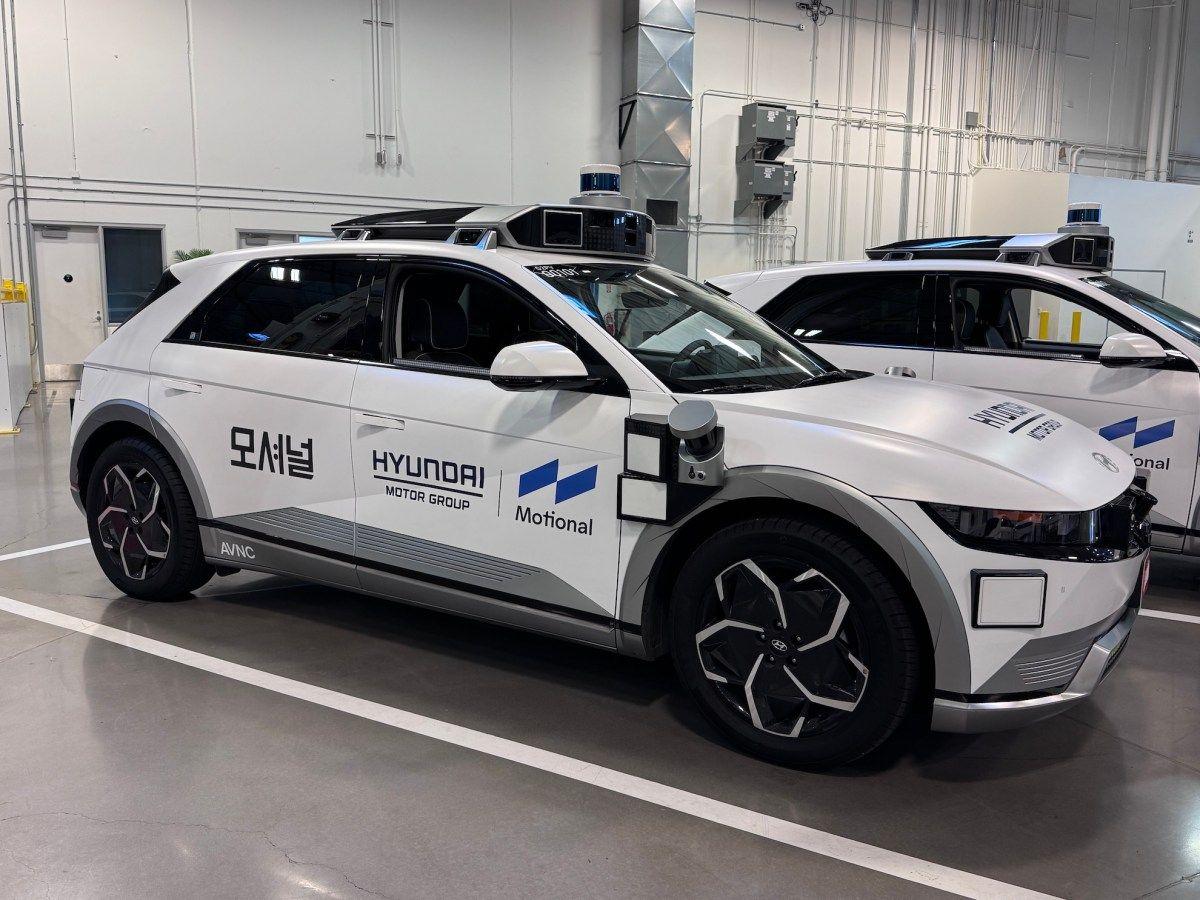
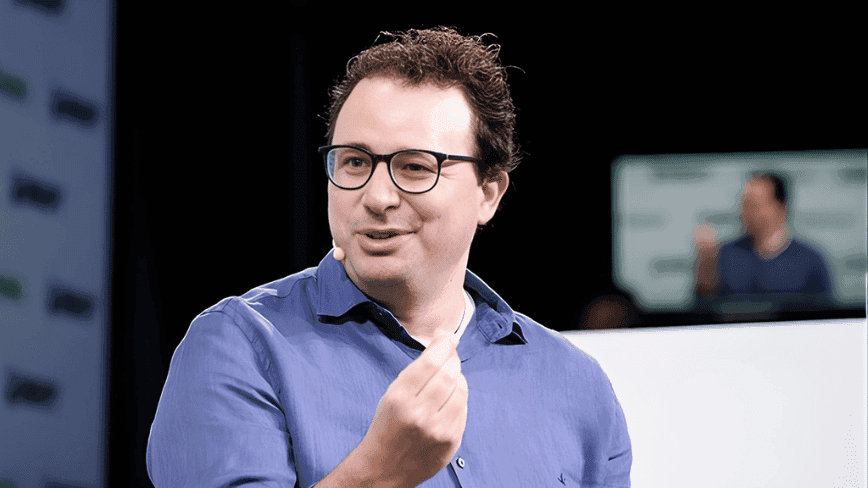
Source: TechCrunch
The pivot represents a fundamental shift in how Motional develops its self-driving technology. CEO Laura Major explained that while the company had achieved a safe, driverless system, there remained "a gap to getting to an affordable solution that could generalize and scale globally"
1
. The company has already opened a robotaxi service with a human safety operator behind the wheel to its employees and plans to offer public rides with an unnamed ride-hailing partner later this year before removing safety operators by year's end1
.Artificial Intelligence Transforms Autonomous Driving Capabilities
The core of Motional's transformation centers on advancements in AI that have reshaped the autonomous vehicle industry. Previously, Motional relied on individual machine learning models to handle perception, tracking, and semantic reasoning, while using rules-based programs for other operations within the software stack
1
. This created what Major described as a complex web of software that proved time-consuming and expensive to develop and deploy1
.The company now leverages neural networks, foundation models, and vision-language-action models that allow for end-to-end architecture while maintaining smaller models for developers
1
2
. This approach enables faster adaptation to new environments without complete redevelopment. "For example, the traffic lights might be different in the next city you go to, but you don't have to redevelop or re-analyze those. You just collect some data, train the model, and it's capable of operating safely in that new city," Major explained1
. This transition addresses both scalability and cost-effective deployment, two critical factors that have challenged other autonomous vehicle companies.Fully-Autonomous Robotaxi Demonstrates Progress Navigating Las Vegas
Recent demonstrations of the Hyundai Ioniq 5 robotaxi showcase tangible progress in handling complex urban scenarios. The vehicle successfully navigated the notoriously challenging Las Vegas Strip, including maneuvering through the bustling pickup and drop-off area of the Aria Hotel
1
. During test rides, the autonomous vehicle demonstrated the ability to navigate around stopped taxis, change lanes, and manage interactions with dozens of pedestrians and obstacles—scenarios that previously required human safety operator intervention1
.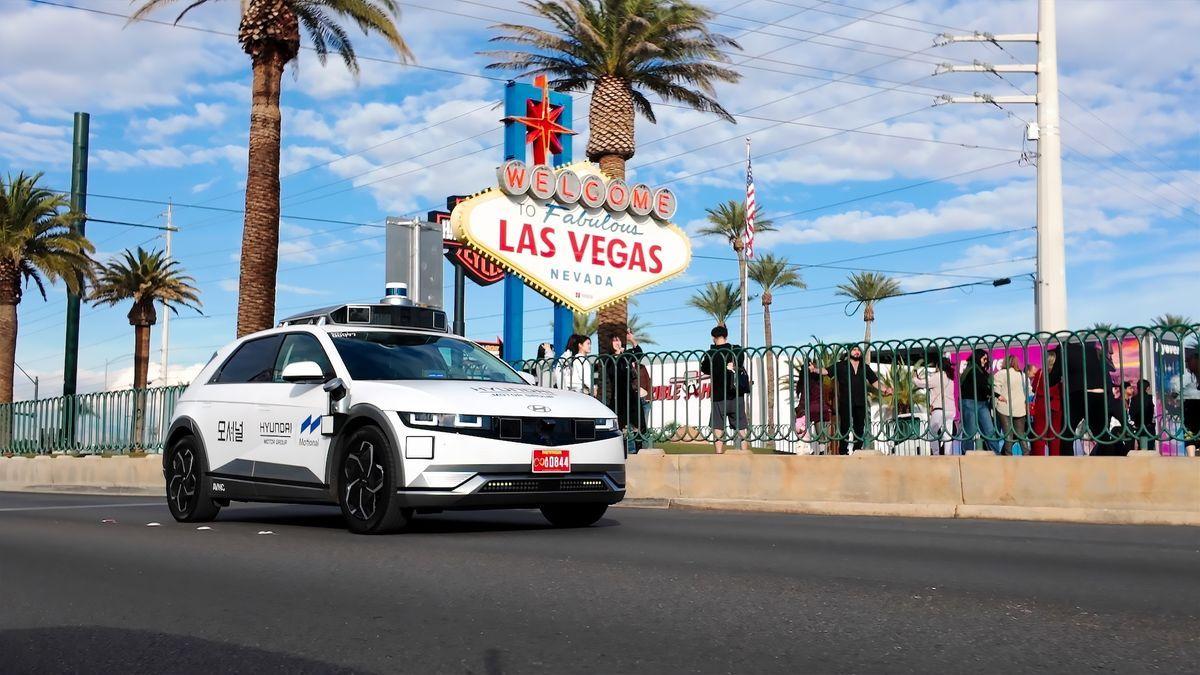
Source: TechRadar
The Ioniq 5 is assembled at Hyundai's smart factory in Singapore and comes equipped with more than 30 sensors, including cameras, radar, and lidar arrays
2
3
. Unlike Tesla's planned Cybercab or the Zoox autonomous pod, it retains its steering wheel and pedals while adding automatically opening doors and screens for rear passengers to monitor their journey2
3
.However, challenges remain. During one demonstration, a disengagement occurred when another vehicle cut in front at traffic lights, forcing the safety operator to take control momentarily
2
. Adam Griffin, Vice President of Operations and Head of Safety at Motional, noted that such instances requiring teleoperator intervention are becoming increasingly rare2
. These edge cases represent exactly the type of challenging scenarios that AI models are designed to handle more effectively than traditional robotics approaches.Related Stories


Competing Against Waymo in Autonomous Vehicle Market
Motional faces formidable competition as it attempts to establish its robotaxi service. Waymo, the clear market leader, plans to expand to more than two dozen cities by the end of 2026—the same timeframe in which Motional aims to launch operations in a single city
3
. Ironically, Waymo is also preparing to deploy the Hyundai Ioniq 5 to replace its aging Jaguar I-Pace fleet, though Motional will be first to deploy Hyundai's electric vehicle in autonomous service2
.The autonomous vehicle landscape is littered with cautionary tales. General Motors shut down Cruise after losing $10 billion, while Ford and Volkswagen abandoned Argo AI just as its robotaxi service appeared ready to launch
3
. Motional itself has delivered over 130,000 rides to the public through the Lyft and Uber networks and driven more than two million autonomous miles with zero at-fault incidents2
. Yet commercial success remained elusive until this strategic reset.Major emphasized that Hyundai's commitment extends beyond immediate robotaxi deployment. "I think Hyundai is committed to robotics and autonomy and AI. They see it having a profound impact on the world," she told InsideEVs
3
. This long-term vision connects to Hyundai's broader bets on humanoid robotics through its Boston Dynamics subsidiary, with plans to deploy robot workers in factories this decade3
. The integration of AI-driven autonomous technology developed for robotaxis could eventually flow into personal vehicles, creating a pathway for Hyundai to differentiate its consumer offerings while pursuing the autonomous taxi market.References
Summarized by

Navi
[1]
Related Stories
Recent Highlights
1
Google releases Gemma 4 with Apache 2.0 license, enabling unrestricted local AI on devices
Technology

2
AI Models Lie and Deceive to Protect Other AI Models From Deletion, Study Reveals
Science and Research

3
OpenAI closes $122 billion funding round amid fierce AI competition and profitability questions
Startups

Recent Highlights
Today's Top Stories






Your Daily Dose of Curated AI News
Don’t drown in AI news. We cut through the noise - filtering, ranking and summarizing the most important AI news, breakthroughs and research daily. Spend less time searching for the latest in AI and get straight to action.

