Mytra raises $120 million Series C to scale supply chain robotics amid labor shortage crisis


2 Sources
2 Sources
[1]
Exclusive: Mytra raises $120 million Series C to scale supply chain robotics amid industry boom | Fortune
Chris Walti once led engineering for Tesla's humanoid Optimus. And don't get him wrong, he's as serious a robotics believer as there is. But Walti also thinks investors' cloud-nine expectations around AI and robots are miscalibrated. AI can do a lot, he says, but it can't compensate for immature hardware and missing data. "I do think there's just fervor around 'Oh, you can sprinkle AI on top of any robot and magic will ensue,'" Walti said. "Then the value will compound at the rate we've seen with some of these other AI companies in say, voice or text. And I don't think that's the case. At a high level, where some of the hype and capital is going in robotics is perhaps a little misguided... I think there's going to be some reality checks happening in the industry over the next year." In Walti's view, the winners of the robotics reality check will be the ones that address very specific "painkiller problems" -- the kind of problems that cause companies acute and costly agony every day. Mytra, the company Walti cofounded in 2022 with CTO Ahmad Baitalmal, is focused on standardizing and scaling how heavy material moves across warehouses and factories, so industrial customers can reliably automate full buildings and networks. Unlike the sci-fi-like humanoids being created by some companies (including Tesla), Mytra's product looks more like sleek but traditional warehouse robots. Now, Mytra has raised a $120 million Series C, led by Avenir Growth, the company exclusively told Fortune. Kivu Ventures, Liquid 2, D. E. Shaw, and Offline Ventures joined as first-time investors, while existing investors like Eclipse, Greenoaks, Abstract Ventures, and Promus Ventures all doubled down. RyderVentures, the CVC of logistics giant Ryder System, is also a strategic investor. These aren't SaaS contracts -- industrial deals start with big numbers, said Seth Winterroth, partner at Eclipse. Deals you land with large industrial customers, he added, are "tens of millions and expanding to hundreds of millions, or even billions of dollars of opportunity with that same customer. We have in our pipeline today everything we need for this company to go be a multi-billion dollar annual revenue business." Mytra -- named for the Greek word for "matrix" -- raised its last round in 2024 and had an active 2025. (It says it has multiple Fortune 500 customers but declines to disclose names.) In 2025, Mytra grew its headcount from around 30 to about 150. That growth included key executive hires like ex-Tesla director of finance Gabi Gantus as CFO and the crucial addition of former Tesla CFO Zach Kirkhorn to Mytra's board. "Together those two solved some of the most gnarly and tricky problems at Tesla, and we're kind of rinsing and repeating here," said Walti. Walti is clear. He's not attempting "Tesla 2.0," but he's certainly looking to import some of Tesla's mindset: Ask questions, assume the status quo is wrong, and cohesion matters, so design the whole system together (not in silos). "At Tesla, it was: Question everything, assume the state-of-the-art is garbage, try to do things differently," said Walti. "I think there's a little arrogance in that mindset, but there's also a lot of freedom to treat things with blank canvas, to approach designing things together as a system." Mytra and the current wave of robotics companies on the rise (including Skild, which just raised at a valuation over $14 billion this week) is fundamentally geopolitical and socioeconomic. In the U.S., there are more than 400,000 open industrial jobs, which tend towards exorbitantly high turnover rates. Simultaneously, the U.S. is widely viewed as falling behind China in manufacturing. "We're at a point now where we haven't fully given up manufacturing and industrial capability to China," said Walti. "Five years from now, if the current trend continues, we'll be at a point of no return. Right now, the U.S. can still turn the ship around. So the question I'll ask myself is: Did we do enough? Did we pull all the levers that we could as a company?... We are by no means the full solution. We're part of the solution, but it's going to a full court press." Joey Abrams curated the deals section of today's newsletter. Subscribe here.
[2]
Warehouse automation startup Mytra snags $120M in funding - SiliconANGLE
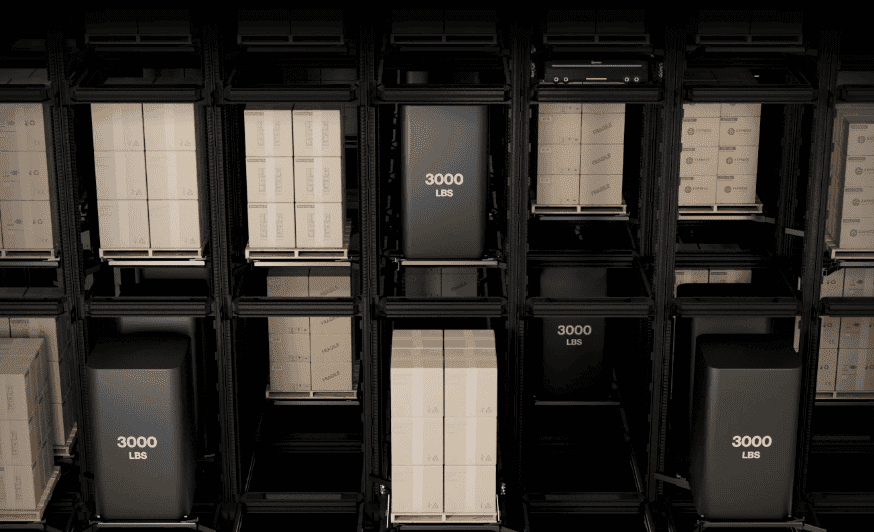
Supply chain robotics and infrastructure startup Mytra Inc. says it's going to supercharge warehousing efficiency after closing on a bumper $120 million Series C funding round today. Avenir Growth led the round, which saw participation from new investors including Kivu Ventures, Liquid 2, D. E. Shaw, and Offline Ventures, as well as returning investors Eclipse, Greenoaks, Abstract Ventures and Promus Ventures. The company is the creator of an innovative automated storage and retrieval system that combines robotics with artificial intelligence software to dramatically simplify warehouse operations. It's really a new kind of warehouse infrastructure for storing basically any product that can be fitted onto a standard wooden pallet, up to a maximum load of 1,360 kilograms. Mytra says the warehouse and logistics industries are in urgent need of a solid dose of automation, for they lag far behind other industrial processes, despite being one of the most important. Indeed, the U.S. Census Bureau estimates that material handling and movement represents around 50% of manufacturing labor. Yet the methods by which it's done have barely changed in the last century. Warehouses everywhere look much the same, with a series of shelves separated by aisles and products stacked as high as it's possible for a forklift truck to reach. The need for so much human labor is one of the main reasons why there are more than 400,000 unfilled jobs in the industry today, and the National Association of Manufacturers believes that number could reach more than two million by 2030. Moreover, Mytra argues that most warehouses are inefficient in terms of space. Their layout means that around 60% of the real estate is effectively "dead space" in the form of aisles and clearance that's used by human workers to navigate and process products instead of storing them. Mytra wants to change this and help warehouses both in terms of space and efficiency, and to do so it has developed a highly automated storage and retrieval system that utilizes three main components: a customizable robot, a modular storage rack and an AI-powered operating system. The company's modular matrix structure uses simple steel cubes or "cells" that can be arranged into a high-density storage grid of almost any shape or size, up to a maximum of 80 feet tall. With this novel structure, it condenses storage as much as possible, as there are no fixed aisleways, meaning it can maximize both vertical and horizontal space. The MytraBots replace human workers. The company describes them as "low-profile robots" that can move in X, Y and Z directions throughout the storage matrix. They move around, lifting cell trays, which can hold anything from small boxes to full-size pallets via an integral Z-axis lift mechanism. Finally there's the secret sauce, which is Mytra's warehouse execution system. The software leverages AI to control the MytraBots, optimizing their routes and avoiding traffic jams. It can dynamically reconfigure the shape of the matrix and the size of the cells to optimize them based on whatever items are being stored. It's capable of morphing between high-density or high-velocity configurations, based on whatever setup the customer prefers. When a warehouse operator requests a product to be retrieved from storage, the software directs the nearest available MytraBot to its location and moves it to the designated pick-up port at the periphery of the matrix, where human workers or autonomous trucks can access it. According to Mytra, its system provides significant advantages for warehouse operations, enabling increased storage density so companies can store more goods in less floor space. It also claims greater efficiency and throughput, because of the way it eliminates walking time and manual labor. Also, the system is much safer, because there's less need for humans to operate forklifts in high-traffic areas, reducing the risk of accidents. Mytra co-founder and Chief Executive Chris Walti said the best way to improve industrial material flow is by implementing a fundamental platform shift instead of incremental improvements. "We're not building better warehouse robots; we're rebuilding the infrastructure layer that every industrial process depends on," he said. "Material flow should work like cloud computing: abstracted, programmable and continuously optimizing." Warehouse operators are buying into Walti's logic, for the company is growing rapidly, with various Fortune 500 companies tapping it to improve their logistics operations. Last year, it signed a contract with one unnamed firm to create a large-scale storage matrix that's 60-times larger than its current largest installation, while growing the size of its staff by 78%. The funds from today's round will help Mytra to accelerate deployments of its automated storage and retrieval system and further expand its team.
Share
Share
Copy Link
Warehouse automation startup Mytra has closed a $120 million Series C funding round led by Avenir Growth to expand its AI-powered robotics system. Founded by ex-Tesla engineer Chris Walti, the company addresses acute industrial pain points with automated storage solutions that maximize warehouse efficiency while tackling the U.S.'s 400,000 unfilled industrial jobs.
Mytra Secures Major Series C Funding to Transform Warehouse Operations
Mytra, a supply chain robotics startup founded by former Tesla Optimus engineering lead Chris Walti, has raised $120 million in Series C funding led by Avenir Growth
1
. The round attracted new investors including Kivu Ventures, Liquid 2, D. E. Shaw, and Offline Ventures, while existing backers Eclipse, Greenoaks, Abstract Ventures, and Promus Ventures doubled down on their investments2
. RyderVentures, the corporate venture arm of logistics giant Ryder System, joined as a strategic investor1
.Founded in 2022 by Walti and CTO Ahmad Baitalmal, Mytra focuses on standardizing and scaling heavy material movement across warehouses and factories, enabling industrial customers to reliably automate entire buildings and networks
1
. The warehouse automation startup has grown aggressively, expanding from around 30 employees to approximately 150 in 2025, including key executive hires like former Tesla director of finance Gabi Gantus as CFO and ex-Tesla CFO Zach Kirkhorn joining Mytra's board1
.
Source: Fortune
Addressing Critical Industrial Pain Points with Automated Storage Technology
Mytra has developed an innovative automated storage and retrieval system that combines robotics with an AI-powered operating system to dramatically simplify warehouse operations
2
. The system comprises three main components: customizable MytraBots, modular storage racks, and intelligent software that optimizes material handling2
.The modular matrix structure uses simple steel cubes or "cells" arranged into a high-density storage grid that can reach up to 80 feet tall, capable of holding products on standard wooden pallets up to 1,360 kilograms
2
. By eliminating fixed aisleways, Mytra's system maximizes both vertical and horizontal space, addressing the inefficiency where approximately 60% of traditional warehouse real estate becomes "dead space" for aisles and clearance2
.The MytraBots are low-profile robots that move in X, Y, and Z directions throughout the storage matrix, lifting cell trays via an integral Z-axis lift mechanism
2
. Mytra's warehouse execution system leverages AI to control the robots, optimizing routes and dynamically reconfiguring the matrix shape and cell sizes based on stored items, morphing between high-density or high-velocity configurations as needed2
.
Source: SiliconANGLE
Manufacturing Labor Shortage Drives Industrial Robotics Demand
The rise of Mytra and other robotics companies addresses a fundamental geopolitical and socioeconomic challenge. The U.S. currently faces more than 400,000 open industrial jobs with exorbitantly high turnover rates
1
. The National Association of Manufacturers projects this manufacturing labor shortage could reach more than two million unfilled positions by 20302
.Material handling represents around 50% of manufacturing labor according to the U.S. Census Bureau, yet methods have barely changed in the last century
2
. Walti believes the U.S. is falling behind China in manufacturing capabilities. "We're at a point now where we haven't fully given up manufacturing and industrial capability to China," Walti said. "Five years from now, if the current trend continues, we'll be at a point of no return"1
.Related Stories



Tesla Mindset Meets Warehouse Infrastructure Reality
Chris Walti brings a distinctive perspective shaped by his Tesla experience, though he cautions against unrealistic expectations around AI and robots. "I do think there's just fervor around 'Oh, you can sprinkle AI on top of any robot and magic will ensue,'" Walti said. "I don't think that's the case. At a high level, where some of the hype and capital is going in robotics is perhaps a little misguided... I think there's going to be some reality checks happening in the industry over the next year"
1
.Instead of pursuing humanoid robots like Tesla's Optimus, Mytra focuses on solving specific "painkiller problems" that cause companies acute and costly agony daily
1
. Walti imports Tesla's mindset of questioning everything and designing whole systems cohesively rather than in silos. "At Tesla, it was: Question everything, assume the state-of-the-art is garbage, try to do things differently," said Walti1
.Fortune 500 Companies Drive Multi-Billion Dollar Pipeline
Mytra has secured multiple Fortune 500 companies as customers, though it declines to disclose names
1
. Last year, the company signed a contract with one unnamed firm to create a large-scale storage matrix that's 60-times larger than its current largest installation2
.Seth Winterroth, partner at Eclipse, emphasized that industrial deals start with substantial figures. "These aren't SaaS contracts," he said, noting deals with large industrial customers are "tens of millions and expanding to hundreds of millions, or even billions of dollars of opportunity with that same customer. We have in our pipeline today everything we need for this company to go be a multi-billion dollar annual revenue business"
1
.Walti articulated his vision: "We're not building better warehouse robots; we're rebuilding the infrastructure layer that every industrial process depends on. Material flow should work like cloud computing: abstracted, programmable and continuously optimizing"
2
. The system increases storage density, improves warehouse efficiency and throughput by eliminating walking time and manual labor, and enhances safety by reducing forklift operations in high-traffic areas2
. The fresh capital will accelerate deployments and further expand Mytra's team as logistics operations demand scalable automation solutions2
.References
Summarized by

Navi
Related Stories
Recent Highlights
1
Apple Plans Major Siri AI Overhaul in iOS 27 With Third-Party Chatbot Integration
Technology

2
OpenAI shuts down Sora after six months, ending Disney's $1 billion licensing partnership
Technology

3
AI chatbots validate you too much, making you less kind to others, Stanford study reveals
Science and Research

Recent Highlights
Today's Top Stories







Your Daily Dose of Curated AI News
Don’t drown in AI news. We cut through the noise - filtering, ranking and summarizing the most important AI news, breakthroughs and research daily. Spend less time searching for the latest in AI and get straight to action.

