India's AI data centers promise internet era-type job boom, but IMF warns of 40% displacement


3 Sources
3 Sources
[1]
Inside a data centre: The digital fortresses powering India's AI boom
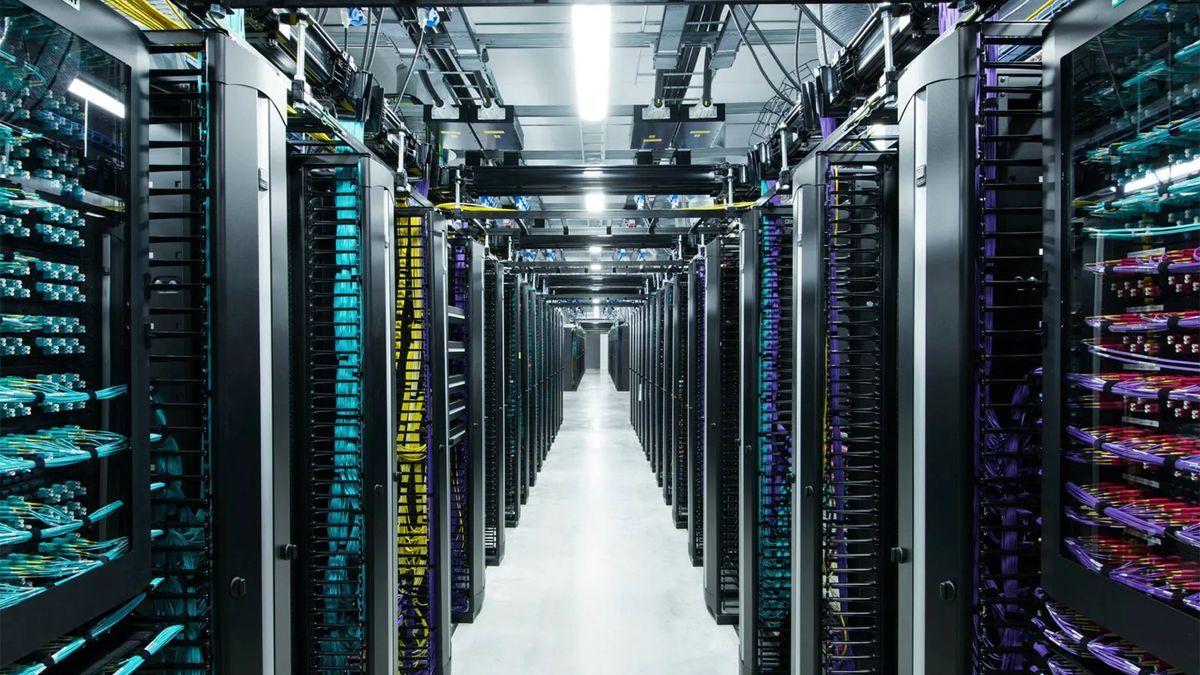
India's digital economy is experiencing an unprecedented surge, fueled by rapid adoption of cloud computing, AI, and digital payments. This growth necessitates massive investments in data centers, with tech giants committing billions and the government offering incentives. The country is becoming a global AI hub, hosting major summits and expecting significant data center investments. Every time a user streams a movie on an OTT platform, makes a digital payment at a roadside tea stall, asks an AI chatbot to summarise meeting minutes on the go, or refines an email draft, a vast network of servers springs into action inside high-security concrete facilities. These data centres form the backbone of India's fast-expanding digital economy. The country's rapid adoption of cloud computing, artificial intelligence and digital payments - one of the defining success stories of New India - is fuelling an unprecedented surge in demand for large-scale data infrastructure. Operators are committing billions in capital expenditure to expand capacity, strengthen power redundancy systems and enhance physical and cyber security. Behind the fortified perimeters, the infrastructure powering India's digital services is both complex and meticulously engineered. A visit to CtrlS' data centre in Noida offered a glimpse into this digital nerve centre. Inside, long rows of humming server racks, blinking consoles, heavy-duty power cables and industrial-scale cooling ducts operate in synchronised precision - ensuring uninterrupted service for millions of users. Top tech giants - from Amazon to Google and Microsoft - have announced big-ticket investments in setting up data centres in India. And such companies received a further filip in the Union Budget for 2026-27, which announced a tax holiday for them until 2047 on global cloud revenues if they route foreign workloads through Indian data centres. At the Noida data centre of CtrlS, Ashok Mysore, President - Sales led a PTI walkthrough of critical infrastructure that powers digital economy - a multi-tier structure supported by Uninterruptible Power Supply (UPS) room, which ensures continuous power to essential IT systems until backup generators activate; the battery room, housing battery banks connected to the UPS systems; and the utility corridors, where dedicated pathways manage power cables, network lines and cooling systems. The server hall - the core of the facility - houses rows of computing and storage equipment operating under tightly regulated temperature, humidity and airflow conditions. Redundancy is built into every layer, reflecting the zero-tolerance approach to downtime in an economy that increasingly runs in real-time. "Be it application, automation or digital, AI is now centre stage. While almost all customers, along with governments, are initiating AI, you need a one place to host the infrastructure, and that is where data centres come into the picture," CtrlS Datacentres' Mysore explains. The growing importance of such infrastructure is closely tied to the rapid adoption of artificial intelligence. India has emerged as a global powerhouse in AI adoption, ranking second only to the United States in enterprise AI and machine learning transactions, according to a recent report by cloud security firm Zscaler. According to the report, Indian enterprises logged a staggering 82.3 billion AI/ML transactions between June and December 2025. This volume accounts for 46.2 per cent of all AI activity in the Asia-Pacific (APAC) region, comfortably placing India as the regional leader. The report attributed the surge to sustained government-led digital transformation efforts, expanding AI skills, and cloud-first technology architectures that enable scalable deployment of AI services. And the scale of investments, all around, reflects this momentum. Between October and December 2025, global technology majors announced multi-billion-dollar investments in AI infrastructure and data centres in India, including USD 15 billion by Google, USD 17.5 billion by Microsoft, USD 35 billion by Amazon, and USD 11 billion by Digital Connexion. India is set to take centre stage in global AI conversations next week as it hosts AI Impact Summit 2026 - the largest of the four global AI summits hosted so far (AI Safety Summit hosted by the UK, the AI Seoul Summit, and the AI Action Summit hosted by France). The much-awaited event - that has created quite a buzz - will reflect growing international focus on responsible, inclusive and impact-driven AI, as well as India's expanding role in shaping the global AI narrative. According to an official release, the Summit has garnered strong interest from the global community, with over 35,000 registrations received ahead of the event, at the last count. Electronics and IT Minister Ashwini Vaishnaw recently said that the government expects investment in data centres to cross USD 200 billion, about Rs 18.33 lakh crore, noting that proposals worth USD 90 billion have already been received, with nearly USD 70 billion having entered the construction phase. Industry players are also scaling up commitments. "In CtrlS we committed to invest USD 2 billion in 2023... by end of 2030, we will exhaust that USD 2 billion, we are promising more and more investments in the data centre industry," Mysore says. As India's digital consumption deepens and AI-driven applications proliferate, such facilities are no longer peripheral infrastructure - they are mission-critical assets sustaining the country's economic engine.
[2]
AI data centres could spur Internet era-type job boom, says Nvidia's Jensen Huang
The CEO of the AI major said AI infrastructure would create jobs across construction, supply chains, operations, and innovation, alongside direct employment. His comments follow the Union Budget 2026, which has extended tax holidays for data centre investments, a move expected to attract up to $200 billion into India Nvidia CEO Jensen Huang believes that artificial intelligence (AI) infrastructure, particularly data centres, could drive job creation in India on a scale similar to the internet. Addressing questions from the Indian media at a recent press conference, Huang stated that the AI infrastructure will generate employment across construction, supply chains, operations, and innovation, alongside direct jobs. This comes at a time when the Union Budget 2026 extended tax holidays until 2047 for foreign firms using data centres based in India, a move expected to attract up to $200 billion in investment. The country already has significant commitments from companies like Google, Microsoft, and Amazon. Huang termed AI the foundational infrastructure for the next wave of industrialisation. Meanwhile, Nvidia also announced a partnership with Dassault Systèmes at the 3DEXPERIENCE event in Houston. Dassault, through its 'outscale' cloud, is deploying AI factories powered by Nvidia infrastructure across three continents to run AI models within the platform. "Together with Dassault Systèmes, we are uniting decades of industrial leadership with Nvidia's AI and Omniverse platforms to transform how millions of researchers, designers, and engineers build the world's largest industries," Huang said in a statement. AI major Nvidia will use Dassault Systèmes' model-based systems engineering to design these AI factories, starting with its Rubin platform and integrating into the Omniverse DSX Blueprint. "Together with Nvidia, we are building industry world models that unite virtual twins and accelerated computing to help industry design, simulate, and operate complex systems in biology, materials science, engineering, and manufacturing with confidence," said Pascal Daloz, CEO, Dassault Systèmes, in a prepared statement.
[3]
NVIDIA CEO says AI datacentre will create India job boom: Hype vs reality?
When Jensen Huang stands before an Indian audience and evokes the "Internet Era," he isn't just selling hardware; he is invoking a cultural core memory. For India, the internet wasn't just a technology, it was the ladder that pulled millions into the middle class, turning cities like Bengaluru and Hyderabad into global nerve centers. By framing AI data centers as the next great job engine, Huang is betting that physical infrastructure will ignite a second industrial revolution. But this optimism collides head-on with a more clinical reality from the IMF, whose warnings of a 40% job displacement suggest that the very technology Huang is building might automate the ladder out from under the next generation of Indian workers. Also read: Claude Opus 4.6 vs GPT-5.3 Codex: Who is leading the coding agent race The tension between these two perspectives lies in the definition of "work." The IMF's warning that AI could disrupt 40% of global jobs is rooted in the reality of the software and service layer. For a nation like India, which became the world's back office by mastering routine cognitive tasks, the IMF's stance feels like an urgent alarm. They are highlighting a "white-collar" vulnerability where the very skills we spent decades honing - coding, basic analysis, and customer support - are now being handled by the models Nvidia's chips power. From this perspective, the "reality" is a painful transition where the displacement of the old happens faster than the creation of the new. Also read: Amazon MGM's AI Studio explained: Generative video as a tool for film and TV productions Huang's vision, however, shifts the focus from the screen to the soil. By calling AI data centres the "new factories," he is arguing that we are moving into a phase of "structural labor." He suggests that the sheer scale of investment required, driven by India's aggressive 20-year tax holidays and $200 billion targets, will necessitate a massive, multi-disciplinary workforce. This isn't just hype for the sake of selling H100s; it's a recognition that you cannot have a digital revolution without a physical one. To Huang, the "job boom" is real because a data centre is a high-voltage, high-maintenance facility that triggers a ripple effect through construction, power management, and local supply chains, effectively mimicking the job-heavy industrialization India has long sought. The bridge between these two views is the "downstream" reality. While a data centre might only employ a few hundred people to keep the servers humming, the compute power it provides is meant to be the oxygen for a million new startups. This is where Huang's "Internet Era" comparison is put to the test. The internet didn't just create "internet jobs"; it enabled every other business to function differently. If India can use this localized compute to build "Agentic AI" services that solve domestic problems in agriculture or healthcare, then Huang's boom becomes a tangible reality. However, if we only build the "land" (the data centres) without the "crops" (the AI applications), the IMF's displacement fears will dominate the narrative. Ultimately, we have to move past the binary of "jobs created versus jobs lost." The reality emerging in 2026 is that the labor market is being re-indexed. Nvidia's "boom" is a structural reality - the money is flowing, the concrete is being poured, and the hardware is arriving. But the IMF's "displacement" is the human reality - the friction of a workforce that must pivot from being "doers of tasks" to "architects of agents." Huang provides the roadmap for the country's GDP, but the IMF provides the warning for the country's people. The "boom" will likely happen, but it will look less like a crowded office and more like a high-tech utility network, fundamentally changing what it means to "work in tech" in India.
Share
Share
Copy Link
Nvidia CEO Jensen Huang claims AI infrastructure will create massive employment across construction, operations, and innovation in India. With $200 billion in expected data center investments and tax holidays until 2047, tech giants are betting big. But the IMF warns AI could disrupt 40% of jobs, creating tension between physical infrastructure optimism and automation reality.
Nvidia's Vision: AI Data Centers as the New Factories
Nvidia CEO Jensen Huang has positioned AI infrastructure as the catalyst for an internet era-type job boom in India, arguing that data centers will generate employment across construction, supply chains, operations, and innovation alongside direct jobs
2
. Speaking to Indian media, Jensen Huang termed AI the foundational infrastructure for the next wave of industrialization, drawing parallels to how the internet transformed India's economy in previous decades2
. His comments arrive as India prepares to host the AI Impact Summit 2026, which has garnered over 35,000 registrations and reflects the country's expanding role in shaping the global AI narrative1
.
Source: Digit
Inside India's Digital Fortresses: The Infrastructure Powering AI
Every digital payment at a roadside tea stall, every AI chatbot summarizing meeting minutes, every streaming session triggers a vast network of servers inside high-security concrete facilities that form the backbone of India's fast-expanding digital economy
1
. A visit to CtrlS' data center in Noida revealed long rows of humming server racks, blinking consoles, heavy-duty power cables, and industrial-scale cooling systems operating in synchronized precision . The facility's multi-tier structure includes Uninterruptible Power Supply rooms, battery banks, utility corridors managing power cables and cooling ducts, and server halls housing computing equipment under tightly regulated temperature and humidity conditions1
.
Source: ET
Massive Data Center Investments Flood India
Between October and December 2025, global technology majors announced staggering data center investments: $15 billion by Google, $17.5 billion by Microsoft, $35 billion by Amazon, and $11 billion by Digital Connexion
1
. Electronics and IT Minister Ashwini Vaishnaw expects total investment in data centers to cross $200 billion, approximately Rs 18.33 lakh crore1
. The Union Budget 2026-27 extended tax holidays until 2047 for foreign firms routing workloads through Indian data centers, a move designed to attract this massive capital2
. India has emerged as a global powerhouse in AI adoption, ranking second only to the United States in enterprise AI and machine learning transactions, with Indian enterprises logging 82.3 billion AI/ML transactions between June and December 2025, accounting for 46.2 percent of all AI activity in the Asia-Pacific region1
.Related Stories

The Collision: Job Creation Promises Meet Displacement Warnings
While Huang's optimism about a job boom centers on physical infrastructure and structural labor, the IMF warns that AI could disrupt 40 percent of global jobs
3
. For India, which became the world's back office by mastering routine cognitive tasks like coding, basic analysis, and customer support, this represents a white-collar vulnerability where the very skills honed over decades are now being automated by models that Nvidia's chips power3
. The tension lies in whether displacement of old jobs happens faster than creation of new ones, and whether the compute power provided by AI data centres enables a million new startups or simply builds infrastructure without applications3
.What This Means for Tech Employment in India
The reality emerging in 2026 is that the labor market is being re-indexed rather than simply expanded
3
. While a data center might only employ a few hundred people directly to maintain servers, the downstream effect depends on whether India can use localized compute power to build agentic AI services solving domestic problems in agriculture or healthcare3
. Nvidia also announced a partnership with Dassault Systèmes to deploy AI factories powered by Nvidia infrastructure across three continents, demonstrating how cloud computing and automation are reshaping industrial design and manufacturing2
. The workforce must pivot from being doers of tasks to architects of agents, fundamentally changing what it means to work in tech in India3
.References
Summarized by

Navi
Related Stories
NVIDIA CEO Highlights India's Potential to Lead Global AI Revolution
22 Oct 2024•Technology

NTT Data CEO warns AI bubble will burst soon, but predicts stronger rebound than internet era
05 Dec 2025•Business and Economy

India's AI Boom to Drive Massive Data Center Expansion by 2030, Deloitte Report Reveals
10 May 2025•Business and Economy

Recent Highlights



Recent Highlights
Today's Top Stories








Your Daily Dose of Curated AI News
Don’t drown in AI news. We cut through the noise - filtering, ranking and summarizing the most important AI news, breakthroughs and research daily. Spend less time searching for the latest in AI and get straight to action.

