Czech ice dancers spark controversy using AI-generated music at Olympics rhythm dance event


4 Sources
4 Sources
[1]
An ice dance duo skated to AI music at the Olympics | TechCrunch
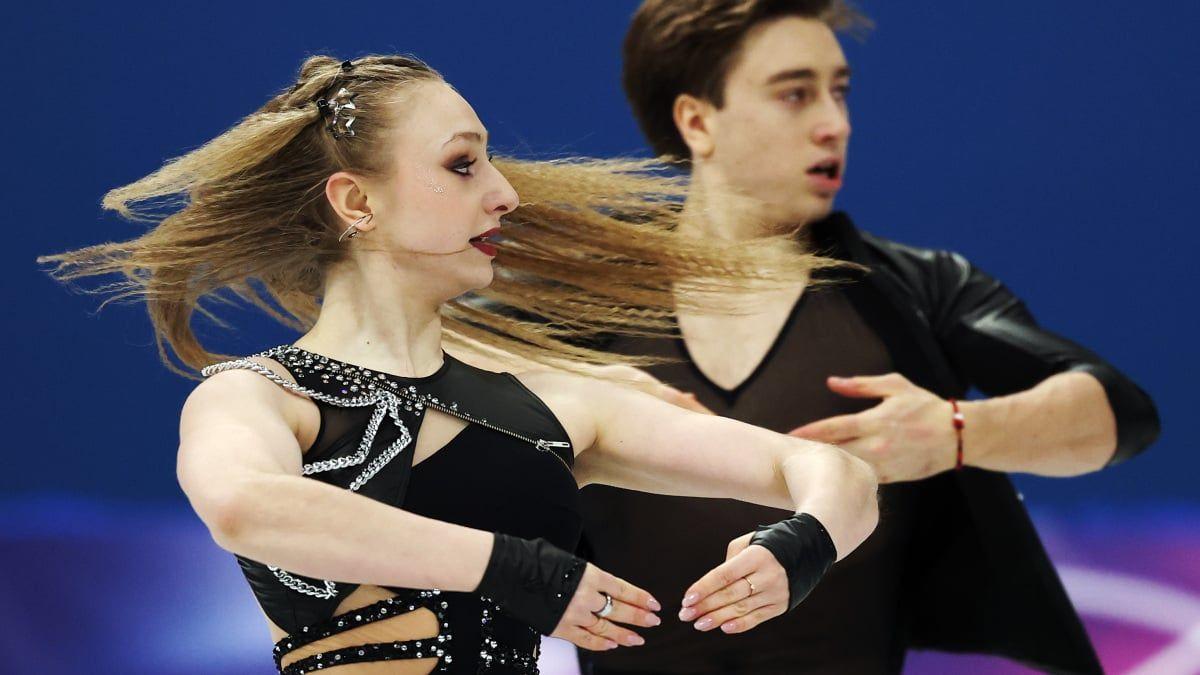
Czech ice dancers Kateřina Mrázková and Daniel Mrázek made their Olympic debut on Monday, an unfathomable feat that takes a lifetime of dedication and practice. But the sibling duo used AI music in their rhythm dance program, which doesn't break any official rules, but serves as a depressing symbol of how absolutely cooked we are. As Mrázek spun his sister in a crazy cartwheel lift sort of move that made them look superhuman, one of the NBC commentators mentioned in passing, "This is AI generated, this first part," referring to the music. Somehow, that admission is even more baffling than the gravity-defying tricks that the siblings showed off on the pressure of Olympic ice. The Olympic ice dance competition is split into two events: the rhythm dance, where pairs must perform a routine that meets a specific theme, and the free dance. This season's theme is "The Music, Dance Styles, and Feeling of the 1990s." British ice dancing duo Lilah Fear and Lewis Gibson paid tribute to the Spice Girls, while United States favorites Madison Chock and Evan Bates skated to a Lenny Kravitz medley. But, for whatever reason -- licensing issues? -- Mrázková and Mrázek danced to a routine with music that's half AC/DC and half AI. It's weird. What's even weirder is that this isn't the duo's first use of AI, nor is it the first time that this choice backfired. Per the International Skating Union, the governing body that oversees competitive ice skating, the duo's music choice for the rhythm dance this season has been "One Two by AI (of 90s style Bon Jovi)" and "Thunderstruck by AC/DC." The official Olympics website confirms that the duo is using the AI-generated song for the rhythm dance portion. The Czech siblings have faced backlash before for using AI-generated music. Earlier in the season, they played a '90s-inspired song for their routine that began with a wailing declaration: "Every night we smash a Mercedes Benz!" If that sounds familiar, it's because that lyric comes directly from the '90s hit "You Get What You Give" by New Radicals (which, by the way, has an incredible music video shot in a Staten Island mall -- the true essence of American suburbia!). The AI-generated lyrics also include the lines, "Wake up, kids/We got the dreamer's disease," and "First we run, and then we laugh 'til we cry." What a coincidence! Those lyrics also appear in the song "You Get What You Give" by New Radicals. The AI song is even titled "One Two," which are the first words of... you can probably guess what song at this point. Before the Olympics, the duo changed the song, swapping out the New Radicals lyrics for other AI-generated lyrics that sound suspiciously like Bon Jovi lyrics, as journalist Shana Bartels noted in November. For example, "raise your hands, set the night on fire." also appear in "Raise Your Hands" by Bon Jovi... and the AI "vocalist" sounds a lot like Bon Jovi, too. (Not to pour salt on the wound, but "Raise Your Hands" isn't even from the '90s!) This was the music that the duo danced to on Monday at the Olympics, before it transitioned into "Thunderstruck" by AC/DC, a real song from the 90s written by real people. While it's unclear what software the team used to generate this music, this is an LLM operating as it's supposed to. These LLMs are trained on large libraries of music, often through legally dubious means. When prompted, LLMs produce the most statistically probable response to an input. That's useful when writing code, but means a song "in the style of Bon Jovi," will likely end up using some actual Bon Jovi lyrics.. And yet, the music industry seems at least temporarily enamored with the idea of "musicians" who aren't totally real. Telisha Jones, a 31-year-old in Mississippi, used Suno to set her (hopefully real) poetry to music under the persona Xania Monet. Now she has a $3 million record deal. It's a shame that these Czech dancers' accomplishment of skating at the Olympics may be marred by discourse around their use of AI music (discourse that I am actively contributing to). But come on! Isn't this sport supposed to be creative?
[2]
Olympic Figure Skaters Get Heat for Using AI-Generated Music
The Olympic figure skating ice dancing event in Milan, Italy, on Monday required participants to go with a 1990s theme. Skaters chose music from popular artists of the era like Jennifer Lopez, Ricky Martin, and the Backstreet Boys. But the skaters from the Czech Republic included some music you may not recognizeâ€"because it's an AI-generated song. Katerina Mrazkova and Daniel Mrazek, a brother-sister pair of figure skaters, had originally planned on performing to a song that may have some lyrics you would recognize. That's because it's an AI song that uses verbatim quotes from the 1998 song "You Get What You Give" by the New Radicals. The song was an international hit in the late 1990s. Journalist Shana Bartels first reported on the song choice back in November in her Patreon newsletter "Figure Skating for Baseball Nerds." She notes that the version they skated to on Monday included the guitar riffs, but the lyrics had been changed so as not to plagiarize New Radicals. You can hear the full song for yourself in a video from a practice routine a couple of months ago, which was identified as “One Two, Thunderstruck." You can kind of hear how the AI song in the first third of the routine is trying to muster a guitar riff along the lines of AC/DC's original "Thunderstruck," but the vocals sound nothing like singers Bon Scott or Brian Johnson. NBC, which has the rights to broadcast the Olympics in the U.S., is notoriously protective of copyright, so you'll likely have a hard time finding clips of the performance from Monday on any social media platforms. But the practice clip routine below reportedly has the same music used on Monday, but also includes just direct portions of AC/DC's "Thunderstruck," along with the AI slop. "Are you kidding me with the AI music in Olympics figure skating? So you want the world to respect your art but don't give a shit about the art of music that helps you do it?" one sound engineer wrote on Bluesky. Another user was more blunt, writing: "'Figure skating music made by AI' immediate skip, get fucked." While the Olympics are supposed to highlight athletic achievement, it seems like the focus has become more and more on intellectual property issues, even if it has nothing to do with AI. Spanish figure skater Tomas-Llorenc Guarino Sabate was initially told that he wouldn't be able to use music from the Minions franchise, but that changed at the last minute, according to USA Today. The rights-clearing process is apparently quite complicated, and a change of song can be frustrating for singers who try to synchronize their movements to line up with the music. U.S. figure skater Amber Glenn also ran into copyright issues this year. Canadian artist Seb McKinnon, who makes music under the name CLANN, complained on social media that Glenn didn't authorize the use of her song in Glenn's performance, according to the Associated Press. McKinnon released a statement saying that she was "glad we cleared things up with Seb," but the AP notes we're still in the dark about what hiccups may have occurred with clearing the music. The International Skating Union (ISU) only started allowing music with lyrics in 2014, which opened the door to more contemporary music choices at the Olympics. The ISU works with a company called ClicknClear to get music rights, but it's a big challenge when you have different rights holders who need to get paid, according to USA Today. Mrazkova and Mrazek received a score of 72.09 for their performance on Monday and ranked 17th.
[3]
AI music enters the Olympics' ice dancing competition
AI-generated content, which some call slop, is everywhere. And the 2026 Winter Olympics are no exception, now that Czech ice dancers have come under fire for using AI-generated music in their routine. In the run-up to the Olympics, Czech pair Katerina Mrazkova and Daniel Mrazek caught flak for using an AI song that appeared to rip off the 1998 New Radicals hit "You Get What You Give". (Journalist Shana Bartels has covered that saga in depth.) Mrazkova and Mrazek didn't use that tune again in Milan -- but they did use another AI generated piece. One with lyrics that appear to, uh, closely mirror the Bon Jovi track "Raise Your Hands." The back half of their routine used music created by actual humans, specifically the rock classic "Thunderstruck" by AC/DC. But that didn't stop online criticism from viewers, who found it particularly galling in a sport known for its human artistry. This Tweet is currently unavailable. It might be loading or has been removed. This Tweet is currently unavailable. It might be loading or has been removed. In the end, the AI music wasn't a successful ploy. The Czech pair scored a middling 72.09, which put them out of the medal race.
[4]
I've Lived Long Enough to Hear an A.I.-Generated Bon Jovi Song in Olympic Ice Dancing
Are you sure you want to unsubscribe from email alerts for Nitish Pahwa? We weren't even a week into the Milan Cortina Olympics when we got our first big A.I. scandal -- on ice! On Monday, the Games' ice dancers showed off their intimate footwork to the greatest hits of the 1990s as part of the competition's rhythm dance event. As any skating fan will tell you, the introduction of music with lyrics to the ice-dance repertoire in recent years has led to all kinds of copyright clashes; figure skater Amber Glenn just settled a dispute with a Canadian musician outraged by the use of his song in her gold-winning Team USA routine. So Kateřina Mrázková and Daniel Mrázek, a brother-sister duo from Czechia, came up with a work-around: Just tango to an A.I.-generated tune in the "style" of the '90s, since that type of copyright-free soundalike is considered kosher by the International Skating Union. That move may have warded off the lawyers, but it didn't slide past Olympic viewers. Disgusted reactions ensued immediately after Mrázková and Mrázek took the ice and NBC's announcers pointed out that, while half of their choreography was set to AC/DC's "Thunderstruck," the other half had been soundtracked by A.I. The ISU's own documentation identifies the track as something called "One Two," created by an A.I. prompted to come up with something resembling "90s style Bon Jovi." This wasn't even the siblings' first A.I.-music experiment. Shana Bartels reported back in November that when Mrázková and Mrázek competed in Skate Canada, they had a different A.I. complement to their "Thunderstruck" routine: a Bon Jovi-style generation that ripped off various lyrics from New Radicals' "You Get What You Give." Gráinne Nielsen, an artist who specializes in paintings of figure skaters, shared a TikTok video comparing the authentic '90s classic to its bizarre replication. After that original round of backlash, the Czech dancers fine-tuned their A.I. accompaniment -- and generated more potential copyright infringement in the process. As Bartels noted in a follow-up, the two removed the New Radicals lyrics from their A.I. melody when they entered Skate America in mid-November, but their new earworm appeared to generously borrow its lyrics and melody from Bon Jovi's "Raise Your Hands." This A.I. New Radicals/Bon Jovi ice dancing scenario is less a one-off scandal than a sign of the times. At their best, the Olympics offer a respite from the relentless horrors of the daily news cycle. But alas, these Winter Games have given us no reprieve from A.I. slop. Welcome to the first Sloplympics. It started with the opening ceremony, which featured a cartoon montage of Olympic host cities with animation so ugly, jerky, and error-prone that viewers derided it as A.I., despite a lack of confirmation from NBC. After the ceremony, the Games' official social media accounts shared a 30-second video introducing its skiing and speedskating events via stills of toy figurines playing their sports on top of iconic Italian foods. The A.I. gave itself away when one of the uniformed figures was displayed with an erroneous five-ring sequence -- overlapping the black ring with the yellow ring at the wrong juncture. Worse still, the graphics appeared to draw upon the aesthetics of Japanese miniatures artist Tatsuya Tanaka, who's been pairing Olympian figurines with sweet treats and household objects for years now. Out of the multiple official Olympics graphics mocked as being A.I., only one appears to have been taken down by the Games' media team: an image of ski jumpers Nika and Domen Prevc, whose Slovenian flags were affixed to their uniforms in a ludicrously sloppy manner. All this dabbling with A.I. in and around the Milan Cortina Games isn't surprising given the astonishing developments in generative tools this decade. And these Olympics, it turns out, have been a surprisingly useful exercise for figuring out where this tech is most useful, and where it still falls hilariously short. One of the more telling motifs of these A.I. Games: The most effective uses of this software have been the least overtly visible. In the lead-up to the opening ceremony, American athletes proudly disclosed their use of various generative apps for training purposes. Team USA's speedskaters used these tools to model various conditions on ice before trying them out for themselves. Halfpipe snowboarder Maddie Mastro deployed A.I. to analyze footage of her practice runs and figure out adjustments in position, like moving her arm below her head, to improve her performance. The MIT Sports Lab developed a similar apparatus for ice skaters, applying machine learning tech to analyze those wee little microseconds that determine whether your leap-and-spin can fit a quadruple axel instead of a mere triple. Whether it's causation or just correlation, these partly A.I.-trained Olympians have found success: Mastro and her teammates made the halfpipe final, American speedskater Jordan Stolz has already nabbed a gold medal, and the USA racked up team figure-skating gold. Meanwhile, on site in Milan, the Chinese digital retail giant Alibaba is deploying its A.I. models to power everything from drone-camera footage to fan-generated "artworks" to the beloved pin-trading tradition. It's likely we're only going to see more A.I. promotion, whether in the form of slop graphics of Google/Alibaba partnerships or machine learning-inspired physical tricks, throughout the rest of the Games. But those who fear that this will turn the Olympics into an unreal simulacrum of itself should take heart: Even the Czech ice dancers didn't perform exclusively to A.I. For Wednesday's free dance event, Mrázková and Mrázek skated to Ernesto Lecuona's "Malagueña," a movement from the Cuban composer's Suite Andalucía that's been a fixture of figure skating for decades. Sometimes, you just can't beat the classics.
Share
Share
Copy Link
Czech siblings Kateřina Mrázková and Daniel Mrázek made Olympic history for an unexpected reason—they performed their ice dancing routine to AI-generated music mimicking Bon Jovi. While technically legal under International Skating Union rules, the decision ignited fierce backlash about copyright concerns and the erosion of human artistry in a sport celebrated for creativity.
Czech Ice Dancers Bring AI-Generated Music to Olympic Stage
Czech ice dancers Kateřina Mrázková and Daniel Mrázek made their Olympic debut on Monday with a performance that featured AI-generated music during their rhythm dance program, marking a controversial first for the sport
1
. The sibling duo's routine combined an AI-created track styled after Bon Jovi with AC/DC's "Thunderstruck," a choice that doesn't violate International Skating Union regulations but has sparked intense debate about the role of artificial intelligence in competitive athletics2
.
Source: Mashable
The Olympics ice dancing competition requires pairs to perform routines matching specific themes, with this season's focus on "The Music, Dance Styles, and Feeling of the 1990s"
1
. While other competitors selected authentic '90s hits—British duo Lilah Fear and Lewis Gibson paid tribute to the Spice Girls, and American favorites Madison Chock and Evan Bates skated to a Lenny Kravitz medley—the Czech siblings opted for a hybrid approach that raised eyebrows across the skating community.A Pattern of AI Music Controversy
This wasn't the first time the Czech ice dancers faced criticism for their music choices. Earlier in the season, they performed to an AI song that directly copied lyrics from New Radicals' 1998 hit "You Get What You Give," including lines like "Every night we smash a Mercedes Benz!" and "Wake up, kids/We got the dreamer's disease"
1
. Journalist Shana Bartels first documented this AI music controversy in her newsletter "Figure Skating for Baseball Nerds" back in November2
.After facing backlash, Mrázková and Mrázek modified their routine, swapping out the New Radicals-inspired lyrics for AI-generated content that suspiciously resembled Bon Jovi's "Raise Your Hands," including phrases like "raise your hands, set the night on fire"
1
. This revised version accompanied their Olympic performance, demonstrating how large language models trained on extensive music libraries tend to produce statistically probable outputs that often mirror existing copyrighted material.Copyright Concerns Meet Artistic Integrity
The decision to use AI-generated music highlights growing tensions around intellectual property in Olympic figure skating. Since the International Skating Union began allowing music with lyrics in 2014, athletes have faced increasingly complex copyright clearance processes
2
. The ISU works with ClicknClear to secure music rights, but navigating multiple rights holders remains challenging. American figure skater Amber Glenn recently settled a dispute with Canadian artist Seb McKinnon over unauthorized use of his music, while Spanish skater Tomas-Llorenc Guarino Sabate initially faced restrictions on using Minions franchise music2
.Yet the Czech pair's solution—using copyright-free AI soundalikes—has provoked stronger reactions than traditional licensing disputes. "Are you kidding me with the AI music in Olympics figure skating? So you want the world to respect your art but don't give a shit about the art of music that helps you do it?" one sound engineer wrote on Bluesky
2
. Critics argue that in a sport celebrated for human artistry and creativity, the use of AI-generated content undermines the very essence of competitive ice dancing3
.
Source: Slate
Related Stories

Performance Results and Broader Implications
The AI music strategy didn't translate to competitive success. Mrazkova and Mrazek scored 72.09 for their rhythm dance performance, placing them 17th and effectively eliminating them from medal contention
2
3
. The controversy surrounding their music choice may overshadow their athletic accomplishment of reaching the Olympic stage, though it raises critical questions about where artificial intelligence fits in competitive sports.
Source: TechCrunch
This incident reflects broader concerns about plagiarism and the legally dubious methods through which large language models are trained on copyrighted material. When these systems generate music "in the style of" established artists, they frequently reproduce actual lyrics and melodies, creating potential legal and ethical complications. The music industry's mixed response—exemplified by Telisha Jones securing a $3 million record deal for AI-generated music created through Suno—suggests these tensions will only intensify
1
.As the 2026 Milan Cortina Olympics continue, the Czech siblings' controversial choice serves as a test case for how athletic competitions will navigate AI integration while preserving the human creativity that defines their appeal
4
.References
Summarized by

Navi
Related Stories
AI-Powered App OOFSkate Aims to Transform Figure Skating Judging and Training
01 Dec 2025•Technology

AI Music Infiltrates Charts as 97% of Listeners Can't Distinguish Synthetic Songs from Human-Made Tracks
12 Nov 2025•Entertainment and Society
Major Labels Embrace AI Music Platforms After Copyright Battles, Raising Artist Concerns
16 Dec 2025•Entertainment and Society
Recent Highlights
1
Apple Plans Major Siri AI Overhaul in iOS 27 With Third-Party Chatbot Integration
Technology

2
OpenAI shuts down Sora video app after six months, ending Disney's $1 billion investment deal
Technology

3
Pentagon formalizes Palantir's Maven AI as core military system with multi-year funding
Policy and Regulation
Recent Highlights
Today's Top Stories



Your Daily Dose of Curated AI News
Don’t drown in AI news. We cut through the noise - filtering, ranking and summarizing the most important AI news, breakthroughs and research daily. Spend less time searching for the latest in AI and get straight to action.

