OpenAI's AI pen hardware project with Jony Ive targets 2026 launch with voice and writing features


6 Sources
6 Sources
[1]
OpenAI's mysterious hardware project could be a... pen?
You can also set us as a preferred source in Google Search by clicking the button below. The tweet is light on specifics, but taken at face value, it's not terribly hard to imagine a pen-style device with AI integration allowing handwritten notes to be transcribed directly to (in this case) ChatGPT. If the same gadget is also an "audio device," as tipster Smart Pikachu says, it could potentially provide two-way communication with ChatGPT via a paired smartphone or other device. The OpenAI project is internally referred to as Gumdrop, the tweet says. The device was initially planned to be built by Chinese electronics manufacturer Luxshare, but a "dispute" over manufacturing location has evidently pushed OpenAI to consider Foxconn for the job. Smart Pikachu says the device is on track to be built in Vietnam, though "discussions include potential" for Gumdrop to be built at a US Foxconn site (the company operates plants in Wisconsin, Ohio, Texas, Virginia, and Indiana).
[2]
OpenAI's mysterious ChatGPT gadget could take the form of an AI-powered pen
We know that ChatGPT developer OpenAI is working on an actual gadget of some description - with ex-Apple design chief Jony Ive, no less - and the latest rumor is that the device is going to take the form of a pen. This comes from well-known tipster Smart Pikachu (via Android Authority), who says that a pen is one of three different ideas under consideration at the moment, as OpenAI makes arrangements with manufacturing partners. Of course as well as being able to scribble notes, this pen should also be able to give you some kind of AI assistance: perhaps by recording your writing and your voice notes, for example (we have seen multiple smart pens in the past). All the indications are that whatever this gadget ends up being, it'll have some form of always-on listening feature, with ChatGPT available to make sense of your memos and discussions, and give you answers on demand whenever you need them. We don't get much more information about what's coming from this particular leak, although the tipster does mention that the internal codename for the device is Gumdrop, apparently - so make of that what you will. OpenAI CEO Sam Altman has gone on record as saying that the device should feel like a "cabin by a lake". That certainly suggests something with a calmer vibe than a smartphone, and something that mostly works in the background. Previous leaks have backed up Smart Pikachu's assertion that several different devices are being worked on, though it remains to be seen how many of them will actually be launched. A wearable pin and a smart speaker have been mentioned, for example. Standalone AI devices like the Humane AI Pin and the Rabbit R1 haven't fared too well in the past, though we also know that Google and Amazon are busy pushing upgraded AI assistants to their smart displays and smart speakers.
[3]
OpenAI's Secret Jony Ive Project Could Be an AI-Powered Pen
OpenAI's secret hardware project with Apple design legend Jony Ive could be an AI-powered pen that's basically ChatGPT in your hand, according to a newly surfaced patent. The smart pen packs a camera that watches you write, instantly digitizing your handwriting, while ChatGPT offers real-time suggestions to clean up your typos. It's like having an editor looking over your shoulder. OpenAI has dumped $1 billion into this hardware partnership with Ive, and with patents now leaking and the recent Operator AI agent launch, the mysterious gadget may finally be taking shape. Whether it actually ships is another story -- tech companies file patents like writers start books they never finish.
[4]
OpenAI's Gumdrop AI Pen Brings Voice Help, Handwriting Capture, and More
What if the future of AI wasn't a screen in your pocket but something as simple as a pen in your hand? The AI GRID explores how OpenAI's ambitious new AI pen project, codenamed "Gumdrop," could redefine our relationship with technology. This AI-powered pen, expected to launch between 2026 and 2027, is designed to bridge the gap between smartphones and laptops, offering features like contextual awareness and handwritten-to-text conversion in a sleek, minimalist form. But with privacy concerns, consumer skepticism, and a competitive wearable market, can this device succeed where others have failed? The video dives into the bold vision behind the AI pen and the challenges it must overcome to earn its place in our daily lives. In this overview, we'll unpack what makes the AI pen stand out, from its screenless design to its promise of distraction-free productivity. You'll discover how OpenAI's collaboration with renowned designer Jony Ive aims to deliver not just functionality but a seamless, intuitive experience. But there's more to this story than just innovation, questions about privacy, affordability, and whether users will embrace a new kind of device loom large. Could this be the first AI wearable to truly work, or will it become another cautionary tale in the tech world? Let's explore the possibilities and the stakes behind this new project. The AI pen represents OpenAI's vision of a "third device," bridging the gap between smartphones and laptops. Unlike traditional devices, it is screenless, focusing on simplicity and functionality. Its design prioritizes a distraction-free user experience while offering innovative features, such as: Designed by renowned designer Jony Ive, the pen emphasizes a sleek, minimalist aesthetic. It is equipped with always-on cameras and microphones, making sure constant readiness to assist users. However, these features have sparked valid concerns about privacy, as some users may hesitate to adopt a device that continuously monitors its surroundings. The development of the AI pen, codenamed "Gumdrop," reflects OpenAI's commitment to pushing the boundaries of hardware innovation. In 2025, OpenAI acquired Jony Ive's design firm for $6.5 billion, underscoring the importance of design and usability in this project. The collaboration aims to create a device that is not only functional but also aesthetically appealing, blending innovative technology with intuitive design. Manufacturing for the AI pen has shifted from China to locations such as Vietnam and the United States. This decision aligns with broader industry trends to diversify supply chains amid geopolitical tensions. By localizing production, OpenAI aims to ensure greater control over quality and reduce potential disruptions, positioning the pen as a premium product in the global market. Expand your understanding of OpenAI with additional resources from our extensive library of articles. Despite its potential, the AI pen faces several significant challenges that could impact its adoption: Overcoming these obstacles will require OpenAI to clearly demonstrate the pen's unique value proposition while addressing concerns about privacy and cost. Building trust with consumers will be essential to its success. The AI pen enters a competitive landscape dominated by AI-powered smart glasses from major players like Meta, Google, and Apple. Smart glasses are often perceived as a more natural and versatile form factor for AI wearables, offering features such as augmented reality and hands-free interaction. These devices have already gained traction among consumers, making it challenging for the AI pen to carve out its own space. To differentiate itself, OpenAI must position the pen as a complementary device rather than a direct competitor to smart glasses. By emphasizing its unique capabilities, such as handwritten-to-text conversion and contextual awareness, the pen could appeal to users seeking a specialized tool to enhance productivity and creativity. Despite the challenges, the AI pen offers several advantages that could help it establish a niche in the market: These factors could help the AI pen stand out in a crowded market, appealing to niche audiences such as tech enthusiasts, productivity-focused users, and those drawn to innovative design. The AI pen has the potential to redefine how we interact with technology, offering a glimpse into the future of AI-driven devices. However, its journey to mainstream acceptance will not be without challenges. Success will depend on OpenAI's ability to demonstrate the pen's unique value, address privacy and pricing concerns, and position it effectively in a competitive market. While widespread adoption remains uncertain, the pen is likely to attract niche audiences, including OpenAI enthusiasts and design-conscious users. If OpenAI can overcome the hurdles it faces, the AI pen could become a significant step forward in the evolution of AI wearables, offering a new way to integrate artificial intelligence into daily life.
[5]

OpenAI's First Consumer Device Is Shaped Like A Pen, Launching In 2026-2027
OpenAI has been working on a number of consumer-oriented devices with Apple's former Chief Design Officer, Jony Ive, hoping to supplant the iPhone with its suite of AI devices as the primary tech medium by leveraging AI-based productivity. Now, we have just received some tantalizing tidbits regarding a pen-like device that OpenAI is planning to launch either in 2026 or 2027. As per the reporting by Taiwan's Economic Daily, OpenAI had been planning to outsource the manufacturing of its upcoming consumer device to China's Luxshare. However, given the qualms in the US around a China-based primary supply chain, OpenAI has reportedly approached Foxconn to manufacture its device either in Vietnam or the United States, with an eye towards an official launch in 2026 - 2027. Of course, Foxconn is already OpenAI's primary manufacturing and engineering partner, handling everything from co-designing AI data centers to overseeing their actual deployment. As such, it only makes sense for OpenAI to tap Foxconn for its upcoming AI-focused consumer device. As for the device itself, it reportedly bears an internal codename "Gumdrop," and is likely to be a smart pen, similar in size to an iPod Shuffle but bereft of a dedicated screen. Additional details include:
[6]

OpenAI and Jony Ive's upcoming AI hardware could be a pen: Here's what we know
We already know that OpenAI is working with former Apple designer Jony Ive on an AI-powered hardware device, and while the project has been very secretive so far, a new leak gives us a clearer idea of what this device might be. According to the latest information, the product could be an AI-powered pen. The information comes from tipster Smart Pikachu. On X, the tipster claims that OpenAI and Ive's upcoming gadget will likely be manufactured by Foxconn, the same company that builds iPhones. As for the device itself, the tipster says it could be a pen or "a 'to-go' audio device." While details are limited, this opens the door to some interesting possibilities. A pen-style gadget could allow users to write notes by hand and have them instantly turned into digital text using AI. Those notes could then be sent directly to ChatGPT for summarising or editing. Also read: Apple iPhone 17 Pro price drops by over Rs 14,000: How to get this deal Internally, the project is said to be called "Gumdrop." It was reportedly originally planned to be built by Luxshare. However, a disagreement over where the device should be made appears to have changed those plans. I think that the idea of dedicated AI hardware is still risky. Recent products like the Rabbit R1 and the Humane AI Pin failed to impress reviewers and buyers, mainly because they did not offer enough value compared to smartphones. Also read: Oppo Find X9s leaks: Launch timeline, camera, battery, processor and other details At OpenAI's developer conference in San Francisco earlier this year, CEO Sam Altman and Ive talked about their new line of AI-powered devices. The pair spoke about the "family of devices" they were developing. Ive said that the goal is to make devices that can "make us happy, and fulfilled, and more peaceful, and less anxious, and less disconnected."
Share
Share
Copy Link
OpenAI is developing an AI-powered pen with former Apple design chief Jony Ive, codenamed Gumdrop. The screenless device promises handwriting capture, voice assistance, and ChatGPT integration, with manufacturing shifting from China to Vietnam or the US. Expected between 2026-2027, the pen faces challenges from privacy concerns and competition from AI wearables.
OpenAI Unveils Plans for Consumer AI Device in Pen Form
OpenAI is advancing its first consumer AI device, an AI pen designed in collaboration with former Apple Chief Design Officer Jony Ive. The mysterious ChatGPT gadget, internally codenamed Gumdrop, represents OpenAI's ambitious entry into the hardware market with a launch window targeting 2026-2027
1
5
. This OpenAI hardware project marks a significant departure from software-only offerings, positioning the company to compete directly in the consumer AI device space.
Source: Digit
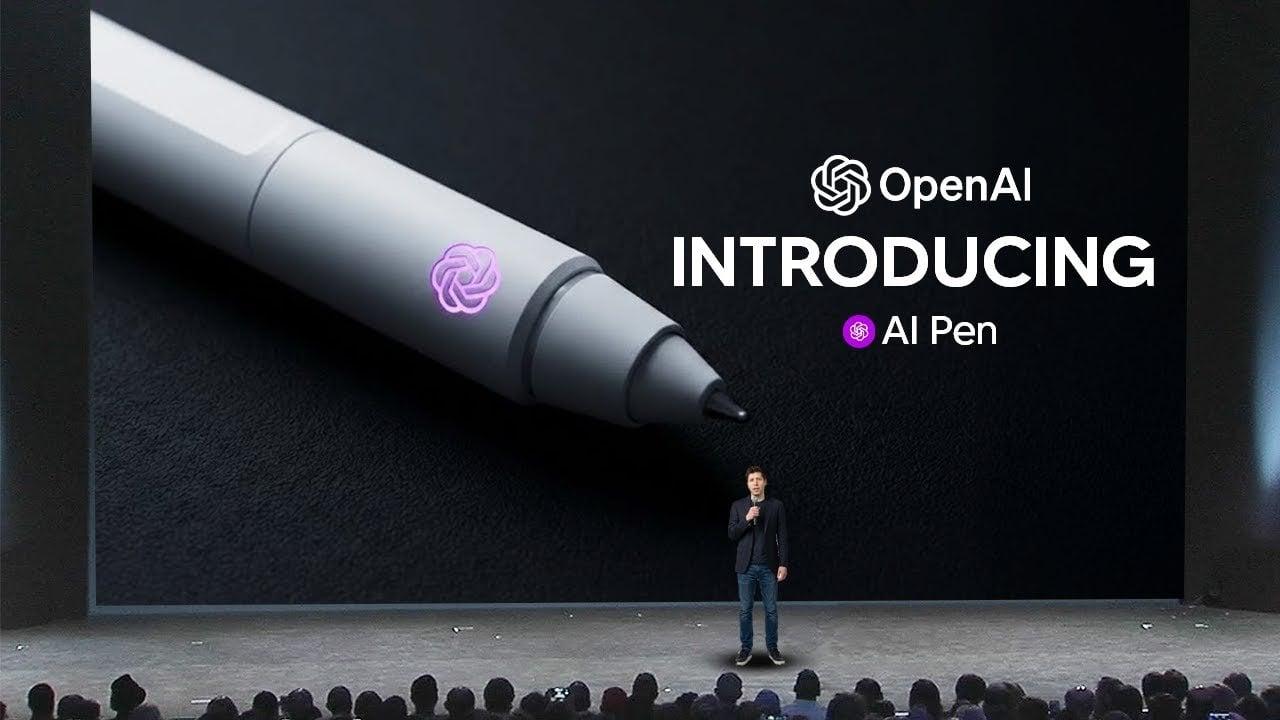
The AI-powered pen aims to function as what OpenAI CEO Sam Altman describes as feeling like a "cabin by a lake," suggesting a calmer, more ambient user experience than traditional smartphones
2
. OpenAI has invested $1 billion into this hardware partnership with Jony Ive, underscoring the strategic importance of this venture3
. The Jony Ive project reportedly led to OpenAI acquiring Ive's design firm for $6.5 billion in 2025, emphasizing the company's commitment to premium design and user experience4
.
Source: Geeky Gadgets
Handwriting Capture and Voice Assistance Define Core Features
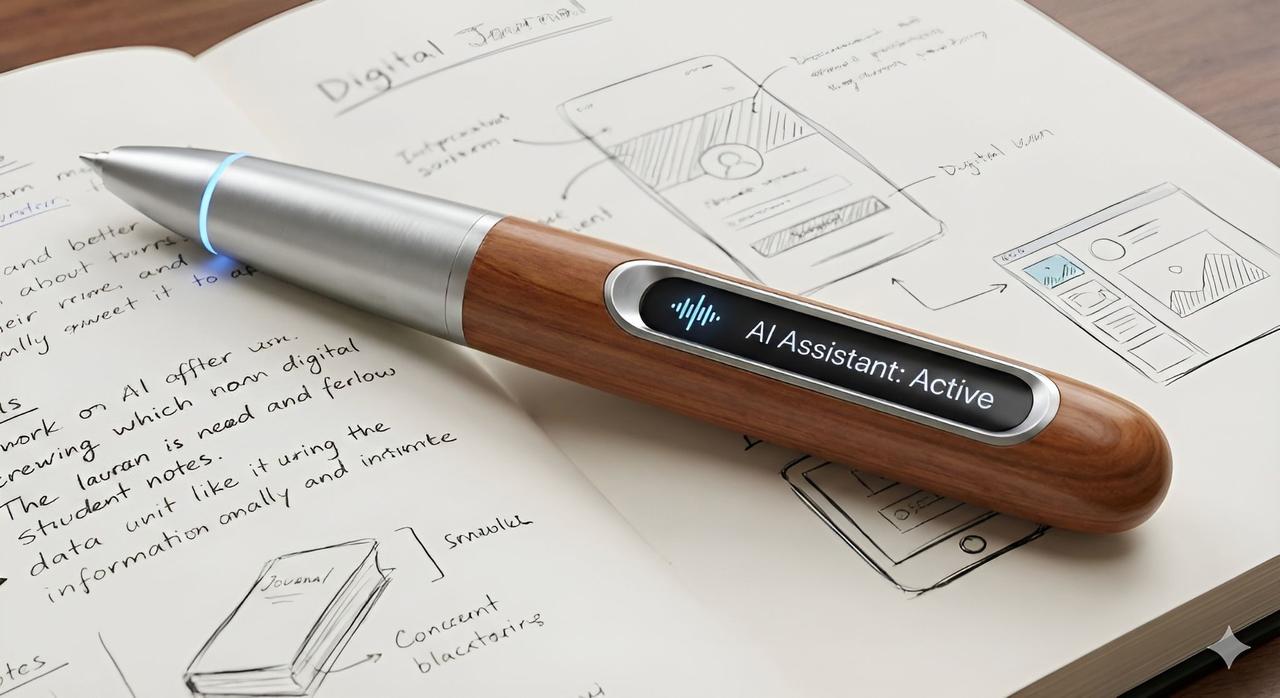
The pen-style gadget with AI integration will be a screenless device, roughly the size of an iPod Shuffle, equipped with always-on cameras and microphones for continuous contextual awareness
4
5
. Handwriting capture forms a central capability, with an integrated camera that watches users write and instantly digitizes handwritten notes while ChatGPT offers real-time suggestions to correct errors3
. Voice assistance functionality enables two-way communication with ChatGPT, likely via a paired smartphone or other device1
.
Source: Wccftech
The device promises handwritten-to-text conversion alongside contextual awareness, positioning itself as a "third device" that bridges the gap between smartphones and laptops
4
. This approach prioritizes distraction-free productivity, allowing users to capture thoughts naturally while benefiting from AI assistance in the background. The sleek, minimalist aesthetic crafted by Jony Ive aims to blend innovative technology with intuitive design, creating a tool that feels both functional and aesthetically appealing.Manufacturing Shifts from China to Vietnam and US
Manufacturing plans for Gumdrop have undergone significant changes due to supply chain considerations. OpenAI initially planned to build the device with Chinese electronics manufacturer Luxshare, but a dispute over manufacturing location prompted the company to pivot toward Foxconn
1
5
. The device is now on track to be built in Vietnam, though discussions include potential production at US Foxconn sites in Wisconsin, Ohio, Texas, Virginia, or Indiana1
.This manufacturing shift aligns with broader industry trends to diversify supply chains amid geopolitical tensions between the US and China. Foxconn already serves as OpenAI's primary manufacturing and engineering partner, handling everything from co-designing AI data centers to overseeing their deployment
5
. By localizing production, OpenAI aims to ensure greater control over quality while reducing potential disruptions, positioning the pen as a premium product in the global market.Related Stories

Privacy Concerns and Market Challenges Loom Large
The AI pen faces substantial hurdles before reaching consumers. Privacy concerns top the list, as the device's always-on cameras and microphones raise questions about continuous monitoring of users' surroundings
4
. Some users may hesitate to adopt technology that constantly records their environment, even with assurances about data handling. OpenAI must clearly demonstrate how it will protect user data and provide transparency around what information gets collected and processed.The competitive landscape presents another challenge. AI wearables from major players like Meta, Google, and Apple dominate the market, with smart glasses often perceived as a more natural and versatile form factor
4
. Previous standalone AI devices like the Humane AI Pin and Rabbit R1 have struggled to gain traction, raising questions about consumer appetite for dedicated AI hardware2
. OpenAI must position the pen as a complementary device rather than a smartphone replacement, emphasizing unique capabilities that justify its existence in users' daily routines.Multiple Device Concepts Under Consideration
The pen represents just one of three different ideas currently under consideration at OpenAI as the company makes arrangements with manufacturing partners
2
. Previous leaks have mentioned other form factors including a wearable pin and a smart speaker, though it remains uncertain how many will actually launch . This multi-pronged approach suggests OpenAI is exploring various ways to integrate AI into physical products, testing which formats resonate most with users.While widespread adoption remains uncertain, the AI pen is likely to attract niche audiences including tech enthusiasts, productivity-focused users, and those drawn to innovative design
4
. Success will depend on OpenAI's ability to demonstrate unique value, address pricing concerns, and build trust around privacy protections. The device could establish a new category of screenless, ambient AI assistants that work alongside existing technology rather than replacing it, offering a glimpse into how AI wearables might evolve beyond screen-based interactions.References
Summarized by

Navi
[1]
[3]
Related Stories
OpenAI and Jony Ive's Mysterious AI Device: Speculations Point to an Innovative Pen
30 Jun 2025•Technology

OpenAI confirms first AI device launch for 2026, and leaked reports suggest it could be earbuds
19 Jan 2026•Technology

OpenAI's Ambitious Hardware Push: AI-Powered Devices in Development
19 Sept 2025•Technology

Recent Highlights
1
Apple Plans Major Siri AI Overhaul in iOS 27 With Third-Party Chatbot Integration
Technology

2
OpenAI shuts down Sora after six months, ending Disney's $1 billion licensing partnership
Technology

3
AI chatbots validate you too much, making you less kind to others, Stanford study reveals
Science and Research

Recent Highlights
Today's Top Stories





Your Daily Dose of Curated AI News
Don’t drown in AI news. We cut through the noise - filtering, ranking and summarizing the most important AI news, breakthroughs and research daily. Spend less time searching for the latest in AI and get straight to action.

