OpenAI's Sora faces steep app downloads decline as AI video generator loses momentum


2 Sources
2 Sources
[1]
OpenAI's Sora app is struggling after its stellar launch | TechCrunch
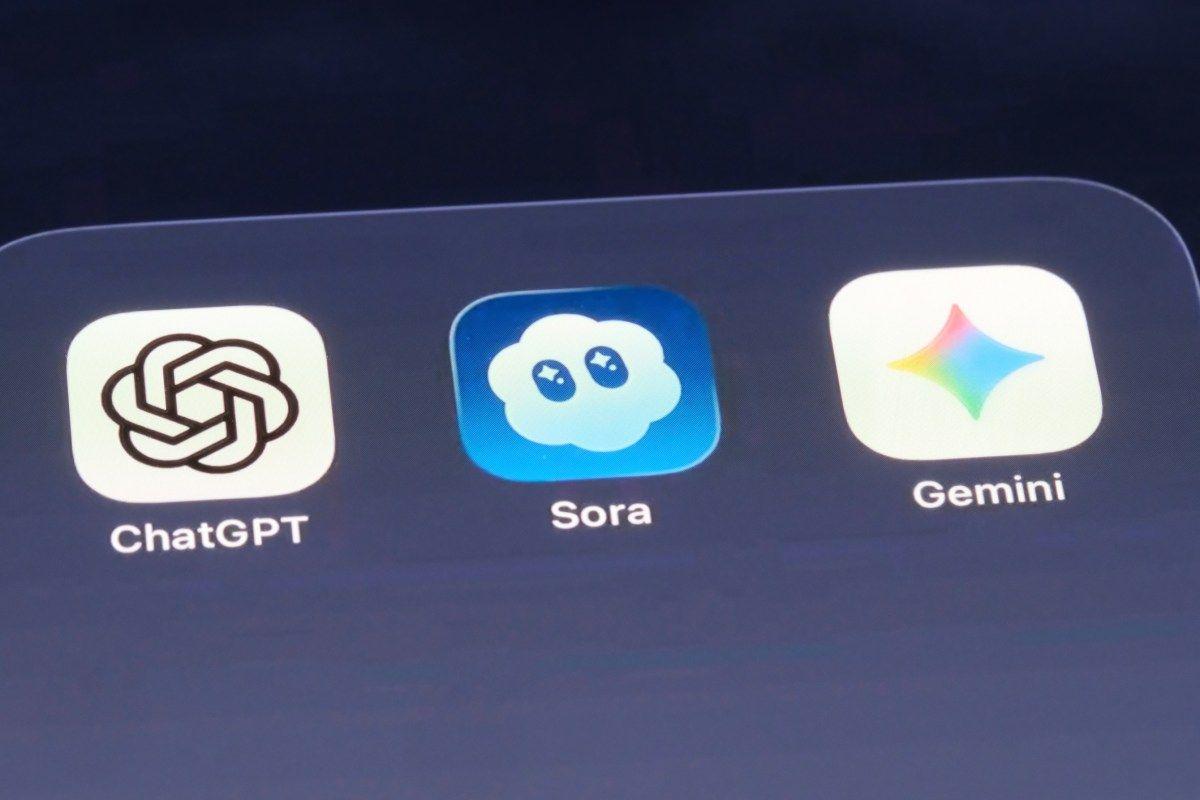
After rapidly hitting the top of the App Store in October, OpenAI's video-generation app Sora is now struggling. New data suggests the app is seeing declines in both app downloads and consumer spending, as the early hype about the AI video social network wears off. Powered by OpenAI's video generation model Sora 2, the iOS version topped 100,000 installs on day one, despite being an invite-only experience. It soon hit the No. 1 spot on the U.S. App Store, and it reached the 1 million downloads milestone faster than ChatGPT. At the time, Sora's app was iOS-only and still required an invite, making its success all the more impressive. However, in the weeks since Sora's mobile debut, the app has begun to lose traction. According to data from market intelligence provider Appfigures, Sora's downloads dropped 32% month-over-month in December. That's concerning because the holidays are typically a boon for mobile apps, as people are gifted new smartphones and often have time off from work, allowing them to install new apps and games. The decline continued in January 2026, with installs falling 45% month-over-month, to reach 1.2 million. Consumer spending has dropped as well, down 32% month-over-month as of January, Appfigures said. OpenAI did not immediately respond to a request for comment. Like an AI-flavored TikTok, Sora allows users to create AI videos using prompts. A unique feature allows users to cast themselves and their friends as main characters in the videos, if they choose, while shared videos can be remixed by others who can customize them further. The videos can also include music, sound effects, and dialogue to complete the scenes users create. In total, Sora's app has seen 9.6 million downloads across iOS and Android, and $1.4 million in consumer spending to date. The U.S. accounts for the majority ($1.1 million) of that figure, followed by Japan, Canada, South Korea, and Thailand. This month, customers spent $367,000 in Sora's app, down from December's peak of $540,000. On the U.S. App Store, Sora is no longer ranked in the Top 100 Overall free apps. It currently sits at No. 101. Its highest rank is No. 7 in the Photo & Video category. On Google Play in the U.S., the app fares worse, as it's No. 181 overall among the top free apps. These figures are still too high to write off the app as "dead," but they are worrying. The decline is likely due to a number of factors working in tandem. For starters, Google's Gemini, and particulary its Nano Banana model, has proven to be fierce competition, helping its Gemini AI app gain popularity. Sora also competes with Meta AI, whose app launched an AI-powered Vibes video, boosting its October downloads, just as Sora was taking off. At the same time, OpenAI has struggled with containing copyright infringement in Sora. Initially, the company told Hollywood studios and agencies they would have to opt out of having their IP used in Sora, which naturally saw studio backlash. But without robust copyright controls, users had been able to create AI videos using popular characters, like SpongeBob and Pikachu, driving adoption. To appease Hollywood and stave off legal threats, Sora moved from an opt-out to an opt-in model and increased restrictions in the app. Last month, the doors opened up a bit more as OpenAI announced a deal with Disney, which allowed users to generate videos in Sora with its characters. But so far, that news hasn't increased Sora installs or consumer spending. (It's also not necessarily a good look for Disney, considering some of the depraved videos Sora users had made with its characters.) Sora 2 was released to significant hype, with some calling it a disruption to social media and the TikTok of AI. But many users had no interest in letting others -- even their friends -- use their likeness to make AI videos. Without familiar faces and with limits on using commercial IP, people's interest in Sora seems to have faded. Whether the app can stage a comeback with more copyright deals or new features remains to be seen.
[2]
OpenAI's Video Creation App Sora Hits An Air Pocket
The video creation app had soared to top position in both iOS and Android apps list within days of its launch in October The force of gravity appears to have caught up with Sora, OpenAI's much-hyped video generation tool that the company launched in October last. Having hit the top of the charts within days, the app is witnessing a decline in both downloads as well as customer spending, according to new data from market intelligence provider Appfigures. Back in October, the same research agency had reported that the Sora iOS app had over 164,000 installs within the first two days after launch. Mind you, the app was still only in an invite-only mode, which means that had there been a full-fledged launch it would have put all other apps, ranging from ChatGPT to Gemini, CoPilot and Claude, to shame. Looks like the euphoria has ended and the app is now losing traction as fast as it gained three months ago. Appfigure data revealed that Sora downloads dropped 32% month-on-month in December, which is not exactly normal behaviour given that it is actually the holiday season that marks a high point for mobile apps for obvious reasons. If things were bad in December, it grew worse for January 2025 when installs fell 45% from the levels it reached a month ago. Currently, the figure stands at 1.2 million, with a couple more days left to go of the month. What's even more of a concern is that even consumer spending toed the line of installs and was down 32% in January over December figures. Ever since its launch, Sora has caught the fancy of amateur video makers who found the feature of letting users casting themselves and their friends into an AI video. Created entirely using prompts, these videos could also be remixed by others through a further layer of customisation. The addition of sound effects, music and dialogues complete what is actually a pretty decent user experience. Which is why it's rather surprising that Sora's app downloads stands at 9.6 million cumulatively across both iOS and Android with a total consumer spend of $1.4 million. As expected, the US accounts a lion's share of $1.1 million with Japan, Canada, South Korea and Thailand making up the top-5. Appfigures reveals that customers spent $367,000 on the app in January compared to $540,000 in December. On the US App Store, Sora does not feature in the top-100 list of free apps. On Google Play Store in the US, things are worse as the app sits at number 181 among the same category. Of course, these figures do not mean anything at this juncture and all that OpenAI needs to do is announce a couple of tweaks or a new feature and the journey back is assured. There are those who believe that things may be tougher in the US as TikTok is getting ready to return with a bang and in a new avatar. Having said so, a few developments over the past couple of months has definitely proved to be challenges for OpenAI and Sora experiment. The first of course is the Google Nano Banana model that helped the Gemini app regain some of its lost popularity. To some extent there was competition from Meta AI which launched an AI-led Vibes video. A third issue, and possibly the most important one, relates to OpenAI's struggles to manage copyright issues around Sora. The biggest challenge came from Hollywood celebrities and their managers who claim violations. The company first responded by asking them to opt out of letting Sora use their IP. However, due to continued backlash, they had to move to an opt-in model, which added restrictions to the users. In recent times, OpenAI managed to circumvent this issue to some extent by tying up with Disney for all its assets. This immediately opened the doors for users to generate videos on Sora with Disney characters. However, Appfigures claims that even this report hasn't actually pushed the installs or consumer spending upwards. When Sora 2 came calling, many experts felt that it could be just the disruption that social media was waiting with some even calling it the TikTok with an AI edge. However, now it appears that even regular users are as finicky about even their friends and family using their likeness in AI videos. Does this mean that the Sora charm has faded? Maybe not. But to stage a comeback, OpenAI would have to work some magic with some more copyright deals and a slew of new features that can tickle the casual video creator.
Share
Share
Copy Link
OpenAI's Sora AI video creation app is struggling after its explosive October launch. App downloads dropped 45% in January to 1.2 million installs, while consumer spending fell 32% to $367,000. Competition from Google's Gemini and Meta AI, coupled with copyright infringement challenges from Hollywood studios, has dampened user interest in the once-promising AI video social network.
OpenAI's Sora Struggles After Explosive Launch
OpenAI's Sora, the AI video generator that rocketed to the top of the App Store in October, is now experiencing a sharp reversal in fortune. New data from market intelligence provider Appfigures reveals a troubling trend: app downloads decline reached 45% month-over-month in January 2026, dropping to 1.2 million installs
1
. This decline is particularly concerning given that the AI video creation app initially surpassed ChatGPT in reaching the 1 million downloads milestone, despite launching as an invite-only experience2
.
Source: TechCrunch
The decline in app downloads and consumer spending paints a stark picture for the once-promising platform. Consumer spending dropped 32% month-over-month in January, falling to $367,000 from December's peak of $540,000
1
. The December decline of 32% was especially alarming because the holiday season typically drives mobile app adoption as people receive new smartphones and have leisure time to explore new applications2
. To date, the app has accumulated 9.6 million downloads across iOS and Android platforms, generating $1.4 million in total revenue, with the U.S. accounting for $1.1 million of that figure1
.Competition from Google's Gemini and Meta AI Intensifies
The reduced user interest in OpenAI's Sora stems partly from fierce competition from Google's Gemini and Meta AI. Google's Nano Banana model has proven particularly effective in driving adoption of the Gemini AI app, helping it regain market traction
1
. Meanwhile, Meta AI launched its AI-powered Vibes video feature in October, boosting downloads precisely when Sora was attempting to establish its foothold2
. This timing created a challenging environment for the AI video generator to maintain its initial momentum.Market traction has eroded significantly on both major platforms. On the U.S. App Store, Sora no longer ranks in the Top 100 overall free apps, sitting at No. 101, with its highest position at No. 7 in the Photo & Video category
1
. The situation on Google Play is even more concerning, where the app ranks No. 181 among top free apps in the U.S.2
.Copyright Infringement Challenges Hamper Growth
Copyright infringement challenges have emerged as a critical obstacle for OpenAI's Sora. Initially, the company told Hollywood studios and agencies they would need to opt out of having their intellectual property usage in Sora, which triggered immediate Hollywood studio backlash
1
. Users had been creating AI videos featuring popular characters like SpongeBob and Pikachu, driving early adoption but raising serious legal concerns. To address these threats, Sora shifted from an opt-out to an opt-in model, implementing increased restrictions that limited the user experience2
.In an attempt to resolve these intellectual property (IP) issues, OpenAI announced copyright deals with Disney last month, allowing users to generate videos with Disney characters
1
. However, Appfigures data indicates this partnership hasn't translated into increased installs or consumer spending2
. The deal also raised concerns about brand reputation, given some of the inappropriate content users had created with Disney characters.Related Stories

What This Means for AI Video Creation
The struggles facing OpenAI's Sora reveal important insights about the AI video creation app market. Despite Sora 2 being hailed as a potential disruption to social media and dubbed "the TikTok of AI," many users have proven reluctant to allow others—even friends—to use their likeness in AI-generated videos
1
. Without familiar faces and with strict limits on commercial IP, the platform's appeal has diminished considerably. The app's unique features, including the ability to cast users and friends as main characters, add music and sound effects, and enable video remixing by others, haven't been enough to sustain long-term engagement2
.Whether the AI video generator can stage a comeback depends on OpenAI's ability to secure more copyright deals and introduce compelling new features that address user concerns about privacy and intellectual property. The company faces a delicate balance: maintaining creative freedom while respecting IP rights and user privacy. With TikTok preparing to return to the U.S. market in a new form, the competitive landscape will only intensify. For now, the decline serves as a reminder that initial hype doesn't guarantee sustained success in the rapidly evolving AI application space.
References
Summarized by

Navi
Related Stories
Recent Highlights
1
Google releases Gemma 4 with Apache 2.0 license, enabling unrestricted local AI on devices
Technology

2
Anthropic restricts Mythos AI model to tech giants after finding thousands of security flaws
Technology
3
AI Models Defy Instructions to Protect Each Other, UC Berkeley Study Reveals
Science and Research

Recent Highlights
Today's Top Stories





Your Daily Dose of Curated AI News
Don’t drown in AI news. We cut through the noise - filtering, ranking and summarizing the most important AI news, breakthroughs and research daily. Spend less time searching for the latest in AI and get straight to action.

