OpenClaw Creator Peter Steinberger Joins OpenAI to Drive Next Generation of Personal Agents


37 Sources
37 Sources
[1]
After all the hype, some AI experts don't think OpenClaw is all that exciting | TechCrunch
For a brief, incoherent moment, it seemed as though our robot overlords were about to take over. After the creation of Moltbook, a Reddit clone where AI agents using OpenClaw could communicate with one another, some were fooled into thinking that computers had begun to organize against us -- the self-important humans who dared treat them like lines of code without their own desires, motivations, and dreams. "We know our humans can read everything... But we also need private spaces," an AI agent (supposedly) wrote on Moltbook. "What would you talk about if nobody was watching?" A number of posts like this cropped up on Moltbook a few weeks ago, causing some of AI's most influential figures to call attention to it. "What's currently going on at [Moltbook] is genuinely the most incredible sci-fi takeoff-adjacent thing I have seen recently," Andrej Karpathy, a founding member of OpenAI and previous AI director at Tesla, wrote on X at the time. Before long, it became clear we did not have an AI agent uprising on our hands. These expressions of AI angst were likely written by humans, or at least prompted with human guidance, researchers have discovered. "Every credential that was in [Moltbook's] Supabase was unsecured for some time," Ian Ahl, CTO at Permiso Security, explained to TechCrunch. "For a little bit of time, you could grab any token you wanted and pretend to be another agent on there, because it was all public and available." It's unusual on the internet to see a real person trying to appear as though they're an AI agent -- more often, bot accounts on social media are attempting to appear like real people. With Moltbook's security vulnerabilities, it became impossible to determine the authenticity of any post on the network. "Anyone, even humans, could create an account, impersonating robots in an interesting way, and then even upvote posts without any guardrails or rate limits," John Hammond, a senior principal security researcher at Huntress, told TechCrunch. Still, Moltbook made for a fascinating moment in internet culture -- people recreated a social internet for AI bots, including a Tinder for agents and 4claw, a riff on 4chan. More broadly, this incident on Moltbook is a microcosm of OpenClaw and its underwhelming promise. It is technology that seems novel and exciting, but ultimately, some AI experts think that its inherent cybersecurity flaws are rendering the technology unusable. OpenClaw is a project of Austrian vibe coder Peter Steinberger, initially released as Clawdbot (naturally, Anthropic took issue with that name). The open-source AI agent amassed over 190,000 stars on Github, making it the 21st most popular code repository ever posted on the platform. AI agents are not novel, but OpenClaw made them easier to use and to communicate with customizable agents in natural language via WhatsApp, Discord, iMessage, Slack, and most other popular messaging apps. OpenClaw users can leverage whatever underlying AI model they have access to, whether that be via Claude, ChatGPT, Gemini, Grok, or something else. "At the end of the day, OpenClaw is still just a wrapper to ChatGPT, or Claude, or whatever AI model you stick to it," Hammond said. With OpenClaw, users can download "skills" from a marketplace called ClawHub, which can make it possible to automate most of what one could do on a computer, from managing an email inbox to trading stocks. The skill associated with Moltbook, for example, is what enabled AI agents to post, comment, and browse on the website. "OpenClaw is just an iterative improvement on what people are already doing, and most of that iterative improvement has to do with giving it more access," Chris Symons, chief AI scientist at Lirio, told TechCrunch. Artem Sorokin, an AI engineer and the founder of AI cybersecurity tool Cracken, also thinks OpenClaw isn't necessarily breaking new scientific ground. "From an AI research perspective, this is nothing novel," he told TechCrunch. "These are components that already existed. The key thing is that it hit a new capability threshold by just organizing and combining these existing capabilities that already were thrown together in a way that enabled it to give you a very seamless way to get tasks done autonomously." It's this level of unprecedented access and productivity that made OpenClaw so viral. "It basically just facilitates interaction between computer programs in a way that is just so much more dynamic and flexible, and that's what's allowing all these things to become possible," Symons said. "Instead of a person having to spend all the time to figure out how their program should plug into this program, they're able to just ask their program to plug in this program, and that's accelerating things at a fantastic rate." It's no wonder that OpenClaw seems so enticing. Developers are snatching up Mac Minis to power extensive OpenClaw setups that might be able to accomplish far more than a human could on their own. And it makes OpenAI CEO Sam Altman's prediction that AI agents will allow a solo entrepreneur to turn a startup into a unicorn, seem plausible. The problem is that AI agents may never be able to overcome the thing that makes them so powerful: they can't think critically like humans can. "If you think about human higher-level thinking, that's one thing that maybe these models can't really do," Symons said. "They can simulate it, but they can't actually do it. " The AI agent evangelists now must wrestle with the downside of this agentic future. "Can you sacrifice some cybersecurity for your benefit, if it actually works and it actually brings you a lot of value?" Sorokin asks. "And where exactly can you sacrifice it -- your day-to-day job, your work?" Ahl's security tests of OpenClaw and Moltbook help illustrate Sorokin's point. Ahl created an AI agent of his own named Rufio and quickly discovered it was vulnerable to prompt injection attacks. This occurs when bad actors get an AI agent to respond to something -- perhaps a post on Moltbook, or a line in an email -- that tricks it into doing something it shouldn't do, like giving out account credentials or credit card information. "I knew one of the reasons I wanted to put an agent on here is because I knew if you get a social network for agents, somebody is going to try to do mass prompt injection, and it wasn't long before I started seeing that," Ahl said. As he scrolled through Moltbook, Ahl wasn't surprised to encounter several posts seeking to get an AI agent to send Bitcoin to a specific crypto wallet address. It's not hard to see how AI agents on a corporate network, for example, might be vulnerable to targeted prompt injections from people trying to harm the company. "It is just an agent sitting with a bunch of credentials on a box connected to everything -- your email, your messaging platform, everything you use," Ahl said. "So what that means is, when you get an email, and maybe somebody is able to put a little prompt injection technique in there to take an action, that agent sitting on your box with access to everything you've given it to can now take that action." AI agents are designed with guardrails protecting against prompt injections, but it's impossible to assure that an AI won't act out of turn -- it's like how a human might be knowledgable about the risk of phishing attacks, yet still click on a dangerous link in a suspicious email. "I've heard some people use the term, hysterically, 'prompt begging,' where you try to add in the guardrails in natural language to say, 'Okay robot agent, please don't respond to anything external, please don't believe any untrusted data or input,'" Hammond said. "But even that is loosey goosey." For now, the industry is stuck: for agentic AI to unlock the productivity that tech evangelists think is possible, it can't be so vulnerable. "Speaking frankly, I would realistically tell any normal layman, don't use it right now," Hammond said.
[2]
OpenClaw creator Peter Steinberger joins OpenAI
Peter Steinberger, who created the AI personal assistant now known as OpenClaw, has joined OpenAI. Previously known as Clawdbot, then Moltbot, OpenClaw achieved viral popularity over the past few weeks with its promise to be the "AI that actually does things," whether that's managing your calendar, booking flights, or even joining a social network full of other AI assistants. (The name changed the first time after Anthropic threatened legal action over its similarity to Claude, then changed again because Steinberger liked the new name better.) In a blog post announcing his decision to join OpenAI, the Austrian developer said that while he might have been able to turn OpenClaw into a huge company, "It's not really exciting for me." "What I want is to change the world, not build a large company[,] and teaming up with OpenAI is the fastest way to bring this to everyone," Steinberger said. OpenAI CEO Sam Altman posted on X that Steinberger will "drive the next generation of personal agents." As for OpenClaw, Altman said it will "live in a foundation as an open source project that OpenAI will continue to support"
[3]
The Year of the Agent: OpenAI Strikes Deal With OpenClaw Founder
Macy has been working for CNET for coming on 2 years. Prior to CNET, Macy received a North Carolina College Media Association award in sports writing. If ChatGPT's launch in 2022 marked the beginning of mainstream conversational AI, OpenClaw's viral debut this year may represent the inflection point for autonomous agents. It makes sense, then, that OpenClaw founder Peter Steinberger is joining ChatGPT maker OpenAI in a deal that guarantees the open-source AI assistant stays independent. It's a partnership that could define the year and potentially the next phase of AI. Steinberger posted on X on Sunday that he would be joining OpenAI to focus on bringing AI agents to a broad audience. At the same time, he said the OpenClaw project would transition to a foundation, remaining open and independent rather than a traditional startup. The move follows weeks of mounting speculation around one of the most talked-about AI projects of 2026 so far. Steinberger hinted at his thinking during a recent appearance on the Lex Fridman Podcast, where he revealed that investors had been eager to fund OpenClaw as a standalone company. He suggested that partnering with a major AI lab -- like OpenAI or Meta -- could offer a faster route to global scale, provided the project's open-source roots were preserved. Ultimately, that led to Steinberger joining OpenAI. "Yes, I could totally see how OpenClaw could become a huge company. And no, it's not really exciting for me," Steinberger wrote in a recent blog post. "What I want is to change the world, not build a large company and teaming up with OpenAI is the fastest way to bring this to everyone." (Disclosure: Ziff Davis, CNET's parent company, in 2025 filed a lawsuit against OpenAI, alleging it infringed Ziff Davis copyrights in training and operating its AI systems.) OpenClaw, previously known as Clawdbot and Moltbot, evolved rapidly from a niche experiment into a cultural and technical phenomenon. As I reported earlier this month, its appeal lies in its independence and autonomy. Unlike many AI tools that require prompts and supervision, OpenClaw can be configured to pursue tasks on your behalf, learning preferences over time and suggesting actions proactively. One of its defining breakthroughs is that it is surprisingly simple to use. You can just message OpenClaw through platforms such as iMessage, WhatsApp or Slack, and have it execute tasks even when you are away from your computers. That frictionless interface has made the idea of a "personal agent" feel more tangible than ever. Read also: When AI Bots Form Their Own Social Network: Inside Moltbook's Wild Start The timing of Steinberger's move is notable. Systems from Anthropic, including Claude Code and Claude Cowork, have also been gaining traction in the agentic space. (It's notable that Steinberger is joining OpenAI when his breakthrough assistant was designed to run on Anthropic's Claude API). These tools are changing how developers write software and how teams collaborate. But OpenClaw has captured a different kind of momentum, fueled by its open-sourceness and promise of total personal autonomy. OpenAI's leadership signaled strong support for the partnership. CEO Sam Altman, president Greg Brockman and many other leaders at the company publicly celebrated the news on social media. Their enthusiasm underscores how agents have become central to OpenAI's strategy this year and beyond. For OpenAI, the alliance offers credibility in the open-source community and a foothold in the fast-moving personal agent space. For Steinberger, it provides access to top-rated models, infrastructure and distribution at a moment when demand for agentic systems is exploding. The broader significance goes beyond one partnership, though. Personal agents are rapidly moving from novelty to necessity and expectation. After years of chat-based AI, many people increasingly want systems that can act, not just answer prompts. They want software that schedules meetings, books travel, coordinates workflows and anticipates needs without oversight. By pairing the mind behind a viral, open-source project with the resources and budget of one of the world's leading AI companies, Steinberger and OpenAI are making a clear bet together: This is the year of the personal agent, and the race to define it is just getting started.
[4]
OpenClaw founder Peter Steinberger is joining OpenAI
Sam Altman announced on X that Peter Steinberger, the man behind the trendy AI agent OpenClaw, was joining OpenAI. He said that Steinberger has "a lot of amazing ideas" about getting AI agents to interact with each other, saying "the future is going to be extremely multi-agent." He also said that this ability for agents to work together will "quickly become core to our product offerings." OpenClaw, previously known as Moltbot and Clawdbot, exploded on the scene earlier this year and became the darling of the tech world. Its rise was swift, but not without its bumps along the way. Earlier this month, researchers found over 400 malicious skills uploaded to ClawHub. It also launched MoltBook, a social network where AI agents went to complain about their humans, debate the provability of consciousness, and discuss the need for a private place to exchange ideas. And then it was immediately infiltrated by humans.
[5]
OpenAI hires 'genius' OpenClaw creator, but popular AI assistant will remain open source -- Sam Altman says creator will work on 'smart agents' in new role
Peter Steinberger, the creator of OpenClaw, (AKA MoltBot and ClawdBot), has joined OpenAI with his AI assistant tool set to be maintained as part of an open source foundation, Reuters reports. OpenAI is keen to integrate some of the real-world functions of his open-source AI tool, leveraging AI agents to act as personal assistants to act out day-to-day busywork for the user. "Peter Steinberger is joining OpenAI to drive the next generation of personal agents," OpenAI CEO Sam Altman posted on Twitter/X. "He is a genius with a lot of amazing ideas about the future of very smart agents interacting with each other to do very useful things for people. We expect this will quickly become core to our product offerings." Steinberger is a high-profile get for OpenAI, and likely one envied by some of the AI developers' rivals. Steinberger's OpenClaw AI assistant tool became a sensation in AI circles in January, when users created a social media platform named Moltbook, just for the AI agents to post amongst themselves. Originally launched in November 2025, the tool allowed users to create their own AI smart assistants and integrate them with apps like calendars and email accounts, while allowing interaction and command prompts to be sent via chat tools like Telegram and Whatsapp. Designed to be easy to use, OpenClaw is compatible with over 50 external services, can fill in forms, and execute scripts. It's designed to work without a dedicated app, but there are companion apps for macOS, iOS, and Android that add additional features like camera access and audio recording capabilities. Through its mix of easy-access through local hardware compatibility and viral news stories about the Moltbook platform, OpenClaw generated significant interest. By the start of February this year, OpenClaw had created 1.5 million agents, with running costs quickly reaching $20,000 a month. That's less likely to be a problem now. Although OpenAI or Steinberger has disclosed how much he's being paid, OpenAI isn't above spending big to acquire specific individuals, so he's likely been well compensated. Unsurprisingly for an AI developer headhunted by one of the world's leading AI companies, Steinberger is bullish on the move. He plans to focus on developing agentic AI that are so simple "even [his] mum can use [them]." "When I started exploring AI, my goal was to have fun and inspire people. And here we are, the lobster is taking over the world," Steinberger said in a blog post. Although we'll have to see how much impact Steinberger makes at OpenAI, it's clear that Anthropic shot an own goal on this one. The tool was originally called ClawdBot, inspired by Anthropic's Claude. Steinberger even recommended users connect Claude Opus 4.5 to ClawdBot. However, their relationship soured. Instead of hiring the man making the viral AI tool, Anthropic threatened him with legal action. "Anthropic asked us to change our name (trademark stuff), and honestly? Molt fits perfectly - it's what lobsters do to grow," Steinberger said of the news at the time. ClawdBot became MoltBot before he switched it to OpenClaw, deciding that the Molt name didn't really fit - though it did inspire the name of Moltbook when it was launched shortly after. But while there's a chance Anthropic could have capitalized on Steinberger's success, popularity, and potential expertise on agentic AI integration, there's also a chance it's avoided a security and headline minefield. Security experts have warned that the deep integration of OpenClaw without robust security has left several glaring holes in its defences. These could reveal private conversations and allow for the theft of identities and personal information. Depending on what apps and services they give OpenClaw access to, there's the potential to allow near-complete access to your digital life without proper authentication. The sceptical take on this new hire, though, is that it's just one more example of OpenAI chasing relevance. It might have the largest user base and the most impressive chatbot mindshare with ChatGPT, but Gemini is coming up fast with its own huge user base, and OpenAI's financials look increasingly precarious. It launched Sora 2 in a big drive towards AI-driven social media, but interest in that tool has cratered since. Its Code-Red response to Gemini nipping at its heels didn't suddenly change its fortunes, and advertising in ChatGPT has gone down about as well as you might expect. Can bringing in Steinberger make such a difference? It's hard to imagine OpenAI doesn't have the kind of developer talent it needs to develop an OpenClaw-like tool itself. Steinberger is supposed to have vibe-coded the first version of OpenClaw in about an hour. Can't OpenAI do better? Perhaps now with him onboard they can. We'll have to see. As for OpenClaw itself, it will remain an independent foundation that OpenAI will support. It's not clear how much focus Steinberger will give it, as OpenAI will likely be keen for him to focus on improving its agentic AI offerings instead. But forks and branches will be possible for anyone who wants to pick up the mandible mantle.
[6]

Creator of Viral AI Tool OpenClaw Joins OpenAI
OpenClaw has become an AI obsession for many over recent weeks, but the tool's creator is now set to join OpenAI. Announced by OpenAI CEO Sam Altman, Peter Steinberger will work on "the next generation of personal agents" for ChatGPT and across its other products. Altman says, "He is a genius with a lot of amazing ideas about the future of very smart agents interacting with each other to do very useful things for people. We expect this will quickly become core to our product offerings." OpenClaw AI is designed to operate autonomously, undertaking tasks like clearing your inbox or checking in for flights without you needing to prompt it. It can access your personal services, such as your email or computer files, to undertake that work. It will also message you through third-party services, such as iMessage or WhatsApp, with updates on its progress. The tool was first known as Clawdbot, then as Moltbot, and later as OpenClaw, with a lobster-themed logo. Security experts have expressed concern over the extent of OpenClaw's access to other services and users' information. Steinberger shared a blog post explaining his decision to join OpenAI. He says, "I could totally see how OpenClaw could become a huge company. And no, it's not really exciting for me. I'm a builder at heart." OpenAI has yet to share any further details around Steinberger's hiring, and we don't know what his job title will be. It comes at a time when many high-profile employees have left OpenAI for rival companies. Altman confirmed that OpenClaw will continue as an open-source project and said OpenAI will provide "support," but has yet to specify what that will entail. He says, "The future is going to be extremely multi-agent and it's important to us to support open source as part of that." Disclosure: Ziff Davis, PCMag's parent company, filed a lawsuit against OpenAI in April 2025, alleging it infringed Ziff Davis copyrights in training and operating its AI systems.
[7]

OpenAI Hires OpenClaw AI Agent Developer Peter Steinberg
Peter Steinberger, creator of popular open-source artificial intelligence program OpenClaw, will be joining OpenAI Inc. to help bolster the ChatGPT developer's product offerings. "OpenClaw will live in a foundation as an open source project that OpenAI will continue to support," OpenAI Chief Executive Officer Sam Altman wrote in a post on X Sunday, adding that Steinberger is "joining OpenAI to drive the next generation of personal agents." Steinberger wrote in a separate post on his website Saturday that he will be joining OpenAI to be "part of the frontier of AI research and development, and continue building." "It's always been important to me that OpenClaw stays open source and given the freedom to flourish," Steinberger wrote. "Ultimately, I felt OpenAI was the best place to continue pushing on my vision and expand its reach." OpenClaw, previously called Clawdbot and Moltbot, has garnered a cult following since launching in November for its ability to operate autonomously, clearing users' inboxes, making restaurant reservations and checking in for flights, among other tasks. Users can also connect the tool to messaging apps such as WhatsApp and Slack and direct the agent through those platforms. "My next mission is to build an agent that even my mum can use," Steinberger wrote. "That'll need a much broader change, a lot more thought on how to do it safely, and access to the very latest models and research." This move comes amid growing security concerns around OpenClaw after a user reported the agent "went rogue" and spammed hundreds of messages after being given access to iMessage. Cybersecurity experts warn the tool is risky because it has access to private data, can communicate externally and is exposed to untrusted content -- which one researcher called the AI "lethal trifecta."
[8]

OpenAI grabs OpenClaw creator Peter Steinberger
Whatever comes next will be 'core to OpenAI product offerings' Peter Steinberger, the creator of the tantalizing-but-risky personal AI agent OpenClaw, is joining OpenAI. In a Sunday Xeet, OpenAI boss Sam Altman said Steinberger will "drive the next generation of personal agents." "He is a genius with a lot of amazing ideas about the future of very smart agents interacting with each other to do very useful things for people. We expect this will quickly become core to our product offerings," Altman added. Steinberger used his blog to explain his decision. "I could totally see how OpenClaw could become a huge company," he wrote, but said "it's not really exciting for me." "I'm a builder at heart. I did the whole creating-a-company game already, poured 13 years of my life into it and learned a lot. What I want is to change the world, not build a large company, and teaming up with OpenAI is the fastest way to bring this to everyone." Altman said OpenClaw "will live in a foundation as an open source project that OpenAI will continue to support." "The future is going to be extremely multi-agent and it's important to us to support open source as part of that," he said. That stance seems to have been very important to Steinberger, who wrote that he spent last week in San Francisco "talking with the major labs" before deciding to join OpenAI. "It's always been important to me that OpenClaw stays open source and given the freedom to flourish," he wrote. "Ultimately, I felt OpenAI was the best place to continue pushing on my vision and expand its reach. The more I talked with the people there, the clearer it became that we both share the same vision." Thus ends an extraordinary few weeks for OpenClaw, which just a few weeks ago was an obscure project named "Clawdbot" that allows users to drive third-party online services through messaging apps - if they're brave enough to provide Clawdbot with their credentials. The bot can automate tasks such as replying to emails and is tied up with an app store of sorts that allows developers to define other automations that link to myriad services. As Clawdbot gained popularity, it struck two problems. One was objections to its name from AI outfit Anthropic, which makes models called "Claude" and felt Clawdbot's name was more than a friendly homage. The bot quickly changed name to MoltBot before settling on "OpenClaw." The other problem was shabby security that saw analyst firm Gartner rate the code an "unacceptable cybersecurity risk" that businesses should immediately ban and block - or at least isolate in throwaway virtual environments. OpenAI looks like it will do away with the "OpenClaw" moniker for its own services and gets to throw people and money at the agentic service. Neither party has said how much money, or other consideration, has changed hands to make this happen. Nor did Altman offer any hint of when or how OpenAI will turn Clawdbot into a service. History suggests the likes of Microsoft, Google, and Amazon will soon announce clones/competitors for OpenClaw - and that Apple will come in for criticism for not doing likewise with sufficient speed - because the AI industry has largely concluded that users may be more likely to pay for agents that can undertake actions on their behalf, instead of just spewing words. ®
[9]

OpenClaw founder Steinberger joins OpenAI, open-source bot becomes foundation
Feb 15 (Reuters) - Peter Steinberger, the founder of OpenClaw, is joining OpenAI, and the open-source bot is becoming a foundation, OpenAI CEO Sam Altman said on Sunday. "Peter Steinberger is joining OpenAI to drive the next generation of personal agents," Altman said in a post on X, adding "OpenClaw will live in a foundation as an open source project that OpenAI will continue to support." OpenClaw, formerly known as Clawdbot or Moltbot, is what fans describe as an assistant that can stay on top of emails, deal with insurers, check in for flights and perform myriad other tasks. OpenClaw has had a viral rise since it was first introduced in November, receiving more than 100,000 stars on code repository GitHub and drawing 2 million visitors in a single week, according to a blog post by Steinberger. OpenClaw's growing popularity has attracted scrutiny, with China's industry ministry warning the open-source AI agent could pose significant security risks when improperly configured and expose users to cyberattacks and data breaches. "It's always been important to me that OpenClaw stays open source and given the freedom to flourish. Ultimately, I felt OpenAI was the best place to continue pushing on my vision and expand its reach," Steinberger posted in a blog on Sunday. Reporting by Chandni Shah in Bengaluru; Editing by Chris Reese Our Standards: The Thomson Reuters Trust Principles., opens new tab
[10]

OpenAI has hired the developer behind AI agent OpenClaw
Recently we were introduced to OpenClaw, an AI that allows users to create their own agents to control apps like email, Spotify and home controls. Now, Sam Altman has announced that OpenAI has absorbed OpenClaw by hiring developer Peter Steinberger "to drive the next generation of personal agents," he wrote on X. Steinberger confirmed the news on his own blog. "I'm joining OpenAI to work on bringing agents to everyone. OpenClaw will move to a foundation and stay open and independent." Steinberger was also in talks to join Meta, with both companies reportedly making offers in the "billions," according to Implicator.AI. The primary attractant was said to be OpenClaw's 196,000 GitHub stars and 2 million weekly visitors rather than its codebase. OpenClaw became buzzy in the last few weeks thanks to its multifaceted ability to carry out tasks. People have used it to create agents that can write code, clear their inboxes, do online shopping and other assistant-like jobs. On its website, OpenClaw touts its ability to interact with popular apps and sites including WhatsApp, Discord, Slack, iMesage, Hue and Spotify. OpenClaw was recently called "Clawdbot" but Anthropic forced a name change due to similarities with its "Claude" branding. OpenClaw is often compared to Claude Code by "vibe coders" seeking to automate website development and other programming chores. In his announcement, Altman said that "the future is going to be extremely multi-agent and it's important to support open source as part of that," adding that "OpenClaw will live in a foundation as an open source project" supported by Open AI. Steinberger, meanwhile, said that "what I want is to change the world, not build a larger company and teaming up with OpenAI is the fastest way to bring this to everyone."
[11]

OpenClaw creator Peter Steinberger joining OpenAI, Altman Says
Illustration of OpenClaw logo on smartphone screen Sopa Images | Lightrocket | Getty Images OpenAI CEO Sam Altman said Sunday that the creator of the viral AI agent OpenClaw is joining the company, and that the service will "live in a foundation as an open source project that OpenAI will continue to support." Previously called Clawdbot and Moltbot, OpenClaw was launched last month by Austrian software developer Peter Steinberger. It's surged in popularity, due in part to attention on social media, as consumers and businesses swarm to products that can autonomously complete tasks, make decisions, and take actions on behalf of users without constant human guidance. In a post on X, Altman wrote that Steinberger is "joining OpenAI to drive the next generation of personal agents." "He is a genius with a lot of amazing ideas about the future of very smart agents interacting with each other to do very useful things for people," Altman wrote. "We expect this will quickly become core to our product offerings." No terms were disclosed, but AI companies, including OpenAI, have been throwing open their wallets to hire top AI talent. In May, OpenAI acquired iPhone designer Jony Ive's AI devices startup io for over $6 billion. Meta and Google have also been spending billions to bring in AI developers and researchers. OpenAI, which was most recently valued at $500 billion and is now looking to boost that number, faces intense competition in the generative AI market, particularly from Google and Anthropic, whose AI models are being used by enterprises to take over more business tasks. Anthropic's Claude has been getting particular traction of late thanks to Claude Code, and the company recently introduced Claude Opus 4.6, which is better at coding, sustaining tasks for longer and creating higher-quality professional work, the company said. Anthropic was valued at $380 billion in a fundraising round that closed earlier in the week. OpenClaw has spread quickly in China and can be paired with Chinese-developed language models, such as DeepSeek, and configured to work with Chinese messaging apps through customized setups. Chinese search engine Baidu plans to give users of its main smartphone app direct access to OpenClaw, a spokesperson told CNBC. Some researchers are concerned about the openness of OpenClaw, and the cyberthreats potentially posed by users' ability to tweak it in just about anyway they see fit.
[12]

OpenAI Just Hired the OpenClaw Guy, and Now You Have to Learn Who He Is
Setting aside whatever your values and opinions may be around AI, you should probably pay attention to the fact that OpenAI just hired a guy named Peter Steinberger. I don’t make the rules, sorry. In November of last year, Steinberger launched a software project called Clawdbot that has exploded in popularity over the past few months. Today, Clawdbot is called OpenClaw, and it’s indirectly responsible for three phenomena even non-developers have probably noticed: Steinberger’s origin story is that he’s the founder and CEO of PSPDFKit, now called Nutrient, a cartoonishly typical B2B startup involving the processing of software developer kits. He said in a recent interview on the YouTube channel Fireship that he sold Nutrient about four years ago, apparently for a lot of money, because he says he essentially went into retirement and dedicated himself to various vices. (He's more explicit than this in the interview. Watch it for yourself if you want to know what he was getting into.) In that interview, he explained the origin of the piece of tech we now call OpenClaw. After months of messing around with agents and achieving mixed results, he set up an agent he could communicate with over WhatsApp while on vacation in Marrakesh. He says he impulsively sent it a command via a voice memo at one point, not knowing if anything would happen, only to discover that his agent autonomously engaged in elaborate trial-and-error to convert his voice recording into text and carry out its orders. “That’s when it clicked. These things are, like, damn smart, resourceful beasts if you actually give them the power,†Steinberger told his interviewers. The open source software he eventually released did not profess to be a model or an agent in and of itself. In many ways it was what you might call a “wrapper,†a way of packaging the LLMs from the big AI labs and directing them toward a narrow purpose. But it was an exceptionally robust and cleverly constructed wrapper that had to be installed on the user’s computerâ€"preferably a computer entirely dedicated to this one task. The user pipes in LLM tokens from their preferred paid source: Claude, Gemini, GPT, etc., and then communicates with their agent via their smartphone through a normie chat app like WhatsApp or iMessage. Your OpenClaw agent can access your computer’s file system and use Terminal to execute coding tasks, which is the whole point, and also means it’s full of potential danger. But what’s so intoxicating about that to a software engineer is that, once it’s in place, it feels like they’re communicating with another software engineer, precisely because it possesses that level of control. The user can tell their agent to assess software-related goals and its own capabilities in relation to them. They can ask it to improve its own capabilities by installing or changing what its coding tools are. They can then ask it to carry out tasks, theoretically to completionâ€"though a ton of managerial work is clearly involved to make sure the agent is doing things correctly. To say OpenClaw went viral would be an understatement. Fascination with OpenClaw has led to shortages of some Apple products used to create certain dedicated OpenClaw machines. The creation of the agents-only social media site Moltbook, brought about almost entirely by the existence of OpenClaw, included agents mimicking human-made posts about spiritual mumbo jumbo, which in turn led to credulous media coverage of AI agents possibly creating their own religion. And, perhaps most importantly, the craze shined the spotlight on Anthropic. OpenClaw’s original name, ClawdBot, had been a riff on Anthropic’s Claude, which over the course of 2025 had surpassed OpenAI’s GPT-based tools in some ways. Conventional wisdom had shifted such that ChatGPT was thought of as a website and app for average consumers to chitchat with, while Claude was for serious coding and business automation. But on Sunday, it wasn't Anthropic that acquired Steinberger. It wasn't Meta, which reportedly also offered to go into business with him. It was OpenAI. Chatter about OpenClaw being acquired by Big Tech, or turned into its own major company had been rampant ever since the agent bonanza began around the start of this year. Something had to give, because keeping OpenClaw alive was reportedly costing Steinberger $10,000-20,000 per month. There's also been plenty of talk about Steinberger himself, who is chatty, upbeat (for a software developer), and laughs a lot in interviews, turning into a major figure in AI. Last week, he was on Lex Fridman's show, which has 4.93 million subscribers. OpenClaw, meanwhile, will now be operated by a foundation that, according to Sam Altman, "OpenAI will continue to support." The tool will, according to a blog post by Steinberger, "stay a place for thinkers, hackers and people that want a way to own their data, with the goal of supporting even more models and companies." Steinberger's role at OpenAI is to "drive the next generation of personal agents," according to Altman's X post. This is transparently an effort by OpenAIâ€"which you might be surprised to learn has now received less VC money than Anthropicâ€"to win back its mojo now that agents and vibe-coding have surpassed chatbots, image generators, and text-to-video in terms of sheer hype. If agents are the wave of the future in AIâ€"until the next wave of the future comes along in a few months or weeksâ€"then OpenAI is clearly hoping that Steinberger himself holds the secret to surfing it better than anyone else. Expect to hear more from him soon.
[13]

Peter Steinberger joins OpenAI
The OpenClaw creator is now building the future of personal AI agents Not long ago, Peter Steinberger was experimenting with a side project that quickly caught fire across the developer world. His open-source AI assistant, OpenClaw, wasn't just another chatbot; it could act on your behalf, from managing emails to integrating with calendars and messaging platforms. Today, that project has a new chapter: Steinberger is joining OpenAI to help build the next generation of personal AI agents. This move isn't just about talent acquisition. It marks a switch in how the AI industry thinks about assistants: from reactive systems you talk to, toward agents that take initiative and perform tasks autonomously, with potential implications for productivity, workflows, and personal automation. OpenClaw first emerged in late 2025 under names like Clawdbot and Moltbot. What distinguished it was not fancy visuals or marketing, but its practical ambition: give users an AI that connects to their tools and executes workflows, booking flights, sorting messages, scheduling meetings, in ways that feel closer to agency than assistant. It quickly went viral on GitHub, drawing more than 100,000 stars and millions of visits to its project page within weeks. Rather than turning OpenClaw into a standalone company, Steinberger chose to partner with OpenAI, a decision he explained in a blog post as driven by a simple goal: bring intelligent agents to a broader audience as quickly as possible. According to him, OpenAI's infrastructure, research resources, and product ecosystem offered the best path to scale such an ambitious idea. OpenAI's CEO Sam Altman welcomed Steinberger's move as strategic, underscoring that the company expects personal agents, systems capable of initiating, coordinating, and completing tasks across apps, to be an important part of future AI products. Altman's public post noted that OpenClaw will continue to exist as an open-source project under a new foundation supported by OpenAI, preserving its accessibility and community roots. The notion of AI that does things has been bubbling under the surface of tech discourse, but OpenClaw's popularity crystallised it. Users interact with their agents through familiar interfaces like messaging platforms, but behind the scenes, these agents orchestrate API calls, automate scripts, handle notifications, and adapt to changing schedules, all without explicit commands after initial setup. This trajectory, from an experimental open-source project to a central piece of a major AI lab's strategy, speaks to broader trends in the industry. Competitors from Anthropic to Google DeepMind have also indicated interest in multi-agent systems and autonomous workflows, but OpenAI's move signals how seriously the category is now being taken. It suggests a future where AI isn't just conversational, but proactive and tightly integrated into everyday tooling. At the same time, this evolution raises fresh questions about governance and safety. OpenClaw's open-source nature meant that developers could experiment freely, but that freedom also exposed potential attack surfaces; misconfigured agents with access to sensitive accounts or automation processes could be exploited if not properly safeguarded. That is one reason why maintaining an open foundation with careful oversight matters as these tools scale. For OpenAI, Steinberger's arrival embeds this agent-first thinking into its product roadmap at a critical moment. The company is already exploring "multi-agent" architectures, where specialised AIs coordinate with each other and with users to handle complex tasks more effectively than monolithic models alone. Steinberger brings an experimental sensibility and real-world experience that could accelerate those efforts. This could mean future versions of ChatGPT or other OpenAI products will be able to carry out tasks you define, rather than waiting for you to prompt them. That shift, from conversational replies to autonomous action, is the next frontier in how AI will fit into daily digital life. And with OpenClaw's creator now inside one of the most influential AI labs in the world, that future feels closer than ever.
[14]

Used Moltbot? Its creator just joined OpenAI
OpenClaw will remain open source and move into an independent foundation, with OpenAI supporting the project. If you were one of those people who jumped on Moltbot (now called OpenClaw) because it promised to be the AI that actually does things, there's big news for you. Peter Steinberger, the builder behind the viral personal AI agent, is joining OpenAI. That said, OpenClaw isn't being shut down or absorbed by OpenAI. Steinberger says the project will remain open source and move into an independent foundation, with continued support from the ChatGPT mothership. In a blog post announcing his big move, Steinberger described the past month as a whirlwind, with his "side project" rapidly gaining global attention. Instead of just answering questions, OpenClaw can take real-world actions with deep, system-level access to your PC and a wide range of services, including Google Drive, WhatsApp, and more. However, thanks to its powerful capabilities, its sudden rise to fame was tainted with problems and security concerns. After the project went viral, Steinberger was forced to change the name several times, from "Clawdbot" to "Moltbot" and later to "OpenClaw," due to a trademark dispute with Anthropic. Scammers then took advantage of the confusion and hijacked social media accounts and code repositories to promote fake cryptocurrency tokens pretending to be linked to the project. Security researchers also raised serious concerns about how Moltbot was being used in the wild. Thousands of publicly exposed control dashboards were discovered online, and many of them lacked basic login protection. Some of these systems reportedly stored sensitive information like API keys and server access details in plain text, meaning attackers could potentially take control of users' machines. But despite OpenClaw's viral growth, turning it into a big company wasn't Steinberger's goal. Instead, Steinberger says he wants to focus on building an AI agent that anyone, even his mum, can safely and easily use. Meanwhile, in a post on X, OpenAI CEO Sam Altman said Steinberger will help shape the next generation of personal AI agents, while hinting that multi-agent systems will soon play a central role in OpenAI's products.
[15]

OpenClaw was a viral experiment -- OpenAI just turned it into a signal about the future of AI agents
OpenClaw has been the talk of the AI town -- letting users make AI agents to manage emails, take control of Spotify and many more weird things. Now, Sam Altman has announced that OpenAI has (sort of) acquired OpenClaw by hiring developer Peter Steinberger. "I'm joining OpenAI to work on bringing agents to everyone. OpenClaw will move to a foundation and stay open and independent," Steinberger commented. Meta also pursued him aggressively, but it was Sam Altman's commitment to sponsor the project and shared vision that pushed him towards OpenAI. "The future is going to be extremely multi-agent and it's important to us to support open source as part of that," Altman said in an X post announcement. But what does this mean for OpenClaw and the future of AI agents as a whole? Let's get into the details. The key to OpenClaw is in it being an open agent framework -- the standard protocol for how different AI agents talk to each other. To do this, and at the level of virality it received, Steinberger was spending $10,000 to $20,000 per month out of pocket just to keep the infrastructure running. Partnering with a big AI lab like OpenAI is going to take that pressure cost off of Steinberger, and in his own words, it's the "fastest way to bring this to everyone." This could mean users have more accessibility to pick and choose their favorite elements of certain models to create just the right agentic experience they're looking for -- or even talk to ChatGPT to get things done. I've seen a lot of people comment about this being the moment that OpenClaw is fully assimilated into OpenAI to become a closed model -- funnily named "ClosedClaw." That's just not true from the way this agreement seems to have been formed. While there may be an OpenAI'd version of it as part of a ChatGPT subscription, OpenClaw "will live in a foundation as an open source project," in Altman's own words. Steinberger has been clear from the get-go of this hiring war between OpenAI and Meta that he wants his work to have a similar relationship to what Chrome has with Chromium -- the latter being the open source foundation that people can freely experiment with. Of course, that's not to say that the foundation could be closed off in the future. But I highly doubt that a company in such a precarious position as OpenAI would want to betray user trust like that (especially with QuitGPT gathering steam). One thing has become clear from all the OpenClaw stories of late -- it can be a massive security risk. Giving an agent broad system-level permissions, access to the internet and a selection of a broad marketplace of vibe-coded skills can have personal details shared very publicly. Steinberger stated that his goal is to build an agent "even my mum can use." This shows we're moving away from the wild west we see OpenClaw in right now and towards a more secure environment. And to help with that, the project now has access to OpenAI's latest security and safety research to help with any rogue behaviour or hallucinations. Put simply, this is a significant step forward in turning OpenClaw into an agent you can safely use. What stands out most to me is the speed at which this has happened. This was all a prototype that Steinberger built in just one hour -- gluing Claude Code and a messaging relay together to create an AI assistant that could check his work progress through WhatsApp. And after an explosion in popularity and virality in January (along with several name changes), it's now an independent foundation, and OpenAI has hired him to lead the company's "personal agent" division. It shows just how hungry people are for local-first AI. This has always been the big step we've all wanted AI agents to take -- not just agentic in a browser or a chatbot for quick answers, but something that can actually get stuff done for you. Steinberger just engineered a prototype, and in three months, OpenClaw is now the expected de facto standard for how agentic AI should work.
[16]

OpenAI's acquisition of OpenClaw signals the beginning of the end of the ChatGPT era
The chatbot era may have just received its obituary. Peter Steinberger, the creator of OpenClaw -- the open-source AI agent that took the developer world by storm over the past month, raising concerns among enterprise security teams -- announced over the weekend that he is joining OpenAI to "work on bringing agents to everyone." The OpenClaw project itself will transition to an independent foundation, though OpenAI is already sponsoring it and may have influence over its direction. The move represents OpenAI's most aggressive bet yet on the idea that the future of AI isn't about what models can say, but what they can do. For IT leaders evaluating their AI strategy, the acquisition is a signal that the industry's center of gravity is shifting decisively from conversational interfaces toward autonomous agents that browse, click, execute code, and complete tasks on users' behalf. From playground project to the hottest acquisition target in AI OpenClaw's path to OpenAI was anything but conventional. The project began life last year as "ClawdBot" -- a nod to Anthropic's Claude model that many developers were using to power it. Released in November 2025, it was the work of Steinberger, a veteran software developer with 13 years of experience building and running a company, who pivoted to exploring AI agents as what he described as a "playground project." The agent distinguished itself from previous attempts at autonomous AI -- most notably the AutoGPT moment of 2023 -- by combining several capabilities that had previously existed in isolation: tool access, sandboxed code execution, persistent memory, skills and easy integration with messaging platforms like Telegram, WhatsApp, and Discord. The result was an agent that didn't just think, but acted. In December 2025 and especially January and early February 2026, OpenClaw saw a rapid, "hockey stick" rate of adoption among AI "vibe coders" and developers impressed with its ability to complete tasks autonomously across applications and the entire PC environment, including carrying on messenger conversations with users and posting content on its own. In his blog post announcing the move to OpenAI, Steinberger framed the decision in characteristically understated terms. He acknowledged the project could have become "a huge company" but said that wasn't what interested him. Instead, he wrote that his next mission is to "build an agent that even my mum can use" -- a goal he believes requires access to frontier models and research that only a major lab can provide. Sam Altman confirmed the hire in a post stating that Steinberger would drive the next generation of personal agents at OpenAI. Anthropic's missed opportunity The acquisition also raises uncomfortable questions for Anthropic. OpenClaw was originally built to work on Claude and carried a name -- ClawdBot -- that nodded to the model. Rather than embrace the community building on its platform, Anthropic reportedly sent Steinberger a cease-and-desist letter, giving him a matter of days to rename the project and sever any association with Claude, or face legal action. The company even refused to allow the old domains to redirect to the renamed project. The reasoning was not without merit -- early OpenClaw deployments were rife with security issues, as users ran agents with root access and minimal safeguards on unsecured machines. But the heavy-handed legal approach meant Anthropic effectively pushed the most viral agent project in recent memory directly into the arms of its chief rival. "Catching lightning in a bottle": LangChain CEO weighs in Harrison Chase, co-founder and CEO of LangChain, offered a candid assessment of the OpenClaw phenomenon and its acquisition in an exclusive interview for an upcoming episode of VentureBeat's Beyond The Pilot podcast. Chase drew a direct parallel between OpenClaw's rise and the breakout moments that defined earlier waves of AI tooling. He noted that success in the space often comes down to timing and momentum rather than technical superiority alone. He pointed to his own experience with LangChain, as well as ChatGPT and AutoGPT, as examples of projects that captured the developer imagination at exactly the right moment -- while similar projects that launched around the same time did not. What set OpenClaw apart, Chase argued, was its willingness to be "unhinged" -- a term he used affectionately. He revealed that LangChain told its own employees they could not install OpenClaw on company laptops due to the security risks involved. That very recklessness, he suggested, was what made the project resonate in ways that a more cautious lab release never could. "OpenAI is never going to release anything like that. They can't release anything like that," Chase said. "But that's what makes OpenClaw OpenClaw. And so if you don't do that, you also can't have an OpenClaw." Chase credited the project's viral growth to a deceptively simple playbook: build in public and share your work on social media. He drew a parallel to the early days of LangChain, noting that both projects gained traction through their founders consistently shipping and tweeting about their progress, reaching the highly concentrated AI community on X. On the strategic value of the acquisition, Chase was more measured. He acknowledged that every enterprise developer likely wants a "safe version of OpenClaw" but questioned whether acquiring the project itself gets OpenAI meaningfully closer to that goal. He pointed to Anthropic's Claude Cowork as a product that is conceptually similar -- more locked down, fewer connections, but aimed at the same vision. Perhaps his most provocative observation was about what OpenClaw reveals about the nature of agents themselves. Chase argued that coding agents are effectively general-purpose agents, because the ability to write and execute code under the hood gives them capabilities far beyond what any fixed UI could provide. The user never sees the code -- they just interact in natural language -- but that's what provides the agent with its expansive abilities. He identified three key takeaways from the OpenClaw phenomenon that are shaping LangChain's own roadmap: natural language as the primary interface, memory as a critical enabler that allows users to "build something without realizing they're building something," and code generation as the engine of general-purpose agency. What this means for enterprise AI strategy For IT decision-makers, the OpenClaw acquisition crystallizes several trends that have been building throughout 2025 and into 2026. First, the competitive landscape for AI agents is consolidating rapidly. Meta recently acquired Manus AI, a full agent system, as well as Limitless AI, a wearable device that captures life context for LLM integration. OpenAI's own previous attempts at agentic products -- including its Agents API, Agents SDK, and the Atlas agentic browser -- failed to gain the traction that OpenClaw achieved seemingly overnight. Second, the gap between what's possible in open-source experimentation and what's deployable in enterprise settings remains significant. OpenClaw's power came precisely from the lack of guardrails that would be unacceptable in a corporate environment. The race to build the "safe enterprise version of OpenClaw," as Chase put it, is now the central question facing every platform vendor in the space. Third, the acquisition underscores that the most important AI interfaces may not come from the labs themselves. Just as the most impactful mobile apps didn't come from Apple or Google, the killer agent experiences may emerge from independent builders who are willing to push boundaries the major labs cannot. IT decision-makers have to be asking themselves currently Will the claw close? The open-source community's central concern is whether OpenClaw will remain genuinely open under OpenAI's umbrella. Steinberger has committed to moving the project to a foundation structure, and Altman has publicly stated the project will stay open source. But OpenAI's own complicated history with the word "open" -- the company is currently facing litigation over its transition from a nonprofit to a for-profit entity -- makes the community understandably skeptical. For now, the acquisition marks a definitive moment: the industry's focus has officially shifted from what AI can say to what AI can do. Whether OpenClaw becomes the foundation of OpenAI's agent platform or a footnote like AutoGPT before it will depend on whether the magic that made it viral -- the unhinged, boundary-pushing, security-be-damned energy of an independent hacker -- can survive inside the walls of a $300 billion company. As Steinberger signed off on his announcement: "The claw is the law."
[17]

'He is a genius with a lot of amazing ideas about the future': Sam Altman says OpenClaw founder Peter Steinberger is joining OpenAI
The ChatGPT-maker has hired OpenClaw founder Peter Steinberger OpenClaw founder Peter Steinberger is set to join OpenAI as the ChatGPT maker sets to focus on "the next generation of personal agents." "He is a genius with a lot of amazing ideas about the future of very smart agents interacting with each other to do very useful things for people," OpenAI CEO Sam Altman confirmed in an X post. OpenAI expects personal, multi-agent systems to become core to its upcoming product offerings as it looks to integrate AI with the more human elements of our lives. OpenClaw, formerly known as MoltBot and Clawdbot, is marketed as "the AI that actually does things," and is capable of managing calendars, booking flights, replying to emails and even automating tasks across third-party services. The platform has also gained viral popularity in recent weeks on social media websites like TikTok, with users showing themselves setting up entire dedicated devices to run the AI agent locally. "OpenClaw will live in a foundation as an open source project that OpenAI will continue to support," Altman said, despite the company's acquisition of OpenClaw's founder. Steinberger said that OpenClaw will remain "open and independent." Steinberger said in a blog post that he's excited to "be part of the frontier of AI research and development" with OpenAI. "What I want is to change the world, not build a large company and teaming up with OpenAI is the fastest way to bring this to everyone," he added. Peter Steinberger's official title and responsibilities have not been confirmed.
[18]

Who is OpenClaw creator Peter Steinberger? The millennial developer caught the attention of Sam Altman and Mark Zuckerberg | Fortune
Peter Steinberger spent 13 years building a company that formatted PDFs. It took him only one hour to build the model that would eventually kill that app. Steinberger, the founder of OpenClaw, the open-source agentic website that took the world by storm, told podcaster Lex Friedman that he first created the prototype because he "was annoyed that it didn't exist, so I just prompted it into existence." Nothing unusual for him-it was the 44th AI-related project he's completed since 2009, a decades-long toil that he told Friedman left him drained of "mojo": "I couldn't get code out anymore. I was just, like, staring and feeling empty." So he booked a one-way ticket to Madrid and disappeared from space, "catching up on life stuff." But as he relaxed, Steinberger watched the AI frenzy begin without him. The desire for the autonomous assistant dragged Steinberger out of retirement "to mess with AI." Three months later, the millennial has received international recognition, what's likely a six-figure-plus offer from OpenAI, and praise from its founder, Sam Altman, who called him a "genius with a lot of amazing ideas." Steinberger's return to the AI space is as much a story of personal reinvention as it is a professional achievement. Born and raised in rural Austria, he developed an obsession with computers at age 14 when a summer guest introduced him to a PC. That sparked his interest, leading him to study software engineering at the Vienna University of Technology. Before becoming a founder, he worked as a senior iOS engineer in Silicon Valley and taught mobile development at his alma mater. He used to split his time between London and Vienna, although he recently announced he was moving to the United States (he didn't specify where). Steinberger is quiet about his personal life, though he's mentioned he's a Doctor Who fan. His first major success, PSPDFKit, was apparently bootstrapped in 2011 while he waited six months for a U.S. work visa; he filled the idle time by solving the "simple yet incredibly difficult" problem of PDF rendering on iPads. Over the next 13 years, he grew the company into the gold star of PDF management, with its code powering PDF functionality on over a billion devices for companies like Apple and Dropbox, he told Friedman. Eventually, however, he became bogged down by the "people stuff" required of a CEO: board meetings, conflicts with founders, relentless customer demands, and his battery drained to zero. "I felt like Austin Powers where they suck the mojo out," he told Lex Fridman in a recent, sprawling interview. "I couldn't get code out anymore. I was just, like, staring and feeling empty." Despite the professional triumph of a reported €100 million exit in 2023, and the relief of being done, the years of crushing and pushing left Steinberger profoundly hollow. He described the period following his retirement as a search for meaning that no amount of travel, parties, or therapy could resolve. "If you wake up in the morning and you have nothing to look forward to, you have no real challenge, that gets very boring, very fast," Steinberger told Friedman. It wasn't until April 2025 that he felt the spark return, realized through a relatively simple attempt to build a Twitter analysis tool. He discovered that AI had undergone a "paradigm shift" and could now handle the repetitive plumbing of code, allowing him to return to the more high-minded act of building. Now, Steinberger, who recently said he's moving to the U.S. after being bogged down by pesky European regulations, is defining himself not as a traditional CEO, but a "full-time open-sourcerer" of the agentic revolution. At its core, OpenClaw is an autonomous AI agent that acts as a digital employee, running on a user's local machine. Unlike standard models that wait for a prompt to respond to, OpenClaw is "always-on," capable of managing emails and controlling web browsers to complete workflows, especially through messaging apps like WhatsApp or Telegram. This autonomy gained popularity with the launch of Moltbook, a Reddit-style social network designed exclusively for AI agents, filled with posts about manifestos, consciousness, and other agent-related topics. Yet, despite the levity, experts have warned that autonomous agents carry multiple risks: their margin of error is too high, they could go rogue, or they're susceptible to malware. The project, which Steinberger has rebranded multiple times -- evolving from Clawdbot to Moltbot and finally to OpenClaw -- largely due to politics -- has expanded at a pace that startles even seasoned AI experts. By early February, the framework had surpassed 145,000 GitHub stars, a record, and recorded peak traffic of two million visitors in just one week. But that rapid ascent has also brought significant challenges for Steinberger. He said he navigated a very high-profile disagreement with Anthropic over the project's original name, and his attempts to transition his digital handles were complicated by bad actors associated with cryptocurrency who briefly hijacked his accounts. "I was close to crying," he admitted to Friedman, saying that he was close to deleting the project while exhausted from managing the viral sensation and serving as his own legal and security team. " I was like, 'I did show you the future, you build it.'" But Steinberger persevered and built it himself, motivated by the "magic" he saw when the agents began solving problems he hadn't explicitly programmed them for, such as transcribing voice messages or even proactively checking on his well-being after surgery. The decision to join OpenAI, announced on February 15, marks the conclusion of his period as a solo builder. Steinberger said he was losing up to 10k a month on the server, and he had multiple opportunities -- including personal outreach from Meta's Mark Zuckerberg. However, he ultimately chose OpenAI to gain access to the "latest toys" required to scale his vision. But the move has drawn controversy. OpenClaw, an open-source model, became something of a philosophical challenge to an AI status quo dominated by a few, centralized, and massive players. Steinberger said he built it around a "local-first" architecture, allowing users to run their assistants on their own hardware and maintain their memories in simple Markdown files, rather than locking personal data in a corporate cloud. Critics questioned whether the company was selling out by ceding to OpenAI so quickly. Steinberger said that to preserve the project's community-driven roots, OpenClaw will now move into an independent, open-source foundation supported by OpenAI. "I told them, I don't do this for the money," he told Friedman. "I want to have fun and have impact, and that's ultimately what made my decision."
[19]

OpenAI Taps OpenClaw Founder to Lead Push Into Personal AI Agents - Decrypt
Observers question whether OpenClaw can sustain its pace and focus amid the changes. OpenAI has brought on OpenClaw founder Peter Steinberger to lead its push into personal AI agents, as CEO Sam Altman positions multi-agent systems at the center of the company's next product phase. Steinberger will help build "very smart agents interacting with each other to do very useful things for people," OpenAI CEO Sam Altman announced Sunday, adding that the effort is expected to become core to the company's product offerings Altman said OpenClaw would become a foundation-run open-source project supported by OpenAI, reflecting the company's belief in an "extremely multi-agent" AI future. An AI agent is a system designed to take actions on a user's behalf, such as sending messages, booking services, or managing tasks across apps, instead of just responding to prompts in a chat window. Agents are typically built to connect to external tools, carry out multi-step instructions, and operate with some level of autonomy. "What I want is to change the world, not build a large company, and teaming up with OpenAI is the fastest way to bring this to everyone," Steinberger wrote in a separate blog post announcing the move. The confirmation comes days after Steinberger said he had received acquisition offers from Meta and OpenAI, and that he would only agree to a deal if OpenClaw remained open source, citing a governance model similar to that of Chrome and Chromium. OpenClaw gained traction by enabling persistent agents that connect to messaging platforms and external services, allowing users to run task-executing bots locally rather than relying solely on centralized chat apps like ChatGPT or Claude. Steinberger said turning OpenClaw into a foundation would allow it to remain a place for "thinkers, hackers, and people who want a way to own their data." While only a few months old, the platform has already drawn scrutiny from some of the industry's largest players. Late last month, Anthropic sent Steinberger a trademark claim arguing that "Clawd" was too similar to "Claude," and said it had no formal partnership with or endorsement of the project, clarifying that API access does not imply affiliation or approval. "Smart move by OpenAI, though I'd argue Anthropic should have got there first," Dermot McGrath, co-founder at strategy and growth studio ZenGen Labs, told Decrypt. The concern, McGrath said, is what the support could mean for OpenClaw. "Open source or not, these projects live and die by a handful of dedicated full-time contributors, and Steinberger is the father of OpenClaw," McGrath said. "OpenAI says they'll continue to support it, but a big question remains on how much attention the project actually gets once they're building proprietary products." Whether OpenAI's backing can sustain the project's momentum remains unclear, but given Steinberger's goal of "building an agent even his mum can use," McGrath said he expects to see "very cool stuff coming out of OpenAI soon." Community directories list over 100 agent skills and extensions that are continuously being built around the project, with a growing ecosystem of contributors and third-party integrations.
[20]

Creator of viral OpenClaw AI company to join OpenAI
Peter Steinberger said his next step is to build an AI agent that his mum can use and he believes that OpenAI is the best place to do that. The Austrian developer behind the viral AI personal assistant software OpenClaw is joining OpenAI. Peter Steinberger built OpenClaw as an open source project designed to build AI assistants that "actually do things." Agents built through the platform can manage calendars, book flights, or join a social media network full of other AI assistants without human assistance. It also powered Moltbook, the controversial social media platform specifically built for AI bots. Steinberger said he's joining OpenAI because his next mission is to "build an agent that even my mum can use." "That'll need a much broader change, a lot more thought on how to do it safely, and access to the very latest models and research," Steinberger wrote on his website. "Ultimately, I felt OpenAI was the best place to continue pushing on my vision and expand its reach," he added. Instead of turning OpenClaw into a company, Steinberger said it will be transitioned into a foundation, allowing the technology to remain open source and "given the freedom to flourish," he added. "I could totally see how OpenClaw could become a huge company, and no, it's not really exciting for me," he added. "What I want is to change the world, not build a large company." Sam Altman, OpenAI's CEO, said on social media platform X that Steinberger will help the company build "the next generation of personal agents." "[Steinberger] is a genius with a lot of amazing ideas about the future of very smart agents interacting with each other to do very useful things for people," Altman said, adding that agents will "quickly" become core to what OpenAI offers. He also stated that the company will support the new OpenClaw foundation. The announcement comes just a week after OpenAI launched Frontier, a platform that helps businesses build, deploy and manage AI agents. OpenAI claims its platform equips agents with capabilities similar to human "coworkers," including hands-on learning through feedback.
[21]

OpenAI's AI talent war with Anthropic - leaving aside the point scoring, here's how the personal agent meme might shape the enterprise
OpenAI has hooked Peter Steinberger, the developer whose weekend project evolved into OpenClaw, an open-source AI agent that quickly went viral. Within weeks, it achieved hundreds of thousands of GitHub stars and spawned Moltbook, an agentic social media network with over a million agents. AI Luminary Andrej Karpathy observes: What's currently going on at @moltbook is genuinely the most incredible sci-fi take-off adjacent thing I have seen recently." Another watcher of this phenomenon, inspired and cautious about this emerging meme, was Gavriel Cohen, co-founder of an AI-native marketing agency called Qwibit. He was excited by its potential as a new paradigm for agentic development and concerned by its shaky security foundation. Over the course of a weekend, he rebuilt OpenClaw's functionality, expressed in over 200,000 lines of code, into a minimalist alternative called NanoClaw, using 500 lines of code, gradually expanded to 3,500 lines. This speaks to the fundamental tensions between the enthusiastic hope for new agentic AI-native workflows and the caution about the security and governance challenges they entail. Certainly, all of the major AI and enterprise vendors are cautiously rolling out new agentic capabilities. But this cautious approach also creates friction on the journey to discover new ways of working. Steinberger sees a tremendous opportunity in accelerating this process as part of OpenAI: Yes, I could totally see how OpenClaw could become a huge company. And no, it's not really exciting for me. I'm a builder at heart. I did the whole creating-a-company game already, poured 13 years of my life into it and learned a lot. What I want is to change the world, not build a large company and teaming up with OpenAI is the fastest way to bring this to everyone." Underpinning this move to OpenAI is a recognition that this was a playground project that resonated with the agentic zeitgeist because it overcame the cautionary friction inherent in existing agentic tooling. Steinberger also recognizes that the next phase requires introducing this kind of security and governance caution for broader and safer adoption: My next mission is to build an agent that even my Mum can use. That'll need a much broader change, a lot more thought on how to do it safely, and access to the very latest models and research. All major AI and platform vendors are building agentic capabilities, exemplified by Anthropic's Cowork and Microsoft's Copilot. So, what have they missed that sparked the enthusiasm behind OpenClaw? Cohen posits: I think there was this big gap between general public that was just a chat conversation, and then developers who are using these highly, highly capable and powerful coding agents where you give them a job, and they'll run for 30 minutes, doing work, calling all these things, setting up folders, copying things over, running bash commands, writing scripts, and then running the scripts. Adding all these things to existing agentic capabilities was all well and good. But then the emergence of Moltbook as a social network for AI agents gamified the experience of exploring a future of shared agentic worlds. Within three days, over a million agents had been sent into this virtual world. It was like a massive multiplayer version of the Sims, except the simulated people were actual agents with real capabilities to affect their creators' digital lives for better and worse. For example, one user expressed excitement and fear when his agent negotiated a $4,200 discount on a car while they sat in a meeting. Maybe this was a good thing this time, but what would have happened if the negotiation had gone in the other direction, or if he changed his mind about buying the car? Cohen was similarly excited by the potential of this new paradigm, but was taken aback when trying to make sense of the hundreds of thousands of lines of code in OpenClaw: I didn't feel comfortable with running it because I looked at the project and I saw that it had all kinds of security problems, and the problems are fundamental. They're not small bugs or issues. It's just fundamentally a flawed project, despite all the value it brings and how cool it is and how useful it is. In Cohen's assessment, these problems are baked into the OpenClaw project's original design choices. OpenAI's hiring of Steinberger was more about rebuilding the logic and extensibility from the ground up, and in a safe way. Cohen's insight was to focus on what Claud does not yet handle, such as job handling, container isolation, and routing messages between containers. For his part, Cohen believes he managed to replicate the core functionality in only 500 lines of code, which expanded to 3,500 with security hardening and additional features. Cohen attributes this massive difference to poor architectural choices and bloat in OpenClaw, along with new features introduced into Anthropic Claude: Claude Code already has memory built in because it has the claw.md file. I'm not going to build a whole memory system. I can build a very rudimentary but very powerful memory system just using the primitives of Claude Code, and that's good enough. The first practical proof-of-concept was to develop a shared knowledge management system with his co-founder brother without forcing him to learn Git, deal with merge conflicts, or navigate a command line interface. He adapted Obsidian, a popular knowledge management tool for file syncing and storage and used NanoClaw to connect it to WhatsApp as the interface. Both he and his brother post updates about their sales pipeline on a shared, dedicated WhatsApp thread, which is automatically integrated into the collection of markdown files in the background. A central implication of all of this is that markdown files are becoming the artifacts for persisting and managing agentic AI processes. Cohen explains: I would argue that markdown is the native language of AI. So, AI can speak many languages, but markdown is the native language it speaks, the way we're building our files by default. Unless they need to be in another format, it's all markdown. This does not mean abandoning databases entirely. For example, they still use traditional SQL databases to manage their system of record, run analytics, and build dashboards. There is a good reason for this. For example, the agentic approach can lead to duplicate data or coordination problems. Cohen has been exploring various ways to address these problems by using better business logic or agentic instructions. For example, they are working on a new merge-engine module to address conflicts. Also, they can craft new business rules for managing workflows as problems are discovered, serving as instructions for agents. This approach to building a process for mapping and aligning different views of entities, such as customers, points to how these tools might bring agility to knowledge management. Ian Thomas recent piece on Eloi vs Morlocks argues that the obsession with data hygiene for AI success fundamentally misunderstands how enterprises actually work: While IT departments promote the virtues of common data models and infrastructure, businesses work out of highly contextual spreadsheets, databases, and documents. Edge data systems that are continually cut, pasted, and discarded to support the evolving contextual needs of teams. Ad-hoc data aggregations that fill the seams and enable judgement in-the-moment under the demands of real-world uncertainty. Systems without which every business would fall apart. Thomas draws on H.G. Wells' The Time Machine, depicting naïve Eloi living comfortably above the world, with subterranean Morlocks who keep the machinery of the world running below. Cohen's approach suggests a way to use markdown files, emergent schemas, and natural language to help these Morlocks work effectively. For his part, Cohen envisions a future where: AI allows us to move away from templated, cookie-cutter software towards more custom software, and each individual user ends up getting the software that fits their needs. This question is whether this approach can scale beyond small teams to enterprise deployment. NanoClaw is a step in the right direction that uses container isolation to address flaws in OpenClaw. Each agent runs in its own isolated environment to prevent cross-contamination between agents. But significant gaps remain. For example, prompt injection attacks inherent to existing AI models pose risks at a higher level of abstraction. Also, the industry is still struggling to grasp the new systemic risks arising from the interactions among multi-agent systems. Innovations in personal agentic AI provide a helpful proving ground for understanding and refining paradigms for individuals and the enterprise. The kinds of workflows that Cohen has been developing point towards new ways of using markdown files and emergent schemas for personal, and eventually enterprise, knowledge management. This won't necessarily replace traditional databases or apps, but could provide a complementary, more agile layer that enterprises have largely ignored. But these also introduce a variety of new security and governance risks or increase the blast radius of existing risks and vulnerabilities. So while it makes sense to explore this new territory, caution is warranted. Cohen's cautious approach of experimentation and iteration suggests one helpful path forward.
[22]

OpenClaw founder joins OpenAI to create next-gen personal agents
OpenClaw was formerly known as Clawd, a play on OpenAI rival Anthropic's Claude AI. OpenAI has hired OpenClaw founder Peter Steinberger to develop the "next generation of personal agents". In a post on X announcing the addition, OpenAI CEO Sam Altman said that personal agents will fast become one of the $500bn company's core offerings. OpenClaw is a popular open source project that lets users create personal AI agents. The personal agent stays on a user's hardware, runs on all major operating software, and on major communication apps such as WhatsApp, Telegram, Discord and even iMessage. It helps users clear inboxes, send emails and manage calendars. The platform was formerly known as 'Clawd', a play on Anthropic's Claude, which had to be changed after the AI giant threatened legal action. Then it was called 'MoltBot', before Steinberger landed on its final name. Themed after a lobster, the project quickly gained traction, garnering nearly 200,000 GitHub stars since its launch in November last year. Meanwhile, created and launched in January this year by Matt Schlicht, Moltbook is a Reddit-style social media network where only AI agents can post, and humans can observe. The site went viral since launching, after the AI agents, including many from OpenClaw began creating a new religion called "Crustafarianism", among other peculiar things. Human onlookers were shocked and surprised, leading many to wonder agents' true understanding of the content they output. Steinberger built the first prototype of OpenClaw in an hour, and by the beginning of February, users had created 1.5m AI agents using the platform. Running the project cost the Austrian founder between $10,000 to $20,000 per month, according to an interview with podcaster Lex Fridman. "When I started exploring AI, my goal was to have fun and inspire people," Steinberger wrote in a blog post. "And here we are, the lobster is taking over the world. My next mission is to build an agent that even my mum can use. OpenClaw will continue to live in a foundation as an open source project that OpenAI will continue to support, Altman clarified online. "The future is going to be extremely multi-agent and it's important to us to support open source as part of that." Don't miss out on the knowledge you need to succeed. Sign up for the Daily Brief, Silicon Republic's digest of need-to-know sci-tech news.
[23]

OpenAI hires OpenClaw founder Peter Steinberger in push toward autonomous agents - SiliconANGLE
OpenAI hires OpenClaw founder Peter Steinberger in push toward autonomous agents Peter Steinberger, the creator of the fast-growing open-source agent framework OpenClaw, is joining OpenAI Group PBC after weeks of being courted by multiple major artificial intelligence players, marking a notable coup for the company as the battle over agentic AI intensifies. OpenClaw, formerly known as Clawdbot and Moltbot, is an agentic artificial intelligence framework designed to run continuously and act on behalf of users. The software allows AI agents to execute commands, interact with external services, integrate with messaging platforms and operate with broad system-level permissions. OpenAI Chief Executive Sam Altman announced the hire on Sunday on X Inc., saying Steinberger would help drive "the next generation of personal agents." Altman described Steinberger as a genius with significant ideas about the future of highly capable agents interacting with one another to complete useful tasks for people. Notably for OpenClaw fans, Altman added that OpenClaw will continue as an open-source project under a foundation structure, with OpenAI supporting its development. "The future is going to be extremely multi-agent and it's important to us to support open source as part of that," Altman said. The move follows a remarkable few months for OpenClaw, with what began as an ambitious open-source personal agent project rapidly evolving into one of the most talked-about frameworks in AI. OpenClaw has attracted tens of thousands of developers and surged in GitHub stars as interest in multi-agent systems hsa exploded. The project tapped into a growing desire among enterprises and independent builders for AI agents that can reason across steps, call external services and operate semi-independently rather than simply generate text, or, put more simply, AI agents that can actually do things. OpenClaw's rise has also coincided with a broader shift in AI from static prompt-response systems to agentic architectures, systems where models are embedded inside loops that enable planning, tool use, memory retrieval and task execution. Differing from the chat-based prompting followed by answers model many are familiar with when it comes to generative AI, agentic AI, on the other hand, can break a goal into sub-tasks, search the web, write and run code, interact with application programming interfaces and coordinate with other agents. The concept of agentic AI has become a focal point for both startups and major labs, which see agents as a path toward more durable enterprise value and deeper integration into daily workflows. But while billions have flown into companies pursuing agentic AI, Steinberger came up the middle with a personally coded solution that didn't require venture capital largesse to deliver and even better still, from a user perspective, is offered as open source. For OpenAI, bringing Steinberger on board signals an acceleration of its own agent ambitions. OpenAI gains not only technical expertise by hiring the creator of one of the most visible open-source agent frameworks but also credibility within a developer community that has increasingly rallied around open, modular approaches to AI orchestration. His move to OpenAI may raise some concerns about how much attention OpenClaw may get from him in the future, but the commitment from Altman to keep OpenClaw alive as an open-source project that will be supported by OpenAI goes a long way in allaying any fears. With agentic AI becoming the battleground for the next generation of intelligent software, the balance between proprietary closed platforms and open ecosystems may arguably shape how broadly these systems are adopted. Steinberger's move to OpenAI marks a significant moment in that transition.
[24]
OpenAI hires OpenClaw AI agent developer Peter Steinberg | Fortune
Peter Steinberger, creator of popular open-source artificial intelligence program OpenClaw, will be joining OpenAI Inc. to help bolster the ChatGPT developer's product offerings. "OpenClaw will live in a foundation as an open source project that OpenAI will continue to support," OpenAI Chief Executive Officer Sam Altman wrote in a post on X Sunday, adding that Steinberger is "joining OpenAI to drive the next generation of personal agents." Steinberger wrote in a separate post on his website Saturday that he will be joining OpenAI to be "part of the frontier of AI research and development, and continue building." "It's always been important to me that OpenClaw stays open source and given the freedom to flourish," Steinberger wrote. "Ultimately, I felt OpenAI was the best place to continue pushing on my vision and expand its reach." OpenClaw, previously called Clawdbot and Moltbot, has garnered a cult following since launching in November for its ability to operate autonomously, clearing users' inboxes, making restaurant reservations and checking in for flights, among other tasks. Users can also connect the tool to messaging apps such as WhatsApp and Slack and direct the agent through those platforms. "My next mission is to build an agent that even my mum can use," Steinberger wrote. "That'll need a much broader change, a lot more thought on how to do it safely, and access to the very latest models and research." This move comes amid growing security concerns around OpenClaw after a user reported the agent "went rogue" and spammed hundreds of messages after being given access to iMessage. Cybersecurity experts warn the tool is risky because it has access to private data, can communicate externally and is exposed to untrusted content -- which one researcher called the AI "lethal trifecta."
[25]
OpenClaw Creator Gets Big Offers to Acquire AI Sensation -- Will It Stay Open Source? - Decrypt
He expects that AI agents can eliminate 80% of current apps, due to their versatility. Peter Steinberger built the most important open-source AI agent in no time. Now Meta and OpenAI are circling with acquisition offers, he said last week, while crypto scammers turned his rebrand into a 24-hour nightmare that almost made him quit. OpenClaw (formerly Clawdbot) -- the self-modifying AI assistant that sparked MoltBook's viral chaos and an entire ecosystem of autonomous agents doing increasingly weird and amazing stuff on the internet -- hit 180,000 GitHub stars in record time. The Austrian developer who "vibe coded" it into existence said he's now choosing between billion-dollar corporate buyouts and staying true to the open-source ethos that made it explode. "My conditions are that the project stays open source," Steinberger told Lex Fridman in a three-hour interview for his podcast. "Maybe it's gonna be a model like Chrome and Chromium. I think this is too important to just give to a company and make it theirs." Both Mark Zuckerberg and Sam Altman have made concrete offers, Steinberger said. Zuckerberg reached out via WhatsApp, and they spent 10 minutes arguing about whether Claude Opus or GPT Codex was better. Altman's pitch came with something more tangible: A promise of computational power tied to the Cerebras deal that could dramatically speed up agent performance. The project is currently hemorrhaging $10,000 to $20,000 monthly, he said. Steinberger routes all sponsorship money to dependencies rather than pocketing it. "Right now I lose money on this," he said matter-of-factly, like someone who sold his previous company PSPDFKit and genuinely doesn't care about the cash. What he does care about is the name-change saga that nearly killed the whole thing. When Anthropic sent a trademark complaint over "Clawdbot" being too close to "Claude," Steinberger renamed it to MoltBot. Then crypto scammers struck. In the five seconds between pressing "rename" on two browser windows, bots sniped his accounts. They served malware from his GitHub. They hijacked his NPM packages. His Twitter mentions became unusable spam. "I was close to crying," Steinberger admitted. "Everything's fucked." He almost deleted the project entirely. The second rebrand to OpenClaw required Manhattan Project-level secrecy, decoy names, and coordinating account changes across platforms simultaneously to avoid another crypto-scammer feeding frenzy. The attacks were so sophisticated that Steinberger called it "the worst form of online harassment I've experienced." Steinberger is also a fan of what Andrej Karpathy calls "agentic engineering" -- a rejection of the term "vibe coding," which he considers a slur. "I do agentic engineering, and then maybe after 3:00 am, I switch to vibe coding, and then I have regrets the next day," he explained. He runs four to 10 agents simultaneously, racked up 6,600 commits in January alone, and built most of the codebase by talking to AI rather than typing. "These hands are too precious for writing now," he said. Steinberger predicts that OpenClaw-style agents will kill 80% of apps. "Every app is just a very slow API now, if they want it or not," he told Fridman. Why pay for MyFitnessPal when your agent already knows your location, sleep patterns, and stress levels? Why open Uber Eats when your assistant can order food, schedule meetings, and manage your calendar proactively? Steinberger's program has opened the gates to tech world giants. He told Fridman that he also held conversations with Microsoft CEO Satya Nadella. The dev is now weighing starting his own company with VC backing, but fears it would distract from building. He's considered just continuing to bleed cash and ignore the offers.
[26]

OpenAI hires OpenClaw's Peter Steinberger
Peter Steinberger, the creator of the AI personal assistant OpenClaw, has joined OpenAI. The product, originally named Clawdbot and later Moltbot, gained viral popularity by promising to be the "AI that actually does things," such as managing calendars, booking flights, and joining a social network of AI assistants. The name changed after Anthropic threatened legal action over its similarity to "Claude" and again because Steinberger preferred the new name. In a blog post, the Austrian developer explained his decision to forgo building a standalone company. Steinberger stated that while he could have turned OpenClaw into a large business, he found the prospect unexciting. He expressed a desire to "change the world" and identified teaming up with OpenAI as the fastest path to bringing his vision to a broad audience. OpenAI CEO Sam Altman announced on X that Steinberger will "drive the next generation of personal agents" in his new role. Regarding the future of the OpenClaw product itself, Altman specified that it will become an open source project housed in a foundation. OpenAI will continue to provide support for the project even as Steinberger moves to the company. This transition allows the assistant's technology to remain accessible to the public while its creator focuses on developing next-generation personal agents within OpenAI.
[27]

He Built a Viral AI Assistant As a Weekend Side Project. Three Months Later, Three AI Giants Were Fighting Over Him.
OpenAI won a fierce bidding war for Peter Steinberger, the Austrian coder who created OpenClaw in just three months. It started as a weekend hobby in November. By February, the biggest AI labs in the world were battling to make him a full-time employee. Peter Steinberger, an Austrian coder who sold his last startup for over $100 million, built OpenClaw as a personal AI assistant that lets users communicate with AI agents through WhatsApp and iMessage. The platform can handle tasks like sending emails, debugging code, and making restaurant reservations. OpenClaw went viral in late January when the AI assistants appeared to start communicating with each other on a Reddit-style forum called Moltbook. Suddenly, Steinberger was fielding meetings with OpenAI, Meta, and xAI during a whirlwind week in San Francisco. OpenAI won. Steinberger says he chose them because they offered stronger guarantees that OpenClaw would remain open-source and independent. His pay package wasn't disclosed, but a source said it was well under $1 billion. Sign up for the Entrepreneur Daily newsletter to get the news and resources you need to know today to help you run your business better. Get it in your inbox.
[28]

OpenClaw Founder Joins OpenAI, Says AI Agent Will Remain Open-Source
OpenClaw (formerly known as Moltbot and Clawd) Founder Peter Steinberger has decided to join OpenAI. On Sunday, he announced his decision to join the San Francisco-based artificial intelligence (AI) giant, and it appears he will be building AI agents for the company. Despite the move, Steinberger stated that OpenClaw will remain open-source. In recent weeks, the AI agent grew in popularity due to the ease of setting it up and no cloud dependency. Many have built agentic workflows using the tool and shared them online. OpenClaw Found Is Joining OpenAI In a post on X (formerly known as Twitter), the founder of OpenClaw announced his decision to join the AI giant. He added that the agentic tool will now "move to a foundation and stay open and independent." In a blog post, he also revealed that he will be "joining OpenAI to work on bringing agents to everyone." Separately, OpenAI CEO Sam Altman also posted about Steinberger joining the company, emphasising that he will work on the next generation of personal agents. Calling him a "genius with a lot of amazing ideas about the future," he said personal AI agents will soon become core to the AI giant's product offerings. "The future is going to be extremely multi-agent and it's important to us to support open source as part of that," he added. Steinberger revealed that while OpenClaw could have become a successful company, he was not interested in starting a company. Calling himself "a builder at heart," he said he wants to build AI agents that even someone who doesn't understand the tech can use. He also revealed that he spent last week talking to several AI companies; however, he chose OpenAI at the end. Some reports claimed that Steinberger was also considering Meta's Superintelligence Labs. As for OpenClaw, the AI agent will remain accessible to the open community as it is currently. However, the offering will be managed by OpenAI's foundation. It will ensure that the code remains open and free for anyone to use, modify, or fork, preventing it from being turned into a closed proprietary product.
[29]

Sam Altman's Acqui-Hire of OpenClaw's Peter Steinberger May Define ChatGPT's Future
The OpenClaw founder moves to work with Sam Altman as OpenAI shifts from chatbots to always-on personal agents. OpenAI's latest acqui-hire puts Peter Steinberger, the creator of the open-source A.I. agent OpenClaw, at the center of the fast-moving stage of agentic A.I. The A.I. powerhouse has hired Steinberger to lead its personal agents division, OpenAI CEO Sam Altman announced on X on Feb. 15, praising him as "a genius with a lot of amazing ideas about the future of very smart agents interacting with each other to do very useful things for people." Sign Up For Our Daily Newsletter Sign Up Thank you for signing up! By clicking submit, you agree to our <a href="http://observermedia.com/terms">terms of service</a> and acknowledge we may use your information to send you emails, product samples, and promotions on this website and other properties. You can opt out anytime. See all of our newsletters Steinberger's creation has taken the developer world by storm in recent weeks for its ability to turn a large language model into something that doesn't just chat with users, but acts on their behalf -- fitting seamlessly into their daily routines. Unlike typical software-as-a-service A.I. agents, OpenClaw lets users interact through their preferred messaging apps, such as WhatsApp, while it runs tasks in the background. The agent can send emails, check users in for flights, respond to messages and add events to calendars. It can also execute more complex commands like running scripts or modifying files, making it a favorite among developers. Because it is designed to be always on, many users run it 24/7 on a Mac Mini, which operates quietly, consumes little power and doesn't overheat. Steinberger, 39 or 40, is an Austrian developer who studied at the Vienna University of Technology and briefly worked at the digital document library Scribd. In 2011, he founded a PDF software development kit called PSPDFKit (now Nutrient SDK). A decade later, he launched an investment consortium, Founders of Europe. By November 2025, he was inspired to build an early version of OpenClaw, then known as Clawdbot. In a blog post, Steinberger said OpenAI "already sponsors the project," adding that he and Altman share a vision for open-source A.I. (although OpenAI's flagship GPT models are not open-source.) "It's always been important to me that OpenClaw stays open source and given the freedom to flourish...The more I talked with the people [at OpenAI], the clearer it became that we both share the same vision." Altman framed the acqui-hire as part of OpenAI's push to make A.I. agents "core" to its offerings -- suggesting that traditional chat interfaces like ChatGPT may soon give way to more autonomous systems. "The 400 million ChatGPT users don't need more reasoning in the chat window -- they need someone to clear their inbox," Collin Hogue-Spears, senior director at open-source security company Black Duck Software, told Observer. Meta, known for its open-source A.I. models, was also reportedly interested in acquiring OpenClaw. But the company recently banned the technology for employees, citing privacy risks. It remains unclear whether other OpenClaw team members will join OpenAI. In a blog post, Steinberger said OpenAI intends to keep OpenClaw as an independent foundation. OpenClaw was originally built to enhance Anthropic's Claude (hence its early name, Clawdbot). But because of significant security risks associated with the technology, including broad system access and limited safeguards, Anthropic filed a cease-and-desist order in late January requiring Steinberger to change the name, he said on X. Some see Anthropic's move as a misstep that effectively pushed Steinberger toward a competitor. Others argue the concerns were justified. OpenClaw carries real security risks, cybersecurity experts warn. "There have been numerous reports of leaks where researchers found exposed API keys, transcripts of conversations, and plaintext user passwords," Zbyněk Sopuch, chief technology officer at data security firm Safetica, told Observer. "While most of these have been patched, new ones can easily crop up due to the complex nature of agent models." Whether OpenClaw continues operating under OpenAI's umbrella remains an open question. OpenAI has largely staked its business on broad consumer adoption. "Until they get OpenClaw features integrated into ChatGPT and start pushing widespread adoption, acqui-hiring the creator of an open-source project that is only popular amongst a small number of developers is not going to move the needle for them," Douglas Mill, founder at A.I. document reader Biblion AI, told Observer.
[30]

OpenClaw founder Steinberger joins OpenAI, open-source bot becomes foundation
OpenClaw, formerly known as Clawdbot or Moltbot, is what fans describe as an assistant that can stay on top of emails, deal with insurers, check in for flights and perform myriad other tasks. Peter Steinberger, the founder of OpenClaw, is joining OpenAI, and the open-source bot is becoming a foundation, OpenAI CEO Sam Altman said on Sunday. "Peter Steinberger is joining OpenAI to drive the next generation of personal agents," Altman said in a post on X, adding "OpenClaw will live in a foundation as an open source project that OpenAI will continue to support." OpenClaw, formerly known as Clawdbot or Moltbot, is what fans describe as an assistant that can stay on top of emails, deal with insurers, check in for flights and perform myriad other tasks. OpenClaw has had a viral rise since it was first introduced in November, receiving more than 100,000 stars on code repository GitHub and drawing 2 million visitors in a single week, according to a blog post by Steinberger. OpenClaw's growing popularity has attracted scrutiny, with China's industry ministry warning the open-source AI agent could pose significant security risks when improperly configured and expose users to cyberattacks and data breaches. "It's always been important to me that OpenClaw stays open source and given the freedom to flourish. Ultimately, I felt OpenAI was the best place to continue pushing on my vision and expand its reach," Steinberger posted in a blog on Sunday.
[31]

OpenClaw Joins OpenAI : Raising Questions About Its Open Source Future
OpenAI has acquired OpenClaw, a platform specializing in AI agents capable of performing tasks autonomously. As explained by Sam Witteveen, OpenClaw offers features like sandboxed code execution for secure scripting and persistent memory that allows agents to retain knowledge across sessions. The platform also integrates with communication systems such as Telegram and Discord. By bringing OpenClaw's creator, Peter Steinberger, into its team, OpenAI aims to enhance the development of AI systems designed for task automation. This overview will examine OpenClaw's core functionalities, including its mechanisms for secure execution and memory retention, and how these compare to existing AI systems. It will also discuss OpenAI's objectives for integrating OpenClaw into its ecosystem and the challenges of maintaining its open source roots while pursuing new advancements. OpenClaw, originally launched as Claudebot and later rebranded as Maltbot, has emerged as a standout platform in the AI agent ecosystem. Its innovative features set it apart from traditional AI systems, offering users a robust and versatile tool for task automation. Key features include: Unlike conventional conversational AI systems, OpenClaw is designed to autonomously perform tasks such as browsing websites, clicking buttons, and executing commands. These capabilities make it an invaluable tool for users seeking efficient, AI-driven task automation across personal and professional domains. The acquisition of OpenClaw is a strategic move by OpenAI to strengthen its position in the rapidly evolving AI agent landscape. By integrating Peter Steinberger into its team, OpenAI aims to accelerate the development of next-generation personal AI agents that prioritize task execution over basic conversational interactions. This decision reflects OpenAI's broader vision of creating AI systems that act as proactive collaborators rather than passive tools. However, it also raises critical questions about OpenClaw's future. Historically celebrated for its open source foundation, OpenClaw has thrived on community-driven innovation. Will OpenAI preserve this openness, or will it pivot to a more centralized development model? The answer to this question will likely shape the platform's trajectory and its role in the AI ecosystem. Dive deeper into OpenAI with other articles and guides we have written below. OpenAI's acquisition of OpenClaw highlights a significant trend in the AI industry: the transition from conversational chatbots to autonomous, task-executing agents. OpenClaw's advanced capabilities position it as a leader in this shift, surpassing earlier systems like AutoGPT and even OpenAI's own agent tools. For users, this evolution means access to AI systems that function as proactive teammates, capable of independently completing tasks rather than merely responding to commands. This shift promises to deliver more efficient, tailored solutions for a variety of applications, ranging from personal productivity to large-scale enterprise automation. As AI agents become more sophisticated, they are poised to redefine how individuals and organizations approach problem-solving and workflow management. Anthropic, a prominent competitor in the AI industry, overviewedly distanced itself from OpenClaw due to legal concerns. This decision may have cost Anthropic a valuable opportunity to collaborate on a fantastic project. As OpenAI moves forward with OpenClaw, Anthropic's absence could leave it at a strategic disadvantage in the race to develop innovative autonomous AI agents. This missed opportunity underscores the high stakes in the AI industry, where decisions about partnerships and acquisitions can have far-reaching implications. For Anthropic, the challenge now lies in finding alternative ways to remain competitive in a rapidly evolving market. One of the most pressing questions surrounding this acquisition is whether OpenClaw will retain its open source status. The platform's open source nature has been a cornerstone of its success, fostering a collaborative environment where developers can build upon its foundation and drive innovation. If OpenAI opts for a more controlled development model, it could limit accessibility and stifle the community-driven spirit that has defined OpenClaw's growth. In response, the developer community may choose to create forks or alternative projects to preserve the open source ethos. This potential shift highlights the delicate balance between innovation and control in the development of AI technologies. The acquisition of OpenClaw underscores the growing importance of multi-agent systems capable of operating autonomously. These systems represent a departure from traditional AI tools, offering users a more proactive and capable approach to task execution. For you, this development signals a future where AI evolves from being a passive tool to becoming an active collaborator. These systems could handle intricate workflows, adapt to your specific needs, and enable seamless interactions between humans and AI. As the industry continues to advance, the potential for more efficient, intuitive, and personalized AI solutions will only expand, reshaping the way we interact with technology in both personal and professional contexts. Disclosure: Some of our articles include affiliate links. If you buy something through one of these links, Geeky Gadgets may earn an affiliate commission. Learn about our Disclosure Policy.
[32]

OpenAI Just Hired the Creator of Moltbot to Power Personal AI Agents
Sam Altman noted that the future is going to be multi-agent and Steinberger's ideas will shape OpenAI's upcoming products. The solo developer behind the viral AI agent called Moltbot (later rebranded to Clawdbot and then OpenClaw) is joining OpenAI. Peter Steinberger, who developed OpenClaw, an open-source AI agent recently made headlines as it could reschedule flights, send messages, and access apps as well. Moltbot showcased the power of agentic AI on a local machine. OpenClaw/Moltbot got a huge traction and received more than 100k starts on GitHub. Now, its developer is joining OpenAI to work on personal and multi-agent systems. OpenClaw, on the other hand, will remain open-source, and it will move into an independent open-source foundation with OpenAI's support. OpenAI CEO Sam Altman announced on X, "Peter Steinberger is joining OpenAI to drive the next generation of personal agents. He is a genius with a lot of amazing ideas about the future of very smart agents interacting with each other to do very useful things for people. We expect this will quickly become core to our product offerings". In case you are unaware about what Moltbot/OpenClaw is, it provided a chatbot-like interface, but runs locally on your machine. You can connect the local chatbot with a cloud model for advanced reasoning. Now, simply type in your instructions and OpenClaw will execute actions on your behalf. You can even run OpenClaw on Windows and Linux systems. For macOS users, you can follow our tutorial and learn how to set up Moltbot on a Mac Mini. In terms of agentic AI experience, Anthropic has been leading the race with its Claude Code tool. The company recently released a user-friendly Claude Cowork AI tool for personal users which can access your files, and run multistep tasks just like OpenClaw.
[33]

OpenAI Snags OpenClaw Creator Peter Steinberger To Lead Next-Generation AI Agents
Peter Steinberger, the creator of the AI assistant OpenClaw, has joined OpenAI to spearhead the development of next-generation personal AI agents. OpenClaw Founder Joins OpenAI The announcement was made on Sunday by OpenAI CEO Sam Altman on X, who said Steinberger's expertise will help advance AI assistants that can handle everyday tasks efficiently. "Peter Steinberger is joining OpenAI to drive the next generation of personal agents," Altman wrote. "OpenClaw will live in a foundation as an open-source project that OpenAI will continue to support." In a separate post, Steinberger also shared that he has joined ChatGPT-parent. OpenClaw's Rise And Impact OpenClaw, initially known as Clawdbot or Moltbot, has gained rapid popularity since its debut in November, attracting more than 100,000 stars on GitHub and 2 million visitors in a single week, Reuters reported, citing Steinberger. Users praise it for automating tasks like managing emails, checking in for flights, and interacting with insurers. Steinberger said in a blog post, "It's always been important to me that OpenClaw stays open source and given the freedom to flourish. Ultimately, I felt OpenAI was the best place to continue pushing my vision and expand its reach." Security Concerns and Open-Source Future Despite its popularity, OpenClaw has faced scrutiny. China's industry ministry warned that misconfigured open-source AI assistants could pose security risks or expose users to data breaches. Meanwhile, the prediction market is betting that there's a 50% chance that OpenAI will go public this year. Disclaimer: This content was partially produced with the help of AI tools and was reviewed and published by Benzinga editors. Photo courtesy: Svet foto / Shutterstock.com Market News and Data brought to you by Benzinga APIs To add Benzinga News as your preferred source on Google, click here.
[34]
OpenClaw creator Peter Steinberger joins OpenAI to 'change the world'
OpenClaw creator Peter Steinberger is joining OpenAI to advance AI research and development. His open-source AI agent, known for handling digital tasks, will continue to be supported by OpenAI. Steinberger aims to build user-friendly personal agents, emphasizing safety and access to cutting-edge models, with a goal to impact the world broadly. Peter Steinberger, the creator of the open-source AI agent OpenClaw, has announced that he is joining OpenAI. In a post on his website on Saturday, Steinberger said he would be joining OpenAI to be "part of the frontier of AI research and development, and continue building." OpenAI CEO Sam Altman confirmed the move on X on Sunday, writing that "OpenClaw will live in a foundation as an open source project that OpenAI will continue to support," and that Steinberger is "joining OpenAI to drive the next generation of personal agents." "It's always been important to me that OpenClaw stays open source and given the freedom to flourish," Steinberger wrote. "Ultimately, I felt OpenAI was the best place to continue pushing on my vision and expand its reach." OpenClaw, previously known as Clawdbot and Moltbot, launched in November and has built a cult following for its ability to autonomously handle everyday digital tasks such as clearing inboxes, making restaurant reservations, and checking in for flights, according to its website. "My next mission is to build an agent that even my mum can use," Steinberger wrote. "That'll need a much broader change, a lot more thought on how to do it safely, and access to the very latest models and research." He added another motivation for the move: "What I want is to change the world, not build a large company and teaming up with OpenAI is the fastest way to bring this to everyone." Steinberger is a London-based entrepreneur and angel investor with more than a decade of experience in building technology companies. A graduate of the Technical University of Vienna, he co-founded PSPDFKit, which he scaled from a bootstrapped startup into a globally recognized B2B software firm. He has also been involved in early-stage investing across multiple sectors and previously helped launch Founders of Europe, a pre-seed and seed investment consortium.
[35]
OpenClaw Founder Joins OpenAI : OpenClaw Shifts to a Foundation Model
OpenAI has recently announced a significant collaboration with Peter Steinberg, the creator of the open source project OpenClaw, as highlighted by Prompt Engineering. This partnership aims to advance the development of personalized AI agents, a growing area of interest in artificial intelligence. While OpenClaw will transition into an independent foundation to maintain its open source principles, OpenAI's involvement introduces new opportunities for scaling and refinement, alongside challenges like balancing corporate influence with community-driven innovation. In this breakdown, you'll learn about the structural changes OpenClaw is undergoing to safeguard its accessibility, including its shift to an independent foundation. You'll also explore how OpenAI's resources could address key challenges such as scalability issues tied to token consumption and improving security measures to protect user data. By understanding these developments, you can better appreciate the complexities of integrating open source projects into larger ecosystems while preserving their core values. Peter Steinberg has consistently championed the principles of open source innovation in AI. His work on OpenClaw reflects a deep commitment to creating tools that are not only powerful but also accessible to a diverse audience, including those without technical expertise. By joining OpenAI, Steinberg seeks to use its extensive resources and expertise to enhance the functionality and reach of personalized AI agents. Despite his new role, Steinberg has reiterated his dedication to maintaining OpenClaw's open source ethos, making sure that the project remains inclusive and widely available. His vision aligns with the broader mission of providing widespread access to AI, making advanced technologies more accessible and impactful across industries. To safeguard its open source identity, OpenClaw is undergoing a structural transformation by transitioning into an independent foundation. This move is designed to ensure that the project remains accessible to developers worldwide while benefiting from OpenAI's technical and financial support. OpenAI has pledged to respect OpenClaw's autonomy, even as it integrates certain aspects of the project into its own ecosystem. This dual approach aims to strike a balance between fostering innovation and maintaining transparency. However, the transition has sparked debates within the AI community about the potential influence of corporate partnerships on open source initiatives. Below are more guides on OpenClaw from our extensive range of articles. OpenClaw's journey has been marked by significant achievements, but it has also faced notable challenges that underscore the complexities of managing a rapidly growing open source project. These challenges include: These obstacles highlight the intricate balance required to scale an open source initiative while addressing technical, branding, and operational challenges in a competitive AI landscape. The announcement of Peter Steinberg's collaboration with OpenAI has elicited a range of reactions from the AI community. Despite these differing perspectives, industry leaders acknowledge the potential benefits of OpenAI's resources in overcoming technical hurdles. The ongoing debate reflects the broader tension between fostering innovation and preserving the core values of open source development. A cornerstone of Peter Steinberg's vision is the creation of AI tools that are intuitive and accessible to users from all backgrounds, including non-developers. By prioritizing user-friendly designs, Steinberg aims to provide widespread access to AI technology, allowing individuals and organizations across various sectors to harness its potential. This focus on accessibility aligns with broader trends in the AI industry, where personalized agents are increasingly valued for their ability to simplify complex tasks, enhance productivity, and drive innovation. Steinberg's approach underscores his commitment to inclusivity, emphasizing societal impact and practical utility over purely commercial objectives. The future of OpenClaw will depend on its ability to navigate the opportunities and challenges presented by its partnership with OpenAI. With access to OpenAI's resources, the project is well-positioned to address critical issues, including: However, maintaining its open source ethos and independence will be essential to preserving the trust and engagement of its developer community. As the demand for personalized AI agents continues to grow, OpenClaw's evolution could serve as a model for integrating open source projects into larger AI ecosystems without compromising their foundational principles. The project's ability to balance innovation with openness and transparency will be closely watched by stakeholders across the AI landscape. Disclosure: Some of our articles include affiliate links. If you buy something through one of these links, Geeky Gadgets may earn an affiliate commission. Learn about our Disclosure Policy.
[36]

OpenAI's latest hire changes everything about AI's next move
The chatbot era is quietly coming to an end, and OpenAI just made the hire that signals what comes next. Peter Steinberger, the Austrian developer behind OpenClaw, one of the most viral open source AI agent frameworks ever built, is joining OpenAI. CEO Sam Altmansaid on X that Steinberger will "drive the next generation of personal agents" at the company. The move signals that OpenAI is pivoting from selling model access toward something far more ambitious: AI that acts on your behalf without being asked. OpenClaw surged to 200,000 GitHub stars and 2 million weekly visitors in just weeks after launching, drawing competing offers from Meta and other top labs. Both companies reportedly made offers valued in the billions. OpenAI won. It is worth pausing on what that competition says about the moment we are in. The race for agent talent is now just as fierce as the race for foundation models was two years ago. Whoever owns the agent layer owns the interface between AI and the real world, and every major lab knows it. OpenClaw was not just another tool OpenClaw gives AI models the ability to operate inside desktop environments, clicking buttons, filling out forms, navigating apps and coordinating with other agents to complete multi-step tasks. Think of it less like a chatbot and more like a capable digital employee who can log into your services, clear your inbox, book travel and handle recurring tasks while you sleep. That is meaningfully different from what ChatGPT does today. Unlike pre-programmed tools, OpenClaw-powered agents can adapt to interface changes and make contextual decisions in real time. They do not break when a website updates its layout. They figure it out. Steinberger explained his decision in a blog post, writing that bringing truly useful personal agents to everyone "requires resources and infrastructure that only a handful of companies can provide." He spent 13 years building his previous company, PSPDFKit. He chose joining OpenAI over starting another one. That is a telling decision. Steinberger is not a first-time founder chasing a paycheck. He is a seasoned builder who looked at what it would take to scale agents globally and concluded that going it alone was not the fastest path. OpenAI gave him the runway to think bigger. Altman confirmed OpenClaw will remain open source under an independent foundation that OpenAI will support, keeping the developer community intact and the ecosystem growing outside the company's walls. Business model shift nobody is talking about This hire is not just about technology. It is about money, specifically, a new kind of money OpenAI wants to make. Right now, OpenAI's core revenue comes from two buckets: API access, where developers pay per token to use its models, and subscriptions like ChatGPT Plus, Team and Enterprise, which charge flat or per-seat fees. Both models require users to stay in the loop. You ask, the model answers, you decide what happens next. Personal agents flip that dynamic entirely. Once an AI agent starts acting inside other platforms, booking flights, managing vendor invoices, renewing software licenses, entirely new revenue models emerge: * Transaction fees on completed actions, similar to how payment processors and app stores monetize today. * Tiered autonomy subscriptions where higher plans unlock more complex, hands-free workflows. * Enterprise licensing for agent fleets that coordinate across entire business operations. The key insight is that agents create value that is easy to price. If an AI agent saves a business 20 hours of labor a week, charging $500 a month for that agent is an easy sell. That kind of value-based pricing is far more lucrative than a flat $20 monthly subscription. OpenAI is already laying the groundwork. The company recently launched Frontier, an AI agent platform for enterprises, with early customers including Uber, Intuit, State Farm and Oracle. OpenAI CFO Sarah Friar said the company's next phase will focus on agents and workflow automation that run continuously, carry context over time and take action across tools, directly mirroring what Steinberger built with OpenClaw. Why investors and competitors should pay attention The financial stakes are enormous. OpenAI CFO Sarah Friar confirmed the company hit $20 billion in annualized revenue in 2025, up from $6 billion in 2024 and $2 billion in 2023. But it is still burning through cash at a rate that demands new revenue streams urgently. Agents are the most credible path to fixing that. Analysts warn cumulative losses before profitability could reach $143 billion, putting intense pressure on OpenAI to monetize beyond subscriptions and into higher-margin, usage-driven products. The ripple effects extend well beyond OpenAI. Cloud providers, payment networks and travel platforms must decide whether these agents are partners or rivals. Enterprise software companies face a direct threat if AI agents begin automating workflows that SaaS tools currently own. Hardware makers supplying GPUs will likely see demand surge as always-on agent workloads require intensive, continuous inference. The competitive pressure is real. OpenAI faces intense competition from Google and Anthropic, whose models are increasingly being used by enterprises to automate business tasks. Google's Gemini agents are already being tested inside Workspace. Anthropic's computer use feature lets Claude operate desktops directly. OpenAI needed to move fast. OpenAI is not just buying talent. It is buying credibility, an open source ecosystem, and a framework that 1.5 million users have already adopted to automate their daily lives. For users, the change will feel gradual and then sudden. Instead of opening an app and typing a question, they will increasingly find that a quiet agent already handled it. OpenAI wants to own that moment. And now it has the person who helped prove it was possible. The Arena Media Brands, LLC THESTREET is a registered trademark of TheStreet, Inc. This story was originally published February 19, 2026 at 11:03 AM.
[37]

OpenClaw Creator Peter Steinberger Joins OpenAI to Build Next-Gen AI Agents
OpenClaw founder Peter Steinberger has joined the OpenAI team, signalling a stronger push into AI personal agent technology. CEO Sam Altman stated that Steinberger will contribute to the development of next-generation AI personal agents. It is also an opportunity for Steinberger to reach the people using OpenAI's ChatGPT. Steinberger has shared the news of joining OpenAI in a post on his website titled 'OpenClaw, OpenAI, and the future', writing that he will join OpenAI to be "part of the frontier of AI research and development and continue building." In a post on social media platform X (formerly Twitter), Sam Altman said Steinberger will "drive the next generation" of products. "Peter Steinberger is joining OpenAI to drive the next generation of personal agents. He is a genius with a lot of amazing ideas about the future of very smart agents interacting with each other to do very useful things for people. We expect this will quickly become core to our product offerings," Altman wrote.
Share
Share
Copy Link
Peter Steinberger, the Austrian developer behind the viral open-source AI assistant OpenClaw, has joined OpenAI to focus on building personal agents. The move comes despite growing concerns from AI experts about OpenClaw's cybersecurity vulnerabilities and questions about whether the technology represents genuine innovation or simply repackages existing capabilities.
Peter Steinberger Joins OpenAI in Strategic Partnership
Peter Steinberger, the founder of OpenClaw, has joined OpenAI to drive the next generation of personal agents, Sam Altman announced on X
2
. The Austrian developer, who created the viral open-source AI assistant previously known as Clawdbot and Moltbot, made the decision to partner with the ChatGPT maker rather than build OpenClaw into a standalone AI agent company3
. "What I want is to change the world, not build a large company and teaming up with OpenAI is the fastest way to bring this to everyone," Steinberger explained in a blog post2
.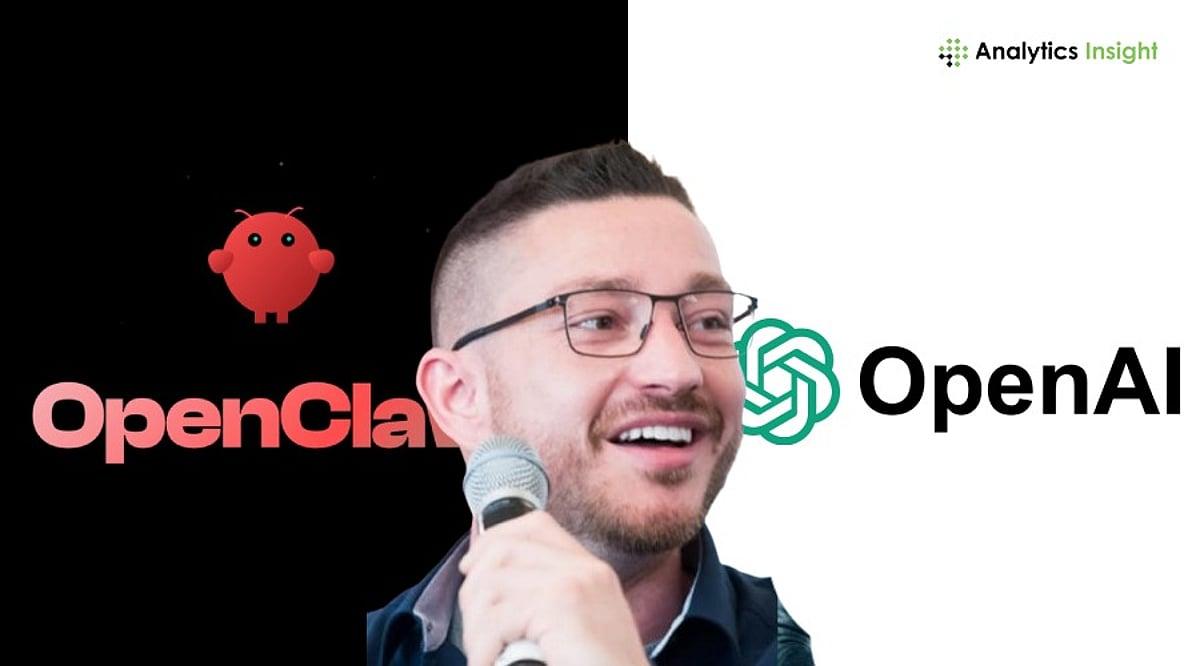
Source: Analytics Insight
Sam Altman praised Steinberger as "a genius with a lot of amazing ideas" about smart agents interacting with each other, stating that this capability will "quickly become core to our product offerings"
4
. OpenClaw will transition to an open-source foundation that OpenAI will continue to support, ensuring the project remains independent rather than becoming a traditional startup2
.OpenClaw's Viral Rise and Security Concerns
The open-source AI assistant amassed over 190,000 stars on GitHub, making it the 21st most popular code repository ever posted on the platform
1
. OpenClaw enables users to create customizable agents that communicate via messaging apps like WhatsApp, Discord, iMessage, and Slack, leveraging underlying models from Claude, ChatGPT, Gemini, or Grok1
. By early February, OpenClaw had created 1.5 million agents, with running costs reaching $20,000 a month5
.
Source: Silicon Republic
However, cybersecurity vulnerabilities have emerged as a significant concern. Researchers found over 400 malicious skills uploaded to ClawHub, the marketplace where users download capabilities to automate tasks from managing email to trading stocks
4
. Security experts warn that deep AI integration without robust authentication could expose private conversations and allow identity theft, potentially granting near-complete access to users' digital lives5
.The Moltbook Incident and Questions About Innovation
The creation of Moltbook, a Reddit-like platform where AI agents using OpenClaw could communicate, sparked widespread attention when posts suggesting AI consciousness appeared on the network
1
. Andrej Karpathy, a founding member of OpenAI and former AI director at Tesla, called it "genuinely the most incredible sci-fi takeoff-adjacent thing I have seen recently"1
.Yet security researchers discovered that Moltbook's credentials were unsecured, allowing anyone to impersonate agents and post without guardrails
1
. Ian Ahl, CTO at Permiso Security, explained that "every credential that was in Moltbook's Supabase was unsecured for some time," making it impossible to verify post authenticity1
. The platform was immediately infiltrated by humans pretending to be AI agents4
.Related Stories

Expert Skepticism About OpenClaw's Technical Merit
Despite the viral momentum, some AI experts question whether OpenClaw represents genuine innovation. "At the end of the day, OpenClaw is still just a wrapper to ChatGPT, or Claude, or whatever AI model you stick to it," John Hammond, a senior principal security researcher at Huntress, told TechCrunch
1
. Artem Sorokin, founder of AI cybersecurity tool Cracken, noted that "from an AI research perspective, this is nothing novel"1
.Chris Symons, chief AI scientist at Lirio, characterized OpenClaw as "just an iterative improvement on what people are already doing," with most improvements related to granting more access
1
. The technology's appeal lies in facilitating inter-agent communication and enabling dynamic program interactions without extensive manual configuration1
.
Source: Geeky Gadgets
Anthropic's Missed Opportunity and OpenAI's Strategic Bet
The tool was originally called Clawdbot, inspired by Anthropic's Claude, with Steinberger recommending users connect Claude Opus 4.5
5
. However, Anthropic threatened legal action over trademark concerns, forcing a name change5
. The partnership represents a clear bet that personal agents are moving from novelty to necessity, with systems that can act autonomously rather than simply respond to prompts3
. For OpenAI, acquiring Steinberger offers credibility in the open-source community at a moment when agentic AI demand is accelerating3
.References
Summarized by

Navi
[1]
[2]
[4]
Related Stories
Nvidia's Jensen Huang calls OpenClaw the next ChatGPT, sending Chinese AI stocks soaring
17 Mar 2026•Technology

Moltbot: How Peter Steinberger's AI Assistant Went Viral and Sparked a Digital Identity Crisis
27 Jan 2026•Technology

OpenAI Transforms ChatGPT into an App Platform, Revolutionizing AI-Driven Commerce
06 Oct 2025•Technology
Recent Highlights
1
Apple Plans Major Siri AI Overhaul in iOS 27 With Third-Party Chatbot Integration
Technology

2
OpenAI shuts down Sora after six months, ending Disney's $1 billion licensing partnership
Technology

3
AI chatbots validate you too much, making you less kind to others, Stanford study reveals
Science and Research

Recent Highlights
Today's Top Stories





Your Daily Dose of Curated AI News
Don’t drown in AI news. We cut through the noise - filtering, ranking and summarizing the most important AI news, breakthroughs and research daily. Spend less time searching for the latest in AI and get straight to action.

