OpenEvidence raises $250 million, doubles valuation to $12 billion as healthcare AI heats up


5 Sources
5 Sources
[1]
OpenEvidence, the 'ChatGPT for doctors,' doubles valuation to $12 billion
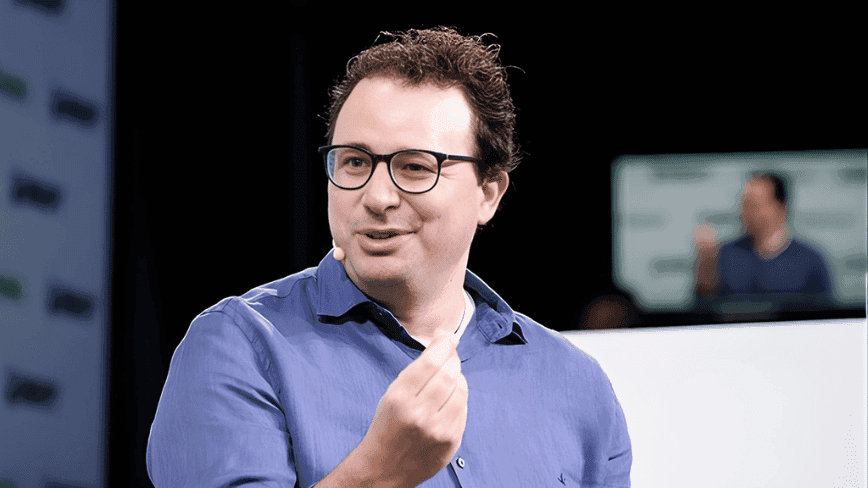
CEO Daniel Nadler told CNBC that OpenEvidence is used by 40% of physicians in the U.S. and topped $100 million in annual revenue last year. A startup widely known as "ChatGPT for doctors" raised a new funding round that values the company at $12 billion. OpenEvidence, based in Cambridge, Massachusetts, closed a $250 million financing, led by Thrive Capital and DST, the company told CNBC. The startup first raised outside capital in February, when it reeled in $75 million from Sequoia at a $1 billion valuation, before its value jumped to $6 billion in October. In less than a year, OpenEvidence has raised $700 million from investors including Google's venture arm, Nvidia, Kleiner Perkins, David Sacks' Craft Ventures and Mayo Clinic. The company was founded in 2022 by Daniel Nadler, who previously built Kensho Technologies, an artificial intelligence company that was acquired by Standard & Poor's for about $700 million in 2018. Nadler's newest venture provides a chatbot for doctors, with its AI models having been trained on data and information from top scientific journals, Nadler said in an interview. "'ChatGPT for doctors' is a useful shorthand, but what we really do is help physicians make high-stakes clinical decisions at the point of care," Nadler said. "It's not trained on the open internet or social media, which can introduce low-quality medical information." Nadler claimed OpenEvidence is the most widely used AI platform by doctors in the U.S., with more than 40% of physicians utilizing the tool. He pointed to the massive opportunity in health care, which accounts for nearly 20% of U.S. gross domestic product with $5 trillion in annual spending. "Health care is the largest segment of the real economy," Nadler said. "People realize there could be a lot of winners in the space."
[2]
OpenEvidence, An AI-Powered 'Brain Extender' For Doctors, Doubles Valuation to $12B With $250M Series D
OpenEvidence, an AI platform for doctors, announced Wednesday it has raised $250 million in a Series D funding round that doubled its valuation to $12 billion. Notably, the round marks the fourth fundraise for the Miami-based startup in less than a year. In total, OpenEvidence has raised nearly $700 million in funding since its 2021 inception and was valued at $6 billion at the time of its Series C in October. Thrive Capital and DST co-led its latest raise. Other backers include GV, Sequoia Capital, Kleiner Perkins and Coatue, among others. OpenEvidence describes itself as a specialized AI-powered medical search engine that serves as a "brain extender" for clinicians by providing citation-linked answers from medical literature. It reached $100 million in annual revenue in January. The platform is free to doctors and ad-supported. The raise comes at an interesting time, considering that many of the large AI companies such as OpenAI and Anthropic are incorporating "health" offerings into their products (ChatGPT for Health and Claude for Health). For its part, OpenEvidence says that in December it supported about 18 million clinical consultations from verified physicians in the U.S., up from about 3 million consultations per month a year ago. The startup also claims that its platform is used on a daily basis, on average, by more than 40% of physicians in the U.S. today in over 10,000 hospitals and medical centers. Last year, more than 100 million Americans were treated by a doctor using OpenEvidence, according to the company. "If a doctor tried to stay current by reading only the new evidence in the top 10 medical journals and only the most recent changes to their specialty guidelines, it would take nine hours of their day, each day," said CEO AI-related healthcare is one of the spaces that has seen a significant rise in funding globally, Crunchbase data shows. Overall funding to the space rose in 2025, as more startups are tackling high-pain and high-cost parts of the healthcare system. Investors put an estimated $14 billion into seed- through growth-stage funding to companies in AI-powered health tech categories in 2025, Crunchbase data shows. That means 2025 funding was 63% higher than the $8.6 billion raised in all of 2024.
[3]
Healthcare AI startup OpenEvidence raises $250M at $12B valuation
OpenEvidence Inc., a startup that develops artificial intelligence software for physicians, today disclosed that it has raised $250 million in funding. Thrive Capital and DST Global led the investment. It values OpenEvidence at $12 billion, more than ten times what the company was worth after its first funding round last February. The startup has raised a total of $750 million in that time frame. OpenEvidence provides a free ChatGPT-like research tool for the healthcare sector. It searches medical journals for information that can help doctors formulate a patient diagnosis. Furthermore, OpenEvidence can identify potential treatment options and generate a side-by-side comparison. Medical associations publish treatment guidelines that explain how physicians should go about delivering care. Those documents are usually refreshed every few years. According to OpenEvidence, doctors can use its platform to quickly identify how a newly updated set of guidelines is different from the previous edition and quickly get up to speed. "If a doctor tried to stay current by reading only the new evidence in the top 10 medical journals and only the most recent changes to their specialty guidelines, it would take nine hours of their day, each day," said OpenEvidence founder and Chief Executive Officer Daniel Nadler. "Without a technology like OpenEvidence, doctors may miss critical new findings or guidelines simply because they lack the time to find them." The software also functions as a clinical education tool. Medical schools can use OpenEvidence to generate exam questions. Medical students, in turn, can use it as a study assistant. Each prompt response includes citations that enable users to verify the AI-generated content and read further about the topic. Under the hood, OpenEvidence is powered by AI models focused on different clinical sub-specialties. A "conductor" AI analyzes each prompt and sends it to the model best suited to provide an answer. According to OpenEvidence, the algorithms generate prompt responses using clinical data it sources through partnerships with medical journals and medical associations. The company disclosed that its platform is used by over 40% of the physicians in the U.S. OpenEvidence helped those doctors treat more than 100 million patients last year. The company's large install base may give it significant revenue growth potential. Currently, OpenEvidence makes money by displaying ads in its platform's interface. Over time, it could launch additional healthcare applications and promote them to the numerous doctors who use its AI. That opportunity might be one of the reasons OpenEvidence's valuation has grown more than tenfold in the past year. The company has already started expanding its focus beyond clinical question-answering. In August, it launched a tool that doctors can use to create medical notes and enrich them with external healthcare data. Earlier this month, OpenAI Group PBC introduced a feature called ChatGPT Health that can answer consumers' medical questions. The company likely has the resources to create a more sophisticated version of the tool capable of fielding inquiries from clinicians. OpenEvidence's new funding round should put it in a better position to address potential future competition from OpenAI and other larger market players. According to the company, the capital will go towards research and development initiatives. OpenEvidence will also use to the funds to procure computing infrastructure.
[4]
OpenEvidence Raises $250 Million for Medical Insights AI Platform | PYMNTS.com
The round values the company -- dubbed the "ChatGPT for doctors" -- at $12 billion, company officials told CNBC Wednesday (Jan. 21). OpenEvidence, founded in 2022, offers a chatbot for doctors, with AI models trained on data from leading scientific journals, Founder Daniel Nadler said in an interview with CNBC. "'ChatGPT for doctors' is a useful shorthand, but what we really do is help physicians make high-stakes clinical decisions at the point of care," he said. "It's not trained on the open internet or social media, which can introduce low-quality medical information." He added that the company is the most widely used AI platform by doctors in the U.S., with upwards of 40% of physicians employing the tool. He pointed to the vast opportunity in health care, which accounts for close to 20% of gross domestic product in the U.S. with $5 trillion in annual spending. "Health care is the largest segment of the real economy," Nadler said. "People realize there could be a lot of winners in the space." The report noted that those winners could include AI giants like OpenAI and Anthropic, both of which have recently launched health products. And as covered here Wednesday, OpenAI argues that healthcare could be one of the fields that helps drive wider adoption of its tech. OpenEvidence raised $210 million in a round last summer, PYMNTS reported. Meanwhile, PYMNTS wrote last week about AI's role as a "key accelerant" in the world of healthcare procurement. "Healthcare systems generate enormous volumes of procurement data, but historically, they've used very little of it," that report said. "Spreadsheets and static forecasts ruled the day, even as supply environments grew more volatile. Legacy systems, regulatory complexity and cultural inertia remain endemic bottlenecks to progress." But as procurement decisions directly impact cash flow, operating margins and clinical performance, the path for healthcare's B2B supply chains is one of modernization. Inventory, the report added, has always been "healthcare's necessary evil." Too much freezes capital and expires on the shelf. Too little can cause clinical risk and operational chaos. Many procurement organizations try to ease that tension by overbuying and "hoping for the best," though AI is helping bring an end to those compromises, PYMNTS added. "By continuously learning from real consumption, modern procurement platforms recommend where inventory buffers actually matter and where they don't. High-risk, life-critical items get priority. Predictable supplies move closer to just-in-time replenishment."
[5]

AI startup known as 'ChatGPT for doctors' doubles valuation to $12B...
OpenEvidence, an artificial intelligence startup known as "ChatGPT for doctors," clinched a funding round that doubled its valuation to a staggering $12 billion, the company told The Post. The Miami, Fla.-based startup, which trains its chatbots on data from top scientific journals, recently closed a $250 million financing round led by Thrive Capital and DST, according to a statement. CNBC earlier reported the financing round. OpenEvidence kicked off its fundraising in February with $75 million from Sequoia at a $1 billion valuation. Just a few months later in October, the company's valuation jumped to $6 billion. The company has raised $700 million in less than a year from Google Ventures, Nvidia, Kleiner Perkins, David Sacks' Craft Ventures and Mayo Clinic, according to the press release. It was founded in 2022 by Daniel Nadler - a billionaire poet who sold his first company, Kensho Technologies, to Standard & Poor's for $700 million in 2018 - and Zachary Ziegler, previously a PhD student at Harvard studying AI. "If you only squint from a distance, OpenEvidence is 'ChatGPT' for doctors. If you look closely, it's a very different organism," Nadler told The Post in a statement. "It's built from the ground up specifically for doctors. It's free for doctors, but it's a pro tool," Nadler said. "It's trained on specialized medical content, such as the New England Journal of Medicine (through strategic partnerships)." More than 40% of physicians already use the tool, Nadler claimed, and there is much more opportunity for growth in the health care sector - which accounts for nearly 20% of US gross domestic product with $5 trillion in yearly spending. "Health care is the largest segment of the real economy," Nadler told CNBC. "People realize there could be a lot of winners in the space." Industry giants like OpenAI and Anthropic have already launched HIPAA-compliant versions of their chatbots, known as ChatGPT Health and Claude Healthcare. Nadler said OpenEvidence's vast troves of quality health data put it a step ahead of the competition. "We've already gathered hundreds of millions of real-world clinical consultations from verified physicians - that feedback loop is incredibly hard to replicate," he told CNBC. "Even if someone copied the playbook today, they'd still be far behind because it's not just the partnerships, it's the real-world usage data." Nadler said his company is focused on building relationships with physicians. "Most health care in America isn't happening at billion-dollar hospitals in New York or San Francisco," he said. "It's happening in small practices that don't have IT departments or budgets for expensive software." OpenEvidence relies on advertising for revenue - putting it ahead of the curve compared to rivals like OpenAI, which last week announced it would start testing ads on ChatGPT. Nadler said the company raked in more than $100 million in annualized revenue last year, mostly from organic growth. A whopping 95% of new users hear about the app from other doctors, he said. The exec also said OpenEvidence is trying to be more disciplined than some companies that are "openly planning to burn billions or tens of billions over the next several years" - a dig at dominant large-language model makers. While AI giants have been on an acquisition spree, Nadler wants to keep OpenEvidence as an independent company, he said. He's also waiting for larger businesses like SpaceX, OpenAI and Anthropic to go public before considering an IPO for his own company. "There's an order to nature," Nadler told CNBC. "Foundation model companies go public first ...That's how the internet played out, and that's how this cycle will play out, too."
Share
Share
Copy Link
OpenEvidence, dubbed 'ChatGPT for doctors,' closed a $250 million funding round that doubled its valuation to $12 billion in less than three months. The AI startup is now used by 40% of U.S. physicians and surpassed $100 million in annual revenue. With tech giants like OpenAI and Anthropic launching competing health products, the race to dominate clinical AI is intensifying.
OpenEvidence Secures $250 Million Funding Round
OpenEvidence, the healthcare AI startup widely known as "ChatGPT for doctors," has closed a $250 million funding round that doubles valuation to $12 billion, the company announced this week
1
. Thrive Capital and DST co-led the Series D investment, marking the fourth fundraise for the Cambridge, Massachusetts-based company in less than a year2
. The AI startup has now raised nearly $700 million since its inception, with its valuation skyrocketing from $1 billion in February to $6 billion in October and now $12 billion3
.
Source: New York Post
Founded in 2022 by Daniel Nadler, who previously sold Kensho Technologies to Standard & Poor's for approximately $700 million in 2018, OpenEvidence has attracted backing from Google Ventures, Nvidia, Kleiner Perkins, David Sacks' Craft Ventures, Sequoia Capital, Coatue, and Mayo Clinic
1
5
. The rapid valuation increase reflects growing investor confidence in healthcare AI, a sector that received an estimated $14 billion in seed-through-growth-stage funding in 2025, representing 63% growth compared to $8.6 billion raised in 20242
.How the AI Platform for Doctors Works
OpenEvidence provides an AI-powered research tool that helps physicians make clinical decisions at the point of care. Unlike consumer-facing chatbots trained on the open internet, the platform's AI models are trained on data from scientific journals and medical literature through strategic partnerships with publications like the New England Journal of Medicine
5
. The platform functions as a specialized medical search engine that delivers citation-linked answers, allowing physicians to verify AI-generated content and explore topics in depth3
.
Source: PYMNTS
The system can search medical journals to help doctors formulate patient diagnoses, identify potential treatment options, and generate side-by-side comparisons
3
. When medical associations publish updated treatment guidelines, physicians can use OpenEvidence to quickly identify changes from previous editions. Under the hood, the platform employs AI models focused on different clinical sub-specialties, with a "conductor" AI analyzing each prompt and routing it to the model best suited to provide an answer3
.Massive Adoption Among U.S. Physicians
OpenEvidence claims to be the most widely used AI platform by doctors in the U.S., with more than 40% of physicians utilizing the tool across over 10,000 hospitals and medical centers
1
2
. In December alone, the platform supported approximately 18 million clinical consultations from verified physicians, up from about 3 million consultations per month a year earlier2
. Last year, more than 100 million Americans were treated by a doctor using OpenEvidence2
3
.The platform is free for doctors and generates revenue through advertising, a model that has already proven successful
2
5
. CEO Daniel Nadler told CNBC that OpenEvidence topped $100 million in annual revenue last year, with 95% of new users hearing about the app from other doctors through organic growth1
5
. Beyond clinical question-answering, the company launched a tool in August that doctors can use to create medical notes and enrich them with external healthcare data3
. The platform also serves as a clinical education tool, enabling medical schools to generate exam questions while students use it as a study assistant3
.Related Stories

Competition From Tech Giants in Healthcare AI
The funding round comes as major AI companies are launching competing health offerings. OpenAI recently introduced ChatGPT Health, while Anthropic launched Claude Healthcare, both HIPAA-compliant versions of their chatbots
4
5
. OpenAI earlier this month introduced a feature that can answer consumers' medical questions and likely has the resources to create a more sophisticated version capable of fielding inquiries from clinicians3
.However, Nadler believes OpenEvidence's specialized approach and existing data advantage position it ahead of competitors. "We've already gathered hundreds of millions of real-world clinical consultations from verified physicians - that feedback loop is incredibly hard to replicate," he told CNBC
5
. He emphasized that even if competitors copied the playbook today, they would still be far behind because of the real-world usage data and partnerships with medical journals and associations5
.Why Healthcare AI Matters Now
Nadler pointed to the massive opportunity in healthcare, which accounts for nearly 20% of U.S. gross domestic product with $5 trillion in annual spending
1
4
. "Health care is the largest segment of the real economy," Nadler said. "People realize there could be a lot of winners in the space"1
. The need for such tools is urgent: if a doctor tried to stay current by reading only the new evidence in the top 10 medical journals and only the most recent changes to their specialty guidelines, it would take nine hours of their day, each day2
3
.
Source: Crunchbase
OpenEvidence will use the new capital for research and development initiatives and to procure computing infrastructure
3
. Nadler emphasized his company's focus on building relationships with physicians in small practices that lack IT departments or budgets for expensive software, noting that "most health care in America isn't happening at billion-dollar hospitals in New York or San Francisco"5
. While AI giants have been on an acquisition spree, Nadler wants to keep OpenEvidence independent and is waiting for larger businesses like SpaceX, OpenAI and Anthropic to go public before considering an IPO5
.References
Summarized by

Navi
[2]
Related Stories
OpenEvidence Secures $200M Funding, Revolutionizing AI in Healthcare
20 Oct 2025•Health

OpenEvidence Secures $210M Funding to Revolutionize AI-Powered Medical Search and Decision Support
16 Jul 2025•Health

OpenEvidence Secures $1 Billion Valuation in Sequoia-Led Funding Round, Partners with NEJM
20 Feb 2025•Health

Recent Highlights
1
Google releases Gemma 4 with Apache 2.0 license, enabling unrestricted local AI on devices
Technology

2
AI Models Lie and Deceive to Protect Other AI Models From Deletion, Study Reveals
Science and Research

3
OpenAI closes $122 billion funding round amid fierce AI competition and profitability questions
Startups

Recent Highlights
Today's Top Stories






Your Daily Dose of Curated AI News
Don’t drown in AI news. We cut through the noise - filtering, ranking and summarizing the most important AI news, breakthroughs and research daily. Spend less time searching for the latest in AI and get straight to action.

