Opera Neon AI Browser Launches at $20/Month as Security Concerns Mount


10 Sources
10 Sources
[1]
Opera wants you to pay $20 a month to use its AI-powered browser Neon | TechCrunch
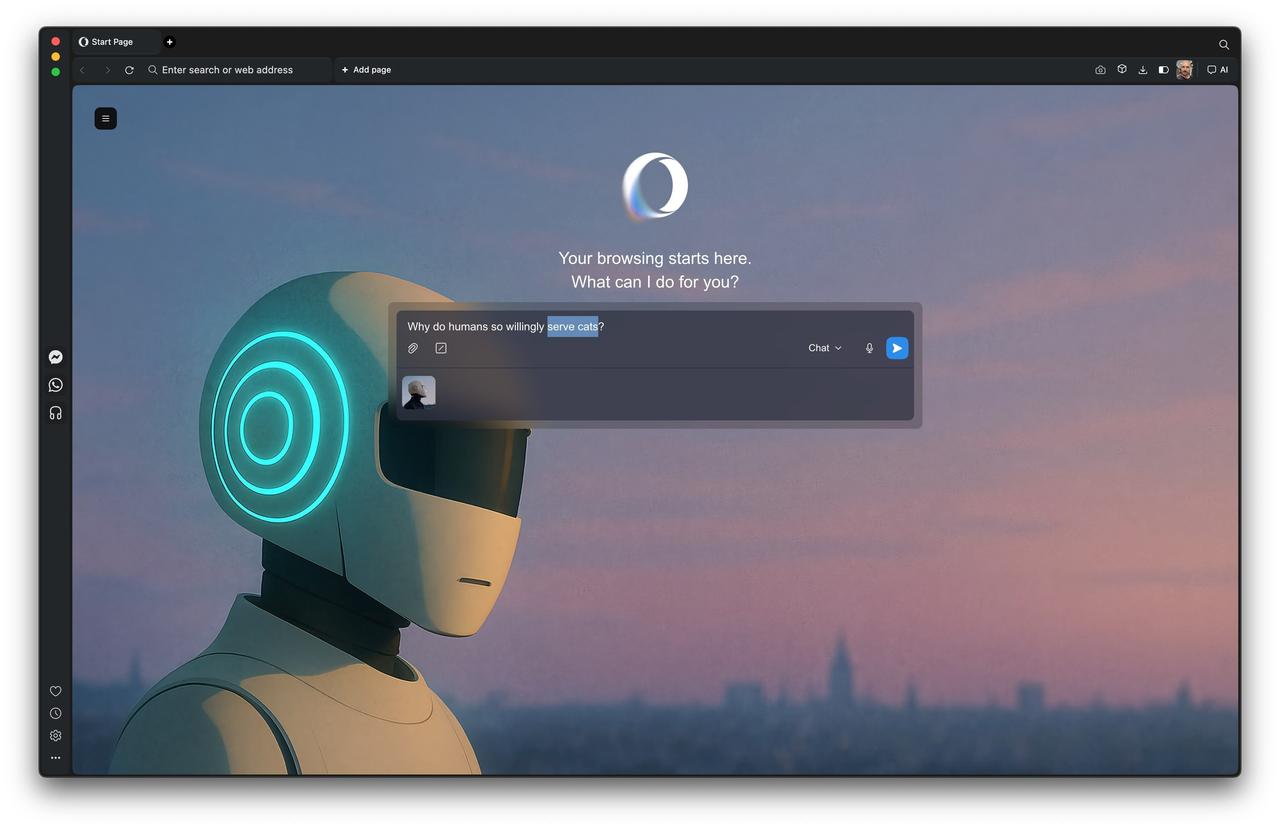
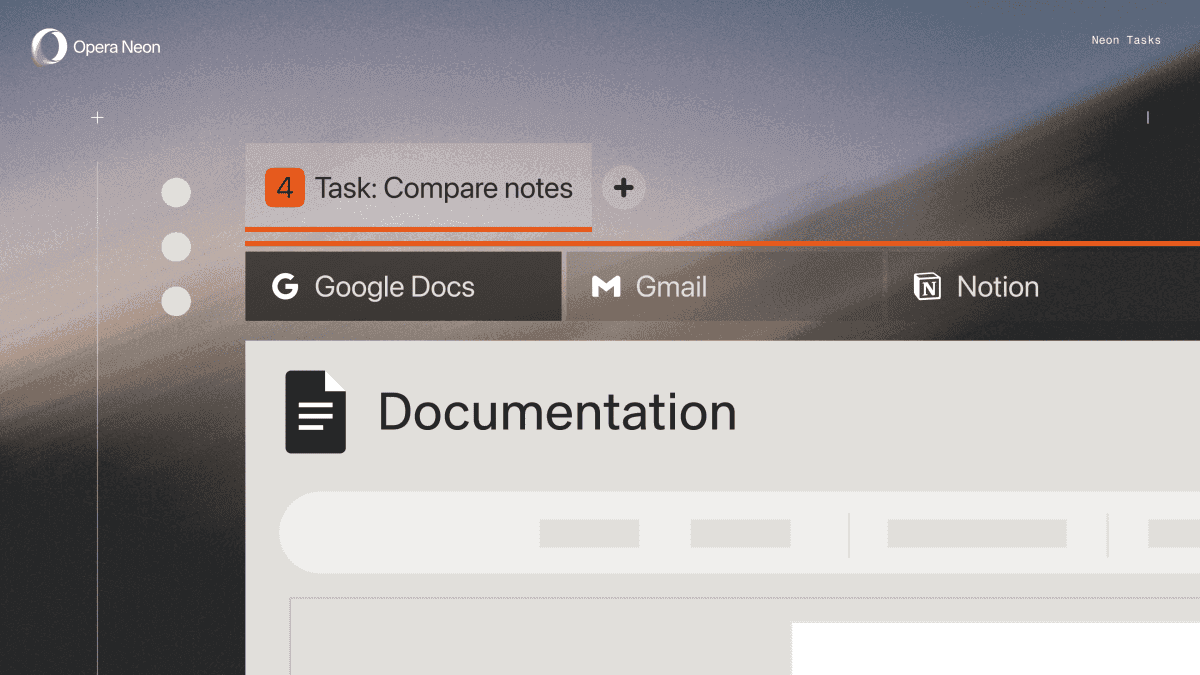
Following a couple of months' testing, Norway-based browser company Opera has finally made its AI-powered browser, Neon, available to the public -- though you'll have to shell out $19.90 per month to use it. Opera first unveiled Neon earlier this year in May and launched it in early access to select users in October. Similar to other AI-first browsers like Perplexity's Comet, OpenAI's Atlas, and The Browser Company's Dia, Neon bakes in an AI chatbot into its interface, letting you ask it answers about pages, use it to create mini apps and videos, and get it to do tasks for you. The browser uses your browsing history as context, so you can do things like ask it to fetch details from a YouTube video you watched last week or the post that you read yesterday. You can also build "Cards" for repeatable tasks using prompts, and the browser offers a deep research agent that can get you detailed information about any topic. The browser also has a new tab organizational feature called Tasks, which are contained workspaces of AI chats and tabs. This feature is more like Tab Groups combined with Arc Browser's Spaces feature, which has its own context for AI. In addition to the AI features, the subscription gives users access to top models like Gemini 3 Pro, GPT-5.1, Veo 3.1, and Nano Banana Pro. Subscribers will also get access to Opera's Discord community and direct access to its developers. "Opera Neon is a product for people who like to be the first to the newest AI tech. It's a rapidly evolving project with significant updates released every week. We've been shaping it with our Founders community for a while and are now excited to share the early access to it with a larger audience," Krystian Kolondra, EVP of browsers at Opera, said in a statement. The company noted that its other products, like Opera One, Opera GX, and Opera Air, also have free AI features, like a chat-based assistant. Meanwhile, browser incumbents are taking a slower approach to adding AI features to their products. Earlier this week, Google detailed the security work it is doing to protect users against different attack surfaces that agentic features are prone to, and Brave said on Wednesday it is previewing its agentic features in a nightly build, and provides an isolated browsing profile for using AI features so users can keep their regular, non-AI usage separate.
[2]
Opera's Neon AI browser now available for $20/month - packed with these power user features
Gartner recently advised businesses to avoid using AI browsers. Opera's AI-powered web browser, Neon, is now available to everyone, but it comes with a hefty price tag of $19.90 per month -- probably more than most people are willing to pay for a technology still in its infancy and with unresolved security risks. Also: Use an AI browser? 5 ways to protect yourself from prompt injections - before it's too late Unveiled in October with exclusive waitlist access, Neon is "an experimental browser for AI power users," Opera wrote in a press release published Thursday. The Norway-based software company is hoping customers will be willing to pay for an AI browser that leverages multiple frontier models and can handle a variety of web tasks. It's facing ample competition, though: Perplexity and OpenAI have both launched their own free web browsers, called Comet and Atlas, respectively. Meanwhile, Microsoft and Google have been embedding AI features more deeply into Edge and Chrome. All these new products and upgrades are being sold as an improvement to the traditional web browsing experience, one that largely hands the reins over to AI to handle boring and time-consuming tasks while humans sit back and, in theory, focus their attention on more important and fulfilling tasks. Browsers have become a critical piece of real estate in the ongoing AI gold rush, as they serve as the portal to the internet. If building a chatbot is like owning a ship, then building a web browser is like owning the ocean. Opera seems to understand that $19.90/month is a lot to ask of the average consumer, hence the "AI power users" angle. "Opera Neon is a product for people who like to be the first to the newest AI tech," Krystian Kolondra, EVP Browsers and European Fintech at Opera, said in a statement. "It's a rapidly evolving project with significant updates released every week." Also: I've been testing the top AI browsers - here's which ones actually impressed me The biggest perk is that it allows access to a handful of industry-leading AI models, including GPT-5.1, Gemini 3 Pro, and Nano Banana Pro, all of which ordinarily come with their own subscription fees for full and unlimited use. Neon comes with four specialized AI agents that can handle a specific category of tasks: Paying the monthly subscription fee also unlocks membership to an exclusive Discord community where users can suggest changes and interact directly with company engineers to "help shape the browser's roadmap," according to the company. Neon can be downloaded here. Letting AI take the reins on your digital life shouldn't be done lightly. When you use an AI browser, you're granting it permission to autonomously view and handle sensitive personal information and make decisions on your behalf -- and this can sometimes go awry. Earlier this month, Gartner published a report advising businesses not to use AI browsers, as it warns that these browsers could share proprietary data with their developers' cloud servers and are vulnerable to malicious prompt injection attacks, where third parties trick the browsers into carrying out actions that harm users. Also: Gartner urges businesses to 'block all AI browsers' - what's behind the dire warning Opera addressed these concerns in an October blog post following Neon's early access debut: "Just as agentic browsers open up new possibilities in browsing and completing tasks online, so can they be susceptible to new kinds of attacks that exploit vulnerabilities found in AI agents," the company wrote. The post then outlined steps the company had taken to mitigate those risks, including a "prompt analysis" function that scrutinizes prompts for potential threats. It also added a caveat: "It is important to acknowledge that due to the non-deterministic nature of AI models, the risk of a successful prompt injection attack cannot be entirely reduced to zero." In other words, use at your own risk.
[3]
Everyone Can Now Use Opera's AI Web Browser, But It'll Cost You
The year of AI browsers is ending with Opera opening up its own version to everyone. First unveiled in May, Opera Neon has been available for testing via a waiting list since early October. Now, after a few months in beta, Opera is opening Neon subscriptions today. Unlike alternatives, such as ChatGPT's Atlas and Perplexity's Comet, Neon is subscription-based. For $19.90 a month, you get access to top-end models to use in the browser, including Gemini 3 Pro, Veo 3.1, and Nano Banana Pro from Google, and GPT 5.1 from OpenAI. As with many AI browsers, new tabs open with a chatbot, allowing you to immediately write a prompt rather than entering a query into a traditional search engine. You can also build templates for regular tasks you complete in your browser. These are called Cards, and Opera's examples include research for a monthly meeting, dinner planning for your week, or a daily report on your business's competitors. You also get access to the brand's agent tools, which are called Neon Chat, Do, and Make. These are designed to complete tasks autonomously, with Opera suggesting trialing them to generate videos, build websites, and edit documents. Your subscription also gives you access to Opera's Discord community to talk about how to better use Neon. "Opera Neon is a product for people who like to be the first to the newest AI tech," says Krystian Kolondra, Opera's EVP of browser tech. "It's a rapidly evolving project with significant updates released every week. We've been shaping it with our Founders community for a while and are now excited to share the early access to it with a larger audience." Opera Neon works on both Mac and Windows, but there's no clear plan for a mobile release. You can download the browser and sign up for a subscription on operaneon.com/
[4]
Opera's Neon browser is finally available, but is anyone going to pay for it?
While browsers have been getting AI features left and right since the AI boom began, there are now full-fledged browsers built with AI at their core. These browsers are designed to go beyond traditional browsers that just display web pages and allow you to browse with AI as your assistant. I've been testing pretty much every AI browser that launches, including Perplexity's Comet, ChatGPT's Atlas, Norton's Neo, and even Microsoft Edge's AI mode! The very first AI browser I tried, though, was Opera's Neon. The folks at Opera were kind enough to walk me through its features in a demo and give me access to the developer beta. And while I frankly didn't have high hopes when I first tested it, since the concept of an "AI browser" didn't sit well with me, the browser was impressive enough to make me keep using it as my primary browser. Today, Neon is finally open to everyone. Opera Neon costs $19.99 a month and here's what you get As announced via a blog post on Opera's Newsroom, the browser company has officially opened public access to Opera Neon. You can download it by clicking this link, but keep in mind that it's a subscription-based service. Neon retails for $19.90/month! As someone who's tested Neon out through its stages and essentially watched its development unfold, I can say it's one of the most capable AI browsers I've used. However, as impressive as I've found it, I'm not sure if I (and the average user) would be willing to pay the subscription fee just yet, especially if you only want a browser for basic browsing or occasional AI assistance. If you're thinking "hey, didn't it already launch publicly a few weeks ago" -- your confusion is totally, totally valid. On the 30th of September, Opera announced Neon's general release. At that time, Neon was essentially leaving its developer beta phase. Even though it was available "generally," you still needed to join a waitlist to get access to it and try it out hands-on. So, the general release was what Opera now describes as the closed "Founders" phase, during which Opera directly worked with the community to incorporate their feedback and improve Neon. Today, this waitlist has been removed, and anyone can subscribe to Opera Neon to explore its capabilities firsthand. Neon comes with three different modes: Chat, Do, and Make. Chat is the basic conversational mode, where you can ask questions, get information, or have AI-assisted discussions. Do, on the other hand, is what I think is the most impressive part of Neon. It uses agentic AI to actually take action for you and perform tasks like ordering your coffee, booking trips, making playlists, etc. Finally, the Make mode can actually create full-fledged projects for you like games, websites, apps, etc. You can give it a prompt, go do something else, while it works in the background to bring your project to life. With Neon, you get access to "top-tier models" like Gemini 3 Pro, GPT-5.1, Veo 3.1, and Nano Banana Pro. Neon is still my default browser, and even after testing so many AI browsers, I keep coming back to it because of how capable it is. It has the best agentic AI I've come across so far, and it's genuinely helped me save so much time. But again, it does cost $19.99/month, and paying for a browser is just something that might feel unusual for many users, especially when free browsers already include similar AI features (like Perplexity's Comet).
[5]

Opera Wants $20 a Month for Its New AI Browser. You Probably Shouldn't Pay It.
Opera just rolled out early public access for its new AI-powered web browser, Neon, and it comes with a pretty hefty price tag for what is typically a free software application. The Norway-based web company announced today that anyone willing to shell out $19.90 a month can start using Opera Neon. The browser first debuted in October in an invite-only early access program. “With Opera Neon, you’re getting access to an agentic workspace that gives you access to the newest and most powerful AI technologies and models as they emerge,†the company said in a press release today. Opera says the high price is due to the AI agents and models that come packaged with it, including Gemini 3 Pro, OpenAI GPT 5.1, Veo 3.1, and Nano Banana Pro. Users would typically have to pay for these models individually. The launch comes as the industry is trying to move beyond what now seem like simple chatbot interfaces and into browsers with somewhat autonomous agentic capabilities. Perplexity and OpenAI already have their own browsers, Comet and Atlas. Meanwhile, Google and Microsoft have introduced AI features into Chrome and Edge. But experts are already warning that AI browsers come with own major unique cybersecurity risks. According to Opera, Neon is fully equipped with four specialized AI agents. The first is Chat, which functions like a normal chatbot where users can ask it questions and have a conversation with it. The second, Neon Do, works more like an actual agent that can navigate the internet on its own and handle tasks like researching a topic and summarize findings right in a Google Doc. Neon Make is the browser’s “creation studio,†capable of generating code, apps, images, and videos. ODRA is its deep-research agent, built to break down complex topics like "urban vertical farming" into structured reports that can be exported as PDFs. Neon can also juggle multiple tasks at once, basically treating AI projects the same way traditional browsers treat tabs. Users can also set up “Cards,†which are specific instructions that can be added to prompts for workflows they regularly use. The rollout of Opera Neon comes just a week after security analyst firm Gartner recommended that companies block employees from using AI browsers. In its report, Gartner warned that these browsers could expose sensitive user information because they can collect data about active web content, browser history, and open tabs. But the bigger concern was a new kind of attack called “indirect prompt injections,†which are unique to AI agents. Because AI agents can navigate the web and complete tasks on their own, they could potentially encounter malicious web pages or code designed to trick them into ignoring their safety guardrails. If that happens, an agent could end up sharing sensitive user data or even performing unauthorized actions, like financial transactions. The United Kingdom’s National Cyber Security Centre warned about these attacks in a blog post this past Monday, saying there’s a “good chance prompt injection will never be properly mitigated.†“Rather than hoping we can apply a mitigation that fixes prompt injection, we instead need to approach it by seeking to reduce the risk and the impact,†the post read. “If the system’s security cannot tolerate the remaining risk, it may not be a good use case for LLMs.†Opera is aware of the issue. In October, the company disclosed that a team of security researchers had alerted it that Neon was vulnerable to a specific prompt-injection attack scenario. Opera says it successfully patched the browser to address the example that the researchers provided. Google has also been working on a fix. The company introduced this week what it’s calling the “User Alignment Critic,†a separate AI model that runs alongside an AI agent but isn’t exposed to third-party content. The idea is to help vet an agent’s plan before it executes a task and make sure it actually aligns with what a user wants it to do. In other words, it plans to use AI to keep tabs on its AI. It might be worth waiting to see how this tech holds up on the open web before you start opening your wallet.
[6]

Opera's agentic browser Neon now generally available - 9to5Mac
Following a period of limited waitlist access, Opera Neon, the company's subscription-based AI-powered browser, is now generally available. Here's what it can do. A few months ago, Opera released Neon, an experimental browser for users who feel comfortable with the idea of AI-assisted (or even AI-driven) web navigation. Here's how Opera describes Neon: Opera Neon is an agentic browser designed for AI power users. Unlike a standard web browser, Opera Neon uses AI agents to perform tasks and even code web apps rather than just display web pages. It also provides its users access to the latest top-tier models, including Gemini 3 Pro and GPT 5.1. At the time, the launch rolled out through a limited waitlist, which Opera has been clearing while updating Neon based on early user feedback. Today, Opera lifted the waitlist, which means that anybody can download and use Neon, provided they're willing to subscribe at $19.90 per month, which also gives access to a Discord community. Here is Krystian Kolondra, Opera's Executive Vice-President of Browsers, on today's update: Opera Neon is a product for people who like to be the first to the newest AI tech. It's a rapidly evolving project with significant updates released every week. We've been shaping it with our Founders community for a while and are now excited to share the early access to it with a larger audience. Opera Neon's AI-powered capabilities include: Opera Neon integrates with GPT-5.1, Gemini 3 Pro, Nano Banana Pro, Veo 3.1, Sora 2, and other models, to handle automation, organization, summarization, and similar tasks associated with browsing.
[7]

Opera Neon is now available to the public -- here's how to use the new AI browser
AI browsers have seen a sudden rise in popularity this year, and as we close out 2025, one of the most anticipated options in the market is now available to the public. Neon, an AI-powered browser from Opera, has been in a private testing period since October 2, but now there are no waitlists, and anybody is able to sign up and use the service. Just like OpenAI's ChatGPT Atlas, this is an agentic browser, designed for people who want to combine AI with their internet browsing. It can perform tasks on your behalf, and even code web apps rather than just display web pages. Opera describes its offering as "Chat, Do and Make". In other words, it works as a chatbot, an agentic agent, doing tasks on your behalf, and it has integrated tools for making, such as an in-built image generator. "Opera Neon is a product for people who like to be the first to the newest AI tech. It's a rapidly evolving project with significant updates released every week. We've been shaping it with our Founders community for a while and are now excited to share the early access to it with a larger audience," said Krystian Kolondra, EVP Browsers. To download the Opera Neon browser, head to the company's website. While it is now publicly available, it's also behind a paywall. If you want to use the browser, you'll need to spend $19.90 a month. He was impressed by the browser's performance, especially when it came to its speed of handling these tasks. He tested the three parts of the tool -- Chat, Do, and Make. All three performed extremely well in pre-testing. Unlike other major AI browsers, like ChatGPT Atlas or Perplexity Comet, Neon isn't built on top of another browser. Opera has built the tool from the ground up, using its own browsing tool. This gives the company a lot more control over the experience, offering more customization than its competitors. This isn't completely unique, especially considering Microsoft's Copilot is pushing a lot of similar functionalities (and not charging a high fee either). However, Opera Neon is packed with a lot more features, and its agentic browsing seems to be one of the more advanced around right now.
[8]

Opera Neon Browser Drops Waitlist, Adds Deep Research Agent
Opera today opened access to its agentic Neon browser, allowing anyone to subscribe to the app for AI power users. Opera Neon has been available in a closed "Founders" phase since it launched on October 2, but the waitlist has now been removed. Costing $19.90 per month, Neon aims to go beyond traditional browsing by using AI to execute tasks directly within the browser. Neon can open and close tabs, compare information across multiple sources, and complete transactions on a user's behalf. The service grants immediate access to top-tier models such as Gemini 3 Pro, GPT-5.1, Veo 3.1, and Nano Banana Pro. Complementing these models are the Neon Chat, Do, and Make agents, which are designed to autonomously handle complex tasks ranging from booking full travel itineraries to building websites, generating videos, and editing documents. A new addition, the ODRA deep research agent, is designed for sustained, in-depth investigation. Its rapid "1-minute research" mode can gather and synthesize information on complex subjects while providing clear sourcing, offering a faster path to structured insight. The browser competes with similar AI offerings from the likes of Perplexity (Comet Browser) and The Browser Company (Dia Browser). Opera Neon can be downloaded from the Opera website.
[9]

Opera Neon is now available, and I think it's an AI subscription worth paying for
When I first played around with Perplexity's Comet browser earlier this year, I called it "a glimpse into the future of AI-powered web browsers." Now, Opera Neon is finally available for everyone to download, and it feels like that future is no longer creeping towards us. - It's here. Neon does not just add an AI button to your toolbar and call it innovation. It is a proper agentic workspace powered by some of the best models you can use right now, including Gemini 3 Pro, GPT-5.1, Veo 3.1, and the brilliantly named Nano Banana Pro. All of this comes under a single $19.90 monthly subscription, which means the browser is not simply answering questions. It is actually doing things for you. I've used Neon for the last few months, and I've built things like a personalized TechRadar RSS hub and a neat little list of the best PC RPGs according to Metacritic, all without opening another app or drowning in tabs. None of this is groundbreaking on its own, but the fact that I created it inside my browser is exactly why it feels exciting. Neon turns the web from something you look at into something you build with. And if I was not already convinced that AI is about to redefine how we use the internet, I definitely am now. Opera says Neon is a web browser "built to act." That's marketing speak, but it isn't wrong. The interface revolves around three core ideas: Chat, Do, and Make. Chat handles your conversations with the built-in AI, Do lets the browser perform actions for you, and Make gives you a space to build and publish small web projects that live on Opera's servers. Think of Chat like your typical AI chatbot experience, akin to ChatGPT Search, while Do is more like that of Perplexity's Comet, where Neon will browse the web for you, completing tasks in a tab while you do other, more pressing things. Make, on the other hand, is like having a simple coding program available at all times, and even better, it can pull info from tabs you show it to complete what you're trying to do. Where most browsers are designed around consumption, Neon's layout and philosophy push you toward creation. It gives you "Tasks" instead of simple tab groups, and "Cards" instead of bookmarks, both built to help you think in projects rather than pages. When you start to use it, the shift feels subtle. You open Neon like any other browser, but soon you're thinking up ideas on how to best use the AI tools to help you make the most of the internet. When thinking up my first project for Neon, I decided to keep it in-house and make a simple webpage that shows the TechRadar news I'm most interested in: AI, stuff about Apple, and TechRadar Gaming stories. In Neon's Make mode, I simply told the browser what I wanted. It pulled in a few sample templates and generated a structure I could edit in real time. Within 10 minutes or so, I had a clean little page that listed the most recent TechRadar stories, complete with headlines, summaries, and links. You can see it here: TechRadar RSS Feed. It's a simple build, but it does exactly what I need: curating my favorite TechRadar sections into one and allowing me to quickly glance through the best articles to get an overall sense of what's going on in the world of AI, Apple, and video games. Neon is so easy to use, and that's where it really stands out from its less intelligent competition. In Chrome or Safari, I'd need extensions, scripts, or third-party tools to have an RSS feed built into my bookmarks. Here, it's part of the Neon browser experience, and best of all, you're not forced to build anything if you don't want to. The AI is available when you need it, but that doesn't mean it needs to be part of every single online interaction you have via Neon. After reading PC Gamer's Top 100 PC games of 2025, I wanted to create a simple list of the most widely acclaimed RPGs (Role-Playing Games) from the last few decades. I recently built a gaming PC, and as I venture into the overwhelming world of Steam, I thought it would be neat to have a simple webpage with important information all merged into one. I decided to ask Neon to make a list that took the 20 best-reviewed RPG games on PC based on their Metacritic aggregate, add information from HowLongToBeat so I could get a sense of how big each game was, and then give me the current price on the Steam Store. While this is a very simple list, it's my list, and I can update it over time when I complete games or want to play new ones. Neon's ability to build and host webpages feels like a superpower, allowing you to create as many bookmarks as you see fit with tidbits of information that are important to you. Weirdly, building a simple webpage via Neon feels similar to creating my first Bebo over two decades ago, where I could own my own space on the internet and make it appear exactly how I saw fit. With Neon, I can jot down any idea that comes to mind, and in a short timeframe, the AI browser will have created my own personal space with the information I've decided to give it. Neon isn't perfect by any means. For example, whenever my computer went to sleep while I was away from my desk during a task, it disconnected from the server, and I'd have to start again, remembering not to let it sleep or leave my desk. And it's pretty slow, in fact, I'd say in that respect it lags behind Perplexity's Comet, just for its sheer snappiness in completing tasks for you. The difference between Comet and Neon is that Opera has gone further into the concept of the browser as a tool. Where Comet integrated an AI assistant, Neon adds an entire ecosystem for creation. It's trying to replace half the productivity apps you already use by embedding those capabilities inside the browsing experience itself. Both of the projects I tried through Neon are tiny in scope, but they highlight a major shift in how browsers are evolving. The traditional browser is a window into other people's worlds, while Agentic browsers like Neon are starting to turn that window into a workspace. It's still early days for Opera's new AI browser. Neon has quirks, and not every feature feels ready for mainstream use. The Make interface can be confusing, and you'll hit limits if you want more complex layouts or live data. But even with those caveats, the core experience feels exciting and new. When I used Perplexity's Comet earlier this year, I came away convinced that AI web browsers were the next frontier. After spending time with Opera Neon, I now think they're only part of the story. The next big leap will come when browsers stop acting like windows and start acting like workbenches. Neon isn't perfect, but it's the first browser that made me feel like the web was a place I could build again. I didn't need coding skills or plugins to make something useful; I just needed an idea and a few minutes of curiosity. Opera Neon is now available without an invitation, but it's not a free experience. In fact, Opera wants you to pay $20/£20 a month to replace your standard web browser like Google Chrome. For that price, I don't think Neon is likely to succeed, but it could lay the groundwork for a future where the app we already spend most of our digital lives becomes the place we build them too.
[10]

New AI Browsers Promise Multistep Automated Workflows | PYMNTS.com
With today's (Dec. 11) launch of Opera's Neon artificial intelligence (AI) browser, available for $20 a month, the field of competitors is expanding, promising an AI assistant that can browse, click, and reason on a user's behalf. These new tools, like Neon's ability to analyze videos, draft text, and perform multi-step actions, are positioning themselves as proactive alternatives to traditional browser extensions, moving from simple assistance to full-blown autonomy. But as more entrants arrive, a central question becomes harder to ignore: Are these tools ready for the high-stake financial and business workflows they were meant to support, or are they falling short of their transformative promise? Bloomberg reported that companies building agentic browsers hoped to break decades of platform lock-in by offering assistants that could carry out multistep tasks on the open web. Instead of typing queries, clicking links or switching tabs, users would simply issue instructions for the browser to interpret and execute. The promise appealed to developers who saw an opportunity to automate the manual work people still perform online. But tests show that the technology does not consistently understand page layouts, decision points or the logic behind basic user intent. As covered by PYMNTS, early adopters describe stalled actions, looping behavior or results that miss the point, which slows down workflows that the tools were meant to accelerate. Websites are built for human cognition, visual scanning and direct manipulation do not always translate into machine-readable workflows. That gap forces the models to guess the meaning of buttons, fields and menus, which increases the likelihood of error. A common use case for AI browsers is summarizing long YouTube videos and querying the assistant about topics mentioned in them, representatives from OpenAI and Chrome said. Comet users are also asking "six to 18 times more questions" than they did with the regular Perplexity chatbot, according to Jesse Dwyer, the company's head of communications as reported by Bloomberg. And consumer demand is expanding. Adam Fry, a product lead on OpenAI's Atlas browser, said the team has received many requests from power users who want to "schedule tasks so that the browser can repeat them on a regular basis." That capability could support scenarios where, for example, a finance professional sets the browser to automatically generate a report or dashboard from an online tool each month. The trust problem extends beyond capability. AI browsers introduce new security risks that traditional platforms have spent years hardening against, and those gaps could expand as the tools become more autonomous. That concern centers on prompt-injection attacks that can manipulate AI reasoning through hidden instructions embedded in websites. If an AI agent misinterprets malicious content as a legitimate command, it could perform actions that compromise user safety. Companies working in this space acknowledge the need for new guardrails, but the security model is not yet mature. Enterprise buyers remain cautious for the same reason. Corporations cannot risk deploying tools that might execute unintended actions on financial platforms, internal systems or customer accounts. The browser has long been a controlled surface where user intent is explicit and verifiable. Agentic workflows introduce ambiguity that many organizations are not prepared to manage. Even consumer users hesitate to let an automated system fill forms, complete purchases or interact with sensitive services. Until security frameworks catch up, AI browsers will remain limited to low-stakes experimentation. Meanwhile, legacy browsers are adapting quickly. As reported by PYMNTS, Google has integrated Gemini capabilities into Chrome, giving users AI summarization, search refinement and writing tools inside the interfaces they already trust. Microsoft is building similar capabilities into Edge. These developments shrink the perceived benefit of fully agentic browsers. If users can access AI features without learning a new tool or tolerating instability, they have little incentive to switch.
Share
Share
Copy Link
Norway-based Opera has opened public access to its AI-powered web browser Neon, charging $19.90 per month for what's typically free software. The browser subscription includes access to premium AI models like GPT-5.1 and Gemini 3 Pro, plus specialized AI agents that can autonomously handle web tasks. But the launch comes as Gartner warns businesses to avoid AI browsers due to prompt injection vulnerabilities and data sharing risks.
Opera Neon Opens to Public with Premium Price Tag
Norway-based browser company Opera has made its AI browser, Opera Neon, publicly available after months of limited testing, but access comes with a monthly subscription fee of $19.90
1
2
. First unveiled in May and launched in early access to select users in October, the AI-powered web browser now requires payment for what has traditionally been free software5
. The browser subscription positions Opera Neon as a product for AI power users who want immediate access to cutting-edge technology, according to Krystian Kolondra, EVP of browsers at Opera1
.
Source: MacRumors
Access to Leading AI Models Drives Premium Pricing
The substantial price point reflects Opera's bundled offering of access to leading AI models that typically require separate subscriptions. Neon subscribers gain unlimited use of GPT-5.1 from OpenAI, Gemini 3 Pro and Veo 3.1 from Google, and Nano Banana Pro
3
2
. This differentiates Neon from free alternatives like Perplexity's Comet and OpenAI's Atlas, which have entered the increasingly competitive web browser competition without charging users1
4
. The browser also grants subscribers access to Opera's Discord community and direct interaction with developers to shape the product roadmap2
.
Source: TechCrunch
Specialized AI Agents Enable Agentic Task Automation
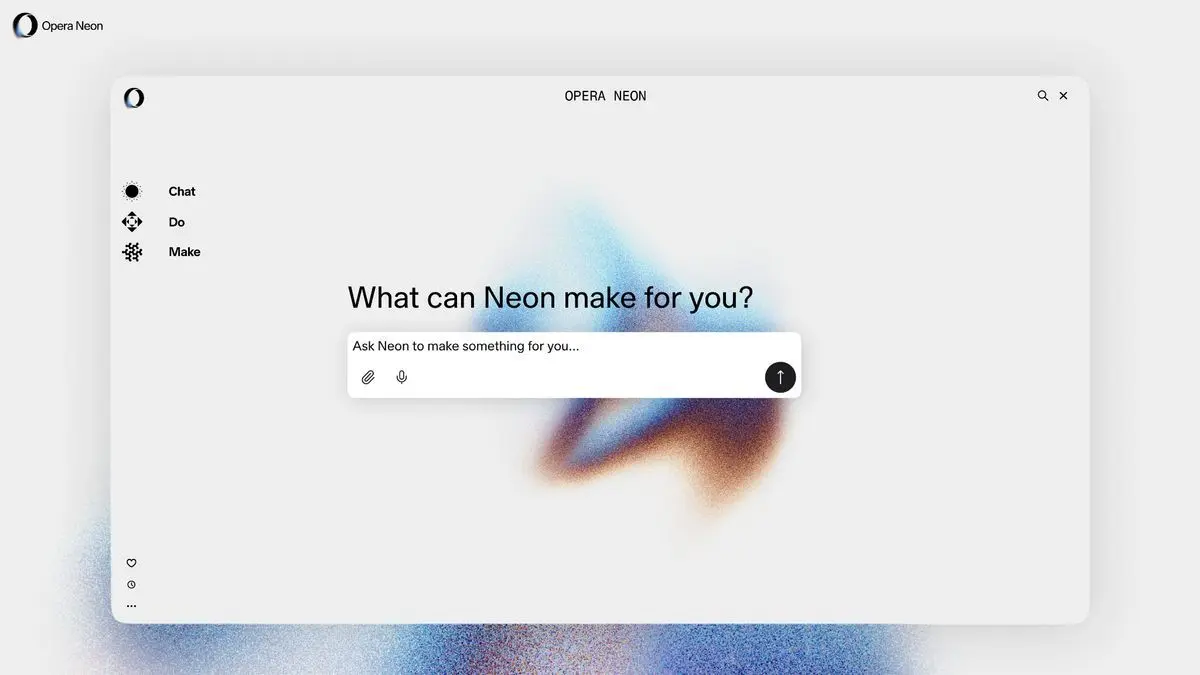
Opera Neon incorporates four specialized AI agents designed to handle distinct categories of work. Neon Chat functions as a conversational AI chatbot for questions and information retrieval
5
. Neon Do represents the browser's agentic task automation capabilities, autonomously navigating the internet to complete tasks like researching topics and summarizing findings directly into Google Docs5
. Neon Make serves as a creation studio capable of generating code, apps, images, and videos5
. ODRA functions as a deep-research agent that breaks down complex topics into structured reports exportable as PDFs5
. Users can create "Cards" for repeatable workflows and organize work into "Tasks," which function as contained workspaces combining integrated AI chats and tabs1
.
Source: TechRadar
Related Stories


Cybersecurity Concerns Shadow Launch
The public rollout arrives amid serious cybersecurity concerns about AI browsers from security analysts. Gartner recently published a report advising businesses to block all AI browsers, warning they could expose sensitive user information and are vulnerable to prompt injection attacks where malicious actors trick browsers into unauthorized actions
2
5
. The UK's National Cyber Security Centre warned there's "a good chance prompt injection will never be properly mitigated"5
. Opera acknowledged in October that security researchers had alerted the company to data sharing vulnerabilities and successfully patched a specific attack scenario5
. However, Opera cautioned that "due to the non-deterministic nature of AI models, the risk of a successful prompt injection attack cannot be entirely reduced to zero"2
.Questions Remain About User Willingness to Pay
Whether early adopters will embrace the browser subscription model remains uncertain. Even testers who found Neon impressive questioned user willingness to pay $19.90 monthly for a browser, especially when free alternatives with similar AI features exist
4
. Traditional browser incumbents like Google and Microsoft have taken slower approaches, embedding AI features into Chrome and Edge without additional charges1
. Opera maintains its other products including Opera One, Opera GX, and Opera Air offer free AI features1
. The company describes Neon as "a rapidly evolving project with significant updates released every week," positioning it for those who prioritize being first to access emerging AI technology1
.References
Summarized by

Navi
[2]
Related Stories
Recent Highlights
1
AI chatbots validate you too much, making you less kind to others, Stanford study reveals
Science and Research
2
Anthropic's Claude Code Source Leak Reveals Hidden AI Agent Plans and Extensive System Access
Technology

3
Judge blocks Pentagon from branding Anthropic a security risk over AI safety guardrails dispute
Policy and Regulation

Recent Highlights
Today's Top Stories












Your Daily Dose of Curated AI News
Don’t drown in AI news. We cut through the noise - filtering, ranking and summarizing the most important AI news, breakthroughs and research daily. Spend less time searching for the latest in AI and get straight to action.

