Oura launches proprietary AI model for women's health in Oura Advisor chatbot


6 Sources
6 Sources
[1]
Oura launches a proprietary AI model focused on women's health | TechCrunch
Oura announced on Tuesday that it's launching its first proprietary AI model to enable its AI chatbot, Oura Advisor, to deliver personalized insights around women's health. The company says the model supports questions spanning the full reproductive health spectrum, from early menstrual cycles through menopause. The new model is rolling out in Oura Labs, the company's opt-in, experimental feature hub within the Oura app. Oura says the new model draws on established medical standards, research, and knowledge sources reviewed by its in-house team of board-certified clinicians and women's health experts. It also integrates biometric signals and long-term trends to deliver personalized guidance. As people are increasingly turning to AI chatbots for health guidance, from cycle changes to perimenopause symptoms, Oura says there is a need for models designed specifically for women. "This custom model is a fundamental shift in how we responsibly deploy AI in health to meet the needs of our members," said Ricky Bloomfield, MD, chief medical officer at Oura, in a press release. "Women's health is too complex -- and too often overlooked -- to rely on one-size-fits-all systems. By designing a model specifically for women and grounding it in trusted clinical science and real-world biometric data, we're setting the standard for how responsible intelligence should be built and expanded across more areas of health, pairing rigorous science with the lived, longitudinal data that makes Oura uniquely powerful." The launch of the new women's health AI model comes as Oura chief commercial officer Dorothy Kilroy told TechCrunch last October that the company's fastest-growing user segment isn't gym rats, it's women in their early twenties. When a user asks Oura Advisor a women's health question, the chatbot prompts the new model to reference its research and knowledge sources while also analyzing the user's relevant biometric signals across sleep, activity, cycle and pregnancy data, stress, and more. The new model is intentionally designed to be non-dismissive, reassuring, and emotionally supportive, the company notes. However, it's not designed to be a doctor, as users shouldn't use the chatbot for a diagnosis or treatment plan. Oura says the model is hosted entirely on Oura-controlled infrastructure, and that conversations are never shared or sold. Users who want to access the new model can opt into Oura Labs by navigating to the drop down menu on the upper left corner of the Oura app.
[2]
Oura Ring Wants to Put an OB-GYN on Your Finger With New AI for Women's Health
If you currently have an Oura Ring on your finger, then you're likely familiar with Oura Advisor, the company's in-app AI chatbot that can answer your health questions. Today, Oura announced that within Oura Advisor, it's launching its own AI model specifically designed to focus on women's health: the menstrual cycle, menopause, fertility and more. However, it is currently only in testing under the app's Oura Labs tab. "This custom model is a fundamental shift in how we responsibly deploy AI in health to meet the needs of our members," Ricky Bloomfield, Oura's chief medical officer, said in a press release. "Women's health is too complex -- and too often overlooked -- to rely on one-size-fits-all systems. By designing a model specifically for women and grounding it in trusted clinical science and real-world biometric data, we're setting the standard for how responsible intelligence should be built and expanded across more areas of health." Designed with Oura's own team of board-certified doctors and women's health experts, the new AI model is the company's first custom large language model made using Oura Advisor's generative AI and Oura's biometric tracking and health-sensing algorithms. So, when a women's health question is asked, this new model is able to comb through its curated women's health research library while analyzing the data collected by the user's Oura Ring to provide evidence-based answers. Perhaps most importantly, this new version of Oura Advisor was created to answer questions in a way that is supportive and doesn't dismiss the user's concerns. Chris Curry, clinical director of women's health at Oura and a board-certified obstetrician and gynecologist, adds in the press release that this model aims to help people prepare for appointments with their doctors: "For example, if someone asks, 'Why has my cycle suddenly become irregular, and is that something to worry about?' Oura Advisor can walk them through what's typical, what their data may be showing and what would be most helpful to surface in conversations with their provider." This women's health AI model is currently available only for testing and feedback in Oura Labs, for which participation is optional. Even if you opt in, you can always opt out. Oura also states that it will never sell or rent your health data, and won't share your sensitive information without your consent. Oura uses what it calls "private AI," which means all AI insights are processed and generated only on your device. The company also partners with webAI, an AI tech company that Oura describes as a "platform for intelligence to operate securely, scale autonomously and evolve with users' needs." Some of its processes, such as population-level algorithms, may use cloud or hybrid architectures when it makes sense for the task at hand.
[3]
Oura adds a model designed to discuss women's health to its AI chatbot.
The Oura Advisor chatbot will soon be able to offer smart ring wearers an AI model that it says covers "the full reproductive health spectrum, from early menstrual cycles through menopause." Of course, reproductive health data is sensitive, particularly in places like the US -- you might want to think carefully before handing it over. Here's what Oura is saying about the model's privacy: It is hosted entirely on Oura-controlled infrastructure, and conversations are never sold, shared, or used to train public or third-party AI systems.
[4]
Oura's latest feature puts women's health at the center
The feature combines clinician-reviewed research with users' data to interpret cycle, fertility, pregnancy, and menopause trends. Oura is expanding its focus on women's health with a new AI model. The feature is the company's first proprietary AI system and aims to turn ring data into personalized guidance. It is rolling out for testing in Oura Labs within Oura Advisor, the company's in-app AI assistant. Unlike earlier Advisor updates that used general AI systems, the new tool runs on a custom model built around clinician-reviewed women's health research. According to Oura, the system interprets long-term trends, including sleep, cycle tracking, activity, stress, and pregnancy signals, through the lens of broader women's health knowledge, to provide contextual guidance. The company positions the feature as a conversational tool rather than a medical service, noting that responses are tuned to be supportive and non-dismissive. Women's health is a major wearable battleground as companies race to translate data into insights about cycles, fertility, and menopause. A model built around that complexity gives Oura a clearer framework than applying a general chatbot to health metrics. As always, this comes with familiar limitations. AI guidance (even when clinically informed) isn't diagnostic. Oura is, however, careful to emphasize privacy as the feature enters testing. The company says the model runs on Oura-controlled infrastructure and that conversations are not sold, shared, or used to train public AI systems. Participation in Oura Labs is optional. If successful, tools like this could mark a broader shift in wearable health from tracking metrics to interpreting them. The challenge isn't collecting data anymore as much as turning long-term patterns into guidance that is genuinely useful.
[5]

Oura finally gives its AI the knowledge boost many wearers have waited for
Oura has made some important changes to its Oura Advisor AI assistant, which now includes a proprietary language model specifically made to support women. New AI feature The model, which will start life inside Oura's test platform, Oura Labs, has been trained on a wide variety of established medical standards, medical sources, and through relevant research. The data was then reviewed by Oura's own clinicians and women's health experts. Wearers will be able to ask the Oura Advisor questions on, "the full reproductive health spectrum, from early menstrual cycles through menopause," according to the company. To answer questions, it will draw on its training, and also examine data taken from the Oura Ring's sensors. Together, this will help the AI to provide guidance based on women's physiology and life stages, going beyond what a standard AI model is capable of. Chris Curry MD, Oura's clinical director of women's health, explained more: If someone asks, 'Why has my cycle suddenly become irregular, and is that something to worry about?' Oura Advisor can walk them through what's typical, what their data may be showing, and what would be most helpful to surface in conversations with their provider. It translates complex science into clear, compassionate, always-available guidance, helping women connect what they're feeling with what they're seeing in their data, and allowing them to walk into discussions about their health more informed, confident, and in control of their decisions. Available in Oura Labs Because the new AI language model is part of the Oura Labs test bed inside the Oura Ring's app, women will have to opt-in to try it out. Oura Labs has been used to test a variety of different Oura Ring features, including Symptom Radar, which have subsequently been integrated into the full app. Oura also assures users its AI is hosted on its own platform, and it will never sell or share conversations. It won't use the conversations to train other AI systems either. Oura Ring ecosystem In 2024, Oura revealed nearly 60% of Oura owners were women, so the development of a custom AI language model, which also fills a gap in the market, makes sense for the company. There are two versions of the Oura Ring available. The titanium Oura Ring 4, which starts at $350, and the Oura Ring 4 Ceramic, which starts at $500. In our experience, the ceramic version is considerably more durable, but otherwise there are no differences between them. The Oura Ring 4's app costs $6 per month to access, and only the most basic data (and no AI) is available if you don't pay for the subscription. Despite the extra cost, the Oura Ring 4 is our recommended smart ring purchase. Oura Ring 4 8.5/10 Heart rate monitor Yes Notification support No Battery life Up to 8 days Sensors Heart rate/HRV; blood oxygen; skin temperature; accelerometer Water Resistance Water-resistant to 100 m Ring sizing 4 - 15 $349 at Oura $349 at Amazon $349 at Best Buy Expand Collapse
[6]

Oura's smart ring AI promises more personalized women's health support
Designed in partnership with clinicians and built around women's real experiences, this AI provides evidence-based health guidance. Oura has gradually become one of the top health-focused wearable manufacturers, and its rise can be attributed to a combination of excellent hardware and a strong focus on research and development aimed at accurate health tracking. In 2024, Oura released its health coach, Oura Advisor, which is an AI-powered health coach that answers questions about health and wellness using data collected from your Oura Ring. Stepping ahead in that direction, Oura has now announced its proprietary AI model focusing on women's health. It analyzes women's biometric data and long-term trends to provide personalized, evidence-based insights tailored to the user. What's different about Oura's new proprietary large language model? Oura's new proprietary large language model differs from other AI providers, primarily in its training dataset. The custom model is trained on trusted medical research and standards rigorously vetted by OURA's board-certified clinicians and women's health experts. Recommended Videos The model is designed for women. When women ask health-related questions, it draws on curated women's health research from verified, trusted sources. Combining it with user data collected from the Oura ring, it evaluates relevant biometric data and long-term patterns across sleep, activity, menstrual cycle, pregnancy metrics, and other data to deliver accurate, reliable insights. "By designing a model specifically for women and grounding it in trusted clinical science and real-world biometric data, we're setting the standard for how responsible intelligence should be built and expanded across more areas of health, pairing rigorous science with the lived, longitudinal data that makes ŌURA uniquely powerful," said Ricky Bloomfield, MD, chief medical officer at Oura. What happens to your data? Oura has said that the company believes advancements in AI should not come at the cost of user data. The model is hosted entirely on Oura's controlled infrastructure, ensuring that user data is not shared with other AI models. If one decides to participate, their data will be used to train the AI and improve its performance, but Oura will never share or sell the data to a third party. If a user is not comfortable with sharing their personal data, they can always opt out or choose not to join.
Share
Share
Copy Link
Oura introduces its first custom AI model designed specifically for women's health, enabling its Oura Advisor chatbot to provide personalized guidance on reproductive health. The model combines clinician-reviewed research with biometric data from the Oura Ring to address questions spanning menstrual cycles, fertility, pregnancy, and menopause. Currently rolling out in Oura Labs for opt-in testing, the feature marks a shift toward more specialized health AI.
Oura Deploys Custom AI Model for Women's Health
Oura announced the launch of its first proprietary AI model designed to enable the Oura Advisor chatbot to deliver personalized health guidance focused specifically on women's health
1
. The model addresses questions spanning the full reproductive health spectrum, from early menstrual cycles through menopause, and is now rolling out in Oura Labs, the company's opt-in testing platform within the Oura app1
5
.
Source: Android Police
This marks a fundamental shift for Oura, which previously relied on general AI systems for its Advisor feature. The new language model was built using established medical standards, research, and knowledge sources reviewed by Oura's in-house team of board-certified clinicians and women's health experts
1
5
. The decision to create a custom model reflects the complexity of women's health issues, which have historically been overlooked in one-size-fits-all health systems.How the Model Integrates Biometric Data and Medical Research
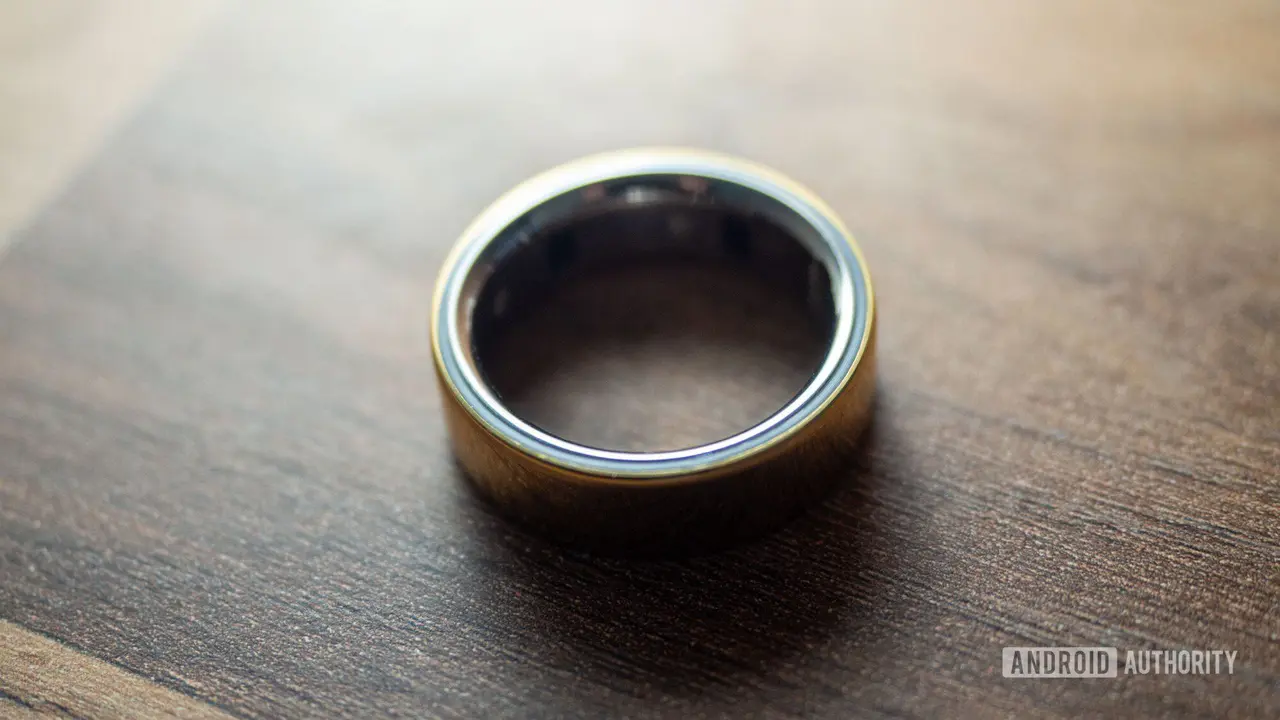
When users ask the Oura Advisor chatbot a women's health question, the new AI model references its curated research library while simultaneously analyzing relevant biometric data collected by the Oura Ring
2
. This includes long-term trends across sleep, activity, cycle tracking, pregnancy data, stress, and other health signals1
4
. By combining generative AI with the smart ring's health-sensing algorithms, the system can provide evidence-based answers tailored to individual users2
.
Source: Android Authority
"This custom model is a fundamental shift in how we responsibly deploy AI in health to meet the needs of our members," said Dr. Ricky Bloomfield, chief medical officer at Oura. "Women's health is too complex -- and too often overlooked -- to rely on one-size-fits-all systems. By designing a model specifically for women and grounding it in trusted clinical science and real-world biometric data, we're setting the standard for how responsible intelligence should be built"
1
.The model is intentionally designed to be non-dismissive, reassuring, and emotionally supportive
1
. Chris Curry, Oura's clinical director of women's health and a board-certified obstetrician and gynecologist, explained that the tool aims to help users prepare for medical appointments: "If someone asks, 'Why has my cycle suddenly become irregular, and is that something to worry about?' Oura Advisor can walk them through what's typical, what their data may be showing, and what would be most helpful to surface in conversations with their provider"2
5
.Why This Matters for Wearables and Women's Health
The timing of this launch is significant. Oura revealed in 2024 that nearly 60% of Oura Ring owners are women
5
, and the company's fastest-growing user segment is women in their early twenties1
. As people increasingly turn to AI chatbots for health guidance on topics like cycle changes, fertility, and perimenopause symptoms, Oura identified a clear need for models designed specifically for women1
.
Source: TechCrunch
Women's health has become a major battleground among wearables companies racing to translate data into actionable insights about menstrual cycles, fertility, and menopause
4
. A model built specifically around this complexity gives Oura a clearer framework than simply applying a general chatbot to health metrics4
. If successful, this approach could signal a broader shift in wearable health technology from merely tracking metrics to interpreting long-term patterns into genuinely useful guidance4
.Related Stories
User Data Privacy and Opt-In Testing
Given the sensitive nature of reproductive health data, particularly in regions like the US, Oura has emphasized its commitment to user data privacy
3
. The model is hosted entirely on Oura-controlled infrastructure, and conversations are never sold, shared, or used to train public or third-party AI systems1
3
5
. The company uses what it calls "private AI," with insights processed and generated on users' devices2
.Participation in Oura Labs is optional, and users can opt out at any time
2
4
. To access the new model, users must navigate to the drop-down menu in the upper left corner of the Oura app and opt into Oura Labs1
. This testing approach allows Oura to gather feedback before a wider rollout, similar to how it previously tested features like Symptom Radar5
.It's important to note that while the AI provides personalized health guidance, it is not designed to replace medical professionals. Users should not rely on the chatbot for diagnosis or treatment plans
1
. The model positions itself as a conversational tool to help users understand their data and prepare for discussions with healthcare providers2
4
.References
Summarized by

Navi
[4]
Related Stories
Oura Ring Launches AI-Powered Health Advisor for All Users
31 Mar 2025•Technology
Oura Ring Introduces AI-Powered Meal Tracking and Glucose Monitoring Features
07 May 2025•Technology

Movano Health Launches EvieAI: A Medical Journal-Trained AI Assistant for Accurate Health Information
08 Jan 2025•Technology

Recent Highlights


Recent Highlights
Today's Top Stories





Your Daily Dose of Curated AI News
Don’t drown in AI news. We cut through the noise - filtering, ranking and summarizing the most important AI news, breakthroughs and research daily. Spend less time searching for the latest in AI and get straight to action.

