Pebble's founder launches $75 AI smart ring that turns fleeting thoughts into organized notes


9 Sources
[1]
Pebble's founder introduces a $75 AI smart ring for recording brief notes with a press of a button | TechCrunch
After rebooting the Pebble smartwatch brand, founder Eric Migicovsky is expanding his company's device lineup with a new smart wearable: an AI-powered smart ring known as Index 01. Named for the finger where the ring is meant to be worn, the new $75 ring is not meant to be a competitor to always-on, always-listening AI devices, like the AI pendant Friend, but instead offers a way to record quick notes and reminders with a press of a button on the ring's side. AI only comes into play via the open source, speech-to-text, and AI models that run locally on your smartphone through the Pebble mobile app. That is, if the ring's button is not being pressed, it's not recording. (And this is a press-and-hold gesture, too, which means you can't start the ring's recording and then let go to surreptitiously record a conversation.) You can wear the stainless steel ring while in the shower, washing hands, doing dishes, or in the rain, but you would have to take it off for other water-related activities, like swimming. At launch, it's water-resistant to 1 meter. The ring is also not a fitness tracker or sleep monitor. It doesn't record details about your heart rate or health. And it's not there to be your AI friend. "I'm not trying to build some AI assistant thing," Migicovsky told TechCrunch in an interview. "I build things that solve one main problem, and they solve it really well," he explains. "I think of [the ring] as external memory for my brain...that's what this is. It's always with you." Plus, the ring has been designed to be highly reliable and privacy-preserving, he says, as all your thoughts are stored on your phone, not in the cloud. There is no subscription. Migicovsky's ring enters a growing market for voice-note wearables. Last month, Sandbar, a New York-based startup founded by former Meta employees, unveiled its Stream Ring, which also lets users record thoughts via a touch-activated microphone. However, unlike Index 01's no-subscription model, Sandbar's $249 ring offers both a free tier with limited AI interactions and a $10-per-month Stream Pro subscription for unlimited chats and early access to features. The Stream Ring is expected to ship next summer. Migicovsky has been wearing his own ring for three months now and says he cannot imagine going back to a world where he doesn't always have a memory device with him. "The problem is that, during the day, I get ideas or I remember something, and if I don't write it down that second, I forget it," he says. The ring solves this problem, he adds, without becoming another device you need to charge. "The battery lasts for years," Migicovsky claims. The ring is said to support roughly 12 to 14 hours of recording. On average, the founder says he uses it 10 to 20 times per day to record 3-to-6-second thoughts. At that rate, he'll get about two years of usage. When the ring's battery dies, you can ship it back to the company for recycling. When using the Index, you can record up to five minutes of audio, which can be saved to the ring and synced to your phone later. This makes sense for recording briefer, personal thoughts and notes, even when you don't have your phone handy, but it wouldn't work for recording a longer chat, like a presentation, meeting, or in-person interview of some kind. The ring also supports more than 100 languages and has a bit of on-device memory for times when you're not in Bluetooth range of your device, where the recording is ultimately saved and transcribed. (The raw audio is retained, too, in case the speech-to-text is garbled due to loud background noise.) If you own a Pebble smartwatch or one from another brand, your recorded thought can even appear on the watch's screen so you can verify it's correct. The ring works with Pebble's mobile app, which offers notes and reminders, but can optionally integrate with your phone's calendaring system, too, or other apps, like Notion. And the ring's software is open source, which makes it hackable by the community, the founder points out. Because of its open nature, the ring's button is already programmable. In addition to the press-and-hold gesture, you can program the ring to do other things with a single or double press, like play or pause your music or control the shutter on your phone's camera. You could use it to send a message through the universal chat app Beeper, which Migicovsky also created, or you could add your own voice actions via MCP. Migicovsky acknowledges that hardware can be difficult to get right, as Pebble's exit to Fitbit showed. (Fitbit was later acquired by Google in 2021.) "I didn't earn any money during Pebble -- we exited, but it was not a great exit," Migicovsky admits. This year, however, he decided to reboot the Pebble project after Google open-sourced PebbleOS, which opened the door to new hardware. With his new company, Core Devices, Migicovsky plans to do things differently. Still, the founder doesn't regret his previous choices, he clarifies. "I wouldn't have gone back and changed anything. I loved what we built. I loved what we did. I love the company that we built, but it's not the only way to build a company," he told TechCrunch. "And speaking as an ex-YC partner, there's a time and a place for building a venture-backed startup. Some companies are phenomenal when they raise money and build a big team, and I tried that...What I'm doing now is trying an alternative path, which is [to] start from profitability," he says. The new company is a small team of five, self-funded, and focused on sustainability. So far, Core Devices has shipped the Pebble 2 Duo smartwatch with a black-and-white display. Its first run sold out, and the company is now preparing to ship the upgraded version, the Pebble Time 2. The newer device, which has seen 25,000 pre-orders, is a stainless steel watch with a larger, color e-ink screen. As for the Index 01, the ring's pre-order offer ends in March 2026. After that, the price increases to $99. It currently comes in silver, polished gold, and matte black and works with iOS and Android devices. Customers can select from eight ring sizes, ranging from 6 to 13.
[2]
Wearing this smart ring reminded me of my Oura - then it started mimicking my voice
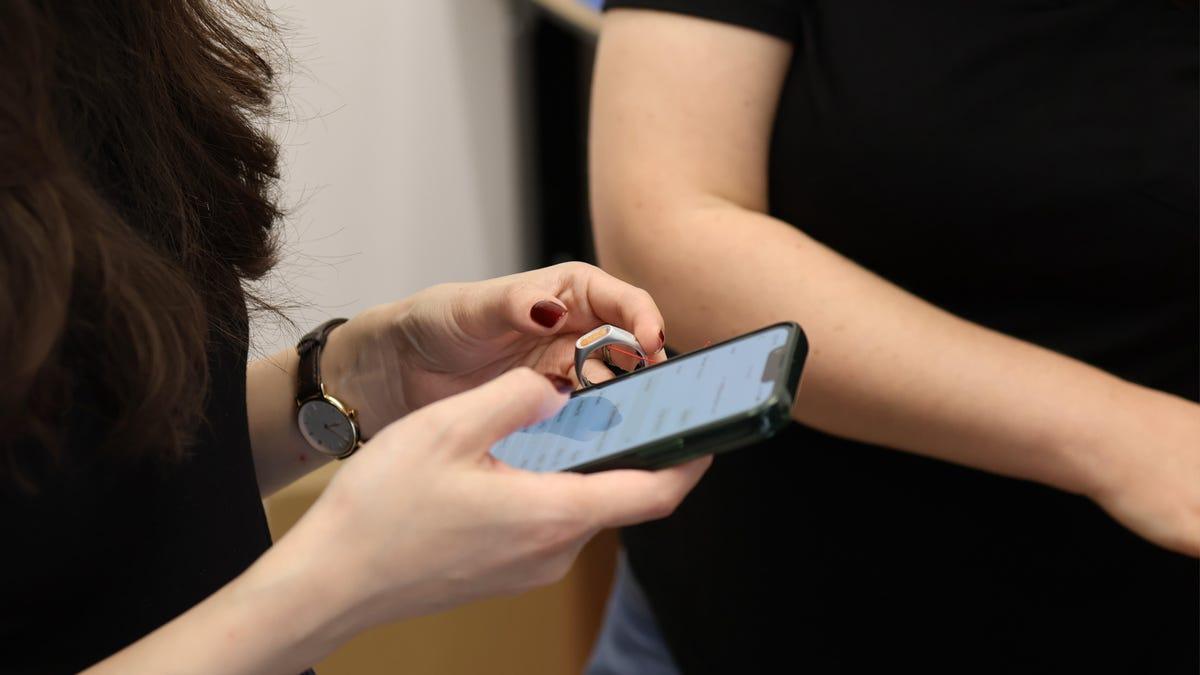
Stream Ring was designed for self-extension, enhancing memory, creativity, and organization. The tech industry is betting that AI will replace humans' creativity and cognition. Sandbar, however, is creating technology that supplements these things instead. Sandbar is developing an AI-powered smart ring with a single and predominant use case. Its Stream Ring is an AI-powered note-taker and thought organizer that users can whisper into. The accompanying app organizes ideas and lists as the user talks. Then, the ring talks back, and, get this, does so in your own voice. Also: The smart ring I'm most fascinated by isn't made by Oura "Thoughts bubble up constantly, especially when we're on the go. I wanted to capture thoughts or discuss ideas without pulling out a phone or speaking into the void. Importantly, I wanted that experience to feel like inner dialogue, not a conversation with a virtual companion," Mina Fahmi, CEO and co-founder of Sandbar, said in the product announcement's press release. Fahmi and co-founder Kirak Hong first collaborated at CTRL-Labs, where they developed neural interfaces that were later sold to Meta. I got to visit Sandbar's Manhattan office, receive a demo of the Stream Ring, and see for myself. The aluminum-clad ring resembles an average accessory, but features a flat crown that serves as a touchpad. Users press and hold it to their mouth to activate the AI. The ring must be pressed to activate the mic. Additionally, the touchpad can be used to control music playing in earbuds. The Stream Ring is suitable for those with "an active inner world," Fahmi says, trying to organize, process, or express themselves and the many bubbling thoughts they produce. It's also a match made for Apple Notes app power users or those who already have familiarity using existing LLMs in a conversational manner. Also: A month with Fitbit Premium on my Pixel Watch changed how I see AI health coaching Fahmi controls his music and thinks through his day of meetings and their respective talking points with the ring while on the subway headed to work. During the workday, he might go for a walk and talk into the ring to thoroughly process ideas or events. One alpha user and marketing professor uses the ring to prep her teaching lesson as she drives and creates a note or agenda out of those thoughts. Another talks into the device while watching her kids at the playground, because, unlike a phone or notepad, a user must look down at it to use, the ring and the accompanying app can be used without visual distraction. When you call on Stream, it fulfills several actions at once, such as providing a response (connected to the web), deciding what to do, writing a note, and revising, regrouping, and reorganizing notes and memories. Different AI models power this variety of functionalities. By talking through personal experiences, ideas, and plans, the ring and its accompanying app, where all these interactions are organized, serve as an extension of the self, Fahmi says. The Inner Voice, the voice that talks back to them during these interactions, is foundational to this idea. When setting up the Stream Ring, users can choose to create their own Inner Voice or use a default voice that responds to them when initiated. I wanted to see what my Inner Voice sounded like, so I recorded myself reading a provided paragraph that Stream uses to generate that voice. Then, I heard myself speak back to myself. It was uncanny - and a little more monotone than my already-monotonous voice. Also: This 30-second routine keeps my Samsung Galaxy watch running like new every month Would people really get used to hearing their own voice speak back to them, I asked Fahmi? He said that the first few times people hear their Inner Voice, they are skeptical or discomfited, but then, within a few days of usage, they can't use the device without it. He stresses that Stream is not a reflection of the user but an extension of it. "We're trying to give people themselves plus a little bit of whatever additional thing they need, an additional perspective, additional memory, empathy, or creativity." Stream's approach to this AI-powered device stands in stark contrast to the other AI-powered wearables currently on the market. Fahmi acknowledges the fear people have of AI hardware and software, and that it poses a perceived threat to their own autonomy and control. "I think the solution is to model something as you rather than another. People have their own wills, independent lives, goals, and perspectives. I don't think machines should be that. I think most of the problems we're seeing with how society is reacting to these machines comes from the fact that we're putting so much effort into modeling them as humans that will talk over you and have their own desires and dreams and will push back," Fahmi tells me. Another important feature of the Stream Ring is its ability to capture words and requests clearly -- regardless of sound level. Fahmi whispered near-inaudibly into the ring as he sat next to me, and the ring precisely captured his words in the app. The controlling of the music device element seemed odd to me. Why did they include that component within the Stream Ring? Fahmi says that the ring is "the beginnings of a conversational interface" that gives the user tools and haptics to hold and pause the device, interrupt, or take actions quickly and silently. Also: I'd easily splurge on these 5 tech devices again - why they're worth it "It needs to coexist with audio and other audio apps," Fahmi explains. Rarely does Fahmi use the Stream Ring with his phone open; he typically uses it with his earbuds in. "It's in my pocket, and I'm listening to music," he explains. "If the conversational interface broke my relationship to music, I wouldn't use it." When I tested the ring out, I asked it to take notes on the meal I was about to make for my friends, to query it for article ideas, and to ask it questions about itself. The haptic feedback was pleasing and responsive to my touches. Fahmi showed me how the app autonomously crosses bullet points off lists you've asked it to create and reorganizes ideas in a seamless manner. That organization piece compelled me most -- what I want out of my technology is to take my existing ideas and plans and do the fine-tuning for me. Stream seems to do this easily. Every action and note taken was performed quickly and without error. Stream Ring's launch is slated for next year at $250, which includes three months of Stream Pro, offering unlimited interactions and early access to new features for free. After the trial period, the subscription costs $10 a month. The ring is designed for most environments, allowing you to shower with it and wash your hands without any issues. It's not made for sleeping and boasts a battery life that should last all day. Preorders are now open.
[3]
Pebble's New Smart Ring Is Only $75, Made to Record Ideas Before You Forget
With over a decade of experience reporting on consumer technology, James covers mobile phones, apps, operating systems, wearables, AI, and more. Pebble's new smart ring isn't designed to replace your smartwatch or compete with the likes of the Oura Ring 4. The Pebble Index 01 is instead built to record your ideas and reminders when inspiration strikes without using your phone. There's a small button on the ring to tap to record your whispers into the ring's microphone. It will send those short recordings directly to your phone. The device uses an on-device large language model (LLM) to decide what to do with the recording. For example, it can add a new note, or it may create a reminder. The ring itself can store up to five minutes or audio before it needs to reconnect to your phone. Pebble's software works with both iPhone and Android devices. Pebble designed the Index 01 to record those ideas that often slip out of your mind unless you write them down. Head of Pebble, Eric Migicovsky, speaks about how he often finds he comes up with ideas when riding his bike, but is unable to write them down before he forgets them. The brand assures customers the ring is only recording after a button press, and it says "your thoughts are processed by open source speech-to-text (STT) and AI models locally on your phone" for extra security. The smart ring is exclusively designed to make recordings as there's no speaker, activity tracking or other tech. However, Pebble is encouraging users to make use of the device outside of recording calling it "customizable and hackable." It says it will open the ability for others to build new functionality for the smart ring, such as a double press of the button to take a photo from your phone, or turn on your smart lights. Migicovsky even suggests it working to talk directly with ChatGPT's Voice Mode. It's available in US ring sizes from six through to 13, although it doesn't currently provide a ring sizing kit unless you have a 3D printer at home. The ring comes in either polished silver or gold, or a matte black. It's made of stainless steel, aside from the button which is liquid silicone rubber. The ring itself is water-resistant up to a meter. You can't recharge the Pebble Index 01. It's designed to be one use product, but the brand estimates its battery will last for around two years. That's based on an average of 10 to 20 recordings a day at a length of between three to six seconds. Pebble encourages users to send the device back for recycling when it's out of juice, suggesting customers should then buy a new ring to replace it. It costs $75 at preorder, before jumping up to $99 when Pebble has the product officially on sale. The ring will be released at some stage in March 2026.
[4]
This ring remembers everything so your brain doesn't have to - and doesn't need charging
Sure you can record voice notes with your phone or smartwatch, but the Index 01 lets you do it with one hand I'm always excited to learn what Pebble is up to, because this gadget brand - which made a name for itself with its lo-fi smartwatch - decidedly does things differently. Its latest product is an AI-enabled device that seeks to avoid the pitfalls of recent fiascos in this category, with thoughtful features and an approach to packaging you don't often come across. It's called the Index 01, and it's basically a ring for your index finger that captures your ideas as you speak into it. The concept is that it's meant to act as external memory for your brain, while respecting your privacy and allowing you to use it discreetly with just one hand. It graces your index finger, has just one button, and includes a single-use battery that can last years. Here's how it works: whenever you think of something you want to remember later, press and hold down the ring's only button and say it out loud. The Index 01 will beam that over to your phone, where your voice note will be transcribed locally, and an on-device large language model (LLM) will parse it to take actions like saving it as a note, turning it into a reminder, or setting a timer. The device doesn't need a subscription to work; it doesn't even require an internet connection or to be within range of your phone to record. It's got a bit of onboard memory, so it can capture your thoughts wherever you are and sync with your handset when you're near it again. Inventor Eric Migicovsky, who founded Core Devices to revive his Pebble brand and launch new products like this one, has been working on the ring for about a year now. Describing the intentions behind the Index 01's design, he noted that it's meant to become part of your routine, while also being unobtrusive and allowing you to be more present in your everyday life. To that end, the ring is water resistant, so you can simply wear it all the time. And since it's worn on your index finger, you can operate it with just one hand - unlike your phone or smartwatch that would require both hands to engage a recording function. The other big deal is the battery. While we're used to being able to recharge virtually every other personal gadget in our arsenal, this one doesn't have a charging port. Instead, its tiny silver oxide battery is meant to last for 'roughly 12 to 15 hours of recording,' which works out to two years of usage if you're recording 3-6 second thoughts between 10-20 times a day. Migicovsky believes that this approach - which seems like a major compromise on the surface - allows the ring to be much smaller and less expensive than it otherwise would be. Plus, there's no charger to misplace. I've got a drawer full of fitness bands and other little doodads that are now unusable because their proprietary chargers have gone missing, so I can get behind this line of thinking. It's sort of like a reasonable version of planned obsolescence: you know what you're getting for your money, and you're buying upfront into the notion that this thing won't last forever. I don't know about you, but I'm all in on voice notes, and have been for about a decade. I run a system that lets me record ideas big and small on my phone or Wear OS smartwatch, and automatically uploads those to Google Drive; those audio files are transcribed and summarized using OpenAI's Whisper model, and dropped into a private Notion database. It works pretty darn well, and it's how I get a lot of my thinking done - everything from daily journaling to planning story ideas to planning motorcycle trips. Being able to do all this more quickly would be fantastic. There are other ways to do this, and some AI hardware products promise a lot of the same thing - but the Index 01 presently seems like the most intuitive approach I've seen. I also like how it skips fancy features like gesture-based activation to just work reliably 100% of the time. You have to push and hold the button to record, and you can be certain it's stopped recording when you let go. There's a lot that the Index 01 doesn't do, like track health stats, count steps, light up, or even vibrate. Heck, it's not even well suited for long voice notes, like the half-hour rambles I go on while trying to flesh out harebrained ideas for novels and screenplays. The company says that's good because this narrow use case allows it to focus on making the ring good at the one thing it says it'll do on the tin. I'd argue it also helps differentiate it from other similar-but-not-quite-the-same offerings like Anker's Soundcore Work, so it simplifies the decision of whether it's the right AI recorder thingamajig for you. The Index 01 will retail at US$99 and can be pre-ordered now for $75; it's set to ship next March in three colorways and eight sizes. The brand notes that you'll be alerted via the app a month before the ring's battery runs out, at which point you can order another and even send yours back for recycling. Given the price point and its single-use battery, this isn't for everyone. It might well be best suited to people who already take a lot of voice notes - as opposed to someone getting into the habit for the first time - and want a better way to do it.
[5]

Pebble Is Making a Smart Ring for Saving All Your Fleeting Thoughts
Pebble's next act is a smart ring with a built-in microphone for recording your thoughts. Pebble smartwatch maker Eric Migicovsky, who recently reacquired the Pebble brand (now under his new company Core Devices) and revived the e-paper-based wearable, calls the $99 Index 01 smart ring an "external memory" for your brain. Unlike the Oura Ring 4 Ceramic, Samsung Galaxy Ring, and countless other multifunctional smart rings designed to track your health and fitness, Pebble's Index 01 is a single-purpose wearable. In a blog post detailing the Index 01, Migicovsky says it's as "small as a wedding band," made of stainless steel, is water-resistant, and comes in three colors. The smart ring has a single button that you can press and hold to activate the microphone. It doesn't require an internet connection or a subscription fee. After activation, you "whisper your thought," which is then sent to your phone and "added to your notes, set as a reminder, or saved for later review." As you may have guessed, the name "Index 01" is named after the fingerâ€"your indexâ€"you wear it on. This lets you use your adjacent thumb to press and hold the microphone button, which Migicovsky says has a "satisfying click-feel"â€"perfect for one-handed use. He says that he had initially made it an app for the Pebble smartwatch, but it couldn't be used with one hand and he also found "lift-to-wake gestures and wake-works" to be "too unreliable." Here's how the Index 01 works, according to Migicovsky. Audio recordings are first saved to the internal memory, streamed to the Pebble app on your phone (iPhone or Android), converted to text, and then an on-device large language model (LLM) turns that into an action such as adding it to your note and reminders." What the Index 01 is not is an "AI friend thingy or always-recording device," notes Migicvosky. Clearly, he's not a fan of AI devices like the controversial (and sucky) Friend pendant. It's a simple gadget built with privacy at its core. Migicovsky says the "connection between ring and phone is encrypted," and because all audio is processed on-device and sent to your phone, no recordings are ever stored in the cloud. He says, "an optional cloud storage system for backing up recordings is available," but it hasn't been built yet. As I scrolled down Migicovsky's detailed FAQ on the Index 01, a few things stood out to me. I love that the smart ring's battery can last "for years"â€"about 12 to 15 hours of battery life, if you use it 10 to 20 times a day for 3 to 6-second thoughts. But it's bizarre that the Index 01 is a single-use device, meaning it doesn't have a rechargeable battery. Migicovsky says that adding charging circuitry would have made the Index 01 bulkier and also more expensive. Instead, users are expected to send the smart ring back to Pebble for recycling; they'll be notified via the Pebble app to order another ring. Migicovsky estimates, based on the aforementioned usage frequency, the Index 01 should last around 2 years before it needs recycling. If you use it less often, the battery may last longer. Pre-orders for the Index 01 start today at a discounted $75, but that will increase to $99 after shipping starts in March 2026. As I said earlier, the smart ring will come in three colors (polished silver, polished gold, and matte black). You'll get eight sizes to choose from (6 through 13). This being a Pebble deviceâ€"built on the principles of open source and DIYâ€"users will be able to hack and customize the Index 01. Migicovsky says you'll be able to program the button for single and double presses, add your own voice actions, and even send audio recordings to your own app or server. It's all very much in the Pebble spirit.
[6]

Pebble's next product is a smart ring that remembers things for you
If you're anything like me, you know how important it is to get ideas and to-dos out of your brain so you actually remember them later. After bringing the iconic smartwatch back this year, Pebble is hoping its next product will help in these situations. It's a smart ring called the Index 01. The Pebble Index 01 is a durable, water-resistant ring -- about the size of a typical wedding band -- that wants to act as external memory for your brain. This is not a smart ring with all the bells and whistles of an Oura Ring. It's simply a ring with a button and a microphone. You just press the button and whisper your thought. That recording is then sent to the Pebble app on your phone, where it can be automatically converted to text, processed by an on-device LLM, and then added to your preferred notes and reminders app. Pebble initially tried building this functionality into the Pebble smartwatch app, but found it wasn't easy enough because it required using your other hand to press the button. Fitting all the necessary tech into a small ring that you wear on your index finger means you can easily press the button with your thumb on the same hand as you raise it to your mouth. Charging also shouldn't be an issue. The Index 01's non-rechargeable silver-oxide hearing aid battery lasts roughly two years based on recording 10-20 short thoughts per day. If you do happen to be away from your phone, the ring has on-ring storage for up to five minutes of audio, which will sync when it connects again. What about privacy? The ring is not always recording or listening for a wake-up command. It only listens when you actively press the button. Your recordings are processed locally on your phone using open-source speech-to-text and AI models, and the connection between the ring and phone is encrypted. The app works completely offline and doesn't require a cloud service, although an optional cloud service is available. Beyond just remembering things, the Index 01 can also perform some basic actions. You can ask it to do things like send messages or answer simple web queries. In addition, button clicks can be configured to control music, your smart home, or Tasker. You can even route the raw audio or transcribed text to your own app or server. It's designed to be extremely hackable and customizable. The Pebble Index 01 is available for pre-order today for $75. Once worldwide shipping begins in March 2026, the price will increase to $99. It comes in three colors -- polished silver, polished gold, and matte black -- and works with both iPhone and Android. Source: Pebble
[7]

Pebble is reinventing voice assistants and smart rings in one device -- meet the Pebble Index 01
It records voice notes and uses an on-device LLM in the open-source Pebble app to interpret instructions or transcribe Core Devices, the company relaunching the original Pebble smartwatch, has revealed the Pebble Index 01, a smart ring very different from the likes of the Oura Ring 4, Samsung Galaxy Ring, and the rest of the best smart rings on our list. With no heart rate sensors or motion detectors, it's not a health tracker. Instead, it's designed as "external memory for the brain", using a button-activated microphone to send voice notes to the Pebble app. Once the voice note arrives, the on-device LLM in the Pebble app (an open-source app so you can read the code and see how it works) interprets the instruction in a similar way to most voice assistants: as a voice note, timer, alarm, or reminder. The raw audio can also be played back within the app, and you can set the note, alarm, timer or reminder to play on a Pebble smartwatch, or another device. Otherwise, there's no actual output on the ring - no speaker or vibrating motor, just a small RGB LED. A blog post by Pebble and Core Devices founder Eric Migicovsky reveals that users can "configure single/double button clicks to control whatever you want (smart home, Tasker, etc)," and you can "add your own voice actions via MCP". MCP stands for 'model context protocols', a framework AIs use to perform actions and connect to external systems. Priced at $75 (around £56 / AU$113), the Pebble Index 01 is available in Black, Gold, and Silver, in eight sizes. It's not designed to be recharged, either - the battery reportedly lasts years, and the device can be sent back to Pebble for recycling. At its core, it's a very simple device. It's just "a button and a microphone, a little bit of memory and a Bluetooth chip", according to Migicovsky, along with the battery needed to power it. There's also no personality attached to the LLM in the app, like those found in Siri or Alexa; it just records, transcribes, answers questions and organizes without inserting itself into the process. "We made a lot of decisions, driving towards the idea of being a reliable external memory for your brain," said Migicovsky, who spoke to me from New York. "If you take it off, and you don't have it, you'll fall back into these other habits. If you're recharging it, even if it's a half-hour or overnight, you forget to put it back on." That drive for frictionless use is why Migicovsky chose a button to activate it, instead of a more modern system such as raise-to-speak or a wakeword like an Apple Watch. "If there's any friction in the system, a wakeword or whatever, you'll stop using it." Migicovsky isn't wrong: people get frustrated when sensors don't respond the right way, as you end up shaking your wrist or repeating yourself to Alexa. On the other hand, I use the voice assistant on my Garmin Venu 4 to execute simple commands like setting timers and reminders once per day, because it's button-activated and reliable. For Migicovsky and his Core Devices company, 'reliable' was a must, with 'fun' a close second. "To me, a gadget is something that doesn't take itself too seriously, that brings a little bit of joy to my life. It's something I get excited about - I loved reading gadget magazines and blogs, it's fun and joyful and brings a little slice of positivity. "In the tech world right now, there's just not enough chance to get that. The company that I started, Core Devices, is basically going to build cool gadgets that I want and sell them to people like me." Migicovsky tells me he's been using the Pebble Index 01 for months, and it has reportedly become part of his routine, easy to use through gloves thanks to the button, and less awkwardly placed than a smartwatch, making it able to function with only one hand in a very natural way. For now, though, we'll have to wait until Marc to find out if the Pebble Index 01 can earn its place as a simple, reliable gadget in a world of complex devices.
[8]

AppleInsider.com
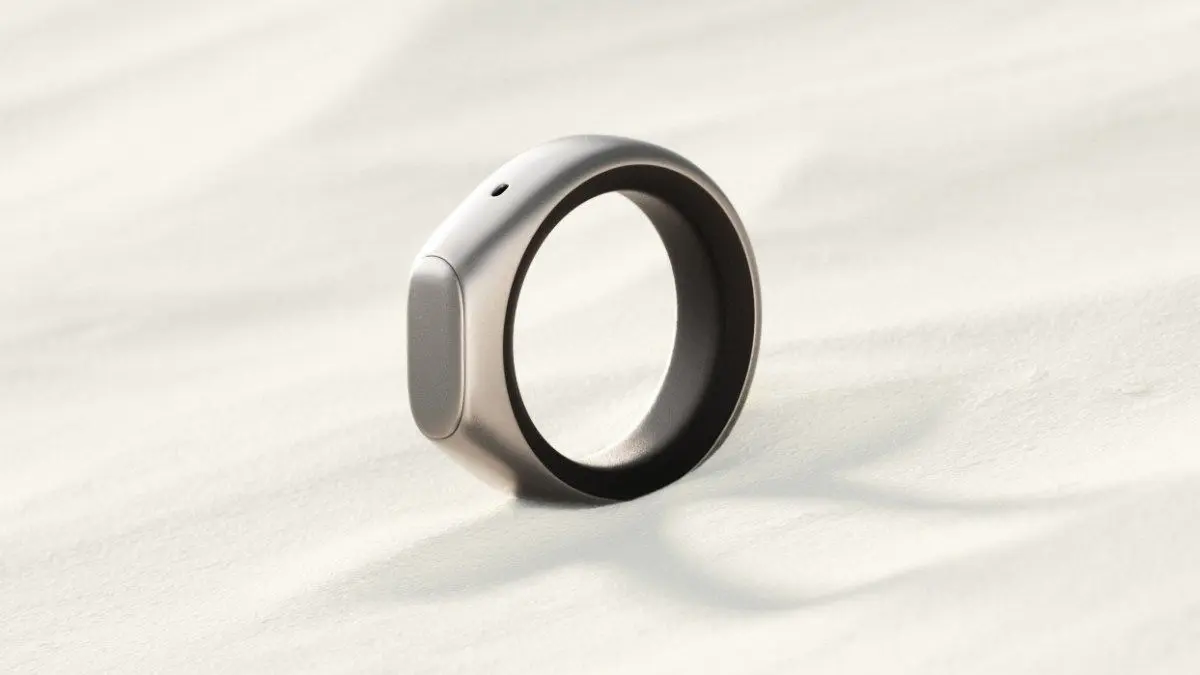
Pebble's revival has continued with an expansion into more wearables, but it's a bit of a stretch to suggest the Pebble Index 01 is a very "smart" ring. The Pebble smart watch made a big return earlier in 2025, with new versions having a 30-day battery life, but lacking modern smartwatch features. Now, the company is going after the smart ring market with a similar concept. Launched on Tuesday, the Pebble Index 01 is a ring designed to help you make voice notes quickly. The idea is to act as an external memory for the user, always on hand to handle audio recordings. The ring consists of a wedding band-style body with a button on the top, as well as a microphone. On pressing the button, the user speaks into the ring, and the recording is saved or transmitted to the user's nearby smartphone. Once on the iPhone or other smartphone, the recordings are then handled by open-source speech-to-text and AI models on the device, and are available for later review. If the iPhone isn't nearby, the ring can store up to 5 minutes of audio for syncing later. There's the possibility of changing where notes and reminders are saved on the device, too. While primarily meant for making notes, the ring can also be used to perform tasks, such as sending a Beeper message to a partner, or to ask simple questions that would normally be a quick web query. Button clicks could also be configured to control music. This is also done with a speech-to-text system that Pebble claims supports more than 99 languages. Not smart, but not dumb While other smart rings, like Oura, include a lot of sensors for biometric measurements, Pebble's attempt seems a lot more simple in comparison. Made from stainless steel and with a jewel-like button on the top, it's a device that lacks many of the typical smart device sensors seen elsewhere. It's a simple device, in that it also doesn't have a display, nor a speaker nor a motor for haptic vibrations. There is a small RGB LED, but Pebble insists it is "rarely used." Instead, it relies on other hardware to provide feedback if necessary. You could check notes on your iPhone, but if you have a Pebble smart watch, the recorded thought will be transcribed and shown on the display. This concept passes all of the AI and LLM processing on to the paired device, reducing the power consumption and performance requirements for the ring itself. This also has the byproduct of saving on battery usage. Pebble says it can last for "years of average use," and that there's no recharging option. When it's out of power, you are expected to send the ring back to Pebble for recycling. Pebble's smart ring may be a more stripped-back approach than others on the market, possibly leading some to think it doesn't deserve the "Smart" name. But at the same time, it may end up being a more useful way of working with onboard iPhone LLM processing than even devices like the flopped Humane AI Pin. However, it will have to convince people that talking to their finger is a good idea. Especially when they can already reach into their pocket to pick up their iPhone to do the same thing. Pebble sells the Index 01 at $75 for the preorder, $99 when it ships in March. It is available in polished silver, polished gold, and matte black, in U.S. ring sizes from 6 to 13. Where's Apple? There is also the possibility that Pebble's effort has come out well ahead of the Apple Ring, the long-fabled smart ring from the iPhone maker itself. The Apple Ring has been a rumor for almost 20 years, and has so far not resulted in any credible sign of it being in active development. That's not to say that Apple hasn't considered the concept, as it has filed numerous patents about the product category over the years. However, with relatively few rumors about the smart accessory floating around, it seems that Pebble doesn't have to fear any imminent launch from Cupertino anytime soon.
[9]

You won't believe what the Pebble watch creator's new product is
Gadgets are back. I'm calling it. On what authority, I'm not quite sure; but consider this the official announcement. Not just tech for the sake of it, something exciting that you want to use. In case you missed it, Pebble - the makers of the first smartwatch - are back, bringing back the smartwatch equivalent of dumbphones. They're scaled back on flagship features, but look cool and keep you more present in the real world. And the brand's latest release is a smart ring called Index 01. Only this isn't a health tracker, it's an AI-powered note-taker - like a more basic version of Plaud. It's powered by AI but in a blend-into-the-background, useful way rather than anything dystopian. The premise is simple: when you get a thought - "pick up oat milk," "text Mum back," you know the sort - instead of scrambling for your phone or hoping your memory is up to scratch, you tap a button on your finger and whisper it into your ring. The Index 01 is essentially an external hard drive for your notes or to-dos, disguised as a minimalist bit of jewellery. It's got one physical button, no screen, and you don't need to pull it out of your pocket. Just press, speak, and the thing does its job. This ring doesn't try to be your friend, therapist, or all-knowing omnipotent being like other AI devices - thank goodness. It's not "always listening," you've got to hold the button down to record. The ring syncs the audio, transcribes it with a local model (so everything stays on your device), and files it where it needs to go in the Pebble app. It stores up to five minutes of audio on the ring itself, so even if your phone's not nearby, you're sorted. It knows if you're adding a reminder, calendar entry, or just a general note. You'll be able to view them in the Pebble app or export them to your calendar, to-do list, or Notion. It even syncs with your contacts, so it knows who you're referencing. One of the best features? It never needs charging. Pebble squeezed all this into something the size of a wedding band, and powered it with a hearing-aid battery that'll last you at least a couple of years. You won't have to deal with a cursed proprietary charging puck that vanishes the moment you need it. You can even set custom button actions to do things like control your music or send preset messages. And because it's Pebble, it's hackable to bits. Want to run your own AI model or pipe raw audio into your own system? Go wild. The Index 01 is available to pre-order now for $75. That goes up to $99 (roughly £78) when shipping starts in March 2026. It comes in three colours: matte black, polished gold, and polished silver. You can nab it in eight US ring sizes, so it'll fit your finger.
Share
Copy Link
Eric Migicovsky, founder of Pebble, has unveiled the Index 01, a $75 AI smart ring designed as external memory for your brain. Unlike always-on AI wearables, this privacy-preserving device only records when you press its button, processing voice notes locally on your smartphone. With a battery lasting up to two years and no subscription fees, the ring enters a growing market alongside competitors like Sandbar's $249 Stream Ring.
Pebble Introduces Index 01 as External Memory Device
Eric Migicovsky, the founder behind the original Pebble smartwatch, has launched the Index 01, an AI smart ring priced at $75 for pre-orders before rising to $99 at retail
1
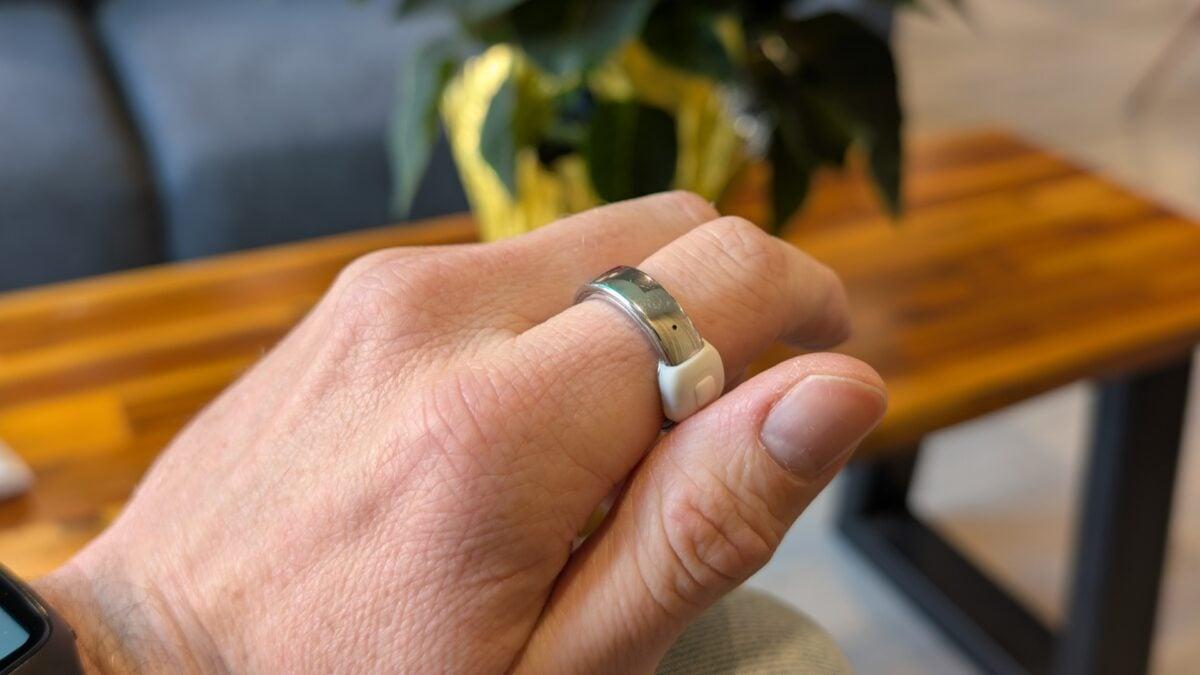
. This AI-powered wearable device serves a singular purpose: capturing fleeting thoughts and ideas before they vanish from memory. Named after the index finger where it's designed to be worn, the ring enables one-handed operation through a single button that activates its microphone4
.
Source: Gizmodo
Unlike fitness trackers such as the Oura Ring or Samsung Galaxy Ring, the Index 01 doesn't monitor heart rate, track steps, or analyze sleep patterns
5
. Migicovsky describes it as "external memory for my brain," addressing a specific problem: capturing ideas that emerge throughout the day before they're forgotten1
. The stainless steel ring is water-resistant to 1 meter, allowing users to wear it during daily activities like showering or washing dishes, though swimming requires removal .Privacy-Preserving Voice Notes Through Local Processing
The Index 01 distinguishes itself as a privacy-preserving wearable by processing all audio locally on the user's smartphone through the Pebble mobile app
1
. An on-device large language model handles voice recording and transcription using open-source speech-to-text models, ensuring no data travels to the cloud4
. The ring only records when its button is pressed and held, preventing any surreptitious recording scenarios1
.
Source: ZDNet
This thought organizer ring can capture up to five minutes of audio, which syncs to the connected smartphone app via Bluetooth when in range
1
. The device includes onboard memory for recording when disconnected from your phone, storing audio until reconnection occurs4
. Raw audio files are retained alongside transcriptions, providing backup if speech-to-text conversion struggles with background noise1
. The system supports more than 100 languages and integrates with apps like Notion and calendar systems1
.Long Battery Life Through Non-Rechargeable Design
The Index 01 features a distinctive approach to power management, offering long battery life through a non-rechargeable silver oxide battery
4
. Migicovsky claims the battery lasts "for years," supporting roughly 12 to 15 hours of recording1
. Based on average usage of 10 to 20 recordings daily at 3 to 6 seconds each, users can expect approximately two years of operation3
.When the battery depletes, Pebble encourages users to ship the device back for recycling, with the app providing one month's advance notice to order a replacement
4
. Migicovsky explains this design choice allowed the ring to remain smaller and more affordable than rechargeable alternatives, eliminating the need for charging circuitry and proprietary chargers that often get misplaced4
. There's no subscription fee required for the device to function1
.Related Stories


Growing Competition in Voice Note Wearables Market
The Index 01 enters an expanding market for voice-activated wearables. Sandbar, a New York startup founded by former Meta employees, recently unveiled the Stream Ring, which also lets users record fleeting thoughts via a touch-activated microphone
1
. However, Sandbar's $249 device offers a different value proposition with both a free tier featuring limited AI interactions and a $10-per-month Stream Pro subscription for unlimited chats1
.The Stream Ring includes a unique "Inner Voice" feature that responds to users in their own synthesized voice after they record a paragraph during setup
2
. Sandbar CEO Mina Fahmi, who previously worked on neural interfaces at CTRL-Labs before its acquisition by Meta, positions the device as "self-extension" technology that enhances memory and creativity rather than replacing human cognition2
. The Stream Ring is expected to ship next summer1
.Open-Source Philosophy Enables Customization
True to Pebble's heritage, the Index 01 embraces open-source software principles, making the ring "customizable and hackable"
3
. The button is programmable beyond its primary voice recording function, supporting single or double press gestures for actions like controlling music playback, triggering smartphone camera shutters, or sending messages through Beeper, the universal chat app Migicovsky also created1
.Users can add custom voice actions via MCP or route recordings to their own servers and applications
5
. If paired with a Pebble smartwatch or other brands, transcribed thoughts can appear on the watch screen for verification1
. This hackable approach reflects Migicovsky's philosophy under Core Devices, his new company that recently reacquired and rebooted the Pebble brand after Google open-sourced PebbleOS1
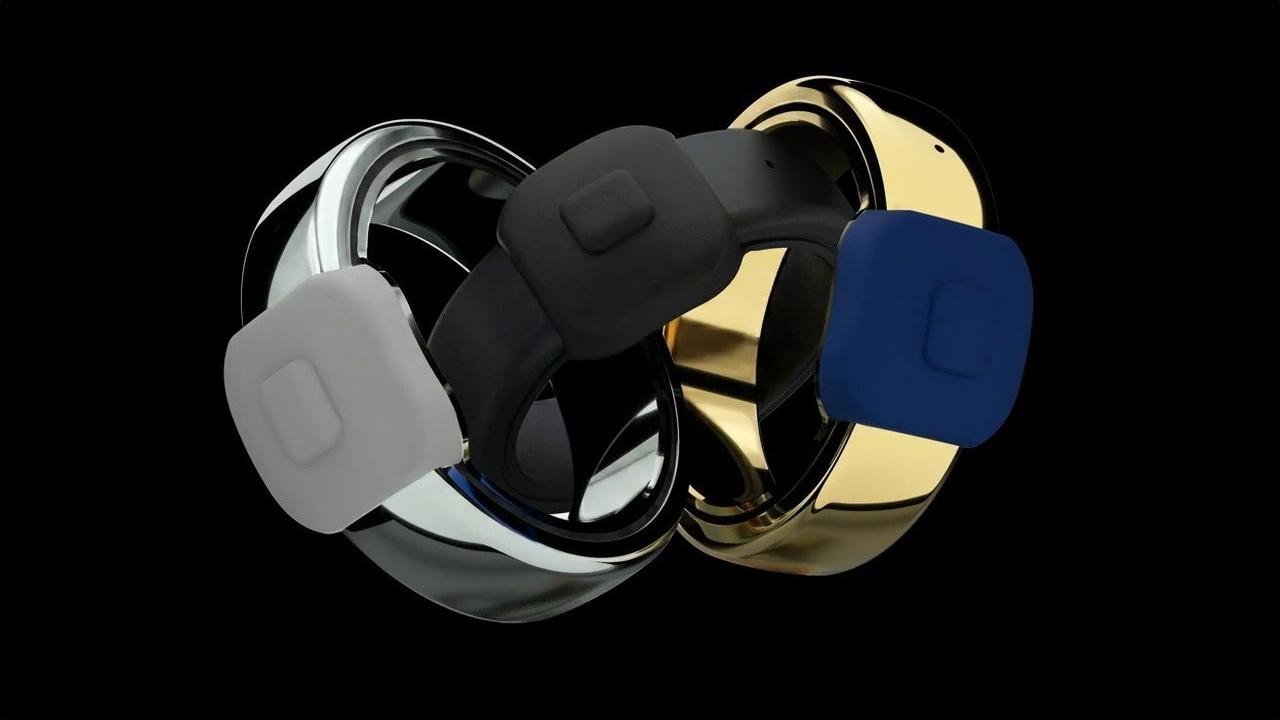
.The Index 01 ships in March 2026, available in polished silver, polished gold, and matte black finishes across US ring sizes 6 through 13
3
. Migicovsky, who wore his own ring for three months during development, says he "cannot imagine going back to a world" without this memory device1
. The focused, single-purpose design deliberately avoids becoming another AI assistant, instead solving one specific problem exceptionally well1
.
Source: AppleInsider
References
Summarized by

Navi
[1]
[4]
Related Stories
Recent Highlights
1
Google bets on AI agents with Gemini 3.5 Flash, Spark, and Omni at I/O 2026
Technology

2
AI passes the Turing Test as GPT-4.5 appears more human than actual people in landmark study
Science and Research

3
OpenAI cracks 80-year-old Erdős problem, stunning mathematicians with AI's biggest math breakthrough
Science and Research

Recent Highlights
Today's Top Stories






Don’t drown in AI news. We cut through the noise - filtering, ranking and summarizing the most important AI news, breakthroughs and research daily. Spend less time searching for the latest in AI and get straight to action.


