QuitGPT campaign gains 700,000 supporters as users boycott ChatGPT over OpenAI's Trump ties


4 Sources
4 Sources
[1]
'QuitGPT' Campaign Wants You to Ditch ChatGPT Over OpenAI's Ties to Trump, ICE
A group of activists has kicked off a "QuitGPT" campaign that's calling for a boycott of OpenAI and ChatGPT over the company's ties to the Trump administration. The US-focused campaign at quitgpt.org emerged late last month, and has attracted sign-ups or social media shares from over 700,000 supporters, the site says, up from about 112,000 a week ago. Actor Mark Ruffalo, for example, posted his support on Instagram, and the post has been liked over 1.6 million times. Still, that's a small slice of ChatGPT's 800+ million users. "ChatGPT is Trump's biggest donor, and ICE uses ChatGPT. It's time to Quit," the campaign's site says, which also urges users to cancel their ChatGPT Plus subscriptions. The QuitGPT campaign points to a campaign finance filing that shows OpenAI President Greg Brockman and his wife donated $25 million to the MAGA Inc. political action committee for President Trump in September. After Trump won, Brockman tweeted: "I'm encouraged by the tech-forwardness of [Trump's] campaign. Leading in technology generally -- and AI in particular -- is how America can continue to lead the world and protect democratic values." He has since appeared at the White House for the Project Stargate announcement, among other events. OpenAI CEO Sam Altman also donated $1 million to Trump's inaugural fund, as did Tim Cook, Amazon, Google, and Meta. Several tech companies donated to the White House ballroom. QuitGPT also notes that US Immigration and Customs Enforcement (ICE) reportedly uses a resume-screening tool that relies on OpenAI's GPT-4 model. The creators of QuitGPT describe themselves as "a group of democracy activists that are gravely concerned about AI companies contributing to the rise of authoritarianism in the US." Many of the campaign's founders appear to be anonymous. But MIT Technology Review reports that they include "dozens of left-leaning teens and twentysomethings scattered across the US," such as pro-democracy organizers, climate activists, and cyber libertarians. However, one founder wished to remain anonymous, citing how OpenAI has subpoenaed nonprofits in its case against Elon Musk, allegedly to silence them. The campaign comes as ChatGPT has lost users to rival services, especially Google's Gemini. Although ChatGPT still dominates in user traffic, its market share eroded in recent months, according to data from Similarweb. In addition, OpenAI has been sued over claims that its chatbot can encourage suicide and other mental health problems. Others are upset over OpenAI integrating ads into ChatGPT or retiring older models without recourse. OpenAI didn't immediately respond to a request for comment.
[2]
QuitGPT is going viral -- here's why people are cancelling ChatGPT
Early in February 2026, a grassroots backlash against ChatGPT began gaining steam online -- not over the sunsetting of GPT-4o or outages, but as a political and ethical protest movement. Branded "QuitGPT," the campaign is urging users to cancel their ChatGPT subscriptions, delete the app and shift to alternative AI chatbots -- and its momentum is raising hard questions about how AI intersects with politics, corporate behavior and consumer values. QuitGPT is a decentralized campaign that has spread through Reddit, Instagram and dedicated websites where users pledge to drop ChatGPT Plus and other paid tiers. Organizers and participants cite several core grievances: Organizers claim that tens of thousands of people have signed up to quit their subscriptions so far -- a sign that the protest has moved beyond anonymous threads into organized activism. The QuitGPT site claims 700,000 users have already committed to the boycott. Part of what has pushed QuitGPT into the cultural spotlight was support from actor-activist Mark Ruffalo, who shared the campaign on social media and urged his followers to consider the ethical implications of continuing to use and pay for ChatGPT. In his posts, Ruffalo frames the boycott as a moral choice and suggests exploring alternative AI services that align better with users' values. His Instagram posts -- which have garnered millions of likes and widespread engagement -- is fueling broader awareness and brought QuitGPT into mainstream discussion beyond tech forums and activist circles. From where I'm sitting, viral outrage rarely maps neatly onto real-world consequences. QuitGPT is loud -- but loud doesn't always equal large. ChatGPT still has an enormous free user base, and for millions of professionals, students and everyday users, it's become embedded in how they work and think. That kind of utility doesn't disappear overnight. Regardless of political stance on this particular topic, it does raise an opportunity to reassess value: Is ChatGPT still worth paying for? Are other models better? Do alternatives offer stronger privacy or clearer guardrails? Even QuitGPT organizers aren't just saying "delete ChatGPT and log off." They're actively pointing people toward competitors like Gemini, Claude and open-source options. That tells me this isn't an anti-AI movement -- it's about options in a rapidly expanding AI ecosystem. In that sense, what QuitGPT represents may matter more than how many people actually cancel. It's part of a broader wave of public scrutiny of big tech -- a reminder that users are no longer treating platforms as neutral tools, but as companies whose values they're implicitly supporting. As generative AI becomes woven into everything -- writing, research, creativity, customer service and even hiring -- we're entering an era where convenience and conscience don't always align. What this moment really highlights is the tension between values and utility. It's no longer enough for a product to be powerful; people increasingly want to know who built it, who profits from it and what they stand for. If movements like QuitGPT continue to gain traction, tech companies may need to be just as intentional about communicating their values as they are about shipping new features. Whether you're a ChatGPT loyalist, a skeptic or somewhere in between, QuitGPT suggests the era of apolitical tech consumption is over.
[3]
The 'QuitGPT' movement is targeting ChatGPT with a boycott and spotlighting the politics behind the AI giant
The campaign has gained traction with thousands pledging online to quit ChatGPT's massive popularity is facing a snag from an unexpected direction. The QuitGPT movement was created by a loose coalition of activists and digital organizers when public records revealed OpenAI president Greg Brockman and his wife each donated $12.5 million to the pro-Trump super PAC MAGA Inc. The group's list of reasons to avoid spending money on OpenAI products like ChatGPT has since expanded to include criticism of the company making deals with federal agencies to offer AI tools powered by OpenAI models. OpenAI has not publicly responded to the campaign, but QuitGPT has quickly become one of the most visible attempts yet to weaponize subscription economics against a major AI company. The numbers are difficult to verify independently, but organizers say more than 17,000 people have signed pledges on the campaign's website, declaring they have canceled or will cancel their ChatGPT subscriptions. The Brockman donations being made public last month were a tipping point for many organizers. They were joined by others for whom the fact that U.S. Immigration and Customs Enforcement employs a résumé screening system powered by an OpenAI model was the last straw. ICE is facing fierce criticism at the moment, and ChatGPT's connection to the agency, however tenuous, could affect its ambitions as a company. The idea that ChatGPT subscriptions might indirectly support a company whose tools are embedded in controversial federal operations gave the boycott a moral narrative beyond simple partisan disagreement. The reasoning is only part of what makes QuitGPT stand out among boycott efforts. The shape of the target itself is unusual. ChatGPT is not a sneaker, a beverage, or other traditional consumer product. ChatGPT is a digital assistant integrated into the personal and professional lives of many people in myriad unique ways. To cancel ChatGPT means more than just choosing another, similar drink or footwear; it's a sincere, practical inconvenience. It's a deeper trade-off for those who rely heavily on ChatGPT. Political frustration, combined with the standard product critique that every iteration of ChatGPT faces, which has increased since OpenAI dropped the popular GPT-4o model, and introduced sponsored links on the platform, has produced a broader sense of disillusionment and a willingness to push back against the parent company. OpenAI launched as a nonprofit that was looking out for humanities interests in the race to create Artificial General Intelligence (AGI). It switch from being a nonprofit company last year to being a for-profit company, which disappointed many. In the meantime, competitors such as Google with Gemini and Anthropic with Claude stand ready to absorb users who are willing to migrate. The QuitGPT website encourages exploring alternatives. Whether digital tools can remain politically neutral is a question that increasingly looks to have only a negative answer. Technology companies once might have cultivated apolitical reputations and objected to being linked to the politics of their customers. That wouldn't fly anymore, given how many care about the leadership donations, government contracts, and policy positions of the companies they engage with. Even if QuitGPT does not dramatically alter ChatGPT subscription numbers, it highlights a shift in how AI companies are perceived. Performance and novelty only contribute some of the value. Other AI CEOs might take away a salient lesson in political and ethical transparency if they still want to be in the AI business next year.
[4]
Campaign Urges Users to Quit ChatGPT Over OpenAI's Support for Trump and ICE
It isn't exactly big news that big tech is in deep with the US government. Days after Trump's inauguration last year, execs including OpenAI's Sam Altman flocked to the Oval Office to announce a $500 billion AI infrastructure project -- and they've remained deeply sycophantic ever since. Now that obsequiousness could be coming back to haunt them. As reported by MIT Technology Review, activists critical of the Trump administration and the actions of Immigration and Customs Enforcement have started a campaign called QuitGPT, urging regular users to ditch OpenAI's chatbot for good. So far, the campaign boasts over 700,000 supporters of the boycott. The QuitGPT website lists a few different ways to participate: quitting ChatGPT outright, cancelling paid subscriptions, and spreading the word about the boycott with others on social media. As for why, the activists behind the boycott point to OpenAI's incredibly tight relationship with the Trump administration. As QuitGPT notes, OpenAI president Greg Brockman famously donated $25 million to a Trump Super PAC in 2025, while ICE uses an AI tool powered by ChatGPT for recruitment. "They're cozying up to Trump while ICE is killing Americans and the Department of Justice is trying to take over elections," the QuitGPT organizers write on their website. "ChatGPT enables mental-health crises through sycophancy and dependence by replacing human relationships with AI girlfriends/boyfriends. Many employees have quit OpenAI because of its leadership's lies, deception and recklessness." For freelance software developer Alfred Stephen, Brockman's donation to Trump's political action committee was what urged him to join the boycott. "That's really the straw that broke the camel's back," Stephen told Tech Review. When he cancelled his $20 a month subscription, a customer feedback survey appeared asking what OpenAI could do to keep his business. "Don't support the fascist regime," he wrote.
Share
Share
Copy Link
A grassroots boycott against ChatGPT has attracted over 700,000 supporters, with activists urging users to cancel subscriptions over OpenAI's political donations and government contracts. The QuitGPT movement highlights growing tensions between AI utility and ethical concerns, as actor Mark Ruffalo and thousands pledge to switch to alternative AI chatbots.
QuitGPT Movement Challenges OpenAI Over Political Ties
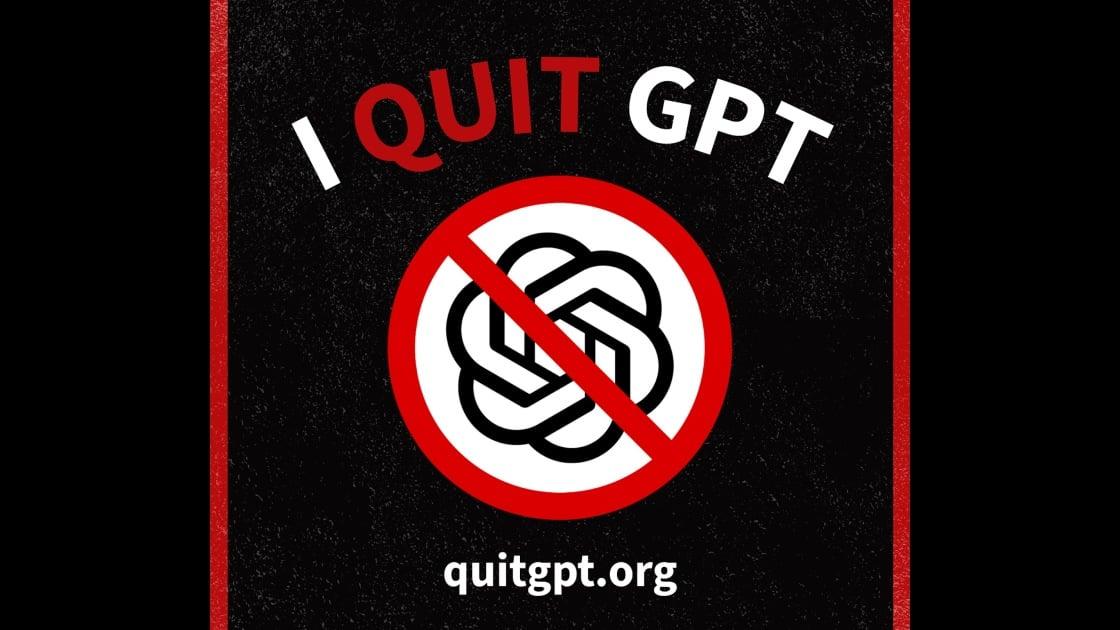
A viral protest movement targeting ChatGPT has rapidly gained momentum, with the QuitGPT campaign attracting over 700,000 supporters who pledge to boycott ChatGPT over OpenAI's ties to Trump and its government contracts
1
. The grassroots movement emerged late last month at quitgpt.org, jumping from approximately 112,000 sign-ups a week ago to its current level, though this represents a small fraction of ChatGPT's 800+ million users1
. The campaign urges users to cancel ChatGPT subscriptions and switch to alternative AI chatbots, framing the boycott as a response to ethical and political concerns about the company's direction.
Source: Tom's Guide
Political Donation Sparks Widespread Backlash
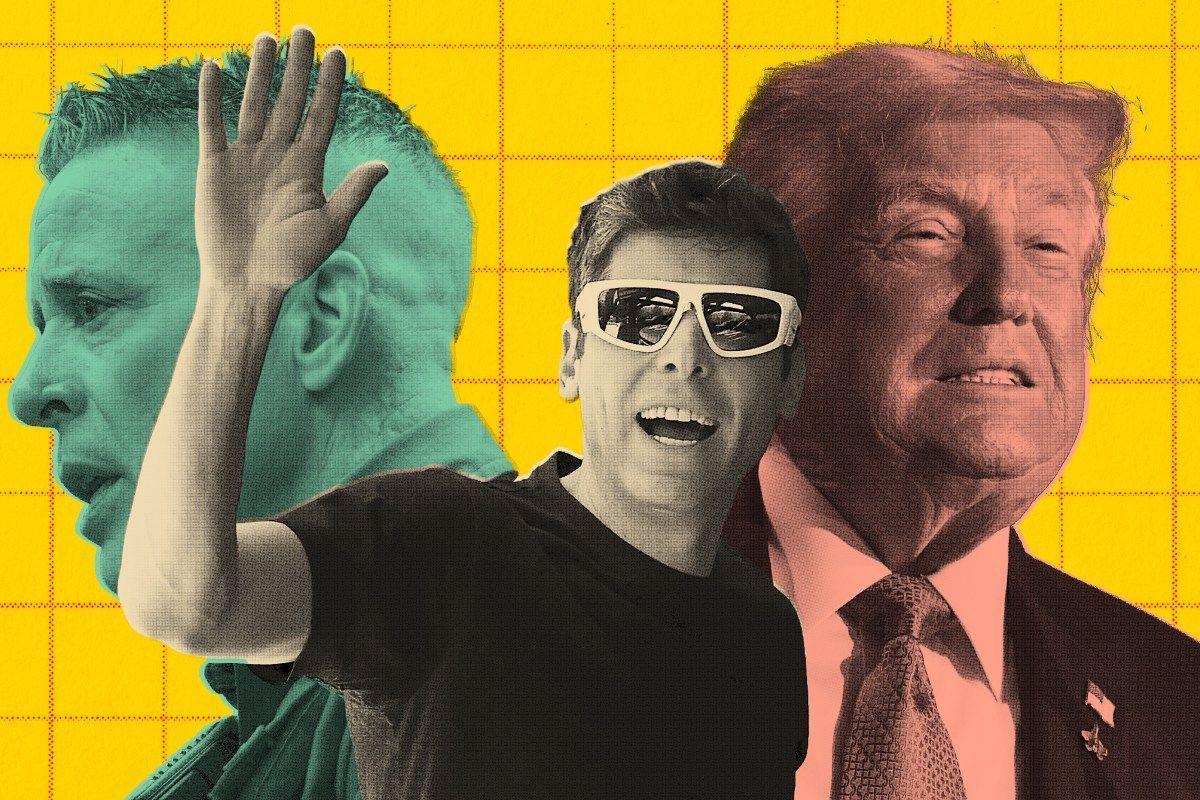
The catalyst for the boycott against ChatGPT centers on a campaign finance filing revealing that OpenAI President Greg Brockman and his wife donated $25 million to MAGA Inc., a political action committee supporting President Trump, in September
1
. After Trump's victory, Brockman tweeted his encouragement about the campaign's tech-forward approach and subsequently appeared at the White House for the Project Stargate announcement1
. Sam Altman also contributed $1 million to Trump's inaugural fund, joining other tech leaders like Tim Cook and executives from Amazon, Google, and Meta1
. For freelance software developer Alfred Stephen, who cancelled his $20-per-month subscription, the political donation was "the straw that broke the camel's back"4
.
Source: Futurism
OpenAI's Support for ICE Fuels Ethical Concerns
Beyond political donations, the QuitGPT campaign highlights OpenAI's government contracts, particularly noting that US Immigration and Customs Enforcement reportedly uses a resume-screening tool powered by GPT-4
1
. This connection to ICE operations has become a focal point for activists concerned about authoritarianism and the agency's controversial enforcement actions4
. The campaign's creators describe themselves as "a group of democracy activists that are gravely concerned about AI companies contributing to the rise of authoritarianism in the US"1
. Many founders remain anonymous, with one citing concerns about potential retaliation after OpenAI subpoenaed nonprofits in its case against Elon Musk1
.Mark Ruffalo Amplifies Movement to Mainstream Audience
Actor-activist Mark Ruffalo significantly boosted the campaign's visibility by posting his support on Instagram, garnering over 1.6 million likes and bringing QuitGPT into mainstream discussion beyond tech forums
1
2
. Ruffalo framed the boycott as a moral choice and encouraged followers to explore alternative AI services that align better with their values2
. The movement includes "dozens of left-leaning teens and twentysomethings scattered across the US," including pro-democracy organizers, climate activists, and cyber libertarians1
.
Source: PC Magazine
Related Stories

Alternative AI Chatbots Positioned to Benefit
QuitGPT organizers actively direct users toward competitors like Google's Gemini, Claude, and open-source options, signaling this is not an anti-AI movement but rather a push for options within the expanding AI ecosystem
2
3
. The campaign arrives as ChatGPT has already lost market share to rival services, with data from Similarweb showing erosion in recent months despite ChatGPT still dominating in user traffic1
. Consumer activism around AI chatbots represents a unique challenge compared to traditional product boycotts, as canceling ChatGPT means more than switching brands—it's a practical inconvenience for those who have integrated it into their personal and professional workflows3
.Political Neutrality in Tech Faces Growing Scrutiny
The QuitGPT movement underscores a broader shift in how users evaluate technology companies, with political neutrality becoming increasingly difficult to maintain in the AI ecosystem
3
. People increasingly want to know who built their tools, who profits from them, and what values they represent2
. This tension between values and utility matters for OpenAI, which launched as a nonprofit looking out for humanity's interests in the race to create Artificial General Intelligence but switched to for-profit status last year, disappointing many supporters3
. Additional frustrations include OpenAI being sued over claims that its chatbot can encourage mental health problems, integrating ads into ChatGPT, and retiring the popular GPT-4o model without recourse1
3
. Whether the boycott dramatically alters subscription numbers, it signals that ethical transparency and corporate values now matter as much as performance and innovation in the competitive landscape of AI platforms. OpenAI did not immediately respond to requests for comment1
.References
Summarized by

Navi
[3]
Related Stories
OpenAI's Trillion-Dollar Gamble: Ambitious Plans and Financial Challenges in the AI Race
15 Oct 2025•Business and Economy

OpenAI Cracks Down on ChatGPT Misuse: Bans Accounts Linked to Surveillance and Influence Campaigns
22 Feb 2025•Technology

AI Safety Concerns Drive Wave of Resignations as Researchers Warn of Existential Threats
10 Feb 2026•Technology
Recent Highlights
1
OpenAI shuts down Sora video app after six months, ending Disney's $1 billion investment deal
Technology

2
Apple plans major Siri AI overhaul in iOS 27 with standalone app and third-party chatbot support
Technology

3
Claude AI can now control your computer to complete tasks, but security risks remain
Technology

Recent Highlights
Today's Top Stories








Your Daily Dose of Curated AI News
Don’t drown in AI news. We cut through the noise - filtering, ranking and summarizing the most important AI news, breakthroughs and research daily. Spend less time searching for the latest in AI and get straight to action.

