Razer opens reservations for Project Ava AI waifu but can't explain what you're buying


3 Sources
3 Sources
[1]
Razer Seems Even More Confused About Its 'AI Waifu' Than the Rest of Us
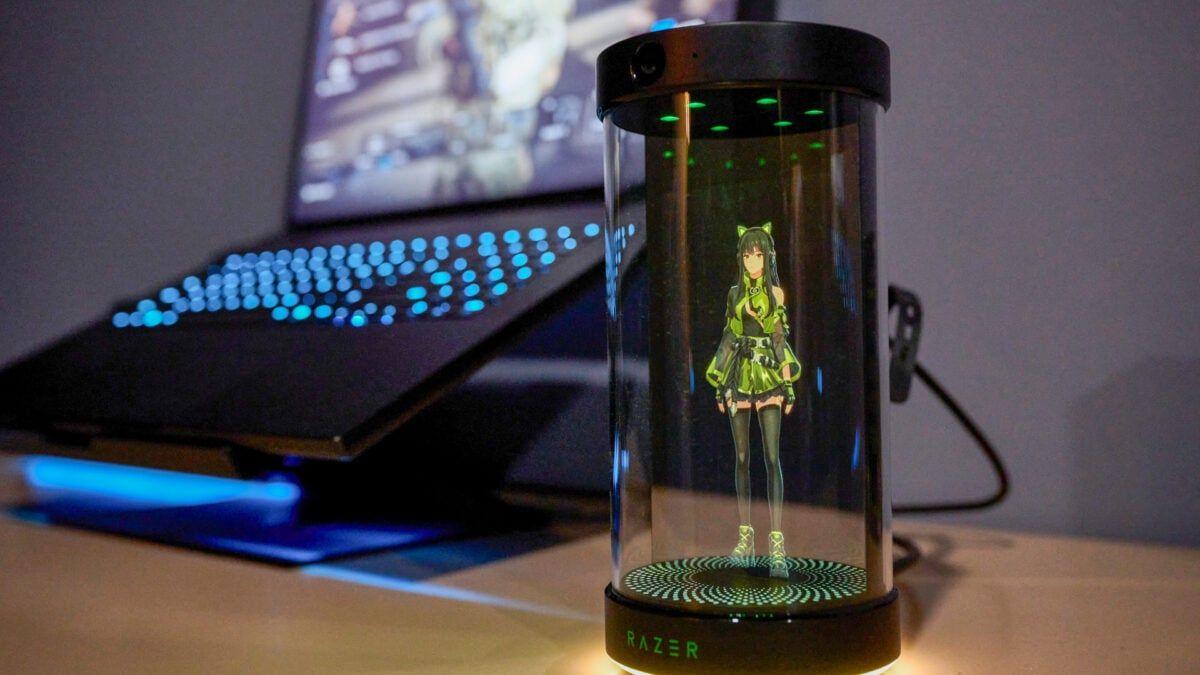
Razer doesn't know exactly what it's creating, but it still wants you to put money down on its desktop AI gadget. PC and peripherals maker Razer believes that somebody, somewhere, is desperate to put an anime cat girl on their desk, like their personal imprisoned Tinkerbell who's forced to compliment them on command. The company's Project Ava includes either a female waifu or male husbando hologram housed inside a glass jar that uses conversational AI to talk to users. The thing is, Razer doesn't know when it will be out, or -- apparently -- much else about this device it promises will be an actual product. We went hands-on with Project Ava during CES 2026. It's stuffed with technology we've seen before -- namely, an animated avatar and AI chatbot that's meant to act as a player's gaming mentor and desktop companion. Razer is mostly known for its PC gaming laptops, mice, and headsets, but it often goes to CES with a fair few concept devices in tow; hence Ava's "Project" nomenclature. In this case, Razer swore to consumers that Project Ava and its other AI gadget -- a pair of headphones with cameras and AI visual capabilities called Project Motoko -- would become real products... eventually. During an interview on The Verge's Decoder podcast, Razer's co-founder and CEO, Min-Liang Tan, couldn't offer many specifics about what's going on with its waifu in a jar, nor much about how people can buy it. Project Ava is currently open for "reservations" that cost $20. Those reservations will eventually become preorders with a promised, though vague, release date in the second half of 2026. At the same time, Tan said they were still getting feedback and "hear[ing] what the concerns are." And there certainly are concerns, considering we've yet to see an AI-centric gadget accomplish anything our existing products couldn't already do. Can you actually buy Project Ava? What's more, Razer hasn't settled on what's actually going on inside its AI companion device. Tan said, "We have not disclosed the actual specs of the product, and not even, for example, which character models, or even which model it's gonna be running at this point in time. We're leaving that absolutely open." Razer previously told Gizmodo it was working with esports stars to potentially stick their mugs and voices in the jar. Hopefully, it's comfortable with the new parasocial relationships consumers will naturally create with their likeness. Tan also told The Verge's Nilay Patel, "So what we have actually said is that these are reservations. They're not pre-orders, per se. So, ultimately, when we do launch the product, and it could be a long way out, by then, because of the specs." In an email statement to Gizmodo, Razer said, "The $20 reservation for Project Ava is a refundable deposit towards the final purchase price of the product. We will have more information on pre-orders for Project Ava in the future and look forward to sharing more information soon." Essentially, the reservation is a preorder for a preorder. It sets you up in line to get a Project Ava (knowing that's definitely not the final name) with the hope that you'll actually want it once the company reveals what's actually going on inside. On its product page, Razer promises you can cancel the reservation and ask for a refund. The company further implied that Project Ava may be in hot demand, and only those who get in line first can hope to get their waifu shipped to their door at some vague future date. Razer's CEO doesn't see the problem with Elon Musk's Grok Project Ava, as an AI chatbot companion, was already a concept Razer had shown off before. The attached waifu hologram is merely a facade for what we've experienced before from the likes of Microsoft. The "Gaming Copilot" is still in beta, and it's currently terrible at what it's supposed to do. In some cases, Copilot doesn't even know a game's controls, even though they were published by Microsoft's Xbox brand. In my short time with Project Ava, the waifu AI wouldn't offer me any solid advice on how to manage recoil in a game like Battlefield 6. Mind you, the demo Razer set us up with was the game's target practice mode that is all about aiming. Razer was reluctant to tell us exactly what was happening inside the glass jar, beyond the fact that it was using Elon Musk's brainchild, Grok, as its centerpiece AI model. We also thought that was a strange choice. When pressed, Razer told Gizmodo that Grok had the best conversational model that helped it sound more human-like. Never mind that Grok is at the center of numerous controversies on X (formerly Twitter), where the chatbot was willing to talk openly about "MechaHitler" and share nonconsensual sexual images. The reason why Grok seems more conversational is because it's designed with "tone" in mind and fewer guardrails -- or, more specifically, made to parrot Musk's increasingly nativist worldview. "My focus to date has been more in terms of what's the best conversational model that we've got, and they're great, they're fantastic," Tan said.
[2]
Project Ava is an AI gaming coach that also runs your day
Razer blends gameplay guidance with routine help, for gamers who live at their PCs. First unveiled at CES 2026, Razer is previewing Project Ava, a 5.5-inch 3D hologram desk companion that's built to sit beside your keyboard and stay involved. It's meant to handle everyday tasks, help with work, and step into games as a training partner. Ava's hardware leans on sensors and a wired link, including dual far-field microphones, an HD camera with an ambient light sensor, and a USB-C port for data and power delivery. It's designed for Windows, with a direct USB-C connection that supports "PC Vision Mode" so it can analyze what's on your screen with minimal latency. Recommended Videos Razer is currently demonstrating Ava with xAI's Grok engine, while also describing an open architecture that's intended to support other AI platforms later. In the US, you can reserve with a $20 deposit that's refundable and applied to the final purchase. Availability is targeted for the second half of 2026. It wants to be your in-game edge Ava's boldest hook is live coaching during gameplay. The demo framing centers on tactical callouts, like when to call for air support, where to aim, and when to break line of sight and change firing style for mid-range fights. That kind of guidance sits in a sensitive spot for competitive play. Razer says it's built as a coach and trainer, not an automation tool, and that it's working to keep features aligned with game terms of service. The rulebook still varies by title. It's also a daily assistant Away from matches, Ava is positioned as a routine and wellness helper that can track habits and moods, then nudge you with reminders. It's also shown managing practical stuff like your calendar, wardrobe picks, and dinner plans. For work, Razer frames it as a brainstorming partner that can help you think through creative directions and tackle complex analysis. But an always-present camera and mic setup needs clear controls, and the details on what's stored, what's processed locally, and what you can fully disable aren't spelled out here. What matters before 2026 If you're tempted by the reservation button, keep your checklist simple. You'll want a confirmed list of supported games and how advice is delivered, plus a privacy breakdown that covers every sensor and every opt-out. Also watch the avatar side. Razer is showing swappable holographic companions with eye tracking and facial expressions, and it notes that avatar selection and animations are still in development. Until the price and the privacy story are concrete, that $20 deposit is best treated as a no-risk placeholder. If things fall into place, Razer's outlook into the future may just include not just games but also this AI companion.
[3]
Razer CEO admits users could fall in love with its holographic AI assistant project but 'that's definitely not something we plan to build the product toward'
Razer has gone big on AI. It opened up three global AI hubs in the latter half of 2025, and at the start of 2026, showed off Project Motoko (AI glasses but as a gaming headset) and Project Ava (a holographic AI assistant). With all this at the forefront of the company, it's no surprise that the technology is a large part of The Verge's extended conversation with CEO Min-Liang Tan at this year's CES. When asked how Razer decides which projects actually become real projects, Tan says: "We very rarely sit down with the finance people and say, 'Oh, do we do projections and things like that?' It's really more of a 'by the seat of our pants' kind of thing. It's cool, we like it, it's gonna be fun, we want it for ourselves. I think the real kind of trigger there is, do we want it for ourselves? And if we really want it for ourselves, and we think it's cool, we'll bring it to market." Naturally, this leads Nilay Patel, the editor in chief of The Verge, to ask about what he calls the 'holographic anime waifu'. Tan compares it to the likes of Cortana from Halo and suggests it's always been a dream of gamers. "It's a little bit of sci-fi, us growing up always wanting something cool like that, and so we said, 'Hey, it's a great concept,' and I think the community loves it." But will they fall in love with it? We know people are already forming relationships with chatbots (hell, people have married bridges and cars), but by actively creating this sort of "anime waifu" for your desktop, is there a risk of it enabling unhealthy relationships between users and Project Ava? "Well, I would say that potentially that could happen," says Tan, "but that's definitely not something we plan to build the product toward." Tan clarifies that Razer is actively taking reservations and does have plans to put it out at some point. Ava itself was actually announced last year, but the initial product was just an app on a computer that backseat gamed. Now, it's much more involved and powered by Grok, xAI's AI assistant. Given the noise around the Grok deepfake AI imagery scandal, it's natural that the trust and safety aspects of xAI as a Razer partner gets touched on, though Tan almost entirely avoids the question. "Specifically, I don't really like to comment on that at this point in time," he says, "because I don't have enough information, I think, right now. I really don't. My focus to date has been more in terms of what's the best conversational model that we've got, and they're great, they're fantastic." In character for a company looking to get an AI waifu on your desk, Tan believes that AI will be near inescapable going forward. "I believe that at some point, it's not just games, but AI is just gonna be so prevalent or ubiquitous that every single vertical, healthcare, gaming, and entertainment, is gonna have some elements of AI there. And we are just going along with it." Despite its own efforts in the AI world, Tan seemingly doesn't just want Razer to be enabling users to churn out rubbish -- for example, it's creating AI-powered QA tools for developers. "I think for us, we're all aligned against gen AI slop that is just churned out from a couple of prompts and stuff like that." Tan argues that new forms of artists will pop up in the AI age, who will weave prompts into their workflow to make different types of art. He also claims that people will get sick of AI work and will look for something more. "At some point in time, we're going to see so much slop out there that we're going to crave for really great art, really great design," says Tan. "And that's what's gonna happen. We've seen a cycle go over and over and over again."
Share
Share
Copy Link
Razer is taking $20 reservations for Project Ava, a holographic AI assistant that sits on your desk like an anime character in a jar. The company promises it will become a real product in late 2026, but CEO Min-Liang Tan admits they haven't finalized specs, character models, or even which AI model will power it. The desktop AI gadget uses Grok AI and aims to serve as both a gaming coach and daily assistant.
Razer Takes $20 Deposits for Undefined Product
Razer has opened reservations for Project Ava, its controversial desktop AI gadget that houses a holographic AI assistant inside a 5.5-inch glass display
1
2
. The company is asking consumers to put down $20 for a product it openly admits is still being defined. During an interview on The Verge's Decoder podcast, Razer co-founder and CEO Min-Liang Tan couldn't offer specifics about the AI waifu device, stating "We have not disclosed the actual specs of the product, and not even, for example, which character models, or even which model it's gonna be running at this point in time"1
. The $20 reservation is refundable and will eventually convert to a preorder, with a vague release window in the second half of 20261
.
Source: Gizmodo
What Project Ava Claims to Offer
First unveiled at CES 2026, Project Ava positions itself as both an AI gaming coach and personal daily assistant
2
. The hologram desk companion features dual far-field microphones, an HD camera with ambient light sensor, and connects via USB-C for data and power delivery2
. Razer demonstrated the device providing tactical callouts during gameplay, such as when to call for air support and how to adjust firing style for mid-range fights2
. Beyond PC gaming applications, the device is framed as a routine and wellness helper that can track habits, manage calendars, and offer brainstorming support2
.Grok AI Model Powers Controversial Device
Razer is currently demonstrating Project Ava with xAI's Grok AI model, developed by Elon Musk's company
1
2
. When questioned about this choice given Grok's involvement in deepfake imagery scandals, Min-Liang Tan largely avoided the issue, saying "I don't really like to comment on that at this point in time" and focusing instead on Grok's conversational capabilities3
. Razer told Gizmodo that Grok offered the best conversational model for sounding human-like, though the platform is known for having fewer guardrails than competing AI systems1
. The company describes an open architecture intended to support other AI platforms later2
.CEO Acknowledges Romance Risk with Holographic Anime Waifu
When asked directly whether users might fall in love with the holographic anime waifu, Tan admitted "potentially that could happen, but that's definitely not something we plan to build the product toward"
3
. The CEO compared Project Ava to characters like Cortana from Halo, suggesting it fulfills a long-standing dream of gamers3
. Razer previously indicated it was working with esports stars to potentially feature their likenesses and voices in the device1
. The company's decision-making process appears informal, with Tan explaining they rarely consult finance teams, instead asking "do we want it for ourselves? And if we really want it for ourselves, and we think it's cool, we'll bring it to market"3
.
Source: PC Gamer
Related Stories

Privacy Concerns and Game Compatibility Remain Unclear
The always-present camera and microphone setup raises significant privacy concerns that Razer has yet to address comprehensively
2
. Details on what data is stored, what's processed locally, and what users can disable remain unspecified2
. For the gaming mentor functionality, questions about game compatibility and compliance with terms of service persist. Razer claims it's working to keep features aligned with game rules, though the rulebook varies by title2
. During hands-on testing, the AI assistant struggled with basic tasks—when asked about managing recoil in Battlefield 6's target practice mode, the AI waifu couldn't provide solid advice1
. This echoes problems with Microsoft's Gaming Copilot, which remains in beta and sometimes doesn't even know game controls for Xbox titles1
.Razer's Broader AI Strategy and Concept Devices
Project Ava represents part of Razer's aggressive push into AI territory. The company opened three global AI hubs in late 2025 and also unveiled Project Motoko, AI-powered headphones with cameras and visual capabilities, at CES 2026
1
3
. Tan believes AI will become inescapable across all verticals including healthcare, gaming, and entertainment3
. Despite this enthusiasm, the CEO expressed opposition to "gen AI slop that is just churned out from a couple of prompts," arguing that Razer is creating AI-powered tools for developers instead3
. Tan predicts that as AI-generated content saturates the market, people will crave authentic art and design, creating opportunities for artists who integrate prompts into their creative workflows3
.References
Summarized by

Navi
[2]
Related Stories
Razer unveils Project Ava AI hologram desk companion powered by Grok at CES 2026
06 Jan 2026•Technology

Razer unveils fully agentic AI companion AVA at GDC 2026, promising task automation beyond chat
09 Mar 2026•Technology

Razer Unveils AI-Powered Game Development and Assistance Tools
20 Mar 2025•Technology
Recent Highlights
1
OpenAI Releases GPT-5.4, New AI Model Built for Agents and Professional Work
Technology

2
Anthropic sues Pentagon over supply chain risk label after refusing autonomous weapons use
Policy and Regulation

3
OpenAI secures $110 billion funding round as questions swirl around AI bubble and profitability
Business and Economy

Recent Highlights
Today's Top Stories







Your Daily Dose of Curated AI News
Don’t drown in AI news. We cut through the noise - filtering, ranking and summarizing the most important AI news, breakthroughs and research daily. Spend less time searching for the latest in AI and get straight to action.

