Reliance unveils $110 billion AI investment plan as India accelerates tech ambitions


9 Sources
9 Sources
[1]
Reliance unveils $110B AI investment plan as India ramps up tech ambitions | TechCrunch
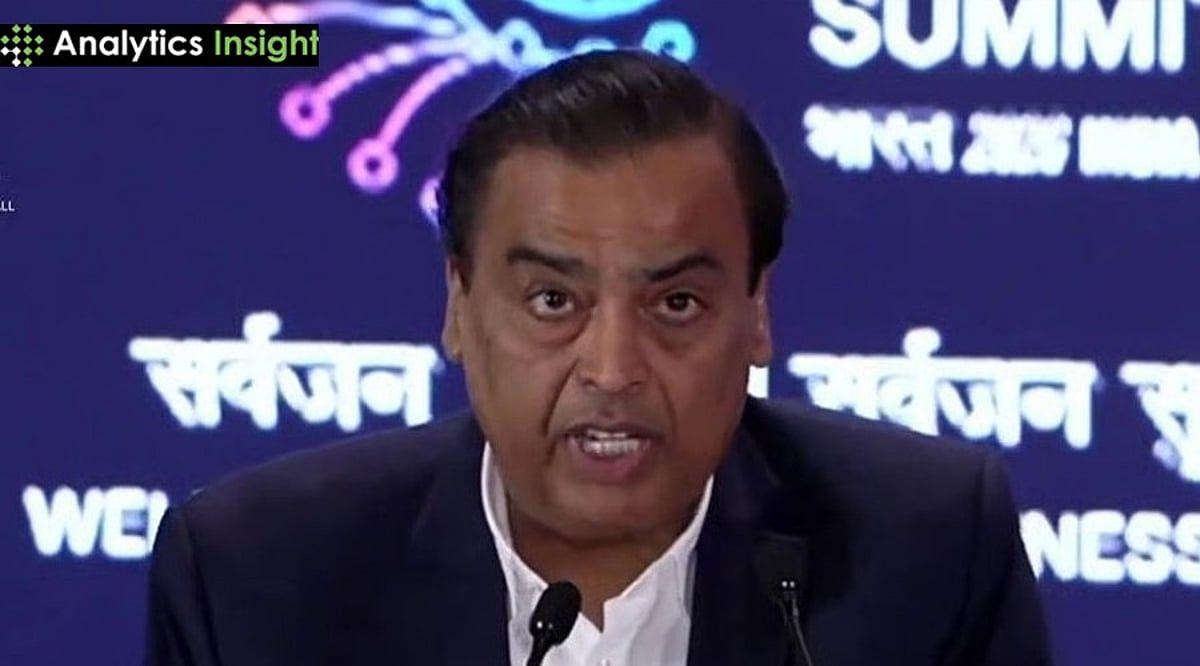
Mukesh Ambani, the billionaire chairperson of Indian conglomerate Reliance, on Thursday unveiled the group's ₹10 trillion (about $110 billion) plan to build AI computing infrastructure in India over the next seven years. Speaking at the India AI Impact Summit in New Delhi on Thursday, Ambani said the investment would fund gigawatt-scale data centers, a nationwide edge computing network, and new AI services integrated with Reliance's Jio telecom platform. Reliance has already begun construction of multi-gigawatt data centers in Jamnagar, Gujarat, Ambani said, and more than 120 megawatts of capacity is expected to come online in the second half of 2026. Ambani's pledge adds to a growing wave of AI investment in India. Earlier this week, Adani Group outlined plans to invest about $100 billion to build AI data centers in the country, and the Indian government expects more than $200 billion in AI infrastructure spending over the next two years. Global technology firms are also stepping up their presence, with OpenAI partnering with the Tata Group to develop about 100 megawatts of AI capacity in the country, and plans to scale that to 1 gigawatt eventually. Ambani said the push is essential for India's technological self-reliance, saying the country "cannot afford to rent intelligence," and that Reliance aims to cut the cost of AI services as dramatically as it once reduced mobile data prices in the country. "The biggest constraint in AI today is not talent or imagination," Ambani said. "It is scarcity and high cost of compute." The build-out, Ambani said, would be supported by Reliance's green energy capacity, which stretches to 10 gigawatts of surplus power from solar projects in Gujarat and Andhra Pradesh. Reliance will partner with Indian enterprises, startups, and academic institutions to embed AI in industries ranging from manufacturing and logistics to agriculture, healthcare and financial services. Jio has already been striking AI partnerships: it last year landed a deal with Google to offer free Gemini AI Pro access to millions of its users in India. Reliance also plans to develop AI capabilities in several Indian languages to spur adoption of the tech, Ambani said. The aggressive push highlights how India's largest conglomerates are racing to secure a foothold in what is expected to be one of the country's biggest technology opportunities.
[2]
India's top telco tackles AI with $110b and proven playbook
Reliance Jio used super-cheap plans and own-brand phones to conquer India's top telco, Reliance Jio, has announced plans to spend $110 billion on datacenters to run AI workloads and says it will use them to deliver services with the same "extreme affordability" it brought to the mobile communications market. Jio launched its mobile network in 2016 and within half a year won 100 million subscribers by offering plans that included unlimited data at prices that significantly undercut competitors. It later introduced its own handsets, some that cost around $12, which helped it to become India's number one telco three years after launch. It later cemented its position with a $27 smartphone created with help from Google, a rapid 5G rollout, and cheap subscriptions that bundle streamed content with carriage. This is not speculative investment. It is not purchasing valuation Indian authorities say the carrier now has 514 million subscribers and 51 percent of the Indian mobile comms market. India now enjoys some of the lowest mobile data costs in the world. Company chairman Mukesh Ambani yesterday announced Jio's intention to spend $110 billion on AI infrastructure over seven years. "This is not speculative investment. It is not purchasing valuation," he said in a speech at India's AI Impact Summit. "This is patient, disciplined, nation-building capital designed to create durable economic value and strategic resilience for decades to come." Ambani added his belief that "the biggest constraint in AI today is not talent or imagination. It is scarcity and high cost of compute." Jio will therefore build multiple gigawatts of datacenter capacity that Ambani said will operate with "the same reliability, quality, scale and extreme affordability that transformed connectivity." "India cannot afford to rent intelligence. Therefore, we will reduce the cost of intelligence as dramatically as we did the cost of data." Given Jio's dominance of Indian mobile telecoms, the company could well do the same for consumer AI services. That's not necessarily bad news for western AI companies because Jio also announced a partnership that will see some of its products include OpenAI's search service. OpenAI, meanwhile, announced a formal presence in India to serve the 100 million users it already has there. The company also said it will build sovereign AI capabilities for India by using datacenters operated by Tata Group, a giant industrial conglomerate that has pledged it will build 100MW of AI infrastructure for OpenAI. Tata may scale that to 1GW. India's AI summit has certainly attracted plenty of attention, with 17 national leaders attending (plus three deputy leaders). OpenAI boss Sam Altman attended. So did Alphabet CEO Sundar Pichai, who delivered an anodyne speech. Bill Gates cancelled his appearance - reportedly to ensure his presence in the Epstein files did not distract from the event. Indian lawmakers have hailed the event as establishing the nation as an AI leader, a claim that's a little hard to support, as while the nation remains a major source of technology talent and intends widespread use of AI in government services, it lacks significant AI infrastructure and has not yet produced a major company in the field. Maybe Jio will fill that role, given its past successes. ®
[3]
Ambani's Reliance to Invest $110 Billion in AI Infrastructure
Billionaire Mukesh Ambani announced that his retail-to-telecom conglomerate will invest as much as 10 trillion rupees ($110 billion) in building artificial intelligence-related infrastructure, joining the global rush into the fastest growing arena in technology. Reliance Industries Ltd. and its telecom unit, Reliance Jio Infocomm Ltd., will invest this sum over seven years, Ambani said at the AI Impact Summit on Thursday in New Delhi. India kicked off one of the largest AI conferences this week that has already drawn the industry heavyweights, including Alphabet's Sundar Pichai and OpenAI Inc.'s Sam Altman. The country expects to attract more than $200 billion in AI-driven investments over the next two years. Reliance's announcement follows a $100 billion AI investment pledge by Gautam Adani's conglomerate earlier this week and Tata Group's plans to partner OpenAI Inc. There could be a consolidation within the industry when some software firms fail to transform their businesses for AI adoption, ServiceNow COO Amit Zavery tells Bloomberg Television. * "There will be some software companies that will not be able to make the transformation to AI," Zavery says in interview on sidelines of India AI Summit
[4]
India's Reliance to build AI data centres in $110 billion investment push
Feb 19 (Reuters) - India's Reliance Industries (RELI.NS), opens new tab and telecoms arm Jio will invest $109.8 billion over the next seven years to build artificial intelligence and data infrastructure, its billionaire chairman Mukesh Ambani said on Thursday. Speaking at the AI Impact Summit in New Delhi, Ambani said the investment would be directed toward long-term "nation-building" capital, including sovereign AI computing capacity, as a shortage and the high cost of computing power remain the biggest constraints on domestic AI development. India's first major artificial intelligence summit this week has drawn senior executives from global technology firms. Jio is constructing multi-gigawatt, AI-ready data centres at Jamnagar, and is set to have over 120 megawatts of capacity online in the second half of this year, Ambani said. The telecommunications company also plans to build AI-ready data centres powered by renewable energy, he said. Separately, Adani Enterprises (ADEL.NS), opens new tab on Tuesday also said it will invest $100 billion to build renewable-powered AI-ready data centres by 2035. Indian companies are increasing AI investment, committing billions of dollars to data centres, computing infrastructure and related services to meet rising demand. Earlier on Thursday, U.S. AI developer OpenAI said it would become the first customer of a data centre operated by Tata Consultancy Services (TCS.NS), opens new tab. ($1 = 91.0870 Indian rupees) Reporting by Chandini Monnappa and Surbhi Misra in Bengaluru; Editing by Himani Sarkar and Christopher Cushing Our Standards: The Thomson Reuters Trust Principles., opens new tab
[5]

Reliance's $110 bn AI investments seen back-loaded over seven years
New Delhi: Reliance Industries Ltd (RIL) has pivoted its business model roughly every decade during its nearly 48-year listed history. Its plan to invest USD 110 billion over seven years in artificial intelligence (AI), related energy supply and the digital ecosystem marks its next major capital allocation shift, analysts said. The proposed AI investment is comparable in scale to the company's telecom and consumer investments between 2014 and 2021, brokerage Morgan Stanley said in a report. Reliance chairman and managing director Mukesh Ambani had at the India AI Impact Summit last week announced a Rs 10 lakh crore (about USD 110 billion) investment in artificial intelligence over the next seven years, pledging to do with AI what his group had achieved with making mobile and internet data affordable and accessible across India. The company is expected to adopt a partnership-led approach as it builds out capacity, Morgan Stanley said. With an annual operating cash flow of USD 14-15 billion and ongoing investment commitments, it is estimated that USD 4-5 billion per year may need to be funded through asset monetisation, such as telecom fibre, to maintain free cash flow breakeven. The planned USD 110 billion outlay is expected to span multi-gigawatt data centres, 10 GW of renewable energy infrastructure, energy storage systems and AI chip investments. "We estimate the intelligence business will deliver 12 per cent+ post tax ROCE, i.e 2x above its consumer/telco investments over the past decade," it said, adding that Reliance is set to commission 120 MW of capacity in the second half of FY26 and, in line with global peers, is likely to scale up over five years, suggesting a back-loaded investment cycle. "So, investments do look more back-loaded," it said. Estimates indicate that the new intelligence business could generate post-tax return on capital employed (ROCE) of over 12 per cent - roughly twice the level achieved by its consumer and telecom investments over the past decade. For the first 1 GW currently under construction, AI infrastructure investments excluding energy are pegged at USD 12-15 billion, pending further details from the company. India's expanding AI infrastructure opportunity and the convergence of energy and digital markets could position Reliance strongly as investments ramp up. Partnerships with Meta Platforms and Google are also expected to help lower capital outlay as the company scales its AI offerings. "While RIL has given limited detail on its AI plans, our bottom-up work using estimates from around the world does point to 12 per cent ROCE and 18 per cent return on equity (ROE) for RIL's AI infrastructure investments over the next five years," Morgan Stanley said in the report. India is catching up with the world on AI infrastructure, and the diffusion of energy and AI markets is set to make Reliance stand out as it ramps up its investments. Its partnerships with META and Google should also help lower capital outlay as it scales its AI offering, it added.
[6]

Mukesh Ambani Makes a Huge Statement Related to Jio
They are not only bundling AI subscriptions, but are also powering them with their networks for the users across the country. Reliance Jio, India's largest telecom operator, recently spoke at the India AI Impact Summit 2026. The telecom operators are at the center of AI (artificial intelligence) distribution in India. They are not only bundling AI subscriptions, but are also powering them with their networks for the users across the country. Read More - JioHotstar Brings ChatGPT Powered Voice Discovery Mukesh Ambani, Chairman and Managing Director of Reliance Jio, said during the India AI Impact Summit 2026, "Jio, together with Reliance, will invest ?10 lakh crores over the next seven years starting this year." This is not a speculative investment, Ambani said. The telco, together with Reliance will build out the infrastructure as well for AI, as compute is the issue that's the problem today. Thus, Reliance is building a one-gigawatt-scale data cetners. The construction for these data centers has already started in Jamnagar. Over 120MW capacity will come online in the second half of 2026 itself. The company is also using in-house energy, as it has up to 10GW of ready green-power surplus. Then, with the help of Jio, Reliance is building an edge compute layer across India. With this layer, kirana stores to hopitals to businesses can stay connected to networks and AI on the go to boost their productivity. Read More - Google Pixel 10a Arrives in India with Many Firsts Mukhesh Ambani reiterated that Reliance is building 'AI for All' and means to serve customers in the last mile. Reliance Jio has already announced several AI powered solutions to boost healthcare, education, and more in India. The telecom operator is showcasing these solutions at the India AI Impact Summit 2026 and also invited Prime Minister Narendra Modi to see all these innovations on the opening day of the summit. Reliance Jio is also expected to go public later this year, and the telecom operator's focus on AI is only going to grow over the coming quarters and years.
[7]
Deven Choksey on Reliance's $110 billion AI bet and what it means for investors and India's tech future
Reliance Industries is gearing up for what could be its most transformative investment cycle yet -- a $110 billion commitment to data centres and AI infrastructure over the next five to seven years. For a conglomerate already carrying $39 billion in gross debt, the move is raising eyebrows on Dalal Street. But analysts who have watched Reliance's cyclical investment playbook say the math could work out handsomely. At the heart of Reliance's AI strategy is something deceptively simple: cheap electricity. According to Deven Choksey of DRChoksey FinServ, roughly 60-70% of any AI data centre investment goes not into chips or servers, but into power and cooling infrastructure. Reliance is addressing this head-on by building what is set to become one of India's largest solar farms -- a dedicated power source designed to slash operating costs to near zero once fully live. Talking to ET Now, Choksey says heaper power means cheaper computing and cheaper computing, at scale, means the "complete democratisation of AI" -- making advanced AI services accessible far beyond premium enterprise clients. If Reliance hits its target of 1 gigawatt of data centre capacity by 2030, Choksey estimates that alone could generate upwards of $1.5 billion in annual revenue, with EBITDA margins in the 40-50% range. On top of that, Reliance is expected to reserve 25-30% of that capacity for its own internal compute -- powering whatever emerges from the Jio Brain platform and its growing suite of AI-native services. The concern is understandable on paper. But context matters. Reliance is currently running at an EBITDA rate of over ₹2 lakh crore annually, growing at 15-20% year-on-year. Jio's platform alone contributes roughly ₹60,000 crore in annualised EBITDA, with capex requirements expected to stay contained between ₹35,000-40,000 crore. At that growth trajectory, the group could effectively double its profit base over five years -- just as the new AI infrastructure begins generating its own returns. Choksey's view is pointed: "If they do not make this investment, the sustainability and survival of the group itself would come into question in the new era." Reliance has a well-documented history of rewarding shareholders at the end of major investment cycles, and this time may be no different. Jio's platform demerger is expected within months, with the retail business potentially following a year later. Renewable energy monetisation could round out a three-part value unlock over the next four to five years -- giving long-term investors multiple catalysts to watch. For India's broader AI ambitions, Reliance's infrastructure push could prove to be the backbone the ecosystem has been waiting for. The question isn't whether this investment is large -- it clearly is. The question is whether the country, and the conglomerate, are ready to build at this scale. By all indications, Reliance is betting they are.
[8]
Mukesh Ambani's Reliance makes Rs 10 lakh cr bold bet on India's AI prowess
At the AI India Impact Summit, Mukesh Ambani announced that Jio and Reliance Industries will invest ₹10 lakh crore over the next seven years starting 2026 to boost AI development. He said India is set to become a global AI power in the 21st century, with AI systems now able to learn, speak, analyse, move, and operate autonomously. Making a 'bold' bet on India's AI prowess, Mukesh Ambani, Chairman and Managing Director of Reliance Industries Limited (RIL) announced on Wednesday that Jio together with RIL will invest Rs 10 lakh crore in next seven years starting this year. This is not speculative investment, he said while speaking at the AI India Impact Summit. "It is not purchasing valuation. This is a patient, disciplined nation building capital, designed to create durable economic value." ALSO READ: Tata's N Chandrasekaran makes bold AI bets while Dalal Street anxiety grips TCS "India cannot afford to rent intelligence. Therefore, we will reduce the cost of intelligence as dramatically as we did the cost of data," he stated. Ambani further stated that India will emerge as one of greatest AI powers in the world in 21st century. "The best of AI is yet to come." The biggest constraint in AI today is not talent or imagination, he said. "It is scarcity and high cost of compute." "For the first time, humans are creating human-like systems that can learn, speak, analyse, move, and produce autonomously." The global summit is a defining moment for India's technology sector, a moment when India pledges to make AI a key force in realising its dream, he said, appreciating the summit. Ambani said, that he see AI as a modern-day Akshay Patra, the legendary vessel in Maharbharat that provided endless nourishment to all. The Akshaya Patra story originates from the Mahabharata, where Lord Surya gifted an inexhaustible, magical vessel to Yudhishthira to provide endless food for the Pandavas during their forest exile, ensuring no guest went hungry. "The Global AI Impact Summit is a defining moment in India's tech history. A moment when India pledges to make AI one of the driving forces to realise its dream of a Viksit Bharat. The dream of becoming a fully developed nation by 2047."
[9]

Mukesh Ambani Announces Rs. 10 Lakh Crore Investment Plan to Build India's Independent AI Ecosystem
The project will start in 2026. The capital will be used to build large data centres, expand green energy, and make AI tools more affordable. Ambani called AI a modern-day Akshay Patra. He said AI can create endless opportunities for every sector. Jio Platforms Limited will lead this mission. The company will build gigawatt-scale data centres in Jamnagar. A 120 MW data centre will go live by late 2026. These centres will run on up to 10 gigawatts of green energy from solar projects in Gujarat and Andhra Pradesh. Clean power will support .
Share
Share
Copy Link
Mukesh Ambani announced Reliance's $110 billion plan to build AI computing infrastructure in India over seven years, including gigawatt-scale data centers and edge computing networks. The investment mirrors the conglomerate's disruptive mobile data strategy and positions India as a major AI infrastructure hub alongside commitments from Adani Group and partnerships with OpenAI and Google.
Reliance commits $110 billion to transform India AI infrastructure
Mukesh Ambani, billionaire chairperson of Reliance Industries, announced a ₹10 trillion (approximately $110 billion) investment plan at the India AI Impact Summit in New Delhi on Thursday, marking one of the largest AI investment commitments globally
1
. The seven-year initiative will fund gigawatt-scale AI-ready data centers, a nationwide edge computing network, and new AI services integrated with Reliance Jio's telecom platform1
. Reliance has already begun construction of multi-gigawatt data centers in Jamnagar, Gujarat, with more than 120 megawatts of capacity expected to come online in the second half of 20261
.
Source: Analytics Insight
AI computing infrastructure addresses compute scarcity challenge
Ambani emphasized that "the biggest constraint in AI today is not talent or imagination. It is scarcity and high cost of compute"
1
. The investment represents patient, disciplined nation-building capital designed to create durable economic value and strategic resilience for decades2
. Reliance aims to deliver AI services with the same extreme affordability that transformed India's mobile communications market, where Jio now commands 514 million subscribers and 51 percent market share2
. "India cannot afford to rent intelligence," Ambani stated, pledging to reduce the cost of intelligence as dramatically as the company once reduced mobile data prices2
.
Source: TechCrunch
India's tech ambitions attract global AI partnerships
The AI investment wave extends beyond Reliance, with Adani Group pledging approximately $100 billion to build AI data centers, and the Indian government expecting more than $200 billion in AI infrastructure spending over the next two years
1
3
. Global technology firms are stepping up their presence, with OpenAI partnering with Tata Group to develop approximately 100 megawatts of AI capacity, with plans to scale that to 1 gigawatt eventually1
. The AI Impact Summit drew 17 national leaders and industry heavyweights including Alphabet CEO Sundar Pichai and OpenAI's Sam Altman2
.
Source: Reuters
Related Stories

Capital allocation shift mirrors Reliance's decade-long business pivots
Analysts at Morgan Stanley noted that Reliance's $110 billion investment plan is comparable in scale to the company's telecom and consumer investments between 2014 and 2021
5
. The planned outlay is expected to span multi-gigawatt data centers, 10 GW of renewable energy infrastructure, energy storage systems, and AI chip investments5
. With annual operating cash flow of $14-15 billion, estimates suggest $4-5 billion per year may need funding through asset monetization to maintain free cash flow breakeven5
. The intelligence business is projected to deliver 12 percent-plus post-tax ROCE (Return on Capital Employed), roughly twice the level achieved by consumer and telecom investments over the past decade5
.Renewable energy capacity powers sovereign AI ambitions
The build-out will be supported by Reliance's green energy capacity, which extends to 10 gigawatts of surplus power from solar projects in Gujarat and Andhra Pradesh
1
. Reliance Jio plans to construct AI-ready data centers powered by renewable energy infrastructure to handle AI workloads4
. The company will partner with Indian enterprises, startups, and academic institutions to embed AI in industries ranging from manufacturing and logistics to agriculture, healthcare, and financial services1
. Jio has already established AI partnerships, including a deal with Google to offer free Gemini AI Pro access to millions of users in India1
. Reliance also plans to develop AI capabilities in several Indian languages to accelerate AI adoption across diverse populations1
. The convergence of energy and digital infrastructure positions India AI as a critical growth opportunity, with investments expected to be back-loaded over the seven-year timeline as capacity scales5
.References
Summarized by

Navi
[1]
[2]
Related Stories
Reliance Industries' $15 Billion AI Gambit: Transforming from Oil to Artificial Intelligence
27 Oct 2025•Business and Economy
Reliance Industries Launches 'Reliance Intelligence': A Major Push into AI with Google and Meta Partnerships
29 Aug 2025•Technology

Reliance Industries' AI Revolution: Mukesh Ambani's Vision for India's Tech Future
29 Aug 2024

Recent Highlights
1
AI chatbots validate you too much, making you less kind to others, Stanford study reveals
Science and Research

2
Anthropic's Claude Code Source Leak Reveals Hidden AI Agent Plans and Extensive System Access
Technology

3
Judge blocks Pentagon from branding Anthropic a security risk over AI safety guardrails dispute
Policy and Regulation

Recent Highlights
Today's Top Stories








Your Daily Dose of Curated AI News
Don’t drown in AI news. We cut through the noise - filtering, ranking and summarizing the most important AI news, breakthroughs and research daily. Spend less time searching for the latest in AI and get straight to action.

