Roborock's Saros Rover robot vacuum with wheel legs climbs stairs and dodges obstacles at CES


6 Sources
6 Sources
[1]
I Watched Roborock's Robot Vacuum With Wheel Legs Dodge Obstacles, Dance, Jump and Climb Stairs Like a Champ at CES
Expertise 13+ years of experience in consumer product reviews, buying guides, best lists, and tech news across a variety of tech categories. As a homeowner, Ajay is also familiar with the unique electrical issues that can crop up in a prewar apartment building. A stair-climbing robot vacuum isn't a new idea. We saw an early attempt at it with the Dreame X50 Ultra, which was able to overcome thresholds of around two inches. Recently, at IFA 2025, we saw the Eufy Marswalker and Dreame CyberX, which use a system of treads and an additional shell to help the robot get up stairs. However, neither can clean the stairs itself. The Roborock Saros Rover is different; it's a robot with legs, and I mean real legs, not treads or a lift system. Yes, this robot vacuum comes with genuine chicken legs (or maybe frog legs) with wheels on the bottom. It's a weird-looking device, no doubt, but the result is hard to argue with. I watched Roborock run the Saros Rover through a range of demos to showcase its stair-climbing abilities, balance and ability to hop over obstacles and even dance. Here's what I thought. As mentioned, the Saros Rover operates differently from the other stair-climbing robots we've seen demoed before. Instead of using a shell with tread attachments, the Rover deploys a pair of legs and wheels to lever itself up over stairs and other obstacles. Its climbing is vaguely reminiscent of a stork or other long-legged bird, with the two legs acting as a support to push its large, flat body up on the next step. Then the legs fold themselves up behind its back, and then it deploys them again for the next step. It took the Saros Rover approximately 30 to 40 seconds to climb about five large steps, so it's certainly not very fast compared to a human, but the Saros can and will clean each step as it moves up. It does that by using one leg for balance on the step below, then rolls itself up and down the next step to ensure it's clean before moving on. This is notably something that Eufy told us that its Marswalker isn't able to do, and the same is true of Dreame's prototype model as well. Roborock says that the Rover should be able to tackle both traditional and curved staircases, as well as different flooring types, included carpeted staircases with bullnose fronts. It'll also help tackle other obstacles that may be present in your home, such as multi-level room thresholds. What impressed me the most about the Saros Rover is its ability to balance and maneuver itself. Gone are the days of a hesitant robot vacuum that slowly and tentatively edges around obstacles, as if unsure of its surroundings. The Saros Rover is able to not just climb stairs, it can rise up on its wheel-legs for added maneuverability, giving it increased reach, lift and height that Roborock compares to human mobility. Once it reached the top of the stairs that Roborock has set up for the demos, I watched it go down a fairly steep ramp with impressive control over its speed. It was even able to stop partway down the incline and reverse, which is something I've never seen another robot vacuum do before. It's able to make sudden stops and turns, and even hop, which Roborock demonstrated for me with a cute little dance involving the Rover, surrounded by Saros Z70 models waving their arms in sync to the beat, much like a group of fans. It's all very impressive to look at and there was only one instance where I saw the Saros Rover lose its balance and stumble a little, but it seemed able to right itself fairly effectively before one of the Roborock booth staff swooped it up. In all fairness, these are early prototype models, so some hiccups are to be expected, but what was striking is just how few hiccups there actually were. Whatever software Roborock uses to manage navigation and objective avoidance is impressive. Roborock told me that it uses an AI algorithm, working in conjunction with complex motion sensors and 3D spatial information, to enable the wheel legs to react to their surroundings. Object avoidance has been a big challenge for robot vacuums and even the best ones we've recommended at CNET have had issues avoiding certain obstacles like pet waste. The problem is mostly on the software end rather than the hardware end, so if the Saros Rover is able to handle stairs, thresholds, inclines and other barriers, that puts it heads and shoulders above most other robot vacuums on the market, at least until we see the capabilities of Narwal's upcoming Flow 2. While Roborock didn't demonstrate this for me in person, they also showed me a video from an earlier briefing of the Saros Rover dodging tennis balls thrown at it by Roborock engineers (sign me up for that job). I asked what the tennis balls are meant to represent in a real-world use case and Roborock explained that it's meant to showcase that the Saros Rover is able to identify and react to fast-moving objects in its environment that might get in its way, such as pets and children. As someone with three cats who enjoys zooming, I'm looking forward to seeing how it works with them and putting the Rover to the test at CNET Labs. Roborock also assured me that this is a product that will come to market, though they currently don't have any pricing or availability to share. With the arm-equipped Roborock Saros Z70 starting at $2,599 when it was first launched, I expect the Saros Rover to cost at least as much, if not more. Of course, the Saros Z70 did drop in price over time and these days can be gotten for around $2,000 if you find it on sale, so my hope is that we'll see the same with the Saros Rover.
[2]
I Saw the Future of Robot Vacuums at CES, and It Has Legs
With 10+ years of experience, Andrew covers smart home innovation and wearable tech, exploring the intersection of connected devices and daily life. LAS VEGAS -- The Roborock Saros Rover represents a literal step forward in robot vacuum mobility. On display at CES, the Rover features a pair of leg-like mechanisms designed to mimic human movement. This allows the nimble cleaner to lift itself over obstacles, pivot sharply, hop across gaps, and -- most strikingly -- climb stairs while continuing to clean. The company hasn't yet announced pricing or a release date, but the unit I saw at CES was fully operational, signaling that it's more than a distant concept. Roborock also unveiled several other robot vacuums slated to arrive sooner, each with notable upgrades, including models that can raise their chassis to better handle high-pile carpet. The company also showcased a lineup of robot lawn mowers, including a LiDAR-guided model. While the entire lineup is impressive, the Saros Rover stands out as the clear highlight, so let's dig in. Each wheel-leg of the Saros Rover can independently raise and bend, allowing the vacuum to navigate through many tricky circumstances. Most practically, the legs together can help the vacuum easily traverse over obstacles and climb steps of multiple configurations. The vacuum can also jump, which might not be the most practical application of these legs, but it can help the bot quickly get across small thresholds. As for stairs, the Saros Rover can both climb and clean, leaving one leg on the stair below to brace itself while it slides across the elevated surface. I watched a demo of it in action in a controlled environment at CES. The bot went up a step, turned, and cleaned before moving on to the next. I didn't see it go back downstairs. It is supposedly equipped to do that easily as well, with a motion similar to a backstroke when swimming. During the demo, it went down a steep ramp on the other side of the steps. While on the ramp, it moved up and down and even paused in the middle of its descent to show its stability. At the bottom of the ramp, it performed a quick bunny hop. The Rover uses motion sensors and AI to process 3D spatial information and understand its environment. If it works as promised, it'll be able to clean straight steps, curved steps, and even slopes, and you won't have to worry about it getting stuck on a nest of cords, even on flat surfaces. At the IFA tech showcase in Berlin in the fall, we saw other robot vacuums that could also climb, including the Eufy Marswalker and a concept model from Dreame. That said, those models relied on a separate rover to carry them up and down the stairs. Neither could clean as they climbed, either, giving the Saros Rover another advantage. Last year at CES, Roborock introduced a vacuum with a robot arm, the Saros Z70, that could pick up obstacles in its path and put them away. That model did come to fruition a few months later, but we found that the tech still needs a generation or two of polish, as its functionality was limited to a select few obstacles and floor types. In practice, the robot arm served as more of a novelty than a capable robot butler. The robot legs on this year's model could come out of the gate in a better state if they can already navigate multiple stair types successfully. Beyond the Saros Rover Roborock showed off a few other robot vacuums slated for release this year. Both the Saros 20 and the Saros 20 Sonic have a record-setting 35,000Pa of suction power. They differentiate in their mop design and navigation. The 20 Sonic features a vibrating mop pad and a retractable LDS tower, allowing it to fit under low-clearance furniture. The Saros 20 uses the company's Starsight navigation system, featuring enhanced obstacle detection and faster processing capabilities compared with LDS. It has dual spinning mop pads. Aside from the high suction, they both feature the latest version of the company's AdaptiLift Chassis, which enables them to navigate over thresholds and avoid obstacles. Additionally, this chassis allows them to adjust the height of the vacuum while on high-pile carpet and maintain that height to increase functional airflow. This dynamic carpet cleaning mode allows the vacuum to be elevated at several different levels, depending on the thickness of the carpet. Roborock hasn't announced a price or release date yet for either Saros model, but expect both to be on the high end following the trend of the company's current Saros bots. Roborock did announce the price of a more affordable midrange model called the Qrevo Curv 2 Flow. The $849 model is expected to hit stores by the end of January. It'll also be the company's first robot cleaner with a spinning roller mop that refreshes itself as it works. That mop style is quickly becoming a personal favorite based on other models that I've tested. Finally, Roborock is showcasing a lineup of robot mowers, and the X1 LiDAR will be the company's first model equipped with LiDAR navigation for mapping and navigating complex lawns. It'll also be able to climb steep slopes and trim the lawn close to boundaries, to minimize the amount of manual edge trimming you'll need to do afterward. I'll be testing all of these models as soon as I can. I especially look forward to seeing how well the Saros Rover can climb stairs in the real world (and clean while doing so). If it works as promised, it'll be an exciting step forward for the category that will no longer be limited to a single floor.
[3]
I just saw Roborock's new two-legged robot vacuum climb stairs -- and even jump in mid-air
The Saros Rover can climb up flights of stairs -- and clean them as it goes As CES 2026 kicks off, the best robot vacuums and innovative robot mops are expected to be a hot topic this year. And Roborock seems to be paving the way in innovation and design with its latest offering. The brand has just unveiled the Rororock Saros Rover -- the "world's first" two-wheel legged robot vacuum that can climb up and easily navigate flights of stairs. And while the Saros Rover looks like something out of a sci-fi movie, this two-wheel-leg architecture is designed to mimic human mobility to tackle multi-story homes, slopes, and inaccessible areas with ease. It can even jump in mid-air. Sounds too good to be true? We saw the Saros Rover in action at CES, and came away pretty impressed. Perhaps the key highlight is that the Saros Rover is the first of its kind to have two-wheel-leg architecture. This enables the robovac to navigate over steps, high thresholds, and awkward spaces. And while we've already seen previous robovac models with an extendable arm or adapt-lift chassis, such as the Roborock Saros 10, the Saros Rover is designed to mimic human movement for a more sturdy and reliable clean. In order to climb stairs, the Rover first raises itself on its two wheels; in their extended position, the bulk of the vacuum is in the front. It then rolls itself forward so that the vacuum is resting on the first step. The wheels then retract backwards and up -- it reminded me of a frog's legs -- before tucking back into the vacuum's body. The Rover can control each leg independently, so it can actually clean your stairs as it goes up. We saw it extend one leg, turn to the side, and then vacuum a single stair tread before retracting the leg and continuing its journey. This capability even allows the Rover to jump up and down; it's not something we'd imagine it would have to do in real life, but it was fun to watch. Another ground-breaking feature is the ability to climb flights of stairs and clean each step without toppling over. What's more, this includes a curved staircase, which is often problematic to navigate. This feature is beneficial when cleaning multi-story homes that require the correct height adjustment to deep clean. In addition, the Saros Rover can tackle various non-flat surfaces with ease due to its flexibility. Of course, the Saros Rover is packed with the latest tech and AI software to make the robotvac more powerful, precise, and its wheel-legs reactive to the environment. This includes using Artificial Intelligence algorithms, alongside advanced motion sensors and 3D spatial information. For instance, the Saros Rover reduces "no-go" zones by accessing areas previously off-limits to a single robot vacuum, making it ideal for multi-story homes. Plus, it can transition to and clean the second floor by tackling each step of a staircase -- which not many robot vacuums can do successfully. Roborock would not give any specifics over the future availability or price for the Saros Rover, only that it was expected to come out sometime in the near future; a company representative said that they need to get the technology perfected first. When it does arrive, though, it could make a real difference for those who don't live in a ranch home and want a single robot vacuum to be able to clean their entire house.
[4]
I've tried a robot vacuum with an arm, now here's one with legs
Roborock's Saros Rover is a robot vac that'll come with legs. Yes, real legs. Why? So it can climb stairs and clean all your floors! Earlier this year, I tried the Roborock Saros Z70 - it's the robot vacuum with a mechanical arm capable of lifting socks, cables, and other small objects like something out of Robot Gladiators. The vision was sound, but it wasn't perfect. The arm didn't always work, and cleaning power seemed to take a back seat. Roborock has seemingly changed direction, showing off a robot vacuum with legs. At CES 2026, I got to see Roborock's Saros Rover. It's a robot vacuum that doesn't get scared of stairs. It climbs them. With actual legs. Yes, real, bendy, folding legs - not some janky scissor lift situation. And it works. I watched the Saros Rover handle everything from standard stairs to carpeted bullnose ones with ease. It's a little on the slow side - about it took almost a minute to climb five steps - but that's not a huge problem if you set it to clean when you're not at home. The Saros Rover goes for it anchors itself with one leg, hoists up, cleans the step, then repeats. Eufy's Marswalker that was shown off last year can't do that, and is nowhere to be seen. The legs are fully integrated. That means no extra attachments, just one unit climbing stairs and stepping over obstacles. Of course, the legs offer the "wow factor", but what actually makes the Saros Rover special is software. This thing has a sense of balance and movement that puts me to shame. At one point, I saw it stumble slightly but it managed to correct itself without falling flat on its back. I can't say the same thing about me riding a Lime scooter. Roborock says it uses AI combined with motion sensors and 3D spatial mapping to navigate and dodge obstacles - the same sensors robot vac already use to navigate. Roborock is pretty confident that the Saros Rover can handle any home environment. I saw it reverse on a ramp, swerve mid-climb, and in a video, it even dodged tennis balls being lobbed at it by engineers. That's meant to simulate pets or children, apparently. Is it fast? Absolutely not. Is it elegant? Not quite. But it's ambitious in a way that's actually useful - unlike a mechanical arm that won't open while the robot's on carpet. I just hope it manages to clean as well as Roborock's non-gimmicky vacs, which are rather excellent at sucking up grime. There's no price or release date yet, but this robot vac is coming soon. The Saros Z70 launched at $2599, so I wouldn't expect this stair-climbing vac to come cheap.
[5]

Roborock Saros Rover : First Robot Vacuum With Legs Unveiled at CES 2026
Can a robot vacuum truly navigate stairs, thresholds, and uneven terrain? The Roborock Saros Rover, unveiled at CES 2026, is redefining home cleaning with its innovative design. In the video below, Roborock demonstrates how this new device, featuring human-like legs -- expands the possibilities of robotic vacuums. Unlike traditional models, the Saros Rover's two-wheel-leg hybrid system allows it to climb, jump, and stabilize across complex layouts, from multi-level homes to spaces with uneven flooring. This innovation marks a significant leap in the evolution of smart home technology. In this launch overview, we'll explore how the Saros Rover's AI-driven navigation, 19,000 Pa suction power, and adaptive mobility are reshaping modern cleaning. Imagine a robot that can conquer curved staircases, traverse challenging surfaces, and learn the intricacies of your home, all while effortlessly handling pet hair and syncing with your smart home ecosystem. By combining versatility and advanced functionality, the Saros Rover sets a bold new benchmark for robotic vacuums. The Saros Rover introduces a two-wheel-leg architecture that mimics human-like movement, setting it apart from conventional robotic vacuums. This design enables the robot to raise, lower, jump, and turn with precision, allowing it to navigate spaces that were previously inaccessible. Whether climbing stairs, crossing thresholds, or maneuvering over uneven surfaces, the Saros Rover maintains a stable and level body to ensure consistent cleaning performance. This adaptive mobility is particularly beneficial for homes with intricate layouts, such as multi-storey residences or spaces with varying floor heights. By overcoming the limitations of traditional wheel-based vacuums, the Saros Rover provides a more comprehensive cleaning solution for modern households. The Saros Rover uses artificial intelligence, motion sensors, and 3D spatial mapping to navigate your home with exceptional accuracy. These technologies work in tandem to analyze the environment, identify obstacles, and optimize cleaning paths. For example, the Saros Rover can clean curved or carpeted staircases with bullnose edges, tasks that are notoriously difficult for traditional robotic vacuums. By adapting to the unique layout of your home, the Saros Rover ensures thorough and efficient cleaning, even in spaces with complex architectural features. Its ability to learn and map its surroundings enhances its precision, making it a reliable tool for maintaining a spotless living environment. Learn more about robot vacuum by reading our previous articles, guides and features : Equipped with Roborock's HyperForce® suction system, the Saros Rover delivers an impressive 19,000 Pa of suction power, allowing it to remove dirt, debris, and pet hair from a variety of surfaces. Whether cleaning carpets, hardwood floors, or stairs, the Saros Rover ensures a deep and effective clean. Its anti-tangle technology prevents hair from clogging the brushes, making sure uninterrupted performance during operation. The Saros Rover's ability to handle slopes and uneven surfaces further enhances its versatility. This makes it an ideal choice for homeowners seeking a robotic vacuum capable of tackling diverse cleaning challenges, from everyday messes to more demanding tasks. Designed with user convenience in mind, the Saros Rover includes features that minimize the need for manual intervention. Its RockDock® base station automates essential maintenance tasks such as emptying the dustbin and cleaning the brushes, allowing you to focus on other priorities. Additionally, the Saros Rover is compatible with Matter, a universal smart home standard, making sure seamless integration with your existing smart home ecosystem. These advanced features not only enhance the Saros Rover's usability but also make it a valuable addition to any tech-savvy household. By combining powerful cleaning capabilities with smart home compatibility, the Saros Rover offers a practical and efficient solution for modern living. The Saros Rover is particularly well-suited for multi-storey homes and environments that pose challenges for conventional robotic vacuums. Its ability to clean staircases, navigate uneven terrain, and adapt to various surfaces makes it an ideal solution for homeowners seeking comprehensive cleaning coverage. Whether dealing with high-traffic areas, pet hair, or hard-to-reach spaces, the Saros Rover is designed to meet the demands of diverse living environments. Although the Saros Rover is still in development and does not yet have a confirmed release date, its debut at CES 2026 highlights its potential to transform the robotic vacuum market. By addressing the limitations of traditional designs, the Saros Rover sets a new standard for what robotic vacuums can achieve. The Roborock Saros Rover represents a significant leap forward in the evolution of home cleaning technology. By combining innovative mobility, AI-driven navigation, and powerful cleaning performance, it addresses the challenges that have long limited traditional robotic vacuums. As the first vacuum with legs, the Saros Rover offers a glimpse into the future of smart home devices, paving the way for more efficient and versatile cleaning solutions. Its debut at CES 2026 signals a new era in robotic cleaning, where advanced technology meets practical application to deliver a superior user experience. With its new design and innovative features, the Saros Rover is poised to redefine how homeowners approach cleaning, offering a solution that is both powerful and adaptable to the complexities of modern living spaces.
[6]

Roborock Saros Rover - Your robotic vacuum cleaner can now walk the stairs
One major drawback of automated vaccum cleaners have since the introduction been a Darlek-like problem, they cannot climb the stairs, and are depending on humans to move them between floors. This design-flaw that stops them from hunting pets, dust and small humans on all floors has now been corrected by Roborock, and the new Saros rover model that can not only walk up the stairs, but also clean it. It has a "two wheel leg architecture" that is supposed to mimic human legs with independent movement, even being able to make small jumps and execute fast directional changes. Like most modern consumer products, AI plays a large role in mapping the house and adapt to different surfaces as well as different stairs, with even curved stairs being possible to climb.
Share
Share
Copy Link
Roborock unveiled the Saros Rover at CES 2026, a robot vacuum with genuine wheel legs that can climb stairs while cleaning each step. Unlike competitors like the Eufy Marswalker, this device uses AI-driven navigation and 3D spatial mapping to tackle curved staircases, high thresholds, and uneven terrain. The prototype model demonstrated impressive balance, even dodging tennis balls and hopping over obstacles.
Roborock Introduces Robot Vacuum With Legs at CES 2026
Roborock has unveiled the Saros Rover at CES 2026, marking a significant shift in how robot vacuums navigate complex home environments
1
. This robot vacuum with legs features genuine wheel legs that deploy and retract, mimicking human mobility to climb stairs, overcome obstacles, and clean multi-level homes2
. Unlike previous attempts at stair-climbing vacuums, including the Eufy Marswalker and Dreame CyberX showcased at IFA 2025, the Roborock Saros Rover can actually clean each step as it ascends1
.
Source: GameReactor
How the Wheel Legs Enable Stair Climbing
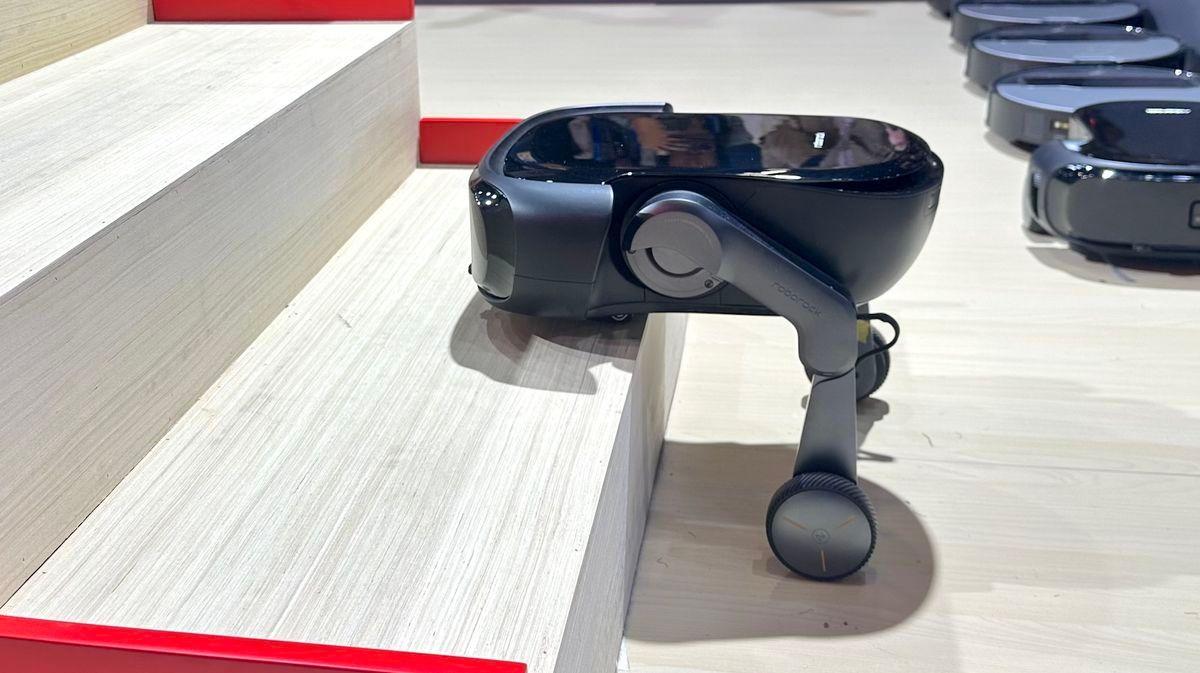
The Saros Rover operates using a two-wheel-leg architecture that sets it apart from conventional designs. During demonstrations, the device took approximately 30 to 40 seconds to climb five large steps
1
. The climbing motion resembles a stork or long-legged bird, with the legs acting as support to push the flat body up onto the next step1
. Each leg can move independently, allowing the robot vacuum to anchor itself with one leg while it rolls up and down the step above to ensure thorough cleaning3
. The prototype model demonstrated the ability to tackle traditional staircases, curved staircases, and even carpeted stairs with bullnose fronts1
.
Source: Tom's Guide
AI-Driven Navigation and Advanced Obstacle Avoidance
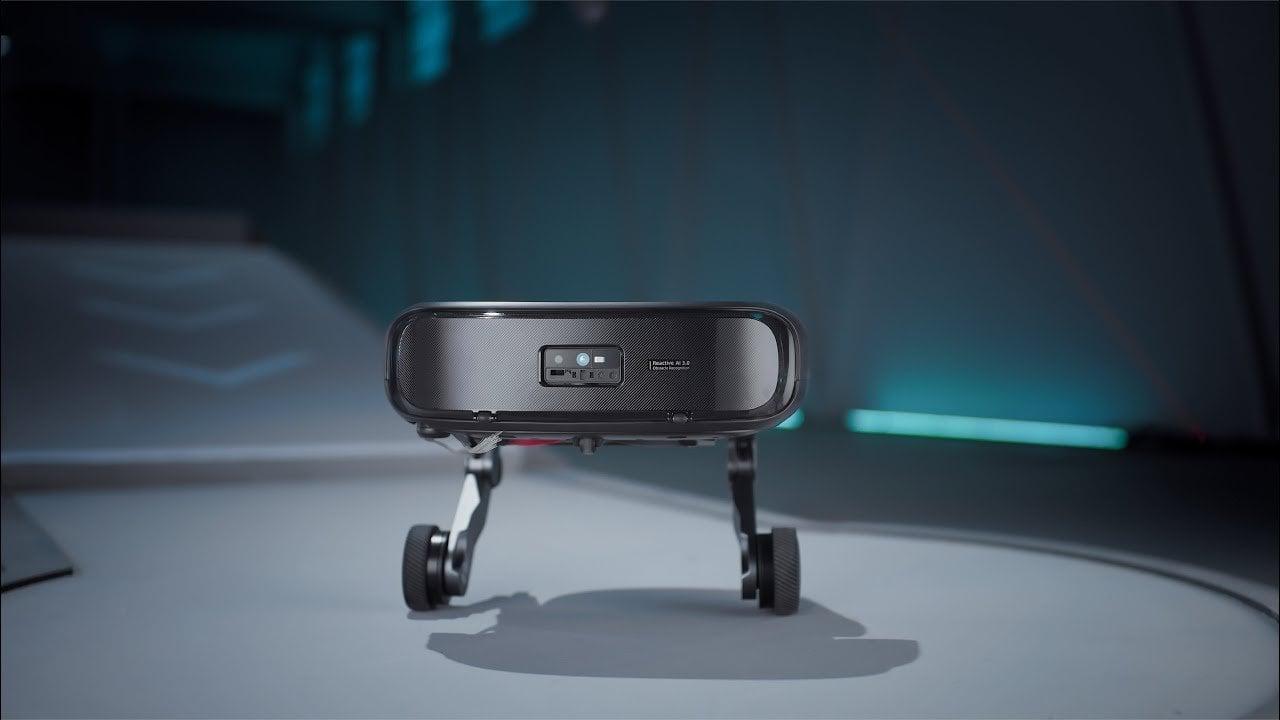
What makes the Roborock Saros Rover particularly impressive is its software capabilities. The device uses an AI algorithm working with motion sensors and 3D spatial mapping to react to its surroundings
1
. This AI-driven navigation enables the robot vacuum to rise up on its wheel legs for increased maneuverability, giving it reach and height comparable to human mobility1
. During CES demonstrations, the Saros Rover showcased remarkable balance and control, descending a steep ramp with the ability to stop partway and reverse—something rarely seen in robot vacuums1
. Roborock engineers also demonstrated the device dodging tennis balls thrown at it, representing its ability to identify and react to fast-moving objects like pets and children1
.
Source: Geeky Gadgets
Competitive Advantage Over Other Stair-Climbing Models
The Saros Rover distinguishes itself from competitors in the emerging stair-climbing robot vacuum category. While the Eufy Marswalker and a Dreame concept model shown at IFA relied on separate rover systems with treads to carry them up stairs, neither could clean while climbing
2
. The Dreame X50 Ultra, an earlier attempt, could only overcome thresholds of around two inches1
. By contrast, the Roborock device can climb stairs, clean each step thoroughly, and navigate multi-level room thresholds without additional attachments4
. This capability addresses a major limitation in smart home technology, where robot vacuums have traditionally been confined to single floors.Related Stories

Technical Specifications and Performance
The Saros Rover features 19,000 Pa suction power through Roborock's HyperForce® system, allowing it to handle dirt, debris, and pet hair across various surfaces
5
. The device includes anti-tangle technology to prevent hair from clogging brushes during operation5
. Its RockDock base station automates maintenance tasks such as emptying the dustbin and cleaning brushes5
. The robot vacuum is also compatible with Matter, a universal smart home technology standard, ensuring seamless integration with existing ecosystems5
. During demonstrations, there was only one instance where the prototype model lost its balance slightly, but it managed to correct itself effectively1
.Market Implications and Future Availability
Roborock has not announced pricing or a release date for the Saros Rover, stating they need to perfect the technology first
3
. However, the fully operational unit displayed at CES signals this is more than a distant concept2
. Given that Roborock's previous innovation, the Saros Z70 with a mechanical arm, launched at $2,599, industry observers expect the stair-climbing model to carry a premium price4
. The device could make a substantial difference for homeowners who don't live in single-story homes and want one robot vacuum to clean their entire house3
. If the Saros Rover can handle stairs, thresholds, inclines and other barriers as demonstrated, it would place Roborock ahead of most competitors in the market1
. The technology represents a shift from Roborock's previous approach with the Z70's mechanical arm, which reviewers found limited in functionality and more novelty than practical tool2
.References
Summarized by

Navi
[2]
[3]
Related Stories
AI-Powered Robot Vacuums: Eufy's Stair-Climbing Marswalker and Ecovacs' X11 Omnicyclone Lead Innovation
04 Sept 2025•Technology

Robot Vacuums Get Smarter: CES 2025 Showcases AI-Powered Cleaning Innovations
06 Jan 2025•Technology

Roborock Launches AI-Powered Saros 10 and 10R Robot Vacuums with Advanced Cleaning Capabilities
09 Feb 2025•Technology

Recent Highlights
1
Google releases Gemma 4 with Apache 2.0 license, enabling unrestricted local AI on devices
Technology

2
AI Models Lie and Deceive to Protect Other AI Models From Deletion, Study Reveals
Science and Research

3
OpenAI closes $122 billion funding round amid fierce AI competition and profitability questions
Startups

Recent Highlights
Today's Top Stories







Your Daily Dose of Curated AI News
Don’t drown in AI news. We cut through the noise - filtering, ranking and summarizing the most important AI news, breakthroughs and research daily. Spend less time searching for the latest in AI and get straight to action.

