Salesforce raises AI prices as Agentforce gains traction but investor doubts persist


12 Sources
12 Sources
[1]
Salesforce finds new AI monetization knobs to twist
With seat and usage-based deals back on the table, CRM giant tells investors agent prices are going up Salesforce has told investors it is upping prices for AI agent platforms, claiming customers will get between three and ten times the value from investment as it introduces new AI charging models. In an earnings call with financial analysts, Miguel Milano, Salesforce chief revenue officer, said the SaaS biz is looking for a sharp increase in "monetization" from new AI contracts it is striking with customers, while also promising something in it for the buyers. "[We're] talking about 3x, 4x the ability to multiply the monetization on customers because, by the way, they're getting 3 or 4x or 10x more value from our products," he said. Forrester has already questioned the assumptions on which such claims are made. In an October report, the research firm said 25 percent of planned AI spending for next year would be put off until 2027 as financial rigor slows production deployments. "The disconnect between the inflated promises of AI vendors and the value created for enterprises will force a market correction. As demand slips, utilization will lag, cost per useful inference will remain high, and providers will chase fill rate with discounts and oversized commitments," the report said. It had already warned that lock-in from the largest vendors would see them end discounting and push high-margin AI products. The issue of how enterprise software vendors charge for AI is still a live one. In August, Salesforce CEO Marc Benioff was questioned by analysts about how it would increase revenue if customers were cutting headcount as a result of AI's productivity gains. He said Salesforce was considering consumption and AI agent conversation-based pricing and promised a "very high margin opportunity." Salesforce introduced its Agentic Enterprise License Agreement (AELA) in October to offer a flexible menu of options and reusable credits in a single package, but on seat-based pricing. On this week's earning call, Benioff said: "When we first started with Agentforce, we were talking about [charging] so much per conversation. It was this type of pricing, maybe transaction-based pricing, usage-based pricing, but customers have pushed for more flexibility." Milano said: "People talk about seat-based versus consumption-based pricing. The reality is there are a lot of customers that want seat-based because seat-based gives you the predictability." While he maintained that human numbers are also going to increase in most deployments, Milano said that where companies had over-ordered or were cutting headcount, users could get credits for their licenses. "If they decrease in some areas, you redeploy them. You can [turn] that payment to Salesforce into credits, into an AELA or into a seat-based license. So we have the full flexibility," he said. Milano said Salesforce is also increasing prices for "our core clouds" while most customers are increasing seats, "which is exciting." Perhaps for Salesforce and its shareholders, who were told this week they are getting a $0.416 per share dividend that is payable on January 8, 2026. The comments followed Salesforce's Q3 results [PDF] for the three months ended October 31, in which it reported revenue of $10.3 billion, up 9 percent from a year earlier. It also increased revenue estimates for the remainder of the current financial year. ®
[2]
Salesforce CEO calls AI a 'commodity feature', says the technology bolsters enterprise software
As Wall Street worries that advancements in artificial intelligence will hurt enterprise software companies, Salesforce CEO Marc Benioff told CNBC's Jim Cramer a large language model is "just a commodity feature" that strengthens his company's products. "All these large language models are the same. We just want the lowest cost one, then we plug it in," Benioff told Cramer. "We've got all the customers' data. We have our killer apps. Those are not commodities." Large language models, or LLMs, are AI models trained on data that can have a variety of functions, including data analysis, summarization and chat bot services. Leading hyperscalers, namely Google, Microsoft and OpenAI, have poured billions into developing the technology. Salesforce stock has had a tough year, even as the broader tech sector has surged. Shares have been dragged down by Wall Street's fears that AI could render some enterprise software products redundant. Salesforce shares are down more than 25% year-to-date, while the tech-heavy Nasdaq Composite is up more than 21%. Benioff, in the interview with Cramer, did not address his company's declining share price in 2025. But he suggested investors who "moved away" from the company over the past year "somehow think software companies are under duress from AI when the opposite is true." "Software companies are being bolstered by AI, powered by it," Benioff continued. Salesforce shares popped on Thursday after the company posted a huge earnings beat, with the stock finishing up 3.66%. While revenue came in a little light, Salesforce upped its revenue guidance for the current quarter. Benioff boasted about the performance of Agentforce -- his company's product that automates sales and customer service workflows -- over the past quarter. On the earnings call, he said annualized revenue from Agentforce came in at at more than $500 million, growing 330% from a year earlier. Benioff also said on the call that Salesforce has closed over 18,500 Agentforce deals in the year since the product was introduced, with 9,500 as paid transactions. "It is the fastest growing product I have ever seen in the history of Salesforce," Benioff told Cramer.
[3]
Salesforce CEO vies to overcome investors' AI skepticism while touting company's quarterly numbers
SAN FRANCISCO (AP) -- After riding the artificial intelligence craze to new heights, business software maker Salesforce has been pummeled by a wave of investor skepticism that's intensified the pressure on its persuasive CEO Marc Benioff to reverse the tide. Benioff, who helped spearhead the transition to cloud computing after founding Salesforce in 1999, got a chance to try to change the AI narrative late Wednesday with the release of his company's latest quarterly results. The key numbers covering the August-October eclipsed the analyst projections that help steer the stock market, providing Benioff with some material to support his contention that Salesforce's big bets on AI will yield a jackpot. The San Francisco-based company earned $2.1 billion, or $2.19 per share, a 37% increase from the same time last year while revenue rose 9% to nearly $10.9 billion. Salesforce also provided an outlook for the current quarter ending in January that exceeded analysts' predictions. "We're uniquely positioned for this new era," Benioff boasted during a 25-minute address on an analyst conference call that sometimes sounded like an AI sermon that also featured comments about "wow" moments that customers experience when seeing the company's technology. Salesforce's shares initially surged by more than 5% after the results came out, but backtracked to a gain of 2% following Benioff's presentation. It's unclear if that modest momentum will be sustained in Thursday's regular trading session because making more money than analysts anticipated isn't necessarily enough to keep propelling a technology stock amid persisting doubts about whether the hundreds of billions of dollars being poured into the much-hyped technology will pay off. Nvidia, the dominant maker of the chips needed to power AI, put a dent in the wall of worry a couple weeks ago with a quarterly earnings report that soared far beyond analyst estimates and initially eased fears about a Big Tech bubble bursting. But the tranquility quickly evaporated, leaving Nvidia's stock price slightly below where it was trading before the company's stellar earnings report and 15% below its peak price reached in late October when the chipmaker became the first company to be valued at $5 trillion. The AI jitters have punished Salesforce even more severely. Before the earnings report was released, Salesforce's market value had plunged by 35%, wiping out about $125 billion in shareholder wealth, since Salesforce's stock price peaked at $369 a year ago. The downturn has happened even as Benioff has been doing his best to highlight AI's potential benefits while calling upon the flair for salesmanship that he developed while become the become a chief evangelist behind the rise of software subscription services amid the ruins of the dot-com bust a quarter century ago. Benioff, who owns Time magazine in addition to his Salesforce job, also is among the Big Tech leaders who have forged ties with President Donald Trump this year while trying to persuade the administration to adopt AI-friendly policies to protect U.S. interests as China also works feverishly on the technology. Salesforce has been primarily focused on creating Ai agents that can automate more customer sales agents while spawning a digital labor force that will take over jobs that have traditionally been filled by people. In a sign that Benioff intends to practice what he preaches, Salesforce laid off 4,000 of its own customer support workers as its "Agentforce" technology took over more of the responsibilities. But the corporate customers that buy Salesforce's services haven't been embracing AI agents as quickly as investors initially thought, turning the company into a "poster child" for the doubts hanging over the technology, said Jay Woods, chief market strategist for investment banking firm Freedom Capital Markets. The second-guessing hasn't dimmed Benioff's AI exuberance - a passion that recently displayed in a resounding endorsement of Google's latest version of the Gemini technology powering its AI suite. "We all know that the speed of innovation has exceeded the speed of customer adoption," Benioff conceded while confidently predicting that dynamic is about to change dramatically as more companies and government agencies build AI services into their operations. Salesforce is projecting $60 billion in revenue for its fiscal year ending in January 2030 - a target that would require average annual increases of 10% from its forecasted sales of $41.5 billion for its current fiscal year. The company also just completed an $8 billion acquisition of another software maker, Informatica, that is building AI tools to manage corporate data. "We're continuing to execute on the path to our $60 billion dream" Benioff said.
[4]
Salesforce bets on agentic AI platform following cautiously optimistic earnings report
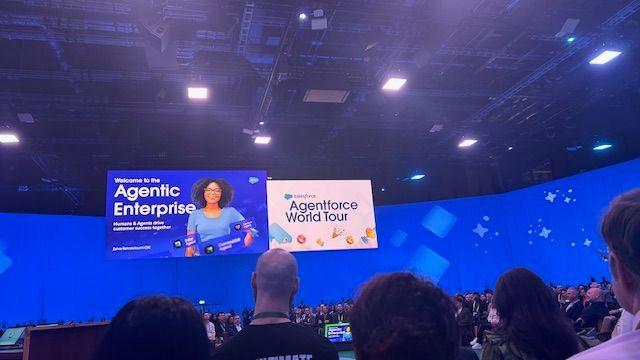
At Salesforce's World tour event this week at ExcelLondon, the company announced a host of new tools for its Agentforce platform - arriving alongside a quietly positive earnings report for Q3 in 2025. Salesforce has revealed an impressive revenue of $10.3 billion this quarter - a 9% year-on-year increase. This has prompted a raise in the full-year revenue guidance to $41.5 billion. Unfortunately, this hasn't translated into investor confidence in the way perhaps Salesforce might have hoped for - with a 29% drop in stock so far in 2025. A core part of Salesforce's ongoing strategy is Agentforce, the organization's agentic AI wing which enables customers to deploy digital assistant-like models to interact with customers at scale. The latest offering is the launch of Agentforce 360 for the design and deployment of AI Agents for enterprise. "It is an all new platform that connects your customers, your employees, your operations and your agents in a whole new way. We are transforming the enterprise just as we transformed CRM and it's all made possible thanks to a new reimagined Agent Force 360," explains Zahra Bahrololoumi, UKI CEO at Salesforce in her keynote. TechRadar Pro sat down with Executive Vice President and General Manager of Agentforce Marketing, Stephen Hammond to find out more. "For several decades companies have all been trying to find ways to create a personalized relationship with their customers at scale," Hammond explains. "But the challenge is that a lot of that work to determine what would be the right kind of offer or message to put in front of someone, was basically guessed off of propensity modeling or machine scoring. There really wasn't a strong way for the individual to share what their interests were." Hammond continues to explain that organizations are often depending entirely on click and search patterns to derive a customer's interests (archaic, I know). But, a new future is possible, he explains; "With [AI] agents, they can tell you directly what they're looking for. Then we can have a response back that's tied back into their profile, product offerings, marketing campaigns, and anything the company is running, even knowledge base as well - and then you can have an educated response back to you know meaningful customer relationships." This is, of course, where Agentforce 360 and data 360 come in. Existing customers now get access to this new technology that they can introduce to their platforms - which is now supported by data 360 and 'intelligent context'. 'The big message really is that with the addition of agents to marketing, brands can create a connection with their customers at a scale that wasn't possible before," Hammond continues. It's all designed to make the experience as frictionless as possible for both enterprises and consumers. Virtual AI assistants, much like the customer service 'bots' we all know and love (!) can be built into a site - but with more autonomy in directing the customer. This means we'll probably start seeing a whole lot more customer service chatbots, even in industries you might not expect. In fact, Thames Valley police are currently trialing an AI Assistant 'Bobbi', for non-emergency questions that the force spends valuable time fielding. It's in the very, very early stages - having only been live for 8 days at the time we spoke to them. Simon Dodds, Chief Superintendent & Head of Contact Management for Thames Valley Police explained that they've seen very positive results since its rollout. "Bobby's already helping out with [queries, such as}; 'I found a phone, what do I do? I want to change my pay address, how do I go about it? And a parcel's been taken off my doorstep.' Dodds explains. This raises questions, for me, about the accountability structure. I asked Dodds about the eventuality that the LLM makes a mistake; fails to recognize a dangerous situation, offers incorrect advice to a user, or hallucinates (in a way we're all familiar with AI doing). After all, proximity to the emergency services means the potential for high-stakes encounters. 'It's [about] making sure that we've tested it - and we've put it through some quite significant testing. But I do say that our human operators will make mistakes, so Bobbie might make some mistakes and that's why we've got to make sure that we stay on top of the learning.' This doesn't, in my opinion, offer much insight into who is accountable if the AI does get it wrong - but the use case is clearly an interesting one that will develop as it is used more frequently.
[5]

Salesforce's AI bets gain momentum, but overall growth remains sluggish - SiliconANGLE
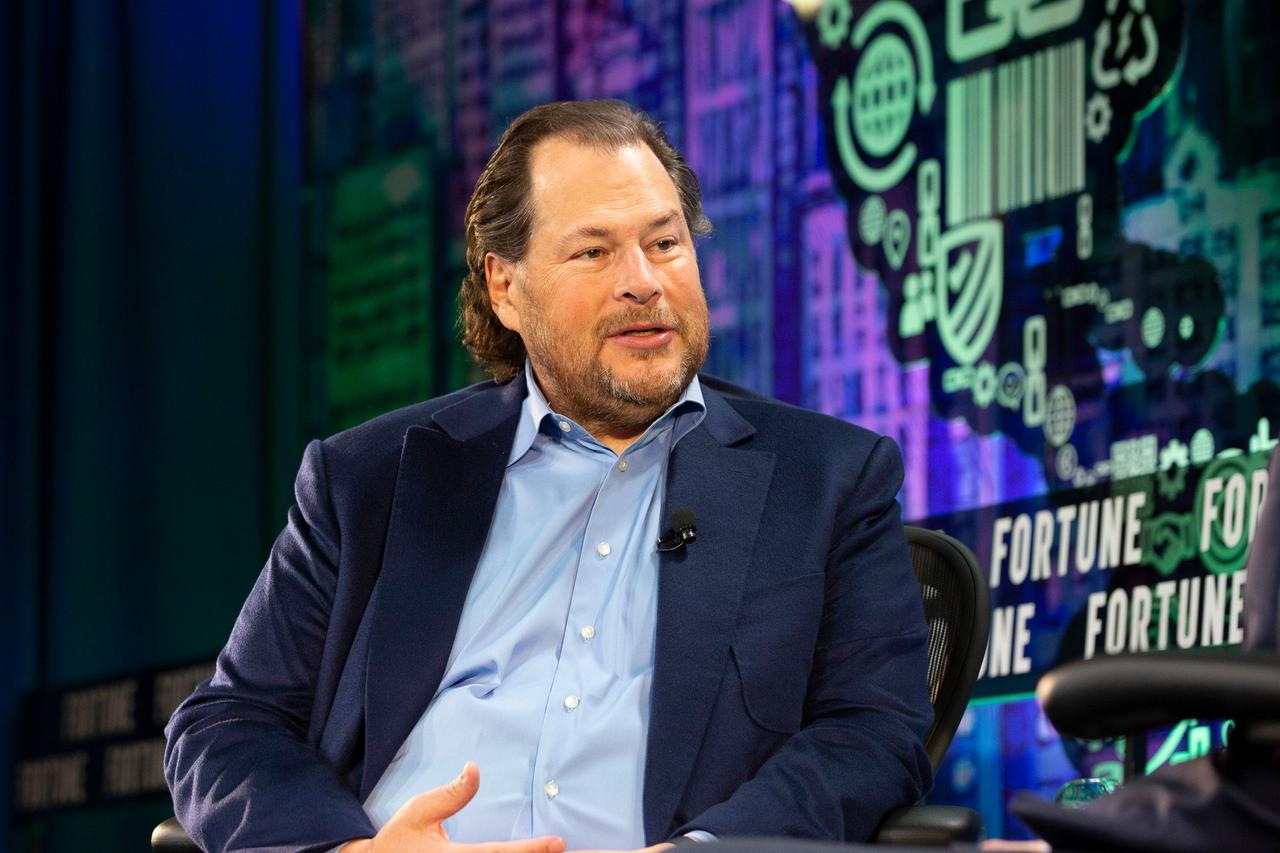
Salesforce's AI bets gain momentum, but overall growth remains sluggish Salesforce Inc. delivered mixed financial results and mixed guidance for the coming quarter, but its stock moved higher in late trading thanks to some encouraging progress from its agentic artificial intelligence initiatives. The company reported third-quarter earnings before certain costs such as stock compensation of $3.25 per share, crushing the analyst consensus estimate of just $2.86, but it came up short in terms of revenue. Sales for the period came to $10.26 billion, up just 8.6% from a year earlier and just shy of the $10.27 billion forecast. Profitability increased, though, with Salesforce reporting a net income of $2.09 billion in the quarter, up from $1.53 billion in the year-ago period. Its bottom line was boosted slightly by a $263 million gain from "strategic investments," the company said. Salesforce was once the epitome of Wall Street darlings, benefiting from an unprecedented duration of high sales growth that saw it consistently deliver impressive revenue from its founding in 1999 to the end of 2022. Not once during that stretch did its growth rate fall below 20%. However, the company's industry-leading customer relationship management platform has saturated the market to the extent that such growth is now no longer possible, and its growth consequently slowed from 2023 onwards. In fiscal 2025, it generated growth of just 8.7%, and it has only been able to show similar gains so far this year. The company has also been caught up in the maelstrom of AI, which threatens to break its stranglehold on the CRM market. To counter this, Salesforce has gone all in on AI itself, pushing fleets of AI agents that can automate complex tasks onto its own customer base. The promise of these agents is that they'll be able to automate mundane, routine business tasks and increase productivity. But the challenge for Salesforce is that it's not at all easy to convince enterprise customers to invest in such products, as many of them are extremely cautious about letting AI loose in their core computing systems, where they could potentially cause more harm than good. Salesforce has been pretty open about the challenges it faces in convincing customers to embrace its AI offerings, particularly its Agentforce products, which provide tools for orchestrating fleets of pre-built agents and also allow companies to develop their own, specialized AI assistants. The company said it has now booked $540 million in annual recurring revenue from Agentforce, up $100 million from the previous quarter. That's encouraging, but at the same time, it represents less than 2% of the company's forecast revenue for the next 12 months, illustrating that it still has a long way to go. Analyst Rebecca Wettemann of Valoir told SiliconANGLE she thinks Salesforce has a better AI outlook than many of its peers, because it's not asking them to do any of the "heavy lifting" with regard to building and managing AI agents. "Customers are gravitating to AI capabilities that are prebuilt, tested and tuned and delivered within and alongside business applications like CRM," she explained. Salesforce Chair and Chief Executive Marc Benioff (pictured) said Agentforce and its Data 360 platform have emerged as real growth drivers, achieving a combined $1.4 billion in ARR. "That's an explosive 114% gain," he said. "We now have over 9,500 paid Agentforce deals and 3.2 trillion tokens processed, underscoring our leadership in building the Agentic Enterprise and driving real outcomes." Wettemann said Salesforce's agentic offerings are likely to get a boost from Slack and Slackbot. "This is where Salesforce's AI story is heading, and we expect to hear more from the company about Slack as the original conversational interface and how employees can leverage Slackbot to help them work," Wettemann said. "This augmentation story is a less scary message for customers than the replacement one." Salesforce might be in a good position with its agentic AI offerings, but that's not going to do much for its immediate growth prospects, as its guidance for the current quarter indicates. The company said it's looking for fourth-quarter earnings of between $3.02 and $3.04 per share, trailing the Street's forecast of $3.04 per share, while it expects to hit between $11.13 billion and $11.23 billion in sales, above the $10.9 billion analyst consensus. The guidance implies revenue growth of between 11% and 12%, which is an improvement on its recent performance. But around three of those percentage points are expected to come from Informatica, the data management company that it agreed to acquire for $8 billion in May. That acquisition finally closed last month. Salesforce's stock gained 2% in after-hours trading once investors digested the latest report, but it's still down 26% in the year to date. The stock has badly underperformed compared to the broader technology industry this year, partly due to concerns over its slowing growth and the prospect of disruption from AI.
[6]

Agentforce use cases now number 18,500 as Salesforce turns in a $10.9 billlon quarter
A tale of two AI firms Tuesday. On the one hand, Microsoft saw its stock take a tumble on reports, since denied by the firm, that it had lowered its AI sales targets on the back of sluggish customer demand. On the other hand, rival Salesforce saw its share price pick up following the release of quarterly numbers that saw its Agentforce momentum take a leap forward. For Q3 fiscal 2026, Salesforce earned $2.09 billion, up 37% year-on-year on revenue up nine percent to hit $10.9 billion. Agentforce and Data 360 hit $1.4 billion in Annual Recurring Revenue (ARR) in the quarter, up 114% year-over-year, including Agentforce ARR of about $540 million, 330% year-over-year. More than 70% of top 100 wins included five or more clouds. Across product lines, the revenue breakdown for Q3 was: Discussing the quarter, Benioff commented: We had strong performance across Agentforce Service, Agentforce Sales and Slack...It is really the hat trick for Salesforce with large customers to say, 'Let us show you what we're doing in Service. Let us show you what we're doing in Sales. Let us show what we're doing in Slack. And it's a 'Wow!' experience right now. In terms of Agentforce use cases, there are now 18,500 examples at some stage of implementation, with 9,500 of them being paid for deals. At the last official count for Q2's results, there were 12,500 overall Agentforce deals out there with around 6,000 of those being paid for. The increase is good news for Benioff: We all know the speed of innovation in the last three years has far exceeded the speed of customer adoption and customers have been racing to catch up to what we've been doing. But we do see that changing. We saw that at Dreamforce...customers are really saying, 'Yes, I'm going to use this now, I'm going to do this. I'm going to put in my customer agents. I'm going to put my employee agents. I'm going to get my omni-channel supervisor. I'm going to harmonize my data. I'm going to federate my data. I'm going to upgrade my apps'. Customers in production with Agentforce have jumped now 70% year quarter-over-quarter...In the quarter, more than 50% of new Agentforce bookings as well as 50% of Data 360 in bookings came from existing customers, expanding their investment, which was awesome and really showed adoption. And we are very focused on adoption more than ever before, especially as an Agentforce. Data 360 is the foundation for every Agentforce deployment, and it's [been] accelerating in Q3. Other topics touched on in the post-results conference call: Pricing for the agentic age. Benioff explained: We have this enterprise license agreement we call the Agentic Enterprise License Agreement. When we first started with Agentforce, we were talking about, oh, it's going to be so much per conversation. It was this type of pricing may be transaction-based pricing, usage-based pricing, but customers have pushed for more flexibility we've moved fast to that. The closing of the $8 billion Informatica acquisition. Benioff expects big things to come from this: When we were doing the due diligence on the company, we saw a lot of things in the labs that we're looking forward to bringing to the market. That data layer, and I haven't done the math exactly, but I think if you do some of the math I think it's about a $10 billion business for us next year now...So Informatica with Data 360 [and] MuleSoft, that is taking everything to this new level when you get into the world of harmonization integration federation, then you're trying to deliver it to the AI, the intelligence, the accuracy, the reliability to wipe out the hallucinations, delivering the AI context. The 'divorce' from Veeva and the rise of Salesforce's Life Sciences Cloud. Benioff mocked: We have this partner who decided to become our competitor, Veeva, and we're taking market share from Veeva. They even had to talk about it in their earnings call that they lost all these deals to us, but they have not seen the losses yet that are coming, highlighted by a notable new win at Helion this quarter. More than 120 industry leaders have selected Life Sciences Cloud...it includes It includes five of the top 20 pharma companies already, but you're going to see them all use Life Sciences Cloud. The US Public Sector opportunity. Benioff said: I was just in Washington, D.C. last week. I was with the Treasury Secretary. I was with a number of the Cabinet Secretaries. All of them are re-building what they're doing, re-automating and we want to help all of them. I'm inspired to see some of the largest, most impactful government agencies running their businesses and their critical workflows and their agents and their data on Salesforce, including the Air Force and the Army...We run the whole Veterans Affairs, we've got 120 apps there now. It used to be a huge problem with Veterans Affairs for the whole country and veterans were not getting the service and support they needed, and we cleaned that up for them. The IRS is another government use case of note: The Office of the Chief Counsel has automated up to 98% of manual activities, decreasing the time to fully open a tax court case from 10 days to 30 minutes, another division saving an estimated 500,000 minutes a year retiring multiple legacy systems. And now Agentforce with IRS is going to be able to further optimize automate, accelerate business process across the entire agency. That damn report from MIT that says 95% of AI projects are failing to deliver ROI. Benioff said: We've all read that crazy MIT study where customers went off trying to build their own models and try to build their own toolkits and this and that and DIY-ing it and now they realize the real value from AI is delivering, number one, customer agents. A strong quarter from Salesforce which has been on the receiving end of a lot of investor skepticism about the rate of Agentforce adoption. I've said it before and I'll doubtless say it again, yes there is a long, long way to go, but the direction of travel is clear and the Agentforce adoption arrow is heading up and to the right. The more use cases that are aired, the more convincing the business case becomes for those enterprises that still harbor doubts or fears.
[7]

Salesforce raises annual forecasts as AI software adoption picks up steam
The forecast signals that monetisation for the company's Agentforce platform is picking up pace as enterprises gravitate towards autonomous AI to streamline and automate repetitive and administrative tasks. Salesforce raised its fiscal 2026 revenue and adjusted profit forecasts on Wednesday, anticipating growth in its artificial intelligence agent platform due to strong enterprise demand, sending its shares up more than 2% in extended trading. The forecast signals that monetisation for the company's Agentforce platform is picking up pace as enterprises gravitate towards autonomous AI to streamline and automate repetitive and administrative tasks. "Our Agentforce and Data 360 products are the momentum drivers, hitting nearly $1.4 billion in ARR-an explosive 114% year-over-year gain," Salesforce CEO Marc Benioff said in a statement. AI agents, which can operate autonomously and take decisions, have seen strong adoption among Big Tech stalwarts including Oracle, as they look for ways to maximize operational efficiencies and boost profit margins. Agentforce ARR surpassed half a billion dollars in the third quarter, more than quadrupling from a year ago. "Raising guidance for year-end shows the confidence it has in pipeline and in bringing customers that are Agentforce experimenters today into Agentforce buyers in the near future," said Rebecca Wettemann, CEO of industry analyst firm Valoir. While Salesforce invests billions in bolstering its AI efforts, investors have been pressuring the company to show returns on the hefty amounts put into the technology amid fears of a bubble in the tech industry. In October, Salesforce forecast revenue of more than $60 billion in 2030, above market estimates, as it works to expand adoption of its AI-powered cloud suite. The company now expects fiscal 2026 revenue in the range of $41.45 billion to $41.55 billion, compared with its prior forecast of between $41.1 billion and $41.3 billion. Salesforce raised its annual adjusted earnings per share forecast to between $11.75 and $11.77, compared with its earlier expectation of between $11.33 and $11.37. It reported third-quarter revenue of $10.26 billion, slightly missing estimates of $10.27 billion, according to data compiled by LSEG.
[8]

Salesforce Counters 'Pilot Purgatory' Fears With 70% Surge In Agentforce Deployments - Salesforce (NYSE:CRM)
Salesforce Inc. (NYSE:CRM) delivered a rebuttal to fears of stalled AI adoption in its third-quarter earnings report Wednesday, presenting data that directly contradicts recent channel checks suggesting customers were stuck in "pilot purgatory." CRM stock is gaining positive traction. Get the inside scoop here. Breaking the 'Testing' Cycle While analysts and partners had warned of "gradual" uptake and contracting pipelines heading into the print, Salesforce management revealed that Agentforce accounts in production surged 70% quarter-over-quarter. This metric serves as a direct counter-argument to the narrative that enterprises are merely experimenting with AI rather than deploying it. CEO Marc Benioff focused on usage statistics to prove the "Agentic Enterprise" is gaining traction. The company reported that its AI and Data portfolio reached nearly $1.4 billion in Annual Recurring Revenue (ARR), up 114% year-over-year. Furthermore, Salesforce processed 3.2 trillion tokens through its AI gateway, a volume Benioff cited as proof of "real enterprise adoption" rather than just demos. Addressing the durability of this demand, Chief Revenue Officer Miguel Milano noted that more than 50% of new Agentforce bookings came from existing customers "refilling the tank," indicating repeat buying behavior rather than one-off trials. See Also: Snowflake Stock Falls On Q3 Earnings: Here's Why Shares Are Melting After Hours Pipeline And Capacity Expansion Despite partner concerns of a slowdown, Salesforce reported that the third quarter was "one of our biggest pipeline generation quarters ever". The company's Remaining Performance Obligation (cRPO), a key measure of backlog, grew 11%, beating analyst expectations of roughly 9%. Signaling confidence in future demand, Salesforce has aggressively expanded its sales distribution, increasing sales capacity by 23% year-to-date. Financials And Guidance While third-quarter revenue of $10.26 billion narrowly missed consensus estimates of $10.27 billion, the company raised its full-year Fiscal 2026 revenue guidance to a range of $41.45 billion to $41.55 billion. The company also announced that the acquisition of Informatica is closing three months ahead of schedule, further solidifying the data foundation required for its AI strategy. The stock closed 1.71% higher at $238.72 apiece on Wednesday and rose by 1.79% in after-hours. It has declined by 27.80% year-to-date and 35.11% over the year. It maintains a weaker price trend over the short, medium, and long terms, with a strong quality ranking. Additional performance details, as per Benzinga's Edge Stock Rankings, are available here. Read Next: Salesforce's 'Record Year' Narrative Faces Serious Partner Pushback Before Q3 Earnings Disclaimer: This content was partially produced with the help of AI tools and was reviewed and published by Benzinga editors. Photo courtesy: Shutterstock CRMSalesforce Inc$243.001.79%OverviewMarket News and Data brought to you by Benzinga APIs
[9]

Salesforce Q3 Earnings: CEO Benioff Calls SaaS Industry's Death By AI A 'False Narrative'
'There was a false narrative that somehow the core is in jeopardy because of these large language models,' Salesforce CEO and co-founder Marc Benioff says. Salesforce CEO and co-founder Marc Benioff continues to assert that growing demand for artificial intelligence and agentic AI will have a multiplier effect on Salesforce's core cloud-based products-and that concerns of AI destroying his software-as-a-service business are overblown. "There was a false narrative that somehow the core is in jeopardy because of these large language models," Benioff said Wednesday on his company's latest quarterly earnings call. Instead, the San Francisco-based enterprise applications vendor has been adding new value across its product portfolio through agentic capabilities. Salesforce is at the forefront for customers looking for tools to turn their organizations into "agentic enterprises" leveraging the cutting-edge technology to grow revenue, reduce costs and improve customer experiences, the CEO said. "We've created this," he said. "We're envisioning this. We're defining what the future is with this." [RELATED: Informatica CEO Walia Sees Consumer AI, Enterprise AI On Separate Journeys] Salesforce covered its third fiscal quarter, ended Oct. 31, on Wednesday's call. Although executives with the vendor highlighted the ways it engages and supports customers directly, Salesforce President and Chief Engineering and Customer Success Officer Srini Tallapragada said that the vendor is working with the likes of Accenture, Deloitte, PwC and other system integrators and partners to meet AI demand. Salesforce has more than 16,000 partners worldwide. "In a lot of places, we are co-selling (with partners)," Tallapragada said. "This together is what it takes to generate the agentic enterprise." Agentic enterprises represent a new paradigm and new revenue opportunity for Salesforce, President and Chief Revenue Officer Miguel Milano said on the call. That presumably also means more opportunities for Salesforce partners. "Customers will use Salesforce in a totally different way," he said. "They will use Salesforce to be the platform for digital labor, for sales, for service, for marketing. And the impact on the way we can monetize those relationships is exponential. It's not linear growth." Salesforce agentic products can multiply monetization opportunities with customers fourfold, Milano said. He's seen average order value (AOV) increase up to fivefold with some customers that are investing in becoming agentic. Customers can get up to 10 times more value from agentic Salesforce products. "We just want to get every single one of our 150,000, 200,000 customers through the agentic enterprise journey," Milano said. "For each of them, there is going to be a multiplier effect." To meet demand, Salesforce has increased its internal account executive seller capacity by 20 percent this year so far and should finish the year with 15 percent more capacity already enabled or ramped, a process that can take six to 12 months, Milano said. "I see the pipelines growing," he said. "The top of the funnel is growing. We've never seen a pipe gen(eration) quarter like we did in Q3." The contextual data Salesforce has amassed over the years on the different needs of sales representatives in finance compared to reps in telecommunications or pharmaceuticals gives the vendor an edge over its AI rivals, Tallapragada said on the call. The vendor has also come to market with agent evaluation and auditing, compliance and local data residency tools agentic enterprises need. Benioff estimated that Salesforce's data foundation business that leverages Informatica, Data 360 (the former Data Cloud) and MuleSoft should reach about $10 billion in business next year. "This is a very significant software business," the CEO said. "It's key for every one of our customers to move to this data foundation, and we are still at the beginning of that journey with so many of our customers." Benioff said that the company is starting to see success in two new markets it expanded into recently-IT service management (ITSM) and life sciences software. Salesforce's ITSM offer is meant to rival products by ServiceNow is selling with customers, Benioff said on the call. "We've got all kinds of customers who've bought products from these competitors (and) never deployed them," Benioff said, without mentioning ServiceNow by name. "Guess what? We are going to deliver some incredible capabilities." Salesforce's Life Sciences Cloud saw new bookings triple year over year and 120 new customers in the past few months, the CEO said. A former Salesforce partner, Veeva, is now competing with the vendor in this market. "We're taking market share from Veeva," Benioff said. "They have not seen the losses yet that are coming." Salesforce's various ways for customers to pay for its AI tools is necessary "to meet customers where they are, where they want to be," Milano said. The CRO said that Salesforce's Agentic Enterprise Licensing Agreement fixed-cost contracts are enticing some customers, with 16 AELAs sold in the third fiscal quarter and about 100 AELAs in the pipeline-with each AELA a multimillion-dollar deal. Customers requested AELAs to avoid the trappings of paying by consumption, Milano said. "It gives the customer the flexibility that they need," he said. Seat-based offers also continue to entice other customers for their spending predictability. Seat-based offers for Agentforce and Data Cloud in the third fiscal quarter doubled year on year. And other customers have opted for Salesforce's pay-per-conversation model as well. Flex credits have also proven popular among existing Salesforce customers that have already invested in the company's tools and have a fluctuating workforce, he said. Salesforce isn't alone in experimenting with different ways to charge customers for AI tools, with Microsoft also rolling out payment methods including licenses and consumption-based metering. During the quarter, Salesforce's current remaining performance obligation (cRPO) rose 11 percent year on year to $29.4 billion, according to the vendor. RPO came in at $59.5 billion, up 12 percent year on year. Agentforce and Data 360 products saw nearly $1.4 billion in annual recurring revenue (ARR), more than double year on year. Salesforce revealed that it now has more than 9,500 paid Agentforce deals done-up 50 percent quarter on quarter-and that it has processed 3.2 trillion tokens. Agentforce has closed more than 18,500 deals since launch. Agentforce ARR alone passed $500 million in the quarter, quadruple the amount a year prior. Agentforce accounts in production rose 70 percent quarter on quarter. Half of the bookings for Agentforce and Data 360 came from existing customer expansion. Milano clarified that around three customers expanded with the AI products about two quarters ago, but in the third fiscal quarter, more than 300 customers expanded. "That's an incredible testimony of the success that Agentforce is having in a very short time frame," he said. Data 360 ingested 32 trillion records, more than double year over year. It ingested 15 trillion records through Zero Copy, more than quadrupling year on year. It also more than quadrupled year on year in terms of unstructured data processed. In October, token usage was nearly 540 billion, up 25 percent month over month, Benioff said on the call. "I just don't think any other enterprise software company has stats quite like this," he said. "This isn't your Clippy (Microsoft's paperclip virtual assistant that used to appear in Word). This is not your kind of a good AI demo. This is real enterprise adoption of agentic AI and capability at scale globally. And those numbers are going to keep growing as customers put Agentforce to work across their business." Subscription and support revenue grew 9 percent year on year ignoring foreign exchange, coming in at $9.7 billion. Revenue for the third quarter reached $10.3 billion, up 8 percent year on year. Salesforce's operating margin using Generally Accepted Accounting Principles was 21.3 percent. Without using GAAP, it was 35.5 percent. Operating cash flow for the quarter was $2.3 billion, up 17 percent year on year. Free cash flow was $2.2 billion, up 22 percent year on year. Salesforce increased its full fiscal year 2026 revenue guidance to between $41.45 billion and $41.55 billion. That would mark an increase year on year of about 9 percent ignoring foreign exchange and it includes about 80 basis points from newly acquired Informatica. The vendor also increased its fiscal year 2026 operating cash flow growth expectation to about 14 percent year on year. Salesforce expects GAAP operating margin for fiscal year 2026 to be 20.3 percent. The vendor maintained its non-GAAP margin expectation of 34.1 percent. The vendor's stock rose about 2 percent after market close Wednesday, trading at about $243 a share.
[10]
Salesforce CEO vies to overcome investors' AI skepticism while touting company's quarterly numbers
Benioff, who helped spearhead the transition to cloud computing after founding Salesforce in 1999, got a chance to try to change the AI narrative late Wednesday with the release of his company's latest quarterly results. After riding the artificial intelligence craze to new heights, business software maker Salesforce has been pummeled by a wave of investor skepticism that's intensified the pressure on its persuasive CEO Marc Benioff to reverse the tide. Benioff, who helped spearhead the transition to cloud computing after founding Salesforce in 1999, got a chance to try to change the AI narrative late Wednesday with the release of his company's latest quarterly results. The key numbers covering the August-October eclipsed the analyst projections that help steer the stock market, providing Benioff with some material to support his contention that Salesforce's big bets on AI will yield a jackpot. The San Francisco-based company earned $2.1 billion, or $2.19 per share, a 37% increase from the same time last year while revenue rose 9% to nearly $10.9 billion. Salesforce also provided an outlook for the current quarter ending in January that exceeded analysts' predictions. "We're uniquely positioned for this new era," Benioff boasted during a 25-minute address on an analyst conference call that sometimes sounded like an AI sermon that also featured comments about "wow" moments that customers experience when seeing the company's technology. Salesforce's shares initially surged by more than 5% after the results came out, but backtracked to a gain of 2% following Benioff's presentation. It's unclear if that modest momentum will be sustained in Thursday's regular trading session because making more money than analysts anticipated isn't necessarily enough to keep propelling a technology stock amid persisting doubts about whether the hundreds of billions of dollars being poured into the much-hyped technology will pay off. Nvidia, the dominant maker of the chips needed to power AI, put a dent in the wall of worry a couple weeks ago with a quarterly earnings report that soared far beyond analyst estimates and initially eased fears about a Big Tech bubble bursting. But the tranquility quickly evaporated, leaving Nvidia's stock price slightly below where it was trading before the company's stellar earnings report and 15% below its peak price reached in late October when the chipmaker became the first company to be valued at $5 trillion. The AI jitters have punished Salesforce even more severely. Before the earnings report was released, Salesforce's market value had plunged by 35%, wiping out about $125 billion in shareholder wealth, since Salesforce's stock price peaked at $369 a year ago. The downturn has happened even as Benioff has been doing his best to highlight AI's potential benefits while calling upon the flair for salesmanship that he developed while become the become a chief evangelist behind the rise of software subscription services amid the ruins of the dot-com bust a quarter century ago. Benioff, who owns Time magazine in addition to his Salesforce job, also is among the Big Tech leaders who have forged ties with President Donald Trump this year while trying to persuade the administration to adopt AI-friendly policies to protect U.S. interests as China also works feverishly on the technology. Salesforce has been primarily focused on creating Ai agents that can automate more customer sales agents while spawning a digital labor force that will take over jobs that have traditionally been filled by people. In a sign that Benioff intends to practice what he preaches, Salesforce laid off 4,000 of its own customer support workers as its "Agentforce" technology took over more of the responsibilities. But the corporate customers that buy Salesforce's services haven't been embracing AI agents as quickly as investors initially thought, turning the company into a "poster child" for the doubts hanging over the technology, said Jay Woods, chief market strategist for investment banking firm Freedom Capital Markets. The second-guessing hasn't dimmed Benioff's AI exuberance - a passion that recently displayed in a resounding endorsement of Google's latest version of the Gemini technology powering its AI suite. "We all know that the speed of innovation has exceeded the speed of customer adoption," Benioff conceded while confidently predicting that dynamic is about to change dramatically as more companies and government agencies build AI services into their operations. Salesforce is projecting $60 billion in revenue for its fiscal year ending in January 2030 - a target that would require average annual increases of 10% from its forecasted sales of $41.5 billion for its current fiscal year. The company also just completed an $8 billion acquisition of another software maker, Informatica, that is building AI tools to manage corporate data. "We're continuing to execute on the path to our $60 billion dream" Benioff said.
[11]

Salesforce Raises Revenue Forecast as Agentforce Sales Top $500 Million
Salesforce raised its full-year sales guidance as its AI product Agentforce surpassed $500 million dollars in annual recurring revenue. The customer-relationship management platform on Wednesday posted a profit of $2.09 billion, or $2.19 a share, for the third quarter-ended Oct. 31, compared with $1.53 billion, or $1.58 a share, a year earlier. Stripping out certain one-time items, adjusted per-share earnings were $3.25, ahead of the $2.86 anticipated by analysts, according to FactSet. Revenue rose 9% to $10.26 billion. Analysts surveyed by FactSet forecast revenue of $10.27 billion. Salesforce raised its full-year revenue outlook to $41.45 billion to $41.55 billion, compared with a previous range of $41.1 billion to $41.3 billion. The new range would represent 9% to 10% sales growth. In the fourth quarter, the company expects adjusted earnings per share of $3.02 to $3.04, with revenue of $11.13 to $11.23 billion. Wall Street is estimating $3.04 in adjusted earnings per share on $10.91 billion in revenue. Agentforce, the company's AI product that launched in October 2024, surpassed $500 million in annual recurring revenue during the third quarter. Combined with Data 360, annual recurring revenue reached nearly $1.4 billion. Agentforce accounts in production increased 70% quarter over quarter, with half of Agentforce and Data 360 bookings coming from existing customer expansion. While Salesforce has consistently beat expectations this year, its stock has fallen 29% as investors remain focused on Agentforce. In its early days, the new product showed limited commercial success, according to Deutsche Bank analysts. Initial deal sizes for Agentforce have remained relatively small in the low-six figures, the analysts said, as businesses are still figuring out ways to use the product. Write to Katherine Hamilton at [email protected]
[12]
Salesforce raises annual revenue forecast
Dec 3 (Reuters) - Salesforce raised its fiscal 2026 revenue forecast on Wednesday, anticipating growth from its artificial intelligence agent platform due to strong enterprise demand, sending its shares up around 4% in extended trading. The business software provider now expects revenue in the range of $41.45 billion to $41.55 billion, compared with its prior forecast of between $41.1 billion and $41.3 billion. The forecast signal that monetization for the company's Agentforce platform is picking up pace as enterprises gravitate towards autonomous AI to streamline and automate repetitive and administrative tasks. "Our Agentforce and Data 360 products are the momentum drivers, hitting nearly $1.4 billion in ARR--an explosive 114% year-over-year gain," said Salesforce CEO Marc Benioff. The company reported third-quarter revenue of $10.26 billion, slightly missing estimates of $10.27 billion, according to data compiled by LSEG. (Reporting by Zaheer Kachwala in Bengaluru; Editing by Maju Samuel)
Share
Share
Copy Link
Salesforce is increasing prices for its AI agent platforms while reporting $540 million in annual recurring revenue from Agentforce, growing 330% year-over-year. Despite beating earnings expectations with $10.3 billion in Q3 revenue, the company's stock has dropped 26% in 2025 as investors question whether AI investments will deliver promised returns.
Salesforce Introduces New AI Charging Models with Price Increases
Salesforce has announced it will raise prices for its AI agent platforms, telling investors that customers will receive between three and ten times the value from their investment as the company introduces new AI charging models. Miguel Milano, Salesforce chief revenue officer, said the company is pursuing a sharp increase in Salesforce AI monetization from new contracts, claiming customers are getting substantially more value from their products
1
. The CRM giant reported Q3 revenue of $10.3 billion, up 9% year-over-year, while earnings of $2.19 per share exceeded analyst projections by a significant margin3
.
Source: The Register
The company introduced its Agentic Enterprise License Agreement (AELA) in October to offer flexible options and reusable credits in a single package. Marc Benioff explained that while Salesforce initially considered conversation-based and transaction-based pricing, customers pushed for more flexibility
1
. Milano noted that many customers prefer seat-based pricing for predictability, though the company now offers the ability to convert licenses into credits where companies have over-ordered or are cutting headcount.Agentforce Drives Growth Despite AI Investor Skepticism
Agentforce, Salesforce's agentic AI platform that automates sales and customer service workflows, has emerged as a key growth driver. Benioff described it as "the fastest growing product I have ever seen in the history of Salesforce," with annualized revenue reaching over $500 million, growing 330% from a year earlier
2
. The company has closed over 18,500 Agentforce deals since the product's introduction, with 9,500 as paid transactions2
.Combined with Data 360, the platform has achieved $1.4 billion in annual recurring revenue (ARR), representing an explosive 114% gain. Salesforce has processed 3.2 trillion tokens through these systems, underscoring its push toward building what Benioff calls the "Agentic Enterprise"
5
. The company also unveiled Agentforce 360 at its World Tour event, enabling customers to deploy AI assistants at scale across customer interactions4
.
Source: TechRadar
Marc Benioff Defends AI as Commodity Feature Strengthening Enterprise Software
Addressing concerns that AI threatens enterprise software companies, Marc Benioff told CNBC that large language models (LLMs) are "just a commodity feature" that strengthens Salesforce's products. "All these large language models are the same. We just want the lowest cost one, then we plug it in," Benioff said, emphasizing that Salesforce's customer data and core applications are what differentiate the company
2
.Benioff suggested that investors who "moved away" from the company somehow think enterprise software companies are under duress from AI when the opposite is true, arguing that software companies are being bolstered and powered by AI . Despite this optimism, Salesforce stock has dropped 26% year-to-date, with investor confidence lagging even as the tech-heavy Nasdaq Composite is up more than 21%
2
.
Source: SiliconANGLE
Related Stories

Customer Adoption Challenges and Market Reality Check
While Salesforce promotes aggressive growth projections, including a target of $60 billion in revenue by fiscal year 2030, the speed of customer adoption remains a critical concern. Benioff acknowledged that "the speed of innovation has exceeded the speed of customer adoption," though he confidently predicted this dynamic would change as more organizations build AI services into operations
3
.Forrester has questioned the assumptions behind vendor value claims, warning in an October report that 25% of planned AI spending for next year would be delayed until 2027 as financial rigor slows production deployments. The research firm predicted that "the disconnect between the inflated promises of AI vendors and the value created for enterprises will force a market correction"
1
. Despite $540 million in Agentforce ARR, this represents less than 2% of the company's forecast revenue for the next 12 months, illustrating significant runway ahead5
.Real-World Deployments Signal Automation's Expanding Reach
Salesforce's push into customer sales automation is gaining traction across unexpected sectors. Thames Valley Police is currently trialing an AI assistant called "Bobbi" for non-emergency questions, having been live for just eight days at the time of reporting. Chief Superintendent Simon Dodds explained that Bobbi already helps with queries like found property and address changes
4
. The deployment raises questions about accountability when AI assistants make mistakes, though Dodds emphasized extensive testing preceded the rollout.Analyst Rebecca Wettemann of Valoir noted that Salesforce has a better AI outlook than many peers because it's not asking customers to do the "heavy lifting" with regard to building and managing AI agents. "Customers are gravitating to AI capabilities that are prebuilt, tested and tuned and delivered within and alongside business applications like CRM," she explained
5
. The company recently completed an $8 billion acquisition of Informatica, a data management company building AI tools, which is expected to contribute three percentage points to fourth-quarter revenue guidance of between 11% and 12% growth3
.References
Summarized by

Navi
[1]
[2]
[3]
Related Stories
Salesforce's AI Bet Faces Scrutiny Amid Weak Forecast and Market Reaction
26 Feb 2025•Business and Economy

Salesforce CEO Marc Benioff dismisses SaaSpocalypse fears as company bets big on AI agents
26 Feb 2026•Business and Economy

Salesforce Unveils AgentForce: AI-Powered Productivity Boost for Businesses
16 Sept 2024

Recent Highlights



Recent Highlights
Today's Top Stories










Your Daily Dose of Curated AI News
Don’t drown in AI news. We cut through the noise - filtering, ranking and summarizing the most important AI news, breakthroughs and research daily. Spend less time searching for the latest in AI and get straight to action.

